
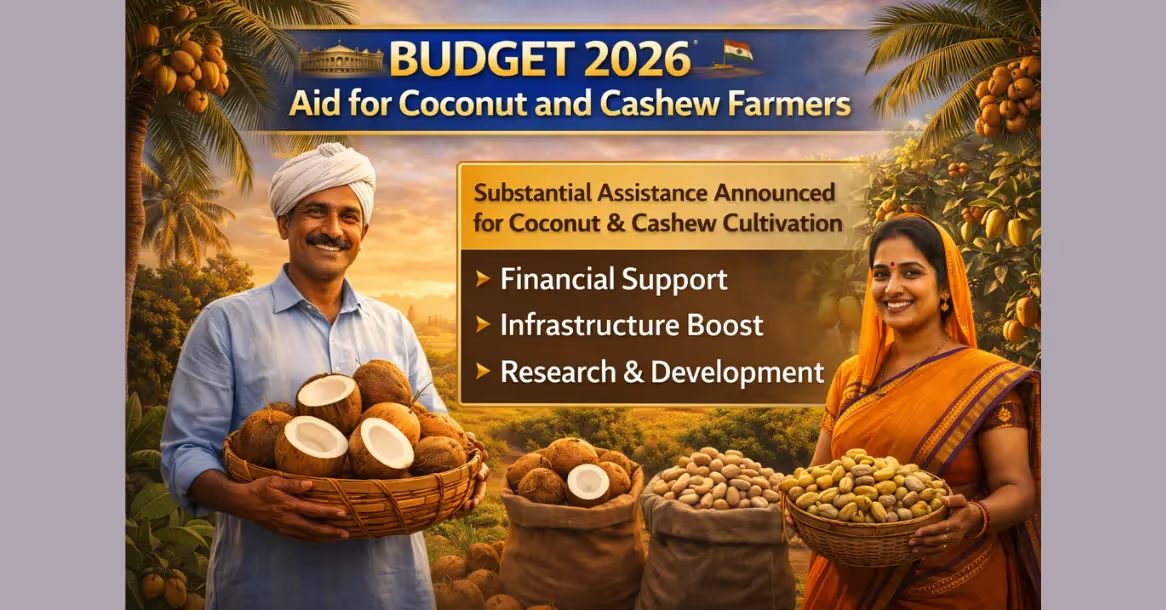
Union Budget 2026 has brought encouraging news for India’s coastal economy with the Finance Minister announcing targeted aid for coconut and cashew farmers. These two crops are lifelines for states such as Kerala, Karnataka, Tamil Nadu, Andhra Pradesh, Goa, and Odisha. The policy intent is to strengthen farmer income, expand processing capacity, and improve India’s position in global agri trade.
Coconut and cashew are not ordinary farm products. They feed large food processing industries, generate rural employment, and earn valuable foreign exchange. Any structured support therefore carries implications far beyond the farm gate.
Why Coconut and Cashew Need Support
Farmers in coastal belts often face volatile prices, pest attacks, and high logistics costs. Many small growers sell raw produce without access to storage or processing units, losing a major part of potential value. The Budget promise aims to bridge this gap through easier credit, modern nurseries, and promotion of farmer producer organizations.
For example, a cashew grower in Kollam typically sells raw nuts to middlemen because local processing is limited. With new schemes encouraging small units and cooperative models, the same farmer can participate in value addition and earn better margins.
Impact on Rural Economy
Higher income from these high value crops directly improves purchasing power in villages. When a coconut cluster receives support for copra drying, oil extraction, or coir manufacturing, local jobs multiply. Transporters, packaging units, and small traders also benefit.
Such rural demand often reflects in sectors like consumer goods, two wheelers, and microfinance. Therefore, equity markets track agricultural reforms closely even though the announcement appears sector specific.
Boost to Exports and Food Processing
India competes with countries like Vietnam and Indonesia in coconut products and with African nations in cashew. Quality improvement and branding can help Indian exporters capture premium markets. The Budget focus on infrastructure and standards aligns with global demand for traceable and hygienic produce.
Real examples already exist. Several farmer groups in Karnataka export organic coconut sugar after receiving training and equipment support. Similar models for cashew kernels can raise realization per kilogram significantly.
Opportunities for Businesses
The announcement opens doors for food processing companies, cold chain operators, and agri fintech firms. Banks may design specialized credit lines while insurers can offer crop protection products. Startups working on grading technology or direct farm procurement stand to gain.
From an investor viewpoint, ancillary industries around packaging, logistics, and edible oils deserve attention. However, execution at state level will determine the speed of results.
How Farmers Can Benefit
- Joining producer organizations to access schemes
- Adopting scientific plantation methods
- Exploring processing instead of raw sale
- Using digital platforms for price discovery
These steps convert policy intent into real income.
Role of Investor Education
Rural themes often look complex to new investors. Understanding how agri reforms translate into corporate earnings requires guidance. Swastika Investmart regularly educates clients on such linkages through research notes and webinars while following SEBI compliant practices.