
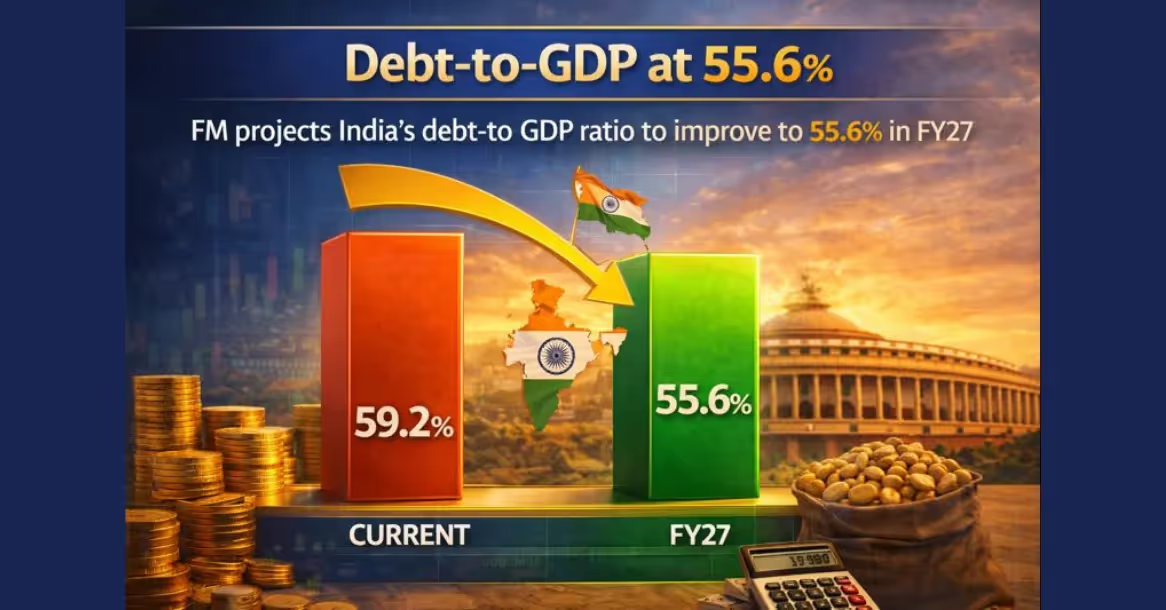
Union Budget 2026 delivered an important macro indicator as the Finance Minister projected India’s debt to GDP ratio to improve to 55.6 percent in FY27. This number matters because it reflects the overall financial health of the nation and its ability to manage obligations without straining growth.
Debt to GDP compares what the country owes with what it produces. A declining ratio usually signals that the economy is expanding faster than borrowing, a welcome sign for investors, rating agencies, and global institutions.
Understanding the Debt to GDP Number
India, like most developing economies, uses borrowing to fund infrastructure, welfare, and strategic investments. The challenge lies in keeping this borrowing at sustainable levels. The projected 55.6 percent shows that the government expects revenues and economic output to rise at a pace that gradually reduces the burden.
For households, it is similar to earning more every year while keeping loans stable. The pressure of repayment eases and future planning becomes comfortable.
What This Means for Markets
Bond markets react sharply to debt trends. A controlled ratio lowers the fear of excessive government borrowing, which in turn helps keep interest rates moderate. Lower yields benefit debt mutual funds, insurance companies, and pension savings.
Equity investors also draw confidence from fiscal stability. Companies can access capital at reasonable costs, supporting expansion plans. Foreign portfolio investors often compare debt metrics across emerging markets before allocating funds, and an improving figure strengthens India’s appeal.
Real World Impact
Consider infrastructure financing. When the sovereign balance sheet looks healthy, global lenders are more willing to fund metro projects, highways, and renewable parks at competitive rates. These projects create jobs and demand for steel, cement, and technology services.
Similarly, a stable debt profile supports the rupee during global shocks. Import dependent sectors face less currency risk, which ultimately helps consumers through stable prices.
Link with Fiscal Deficit
Debt to GDP moves hand in hand with fiscal deficit targets. The government’s plan to bring the deficit to 4.4 percent in FY26 and 4.3 percent in FY27 complements the goal of 55.6 percent debt ratio. Together they present a credible roadmap rather than isolated numbers.
What Experts Will Track
- Actual GDP growth versus estimates
- Tax collection momentum
- Disinvestment receipts
- Interest cost as a share of revenue
These elements will decide whether the projection turns into reality.
Role of Investor Awareness
Macro indicators can appear distant to retail participants, yet they shape portfolio returns. Platforms that explain such concepts in simple language help investors make balanced choices. Swastika Investmart focuses on research backed insights and investor education so that clients connect policy with personal finance.
Opportunities Across Sectors
A healthier sovereign balance sheet favors banks, housing finance, capital goods, and infrastructure developers. Lower risk premiums encourage long term projects. At the same time, disciplined spending reduces the chance of sudden tax shocks on businesses.
Investors should remember that markets move on expectations. Even the announcement of a credible 55.6 percent target can improve sentiment before actual numbers arrive.