
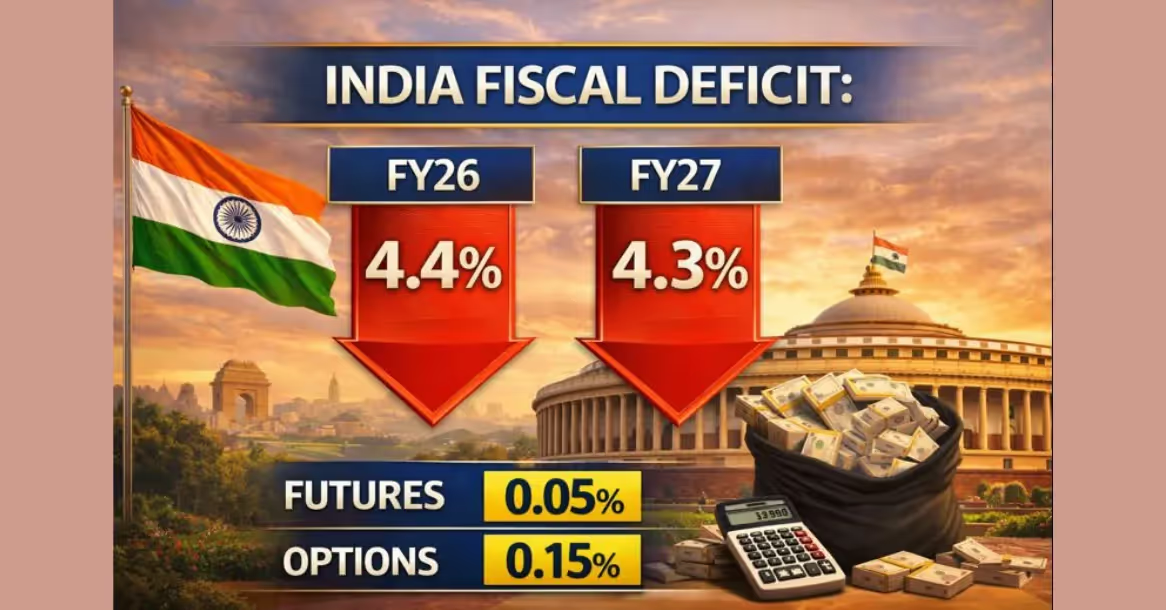
India’s fiscal roadmap received clear direction as the Finance Minister pegged the fiscal deficit at 4.4 percent of GDP for FY26 with a further glide path to 4.3 percent in FY27. The announcement reflects a careful balance between supporting economic growth and maintaining financial prudence. For Indian markets, this number is more than an accounting figure. It shapes interest rates, liquidity, and investor confidence.
Fiscal deficit represents the gap between government spending and revenue. When the gap narrows in a planned manner, it reassures rating agencies, foreign investors, and domestic savers that public finances are on a sustainable path.
Why the Fiscal Deficit Target Matters
A predictable deficit trajectory helps the Reserve Bank of India manage inflation and borrowing programs efficiently. Lower government borrowing pressure leaves more room for private sector credit. This is crucial at a time when India aims to expand manufacturing, infrastructure, and job creation.
The 4.4 percent target suggests that capital expenditure will continue while wasteful spending remains under check. Markets generally reward such discipline with stable bond yields and improved equity sentiment.
Impact on Indian Markets
Bond investors track fiscal numbers closely because higher deficits often push yields upward. With the government committing to consolidation, yields may remain anchored, benefiting debt mutual funds and long duration portfolios.
Equity markets view the announcement as a sign that growth will not be sacrificed for populism. Sectors linked to government spending such as roads, power, and railways may continue to see order flows. At the same time, controlled borrowing reduces the risk of crowding out corporate investment.
Real World Context
Consider a household managing its budget. If expenses rise faster than income, loans pile up and interest eats future savings. Governments face a similar reality. By planning a gradual reduction from 4.4 to 4.3 percent, India is choosing steady health over sudden shock therapy.
In previous years, credible deficit management helped India attract foreign portfolio flows even during volatile global cycles. The current roadmap follows that tested approach.
Balancing Growth and Prudence
Critics often argue that lower deficit targets can slow welfare spending. However, the present plan focuses on quality expenditure rather than cuts. Investments in highways, digital infrastructure, and renewable energy create assets that generate future revenue.
Inflation control is another benefit. Excessive deficits can fuel price pressures. A moderate path supports the RBI’s mandate of price stability, which ultimately protects household purchasing power.
What Investors Should Watch
- Actual tax collections versus estimates
- Disinvestment and asset monetization progress
- Global crude prices affecting subsidy burden
- State government fiscal behavior
These factors will determine whether the 4.4 percent goal translates into reality.
Role of Financial Platforms
For individual investors, understanding macro signals can be challenging. Platforms with strong research tools and educational support help decode such announcements. Swastika Investmart focuses on simplifying policy impacts so clients can align portfolios with evolving conditions while following SEBI compliant processes.
Opportunities Across Asset Classes
A stable fiscal environment favors multiple asset classes. Equities benefit from improved corporate earnings visibility. Bonds gain from contained supply and predictable rates. Even gold demand moderates when macro confidence rises.
Small investors can use systematic investment plans and diversified baskets to participate without taking concentrated bets. The key is consistency rather than reacting to every headline.