
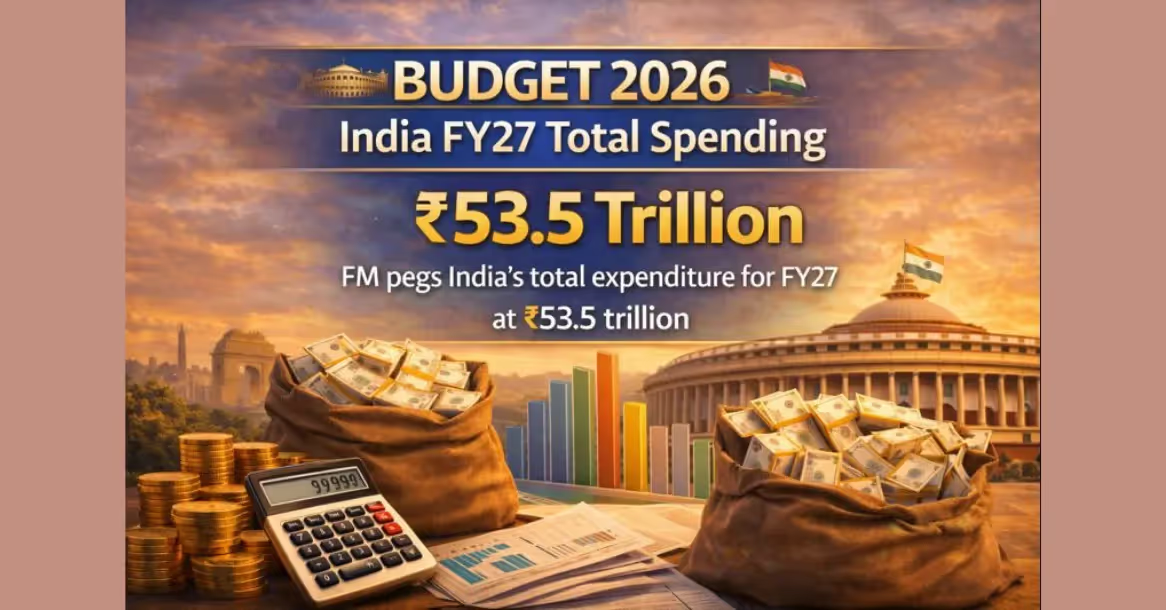
Union Budget 2026 has outlined an ambitious plan with India’s total expenditure for FY27 pegged at ₹53.5 trillion. This figure offers a window into the government’s growth priorities and signals where economic momentum may emerge in the coming years. Public spending remains one of the most powerful drivers of demand in a developing economy, and the latest number underlines that intent.
Government expenditure influences roads built, schools upgraded, digital networks expanded, and welfare delivered. When the allocation rises in a structured manner, businesses gain visibility and investors understand which sectors could lead the next phase of growth.
What ₹53.5 Trillion Spending Represents
The proposed outlay covers revenue expenses such as salaries and subsidies as well as capital expenditure on assets. The quality of this mix matters more than the size alone. Recent budgets have shifted focus toward productive investment, and the FY27 plan continues that approach.
For example, higher allocation to railways or renewable energy creates orders for equipment makers, contractors, and technology providers. The ripple effect travels through employment, raw material demand, and local services.
Impact on Indian Markets
Equity markets usually welcome a credible spending roadmap. Capital goods, infrastructure developers, cement, and logistics companies often benefit when projects receive funding assurance. Banking and financial services also gain as credit demand rises alongside government programs.
Bond markets watch the number from a different lens. If spending is accompanied by disciplined revenue planning, yields remain stable. The announced fiscal consolidation path suggests that the ₹53.5 trillion plan seeks growth without stretching the balance sheet.
Real World Examples
When a new highway project begins, nearby real estate activity picks up, small businesses flourish, and vehicle sales improve. Similarly, investment in digital health records can open opportunities for software firms and medical equipment suppliers. These everyday outcomes explain why a single budget figure carries such wide influence.
Rural schemes included in total expenditure can lift consumption of consumer staples and two wheelers. Urban infrastructure boosts demand for steel and power. Investors tracking these linkages stay ahead of market trends.
Balancing Welfare and Investment
A key challenge for any budget is balancing social needs with asset creation. The FY27 spending plan attempts this by protecting welfare while continuing capital push. Such balance supports inclusive growth and reduces regional disparities.
Inflation management also depends on how money is spent. Productive expenditure increases supply capacity and keeps prices stable over time.
What Investors Should Monitor
- Actual release of funds to projects
- Private sector participation alongside government spending
- Progress of public private partnerships
- Revenue growth that finances the outlay
These indicators decide the real market impact beyond the headline.
Role of Research Platforms
Understanding which companies benefit from government programs requires careful analysis. Swastika Investmart provides SEBI registered research, tech enabled tools, and responsive support so investors can connect macro announcements with portfolio choices responsibly.
Sectoral Opportunities
The ₹53.5 trillion envelope is likely to touch multiple themes:
- Transportation and urban mobility
- Clean energy and power grids
- Water management and housing
- Digital governance and education
Each theme creates a chain of opportunities from large listed firms to small ancillary players.