
Does the Budget Really Move the Nifty 50?
Every February, Indian investors expect the Union Budget to change the direction of the stock market overnight. Television debates create excitement, but history tells a calmer story. The Nifty 50’s performance one month after the Budget rarely follows a straight pattern. Sentiment, global markets, crude prices and earnings often matter more than the speech in Parliament.
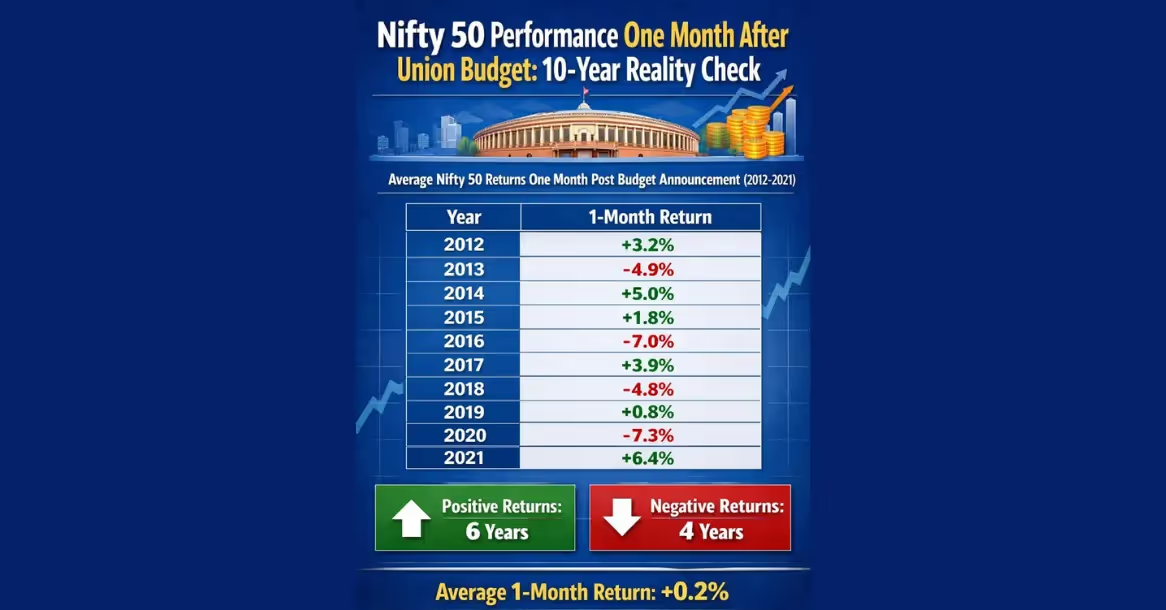
A review of the last ten Budgets from 2016 to 2025 shows that the index rose in about half the years and fell in the rest. The average move was mildly positive, yet volatility was high. This means the Budget is important, but not a magic trigger for guaranteed profits.
What the Last Decade Reveals
Years of Strong Optimism
The best post-Budget month came in 2021 when the market jumped sharply after a growth-oriented and reform-focused Budget. The economy was emerging from pandemic stress and investors welcomed higher capital spending and policy clarity. Another notable year was 2016 when rural and infrastructure focus helped the Nifty deliver double-digit gains in the following month.
When Markets Disappointed
The worst period was 2020. Although the Budget itself was not negative, global fear around the pandemic led to a steep correction soon after. In 2018 and 2022 as well, the index slipped despite sector-specific positives. These episodes remind investors that the Budget cannot fight global storms.
Neutral and Sideways Phases
Several years such as 2019 and 2025 saw flat to mildly positive outcomes. Markets digested announcements without strong conviction, waiting for earnings and policy execution. This is often the most common scenario.
Why One Month Is Too Short
Stock markets discount news quickly. By the time the Finance Minister finishes speaking, traders have already priced in most expectations. The following weeks are influenced by foreign investor flows, quarterly results and global interest rates.
For example, a supportive Budget for infrastructure may lift cement and capital goods stocks immediately, but banking or IT may react to global data instead. Sector rotation becomes more important than the index headline.
Patterns Every Investor Should Know
- Pre-Budget nervousness is common. In several recent years the Nifty dipped before the Budget as traders reduced risk.
- Positive surprises help more than big promises. Clear tax reforms or capex hikes create better reactions than complex schemes.
- Global cues dominate. US markets, crude oil and geopolitical events often overpower domestic announcements.
- Long-term wins over short-term trades. Three to six months after the Budget, returns tend to align with earnings growth rather than the speech.
Impact on Indian Investors
For retail participants, the lesson is to avoid emotional decisions around Budget day. Chasing intraday spikes or selling in panic has historically hurt portfolios. A disciplined approach of asset allocation and quality stock selection works better.
This is where professional research becomes valuable. SEBI-registered Swastika Investmart offers detailed sector analysis, tech-enabled investing platforms and strong customer support to help investors navigate such event-driven volatility without losing long-term focus.
Real Market Example
Imagine an investor who sold banking stocks in February 2021 fearing fiscal stress. Within weeks the same stocks rallied as credit growth improved and reforms took shape. Another investor who stayed invested and added gradually benefited from the recovery. Budget reactions often test patience more than intelligence.