
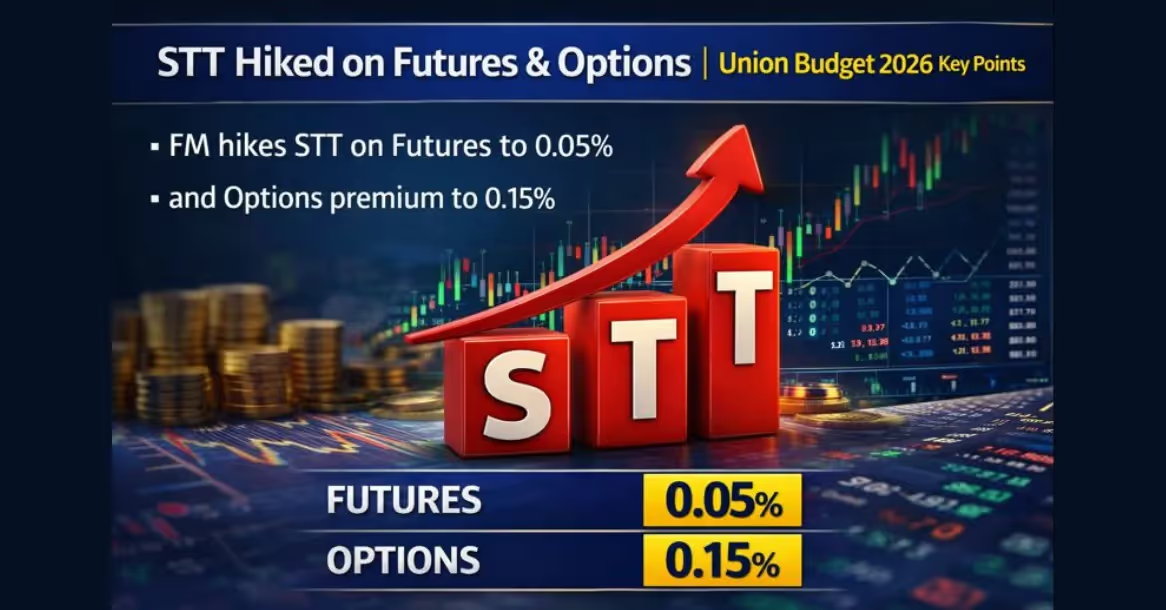
India’s derivatives market received a clear policy shift in Union Budget 2026 with Finance Minister announcing a hike in Securities Transaction Tax on Futures and Options. STT on Futures contracts moves to 0.05 percent while Options premium attracts 0.15 percent. The change aims to balance speculative activity and revenue collection without disturbing the core market structure.
For lakhs of retail traders and professional desks, even a small tweak in transaction tax alters profitability calculations. India hosts one of the world’s most active Options markets and this adjustment will directly influence trading behavior, strategy design, and risk management.
Why the Government Raised STT
The rationale behind the decision rests on two pillars. First, the explosive growth in derivatives volumes has widened the gap between cash and F&O activity. Second, policymakers want to ensure that markets remain a tool for hedging and price discovery rather than pure speculation.
Tax collections from capital markets have grown sharply in recent years. By revising STT, the government seeks a fair contribution from high frequency participants who execute thousands of contracts daily. Similar measures exist in several global markets where transaction levies discourage excessive churn.
What This Means for Traders
An Options buyer paying 0.15 percent on premium will now see a higher breakeven point. For example, a weekly Nifty option priced at ₹120 will carry slightly higher tax outgo, pushing traders to reassess strike selection and target levels. Futures traders running intraday strategies may notice thinner margins on quick scalps.
Yet, long term investors using Futures for hedging portfolios are unlikely to step back. The cost increase remains manageable compared with the benefit of risk protection. Institutional desks typically factor such taxes into execution algorithms and may adjust position sizing rather than exit the market.
Impact on Indian Markets
Market experts expect a short phase of adjustment. Volumes in ultra short term Options could cool off while delivery based segments remain unaffected. Exchanges might witness a shift from low value contracts to meaningful directional trades.
The broader equity trend depends more on earnings, liquidity, and global cues than on STT alone. India’s regulatory framework under SEBI continues to focus on transparency, margin discipline, and investor safety. The tax tweak fits within that larger objective.
Real World Scenarios
A retail trader who earlier executed ten intraday option trades may reduce activity to six high conviction trades. A proprietary desk could redesign strategies to capture larger moves instead of micro swings. On the other hand, an exporter hedging currency exposure through index Futures will continue the practice as business risk outweighs incremental tax.
Brokers and platforms will update calculators and contract notes to reflect the new levy. Clear communication becomes vital so that first time participants understand net costs before placing orders.
How to Adapt Your Strategy
Investors can respond in practical ways:
- Focus on quality setups rather than frequent trades
- Combine cash market positions with selective hedges
- Use stop losses and defined risk per trade
- Track total cost including brokerage, GST, and STT
Technology enabled investing platforms help in comparing scenarios before execution. Strong research support, timely alerts, and educational content make the transition smoother for new entrants.
Role of Research and Education
Periods of policy change test discipline. Traders who rely on structured research tend to navigate better than those chasing tips. Understanding open interest trends, volatility indices, and option Greeks becomes more important when costs rise.
Swastika Investmart emphasizes investor education through webinars and easy tools so that clients can take informed decisions aligned with SEBI guidelines.
Balanced View on the Decision
The STT hike is neither a shock nor a ban on derivatives. It is a calibrated step to nudge the market toward responsible participation. Healthy markets require both liquidity and prudence, and the new rates aim to strike that balance.