
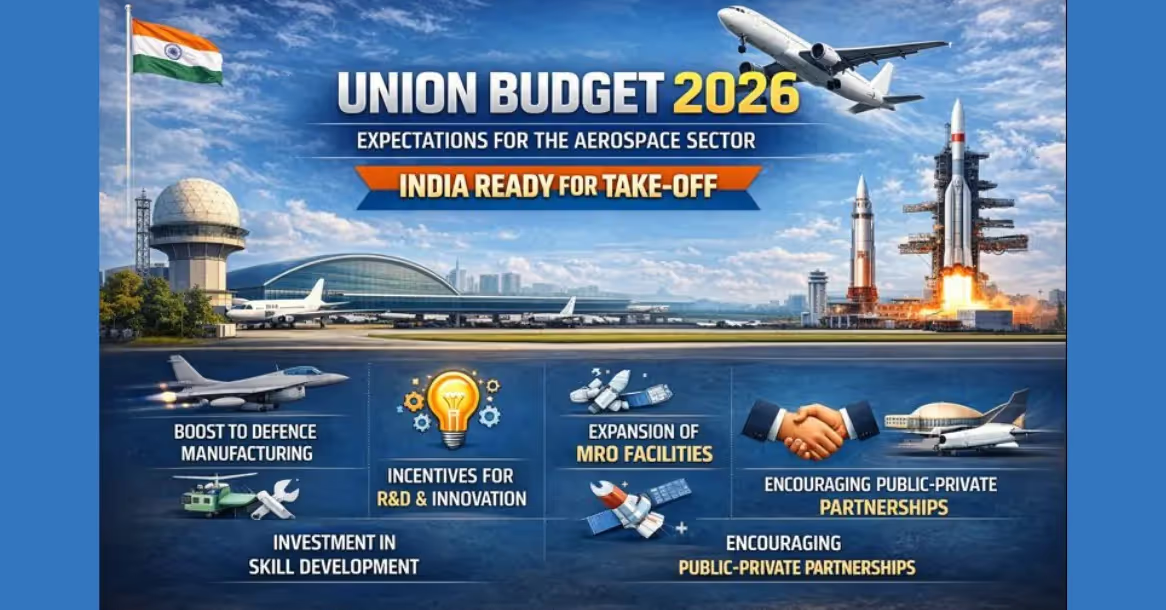
India’s aerospace story is entering a decisive phase. With the Finance Minister set to present the Union Budget 2026, the sector is watching for policy signals that can convert strong demand into sustainable growth. The ecosystem today spans defence aircraft, components, civil aviation, maintenance and repair services, drones and a fast-growing private space industry. Each segment has unique needs, yet all are connected by the national goal of self-reliance and global competitiveness.
Why Aerospace Matters for the Indian Economy
India is now the third-largest domestic aviation market in the world. Passenger traffic has crossed 400 million annually and is projected to expand sharply over the next five years. Airport numbers have doubled in a decade, but the country still has far fewer airports per million people than global peers. On the defence side, geopolitical realities have pushed India to build local capability in fighters, helicopters, missiles and avionics. The space programme, once government driven, is welcoming startups and private manufacturers.
This combination makes aerospace one of the few sectors where manufacturing, services, technology and exports converge. Budget decisions therefore have a multiplier effect on employment, MSMEs and regional development.
Defence Aerospace: Expect a Strong Capex Push
The clearest expectation is a meaningful rise in defence capital expenditure. Industry voices are seeking a 15 to 20 percent increase with a larger share reserved for indigenous procurement. Faster conversion of Defence Acquisition Council approvals into firm orders is equally important. Private manufacturers want long-term visibility so they can invest in tooling and skilled manpower.
A higher allocation to research agencies and testing infrastructure would help Indian firms move from assembly to design. Companies involved in radar systems, avionics, missiles and aircraft components could see healthier order books. For investors, this segment remains a structural growth theme rather than a short-term trade.
Civil Aviation: Affordability and Infrastructure
Airlines continue to battle high operating costs, largely due to aviation turbine fuel prices. Bringing fuel under GST remains a long-standing demand. Even a partial rationalisation could lower ticket prices and improve route viability. Regional connectivity under UDAN has connected many tier-two cities, yet viability gaps persist. The Budget may extend support for new routes and smaller airports.
Another focus area is sustainable aviation. Global carriers are moving towards cleaner fuels and carbon-neutral airports. Incentives for blending sustainable aviation fuel or setting up green airport infrastructure would align India with global standards. The government also aims to position GIFT City as a hub for aircraft leasing and financing, reducing dependence on overseas lessors.
MRO and Manufacturing: Building at Home
India still sends a large portion of aircraft maintenance work abroad. A clear tax regime for MRO services, customs duty relief on spare parts and faster certification processes could change this picture. Domestic MRO growth would create high-skill jobs and cut downtime for airlines.
Manufacturers of drones and aerospace components are asking for extension of production-linked incentives. Rationalising inverted duty structures is crucial so that local production becomes cheaper than imports. MSME suppliers need easier credit and export facilitation to join global supply chains.
Space Technology: The New Frontier
Private space firms have moved from concept to commercial launches. Analysts expect at least a ten percent rise in the Department of Space budget along with procurement commitments for private players. Support for satellite manufacturing, earth observation services and launch vehicles can expand the space economy several times over the decade.
For young entrepreneurs, clarity on spectrum usage, insurance norms and foreign investment limits would unlock capital. India’s reputation for low-cost missions gives it a natural export advantage if policy remains consistent.