Why the Leather Sector Matters to India
India is the world’s second-largest footwear producer and a major exporter of leather garments, accessories and saddlery. The sector employs millions, most of them in small workshops and family-run units. Unlike many capital-heavy industries, leather manufacturing is labour intensive and has a direct link to rural and semi-urban livelihoods.
Yet the industry is facing a tough phase. High input costs, inverted duty structures and intense competition from Vietnam, Bangladesh and China have squeezed margins. Recent tariffs in the US market have added to the pressure. The upcoming Union Budget is therefore critical in deciding whether the sector merely survives or truly scales up.
Global Headwinds and New Opportunities
The Economic Survey has acknowledged that labour-intensive exports such as leather and footwear have shown resilience despite global trade tensions. Many exporters have quickly shifted focus to Europe, the Middle East and emerging markets. The India–EU Free Trade Agreement opens a promising window, with tariff reductions on a large range of leather products.
However, opportunity alone is not enough. Indian manufacturers need cost competitiveness, modern machinery and faster logistics to capture this demand. Budget 2026 is expected to address these structural gaps.
Duty Rationalisation: The Biggest Ask
One of the most urgent demands is correction of inverted duties. In several product lines, raw materials and components attract higher customs duties than finished goods. This discourages local value addition and makes imports more attractive.
The industry is seeking lower duties on wet blue, crust leather, accessories and specialised machinery. Relief under the IGCR scheme and reinstatement of exemptions could immediately improve working capital for MSMEs. Similar reforms transformed the mobile manufacturing ecosystem, and leather hopes for a comparable policy push.
Export Incentives to Counter Tariff Stress
With US tariffs hurting margins, exporters are requesting higher incentives for non-leather footwear to bring them at par with leather products. Support for domestic trading companies and freight assistance can help smaller units reach new buyers.
A targeted package for the footwear value chain has been widely discussed. If implemented, it could accelerate diversification toward the EU and West Asia, reducing dependence on a single market. For towns like Ambur, Agra and Kanpur, this would mean revival of orders and fresh hiring.
Strengthening Manufacturing Through Incentives
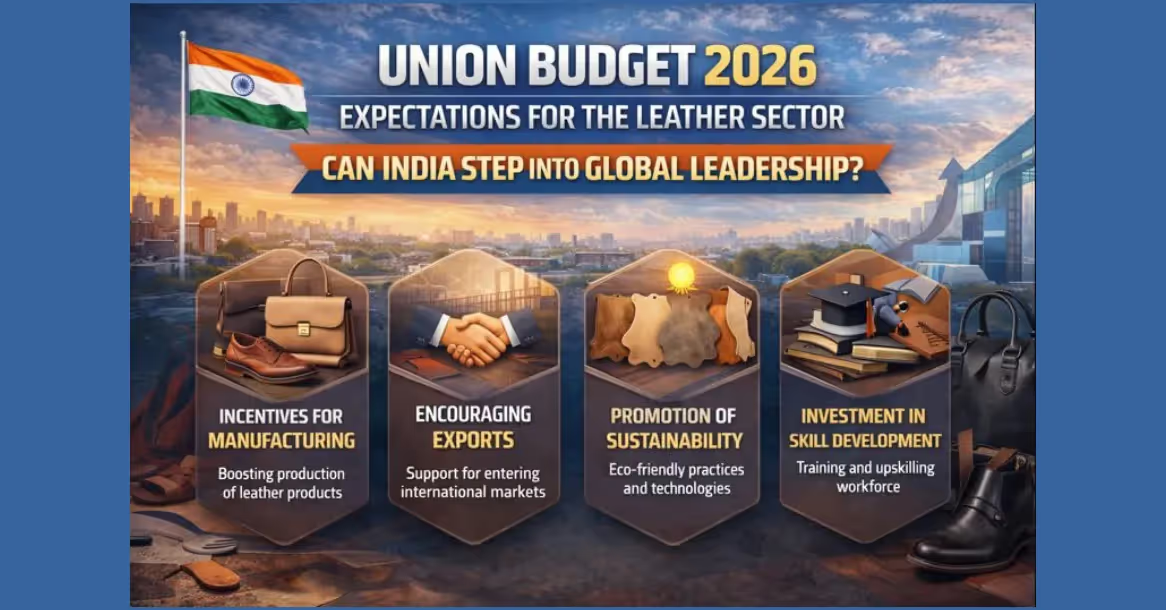
Production-linked incentives or an enhanced Focus Product Scheme could encourage investment across the entire chain, from tanning to finished shoes. Modern moulds, automation and design capabilities are essential to move from low-value contracts to global brands.
MSMEs also need easier credit and formalisation support. Cleaner tanning processes and waste management systems are becoming mandatory for global buyers, and Budget support for green upgrades would improve both compliance and image.
GST and Ease of Doing Business
Complex GST slabs on footwear and inputs continue to create compliance burdens. Rationalisation, especially for premium and sports segments, would help organised players compete with imports. Faster refunds and digital clearances can improve cash flows for exporters who operate on thin margins.
The Survey’s focus on reducing logistics and power costs is particularly relevant. Leather clusters often suffer from high energy bills and slow transport links, directly affecting delivery timelines.
Impact on Indian Markets and Employment
If the Budget delivers on these expectations, the sector could witness double-digit export growth over the next few years. Organised manufacturers and listed footwear brands may benefit from better margins and order visibility. More importantly, the social impact would be significant, with potential creation of over twenty lakh jobs across traditional hubs.
Investors looking at this theme need reliable research and understanding of company fundamentals. SEBI-registered Swastika Investmart provides technology-enabled platforms, strong sector analysis and investor education to evaluate such opportunities prudently.