
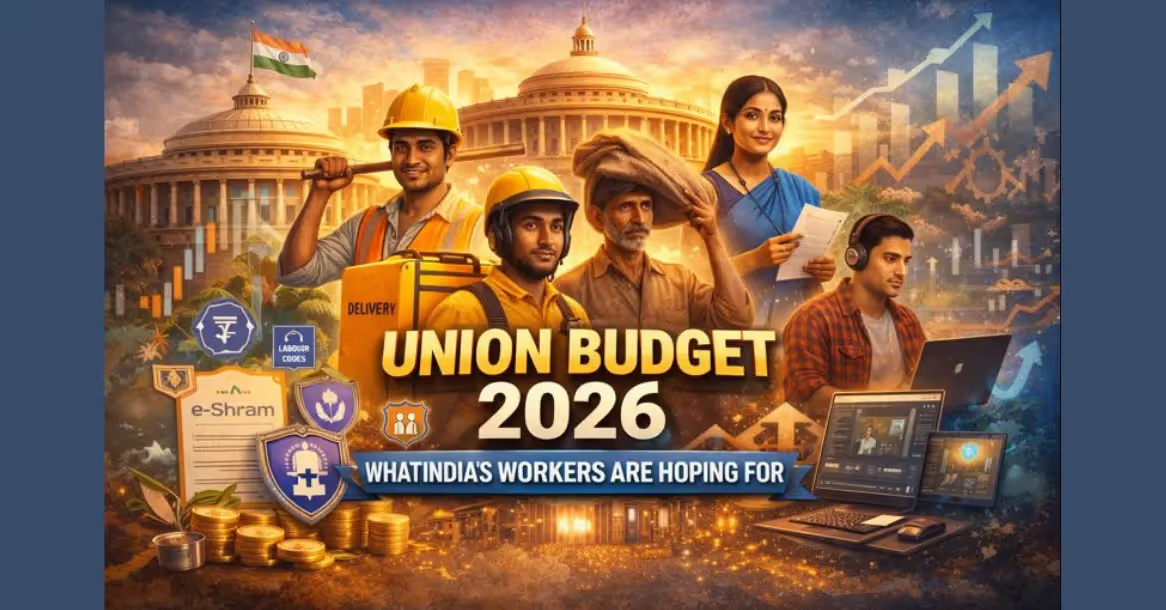
As India prepares for the Union Budget 2026 on February 1, expectations from the labour and employment ecosystem are rising steadily. With a workforce of over 56 crore people and nearly 90 percent engaged in informal or semi-formal employment, workers remain central to India’s growth narrative.
From factory floors and construction sites to delivery platforms and digital freelancing, India’s workers are seeking stability, protection, and opportunity. The upcoming Budget is expected to take a calibrated approach that balances fiscal discipline with inclusive growth, focusing on formalisation, skilling, and job creation rather than sweeping new schemes.
Why Workers Matter More Than Ever in Budget 2026
The Economic Survey 2025–26 highlighted encouraging trends such as declining unemployment and steady job creation. However, it also underlined structural challenges including informalisation, low wage security, and uneven access to benefits.
India’s demographic advantage can turn into a liability if quality employment does not keep pace. This makes Budget 2026 a crucial moment to strengthen the employment ecosystem without straining public finances, especially with the fiscal deficit target hovering near 4.4 percent of GDP.
Labour Codes: From Notification to Real Impact
One of the most closely watched areas is the implementation of the four Labour Codes, notified in late 2025 but still awaiting full rollout at the state level.
What Workers Expect
- Clear timelines for implementation
- Better protection for women workers and inter-state migrants
- Simplified compliance encouraging employers to formalise jobs
Why It Matters
If implemented effectively, the Labour Codes could reduce compliance complexity for businesses while extending social security coverage to millions of workers. Markets generally view such reforms positively as they improve productivity and long-term competitiveness.
Gig and Platform Workers: Slow but Steady Progress Likely
India’s gig economy has expanded rapidly, covering delivery personnel, ride-hailing drivers, and freelance digital workers. Yet income volatility and lack of benefits remain persistent concerns.
Budget Expectations
- Expansion of e-Shram registrations for better worker mapping
- Incremental funding for health insurance and accident cover
- Possible convergence with schemes like PM SVANidhi
Rather than introducing a new umbrella law, the government is expected to refine existing frameworks. This pragmatic approach aligns with fiscal realities while gradually improving worker security.
Skilling, Apprenticeships, and Youth Employment
With millions entering the workforce each year, skilling remains a cornerstone of employment strategy.
Likely Focus Areas
- Increased funding for national skilling centres
- Industry-linked apprenticeships with incentives for MSMEs
- Reskilling programs aligned with manufacturing and infrastructure growth
For example, sectors such as electronics manufacturing, renewable energy, logistics, and construction are expected to absorb a large share of new workers if skill pipelines are aligned correctly.
Labour-Intensive Sectors: Quiet but Crucial Support
Textiles, footwear, leather, toys, and food processing continue to be vital job creators, especially in semi-urban and rural areas.
What Budget 2026 May Deliver
- Targeted incentives linked to employment generation
- Easier access to credit for MSMEs
- Infrastructure support to improve productivity
Even modest policy nudges in these sectors can generate lakhs of jobs, making them an efficient tool for inclusive growth.
Social Security and Welfare: Incremental, Not Radical
Large-scale welfare expansions are unlikely due to fiscal consolidation priorities. However, targeted enhancements are expected.
Possible Measures
- Higher allocations for worker health and safety
- Improved portability of benefits for migrant workers
- Digital integration of welfare delivery
Such measures may not grab headlines but can significantly improve worker confidence and consumption, indirectly supporting economic growth.
Market Impact: Why Investors Are Watching Labour Policies
Employment-focused budgets tend to support sectors like infrastructure, manufacturing, logistics, and consumption-led businesses. Improved job security boosts household spending, which feeds into corporate earnings over time.
From an investor’s perspective, steady reforms rather than disruptive changes are viewed as a sign of policy stability. This environment encourages long-term capital allocation rather than speculative moves.
How Swastika Investmart Helps You Track These Trends
Understanding labour and employment reforms is not just about policy awareness. It is also about spotting opportunities across sectors that benefit from job creation, formalisation, and rising consumption.
Swastika Investmart, a SEBI-registered brokerage, supports investors with strong research insights, sectoral analysis, and tech-enabled platforms that help translate policy developments into informed investment decisions. Its focus on investor education ensures that clients stay ahead of structural trends shaping India’s economy.