
Reading the Signals Before Budget Day
Every year the Economic Survey sets the intellectual backdrop for the Union Budget. The 2025-26 Survey, tabled just ahead of the Budget, paints a picture of an economy that is resilient at home but operating in an uncertain global environment. For investors and businesses, the document offers valuable clues on where government spending and policy energy may flow.
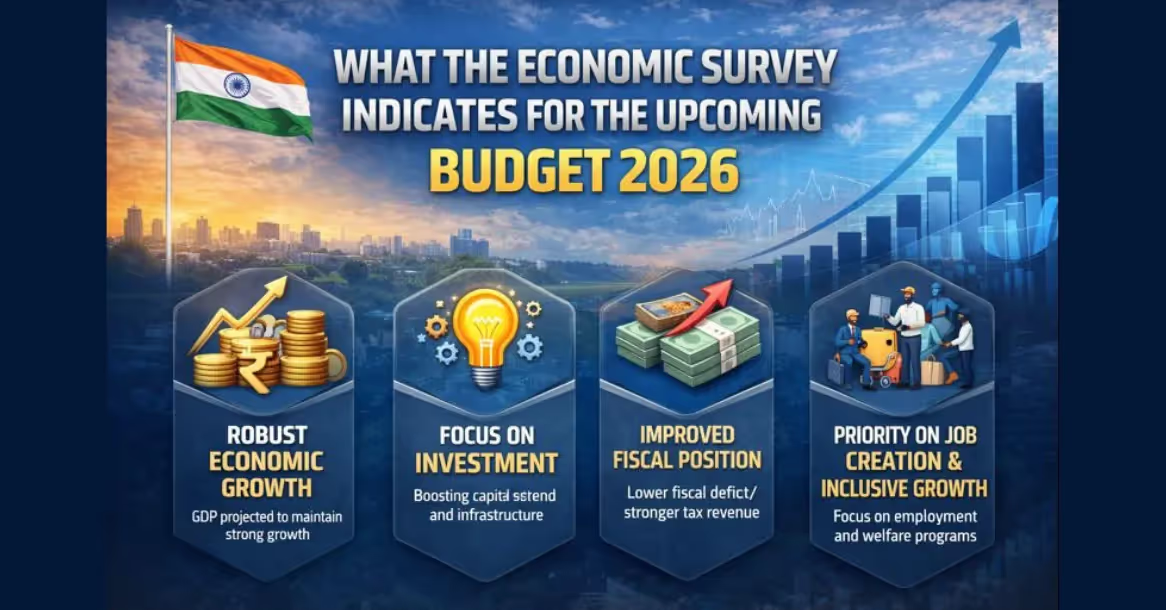
The Survey highlights steady growth momentum, comfortable foreign exchange reserves and historically low inflation. At the same time, it warns about global trade tensions and financial volatility. This balance between optimism and caution is likely to shape the tone of Budget 2026.
Growth Outlook Points to Stability
India’s real GDP growth is estimated near 7 percent with potential to remain in the same range over the medium term. Such a projection gives the Finance Minister confidence to continue long-term investment plans. The emphasis is clearly on productivity-led expansion rather than short-lived consumption booms.
For ordinary citizens, this could translate into better infrastructure, more manufacturing jobs and improved digital services. For markets, stable growth reduces earnings uncertainty and supports valuations in sectors linked to domestic demand.
Capex to Remain the Cornerstone
One of the strongest messages from the Survey is the need to keep government capital expenditure high. Roads, railways, airports, defence production and urban infrastructure have been key drivers of private investment. The upcoming Budget is therefore expected to maintain or even expand the capex envelope.
A continuation of this strategy benefits cement, steel, capital goods, logistics and engineering companies. It also creates opportunities for employment in smaller towns where new projects are coming up.
Manufacturing and Make in India 2.0
The Survey speaks about building competitive manufacturing with lower logistics costs, easier regulations and better integration into global value chains. Instead of blanket protectionism, it advocates smart incentives and reduction of inverted duty structures.
This approach suggests that the Budget may extend production-linked incentives to new areas, support export-oriented clusters and simplify compliance for MSMEs. Sectors such as electronics, defence components, textiles and renewable equipment could be in focus.
Inclusive Growth Without Fiscal Stress
Low consumer inflation gives room for selective relief to households. However, the Survey underlines the importance of fiscal prudence. Large untargeted giveaways appear unlikely. Instead, support may come through rural infrastructure, skilling programmes, health initiatives and social security for gig workers.
For the middle class, expectations revolve around rationalisation of income tax slabs, higher deductions for health insurance and encouragement for long-term savings.
Reforms and Ease of Doing Business
Another recurring theme is deregulation. The Survey notes progress in reducing compliance burden and calls for further simplification in land, labour and utility reforms. Digital governance and use of technology to curb leakages are highlighted.
Businesses can therefore expect procedural improvements, faster approvals and policy stability rather than dramatic changes in tax rates.