

5 Ways Discount Brokers Are Lowering Costs for Retail Traders in India


Discount brokers have changed how retail traders participate in the Indian stock market by making trading more affordable. Unlike traditional full-service brokers that charge percentage-based commissions and offer bundled services, discount brokers follow a technology-driven model with lower brokerage fees and digital services.
From zero brokerage on equity delivery to flat-fee pricing for intraday and futures and options (F&O) trades, these platforms help traders reduce their trading expenses. They also provide free analysis tools, online account opening and educational resources. Here are five ways discount brokers are lowering costs for retail traders in India.
1. Zero Brokerage on Equity Delivery Trades
One of the biggest ways discount brokers reduce trading costs is by offering zero brokerage on equity delivery trades.
Traditional full-service brokers charged a percentage of the transaction value as brokerage. As the investment amount increased, the brokerage cost also increased. This could add to the expenses of investors who regularly purchased and held stocks for the long term. Many discount brokers offer ₹0 brokerage on long-term equity delivery trades under their standard plans. For example, an investor purchasing shares worth ₹1 lakh does not have to pay an execution commission under a zero-brokerage delivery plan. This allows retail investors to invest without worrying about additional brokerage expenses on their delivery purchases.
2. Flat-Fee Pricing for Intraday and F&O Trading
Flat-fee pricing is another important advantage offered by discount brokers, especially for active traders. Traditional brokers often charged percentage-based brokerage ranging from 0.03% to 0.5% of turnover. These charges could increase quickly for traders placing large orders or executing multiple trades throughout the day.
Discount brokers use a flat-fee model instead. They typically charge ₹20 per executed order, while some platforms offer brokerage as low as ₹9. For example, consider a trader executing an order worth ₹2 lakh. Under a percentage-based brokerage model, the charge depends on the applicable brokerage rate. Under a flat-fee model, the brokerage remains fixed regardless of the order value. This pricing structure helps intraday and F&O traders control their brokerage expenses. It can also reduce the trading cost that needs to be recovered before a trade becomes profitable.
3. Elimination of Physical Branches and Relationship Managers
Traditional brokerage firms often operate through physical branches and dedicated relationship managers. Maintaining these facilities requires spending on office infrastructure, employees and other operational activities. These expenses can contribute to the overall cost of providing brokerage services. Discount brokers follow a different approach. They operate through centralised, digital-first business models and allow customers to manage most trading activities online.
For example, investors can complete paperless Aadhaar-based onboarding and open trading accounts in about 10 minutes. They do not need to visit a physical branch or depend on a relationship manager for routine account activities. By reducing their dependence on physical infrastructure and traditional customer service models, discount brokers maintain a leaner operating structure. This helps them offer trading services at lower costs.
4. Unbundled Execution-Only Services and In-House Technology
Discount brokers also reduce costs by separating trade execution from investment advisory services. Traditional full-service brokers often bundle services such as stock research, investment recommendations and trade execution into their brokerage offerings. Customers may pay higher brokerage charges for access to these additional services.
Discount brokers follow an execution-only model. Their primary focus is to provide a platform through which customers can place and manage trades. Investors who want to conduct their own research can use these platforms without paying for bundled advisory services. Technology also plays an important role in reducing their expenses. Instead of depending entirely on expensive third-party trading software, discount brokers develop their own platforms.
5. Free Trading Analysis Tools and Educational Resources
Discount brokers also help retail traders save money by providing integrated analysis tools and educational resources. Traders often need technical charts, indicators, brokerage calculators and learning materials to understand market movements and evaluate trading opportunities. Purchasing these services separately can increase their overall expenses.
Many discount brokers provide several of these resources through their platforms. Choosing the right trading app also involves evaluating its charting features, indicators and other analytical tools.
Are Discount Brokers Always Cheaper Than Full-Service Brokers?
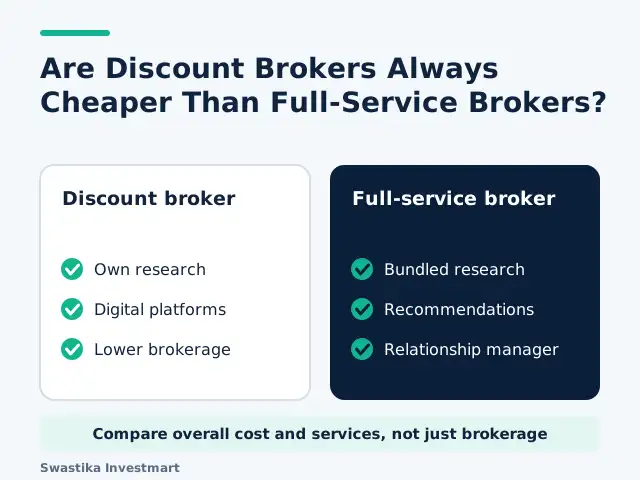
Discount brokers can help traders reduce brokerage and other service-related expenses. However, the right brokerage model depends on the services an investor needs. Traders who prefer managing their own research and placing orders through digital platforms may find discount brokers suitable. Investors who want bundled research, stock recommendations and dedicated relationship management may prefer full-service brokers. The important factor is to compare the overall cost and services offered rather than choosing a broker based only on its advertised brokerage rate.
Frequently Asked Questions
1. What are discount brokers?
Discount brokers are brokerage firms that offer trading and investment services at lower brokerage charges. They generally focus on digital platforms and trade execution instead of bundling extensive advisory services.
2. Do discount brokers offer zero brokerage?
Some discount brokers offer ₹0 brokerage on equity delivery trades under their standard plans. However, brokerage charges for intraday and F&O trading may still apply.
3. How much do discount brokers charge per order?
Many discount brokers charge a flat brokerage fee of typically ₹20 per executed order. Some platforms offer lower rates, depending on their pricing plans.
4. How are discount brokers different from full-service brokers?
Discount brokers primarily focus on trade execution through digital platforms, while full-service brokers generally offer additional services such as research reports, investment recommendations and relationship management.
5. Can beginners use discount brokers?
Yes. Beginners can use discount brokers to access digital trading platforms, analysis tools and educational resources. However, they should understand the available services and trading risks before placing orders.
Conclusion
Discount brokers have made retail trading more affordable through zero-brokerage delivery plans, flat-fee pricing, digital operations and integrated technology. Free analysis tools and educational resources further help traders reduce additional expenses. However, lower brokerage should not be the only factor when choosing a trading platform. Investors should also consider the features, services and overall costs associated with their trading requirements. At Swastika Investmart, understanding brokerage charges and available trading services can help investors make more informed decisions about their stock market journey.