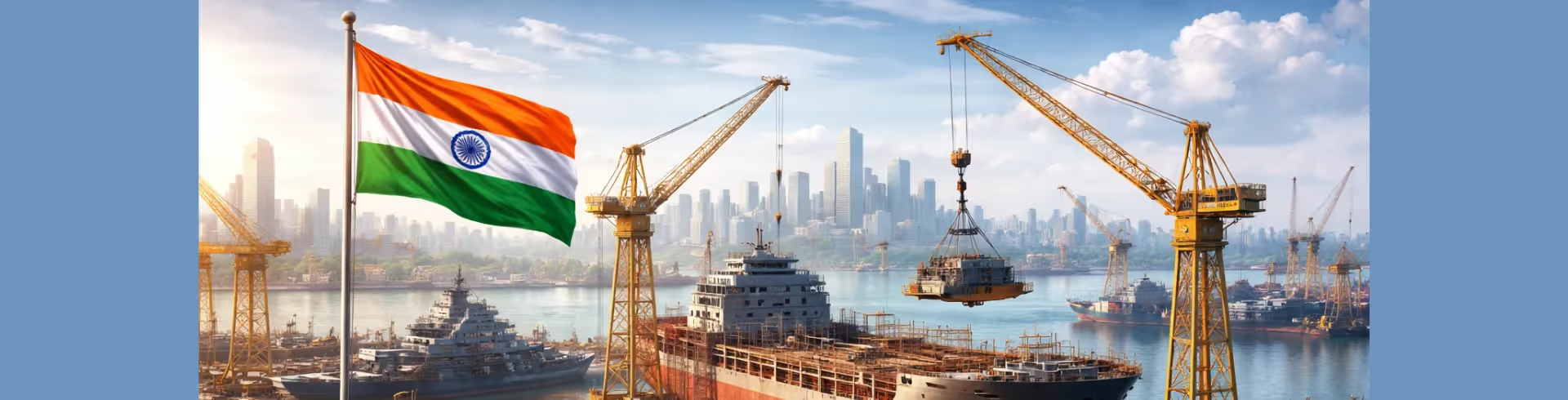

Can India Become a Global Shipbuilding Hub? Insights from the Latest Government Push


Key takeaways
• India is accelerating its ambition to become a global shipbuilding hub through policy reforms and strategic incentives.
• Government initiatives aim to reduce import dependence and boost exports in the maritime sector.
• Shipbuilding growth can benefit infrastructure, metals, logistics, and capital goods sectors.
• Investors should track policy execution, order inflows, and global trade trends closely.
Can India Become a Global Shipbuilding Hub? Insights from the Latest Government Push
India’s manufacturing story is entering a new phase, and shipbuilding is fast emerging as a strategic focus area. With rising global trade, supply chain diversification, and India’s own maritime ambitions, the government has intensified efforts to position the country as a competitive global shipbuilding hub.
The key question for investors and industry watchers is simple: can India realistically challenge established shipbuilding giants and convert policy intent into execution? Let us break this down from an economic, market, and investment perspective.
Why Shipbuilding Matters to India’s Economic Strategy
Shipbuilding is not just about building vessels. It has deep linkages with steel, heavy engineering, power equipment, electronics, ports, and logistics. Countries with strong shipbuilding capabilities often enjoy strategic advantages in trade, defence, and employment generation.
For India, the opportunity is significant. Nearly 95 percent of India’s trade by volume moves through sea routes, yet a large portion of vessels used are foreign-built. This dependence leads to foreign exchange outflow and limits domestic value creation.
A stronger shipbuilding ecosystem aligns directly with broader national goals such as Make in India, Atmanirbhar Bharat, and export-led growth.
What Is the Latest Government Push?
Policy Support and Financial Incentives
The government has rolled out targeted policy measures to revive and scale up shipbuilding and ship repair. This includes financial assistance schemes aimed at reducing cost disadvantages faced by Indian shipyards compared to global peers.
Shipbuilding is capital intensive and long gestation in nature. To address this, the policy framework focuses on improving access to financing, reducing project risk, and enhancing long-term visibility of orders.
Strategic Focus on Ship Repair and Recycling
Alongside new shipbuilding, ship repair and ship recycling are receiving attention. India already has a strong presence in ship recycling, particularly in Gujarat. Expanding repair capabilities helps generate steady cash flows and positions Indian yards as service hubs for global shipping routes passing through the Indian Ocean.
Defence and Coastal Shipping Demand
Defence shipbuilding remains a critical anchor. Indian Navy and Coast Guard orders provide scale, learning, and technological capability. At the same time, growth in coastal shipping, inland waterways, and energy transportation creates incremental domestic demand.
Can India Compete with Global Shipbuilding Leaders?
The Global Landscape
Countries like China, South Korea, and Japan dominate global shipbuilding due to scale, technological depth, and state-backed financing. India does not aim to replicate their volume leadership overnight.
Instead, India’s approach appears focused on niche segments such as specialised vessels, defence ships, offshore support vessels, and green energy-linked shipping.
Cost and Location Advantage
India’s labour cost advantage, improving port infrastructure, and strategic geographic location are structural positives. With the right policy execution, these factors can help Indian yards win regional and export orders over time.
Impact on Indian Stock Markets and Sectors
Capital Goods and Engineering
A sustained shipbuilding push benefits capital goods manufacturers, heavy engineering firms, and equipment suppliers. Order inflows in shipyards often translate into demand for domestic ancillaries.
Metals and Commodities
Shipbuilding is steel intensive. Any structural increase in ship orders supports domestic steel consumption, benefiting upstream metal producers.
Ports and Logistics
A stronger maritime ecosystem improves port utilisation, coastal trade, and logistics efficiency. This has long-term positive implications for port operators and logistics companies.
Defence Manufacturing Theme
Defence-linked shipyards and suppliers align with India’s broader defence indigenisation theme, which has been gaining investor attention in recent years.
Regulatory and Institutional Framework in India
Shipbuilding operates under multiple regulatory touchpoints including maritime authorities, defence procurement frameworks, and environmental norms. Policy clarity, faster approvals, and consistency remain key execution variables.
India’s regulators have been gradually improving transparency and timelines, which supports investor confidence. However, project execution and cost discipline will remain under close market scrutiny.
What Investors Should Watch Going Forward
- Actual order wins by Indian shipyards, both domestic and export oriented
- Budgetary allocations and continuity of policy incentives
- Global shipping cycle and trade growth trends
- Execution efficiency, balance sheet strength, and working capital management of companies
Shipbuilding is a long-cycle industry. Short-term volatility should be expected, but structural policy backing improves long-term visibility.
Role of Research and Advisory in Navigating Such Themes
Emerging policy-led themes require disciplined research rather than headline-driven investing. Understanding sector cycles, company-specific execution, and regulatory nuances is critical.
Swastika Investmart, a SEBI-registered financial services firm, supports investors with in-depth research, robust trading platforms, and strong customer support. Its tech-enabled investing tools and focus on investor education help market participants make informed decisions, especially in evolving sectors like maritime manufacturing.
Frequently Asked Questions
Is shipbuilding a long-term opportunity for India?
Yes, given India’s trade growth, defence needs, and policy focus, shipbuilding has long-term strategic relevance.
Which sectors benefit most from shipbuilding growth?
Capital goods, steel, ports, logistics, and defence manufacturing are key beneficiaries.
Can Indian shipyards compete globally?
India may not lead in volume immediately but can compete in specialised and regional segments.
Is this theme suitable for retail investors?
It can be, but investors should focus on fundamentals, execution capability, and long-term horizon.
Conclusion
India’s ambition to become a global shipbuilding hub is no longer just a vision statement. With policy support, strategic demand, and improving infrastructure, the foundations are being laid. While challenges remain, the direction is clearly positive.
For investors, this theme underscores the importance of staying aligned with structural economic shifts rather than short-term noise. A research-driven approach can help identify sustainable opportunities within this evolving landscape.
If you are looking to explore such policy-driven investment themes with professional research support and a reliable trading platform, consider opening an account with Swastika Investmart.