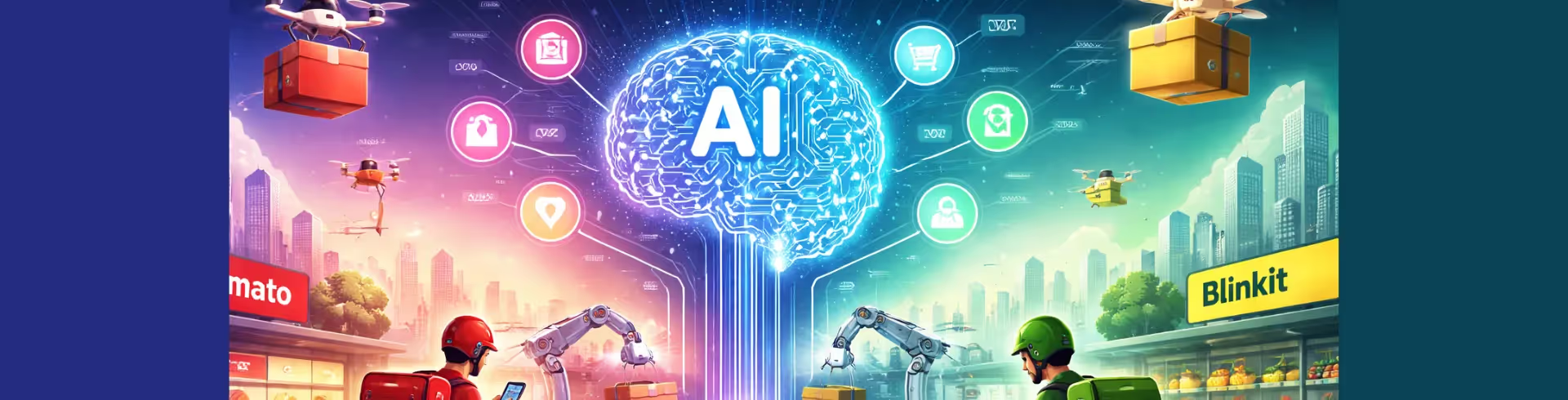

Eternal–OpenAI Partnership: How AI Could Transform Zomato and Blinkit Ecosystems


TL;DR
- Eternal’s collaboration with OpenAI may accelerate AI adoption across food delivery and quick commerce platforms.
- Smarter logistics, demand prediction, and hyper-personalization could improve margins for Zomato and Blinkit.
- AI integration may influence India’s internet sector valuations and investor sentiment.
- Regulatory oversight and data compliance will be key factors to monitor.
Eternal–OpenAI Partnership: How AI Could Transform Zomato and Blinkit Ecosystems
Artificial intelligence is rapidly becoming the backbone of digital platforms. The proposed partnership between Eternal and OpenAI has sparked discussions across India’s tech and investment circles. Market participants are closely watching how this collaboration could reshape platforms like Zomato and Blinkit, both of which rely heavily on data, logistics efficiency, and customer engagement.
For investors, the bigger question is not just about technology. It is about profitability, scalability, and long term competitive advantage in India’s fast evolving digital economy.
Understanding the Strategic Context
AI partnerships today are not simply about automation. They are about intelligence layers that sit on top of existing platforms. Eternal’s potential collaboration signals a shift toward predictive decision making, adaptive logistics, and conversational interfaces.
In practical terms, this means platforms could move from reactive operations to proactive systems that anticipate user needs before orders are placed. For companies operating on thin margins, even small efficiency gains can significantly improve profitability.
Zomato and Blinkit: Why AI Matters Now

Smarter Demand Forecasting
Food delivery and quick commerce businesses struggle with demand volatility. Rain, cricket matches, or festivals can cause sudden spikes. AI models can analyze historical order patterns, weather data, and local events to predict demand accurately. This allows better staffing, optimized delivery routes, and reduced idle time for riders.
Dynamic Pricing and Offers
AI driven pricing algorithms can adjust delivery fees, discounts, or surge charges in real time. Airlines and ride hailing apps already use similar systems. For Zomato and Blinkit, such tools could increase order volumes during slow periods while maximizing revenue during peak hours.
Inventory Optimization for Quick Commerce
Blinkit operates dark stores that must stock the right products at the right time. AI can predict which items will sell faster in each locality. This reduces wastage of perishables and improves inventory turnover ratios, a key metric investors track in quick commerce.
Personalization as a Growth Engine
Personalization is where AI could deliver the biggest impact.
Imagine opening a food delivery app and seeing exactly what you want to eat before you even search. AI can analyze past orders, dietary preferences, time of day, and even mood signals from browsing behavior. Such hyper personalization increases conversion rates and customer retention.
For Blinkit, personalized grocery lists and automated reordering reminders could turn occasional users into daily customers. Subscription models powered by predictive analytics may emerge as a new revenue stream.
Operational Efficiency and Margin Expansion
Investors often worry about profitability in India’s internet sector. AI driven automation could address this concern.
- Route optimization reduces fuel costs and delivery time.
- AI chatbots handle customer queries, lowering support expenses.
- Fraud detection algorithms minimize refund abuse and fake orders.
Even a 2 to 3 percent improvement in operational efficiency can materially improve EBITDA margins for high volume platforms.
Market Impact on Indian Tech Stocks
The Indian equity market tends to reward companies that demonstrate scalable technology advantages. When firms integrate advanced AI systems, analysts often upgrade growth projections due to improved unit economics.
If Zomato and Blinkit successfully deploy AI across logistics, marketing, and operations, it could influence sector wide valuations. Comparable platform companies may face pressure to accelerate their own AI investments, potentially triggering an industry wide innovation cycle.
Institutional investors usually interpret such partnerships as signals of future readiness. This can attract long term capital flows, especially from global funds seeking exposure to India’s digital consumption story.
Regulatory and Data Governance Considerations
Any AI integration involving user data must comply with India’s digital regulations. The Securities and Exchange Board of India monitors disclosures and corporate governance for listed entities, while data protection rules govern how platforms handle customer information.
Companies deploying AI must ensure transparency, user consent, and algorithmic accountability. Failure to do so could lead to regulatory scrutiny or reputational risk, which investors should factor into risk assessment.
Real World Scenario: What This Could Look Like
Consider a Friday evening in Mumbai. AI predicts heavy rain and increased food delivery demand. The system automatically:
- Prepositions delivery partners in high demand zones
- Suggests rain friendly dishes to users
- Adjusts delivery fees based on real time rider availability
- Notifies restaurants to prepare for order surges
This level of predictive orchestration can dramatically improve customer experience while reducing operational chaos.
Investor Perspective: Opportunities and Risks
Potential Upsides
- Higher margins through automation
- Stronger customer retention via personalization
- Competitive moat through proprietary AI models
Possible Risks
- High initial investment in AI infrastructure
- Dependence on external technology partners
- Regulatory compliance costs
Smart investors evaluate both sides before making decisions.
Frequently Asked Questions
1. What is the Eternal–OpenAI partnership about
It refers to a collaboration focused on deploying advanced AI tools to enhance platform intelligence, automation, and user experience.
2. How could this affect Zomato’s profitability
AI driven logistics and demand prediction could reduce costs and improve margins over time.
3. Why is Blinkit likely to benefit from AI
Quick commerce relies on accurate inventory and delivery speed. AI improves both, making operations more efficient.
4. Will this impact stock prices immediately
Not necessarily. Markets typically wait for measurable results before re rating valuations.
5. What should investors monitor
Track earnings commentary, AI investment disclosures, and operational metrics such as delivery time and cost per order.
Conclusion
The Eternal–OpenAI collaboration signals a broader shift toward AI first business models in India’s digital economy. For platforms like Zomato and Blinkit, the real opportunity lies not just in adopting AI but in embedding it deeply into operations, logistics, and customer engagement. If executed well, this transformation could reshape profitability trajectories and strengthen their competitive positioning.
For investors seeking to track such emerging opportunities with reliable research, analytics tools, and dedicated support, Swastika Investmart offers a technology driven investing platform backed by strong compliance standards and investor education resources.