




HUL’s ₹2,000 Crore Capex Plan: What It Means for Future Growth


HUL’s ₹2,000 Crore Capex Plan: A Strategic Growth Blueprint

4
Quick Summary
- The ₹2,000 crore investment aims to expand manufacturing and supply chain capacity.
- The move reflects rising rural demand and premium product growth.
- It may strengthen margins through automation and efficiency gains.
- Long term investors could view this as a signal of sustained confidence in India’s consumption story.
Understanding the Announcement
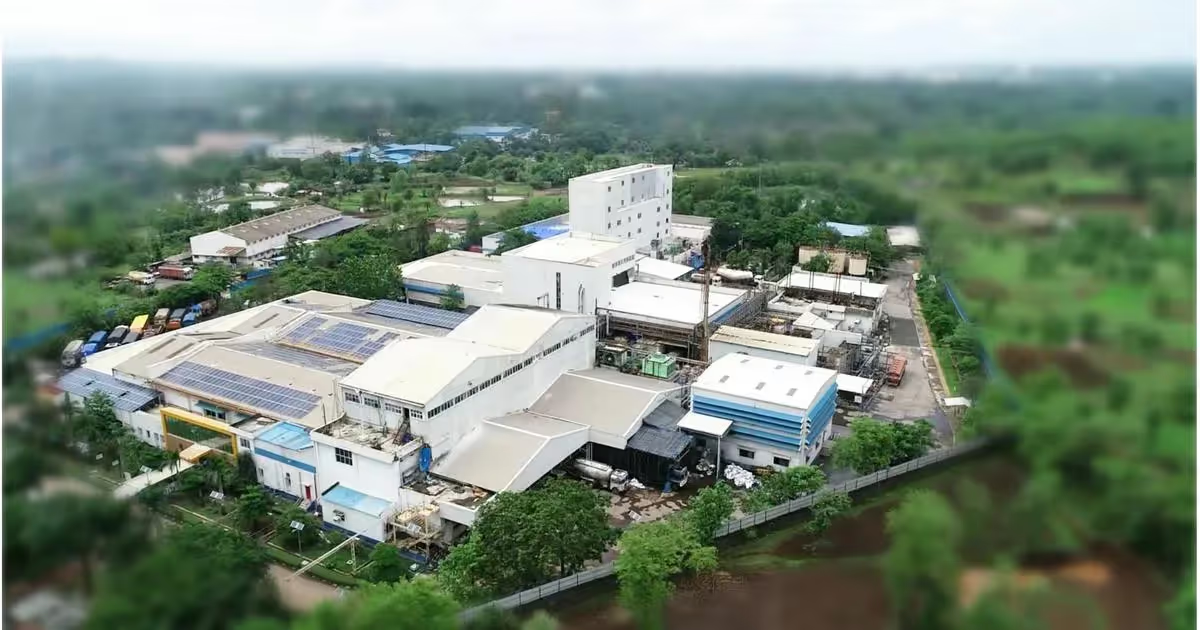
Hindustan Unilever Limited has unveiled a ₹2,000 crore capital expenditure plan focused on capacity expansion, technology upgrades, and supply chain optimization. For a consumer goods giant known for steady performance rather than aggressive spending, this decision stands out.
Capex announcements from large FMCG companies often signal confidence in future demand. Unlike cyclical sectors, consumer goods investments are typically driven by real consumption trends rather than speculation. That makes this move particularly relevant for investors tracking India’s economic momentum.
Why This Capex Matters Now
Rising Consumption Across India
India’s consumption story has evolved in recent years. Urban demand remains strong, but rural markets are showing renewed traction after periods of slowdown. Higher government spending, improving farm incomes, and infrastructure development have supported rural purchasing power.
For a company deeply embedded in daily household consumption, expanding production capacity allows it to meet demand spikes without supply constraints.
Premiumization Trend
Consumers are increasingly shifting toward premium products such as specialized skincare, health focused foods, and high quality personal care items. Premium segments often carry better margins than mass market goods. Investing in advanced manufacturing facilities helps companies produce these higher value products efficiently.
Strategic Areas Where the Money May Go
Although detailed allocation may unfold gradually, analysts expect funds to be deployed across three major areas.
Manufacturing Expansion
New plants or expanded lines can increase output in high demand categories. This is especially important for fast moving products where stock shortages directly impact sales.
Automation and Technology
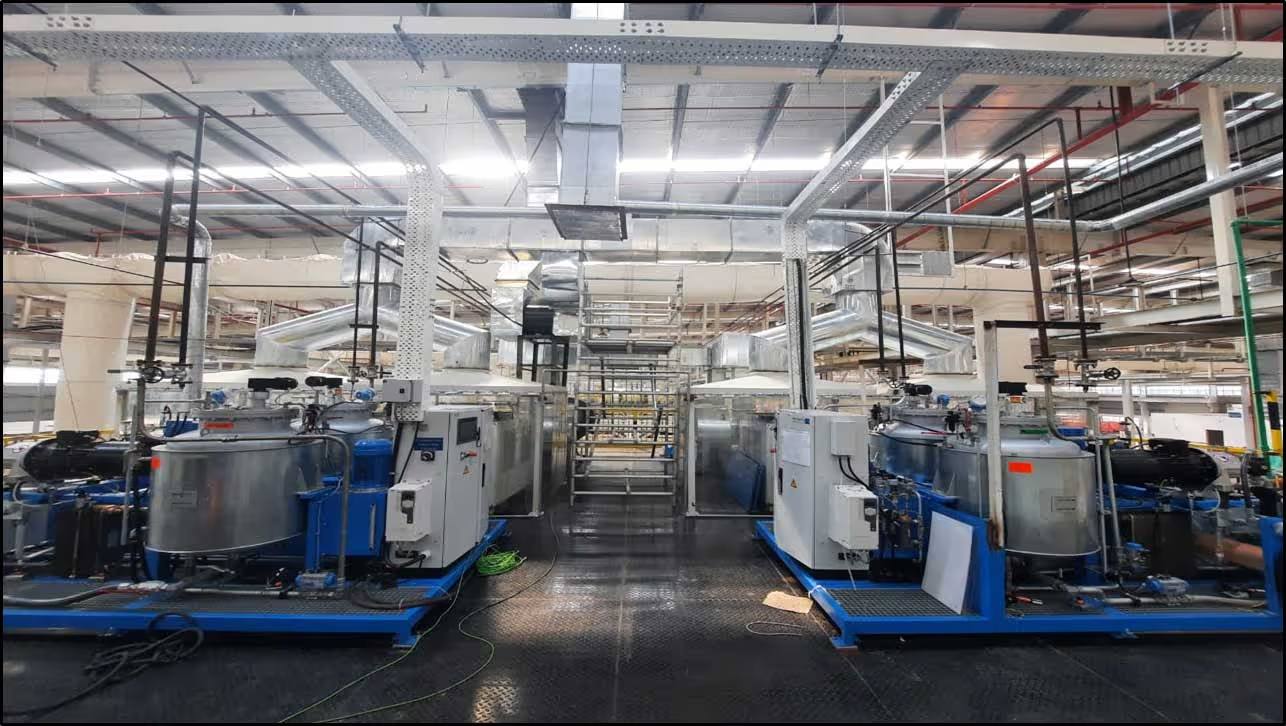
Modern factories rely on robotics, data analytics, and predictive maintenance systems. Automation reduces errors, lowers labor intensive costs, and improves consistency. Over time, this supports margin expansion.
Distribution Infrastructure
Efficient logistics networks help companies reach remote markets quickly. Investments in warehouses and digital supply chains can cut transportation costs and reduce delivery time.
Market Impact and Investor Interpretation
Capex announcements often influence stock sentiment because they reflect management’s outlook. A company willing to invest heavily typically expects demand visibility over several years.
For equity markets, such moves can have ripple effects:
- Capital goods companies may see higher order inflows
- Packaging and logistics firms could benefit
- Rural focused businesses may get sentiment support
However, investors should remember that capex initially increases expenses. Returns emerge gradually as facilities become operational.
Real World Example of Capex Driven Growth
Consider how beverage companies expanded bottling plants during periods of rising demand. Those investments allowed them to scale quickly when consumption surged during peak seasons. Firms that delayed expansion often struggled with stock shortages and lost market share.
The same principle applies here. By investing ahead of demand, companies position themselves to capture future growth rather than reacting late.
Regulatory and Policy Context
India’s manufacturing ecosystem is increasingly supported by policy initiatives that encourage domestic production. Incentives for local manufacturing, simplified compliance processes, and infrastructure development have improved the ease of doing business.
The presence of strong oversight by regulators such as the Securities and Exchange Board of India also strengthens investor confidence. Transparent disclosures and governance standards help shareholders evaluate whether capital allocation decisions are prudent.
Risks Investors Should Monitor
Even well planned expansions carry certain risks. Understanding them helps investors make balanced decisions.
Execution risk
Project delays or cost overruns can reduce expected returns.
Demand mismatch
If consumption slows unexpectedly, newly added capacity may remain underutilized.
Input cost volatility
Fluctuations in raw material prices can affect margins, even with improved efficiency.
Long term investors typically track quarterly updates to see whether capital expenditure translates into revenue growth and operating leverage.
Broader Implications for the FMCG Sector
Large scale investments by market leaders often set industry trends. Smaller competitors may follow with their own expansion plans to remain competitive. This can trigger a broader investment cycle across the sector.
It also signals confidence in India’s structural consumption growth. When companies that closely track household spending increase investments, it often reflects strong ground level demand indicators.
What It Means for Long Term Investors
For investors, this announcement highlights an important principle. Sustainable wealth creation often comes from businesses that reinvest profits into growth. Capex funded expansion, when executed well, can drive earnings compounding over many years.
That said, investment decisions should always be supported by research rather than headlines. Evaluating balance sheets, return ratios, and management commentary provides a clearer picture of whether a company’s expansion plan is likely to succeed.
Platforms such as Swastika Investmart help investors interpret such developments through detailed research tools, responsive support, and investor education resources designed for both beginners and experienced market participants.
Frequently Asked Questions
What does HUL’s ₹2,000 crore capex indicate
It suggests the company expects sustained demand growth and is preparing capacity in advance to meet future consumption.
Will this investment impact profits immediately
Short term profits may remain stable or slightly pressured due to spending, but long term gains depend on execution and demand realization.
Which sectors benefit from such capex plans
Capital goods, logistics, packaging, and industrial equipment suppliers often benefit from large manufacturing investments.
Is capex always positive for stocks
Not necessarily. It is positive when returns exceed cost of capital. Investors should track utilization and profitability metrics.
Does this reflect broader economic strength
Yes. Large consumption driven investments often signal confidence in economic stability and purchasing power trends.
Final Thoughts
The ₹2,000 crore expansion plan is more than a financial commitment. It is a strategic statement about future growth, demand visibility, and long term confidence in India’s consumption engine. For investors, such developments serve as valuable indicators of where corporate India sees opportunity.
If you want expert backed insights and research driven analysis to track opportunities like this, you can start your investment journey here:






