


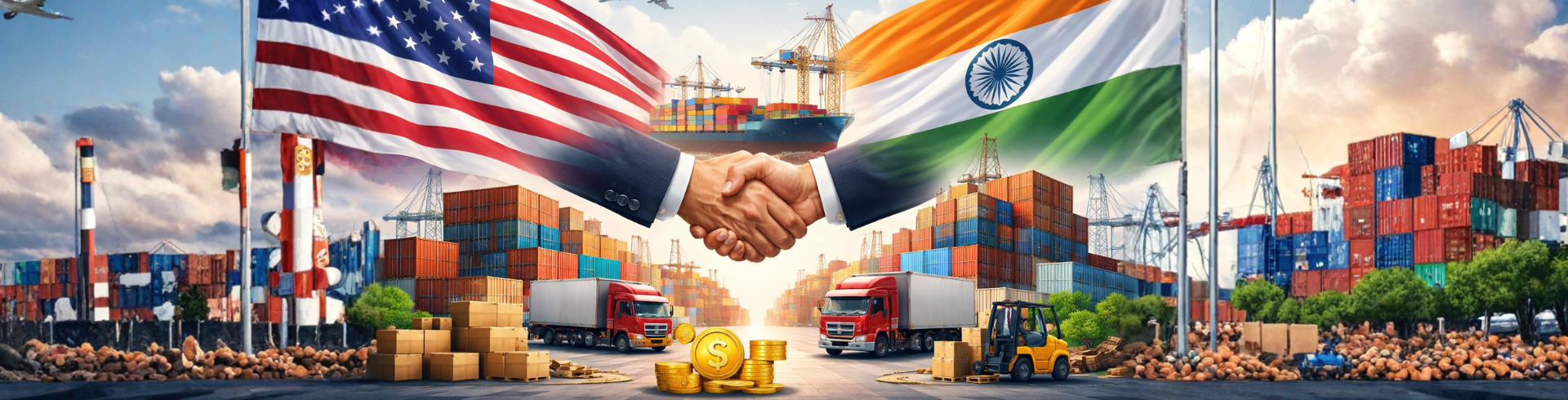

US Slashes Tariffs on Indian Goods to 18%: What the New Trade Deal Means for India


Summary
- The US has reduced tariffs on Indian goods to 18%, improving export competitiveness
- Electronics, seafood, textiles, pharma and auto components are key beneficiaries
- The move strengthens India’s position as a global manufacturing hub
- Indian markets reacted positively with gains in equities, currency and bonds
- Long-term impact supports Make in India and export-led growth
A Big Trade Signal from Washington
India–US trade ties received a meaningful boost after the United States announced a reduction in tariffs on Indian goods to 18%. The decision followed high-level discussions between leaders of both countries and comes at a time when global supply chains are being restructured and investors are seeking stability.
For India, the move removes a major source of uncertainty that had weighed on exporters for months. Higher tariffs had made Indian products less competitive in the US market, slowing fresh orders and impacting sectors heavily dependent on exports.
The tariff cut is being seen as a reset in trade relations and a signal of deeper economic cooperation between the two democracies.
Why the 18% Tariff Rate Matters
According to industry leaders, the revised tariff rate places India in a strong competitive position relative to other global manufacturing economies.
ICEA Chairman Pankaj Mohindroo described the development as a positive and competitive outcome, noting that India remains well placed among key manufacturing peers. At 18%, Indian exporters can price products more competitively without compromising margins.
This is especially important for sectors such as electronics manufacturing, where cost efficiency and scale determine global competitiveness.
Electronics and Manufacturing Get a Strong Push
India’s electronics manufacturing sector has been a major beneficiary of policy support under the Make in India and Production Linked Incentive frameworks. Lower US tariffs now strengthen India’s integration into US-led global value chains.
With reduced trade friction, Indian manufacturers can scale production, attract global orders and deepen technology partnerships. Over time, this can translate into higher employment, increased exports and stronger manufacturing capacity.
This aligns well with India’s long-term goal of becoming a reliable global manufacturing hub rather than just a consumption market.
Relief for Seafood Exporters
The seafood industry offers a real-world example of how tariff changes directly impact businesses.
According to the Seafood Exporters Association of India, shipments to the US had declined sharply after tariffs were raised. During April to November of the current financial year, export volumes fell by 15%, while export value declined to USD 1.72 billion.
Many US buyers delayed new orders due to uncertainty, storing consignments in bonded warehouses. With tariffs now reduced, exporters expect shipments to recover and return closer to earlier levels.
As industry representatives noted, the playing field has become level again.
What Triggered the Earlier Downturn
The export slowdown began in August 2025, when the US imposed steep tariffs, including a penalty linked to India’s purchase of Russian oil. While existing contracts were honoured, new business slowed significantly.
This uncertainty affected not just exporters but also investor sentiment, as trade policy risks tend to ripple through currency, bond and equity markets.
The latest decision removes that overhang.
Diplomatic Momentum Beyond Trade
The tariff cut coincides with External Affairs Minister S Jaishankar’s visit to the United States, where he is meeting senior American officials and attending the Critical Minerals Ministerial.
Critical minerals are essential for semiconductors, electric vehicles, defence systems and clean energy technologies. Strengthening cooperation in this area supports economic security and technological leadership for both countries.
During his visit, Jaishankar welcomed the trade agreement, highlighting its positive impact on jobs, growth and innovation, while reinforcing the Make in India initiative.
Impact on Indian Financial Markets
Indian financial markets reacted swiftly and positively to the announcement.
Equities surged as export-oriented sectors gained traction. The rupee strengthened by over 1% against the US dollar in early trade, reflecting improved capital flows and sentiment. Bond markets also responded, with yields on the benchmark 10-year government bond falling as risk perception eased.
For investors, the move reduced policy uncertainty and reinforced confidence in India’s external trade outlook.
What It Means for Investors
From an investment perspective, lower tariffs support earnings visibility for export-driven companies. Sectors such as electronics manufacturing, auto components, pharma, textiles and specialty chemicals may see improved order flows over time.
That said, investors should continue to focus on fundamentals, balance sheet strength and long-term demand trends rather than short-term market reactions.
This is where access to quality research, disciplined investing tools and professional guidance becomes important.
How Swastika Investmart Supports Investors
Navigating global trade developments requires more than headlines. Swastika Investmart, a SEBI-registered financial services firm, supports investors with in-depth research, market insights and tech-enabled investing platforms.
With a strong focus on investor education, transparent advisory practices and responsive customer support, Swastika helps investors make informed decisions across equities, derivatives, mutual funds and other asset classes.
Whether markets are reacting to global trade deals or domestic policy changes, having a trusted partner matters.
Frequently Asked Questions
Why did the US reduce tariffs on Indian goods?
The move reflects improving trade relations and aims to strengthen economic cooperation, supply chains and competitiveness between the two countries.
Which Indian sectors benefit the most from the tariff cut?
Electronics manufacturing, seafood, textiles, pharmaceuticals and auto components are among the key beneficiaries.
Will this immediately boost Indian exports?
While existing orders may resume quickly, a sustained export recovery will depend on global demand and long-term trade stability.
How did Indian markets react to the announcement?
Equities rallied, the rupee strengthened and bond yields eased as investor confidence improved.
Does this support the Make in India initiative?
Yes, lower tariffs enhance India’s attractiveness as a manufacturing and export hub, supporting Make in India goals.
The Road Ahead
The reduction of US tariffs on Indian goods to 18% is more than a trade adjustment. It signals trust, cooperation and shared economic priorities at a time when global trade remains fragile.
For India, the opportunity lies in converting this momentum into sustained manufacturing growth, export diversification and stronger global partnerships.
For investors, staying informed and aligned with long-term structural trends is key.
If you are looking to invest with confidence and clarity in a changing global environment, explore Swastika Investmart’s research-driven platforms and advisory support.






