


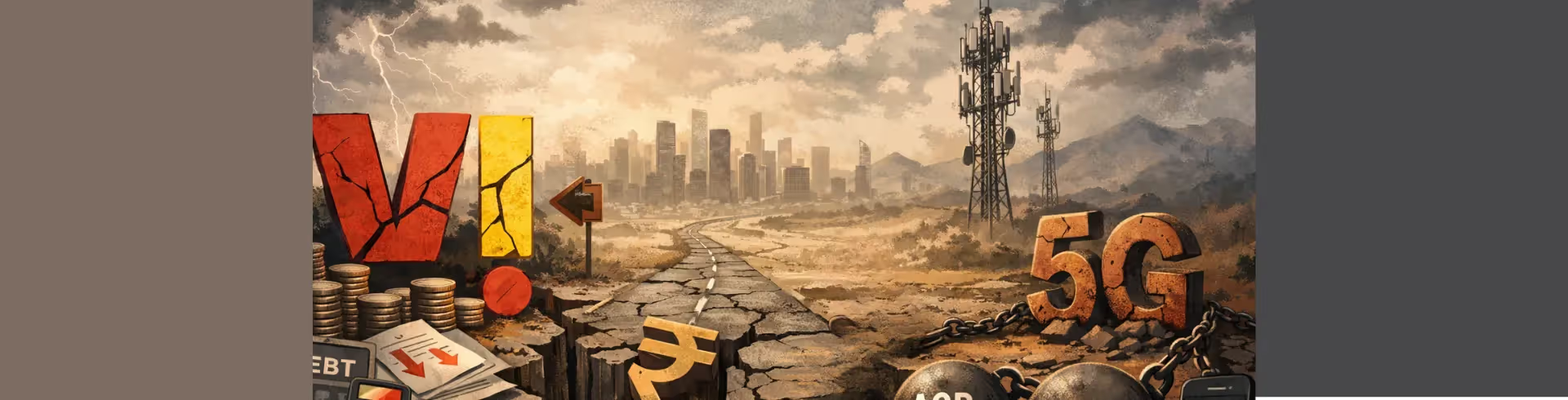

Vodafone Idea AGR Dues: What Lies Ahead for India’s Struggling Telecom Giant?


Key takeaways
- Vodafone Idea’s AGR dues continue to strain its balance sheet despite relief measures
- Government support has prevented immediate collapse, but long-term viability is uncertain
- Capital raising and tariff hikes are critical for survival
- The situation has wider implications for Indian telecom competition and investors
Introduction: Why Vodafone Idea’s AGR Dues Matter
Vodafone Idea’s AGR dues have become one of the most debated issues in India’s telecom sector. For investors, policy watchers, and even everyday mobile users, the question is simple yet crucial: can Vodafone Idea survive under the weight of massive adjusted gross revenue liabilities?
Once a strong challenger in India’s telecom market, Vodafone Idea today represents the fragile balance between regulation, competition, and financial sustainability. Its AGR dues are not just a company problem but a systemic issue with implications for banks, markets, and consumers.
This blog breaks down what lies ahead for Vodafone Idea, what the numbers really mean, and how this situation could shape the future of Indian telecom.
Understanding AGR Dues in Simple Terms
What are AGR dues?
Adjusted Gross Revenue refers to the share of revenue that telecom operators must pay to the government as license fees and spectrum usage charges. In 2019, the Supreme Court ruled that AGR should include not just core telecom revenue but also non telecom income such as interest and rent.
This ruling led to massive retrospective liabilities for telecom companies, with Vodafone Idea emerging as the worst hit.
Why Vodafone Idea suffered the most
Vodafone Idea was already dealing with losses due to intense price competition and high debt from past spectrum auctions. The AGR ruling added tens of thousands of crores in dues, pushing the company into a severe liquidity crisis.
Current Status of Vodafone Idea’s AGR Liabilities
The size of the problem
Vodafone Idea’s AGR dues run into tens of thousands of crores, making them one of the largest corporate liabilities owed to the government. Even after relief measures like moratoriums and conversion of interest into equity, the dues remain a major overhang.
Government support so far
The government has taken several steps to prevent a market duopoly:
- Moratorium on AGR and spectrum payments
- Conversion of interest into government equity, making the government a significant shareholder
- Telecom reforms aimed at improving cash flows
These steps have bought time but have not solved the core issue of long-term profitability.
What Lies Ahead for Vodafone Idea
Capital raising is non negotiable
Vodafone Idea needs fresh capital to survive. Without new equity or strategic investments, meeting future AGR payment schedules will be extremely challenging. The company has repeatedly indicated plans to raise funds, but investor appetite depends on clarity around cash flows and policy stability.
Tariff hikes could offer breathing room
Industry wide tariff hikes have improved average revenue per user. For Vodafone Idea, higher tariffs are essential to generate sustainable operating cash flows. However, tariff increases must balance consumer affordability, especially in price sensitive rural markets.
Network investments remain critical
Even as it struggles financially, Vodafone Idea must invest in network quality and 5G readiness. Falling behind peers on technology could lead to further subscriber losses, creating a vicious cycle.
Impact on Indian Telecom Markets
Competition and consumer choice
If Vodafone Idea exits or weakens significantly, India risks moving towards a duopoly. Reduced competition could eventually hurt consumers through higher tariffs and slower innovation.
Banking and investor sentiment
Vodafone Idea’s debt exposure affects banks and institutional investors. Any adverse development could impact sentiment in telecom related stocks and increase caution toward highly leveraged sectors.
Policy credibility and regulatory confidence
The AGR episode has become a case study in regulatory risk. How the government balances revenue collection with sector sustainability will influence long-term investor confidence in regulated industries.
What This Means for Retail Investors
Stock market perspective
Vodafone Idea’s stock remains a high risk bet. Price movements are often driven by news flow around government relief, fundraising, or policy changes rather than fundamentals.
Learning from the AGR episode
For investors, the AGR saga highlights the importance of:
- Understanding regulatory risks
- Avoiding excessive leverage exposure
- Focusing on companies with strong balance sheets and governance
Platforms like Swastika Investmart help investors analyze such risks with structured research tools and SEBI registered advisory frameworks.
Frequently Asked Questions
Will Vodafone Idea be able to pay its AGR dues?
Vodafone Idea can meet near term obligations only with continued government support and successful capital raising. Long-term sustainability depends on profitability and tariff growth.
Has the government waived AGR dues for Vodafone Idea?
No waiver has been granted. Relief has come in the form of moratoriums, equity conversion, and payment restructuring.
Is Vodafone Idea bankruptcy a possibility?
While immediate bankruptcy risk has reduced, financial stress remains high. The company’s future hinges on funding and operational turnaround.
How do AGR dues affect telecom users?
In the long run, high sector costs can lead to higher tariffs and reduced competition, impacting consumer choice.
How Swastika Investmart Helps Investors Navigate Such Risks
In complex cases like Vodafone Idea, informed decision making is critical. Swastika Investmart stands out through:
- SEBI registration ensuring trust and compliance
- Strong equity and sector research tools
- Tech enabled investing platforms for data driven decisions
- Investor education initiatives that explain regulatory and market risks clearly
- Dedicated customer support for long term investors
Whether tracking telecom stocks or building a diversified portfolio, having the right research partner makes a real difference.
Conclusion: A Defining Chapter for Indian Telecom
Vodafone Idea’s AGR dues represent more than a balance sheet issue. They reflect the evolving relationship between regulation, competition, and sustainability in Indian telecom. While government support has kept the company afloat, the road ahead remains challenging.
For investors, this episode reinforces the need for disciplined analysis and reliable advisory support. With its research driven approach and investor first philosophy, Swastika Investmart empowers market participants to navigate such high risk narratives with confidence.






