


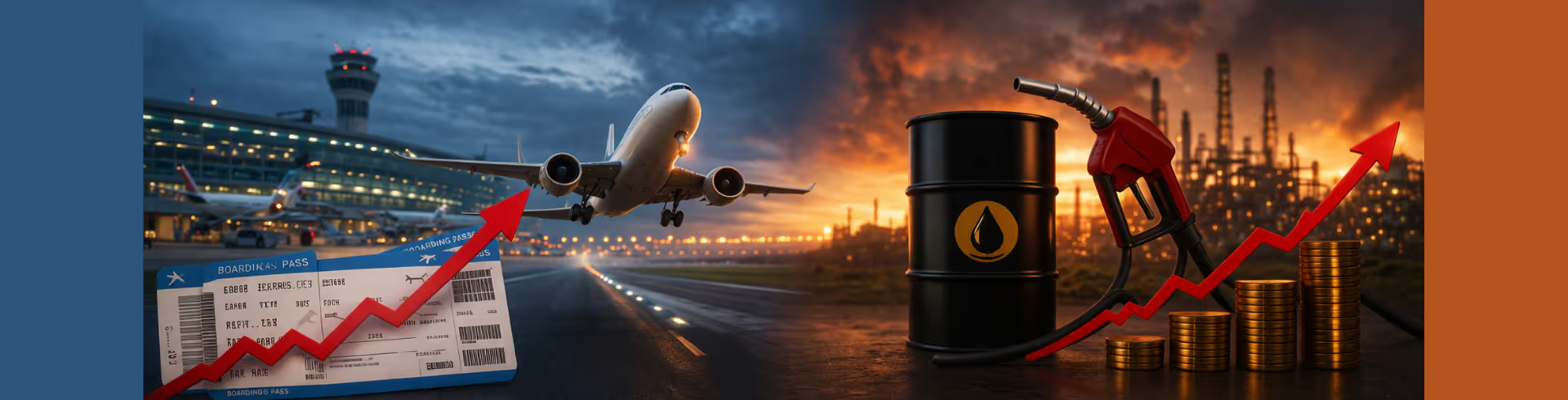

Why Flight Tickets Are Getting Expensive in 2026? - The ATF Price Shock Explained


Key takeaways
- Aviation fuel prices have surged sharply, increasing airline costs
- Flight capacity has reduced, leading to supply-demand imbalance
- Airlines now have pricing freedom, pushing fares higher during peak demand
- Government intervention may help, but relief will take time
Introduction
If you’ve recently booked a flight and felt the pinch, you’re not imagining things. Flight ticket prices in India have gone up noticeably in 2026. Whether it’s a last-minute business trip or a family vacation, fares are higher across routes.
At the heart of this surge lies one major factor: aviation turbine fuel, or ATF. But that’s not the only reason. A mix of global tensions, operational challenges, and policy changes is reshaping the aviation landscape.
Let’s break it down in simple terms.
What Is ATF and Why Does It Matter So Much?
Aviation Turbine Fuel is the lifeline of the airline industry. It accounts for nearly 35 to 45 percent of an airline’s total operating cost.
When fuel prices rise, airlines have limited options. They can either absorb the cost, which hurts profitability, or pass it on to passengers through higher ticket prices. Most airlines choose the latter.
In April 2026, ATF prices in India crossed record levels, even touching above ₹2 lakh per kilolitre in some reports. While domestic airlines were partially shielded, the increase was still significant enough to impact fares.
The Real Trigger: Global Geopolitics
The surge in fuel prices is not happening in isolation. Global tensions, especially in the Middle East, have disrupted energy supply chains.
The Strait of Hormuz, a key oil transit route, has been under pressure due to geopolitical conflicts. This has led to uncertainty in oil supply, pushing crude prices higher.
When crude oil rises, ATF follows. And when ATF rises, ticket prices go up. It’s a direct chain reaction.
For example, during previous crises like the Russia-Ukraine conflict in 2022, similar spikes in fuel prices led to higher airfares globally. We are seeing a repeat of that pattern.
Fewer Flights, Higher Demand
Another important factor is the reduction in flight capacity.
As per recent updates, weekly flights in India have dropped from around 25,600 to nearly 23,000. That’s roughly a 10 to 12 percent decline.
Why is this happening?
The aviation regulator has instructed airlines to schedule flights only based on available aircraft, not on expected future deliveries. This has reduced the number of operational flights in the system.
Now, combine fewer flights with strong travel demand during summer and holidays. The result is simple economics: higher prices.
Fare Caps Removed: Airlines Get Pricing Power
Earlier, there were certain fare caps in place to prevent excessive pricing. But now, those caps have been removed.
This means airlines have more flexibility to price tickets based on demand.
During peak seasons, weekends, or festive periods, airlines can increase fares significantly. This dynamic pricing model is similar to what we see in ride-hailing apps.
While this benefits airlines, it adds pressure on passengers.
Government’s Response: Partial Relief
The government is aware of the situation and has taken some steps.
Oil Marketing Companies have implemented only a partial increase in ATF prices for domestic airlines, around 25 percent instead of the full spike. This is aimed at cushioning the impact on domestic travel.
Additionally, states have been urged to reduce VAT on aviation fuel. Lower taxes can help bring down operational costs.
However, these measures take time to reflect in ticket prices. For now, passengers may continue to face higher fares.
Impact on Indian Markets and Stocks
The rising cost environment has a mixed impact on the stock market.
Airline companies may face margin pressure due to higher fuel costs. Stocks in the aviation sector can remain volatile in such conditions.
On the other hand, oil marketing companies and energy-related businesses may benefit from higher prices.
For investors, this creates both risks and opportunities. Understanding sectoral impact becomes crucial in such times.
Platforms like Swastika Investmart help investors track these trends through research-backed insights, sector analysis, and real-time market tools. This can be especially useful when global events start influencing domestic markets.
Real-Life Scenario: Why Your Ticket Costs More
Let’s take a simple example.
Suppose last year, a Delhi to Mumbai ticket cost around ₹5,000. Now, due to higher fuel prices and limited flights, the same ticket may cost ₹7,000 or more during peak days.
That extra ₹2,000 is not random. It reflects increased fuel cost, operational constraints, and higher demand.
Multiply this across thousands of passengers daily, and you see the scale of the impact.
A Small Positive: New Airlines Entering the Market
While the current situation looks tight, there is a long-term positive.
New airlines are entering the Indian market, focusing on regional connectivity and smaller cities. This could increase competition and improve supply over time.
More players in the market usually lead to better pricing and more options for travelers. However, this is a gradual process.
What Should You Do as a Consumer or Investor?
For travelers:
- Book tickets in advance whenever possible
- Avoid peak travel days
- Compare prices across platforms
For investors:
- Track aviation and oil sector developments
- Watch global crude price trends
- Focus on diversified portfolios to manage risk
A disciplined and informed approach can help you navigate such phases better.
FAQs
Why are flight tickets so expensive in 2026?
Flight tickets are expensive mainly due to rising aviation fuel prices, reduced flight capacity, and increased demand during peak travel seasons.
What is ATF and why does it impact ticket prices?
ATF is aviation fuel and forms a major part of airline costs. When its price rises, airlines increase ticket fares to maintain profitability.
Will flight ticket prices come down soon?
Prices may stabilize if fuel costs ease and flight capacity increases. However, in the short term, high fares may continue.
How does this affect Indian stock markets?
Airline stocks may face pressure due to higher costs, while oil-related companies could benefit. Market volatility may increase due to global factors.
Conclusion
The rise in flight ticket prices in 2026 is not due to a single factor. It’s a combination of global geopolitics, rising fuel costs, reduced capacity, and pricing freedom for airlines.
While short-term relief may be limited, understanding the bigger picture helps both travelers and investors make better decisions.
If you’re looking to stay ahead of such market-moving developments, having the right platform matters. Swastika Investmart, a SEBI-registered broker, offers strong research tools, reliable customer support, and tech-enabled investing solutions to help you navigate changing market conditions with confidence.






