




Why We Are Avoiding GSP Crop Science IPO — A Data-Driven Analysis


Why We Are Avoiding GSP Crop Science IPO: A Data-Driven Analysis
India’s primary market continues to see a steady flow of IPOs across sectors such as manufacturing, technology, and agrochemicals. While new listings often create excitement among retail investors, not every IPO offers an attractive investment opportunity.
The GSP Crop Science IPO is one such issue that has generated interest among investors due to its presence in the agrochemical sector. However, when we closely analyze the company’s financial performance, valuation metrics, and industry dynamics, several concerns emerge.
In this detailed review, we break down the numbers, compare the company with industry peers, and explain why investors may want to stay cautious about this IPO.
TL;DR
• GSP Crop Science IPO appears expensive compared to industry peers on valuation metrics.
• Profit growth has slowed sharply despite revenue expansion.
• Agrochemical businesses face regulatory, raw material, and commodity cycle risks.
• Based on financial ratios and sector outlook, the IPO may not offer attractive risk-reward.
IPO Snapshot
About GSP Crop Science
GSP Crop Science is a research-driven agrochemical company involved in manufacturing crop protection products such as insecticides, herbicides, fungicides, and plant growth regulators.
The company operates across two key segments:
- Formulations – Finished agrochemical products used directly by farmers.
- Technicals – Concentrated active ingredients that serve as the base for formulations.
Its products are sold across domestic and international markets, targeting agricultural customers who require solutions to improve crop yields and manage pest control.
Over the years, the company has focused on expanding its product portfolio through research and development while strengthening manufacturing capabilities.
Financial Performance
A closer look at the company’s financials reveals a mixed picture.
Revenue growth has been visible, but profitability has deteriorated significantly in recent years.
Revenue Growth
- FY23 Revenue: ₹1,301 crore
- FY24 Revenue: ₹1,158 crore
- FY25 Revenue: ₹1,206 crore
While the business has maintained revenue above the ₹1,000 crore mark, growth has been inconsistent.
Profit Decline
The company’s profit trend is more concerning.
- FY23 Net Profit: ₹81.42 crore
- FY24 Net Profit: ₹55.54 crore
- FY25 Net Profit: ₹17.57 crore
This represents a sharp drop in profitability.
Margins have also contracted.
- EBITDA Margin FY23: 12.61%
- EBITDA Margin FY24: 11.26%
- EBITDA Margin FY25: 6.74%
Declining margins often signal cost pressures, pricing competition, or operational inefficiencies. For investors evaluating IPOs, weakening profitability is a major red flag.
Valuation Concerns
The biggest concern with the IPO lies in its valuation.
Based on FY25 earnings, the company is expected to list at a Price to Earnings ratio of about 15.34 times.
At first glance, this may appear cheaper compared to some listed agrochemical companies.
However, the issue is that the earnings base itself has declined sharply. When profits fall dramatically, even moderate valuations can become risky.
Peer Comparison
When compared with listed agrochemical companies, the valuation appears stretched relative to growth prospects.
For example:
- PI Industries trades at around 28 times earnings
- Sumitomo Chemical India around 39 times
- Bharat Rasayan roughly 4 times
- Excel Industries about 13 times
However, many of these companies have stronger profitability, better margins, or established export networks.
In contrast, GSP Crop Science currently faces declining margins and volatile earnings.
Therefore, the valuation does not provide a sufficient margin of safety.
Industry Risks
The agrochemical industry has strong long-term potential due to rising food demand and the need to improve crop productivity. However, it also comes with structural risks.
Regulatory Challenges
Crop protection products require approvals from multiple regulatory authorities in India and international markets. Any delays or restrictions can impact product launches and sales.
Raw Material Volatility
Many agrochemical inputs are derived from chemical intermediates. Fluctuations in raw material prices can directly impact operating margins.
Agricultural Cycles
The sector is closely tied to monsoon patterns, crop cycles, and farmer income levels. Poor rainfall or weak rural demand can affect product sales.
Competitive Pressure
The agrochemical industry is highly competitive with both domestic players and global giants. Price competition often squeezes margins for smaller companies.
Key Strengths
Despite the concerns, the company does have certain strengths.
- Diversified product portfolio across insecticides, herbicides, fungicides, and growth regulators
- Integrated business model with both technicals and formulations
- Established manufacturing presence in India
- Focus on research and product registrations
These strengths indicate that the company has built a functional agrochemical platform.
However, strong fundamentals must translate into stable profitability to justify a public listing valuation.
Key Concerns
Several issues make the IPO less attractive.
First, profitability has declined sharply over the last three years.
Second, margins have almost halved, indicating operational pressure.
Third, revenue growth remains inconsistent despite operating in a growing sector.
Fourth, the agrochemical industry itself is cyclical and heavily regulated.
Finally, the IPO valuation does not offer enough comfort given the current earnings profile.
Should Investors Subscribe?
IPO investing requires a balance between growth potential and valuation comfort.
In the case of GSP Crop Science, the numbers suggest that investors should adopt a cautious approach.
While the company operates in a promising sector, declining profitability and margin pressure raise concerns about earnings sustainability.
For long-term investors, it may be wiser to wait and observe the company’s performance after listing before considering an investment.
How Investors Can Approach IPO Opportunities
For retail investors, IPO excitement often leads to quick decisions. A better approach is to evaluate three key aspects:
- Financial stability
- Industry outlook
- Valuation compared to peers
Using research tools and expert insights can make a big difference in identifying quality opportunities.
Platforms like Swastika Investmart help investors analyze IPOs through research reports, market insights, and easy-to-use trading platforms.
Frequently Asked Questions
Is GSP Crop Science a good IPO to apply for?
Based on current financials and valuation, the IPO appears less attractive compared to peers. Investors may consider staying cautious.
What is the price band of the GSP Crop Science IPO?
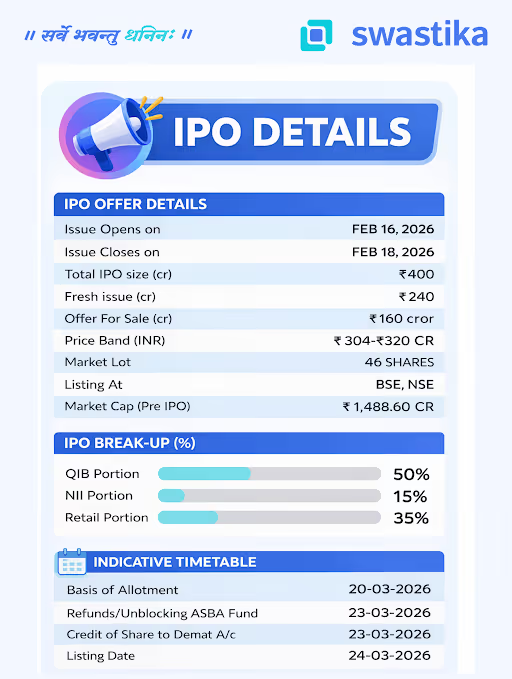
The price band is ₹304 to ₹320 per share with a lot size of 46 shares.
When will GSP Crop Science IPO list?
The tentative listing date is March 24, 2026 on BSE and NSE.
What sector does the company operate in?
GSP Crop Science operates in the agrochemical industry producing crop protection products such as insecticides, herbicides, and fungicides.
Why are analysts cautious about this IPO?
Key concerns include declining profit margins, inconsistent revenue growth, and valuation risks compared with listed peers.
Conclusion
IPO markets often create opportunities for wealth creation, but careful analysis is essential before investing.
The GSP Crop Science IPO highlights why numbers matter more than hype. Despite operating in a promising agrochemical sector, the company’s declining profitability and margin pressures raise questions about its near-term growth trajectory.
For investors, patience can often be the best strategy.
If you are looking for expert IPO analysis, powerful trading tools, and reliable customer support, Swastika Investmart provides a technology-driven investing platform backed by strong research and SEBI-registered expertise.






