The Indian quick service restaurant space is witnessing a major consolidation move. Sapphire Foods and Devyani International have announced a proposed merger, with a swap ratio fixed at 177 shares of Devyani International for every 100 shares of Sapphire Foods. The announcement has drawn strong interest from investors, analysts, and market participants tracking the listed QSR universe.
Mergers in consumer-facing businesses often reshape competitive dynamics. In this case, the deal combines two well-known franchise operators with deep exposure to brands like KFC, Pizza Hut, and other global food chains. The Sapphire Foods–Devyani International merger is being viewed as a strategic step toward building scale, improving margins, and strengthening long-term growth visibility.
A swap ratio of 177:100 means that Sapphire Foods shareholders will receive 177 shares of Devyani International for every 100 shares they currently hold. The ratio is typically derived from relative valuations, future earnings potential, and independent fairness opinions.
For investors, this is not just a numerical adjustment. It reflects how the market and advisors view the comparative strength and growth outlook of both companies. If Devyani International trades at a premium valuation, Sapphire Foods shareholders may see value creation over the medium to long term, provided execution remains strong.
In mergers within the Indian listed space, valuation often considers metrics such as EV to EBITDA, store-level profitability, and same-store sales growth. Both Sapphire Foods and Devyani International operate asset-light franchise models, but differ in geographic mix and brand exposure.
The swap ratio suggests that the combined entity aims to balance scale with profitability, while ensuring fairness to minority shareholders. The merger is subject to approvals from SEBI, stock exchanges, and the National Company Law Tribunal, ensuring regulatory oversight.
India’s QSR industry is growing at a steady pace, driven by urbanisation, rising disposable incomes, and changing consumption habits. However, competition is intense, with both global and domestic players fighting for market share.
By combining operations, Sapphire Foods and Devyani International can leverage procurement efficiencies, better bargaining power with suppliers, and shared technology platforms. Scale also helps in faster expansion into Tier 2 and Tier 3 cities, where organised QSR penetration is still low.
Real-world examples from past mergers in the FMCG and retail space show that backend integration often leads to margin improvement. Shared logistics, common sourcing, and unified digital ordering systems can reduce costs over time.
For investors, the key variable will be how quickly these synergies translate into improved return ratios and free cash flows.
Historically, merger announcements in India trigger short-term volatility. Share prices may move based on perceived valuation fairness, arbitrage opportunities, and expectations of synergy benefits.
In the case of the Sapphire Foods–Devyani International merger, market participants are closely watching trading volumes and price movements to assess institutional sentiment. Mutual funds and long-term investors tend to focus on execution quality rather than immediate price reaction.
This merger highlights a broader trend of consolidation in consumer-facing sectors. As input costs remain volatile and competition rises, scale becomes a critical advantage. Other listed QSR players may also explore strategic partnerships or acquisitions to strengthen their market position.
For the Indian equity market, such consolidation often improves sector maturity and long-term earnings stability.
Mergers of listed entities in India follow a well-defined framework under SEBI regulations and the Companies Act. Independent valuation reports, fairness opinions, and shareholder voting are mandatory steps in the process.
This ensures transparency and protects minority investors. The Sapphire Foods–Devyani International merger will go through these checks, providing confidence around governance standards.
Rather than reacting to short-term price movements, investors should track post-merger metrics such as store additions, margin trends, and return on capital employed. The ability of the combined entity to generate consistent cash flows will ultimately decide shareholder value.
Events like mergers underline why research-backed decision-making matters. SEBI-registered platforms like Swastika Investmart support investors with structured research tools, market insights, and investor education. Tech-enabled investing and responsive customer support help investors interpret complex corporate actions with clarity.
What is the swap ratio in the Sapphire Foods–Devyani International merger?
The swap ratio is 177 shares of Devyani International for every 100 shares of Sapphire Foods.
Will existing Sapphire Foods shares be delisted after the merger?
Post-merger, Sapphire Foods shareholders will hold shares in Devyani International, subject to regulatory approvals.
Why are QSR companies consolidating in India?
Rising competition, cost pressures, and the need for scale are driving consolidation in the QSR sector.
Does the merger guarantee higher returns for investors?
No merger guarantees returns. Value creation depends on execution, synergy realisation, and long-term demand growth.
Is regulatory approval required for this merger?
Yes, approvals from SEBI, stock exchanges, and NCLT are mandatory.
The Sapphire Foods–Devyani International merger marks an important development in India’s evolving QSR landscape. With a clearly defined swap ratio and strategic intent to build scale, the deal has the potential to reshape competitive dynamics in the sector. However, as with any merger, long-term success will depend on integration quality and disciplined execution.
For investors navigating such corporate actions, access to reliable research and regulatory-compliant guidance is crucial. Swastika Investmart, with its SEBI registration, strong research ecosystem, and investor-focused approach, aims to empower investors to make informed decisions in changing market conditions.
If you are looking to stay ahead of market developments and invest with confidence, take the next step.
%20(2).png)
Indian equity markets concluded the trading session on 30 December 2025 with a mixed performance, reflecting cautious investor sentiment as the year draws to a close. While benchmark indices showed limited movement, sector-specific buying helped banking stocks outperform the broader market.
With most global markets witnessing thin participation and domestic investors focusing on year-end portfolio positioning, the session remained largely range-bound. Traders avoided aggressive bets, preferring stock-specific opportunities over broad index exposure.
At the closing bell on 30 December 2025, the benchmark indices stood at:
The near-flat close in the Nifty 50 indicates consolidation after recent upward moves, while the Bank Nifty’s strength highlights continued investor confidence in the banking sector.
Markets began the day on a subdued note, influenced by muted global cues and the absence of major domestic triggers. Early trade remained cautious, with indices moving within a narrow range.
As the session progressed, buying interest emerged in select banking and financial stocks, lifting the Bank Nifty higher. However, selling pressure in a few heavyweight stocks capped gains in the Nifty 50, preventing a sustained rally.
Low trading volumes, typical of the final trading days of the year, amplified intraday swings but failed to provide clear direction.
The Bank Nifty stood out as the key performer on 30 December 2025. Select private and public sector banks attracted buying interest, supported by expectations of stable interest rates and improving asset quality.
Banking stocks often act as a defensive play during uncertain market phases, and today’s performance reflected that trend. Investors rotated funds into financially strong institutions, seeking stability amid broader market consolidation.
From a technical perspective, continued relative strength in Bank Nifty suggests that banking stocks may remain in focus if the broader market continues to move sideways.
Despite multiple intraday attempts, the Nifty 50 failed to gain momentum and closed marginally lower. Key factors influencing the flat close included:
Such consolidation phases are common after sustained rallies and are generally considered healthy for long-term market structure.
The broader market witnessed selective action, with some stocks seeing buying interest while others faced mild profit booking. Defensive sectors remained relatively stable, while cyclical segments showed uneven participation.
Investors continued to favor companies with strong balance sheets, predictable earnings, and reasonable valuations, rather than chasing momentum-driven moves.
Globally, markets remained mixed, offering limited directional cues to Indian equities. Investors also stayed cautious ahead of upcoming macroeconomic data and policy signals expected in the new year.
On the domestic front, there were no major economic announcements on 30 December 2025, keeping market sentiment driven primarily by technical levels and sector rotation.
For short-term traders, the current environment suggests continued range-bound movement, with opportunities arising from sector-specific strength rather than broad market trends.
For long-term investors, such consolidation phases often provide an opportunity to gradually accumulate quality stocks without chasing sharp rallies. Maintaining discipline and aligning investments with long-term financial goals remains crucial.
As per SEBI guidelines, investors are advised to avoid speculative trading based on short-term noise and rely on research-backed decision-making.
Navigating markets during consolidation requires reliable insights and the right tools. Swastika Investmart, a SEBI-registered brokerage, empowers investors through:
Whether you are an active trader or a long-term investor, having access to trusted research and professional guidance can make a meaningful difference.
Why did the Nifty 50 close flat on 30 December 2025?
The Nifty 50 closed almost flat due to profit booking at higher levels, low year-end volumes, and the absence of strong global or domestic triggers.
Why did Bank Nifty outperform the broader market?
Bank Nifty gained due to selective buying in banking stocks, supported by expectations of stable interest rates and improving fundamentals.
Is market consolidation a negative signal?
No. Consolidation helps markets absorb gains and build a base for the next move, especially after a rally.
Should investors be cautious during year-end trading sessions?
Yes. Lower liquidity and higher volatility are common during year-end sessions, making risk management essential.
Which sectors should investors watch during consolidation phases?
Banking, financials, and fundamentally strong large-cap stocks often remain in focus during such phases.
The market closing summary for 30 December 2025 reflects a classic year-end consolidation session. While the Nifty 50 paused near higher levels, the Bank Nifty continued to show relative strength, highlighting selective opportunities within the market.
For investors looking to trade or invest with confidence backed by research, technology, and trusted guidance, partnering with Swastika Investmart can help navigate changing market conditions effectively.
Smart research. Smarter decisions. Confident investing.
.png)
Investing in the stock market has become easier than ever with the digital era. A Demat account is your first step to buying, selling, and holding shares electronically in India. Whether you are a student, beginner, or experienced investor, understanding how a Demat account works is crucial in 2026.
In this blog, we’ll cover everything from opening a Demat account, its benefits, and practical tips for beginners.
A Demat account (short for Dematerialized account) allows investors to hold their securities in digital form instead of physical certificates. This includes shares, bonds, government securities, ETFs, and mutual funds.
Key Features:
Opening a Demat account in 2026 is fast, easy, and fully digital. Here’s a step-by-step guide:
Opening a Demat account in India 2026 is simple and essential for anyone looking to invest in the stock market. It provides a secure, fast, and paperless way to manage your investments. By choosing the right depository participant and staying informed, you can make the most of your investments and grow your wealth in a smart and hassle-free way.

India’s defence sector is back in the spotlight as reports around potential approvals worth nearly ₹79,000 crore by the Defence Acquisition Council sparked strong buying interest in defence stocks. The market reaction was swift, with several defence counters witnessing sharp moves as investors priced in the possibility of large domestic orders.
For market participants, this development goes beyond short term momentum. It reflects India’s long term push towards defence self reliance, higher capital expenditure, and deeper participation of domestic manufacturers in strategic programmes.
The Defence Acquisition Council, chaired by the Defence Minister, plays a central role in India’s defence procurement process. It is responsible for granting acceptance of necessity for major defence purchases.
An approval at the DAC level signals intent. While it does not immediately translate into revenue, it sets the stage for tenders, contracts, and eventual execution.
For listed defence companies, DAC approvals provide early visibility into potential order pipelines, which markets often factor into valuations.
A key highlight of recent DAC discussions has been the emphasis on buying from Indian manufacturers. This aligns with the government’s long standing policy of reducing import dependence and strengthening domestic capabilities.
Large ticket items such as combat systems, platforms, and advanced equipment are increasingly being routed through domestic production routes.
If these deals move forward, they could significantly expand the order books of defence public sector undertakings and select private players. Order visibility is critical in the defence sector, where execution cycles are long and capital intensive.
Defence stocks often trade on order book strength and future revenue visibility. Even early stage approvals can trigger re rating if investors believe execution is likely.
The ₹79,000 crore figure caught market attention because of its sheer scale and domestic focus.
India’s defence budget continues to prioritise capital expenditure. Over the past few years, a growing share of this capex has been reserved for domestic procurement.
This structural tailwind has made defence a favoured theme among long term investors, not just short term traders.
Companies involved in manufacturing, systems integration, electronics, and platform development stand to benefit the most. Strong order inflows can support multi year revenue growth and operating leverage.
However, not all players benefit equally. Execution capability, past delivery track record, and financial discipline matter.
Positive defence news often improves sentiment across allied sectors such as aerospace components, electronics, and capital goods. This creates broader market interest in the defence manufacturing ecosystem.
India’s defence procurement framework is governed by clearly defined procedures and oversight. From DAC approvals to contract finalisation, multiple checks are built into the system.
SEBI regulated markets ensure that disclosures around orders, contracts, and financial performance are made transparently once deals are finalised. This helps investors distinguish between intent and execution.
DAC approval is only the first step. Actual contracts may take time to materialise, and execution can stretch over several years.
Markets sometimes run ahead of fundamentals, making stock selection and timing critical.
Defence projects involve complex execution and strict quality standards. Delays, cost overruns, or margin pressures can impact profitability.
Investors should focus on companies with a strong execution history and balance sheet strength.
India’s geopolitical environment, border security needs, and ambition to become a defence exporter provide long term support to the sector.
While short term stock movements may be driven by news flow, long term returns depend on how well companies convert policy support into sustainable earnings.
Headline driven rallies can be tempting, but they also carry risk. Understanding which companies are best placed to benefit from defence orders requires deep sector knowledge and continuous tracking.
Swastika Investmart, a SEBI registered financial services firm, supports investors with strong research tools, detailed sector insights, and tech enabled investing platforms. Its emphasis on investor education and responsive customer support helps clients navigate themes like defence manufacturing with clarity and discipline.
What is the Defence Acquisition Council?
It is the apex body responsible for approving major defence procurements in India.
Do DAC approvals guarantee revenue for companies?
No. They indicate intent, but contracts and execution follow later.
Why do defence stocks react strongly to DAC news?
Because approvals improve order visibility, which markets often price in early.
Is defence a long term investment theme in India?
Yes. Policy support, rising capex, and export ambitions provide structural support.
The buzz around ₹79,000 crore defence deals highlights the growing importance of the defence sector in India’s economic and strategic landscape. While stock prices may react sharply to such news, sustainable wealth creation depends on execution, governance, and long term demand visibility.
For investors, defence remains a promising but selective space. A research driven approach can help separate durable opportunities from short lived excitement.
If you want to track defence stocks and other policy driven themes with deeper insights, advanced tools, and a trusted platform, consider opening an account with Swastika Investmart.

India’s aviation sector is once again in focus, but this time the spotlight is not on aircraft orders or passenger traffic. IndiGo, the country’s largest airline by market share, has revamped its pilot pay structure, resulting in higher take home earnings for its cockpit crew.
This move comes at a time when the aviation industry is expanding rapidly, pilot demand is rising globally, and competition for skilled talent has intensified. For investors, this development is more than an HR decision. It has implications for cost structures, operational stability, and long term profitability.
India is one of the fastest growing aviation markets in the world. With airlines adding capacity and new routes, the demand for trained pilots has increased sharply. Globally, airlines are facing a pilot shortage, and India is not immune to this trend.
In such an environment, compensation becomes a critical lever for retention and attraction of talent.
Rather than simply increasing fixed salaries, IndiGo has reportedly reworked the structure to optimise take home earnings. This approach allows employees to see immediate benefits in monthly payouts while helping the company manage long term cost commitments.
Such restructuring is increasingly common across industries where skilled manpower is scarce.
For airlines, employee costs form a significant portion of operating expenses, along with fuel, lease rentals, and maintenance. Any increase in pilot compensation directly affects cost per available seat kilometre, a key metric tracked by analysts.
However, frequent pilot attrition or shortages can be far more disruptive and costly in the long run.
Flight cancellations, crew shortages, and scheduling disruptions can damage brand reputation and financial performance. By improving pilot satisfaction and retention, airlines aim to ensure smoother operations.
For IndiGo, which runs one of the highest aircraft utilisation rates in the industry, operational reliability is central to its business model.
Indian airlines are placing large aircraft orders to cater to growing passenger demand. As fleets expand, competition for trained pilots is intensifying.
IndiGo’s move can be seen as a proactive step to stay ahead of the curve rather than reacting to attrition pressures later.
Globally, airlines in the US, Europe, and the Middle East have increased pilot compensation in recent years. IndiGo’s decision aligns Indian aviation practices more closely with international trends.
From an investor’s perspective, higher employee costs may raise concerns about margin pressure, especially in a sector known for thin profitability.
Analysts will closely track whether IndiGo can offset higher costs through better capacity utilisation, pricing discipline, and ancillary revenues.
A stable and motivated workforce supports long term growth. Reduced attrition lowers training and onboarding costs, which are significant for pilots.
Over time, such measures can support consistent service quality and strengthen competitive positioning.
India’s aviation sector operates under guidelines set by the Directorate General of Civil Aviation. Crew duty hours, training standards, and safety norms are strictly regulated.
Pay structures themselves are not regulated, but compliance with labour laws and contractual obligations is mandatory. IndiGo’s move appears aligned with these frameworks while addressing market realities.
Aviation remains a cyclical and cost sensitive sector. Stock performance often depends on execution rather than headlines.
Corporate decisions around compensation can be misunderstood if viewed in isolation. Investors need to evaluate the broader context, industry cycles, and long term strategy.
Swastika Investmart, a SEBI registered financial services firm, helps investors decode such developments through strong research tools, sector analysis, and tech enabled investing platforms. Its focus on investor education and responsive customer support enables clients to take informed decisions rather than reacting emotionally to news flow.
Why did IndiGo change its pilot pay structure?
To improve take home earnings, retain skilled pilots, and remain competitive amid rising industry demand.
Will higher pilot pay impact IndiGo’s profitability?
It may increase costs in the short term, but better retention and operational stability can support long term performance.
Is this trend limited to IndiGo?
No. Globally and domestically, airlines are revisiting pilot compensation due to supply constraints.
Does pilot pay fall under aviation regulation in India?
Pay is not directly regulated, but airlines must comply with labour laws and DGCA operational norms.
IndiGo’s decision to revamp its pilot pay structure reflects the evolving realities of India’s aviation sector. While cost pressures are an inherent concern, investing in people is often critical for sustaining growth in a service driven industry.
For investors, the key lies in assessing how well IndiGo balances higher costs with efficiency, demand growth, and pricing power. A research led approach helps cut through noise and focus on long term value creation.
If you want to track aviation stocks and other market developments with deeper insights, advanced tools, and a trusted platform, consider opening an account with Swastika Investmart.

Silver has been one of the standout performers in the commodity space, delivering a strong rally that caught the attention of traders, investors, and even long term allocators. However, after the sharp move higher, silver prices have recently taken a pause, marked by a notable correction.
For many market participants, this raises an important question. Is this the end of the rally, or merely a healthy breather before the next move?
To answer that, it is important to look beyond short term price action and understand what is driving silver, both globally and in the Indian market.
Silver’s earlier rally was not driven by a single factor. Instead, it was a result of multiple forces coming together.
Unlike gold, silver is both a precious metal and an industrial metal. It plays a critical role in electronics, solar panels, electric vehicles, and high end manufacturing.
As global focus on clean energy and electrification grows, silver demand from solar installations and power related applications has increased steadily. This structural demand gave strong support to prices during the rally.
Silver also benefits from expectations around global interest rates. When markets anticipate easier monetary conditions or slowing economic growth, precious metals tend to attract buying interest.
Earlier optimism around rate cuts and lower bond yields supported silver, much like gold, but with higher volatility.
One of the most common reasons for a sharp correction after a strong uptrend is profit booking. When prices move up quickly, traders often lock in gains, leading to short term selling pressure.
This does not necessarily change the broader trend, but it can cause swift and sometimes uncomfortable pullbacks.
Silver prices are sensitive to the US dollar and global bond yields. A rebound in the dollar or rise in yields makes non yield bearing assets like silver less attractive in the short term.
Recent global cues have pushed traders to reassess positions, contributing to the correction.
Silver is known to be more volatile than gold. Even within a bullish phase, sharp swings are common. This makes silver attractive for traders, but also demands disciplined risk management.
In India, silver prices on MCX are influenced not just by global silver prices but also by the rupee dollar exchange rate. A weaker rupee can cushion downside or even keep domestic prices elevated despite global softness.
This is why Indian silver prices sometimes behave differently from international benchmarks.
Silver has strong cultural and investment relevance in India. Apart from industrial use, it is widely used in jewellery, utensils, and as an affordable alternative to gold.
Periods of price correction often see renewed interest from long term buyers who were waiting for better entry levels.
From a technical perspective, sharp rallies are often followed by consolidation or retracement phases. This helps the market digest gains and reset indicators.
If silver manages to hold key support zones and stabilise, it may indicate that the broader trend remains intact. However, failure to hold these levels could lead to deeper consolidation.
For traders, the focus should be on confirmation rather than prediction.
Silver’s performance often reflects sentiment around industrial metals and renewable energy. Any sustained strength or weakness can influence related sectors indirectly.
Precious metals also form part of the broader commodity basket watched by policymakers and investors. Volatility in silver adds to overall commodity market movement, influencing inflation expectations at the margin.
Silver is not a straight line asset. It rewards patience and discipline.
Commodity markets are heavily influenced by global data, currency movement, and sentiment shifts. Acting on headlines alone can lead to poor outcomes.
Swastika Investmart, a SEBI registered financial services firm, supports investors with robust research tools, tech enabled trading platforms, and responsive customer support. Its emphasis on investor education helps market participants understand the drivers behind moves like silver’s recent correction, rather than reacting emotionally.
Why did silver prices fall after such a strong rally?
The fall was mainly due to profit booking, changes in global interest rate expectations, and strength in the US dollar.
Does the correction mean silver’s bullish trend is over?
Not necessarily. Corrections are common after sharp rallies. The broader trend depends on demand, macro conditions, and price behaviour near support levels.
How is MCX silver different from global silver prices?
MCX silver prices are influenced by global prices and the rupee dollar exchange rate, which can amplify or reduce moves.
Is silver more volatile than gold?
Yes. Silver typically shows higher price swings due to its dual role as an industrial and precious metal.
Silver’s rally taking a breather is not unusual. Sharp corrections are part of the journey, especially in a metal known for volatility. What matters now is how prices behave after the fall and whether key supports hold.
For Indian investors and traders, silver remains a metal to watch closely, given its link to industrial growth, renewable energy, and global monetary trends.
If you want to track commodities like silver with better clarity, access in depth research, and trade on a reliable platform, consider opening an account with Swastika Investmart.
%20(2).png)
Indian equity markets began the session on a slightly negative note today, 27 December 2025, reflecting a cautious investor mood as the year draws to a close. Traders and investors are taking a careful approach amid mixed domestic and global signals.
The near-flat opening of Nifty 50 indicates a balanced approach between buying interest and profit booking, while Bank Nifty shows mild weakness due to selective selling in financial stocks.
At Swastika Investmart, investors gain access to:
This empowers both long-term investors and active traders to stay informed and confident.
As of 27 December 2025, Indian markets have opened marginally lower, signaling cautious sentiment ahead of year-end. Traders should monitor key support and resistance levels, while long-term investors can continue to focus on disciplined investing and portfolio management.
👉 Open your trading account today with Swastika Investmart
Smart planning leads to smarter investing.


Trust Our Expert Picks
for Your Investments!


Gold and silver have regained investor attention after a prolonged period of consolidation. Global cues such as geopolitical tensions, expectations of lower global interest rates, and currency volatility have revived demand for precious metals as a hedge.
In India, the story is even more nuanced. Gold is not just an investment asset but also a cultural store of value. Silver, meanwhile, is gaining prominence due to its industrial use in electronics, solar energy, and electric vehicles. As prices move up, trading activity across bullion markets typically accelerates.
This brings an important question for equity investors: should you track MCX stock when gold and silver prices are rising?
One of the biggest drivers of precious metals is interest rate direction. When global central banks signal a pause or potential easing, non-yielding assets like gold become more attractive.
Lower real interest rates reduce the opportunity cost of holding gold and silver, leading to increased investment demand globally.
Periods of geopolitical stress and economic uncertainty often push investors toward safe-haven assets. Gold, in particular, benefits during such phases as portfolios seek stability.
Silver tends to follow gold but also draws strength from industrial demand, making its price movement slightly more volatile but potentially more rewarding.
A softer US dollar and inflation concerns further support precious metal prices. For Indian investors, a stable or strengthening rupee can moderate domestic price swings, but global trends still dominate overall sentiment.
Multi Commodity Exchange of India is the country’s largest commodity derivatives exchange. It provides a regulated platform for trading metals, energy, and agricultural commodities.
MCX earns revenue primarily through transaction fees, which are directly linked to trading volumes rather than commodity prices themselves. This distinction is crucial for equity investors.
When gold and silver prices rise and volatility increases, participation from hedgers, traders, jewellers, and institutional players often picks up. Higher volumes can translate into stronger operating leverage for the exchange.
Historically, commodity exchanges tend to benefit during periods of heightened price movement. Rising gold and silver prices attract retail traders, arbitrageurs, and hedgers, leading to higher turnover.
MCX, being the dominant platform in precious metals trading in India, stands to gain from increased activity rather than directional price bets.
India has seen a steady rise in retail participation in commodities, supported by better digital access, awareness, and regulatory clarity. Gold and silver rallies often act as entry points for first-time commodity investors.
This structural shift supports long-term volume growth for MCX beyond short-term price cycles.
MCX operates under the regulatory oversight of SEBI, which has strengthened market transparency and risk management over time. Improved governance norms have helped restore confidence among participants after past disruptions.
Stable regulation encourages broader participation, which is critical for exchange-led business models.
It is important to note that MCX’s performance is not tied to whether gold or silver prices rise or fall. What matters is market activity, volatility, and participation.
Even during price corrections, active hedging and speculative interest can sustain volumes. This makes MCX a relatively unique way to gain exposure to commodity market growth without directly trading commodities.
For equity investors, MCX represents a play on India’s evolving financial markets rather than a pure commodity bet.
Key factors to track include:
Like all market-linked businesses, MCX earnings can be cyclical, but its long-term prospects are aligned with India’s increasing financialisation and risk management needs.
A sustained rally in gold and silver often coincides with cautious equity sentiment globally. In such phases, investors tend to diversify portfolios across asset classes.
Tracking MCX stock during precious metal rallies can offer insight into broader market participation trends, risk appetite, and hedging behaviour. However, stock selection should always be guided by fundamentals and valuation comfort.
Why are gold and silver prices rising now?
Gold and silver are rising due to global rate cut expectations, geopolitical uncertainty, and demand for inflation hedging.
Does MCX benefit directly from higher gold and silver prices?
MCX benefits from higher trading volumes and participation, not from the price level of commodities.
Is MCX stock a proxy for gold investment?
No. MCX stock reflects commodity market activity, not gold prices. It is an exchange business, not a commodity producer.
Is MCX regulated in India?
Yes. MCX operates under SEBI regulation, ensuring transparency, risk controls, and investor protection.
The rise in gold and silver prices highlights a broader shift toward diversification and risk management in uncertain times. While direct commodity investing is one route, tracking MCX stock offers a different lens into how India’s commodity markets are evolving.
At Swastika Investmart, our SEBI-registered research, advanced trading tools, and strong investor education framework help you understand such thematic opportunities with clarity and discipline. Whether you are exploring commodities or equities, informed decisions make all the difference.

The Indian rupee has shown notable resilience and strength against the US dollar in recent months, surprising many market participants who were bracing for volatility amid global uncertainties. Currency movements may appear technical, but they have a direct bearing on inflation, corporate earnings, foreign investment, and stock market sentiment.
A strengthening rupee is not a standalone event. It is usually the outcome of multiple economic forces moving in sync. For investors, understanding these forces is crucial to identify which sectors benefit and which face headwinds.
One of the biggest drivers of rupee strength has been consistent foreign capital inflows. India continues to attract foreign portfolio investors and long-term global funds due to its relatively strong growth prospects compared to other emerging economies.
When foreign investors bring dollars into Indian equities and bonds, demand for the rupee rises, naturally pushing the currency higher. This trend is often reinforced during periods when India’s macro stability stands out globally.
India’s foreign exchange reserves remain among the highest globally, giving the Reserve Bank of India a strong buffer against excessive volatility. The RBI regularly intervenes in currency markets to smooth sharp movements rather than targeting a specific exchange rate.
This disciplined approach reassures global investors and prevents panic-driven depreciation, contributing to gradual rupee appreciation during stable periods.
While India remains a net importer, moderation in crude oil prices and steady export performance in services such as IT and pharmaceuticals have helped contain the trade deficit.
A narrower current account deficit reduces pressure on the rupee and improves overall currency sentiment. Services exports, in particular, provide consistent dollar inflows that support rupee stability.
Currency strength is always relative. Periods of easing US inflation expectations, potential rate cuts by the US Federal Reserve, or slowing US growth often weaken the dollar index.
When the dollar softens globally, emerging market currencies like the rupee tend to benefit, especially those backed by strong domestic fundamentals.
Companies that rely heavily on imports gain directly from rupee appreciation. Lower input costs help protect margins and reduce pricing pressure.
Key beneficiaries include:
These sectors often see improved profitability during phases of rupee strength.
A stronger rupee helps contain imported inflation. When fuel, fertilisers, edible oils, and electronic goods become cheaper in rupee terms, it indirectly supports household purchasing power.
Lower inflation also gives the RBI greater flexibility in monetary policy, which can be supportive for interest-sensitive sectors like banking, real estate, and automobiles.
Currency stability is a sign of macroeconomic confidence. A strengthening rupee often boosts overall market sentiment, especially among foreign investors who see lower currency risk.
Historically, periods of rupee stability or appreciation have coincided with steady equity market inflows and reduced volatility.
Exporters earn revenues in foreign currency but incur costs largely in rupees. A stronger rupee reduces the value of their dollar earnings when converted back to rupees.
IT services, textiles, and some manufacturing exporters may experience margin pressure if rupee appreciation is sharp or prolonged. However, companies with pricing power or global cost structures are better positioned to absorb this impact.
Indian households dependent on overseas remittances may see slightly lower rupee inflows when the domestic currency strengthens, although this impact is usually marginal unless currency moves are extreme.
Currency trends influence sector rotation within equity markets. During phases of rupee strength, investors often prefer domestically focused sectors such as banking, consumption, infrastructure, and capital goods.
At the same time, selective exporters with strong order books and hedging strategies continue to remain attractive. The key is balance rather than blanket sector calls.
Bond markets also benefit from currency stability, as it encourages foreign participation in Indian debt instruments, improving liquidity and lowering borrowing costs.
The RBI follows a managed float regime, allowing market forces to determine the rupee’s value while intervening to prevent disorderly movements. This policy balance has earned credibility globally.
India’s focus on fiscal discipline, infrastructure spending, and ease of doing business reforms further strengthens the rupee’s long-term outlook without compromising export competitiveness.
Investors should track global interest rate trends, crude oil prices, and RBI policy commentary closely. Sudden shifts in global risk sentiment can still influence currency movements.
Rather than reacting to short-term fluctuations, investors should assess how currency trends align with broader portfolio goals and sector exposure.
Why is the Indian rupee strengthening against the dollar?
The rupee is gaining strength due to strong capital inflows, high forex reserves, controlled inflation, and a relatively weaker US dollar.
Is a strong rupee good for Indian stock markets?
Generally yes. Currency stability improves investor confidence and supports foreign investment inflows into Indian equities.
Which sectors benefit the most from a stronger rupee?
Import-heavy sectors such as oil, aviation, capital goods, and electronics benefit the most from rupee appreciation.
Do exporters lose when the rupee strengthens?
Exporters may face margin pressure, but companies with diversified markets, pricing power, and hedging strategies can manage the impact effectively.
A strengthening Indian rupee is not just a currency story. It reflects confidence in India’s economic fundamentals, policy stability, and long-term growth potential. While some sectors benefit more than others, overall currency stability is a positive signal for markets and investors alike.
At Swastika Investmart, our SEBI-registered research, advanced analytics, and investor education initiatives help you navigate macro trends like currency movements with clarity and confidence. Whether you are positioning for domestic growth or managing global exposure, informed insights make all the difference.

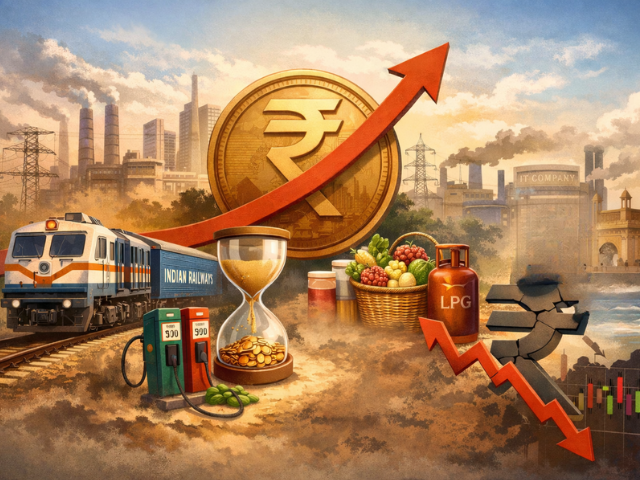
Indian Railways is more than just a transport utility. It is the backbone of India’s economic engine, moving over 20 million passengers and nearly 1.5 billion tonnes of freight annually. Any change in railway fares, even a marginal one, has a cascading impact across households, businesses, and financial markets.
A railway fare increase often sparks public debate, but from an economic and investment lens, it reflects deeper themes such as fiscal discipline, subsidy rationalisation, infrastructure funding, and inflation management. Let’s break down how a railway fare hike travels far beyond ticket counters and into the broader Indian economy.
Indian Railways operates in a complex financial environment. Passenger fares have historically been kept low for social reasons, leading to heavy cross-subsidisation from freight revenues.
Some key reasons behind fare revisions include:
Fuel prices, employee salaries, maintenance expenses, and safety upgrades continue to rise. Indian Railways is one of the largest employers in the country, and wage revisions under Pay Commissions significantly impact its cost structure.
Projects such as Vande Bharat trains, station redevelopment, dedicated freight corridors, and electrification require sustained capital inflows. Fare hikes help fund these long-term investments.
The government has been gradually nudging PSUs, including Indian Railways, toward financial self-reliance. Rationalising fares reduces the fiscal burden on the exchequer.
For millions of middle-class and lower-income families, railways remain the most affordable mode of long-distance travel. Even small fare hikes can affect monthly budgets.
Daily and seasonal commuters feel the immediate pinch, especially those dependent on second-class and sleeper travel. This can reduce discretionary spending in other areas.
Higher passenger fares indirectly contribute to inflation, especially when combined with rising fuel and food prices. While rail fares have a lower weight in CPI compared to fuel, their indirect impact cannot be ignored.
Railways are critical to India’s logistics ecosystem, transporting coal, cement, steel, food grains, and fertilisers.
If freight charges rise alongside passenger fares, companies may pass on higher logistics costs to consumers. Sectors like FMCG, cement, power, and metals are particularly sensitive.
Small manufacturers and traders operating on thin margins may face profitability pressure if transportation costs rise faster than demand growth.
India’s export competitiveness depends partly on efficient inland logistics. Persistent cost escalation can affect pricing power in global markets.
Railway fare hikes are closely tracked by equity markets, not because of the fare itself, but for what it signals.
Markets often view fare rationalisation as a sign of improved financial discipline. This can be sentiment-positive for railway-linked PSUs and infrastructure companies.
Stocks related to rail manufacturing, EPC, signalling, and rolling stock may benefit if higher revenues translate into stronger capex execution.
On the flip side, sectors dependent on mass travel and discretionary spending, such as tourism or budget hospitality, may face near-term demand moderation.
Railway fares are influenced by broader policy objectives rather than pure commercial logic.
This measured approach helps balance social welfare with fiscal sustainability.
For investors, the real story is not the fare hike itself but what follows.
Are higher revenues being reinvested into safety, capacity expansion, and efficiency improvements?
Sustained improvement in freight efficiency can stabilise railway finances without frequent passenger fare hikes.
Any meaningful inflationary pressure could influence monetary policy decisions, affecting interest-sensitive sectors.
Cement, steel, logistics, and PSU banks financing rail projects are key areas to monitor.
Does a railway fare increase directly increase inflation?
Not significantly on its own, but combined with higher freight costs, it can contribute indirectly to inflationary pressure.
Are railway fare hikes good or bad for the economy?
In the short term, they can strain consumers. In the long run, if revenues are invested efficiently, they support infrastructure growth and productivity.
Which sectors are most affected by railway fare increases?
Logistics-heavy sectors like FMCG, cement, steel, power, and tourism feel the impact the most.
Do railway fare hikes impact stock markets immediately?
Markets usually react to the broader policy signal rather than the fare hike itself. The impact is often indirect and sector-specific.
A railway fare increase may feel like a small change at the ticket window, but its economic footprint is far larger. It touches household budgets, corporate margins, inflation trends, and government finances. For investors, understanding these linkages is essential to making informed decisions rather than reacting to headlines.
At Swastika Investmart, our SEBI-registered research framework, advanced market tools, and investor education initiatives help you decode such macro developments and align them with your portfolio strategy. Whether it’s infrastructure themes, PSU opportunities, or inflation-linked trends, having the right insights at the right time makes all the difference.
%20(1).png)
Overnight global markets provided a supportive backdrop for Indian equities.
US markets ended higher, with the Dow Jones gaining 183 points, reflecting continued risk appetite among global investors. Dow futures trading higher in early hours further reinforces positive sentiment.
Asian markets are trading on a positive note, indicating broad-based optimism across regions. The strongest indicator for Indian traders, GIFT Nifty, is up by 164 points, suggesting a firm to positive start for domestic benchmarks.
Such alignment between US markets, Asian peers, and GIFT Nifty typically leads to confident market openings unless disrupted by sudden macro news.
Institutional participation remains the backbone of the current market trend.
Foreign Institutional Investors bought shares worth ₹1,831 crore, while Domestic Institutional Investors added ₹5,723 crore. This results in a combined net inflow of ₹7,554 crore into the cash market.
When both FIIs and DIIs are net buyers, it signals strong conviction in market stability. Historically, such sessions often see:
This flow data supports a continuation of the prevailing uptrend rather than a reversal.
Derivatives indicators point toward a controlled bullish environment.
The Nifty Put Call Ratio has moved up to 1.13 from 0.83, indicating increased put writing activity. This suggests that traders are expecting the market to hold higher levels.
India VIX has cooled off to 9.71, down 1.32 percent. A low volatility environment generally supports trending moves and discourages aggressive short positions.
Together, rising PCR and falling VIX reflect confidence rather than complacency.
FII data in index derivatives further strengthens the positive outlook.
There has been an increase in futures long positions and a reduction in futures shorts. On the options side, significant additions in put positions and reduction in call shorts indicate expectations of market stability with limited downside.
This type of positioning usually aligns with gradual upside moves rather than sharp spikes, making it favorable for positional traders.
Option data highlights important reference levels for today’s session.
The highest call open interest is placed at 26000, while the highest put open interest stands at 25900. The maximum pain level is around 25950.
This creates a crucial zone between 25950 and 26000. A sustained move above 26000 may lead to short covering, while holding above 25950 keeps the structure intact.
Nifty is likely to open above its 20-day moving average near 26000, indicating a positive bias.
Immediate resistance is seen at 26100. A decisive move above this level can open the door for 26200 and 26300 in the near term.
On the downside, the 26000 to 25950 zone acts as immediate support. Below this, 25840 becomes the next important level to watch.
As long as Nifty holds above 25950, the trend remains favorable for buy-on-dips strategies.
Bank Nifty continues to outperform, trading above its 20-day moving average near 59275.
On the upside, 59600, 59800, and the psychological 60000 level are key targets. Support is placed at 59000, followed by a stronger base near 58700.
Strength in Bank Nifty often provides stability to the broader market, making it a key index to track during intraday and positional trades.
For intraday traders, dips toward support zones may offer buying opportunities with disciplined risk management.
Positional traders can continue to stay aligned with the trend while trailing stops near key support levels.
Long-term investors may use phases of consolidation to accumulate quality stocks, especially in sectors backed by institutional buying.
All market participation should remain aligned with SEBI guidelines and individual risk profiles.
Is the market bullish today, 22 December 2025?
Yes, the overall set-up is positive, supported by global cues, institutional buying, and bullish derivatives data.
What are the key Nifty levels to watch today?
Immediate support lies between 25950 and 26000, while resistance is placed at 26100 and above.
Why is Bank Nifty important for today’s trade?
Bank Nifty is showing relative strength and often leads market direction, especially during trending sessions.
Does low India VIX favor traders?
Yes, low volatility supports trend-based strategies and reduces the risk of sharp intraday swings.
The market set-up for 22 December 2025 reflects a stable and confident environment driven by strong global cues, solid institutional flows, and supportive technical indicators. While short-term fluctuations are part of market behavior, the broader structure remains constructive.
For traders and investors looking for disciplined market participation, a research-backed approach is essential. Swastika Investmart, a SEBI-registered stockbroker, offers strong research insights, advanced trading platforms, and dedicated customer support to help investors navigate markets with confidence.

Before listing the recommendations, it is important to understand why such content matters. Markets repeat patterns, but investors often do not learn fast enough. Movies and books capture these patterns in a way data cannot.
For Indian investors, especially post events like the Harshad Mehta scam, global financial crises, and recent retail market participation, understanding history and psychology is as important as understanding ratios.
SEBI has consistently emphasized investor education and risk awareness, and these stories complement formal learning by showing consequences of excess leverage, blind optimism, and herd mentality.
This movie explains the 2008 global financial crisis through simple storytelling. It shows how a few investors spotted risks in mortgage-backed securities while the majority ignored warning signs.
Investor takeaway: When everyone believes a story, it is worth questioning it. Indian markets have seen similar optimism during small-cap and IPO booms.
A classic film that introduced the phrase “greed is good.” While fictional, it captures the emotional pull of quick money and insider culture.
Investor takeaway: Short-term gains without ethics or discipline often end badly, a lesson reinforced by several Indian market scams.
Set over 24 hours inside an investment bank, this movie focuses on risk management failures.
Investor takeaway: Risk ignored does not disappear. It compounds. Retail investors using leverage in derivatives can relate closely to this message.
Though technically a series, it is essential viewing for Indian investors. It shows how loopholes, unchecked optimism, and blind trust can distort markets.
Investor takeaway: Regulation matters. SEBI’s current surveillance systems exist because of such episodes.
A documentary-style film that connects policy failures, rating agencies, and financial institutions.
Investor takeaway: Markets are part of a larger system. Understanding macro forces improves long-term investing decisions.
Often called the investor’s bible, this book focuses on value investing and margin of safety.
Investor takeaway: Price is what you pay, value is what you get. This principle remains relevant in Indian equity markets.
This book emphasizes qualitative analysis, management quality, and long-term growth.
Investor takeaway: Not all value lies in numbers. Many successful Indian companies rewarded investors who understood the business early.
Lynch explains how everyday observations can lead to great investments.
Investor takeaway: Retail investors often have informational advantages in products and services they use daily.
While not strictly about the stock market, it reshapes how people think about money, assets, and cash flow.
Investor takeaway: Investing is about building assets, not just earning income.
A collection of interviews with top traders across markets.
Investor takeaway: There is no single formula for success, but discipline, risk control, and consistency are common traits.
Indian markets today have higher retail participation than ever before. Easy access to trading apps has increased participation but also risk. Stories from movies and books highlight mistakes that repeat across geographies.
Key lessons include:
SEBI’s push toward investor awareness aligns closely with these lessons.
Learning is only useful when applied correctly. Watching movies or reading books builds perspective, but execution requires discipline and reliable support.
This is where platforms like Swastika Investmart stand out. As a SEBI-registered brokerage, it combines:
Such support systems help investors apply lessons learned from history to real market decisions.
Are stock market movies useful for real investors?
Yes. They simplify complex concepts like bubbles, risk, and psychology, making them easier to remember and apply.
Which book should a beginner start with?
The Intelligent Investor is a strong starting point, followed by One Up on Wall Street for practical thinking.
Do these lessons apply to Indian markets?
Absolutely. Human behaviour, greed, and fear remain constant across markets, including India.
Can movies replace financial education?
No. They complement learning but should be combined with research, data, and regulatory awareness.
The stock market rewards patience, discipline, and understanding. Movies and books act as mirrors, reflecting mistakes and successes investors have already lived through. Learning from them helps avoid repeating history.
If you are ready to turn knowledge into action with research-backed insights and a trusted platform, consider starting your investing journey with Swastika Investmart.
Infosys ADRs listed on the NYSE witnessed an unusually sharp intraday spike, at one point showing gains close to 50%. This triggered automatic volatility controls, leading to a temporary trading halt.
Such halts are not uncommon in US markets when price movements exceed predefined thresholds within a short time. What made this event stand out was the absence of any news that could justify such a dramatic re-rating of a large-cap IT stock.
Within hours, reports clarified that the move was not driven by business developments but by a technical anomaly related to market data and liquidity conditions.
Infosys had not released earnings, revised guidance, announced a large deal, or disclosed any material event. Under Indian regulations, specifically SEBI’s Listing Obligations and Disclosure Requirements, any price-sensitive information must be promptly disclosed to exchanges. No such disclosure was made.
The Indian IT sector has been navigating a phase of cautious global tech spending, margin pressures, and slower deal ramp-ups. While long-term digital demand remains intact, there was no overnight shift that could justify a 50% jump in valuation.
If fundamentals were truly at play, the impact would have reflected in Infosys shares on NSE and BSE. Instead, domestic shares remained largely stable, reinforcing that the ADR spike was an isolated overseas event.
Market data feeds transmit real-time prices, volumes, and quotes to trading platforms. In rare cases, glitches, delayed updates, or erroneous prints can cause abnormal price displays. When combined with automated trading systems, this can exaggerate price moves.
ADRs often trade with lower volumes compared to their home-market shares. In such cases:
This makes ADRs more susceptible to sudden spikes or drops unrelated to fundamentals.
US exchanges use limit-up and limit-down mechanisms to pause trading during extreme moves. The Infosys ADR halt was a risk-control measure, not a confirmation of genuine price discovery.
There was limited spillover into Indian markets. Professional investors and institutions quickly recognized the anomaly and avoided overreacting. Retail investors who track ADRs should note that overseas price distortions do not always translate to domestic valuations.
While such events grab headlines, they rarely alter the intrinsic value of a fundamentally strong company. Infosys continues to be valued in India based on earnings visibility, deal pipeline, margins, and management commentary.
SEBI’s surveillance mechanisms and disclosure norms significantly reduce the chances of such unexplained spikes in Indian markets. This incident indirectly highlights the robustness of domestic market oversight compared to fragmented overseas trading in ADRs.
A sharp move does not automatically mean insiders know something. Technical errors, low liquidity, or algorithmic trading can create noise.
Entering trades purely based on unusual price action can expose investors to sharp reversals once normal trading resumes.
Earnings quality, balance sheet strength, cash flows, and management guidance remain the real drivers of long-term returns.
Market anomalies reinforce the importance of using research-backed, compliant platforms. Swastika Investmart, a SEBI-registered brokerage, focuses on:
Such strengths help investors stay grounded when markets throw surprises.
Was the Infosys ADR rally caused by a short squeeze?
No clear evidence suggests a classic short squeeze. The move was largely attributed to technical and data-related factors combined with thin liquidity.
Will Infosys shares in India eventually catch up to the ADR spike?
Unlikely. Since the move was not fundamentals-driven, Indian prices are expected to reflect business performance, not overseas anomalies.
Can such data-feed errors happen in Indian markets?
They are rare due to robust surveillance and disclosure norms enforced by SEBI, though no market is entirely immune to technical issues.
Should investors track ADR prices regularly?
ADR prices can offer global sentiment cues, but they should never be the sole basis for investment decisions in Indian-listed stocks.
The Infosys ADR 50% jump was dramatic but misleading. It serves as a reminder that not every big price move signals opportunity. For Indian investors, discipline, regulatory awareness, and fundamentals remain the best anchors in volatile markets.
If you want to invest with clarity, strong research support, and a platform built for long-term wealth creation, consider opening an account with Swastika Investmart.