NHPC’s ₹26,070 Crore Hydroelectric Project: A Game-Changer for Growth?


Key Takeaways
- NHPC Ltd receives approval for a ₹26,070 crore hydroelectric project
- Project to be developed in partnership with the Arunachal Pradesh government
- Strengthens India’s renewable energy push and hydro capacity
- Long gestation period but strong long-term visibility
- Execution, funding, and timelines remain key factors
Introduction
India’s renewable energy ambitions are gaining momentum, and hydropower is once again coming into focus. In a significant move, NHPC Ltd has received approval for a ₹26,070 crore investment in the Kamala Hydroelectric Project.
This development not only strengthens NHPC’s project pipeline but also signals a broader policy push toward clean and sustainable energy. For investors, the key question is whether this project can truly act as a growth catalyst or if challenges around execution and timelines may limit its near-term impact.
Project Overview
The Kamala Hydroelectric Project will be implemented through a joint venture between NHPC and the Government of Arunachal Pradesh.
Key highlights
- Total investment: ₹26,070 crore
- Location: Arunachal Pradesh
- Structure: Joint venture model
- Objective: Expand hydroelectric capacity
Hydropower projects are capital-intensive and long-term in nature, often taking several years to become operational.
Strategic Importance of the Project
Strengthening Renewable Energy Portfolio
Hydropower plays a crucial role in balancing renewable energy sources like solar and wind. Unlike intermittent sources, hydro provides stable and flexible power.
For NHPC, this project enhances its position as a leading player in India’s renewable energy ecosystem.
Government Policy Support
India has been actively promoting renewable energy through policy initiatives and incentives. Large-scale hydro projects are now being recognized as an essential part of this transition.
Approvals from bodies like the Cabinet Committee on Economic Affairs reflect strong government backing for such investments.
Regional Development
Projects in the Northeast region contribute to:
- Infrastructure development
- Employment generation
- Improved connectivity
This aligns with the government’s broader focus on regional growth.
Impact on Indian Stock Market
Positive Signals for Investors
The project sends a strong message about NHPC’s growth ambitions.
- Expands long-term revenue visibility
- Reinforces leadership in hydro power
- Aligns with India’s clean energy goals
Such developments often improve investor sentiment, especially in PSU and energy stocks.
Sectoral Impact
The announcement may have a broader impact on:
- Renewable energy companies
- Power equipment manufacturers
- Infrastructure and EPC players
As hydro projects scale up, ancillary industries also benefit.
Financial Implications
High Capital Investment
A project of this scale requires significant funding.
- Potential increase in debt levels
- Long payback period
- Gradual revenue realization
Investors should be mindful that returns from such projects are not immediate.
Revenue Visibility
Once operational, hydro projects generate stable and predictable cash flows. This makes them attractive from a long-term perspective.
Risks to Consider
Execution Risk
Large infrastructure projects often face delays due to:
- Land acquisition challenges
- Environmental clearances
- Logistical constraints
Cost Overruns
Inflation in raw materials and delays can increase project costs, impacting profitability.
Regulatory and Environmental Factors
Hydropower projects require multiple approvals and are subject to environmental scrutiny, which can affect timelines.
Real-World Context
Globally, countries are increasingly investing in hydroelectric power as part of their renewable energy mix. In India, companies like NHPC are at the forefront of this transition.
With rising electricity demand and a push for clean energy, hydro projects are expected to play a key role in ensuring grid stability.
Investor Perspective
Short-Term View
- Limited immediate earnings impact
- Possible neutral to mild positive market reaction
Long-Term View
- Strong revenue visibility once operational
- Strategic alignment with energy transition
- Potential for steady cash flows
Investors with a long-term horizon may find such projects attractive.
Regulatory Framework
Projects of this scale operate under strict regulatory oversight. Institutions like the Securities and Exchange Board of India ensure transparency for listed companies, while government approvals add credibility to large investments.
What Should Investors Do?
Investors should take a balanced approach.
- Evaluate NHPC’s overall project pipeline
- Monitor funding strategy and execution progress
- Consider long-term potential rather than short-term gains
Hydropower investments are typically suited for patient investors.
FAQs
What is the size of NHPC’s new project?
The project involves an investment of ₹26,070 crore.
Where will the project be developed?
It will be developed in Arunachal Pradesh through a joint venture.
Is this project positive for NHPC stock?
It is positive from a long-term perspective but may not have an immediate impact on earnings.
What are the key risks?
Execution delays, cost overruns, and regulatory challenges are the main risks.
Should investors invest in NHPC now?
Investors should consider their risk appetite and investment horizon before making a decision.
Conclusion
NHPC’s ₹26,070 crore hydroelectric project reflects a strong commitment to India’s renewable energy future. While the scale of the investment is impressive, the benefits will unfold gradually over time.
For investors, this is not a short-term trigger but a long-term structural story. Tracking execution, funding, and policy developments will be key to understanding the real impact.
Navigating such opportunities requires the right guidance and tools. With SEBI registration, robust research capabilities, advanced technology, and a strong focus on investor education, Swastika Investmart empowers you to make informed investment decisions.
Big Budget







.webp)
.webp)
.webp)
.webp)
.webp)














.webp)
.webp)
.webp)
.webp)
Latest Articles
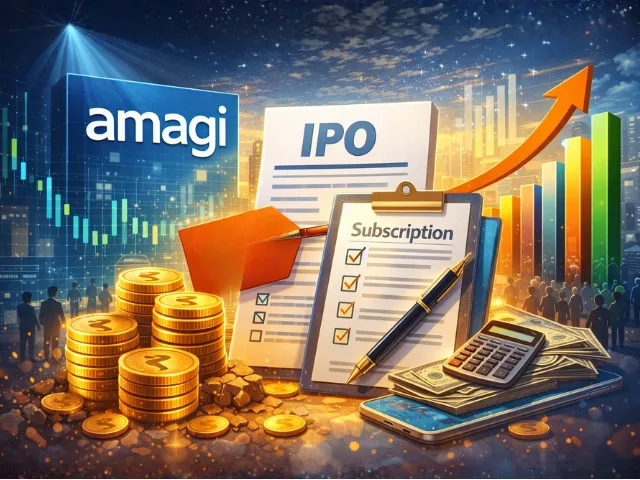
Amagi IPO Review: Key Details, Price Band & Subscription Outlook


Key Takeaways at a Glance
- Amagi shows strong revenue growth but continues to report losses
- EBITDA margin remains low at around 2 percent, limiting operating leverage
- Valuation appears expensive even on FY26 annualised earnings
- IPO proceeds are focused on growth and technology, not near-term profits
- Risk reward looks unfavourable for now; long-term investors may wait
Amagi IPO Analysis: High Growth, High Valuation, Limited Profit Visibility
The upcoming Amagi IPO has attracted attention due to its presence in the fast-growing advertising technology and connected TV segment. While the company’s topline growth story is compelling, a closer look at its financials raises important questions around profitability, valuation comfort, and risk reward balance.
In an IPO market that has become increasingly selective, investors are now looking beyond growth narratives and focusing on sustainable earnings. Against this backdrop, Amagi’s public issue warrants a cautious and well-informed evaluation.
Strong Revenue Growth Supports the Business Story
Amagi has reported robust revenue growth over recent years, driven by rising adoption of connected TV advertising and increased demand for data-driven ad solutions. The company has built a strong presence in global markets, particularly the United States, which contributes a large share of its revenue.
This growth reflects increasing advertiser preference for targeted digital platforms over traditional television advertising. From a business perspective, Amagi’s positioning within this structural shift supports long-term scalability.
However, revenue growth alone does not automatically translate into shareholder value, especially in public markets that now prioritise profitability discipline.
Profitability Remains the Biggest Concern
Despite strong topline expansion, Amagi continues to report negative Profit After Tax and Return on Equity. This indicates that the company is still investing heavily in growth, technology, and market expansion without generating sustainable bottom-line returns.
The EBITDA margin remains extremely low at around 2 percent. Such thin margins suggest that operating leverage has not yet kicked in and cost structures remain elevated. In comparison, mature adtech and platform businesses typically demonstrate improving margins as scale increases.
At present, Amagi appears to be in an early or transition phase, where profitability visibility remains uncertain.
Valuation Appears Stretched Even After Adjustments
Valuation is one of the most critical factors in any IPO decision. Even after factoring in a valuation haircut, the implied Price-to-Earnings multiple based on FY26 annualised earnings appears extremely high.
This creates a challenging risk reward equation for investors. High valuations can be justified when companies show clear visibility of profitability, strong cash flows, and improving return ratios. In Amagi’s case, earnings visibility remains limited, making it difficult to justify premium multiples.
Recent market trends show that investors have become cautious about overpaying for growth, particularly in loss-making or low-margin businesses.
IPO Proceeds Focus on Growth, Not Earnings Visibility
The primary objective of the IPO is to fund growth initiatives and technology investments rather than deliver immediate earnings improvement. While this strategy supports long-term business expansion, it also delays profitability timelines.
For investors, this means returns will largely depend on future execution rather than near-term financial performance. Any slowdown in global advertising spends or competitive pressure could impact growth assumptions and valuations.
Such IPOs are better suited for investors with a high risk appetite and a long investment horizon.
Risk Reward Assessment for Investors
From a risk reward perspective, the current setup appears unfavourable.
- Strong revenue growth is offset by weak profitability
- Margins remain too low to absorb business shocks
- Valuation leaves limited margin of safety
- Returns depend heavily on future execution and market conditions
In a market where several listed companies are offering stable earnings and reasonable valuations, the opportunity cost of investing in a high-risk IPO becomes significant.
Long-term investors may be better served by waiting for consistent profitability, improved EBITDA margins, and clearer return ratios before considering exposure.
Broader Market and Regulatory Context
SEBI’s disclosure norms ensure transparency around financials, risks, and use of proceeds. However, regulatory compliance does not reduce business risk. The responsibility lies with investors to assess whether the company’s fundamentals align with their investment objectives.
Recent IPO outcomes show that markets are no longer rewarding growth without profits. Companies with weak earnings visibility have seen post-listing volatility, reinforcing the importance of valuation discipline.
How Swastika Investmart Helps IPO Investors Make Better Choices
Analysing IPOs requires a balance of numbers, business understanding, and market awareness. Swastika Investmart, a SEBI-registered broking and research firm, supports investors with detailed IPO evaluations, valuation insights, and risk analysis.
With strong research tools, technology-enabled platforms, responsive customer support, and a focus on investor education, Swastika Investmart helps investors navigate IPO opportunities with clarity rather than speculation.
Frequently Asked Questions
Is Amagi a profitable company at present?
No, the company continues to report negative PAT and ROE, indicating profitability is yet to stabilise.
Why is EBITDA margin a concern in this IPO?
An EBITDA margin of around 2 percent suggests limited operating leverage and weak cost efficiency at the current scale.
Does high revenue growth justify the valuation?
Revenue growth alone may not justify high valuation multiples without clear profitability and cash flow visibility.
Who should consider investing in this IPO?
Only investors with a high risk appetite and long-term horizon should consider it, while conservative investors may wait.
Final Verdict
Amagi’s IPO presents an interesting business story backed by strong revenue growth and exposure to a promising digital advertising segment. However, weak profitability, low margins, and expensive valuation tilt the risk reward balance unfavourably.
Given the current financial profile, it may be prudent to avoid the IPO for now. Long-term investors can revisit the opportunity once the company demonstrates consistent profits and improved return ratios.
For research-backed IPO analysis and disciplined investment guidance, consider opening your account with Swastika Investmart.

Infosys Shares in Focus After 10% ADR Surge: What to Expect in Indian Markets
Key Takeaways at a Glance
- Infosys ADR surged nearly 10% in US trading, boosting investor sentiment
- ADR movements often influence early trade cues for Indian IT stocks
- Positive global cues could support Infosys shares in Indian markets
- Fundamentals, guidance, and global tech spending remain key drivers
- Long-term investors should focus on earnings visibility, not just ADR moves
Infosys Shares in Focus After 10% ADR Surge: What to Expect in Indian Markets
Infosys shares are back in the spotlight after the company’s American Depository Receipts surged nearly 10% in US trading. Such sharp moves in ADRs often grab investor attention, especially when domestic markets are closed. For Indian investors, the big question is whether this rally will translate into momentum for Infosys shares on Dalal Street.
ADR movements can influence sentiment, but they are not the sole factor shaping stock performance. Understanding the reasons behind the surge and its likely impact on Indian markets is crucial for making informed investment decisions.
What Triggered the Surge in Infosys ADR?
Infosys ADRs trade on US exchanges and typically reflect how global investors perceive the company. A sharp rise usually points to improved sentiment, triggered by factors such as earnings expectations, sectoral tailwinds, or broader market rallies.
In this case, optimism around global technology stocks, easing concerns over US interest rates, and renewed confidence in IT spending cycles have played a role. Large-cap IT companies like Infosys often benefit when global funds rotate back into technology after periods of caution.
ADR gains also reflect expectations of stable revenue visibility and margin resilience, especially at a time when global enterprises are selectively increasing digital transformation spends.
How ADR Movements Affect Infosys Shares in India
ADR prices act as an overnight indicator for Indian markets. While they do not guarantee identical price movement, they often influence opening sentiment.
Early trade cues
A strong ADR performance usually leads to positive cues during pre-market sessions in India. Traders and short-term participants closely track ADR premiums or discounts to anticipate opening gaps.
Currency and valuation impact
ADR prices are dollar-denominated, while Infosys shares trade in rupees. Exchange rate movements can amplify or moderate the impact of ADR gains on domestic prices.
Not a standalone trigger
It is important to note that ADR rallies do not override domestic fundamentals. Indian market participants eventually align stock prices with earnings, guidance, and management commentary.
Current Market Context for Indian IT Stocks
The Indian IT sector has seen mixed sentiment over the past year. While long-term digital demand remains intact, short-term challenges such as delayed client spending, pricing pressure, and cautious global outlook have weighed on valuations.
However, recent signs suggest stabilisation.
- US inflation data has shown signs of cooling, supporting risk appetite
- Global technology indices have regained momentum
- Large IT companies continue to report strong deal pipelines
Infosys, being one of India’s top IT exporters, is closely linked to global economic trends. A positive ADR move reflects improved confidence in these broader conditions.
What Investors Should Watch Going Forward
Earnings consistency
Infosys has maintained disciplined execution despite global uncertainty. Investors should track quarterly revenue growth, deal wins, and margin trends rather than short-term price spikes.
Management guidance
Forward-looking commentary often matters more than historical numbers. Any improvement in demand outlook or discretionary spending can support sustained upside.
Regulatory and compliance environment
As a SEBI-compliant listed entity, Infosys operates under strict disclosure norms. Transparent communication and governance standards continue to strengthen investor trust, especially among foreign institutional investors.
Broader IT sector movement
Infosys rarely moves in isolation. If peers also see buying interest, it signals sector-wide optimism rather than stock-specific speculation.
Short-Term Trading vs Long-Term Investing
For traders, ADR surges can offer short-term opportunities driven by momentum and sentiment. However, such trades carry higher volatility risk.
Long-term investors should view ADR rallies as confirmation of improving sentiment rather than a reason to chase prices. Sustainable wealth creation in IT stocks depends on earnings growth, return ratios, and competitive positioning.
This distinction is crucial, especially for retail investors navigating fast-moving headlines.
How Swastika Investmart Supports Smarter Decisions
Interpreting global cues like ADR movements requires context and clarity. Swastika Investmart, a SEBI-registered broking and research firm, empowers investors with in-depth analysis, sector insights, and timely market updates.
With strong research tools, technology-driven platforms, responsive customer support, and a focus on investor education, Swastika Investmart helps clients cut through market noise and focus on fundamentals that matter.
Frequently Asked Questions
Why do Infosys ADR movements matter to Indian investors?
ADR prices provide overnight cues on global investor sentiment and can influence early trading in Indian markets.
Does a 10% ADR surge guarantee a similar rise in Infosys shares in India?
No. While sentiment may turn positive, domestic prices ultimately depend on fundamentals, currency movement, and overall market conditions.
Are ADR-based trades suitable for long-term investors?
ADR movements are better suited for short-term sentiment tracking. Long-term investors should focus on earnings and growth visibility.
Is the IT sector entering a recovery phase?
Signs of stabilisation are visible, but a full recovery depends on global economic growth and technology spending trends.
Final Takeaway
The sharp rise in Infosys ADRs has brought the stock back into focus and improved near-term sentiment. While this could support Infosys shares in Indian markets, investors should avoid making decisions based solely on overnight cues.
A balanced approach that considers fundamentals, global trends, and long-term strategy remains key.
If you want expert insights, research-backed recommendations, and a reliable trading platform, consider opening your account with Swastika Investmart today.

India’s Labour Code Reform: Short-Term Pain, Long-Term Gain for IT Sector?
Key Takeaways at a Glance
- India’s labour code reform could raise near-term costs for IT companies due to compliance and benefits alignment
- Large IT firms may absorb the impact better than mid-sized players
- Over time, flexibility in hiring and workforce management could improve productivity
- The reforms may enhance India’s global competitiveness in IT services
- Investors should focus on long-term fundamentals rather than short-term margin pressure
India’s long-awaited labour code reforms are finally inching closer to full implementation. While the intent is to simplify and modernise India’s complex labour framework, the immediate impact on corporate India is mixed. For the IT sector, one of India’s largest employers and foreign exchange earners, the reforms raise an important question. Will labour code reform disrupt margins in the short term, or will it strengthen the sector’s global standing over time?
To answer this, investors need to look beyond headline costs and understand how structural reforms reshape long-term value creation.
Understanding India’s Labour Code Reform
India has consolidated 29 central labour laws into four labour codes. These include the Code on Wages, Industrial Relations Code, Social Security Code, and Occupational Safety, Health and Working Conditions Code.
The objective is clear. Simplify compliance, standardise definitions, improve worker protection, and give employers greater flexibility in workforce management. However, implementation across states remains staggered, adding an element of uncertainty for businesses.
For the IT sector, which employs millions across delivery centres in multiple states, alignment with these codes is not just a legal change but an operational shift.
Why the IT Sector Feels the Immediate Heat
Unlike manufacturing, IT firms already operate in a largely formalised environment. Yet the labour code reform introduces new cost and compliance elements that can impact margins.
Higher social security obligations
The revised definition of wages expands the base on which provident fund and gratuity contributions are calculated. Variable pay, allowances, and incentives may now fall under wage limits.
For large IT firms with thousands of employees, even a small increase in contribution percentages translates into significant absolute costs.
Compliance recalibration across states
IT companies operate delivery centres in Bengaluru, Hyderabad, Pune, Chennai, and Gurugram. Since states are rolling out labour codes at different speeds, firms must manage multiple compliance frameworks simultaneously.
This adds administrative burden and increases legal and HR costs in the short term.
Impact on operating margins
In a sector already facing pricing pressure from global clients, currency volatility, and higher attrition costs, labour reforms add another layer of near-term margin pressure.
Recent quarterly results from leading IT firms have already highlighted rising employee costs as a key concern.
Why Large IT Firms Are Better Positioned
The impact of labour code reform will not be uniform across the sector.
Scale matters
Large-cap IT companies have stronger balance sheets, diversified revenue streams, and established HR systems. They can absorb higher costs without significant disruption to profitability.
Mid-sized IT firms, on the other hand, may face tighter margins, especially those operating on lower billing rates or niche contracts.
Automation as a buffer
India’s top IT companies have already invested heavily in automation, AI, and digital delivery models. Over time, higher labour costs could accelerate this transition, improving productivity per employee.
This shift may initially impact hiring sentiment but strengthens long-term efficiency.
Long-Term Gains That Investors Should Not Ignore
While the short-term pain is real, labour code reform offers several structural benefits for the IT sector.
Workforce flexibility
Simplified rules around hiring, termination, and contract labour can help IT companies align workforce size with project demand. This is particularly important in a sector driven by global business cycles.
Improved formalisation
Standardised wage definitions and social security coverage enhance employee trust and retention. Over time, this can reduce attrition costs, a persistent challenge for Indian IT firms.
Global competitiveness
Multinational clients increasingly focus on ESG compliance, labour standards, and workforce welfare. A modernised labour framework improves India’s credibility as a responsible outsourcing destination.
This strengthens India’s position against competing IT hubs in Eastern Europe and Southeast Asia.
Market Impact and Investor Perspective
From a market standpoint, labour code reform is unlikely to trigger sharp valuation re-rating in the near term. Instead, it acts as a slow-burn structural change.
Short-term stock reactions may reflect margin concerns, especially during result seasons. However, long-term investors should track how efficiently companies adapt their cost structures and leverage productivity gains.
This is where informed research becomes crucial. Understanding which IT firms can convert regulatory change into operational advantage makes a meaningful difference to portfolio outcomes.
Regulatory Context and Policy Direction
The labour code reform aligns with broader policy initiatives such as Make in India, Digital India, and ease of doing business reforms. While IT is not a traditional manufacturing sector, its employment intensity makes it a key stakeholder.
SEBI-regulated research firms and market participants are closely tracking how these reforms influence earnings visibility and capital allocation decisions within the IT space.
How Swastika Investmart Helps Investors Navigate This Shift
Navigating policy-driven sectoral changes requires more than surface-level analysis. Swastika Investmart, a SEBI-registered research and broking firm, provides investors with data-backed insights, sectoral deep dives, and long-term investment frameworks.
With robust research tools, responsive customer support, and a strong focus on investor education, Swastika Investmart helps investors look beyond short-term noise and focus on sustainable value creation.
Frequently Asked Questions
Will labour code reform significantly hurt IT company profits?
The impact is expected to be moderate and front-loaded. Large IT firms can absorb higher costs, while long-term benefits may offset short-term pressure.
Which IT companies are most vulnerable to these reforms?
Mid-sized IT firms with thinner margins and limited automation capabilities may face higher relative pressure.
Does labour reform improve India’s attractiveness for global IT clients?
Yes. Better labour standards and compliance improve India’s ESG profile, which matters to global enterprises.
Is this reform positive for IT employees?
In the long run, expanded social security coverage and standardised wage structures enhance employee benefits and stability.
Final Thoughts
India’s labour code reform is a classic case of structural change. The IT sector may experience near-term discomfort as costs rise and compliance evolves. However, the long-term gains in flexibility, productivity, and global credibility cannot be ignored.
For investors, the key is to stay informed, patient, and selective.
If you want expert insights on how regulatory shifts impact Indian sectors and stocks, consider opening your trading and investment account with Swastika Investmart today.
%20(7)%20(6).webp)
ICICI Lombard Q3 FY26: Profit Slips 9% as Rising Claims Push Combined Ratio Above 105%.
Key Takeaways at a Glance
- ICICI Lombard reported a 9 percent year-on-year decline in profit for Q3 FY26
- Rising claims, especially in motor and health insurance, impacted underwriting performance
- Combined ratio crossed the 105 percent mark, indicating margin pressure
- Long-term growth drivers remain intact despite near-term profitability concerns
ICICI Lombard Q3 FY26: Profit Slips 9% as Rising Claims Push Combined Ratio Above 105%
The ICICI Lombard Q3 FY26 results reflect a challenging quarter for India’s largest private-sector general insurer. While premium growth remained steady, profitability came under pressure as higher claims weighed on margins. Net profit declined by around 9 percent year on year, and the combined ratio moved above the critical 105 percent level, raising concerns among investors about near-term earnings visibility.
For market participants tracking the insurance space, these numbers highlight the fine balance insurers must maintain between growth and underwriting discipline, especially in a competitive environment.
Understanding ICICI Lombard’s Q3 FY26 Performance
Profit Decline Explained
The drop in profit during the quarter was largely driven by an increase in claims across key segments. Motor insurance witnessed higher claim frequencies, while health insurance continued to see elevated medical costs. These trends pushed up the loss ratio, directly impacting underwriting margins.
Although investment income provided some support, it was not enough to fully offset the pressure from rising claims. As a result, overall profitability declined despite stable operating income.
Combined Ratio Crosses 105 Percent
The combined ratio is a crucial metric for general insurers, as it measures underwriting performance by combining claims and expense ratios. A ratio above 100 percent indicates that the insurer is paying out more in claims and expenses than it earns in premiums.
In Q3 FY26, ICICI Lombard’s combined ratio crossed 105 percent, signaling stress on underwriting margins. While this level is not unprecedented during periods of high claims, it does raise questions about pricing discipline and cost control in the short term.
Segment-Wise Trends and Market Context
Motor and Health Insurance Pressures
Motor insurance has seen a gradual increase in claim severity, driven by higher repair costs and rising spare part prices. Health insurance, on the other hand, continues to face inflationary pressures due to increased hospital charges and more frequent claims.
These trends are not unique to ICICI Lombard. The broader general insurance industry in India has been grappling with similar challenges, making underwriting discipline more important than ever.
Competitive Intensity in the Industry
India’s general insurance market remains highly competitive, with private players focusing on growth through pricing and product innovation. While this supports premium expansion, it can also compress margins if claims experience worsens.
ICICI Lombard’s scale and diversified portfolio provide some resilience, but maintaining profitability in such an environment requires careful risk assessment and pricing adjustments.
Regulatory and Industry Factors at Play
IRDAI Oversight and Pricing Discipline
The Insurance Regulatory and Development Authority of India plays a key role in shaping industry practices. Regulatory focus on transparency, solvency, and fair pricing encourages insurers to strengthen their underwriting frameworks.
In recent years, regulatory measures have aimed to promote sustainable growth rather than aggressive price-led expansion. Over time, this could help stabilise combined ratios across the industry.
Long-Term Insurance Penetration Story
Despite short-term volatility, India’s insurance penetration remains relatively low compared to global standards. Rising awareness, increased vehicle ownership, and growing healthcare needs continue to support long-term demand for general insurance products.
For established players like ICICI Lombard, this structural growth offers a strong foundation, even if quarterly earnings fluctuate.
What This Means for Investors
Short-Term Volatility vs Long-Term Fundamentals
From an investor’s perspective, the ICICI Lombard Q3 FY26 results may prompt near-term caution. Elevated combined ratios and profit pressure could weigh on sentiment in the short run.
However, long-term investors often look beyond a single quarter. ICICI Lombard’s strong brand, wide distribution network, and disciplined balance sheet position it well to benefit from industry growth over time.
Importance of Tracking Key Metrics
For insurance stocks, metrics such as combined ratio, loss ratio, and premium growth are as important as headline profit numbers. Investors should monitor whether pricing adjustments and cost controls help improve margins in coming quarters.
Access to structured research and timely insights can make a meaningful difference in such analysis.
Role of Research and Technology in Smarter Investing
Understanding sector-specific nuances requires more than just headline data. Platforms like Swastika Investmart, a SEBI-registered brokerage, support investors with in-depth research, market insights, and advanced trading tools.
With a focus on investor education, technology-enabled investing, and responsive customer support, Swastika Investmart helps investors make informed decisions across market cycles, including sectors like insurance where fundamentals matter more than short-term noise.
Frequently Asked Questions
Why did ICICI Lombard profit fall in Q3 FY26?
Profit declined mainly due to higher claims in motor and health insurance, which increased the combined ratio.
What does a combined ratio above 105 percent indicate?
It suggests that underwriting operations are under pressure, with claims and expenses exceeding premium income.
Is this issue specific to ICICI Lombard?
No, rising claims have affected the broader general insurance industry in India.
Does this impact ICICI Lombard’s long-term outlook?
While short-term profitability is impacted, long-term growth drivers such as low insurance penetration remain intact.
What should investors track going forward?
Investors should watch combined ratio trends, premium growth, and management commentary on pricing and claims control.
Final Takeaway
The ICICI Lombard Q3 FY26 results underline the challenges facing general insurers amid rising claims and competitive pressures. While the combined ratio crossing 105 percent is a concern in the near term, the company’s strong market position and long-term industry tailwinds provide comfort to patient investors.
Staying informed and data-driven is key when evaluating such developments. With its research-backed approach, technology-driven platforms, and strong investor support, Swastika Investmart enables investors to navigate earnings seasons with greater clarity.
If you are looking to track market opportunities more effectively, take the next step today.

Tata Punch 2026 Facelift: Can the New Turbo Engine Redefine the Entry SUV Segment?
Key Takeaways at a Glance
- Tata Punch 2026 Facelift is expected to bring a refreshed design and a new turbo petrol engine
- The upgrade could strengthen Tata Motors’ leadership in the entry-level SUV segment
- Improved performance and features aim to attract younger urban buyers
- Strong product momentum may support Tata Motors’ passenger vehicle growth story
Tata Punch 2026 Facelift: Can the New Turbo Engine Redefine the Entry SUV Segment?
The Tata Punch has been one of the most successful stories in India’s compact SUV space. Since its launch, it has consistently featured among the top-selling cars in the country, appealing to first-time buyers, small families, and urban commuters alike. Now, market buzz around the Tata Punch 2026 Facelift suggests that Tata Motors is preparing to raise the bar once again.
At the heart of this update could be a new turbo petrol engine, a move that may change how buyers view entry-level SUVs. The big question is whether this upgrade is just a cosmetic refresh or a strategic step that could reshape the segment and strengthen Tata Motors’ position in the Indian auto market.
Why the Tata Punch Facelift Matters
A Strong Base to Build On
The current Tata Punch has already proven its appeal with a strong safety rating, practical design, and competitive pricing. It struck a chord with buyers who wanted the SUV look without stretching their budget.
However, customer preferences are evolving. Buyers now expect more power, better technology, and refined driving experiences even in smaller cars. The upcoming facelift is Tata Motors’ opportunity to meet these expectations head-on.
Turbo Engine as a Game Changer
If reports hold true, the Tata Punch 2026 Facelift may feature a turbocharged petrol engine similar to what Tata Motors already offers in other models. For everyday users, this could mean smoother highway drives, quicker overtakes, and a more confident feel behind the wheel.
For a buyer upgrading from a basic hatchback, this performance boost could be a decisive factor.
What to Expect from the Tata Punch 2026 Facelift
Design and Feature Upgrades
While Tata Motors is unlikely to alter the Punch’s core design language, subtle exterior tweaks are expected. These may include revised bumpers, updated lighting elements, and new alloy wheel designs.
Inside the cabin, buyers can expect improvements in infotainment, connected car technology, and comfort features. A larger touchscreen and enhanced driver assistance features could bring the Punch closer to premium offerings without losing its value positioning.
Improved Driving Experience
The introduction of a turbo engine could significantly enhance the driving dynamics. Urban commuters often struggle with underpowered engines during peak traffic or highway merges. A turbocharged option would address this pain point directly.
This aligns well with India’s changing driving patterns, where city dwellers increasingly take weekend highway trips and expect versatility from their vehicles.
Competitive Landscape and Market Impact
Standing Out in the Entry SUV Segment
The entry-level SUV category is one of the most competitive spaces in India. Buyers compare features, mileage, safety, and resale value closely before making a decision.
With the facelift, Tata Motors is likely aiming to create clear differentiation. A turbo engine combined with a strong safety reputation could position the Punch as a more complete package than many rivals.
Impact on Tata Motors Passenger Vehicle Business
From a market perspective, consistent success of models like the Punch strengthens Tata Motors’ passenger vehicle portfolio. This segment has been a key growth driver for the company in recent years, alongside electric vehicles.
A successful facelift could help Tata Motors maintain volumes, protect market share, and improve margins, factors that equity investors closely monitor.
Regulatory and Policy Context in India
Emissions and Safety Norms
Any new engine introduced in 2026 will comply with India’s prevailing emission standards, ensuring alignment with regulatory requirements. Tata Motors has already demonstrated its capability to adapt to stricter norms without compromising performance.
On the safety front, the Punch’s strong crash test credentials have been a major selling point. Maintaining or improving this standard will be critical, especially as safety awareness among Indian buyers continues to rise.
Push for Domestic Manufacturing
The Indian government’s emphasis on local manufacturing supports automakers with strong domestic supply chains. Tata Motors, with its established manufacturing base, is well positioned to benefit from this policy environment.
What This Means for Investors
Auto Sector Momentum
The Indian automobile sector has shown resilience despite economic cycles. Strong demand, improving rural sentiment, and premiumisation trends are shaping long-term growth.
Product upgrades like the Tata Punch 2026 Facelift signal management’s focus on innovation and consumer-centric design, which can positively influence investor confidence.
Tracking Tata Motors Through Research Tools
For investors following auto stocks, staying updated on product launches, sales data, and margin trends is essential. Platforms like Swastika Investmart, a SEBI-registered brokerage, support investors with research-driven insights, advanced trading tools, and dedicated customer support.
Such resources help investors connect product-level developments with broader financial performance.
Frequently Asked Questions
What is new in the Tata Punch 2026 Facelift?
The facelift is expected to bring design updates, enhanced features, and a possible turbo petrol engine.
Will the new Tata Punch be more powerful than the current model?
If a turbo engine is introduced, the Punch will likely offer better performance and improved drivability.
Is the Tata Punch suitable for first-time car buyers?
Yes, its compact size, safety focus, and expected feature upgrades make it appealing for new buyers.
How could the facelift impact Tata Motors stock?
Successful launches can support sales growth and strengthen investor sentiment, though stock performance depends on broader market factors.
Will the Tata Punch remain affordable after the facelift?
Tata Motors is expected to retain competitive pricing while offering added value through features and performance.
Final Thoughts
The Tata Punch 2026 Facelift appears more than just a routine update. With the possibility of a turbo engine and meaningful feature enhancements, it could redefine expectations in the entry SUV segment. For consumers, this means more choice and better performance. For investors, it highlights Tata Motors’ commitment to product-led growth.
If you want to stay ahead of such market-moving developments and explore investment opportunities with confidence, Swastika Investmart offers a robust platform backed by research, technology, and investor education.
Take the next step in your investing journey.

ONGC, Oil India Extend Rally on Rising Crude Prices — Can the Momentum Sustain?
Key Takeaways at a Glance
- ONGC and Oil India stocks are rising in sync with higher global crude oil prices
- Improved realizations and stable cost structures support near-term earnings visibility
- PSU oil explorers benefit directly from crude upcycles, unlike downstream peers
- Sustainability of the rally depends on crude price stability, policy clarity, and global demand trends
Shares of ONGC and Oil India have been on a steady upward move, tracking the recent rise in global crude oil prices. For investors watching India’s energy space, the rally has revived a familiar question. When oil prices move up, upstream PSU stocks tend to outperform. But can this momentum last, or is it another short-term trade driven by volatile commodities?
To answer that, it is important to look beyond daily price action and understand how crude prices, government policy, and global demand dynamics shape the earnings outlook for India’s oil exploration companies.
Why Are ONGC and Oil India Rising Now?
Crude Oil Prices Move Higher
The primary trigger behind the recent rally is the sharp uptick in global crude oil prices. Brent crude has been trading at elevated levels due to a mix of factors including supply discipline by OPEC+, geopolitical tensions in key producing regions, and signs of improving global demand.
For upstream companies like ONGC and Oil India, higher crude prices translate almost directly into better realizations. Unlike downstream oil marketing companies, they do not face price caps on petrol and diesel. This direct linkage often makes upstream stocks early beneficiaries in a crude upcycle.
Strong Link Between Crude and Earnings
Historically, ONGC and Oil India have shown a strong correlation between crude prices and profitability. Even a modest rise in average crude realization can significantly boost operating margins, especially when production costs remain stable.
For example, when crude prices recovered post pandemic, ONGC’s cash flows improved materially despite flat production volumes. Investors tend to anticipate this effect early, which partly explains the recent stock performance.
How Rising Crude Impacts ONGC and Oil India Financials
Revenue and Margin Expansion
Higher crude prices improve topline growth for upstream players without proportionately increasing costs. Exploration and production costs are largely fixed in the short term. This operating leverage works in favour of companies like ONGC and Oil India during an upcycle.
As a result, EBITDA margins typically expand, strengthening balance sheets and improving dividend-paying capacity.
Improved Cash Flows and Capex Visibility
Stronger cash flows allow oil PSUs to fund capital expenditure internally. This is crucial for long-term investors because sustained investment in exploration ensures reserve replacement and production stability.
Oil India, for instance, has been focusing on domestic exploration blocks and enhanced recovery techniques. A favourable crude environment supports these initiatives without stretching leverage.
Indian Market Context and Policy Landscape
Government Policies and Windfall Taxes
One key risk investors track closely is government intervention. India has, in the past, imposed windfall taxes on crude producers when prices surged sharply. While such levies help protect fiscal stability, they can cap upside for upstream companies.
However, recent policy actions suggest a more calibrated approach, with taxes adjusted periodically rather than abruptly. This has improved visibility and reduced regulatory shock for investors.
Strategic Importance of Domestic Oil Production
India imports a significant portion of its crude oil requirement. Domestic producers like ONGC and Oil India play a strategic role in reducing import dependence. This gives them long-term relevance, even if near-term production growth remains moderate.
From a regulatory standpoint, stable policies under the Ministry of Petroleum and Natural Gas continue to support domestic exploration and production activity.
Can the Rally Sustain From Here?
Factors Supporting the Momentum
- Continued firmness in global crude prices
- Stable production levels and cost discipline
- Healthy dividend yields attracting long-term investors
- PSU rerating theme driven by balance sheet improvement
For investors seeking exposure to commodities within the Indian equity market, upstream oil stocks offer a relatively direct play on crude prices compared to diversified energy companies.
Risks That Could Derail the Trend
Despite the positives, risks remain. A sharp correction in crude prices due to global slowdown fears or increased supply could impact sentiment quickly. Additionally, any unexpected increase in windfall taxes or policy changes may limit upside.
Market participants should also watch currency movements, as a stronger rupee can partially offset crude realization gains.
How Retail Investors Should Look at ONGC and Oil India
Trading vs Long-Term Investing
For short-term traders, ONGC and Oil India often work best as momentum plays aligned with crude price trends. For long-term investors, the appeal lies in consistent dividends, improving capital discipline, and strategic relevance.
A balanced approach is to track crude prices along with company-specific updates such as production guidance, capex plans, and policy developments.
Role of Research and Market Tools
Navigating commodity-linked stocks requires timely data and research. This is where platforms like Swastika Investmart add value through structured research, sector insights, and technology-driven investing tools. Being a SEBI-registered broker, Swastika Investmart focuses on informed decision-making rather than speculation.
Frequently Asked Questions
Why do ONGC and Oil India rise when crude prices increase?
Upstream oil companies earn more per barrel when crude prices rise, directly improving revenues and margins.
Are ONGC and Oil India affected by fuel price controls?
Unlike oil marketing companies, upstream players are not directly impacted by petrol and diesel price controls.
What is the biggest risk to these stocks?
A sharp fall in crude prices or higher windfall taxes imposed by the government can impact earnings.
Are these stocks suitable for long-term investors?
They can be suitable for income-focused investors due to dividends, but returns remain linked to commodity cycles.
How do global events impact Indian oil stocks?
Geopolitical tensions, OPEC decisions, and global demand trends directly influence crude prices and, in turn, oil stocks.
Conclusion
The rally in ONGC and Oil India reflects a familiar but powerful theme in Indian markets: rising crude prices boost upstream oil stocks. While the current momentum is supported by global supply dynamics and stable domestic policies, sustainability will depend on how crude prices behave over the coming quarters.
For investors, the key lies in staying informed, balancing risk, and using reliable research tools. With its strong research ecosystem, investor education initiatives, and tech-enabled platforms, Swastika Investmart helps investors navigate such sectoral trends with confidence.
Ready to take the next step in your investing journey?


.webp)
.webp)

.webp)





START YOUR INVESTMENT JOURNEY
Get personalized advice from our experts
- Dedicated RM Support
- Smooth and Fast Trading App