.png)
The US economy remains the single most influential force in global financial markets. From equity flows to currency movements and commodity prices, decisions taken in Washington and by the US Federal Reserve ripple across economies worldwide. As we look ahead, understanding what to expect from the US economy in 2026 becomes essential for Indian investors, traders, exporters and policymakers.
In this blog, we break down the expected economic trends in the US for 2026 and explain how these developments could shape Indian stock markets, interest rates, currency movements and investment strategies.
After years of post pandemic recovery and policy tightening, the US economy is expected to enter 2026 with stable momentum. Most global institutions expect GDP growth to remain around the long term average rather than the sharp expansion seen earlier in the decade.
Key drivers include strong consumer spending, government infrastructure investment and continued capital expenditure in technology and artificial intelligence. At the same time, high base effects and tighter financial conditions could limit rapid growth.
For Indian investors, stable US growth is generally positive as it supports global risk appetite without creating excessive inflationary pressure.
Inflation is expected to trend closer to the US Federal Reserve’s comfort zone by 2026, though it may not settle perfectly at two percent. Wage pressures, energy prices and supply chain restructuring will continue to influence price levels.
Lower inflation reduces the need for aggressive monetary tightening and supports equity markets globally.
One of the most watched elements of the US economy in 2026 will be interest rates. If inflation continues to ease, the Federal Reserve may shift towards a more accommodative stance or maintain stable rates.
For India, this matters because lower US interest rates often lead to increased foreign portfolio inflows into emerging markets like India, improving liquidity and supporting equity valuations.
The US dollar’s trajectory in 2026 will depend largely on interest rate differentials and economic confidence. A stable or slightly weaker dollar typically benefits emerging market currencies, including the Indian rupee.
A stronger rupee can help reduce imported inflation for India, especially in crude oil and raw materials. However, exporters may face margin pressure if currency appreciation becomes sharp.
Foreign Institutional Investors closely track US bond yields and equity performance. If US yields remain stable and growth continues without shocks, India is likely to attract sustained FII inflows.
Historically, periods of US economic stability have coincided with strong performance in Indian sectors such as IT, banking, capital goods and consumer discretionary.
Trade policy remains a key variable. Any shift towards protectionism or tariff changes can affect Indian exports to the US, particularly in textiles, engineering goods and specialty chemicals.
However, diversification away from China continues to create long term opportunities for Indian manufacturers under the China plus one strategy.
From an Indian regulatory standpoint, SEBI continues to emphasize transparency, investor protection and risk management. Global volatility originating from the US economy reinforces the importance of disciplined investing, asset allocation and regulatory compliance.
Platforms like Swastika Investmart, a SEBI registered intermediary, play a crucial role by offering research backed insights, technology driven trading platforms and investor education that helps clients navigate global uncertainty confidently.
👉 Open your trading and investment account today
Long term wealth creation depends on staying invested with a clear strategy rather than timing global events perfectly.
How will the US economy in 2026 affect Indian stock markets?
A stable US economy usually supports global risk appetite, leading to better FII inflows and positive sentiment in Indian equities.
Will US interest rate changes impact Indian investors?
Yes. Lower or stable US rates often encourage foreign investments into India, improving liquidity and market valuations.
Which Indian sectors are most influenced by the US economy?
IT, pharmaceuticals, metals and export oriented manufacturing sectors are most sensitive to US economic trends.
Is a weaker US dollar good for India?
Generally yes, as it supports the rupee and reduces import costs, though exporters may face some pressure.
Understanding what to expect from the US economy in 2026 is essential for making informed investment decisions in India. While global uncertainties will always exist, a balanced US growth outlook combined with easing inflation could create a supportive environment for Indian markets.
With expert research, robust trading platforms and strong customer support, Swastika Investmart helps investors stay ahead of global trends while focusing on long term financial goals.

The announcement that Vikram Engineering has bagged a ₹2,035 crore solar EPC order has caught the attention of market participants across Dalal Street. In a sector where order inflows often drive sentiment, such a large contract naturally raises expectations around revenue growth, execution strength, and future profitability.
But for investors, the real question goes beyond the headline. What does this order actually mean for Vikram Engineering’s stock? Is it a turning point or simply another milestone in a competitive EPC landscape? This blog breaks down the implications with a balanced, fundamentals-driven lens.
The ₹2,035 crore order is part of a large-scale solar power project aligned with India’s renewable energy expansion plans. EPC contracts typically include engineering, procurement, and construction, making execution quality as important as order size.
For Vikram Engineering, this order significantly enhances revenue visibility over the next few years. It also reinforces the company’s credibility in handling large and complex renewable projects, an area where client confidence plays a crucial role.
In practical terms, such orders usually translate into phased revenue recognition, depending on project milestones and timelines.
India’s renewable energy push is no longer aspirational. It is policy-backed and execution-driven. With government targets focused on expanding solar capacity, EPC players are seeing increased tender activity and competitive bidding.
Against this backdrop, Vikram Engineering’s order win signals its ability to compete effectively. It also places the company firmly within a sector that enjoys long-term structural tailwinds rather than short-term cyclical demand.
From an Indian market perspective, renewable-focused announcements often attract both institutional and retail interest, especially when backed by tangible order inflows.
A ₹2,035 crore order meaningfully boosts the company’s order book. This improves revenue predictability and supports growth visibility, particularly if execution stays on schedule.
However, investors should remember that EPC businesses are execution-led. Revenue realization depends on timely procurement, construction efficiency, and client approvals.
Solar EPC margins tend to be competitive. While scale helps, profitability depends on procurement efficiency, commodity price management, and project planning.
If Vikram Engineering manages costs well, the order can contribute positively to operating margins. Any delays or cost overruns, however, could pressure profitability.
Large EPC orders often demand higher working capital. Monitoring receivables, advances, and cash flow cycles will be important as the project progresses.
Historically, EPC stocks often see an initial positive reaction to large order wins. However, sustained stock performance depends on follow-through execution and quarterly updates.
Markets tend to reward consistency rather than one-off announcements. If Vikram Engineering demonstrates steady execution and improving financial metrics, investor confidence is likely to strengthen over time.
Short-term volatility is common, especially if broader market sentiment turns risk-averse.
Despite the positive headline, risks remain.
Project execution risk is inherent in EPC businesses. Delays due to supply chain issues, regulatory approvals, or weather conditions can affect timelines.
Competition in the solar EPC space is intense. Pricing pressure remains a reality, especially as more players chase large renewable projects.
Policy clarity is supportive, but changes in tender norms or payment cycles can impact cash flows. Investors should also track commodity price movements, which influence input costs.
India’s renewable energy expansion is supported by policy initiatives and long-term targets. Solar EPC players benefit from this ecosystem, though compliance and execution standards remain high.
As a listed company, Vikram Engineering operates under SEBI disclosure requirements, ensuring transparency around order inflows, execution progress, and financial performance. This regulatory oversight helps investors track developments with clarity.
For long-term investors, the key lies in separating signal from noise. A large order is a positive indicator, but not a guarantee of value creation.
Tracking quarterly execution updates, margin trends, and cash flow discipline will provide a clearer picture than headline numbers alone.
Those with a higher risk appetite may see opportunities during market corrections, while conservative investors may prefer to wait for execution visibility.
Interpreting EPC order wins requires context, not just enthusiasm. Swastika Investmart, a SEBI-registered brokerage, supports investors with detailed research, sector insights, and execution-focused analysis.
With tech-enabled investing platforms, strong customer support, and a commitment to investor education, Swastika Investmart helps investors evaluate whether such announcements translate into sustainable shareholder value.
Is the ₹2,035 crore order positive for Vikram Engineering?
Yes, it improves order book strength and revenue visibility, subject to smooth execution.
Will this immediately boost profits?
Profit impact depends on execution pace, cost control, and margin management.
Is the solar EPC sector competitive?
Yes, competition is high, making execution capability a key differentiator.
Should investors buy the stock on this news?
Investment decisions should consider valuation, execution track record, and risk appetite.
Does policy support reduce risk?
Policy support helps demand, but project-level risks still exist.
Vikram Engineering’s ₹2,035 crore solar EPC order is a meaningful development that strengthens its growth visibility and reinforces its position in India’s renewable energy ecosystem. While the opportunity is clear, execution will ultimately determine shareholder value.
For investors seeking clarity amid market-moving announcements, Swastika Investmart offers the research depth, tools, and guidance needed to make informed, disciplined decisions.
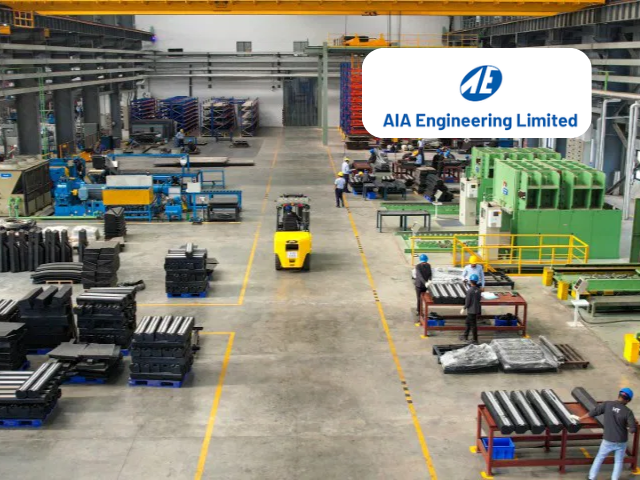
Among Indian manufacturing companies with global relevance, AIA Engineering fundamental analysis often leads to one key question. Is this business close to a monopoly?
AIA Engineering Ltd is a global leader in high-chrome grinding media and wear-resistant castings used primarily in cement and mining industries. These products are mission-critical consumables. Once approved by customers, they are rarely replaced by alternatives. This creates a business that behaves like a near monopoly without being one in a legal sense.
For long-term Indian investors focused on quality, stability, and capital preservation, AIA Engineering stands out as a quietly powerful compounder.
AIA Engineering supplies grinding media used in crushing and grinding operations. These operations run continuously, and the grinding media wears out over time. Replacement is not optional.
A cement plant or mining operation cannot afford inconsistent quality. Even a minor drop in grinding efficiency can increase power costs, reduce throughput, and cause unplanned shutdowns. This makes performance more important than price.
Once AIA Engineering’s products are approved, customers tend to stick for years. This repeat demand creates predictable revenues and strong visibility, a rare feature in industrial manufacturing.
Exports form a significant share of revenues, giving the company geographic diversification and reducing dependence on the Indian infrastructure cycle.
Switching grinding media suppliers is risky. Every mill behaves differently, depending on ore hardness, mill design, and operating conditions. AIA Engineering customizes its alloy composition and product design for each client.
Once this customization is validated, customers avoid switching due to operational risk. This creates monopoly-like behavior without formal market dominance.
The real moat lies in knowledge, not machinery. Decades of metallurgical data, testing, and process optimization give AIA Engineering a clear edge. New entrants can buy machines, but replicating experience takes years.
While competitors exist, very few operate at AIA Engineering’s scale with similar consistency, global reach, and product performance. This allows AIA Engineering to command pricing power without aggressive competition.
AIA Engineering’s financials reinforce its competitive position.
Over the long term, revenues have grown at around 7 to 8 percent, while profits have grown between 9 and 13 percent. This indicates improving efficiency and operating leverage.
Operating margins remain strong at nearly 27 to 28 percent, which is exceptional for a manufacturing company. These margins reflect product differentiation and pricing power rather than cost cutting alone.
The balance sheet is a major strength. The company operates with very low debt and high interest coverage, keeping financial risk minimal. Strong operating cash flows fund expansion and dividends without stressing capital.
Return ratios are stable and healthy. ROE around 15 percent and ROCE close to 19 percent indicate efficient capital use without leverage-driven risk.
At current levels, AIA Engineering trades at a P/E multiple of around 31 times. This is clearly a premium valuation compared to traditional manufacturing peers.
However, the premium reflects its near-monopoly economics, predictable cash flows, and balance sheet strength. The stock may not offer sharp short-term upside, but it suits investors looking for steady compounding and downside protection.
This makes AIA Engineering more suitable for long-term portfolios than for tactical trading strategies.
End-user industries such as cement and mining are cyclical. During global slowdowns, volume growth can soften, even though replacement demand offers some cushion.
Raw material price volatility can temporarily impact margins, especially if cost pass-through lags. Currency fluctuations also affect earnings due to export exposure.
Valuation risk is real. Buying at high multiples limits short-term returns if growth slows.
AIA Engineering reflects India’s evolution from low-cost manufacturing to high-value engineering exports. Its success strengthens India’s position in global industrial supply chains.
As a listed company, it follows SEBI disclosure norms and maintains transparent reporting. This regulatory framework enhances investor confidence and aligns with long-term investing principles.
Understanding near-monopoly businesses requires deeper analysis beyond surface metrics. Swastika Investmart, a SEBI-registered brokerage, provides in-depth equity research, sector insights, and advanced analytical tools to support informed investing.
With tech-enabled platforms, strong customer support, and a focus on investor education, Swastika Investmart helps investors evaluate quality businesses like AIA Engineering with clarity and discipline.
Is AIA Engineering a monopoly?
No, but it displays near-monopoly characteristics due to high switching costs and technical expertise.
Why are margins so high for a manufacturing company?
Strong pricing power, customization, and customer stickiness support superior margins.
Is export exposure a risk?
Exports add diversification, though currency movements can affect short-term results.
Is the stock suitable for short-term investors?
It is better suited for long-term investors focused on stability rather than quick gains.
Does valuation limit future returns?
Premium valuation may cap short-term upside, but long-term compounding remains attractive.
AIA Engineering’s fundamental analysis reveals a business with near-monopoly economics, strong financial discipline, and predictable demand. While valuations are premium, the company remains a high-quality compounder for patient investors seeking consistency and capital protection.
For investors looking to analyze such businesses with confidence and structure, Swastika Investmart offers the research depth, technology, and support needed to make informed decisions.
%20(1).png)
Indian equity markets opened on a mixed note today as investors remain cautious amid global uncertainty and stock-specific action.
While benchmark indices showed limited movement, the broader tone suggests a wait-and-watch approach at the start of the session.
The Nifty 50 opened marginally lower at 26,170.65, down 0.02 percent, reflecting muted sentiment among frontline stocks.
The index is currently consolidating near higher levels after recent gains. Profit booking in select heavyweights is keeping upside capped, while buying interest at lower levels continues to provide support.
• Immediate support near 26,100
• Strong support around 26,000
• Resistance seen near 26,250
• Break above resistance may open further upside
Traders are advised to remain cautious and avoid aggressive positions until a clear directional trend emerges.
The Bank Nifty opened slightly higher at 59,322.95, gaining 0.04 percent, supported by selective buying in private sector banks.
Despite global rate uncertainty, banking stocks continue to show resilience due to stable asset quality expectations and improving credit growth outlook in India.
• Immediate support near 59,000
• Strong support around 58,800
• Resistance placed near 59,600
• Sustained move above resistance may attract momentum buying
Global markets are trading mixed, with investors closely tracking macroeconomic data, interest rate expectations, and geopolitical developments.
In the domestic market, sentiment remains balanced as participants focus on:
• Corporate earnings outlook
• Institutional flows
• Global market direction
• Stock-specific developments
FII and DII activity will remain a key trigger during the session, especially in heavyweight stocks.
At the opening bell, sectoral performance is mixed:
• Banking stocks show marginal strength
• IT stocks trade cautiously amid global tech uncertainty
• FMCG remains stable
• Auto and metal stocks are seeing selective activity
Stock-specific moves are expected to dominate trading action today.
• Intraday traders should trade with strict stop-loss
• Avoid chasing momentum at higher levels
• Focus on stock-specific opportunities
• Positional traders may wait for confirmation above resistance levels
Volatility may remain limited unless there is a strong trigger from global markets.
Swastika Investmart provides traders and investors with:
• Real-time market insights
• Research-backed trading levels
• Advanced trading platforms
• Dedicated customer support
Our SEBI-compliant approach ensures disciplined and informed decision-making in dynamic market conditions.
👉 Trade smarter with Swastika Investmart
The Indian market has opened on a cautious yet stable note, with Nifty 50 trading slightly lower and Bank Nifty showing mild strength.
As the session progresses, global cues and institutional activity will guide further direction. Traders are advised to stay disciplined and focus on risk management.
👉 Trade smarter with Swastika Investmart
Stay informed. Stay disciplined. 📊
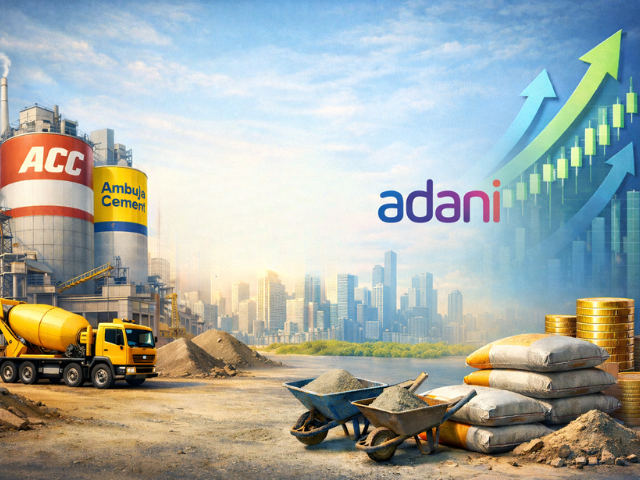
When the Adani Group acquired Ambuja Cements and ACC, it signalled a decisive shift in India’s cement landscape. What initially looked like a strategic entry into a core infrastructure sector has now evolved into a much larger consolidation story. The proposed merger of Ambuja Cements and ACC marks a defining moment for both the Adani Group and the Indian cement industry.
For investors, this move is not just about corporate restructuring. It raises important questions around market dominance, cost synergies, regulatory oversight and the future valuation of cement stocks.
Understanding the Ambuja–ACC merger impact on stocks requires looking beyond short-term price reactions and into the structural implications of scale, efficiency and capital allocation.
Ambuja Cements and ACC are two of India’s most established cement companies, with strong brand recall, pan-India manufacturing footprints and deep dealer networks. Together, they command a significant share of India’s cement capacity.
Under the Adani Group, the merger aims to unlock operational efficiencies by combining logistics, procurement, power sourcing and distribution. Cement is a scale-driven business, where cost leadership often determines profitability. Larger volumes allow better bargaining power on fuel, freight and raw materials.
For Adani, the merger strengthens its ambition to become one of the world’s largest cement producers, aligned with India’s long-term infrastructure growth story.
Cement is a critical input for roads, housing, railways, ports and urban infrastructure. India’s government-led capital expenditure cycle has created sustained demand visibility for the sector.
The Adani Group’s strategy focuses on backward integration and logistics optimisation. With access to ports, rail networks, power assets and renewable energy, Adani can potentially reduce cement production and transportation costs over time.
By merging Ambuja and ACC, the group simplifies structure, reduces duplication and enhances capital efficiency. This is particularly important in an industry where margins are sensitive to fuel costs and freight expenses.
From a shareholder perspective, the merger raises both opportunities and concerns.
On the positive side, operational synergies could improve profitability over the medium term. Shared logistics, unified procurement and better capacity utilisation may lead to margin expansion, especially during favourable demand cycles.
However, near-term market reactions often reflect uncertainty. Integration costs, merger ratios and regulatory approvals can influence stock performance in the short run. Investors also closely watch how debt levels and capital expenditure plans evolve post-merger.
Historically, cement mergers have rewarded patient investors once synergy benefits become visible in earnings rather than immediately after announcements.
Large mergers in capital-intensive sectors attract regulatory scrutiny. The Competition Commission of India plays a key role in evaluating market concentration and pricing power.
While the Indian cement market remains competitive with multiple national and regional players, consolidation does increase the influence of large groups. Regulators typically focus on ensuring fair competition and preventing monopolistic practices.
For investors, regulatory approvals are a procedural risk rather than a fundamental threat, but timelines and conditions can affect sentiment.
The Ambuja–ACC merger could accelerate consolidation across the cement sector. Smaller regional players may face increased pricing pressure as larger groups optimise costs and expand distribution reach.
At the same time, stronger balance sheets and scale allow major players to invest in capacity expansion, green energy and alternative fuels. This supports long-term sustainability goals and aligns with evolving environmental regulations in India.
For the Indian markets, a stronger cement sector supports infrastructure development, employment and capital formation.
Despite the strategic logic, risks remain.
Integration execution is critical. Merging operations, cultures and systems requires disciplined management. Any delays in synergy realisation can impact earnings expectations.
Cement demand is cyclical and linked to construction activity. A slowdown in infrastructure spending or housing demand can affect volumes.
Input costs such as coal, pet coke and freight remain volatile. Although scale provides some cushion, margin pressures cannot be eliminated entirely.
Finally, high expectations embedded in stock prices can lead to short-term volatility if results do not immediately reflect synergy benefits.
The Ambuja–ACC merger under the Adani Group is a long-term structural story rather than a short-term trading event. Investors with a medium to long-term horizon may view consolidation as a positive development, provided balance sheet discipline and execution remain strong.
Tracking quarterly performance, cost trends and capacity expansion plans will be crucial in evaluating progress.
Corporate actions of this scale require careful analysis rather than headline-driven decisions. Understanding regulatory processes, synergy timelines and sector cycles can make a meaningful difference to outcomes.
This is where Swastika Investmart, a SEBI-registered brokerage, adds value. With in-depth research, sector expertise, robust trading platforms and investor education initiatives, Swastika Investmart helps investors navigate complex corporate developments with clarity and confidence.
Why is the Ambuja–ACC merger significant?
The merger creates a larger, more efficient cement platform under the Adani Group, unlocking cost synergies and strengthening market positioning.
How does this merger impact Ambuja and ACC stocks?
In the short term, stock performance may remain volatile. Over the long term, synergy benefits and improved profitability could support valuations.
Will regulators approve the Ambuja–ACC merger?
The merger will be reviewed by the Competition Commission of India to ensure fair competition. Such approvals are common in large consolidations.
Does this merger make Adani a cement monopoly?
No. While Adani becomes a major player, the Indian cement industry remains competitive with several large and regional producers.
Is the cement sector attractive for long-term investors?
Cement benefits from infrastructure growth but remains cyclical. Long-term investors should focus on balance sheet strength and cost leadership.
The Ambuja–ACC merger marks a bold step in Adani Group’s cement strategy. While short-term market reactions may fluctuate, the long-term narrative centres on scale, efficiency and alignment with India’s infrastructure growth.
For investors seeking to understand and act on such structural themes with confidence, research-backed insights are essential.
If you are exploring opportunities in cement and infrastructure stocks, consider partnering with Swastika Investmart for informed investing and seamless execution.


Trust Our Expert Picks
for Your Investments!




• Financials, autos, and defence stocks dominated the gainers list
• IT stocks clearly underperformed and dragged the losers pack
• Sectoral rotation played a bigger role than overall market direction
• Stock-specific fundamentals mattered more than index movement
The last one year in the Indian equity markets has been a perfect example of how stock selection can make or break returns. While Nifty moved higher in phases, individual stocks showed extreme divergence. Some stocks delivered near 50 percent returns, while others corrected sharply despite being index heavyweights.
This sharp contrast makes it important to study Nifty’s top 5 gainers and losers of the last one year and understand what actually drove these moves. The insights are especially relevant for retail investors who often assume index stocks move together.
Indian markets over the past year saw a mix of strong domestic growth, sector rotation, and changing global cues. Capital flowed into sectors linked to consumption, defence, and financial services, while export-oriented IT stocks faced pressure.
What stood out was that leadership changed within the index itself. Defensive names struggled, while growth-focused businesses rewarded investors handsomely.
Bajaj Finance moved from around 694 to over 1009, delivering a return of about 45 percent. The stock benefited from consistent performance in retail lending, improving asset quality, and strong investor confidence in the NBFC space.
As credit demand stayed healthy and risk concerns eased, investors were willing to pay a premium for predictable growth.
Maruti Suzuki surged roughly 46 percent over the year, rising from about 11209 to 16377. Strong demand for passenger vehicles, better product mix, and improved margins helped the stock outperform.
The rally highlighted how consumption-led themes continued to attract long-term investors despite concerns around input costs.
Shriram Finance delivered close to 47 percent returns, moving from about 583 to nearly 859. The company gained from robust demand in the commercial vehicle financing space and improving profitability metrics.
This performance underlined the market’s preference for well-managed lenders with niche dominance.
Eicher Motors also rose around 47 percent, climbing from approximately 4885 to 7190. Strong Royal Enfield sales, improving exports, and operating leverage played a major role.
The stock reflected how brand strength and execution can drive rerating even in a competitive auto market.
Bharat Electronics gained about 33 percent, moving from around 294 to 390. The stock benefited from steady defence-related orders and positive sentiment towards indigenous manufacturing.
This performance showed how policy-driven sectors can generate stable returns during uncertain global conditions.
| S. No. | Top Gainer Stock Name | Price on 01/01/2025 | Price on 19/12/2025 | % Change |
|---|---|---|---|---|
| 1 | Bajaj Finance Ltd | 693.97 | 1009.10 | 45% |
| 2 | Maruti Suzuki India Ltd | 11208.30 | 16377.00 | 46% |
| 3 | Shriram Finance Ltd | 583.75 | 858.80 | 47% |
| 4 | Eicher Motors Ltd | 4885.30 | 7190.00 | 47% |
| 5 | Bharat Electronics Ltd (BEL) | 293.90 | 390.10 | 33% |
| 6 | SBI Life Insurance | 1400.40 | 2017.30 | 44% |
The common thread among gainers was earnings visibility and sectoral tailwinds. Financials benefited from credit growth, autos from domestic demand, and defence from structural government support.
Importantly, these stocks rewarded patience rather than short-term trading.
Trent was the biggest loser, falling nearly 43 percent from around 7068 to 4032. After strong previous rallies, the stock saw profit booking and valuation correction.
This highlighted how even quality retail stories can correct sharply when expectations run too far ahead.
TCS declined about 19.5 percent, dropping from roughly 4112 to 3311. Slower global IT spending and cautious client outlook impacted the stock.
Despite being a market leader, sentiment turned negative as growth visibility weakened.
Infosys fell around 12.4 percent over the year, moving from about 1883 to 1649. Deal delays and margin concerns weighed on investor confidence.
The correction showed that size does not guarantee downside protection.
HCL Tech declined nearly 13.9 percent, from around 1912 to 1646. Pressure on discretionary tech spending and sector-wide concerns played a role.
Wipro slipped close to 11.8 percent, falling from about 300 to 265. Weak revenue growth outlook kept the stock under pressure.
| S. No. | Top 5 Losers Stock Name | Price (Earlier) | Price (Latest) | % Change |
|---|---|---|---|---|
| 1 | Trent Ltd. | 7068.05 | 4032.20 | -42.95% |
| 2 | TCS | 4112.45 | 3310.60 | -19.50% |
| 3 | Infosys Ltd. | 1882.50 | 1648.90 | -12.41% |
| 4 | HCL Tech Ltd. | 1911.95 | 1646.20 | -13.90% |
| 5 | Wipro Ltd. | 300.30 | 264.75 | -11.84% |
| 6 | ITC | 456.80 | 400.95 | -12.23% |
| 7 | Power Grid | 310.40 | 260.20 | -16.17% |
The IT sector faced multiple headwinds. Global clients cut discretionary budgets, deal closures slowed, and currency benefits failed to offset growth concerns.
This resulted in a clear underperformance of IT stocks within Nifty, despite their heavyweight status.
For investors, this one-year period reinforced a key lesson. Index investing provides stability, but alpha comes from understanding sector cycles and company fundamentals.
The divergence between gainers and losers also highlighted why risk management and portfolio diversification are critical.
When markets show such sharp contrasts, relying on headlines alone can be costly. Research-driven investing helps identify when momentum is backed by fundamentals and when corrections are driven by structural issues.
Swastika Investmart, a SEBI-registered brokerage, supports investors with strong research tools, sector insights, and technology-driven platforms. Their focus on investor education and responsive customer support helps investors stay disciplined during volatile phases.
Why did financial stocks outperform the market?
Financial stocks benefited from strong credit demand, improving balance sheets, and better earnings visibility.
Why did IT stocks fall despite being large companies?
Slower global spending and weak growth outlook impacted sentiment across the IT sector.
Does one year performance decide long-term potential?
No. One-year performance reflects cycles. Long-term returns depend on consistent fundamentals.
Should investors avoid underperforming stocks?
Not necessarily. Some corrections create opportunities, but only after proper analysis.
How can retail investors manage such market extremes?
By diversifying portfolios, tracking fundamentals, and using research-backed platforms.
Nifty’s top 5 gainers and losers of the last one year clearly show that markets reward clarity and punish uncertainty. Sector rotation, earnings visibility, and valuations played a bigger role than overall index movement.
For investors, the takeaway is simple. Stay informed, stay selective, and stay disciplined.
If you want to invest with structured research, smart tools, and professional support, consider Swastika Investmart.

• Large-cap indices showed relative stability while mid and small caps saw sharper swings
• Sector-specific indices reflected clear rotation during the year
• Broader markets rewarded selective stock picking, not blanket investing
• Index behaviour highlights the importance of asset allocation and discipline
The Indian stock market rarely moves in a straight line, and this year was a clear reminder of that reality. While headline indices often grab attention, a closer look shows that different indices behaved very differently. Some rewarded patience, others tested investor nerves, and a few quietly outperformed without much noise.
Understanding how Indian stock market indices behaved this year is not just an academic exercise. It offers practical lessons for investors on diversification, risk management, and expectations. Let us break it down in a simple, investor-friendly way.
This year was shaped by a mix of domestic strength and global uncertainty. India’s economy remained resilient, supported by consumption, government spending, and stable banking health. At the same time, global cues like interest rate uncertainty and uneven growth kept volatility alive.
Against this backdrop, Indian indices did not move in sync. Performance depended heavily on market capitalisation, sector exposure, and earnings visibility.
Large-cap indices like Nifty and Sensex showed relatively steady movement through the year. While there were periods of correction, sharp crashes were largely avoided.
This stability came from strong balance sheets, predictable earnings, and leadership from sectors like financials, autos, and select industrials. For many long-term investors, large-cap indices acted as shock absorbers during volatile phases.
Large-cap indices may not always deliver eye-catching returns in a single year, but they provide consistency. Investors relying on these indices for core portfolio allocation benefited from lower volatility and smoother returns.
Midcap indices experienced higher volatility compared to large caps. There were phases of strong rallies driven by earnings optimism and liquidity flows. However, these rallies were often followed by sharp corrections when valuations stretched.
This behaviour reminded investors that midcaps amplify both opportunity and risk.
Midcap exposure needs discipline. Chasing momentum without valuation comfort proved costly for some investors. Those who focused on quality midcap businesses with earnings visibility fared better.
Small cap indices showed the widest swings this year. Periods of strong optimism were followed by equally strong sell-offs. Liquidity-driven moves played a major role, making price action more emotional than fundamental at times.
Retail participation was high, which added to volatility.
Small caps demand patience and strong research. Blind diversification within small caps did not work. Investors who treated small caps as long-term bets rather than quick trades managed risk better.
Financial and auto-related indices showed relative strength during the year. Stable demand, improving margins, and regulatory comfort supported these sectors.
Banks and NBFCs benefited from credit growth and healthy balance sheets, while auto companies gained from steady domestic consumption.
IT indices faced pressure due to global demand slowdown and cautious client spending. Defensive sectors also underperformed in phases when risk appetite improved.
This divergence highlighted how sector cycles matter as much as overall market direction.
One key takeaway from this year is that Indian markets are becoming more selective. Index-level movement no longer tells the full story.
SEBI’s continuous focus on transparency, governance, and investor protection has strengthened market depth. As a result, stock-specific fundamentals are playing a bigger role than broad market sentiment.
For investors, this means passive investing alone may not capture all opportunities.
Different indices serve different purposes. Large caps provide stability, midcaps offer growth, and small caps add optional upside. A balanced allocation helps smooth returns across cycles.
Many investors assume index returns reflect their portfolio returns. This year showed that stock selection within indices can lead to very different outcomes.
With divergence across indices and sectors, research-backed investing becomes critical. Understanding earnings quality, valuations, and sector trends helps avoid emotional decisions.
In a market where indices move differently, investors need more than basic tools. They need insights, timely analysis, and guidance.
Swastika Investmart, a SEBI-registered brokerage, supports investors with strong research capabilities, tech-enabled trading platforms, and a focus on investor education. Their customer support and analytical tools help investors interpret market trends rather than react to them.
Whether you are tracking index performance or building a diversified portfolio, access to reliable research adds confidence.
Why do different indices behave differently in the same year?
Because each index represents a different set of companies, sectors, and risk profiles.
Is investing only in Nifty enough?
Nifty provides stability, but combining it with selective mid and small-cap exposure can improve long-term returns.
Are sectoral indices useful for retail investors?
Yes, they help understand sector trends, but direct investing requires timing and research.
Does volatility mean markets are weak?
Not necessarily. Volatility often reflects changing expectations rather than poor fundamentals.
How should new investors use index data?
As a guide for allocation and risk understanding, not as the sole basis for stock selection.
This year clearly showed that Indian stock market indices do not move as one. Each index told a different story, shaped by fundamentals, liquidity, and investor behaviour.
For investors, the lesson is simple. Respect market cycles, diversify wisely, and rely on research rather than noise.
If you are looking to invest with clarity, technology, and professional research support, consider Swastika Investmart.
%20(2).png)
Indian equity markets ended the session on 24 December 2025 on a weak note, giving up intraday gains amid profit booking and cautious sentiment across sectors.
Despite a stable start and a positive mid-day move on 24 December 2025, benchmark indices failed to sustain higher levels and slipped into negative territory by the closing bell.
The market began the day on 24 December 2025 with a mixed opening, reflecting cautious global cues and selective stock action.
• Nifty 50 opened at 26,170.65, marginally lower by 0.02 percent
• Bank Nifty opened at 59,322.95, up 0.04 percent
Early trade saw limited momentum as investors remained watchful amid global and domestic cues.
By mid-session on 24 December 2025, markets showed signs of recovery supported by buying interest in select heavyweight stocks.
• Nifty 50 traded at 26,189.80, up 0.05 percent
• Bank Nifty traded at 59,316.70, up 0.03 percent
The recovery was driven by short covering and selective accumulation, though volumes remained moderate.
As the session progressed on 24 December 2025, selling pressure emerged at higher levels, leading to a reversal in benchmark indices.
• Nifty 50 closed at 26,142.10, down 0.13 percent
• Nifty Bank closed at 59,183.60, down 0.20 percent
Late-session profit booking in banking and heavyweight stocks weighed on overall market sentiment.
Several factors influenced market movement on 24 December 2025:
• Profit booking after recent gains
• Lack of strong global cues
• Cautious positioning ahead of upcoming macro events
• Stock-specific selling in banking and frontline stocks
Despite intraday recovery, markets lacked fresh triggers to sustain upward momentum.
Sector performance remained mixed throughout the session:
• Banking stocks saw mild selling pressure
• IT stocks traded cautiously
• FMCG remained relatively stable
• Auto and metal stocks witnessed selective activity
Broader markets also traded with mild volatility, indicating cautious participation.
The market continues to consolidate near higher levels after the session on 24 December 2025. While the long-term structure remains intact, short-term volatility may persist.
Key factors to watch in upcoming sessions include:
• Global market trends
• FII and DII activity
• Movement in banking and heavyweight stocks
• Key technical support and resistance levels
Swastika Investmart supports traders and investors with:
• Real-time market insights
• Research-backed trading views
• Advanced, tech-enabled trading platforms
• Dedicated customer support
Our SEBI-compliant approach ensures informed and disciplined decision-making across market conditions.
The trading session on 24 December 2025 highlighted the importance of caution at higher levels. Despite intraday recovery, benchmark indices closed lower due to profit booking.
As markets consolidate, a stock-specific and risk-managed approach remains key.
%20(3).png)
Indian equity markets closed on a positive note on Friday, 19 December 2025, extending their upward momentum for the second consecutive session. Buying interest across banking, financials, and select heavyweight stocks helped benchmark indices end near the day’s highs.
The overall tone of the market remained optimistic, supported by stable global cues, steady institutional participation, and expectations of continued economic growth in India.
At the closing bell, benchmark indices posted healthy gains:
Markets opened on a firm note and gradually moved higher as buying interest picked up during the mid-session, especially in banking and large-cap stocks.
The session began with cautious optimism. Early trade saw Nifty 50 hovering around 25,911, while Bank Nifty traded near 59,047. Gradual accumulation by institutional investors helped indices inch higher.
By mid-session, markets consolidated gains without major profit booking. This phase reflected confidence among participants despite year-end volatility typically seen in December.
In the final hour, fresh buying lifted indices to close near the day’s highs. Nifty 50 traded around 25,957, while Bank Nifty crossed 59,020, confirming strong intraday support levels.
Banking stocks remained the backbone of today’s rally. Private sector banks and select PSU banks attracted buying interest, supporting Bank Nifty’s steady performance near record territory.
Heavyweights across FMCG, IT, and capital goods sectors contributed to market stability. Investors preferred quality large-cap stocks amid ongoing global uncertainties.
Mid-cap and small-cap stocks traded with a positive bias, indicating healthy risk appetite. Market breadth favored advancers, suggesting broad-based participation rather than a narrow rally.
Several factors influenced the positive close:
With inflation largely under control and corporate earnings visibility improving, investor confidence remains intact.
For short-term traders, today’s close above key levels reinforces a positive trend, especially in banking and index heavyweights.
For long-term investors, the steady rise reflects confidence in India’s growth story. Phased investing and disciplined allocation continue to remain sensible strategies in current market conditions.
SEBI-regulated market frameworks and transparent disclosures continue to strengthen trust among retail investors participating through digital platforms.
In markets like today, where momentum builds gradually, having access to reliable research and real-time insights becomes crucial.
Swastika Investmart, a SEBI-registered stockbroker, supports investors through:
This combination helps investors make informed decisions rather than emotional ones.
👉 Open your trading and investment account with Swastika Investmart
Why did the Indian stock market close higher today?
Positive global cues, banking sector strength, and steady institutional buying helped markets end higher.
What was the closing level of Nifty 50 today?
Nifty 50 closed at 25,966.40 on 19 December 2025.
How did Bank Nifty perform today?
Bank Nifty ended at 59,069.20, maintaining strength near record levels.
Is the market trend bullish after today’s close?
The trend remains positive, but investors should stay cautious of short-term volatility.
Should investors enter the market at current levels?
A staggered investment approach with proper research is generally advisable.
The market closing today on 19 December 2025 reflects sustained optimism in Indian equities. With Nifty, Sensex, and Bank Nifty holding strong levels, sentiment remains constructive heading into the final trading days of the year.
For investors looking to participate confidently in India’s growth journey, combining disciplined strategies with expert research is key.
👉 Open your trading and investment account with Swastika Investmart
Invest smart. Invest informed.

Artificial Intelligence has become the most talked-about force in global markets. From Silicon Valley to Dalal Street, investors are debating one big question. Will AI reduce the need for traditional IT services or will it create a new wave of demand? Against this backdrop, a fresh theme is gaining attention. The anti-AI trade.
In simple terms, an anti-AI trade means betting on sectors that may benefit if AI adoption is slower, regulated, or more expensive than expected. For Indian investors, this brings Indian IT companies into sharp focus. By 2026, could Indian IT stocks act as a hedge against overhyped AI narratives?
Let us break this down in a practical, market-focused way.
AI promises automation, faster coding, and lower costs. Global tech giants are investing billions to reduce dependence on large human workforces. At first glance, this looks negative for IT services companies.
But markets often move in cycles. When expectations run too far ahead of reality, counter-trends emerge.
An anti-AI trade assumes three possibilities.
First, AI implementation is slower than expected due to regulatory and ethical constraints.
Second, AI raises costs instead of reducing them, especially for enterprise clients.
Third, businesses still need humans to manage, customise, and secure AI systems.
If any of these play out, traditional IT services could regain relevance.
Indian IT companies like TCS, Infosys, Wipro, HCLTech, and Tech Mahindra are deeply integrated into global enterprise systems. They are not just coding shops anymore.
They handle legacy system maintenance, cloud migration, cybersecurity, compliance, and now AI integration itself.
For example, a large US bank may experiment with AI-driven customer support. But it still needs an Indian IT firm to integrate AI with its core banking systems, ensure data privacy, and meet regulatory norms. AI does not work in isolation.
This is where Indian IT’s real strength lies.
Despite AI tools, global companies remain cost-sensitive. Indian IT offers scalable talent at competitive costs. Even if AI reduces coding time, enterprises still prefer outsourcing execution and maintenance.
In a slow global growth environment, CFOs focus on cost control. That directly supports Indian IT spending.
India, the EU, and even the US are discussing stricter AI regulations. Data privacy laws, sector-specific compliance, and accountability frameworks can slow full-scale AI rollout.
Indian IT firms already operate in regulated environments like BFSI and healthcare. They understand compliance better than pure AI startups.
If regulation tightens, enterprises may rely more on trusted IT vendors instead of experimenting aggressively.
AI-generated code still needs validation, testing, and security checks. Enterprises cannot risk mission-critical systems on unchecked automation.
Indian IT companies are positioning themselves as AI partners rather than AI victims. Many are training employees to work alongside AI tools, not against them.
This hybrid model could support stable revenue growth.
A balanced view is important.
If AI tools become extremely efficient and easy to deploy, some low-end IT services may face pricing pressure. Margins could compress if companies fail to move up the value chain.
Also, large global clients may delay discretionary IT spending during economic uncertainty. This affects short-term revenue visibility.
Hence, Indian IT as an anti-AI trade is not a blanket bet. It is a selective opportunity.
Indian IT stocks have historically acted as defensives during global slowdowns. In 2026, if AI-led tech stocks correct globally due to high expectations, Indian IT could attract value-focused investors.
Domestic mutual funds, FIIs, and long-term investors may rotate into predictable cash-flow businesses. SEBI’s emphasis on transparency and governance also adds comfort for institutional investors.
This does not mean explosive rallies. Instead, steady returns, dividend yield, and lower volatility could be the appeal.
Instead of chasing headlines, investors should focus on fundamentals.
Look for companies with strong client diversification, high deal wins, and clear AI strategy. Track order books, attrition trends, and management commentary.
This is where research-backed platforms make a difference.
In theme-based investing like the anti-AI trade, timing and stock selection are crucial. Blind optimism or fear can hurt returns.
Swastika Investmart, a SEBI-registered brokerage, stands out with its strong research ecosystem, tech-enabled platforms, and investor education focus. Their detailed reports, sector insights, and responsive customer support help investors navigate evolving market themes with clarity.
Whether you are a long-term investor or a short-term trader, access to reliable research tools can help separate noise from opportunity.
AI is more of a transformation tool than a direct threat. Indian IT firms are adapting by offering AI integration and management services.
It refers to investing in sectors that may benefit if AI adoption is slower or less disruptive than expected.
Yes, especially companies with strong fundamentals, diversified clients, and clear AI strategies.
Historically, yes. They often provide stability during global economic uncertainty.
No. Stock selection and timing matter. Research-driven decisions are essential.
The idea of Indian IT as an anti-AI trade in 2026 is not about rejecting AI. It is about recognising market cycles, regulatory realities, and human dependency in technology.
Indian IT companies are evolving, not disappearing. For investors, this theme offers stability rather than excitement. And in uncertain times, stability often wins.
If you want to explore such themes with structured research and professional support, consider investing with Swastika Investmart.
%20(1).png)
The IPO market in India in 2025 remained one of the most closely watched segments of the equity market. With strong domestic participation, rising demat accounts, and easy access to online investing, IPOs continued to attract massive attention from retail investors.
However, 2025 was also a reality check. While some IPOs delivered impressive listing gains, others struggled to hold their issue price. This divergence made one thing clear, IPO investing is no longer about blind subscriptions but informed decision-making.
As we step into 2026, understanding last year’s IPO performance becomes critical for navigating the primary market ahead.
Despite global macro uncertainties, India’s primary market stayed resilient in 2025. Several companies tapped the capital markets to fund expansion, deleverage balance sheets, and provide exits to early investors.
Key trends observed:
While subscription numbers remained healthy, post-listing performance became the real differentiator.
Some IPOs stood out by delivering strong listing gains, rewarding investors who focused on fundamentals rather than hype.
These IPOs benefited from:
Such listings reinforced the idea that quality businesses still command a premium in the IPO market.
Not all IPOs had a smooth debut. A few listings disappointed investors by opening below issue price or losing momentum shortly after listing.
Common red flags among weak IPOs:
These cases highlighted the importance of reading offer documents and understanding business fundamentals.
A closer IPO performance analysis reveals clear patterns.
Winning factors included:
Meanwhile, IPOs relying purely on market sentiment struggled once listing-day excitement faded.
SEBI continued to play a crucial role in shaping a healthier IPO ecosystem in 2025.
Key regulatory measures included:
These steps helped retail investors make better-informed decisions and reduced information asymmetry.
The IPO market in India 2026 is expected to be more selective but fundamentally stronger.
Likely trends:
Upcoming IPOs in India are expected to come from companies with proven business models rather than concept-stage stories.
IPO investing in 2026 will demand discipline and patience.
Smart investors should:
Using research-backed platforms and expert insights can significantly improve IPO selection quality.
Swastika Investmart, a SEBI-registered brokerage, supports investors with in-depth IPO analysis, timely updates, and investor education.
Key strengths include:
This empowers investors to participate in IPOs with clarity rather than speculation.
👉 Open your trading account now
Was 2025 a good year for IPO investors?
Yes, but selectively. Quality IPOs performed well, while overvalued listings underperformed.
Do IPO listing gains guarantee long-term returns?
No. Long-term performance depends on business growth, earnings, and governance.
Are SEBI regulations making IPOs safer?
Yes. SEBI’s tighter norms have improved transparency and reduced risks for retail investors.
What should investors focus on in the IPO market in India 2026?
Fundamentals, valuation discipline, and long-term business potential.
The IPO market in India in 2025 taught investors valuable lessons. Listing gains are no longer guaranteed, and blind optimism can be costly. As we move into 2026, IPO investing is evolving into a more mature, research-driven activity.
Investors who focus on quality, regulatory compliance, and long-term value creation will be better positioned to benefit from upcoming IPOs in India.
If you are planning to explore IPO opportunities through a SEBI-registered, research-focused platform, Swastika Investmart offers the tools and insights to help you invest with confidence.