.png)
The US economy remains the single most influential force in global financial markets. From equity flows to currency movements and commodity prices, decisions taken in Washington and by the US Federal Reserve ripple across economies worldwide. As we look ahead, understanding what to expect from the US economy in 2026 becomes essential for Indian investors, traders, exporters and policymakers.
In this blog, we break down the expected economic trends in the US for 2026 and explain how these developments could shape Indian stock markets, interest rates, currency movements and investment strategies.
After years of post pandemic recovery and policy tightening, the US economy is expected to enter 2026 with stable momentum. Most global institutions expect GDP growth to remain around the long term average rather than the sharp expansion seen earlier in the decade.
Key drivers include strong consumer spending, government infrastructure investment and continued capital expenditure in technology and artificial intelligence. At the same time, high base effects and tighter financial conditions could limit rapid growth.
For Indian investors, stable US growth is generally positive as it supports global risk appetite without creating excessive inflationary pressure.
Inflation is expected to trend closer to the US Federal Reserve’s comfort zone by 2026, though it may not settle perfectly at two percent. Wage pressures, energy prices and supply chain restructuring will continue to influence price levels.
Lower inflation reduces the need for aggressive monetary tightening and supports equity markets globally.
One of the most watched elements of the US economy in 2026 will be interest rates. If inflation continues to ease, the Federal Reserve may shift towards a more accommodative stance or maintain stable rates.
For India, this matters because lower US interest rates often lead to increased foreign portfolio inflows into emerging markets like India, improving liquidity and supporting equity valuations.
The US dollar’s trajectory in 2026 will depend largely on interest rate differentials and economic confidence. A stable or slightly weaker dollar typically benefits emerging market currencies, including the Indian rupee.
A stronger rupee can help reduce imported inflation for India, especially in crude oil and raw materials. However, exporters may face margin pressure if currency appreciation becomes sharp.
Foreign Institutional Investors closely track US bond yields and equity performance. If US yields remain stable and growth continues without shocks, India is likely to attract sustained FII inflows.
Historically, periods of US economic stability have coincided with strong performance in Indian sectors such as IT, banking, capital goods and consumer discretionary.
Trade policy remains a key variable. Any shift towards protectionism or tariff changes can affect Indian exports to the US, particularly in textiles, engineering goods and specialty chemicals.
However, diversification away from China continues to create long term opportunities for Indian manufacturers under the China plus one strategy.
From an Indian regulatory standpoint, SEBI continues to emphasize transparency, investor protection and risk management. Global volatility originating from the US economy reinforces the importance of disciplined investing, asset allocation and regulatory compliance.
Platforms like Swastika Investmart, a SEBI registered intermediary, play a crucial role by offering research backed insights, technology driven trading platforms and investor education that helps clients navigate global uncertainty confidently.
👉 Open your trading and investment account today
Long term wealth creation depends on staying invested with a clear strategy rather than timing global events perfectly.
How will the US economy in 2026 affect Indian stock markets?
A stable US economy usually supports global risk appetite, leading to better FII inflows and positive sentiment in Indian equities.
Will US interest rate changes impact Indian investors?
Yes. Lower or stable US rates often encourage foreign investments into India, improving liquidity and market valuations.
Which Indian sectors are most influenced by the US economy?
IT, pharmaceuticals, metals and export oriented manufacturing sectors are most sensitive to US economic trends.
Is a weaker US dollar good for India?
Generally yes, as it supports the rupee and reduces import costs, though exporters may face some pressure.
Understanding what to expect from the US economy in 2026 is essential for making informed investment decisions in India. While global uncertainties will always exist, a balanced US growth outlook combined with easing inflation could create a supportive environment for Indian markets.
With expert research, robust trading platforms and strong customer support, Swastika Investmart helps investors stay ahead of global trends while focusing on long term financial goals.

The announcement that Vikram Engineering has bagged a ₹2,035 crore solar EPC order has caught the attention of market participants across Dalal Street. In a sector where order inflows often drive sentiment, such a large contract naturally raises expectations around revenue growth, execution strength, and future profitability.
But for investors, the real question goes beyond the headline. What does this order actually mean for Vikram Engineering’s stock? Is it a turning point or simply another milestone in a competitive EPC landscape? This blog breaks down the implications with a balanced, fundamentals-driven lens.
The ₹2,035 crore order is part of a large-scale solar power project aligned with India’s renewable energy expansion plans. EPC contracts typically include engineering, procurement, and construction, making execution quality as important as order size.
For Vikram Engineering, this order significantly enhances revenue visibility over the next few years. It also reinforces the company’s credibility in handling large and complex renewable projects, an area where client confidence plays a crucial role.
In practical terms, such orders usually translate into phased revenue recognition, depending on project milestones and timelines.
India’s renewable energy push is no longer aspirational. It is policy-backed and execution-driven. With government targets focused on expanding solar capacity, EPC players are seeing increased tender activity and competitive bidding.
Against this backdrop, Vikram Engineering’s order win signals its ability to compete effectively. It also places the company firmly within a sector that enjoys long-term structural tailwinds rather than short-term cyclical demand.
From an Indian market perspective, renewable-focused announcements often attract both institutional and retail interest, especially when backed by tangible order inflows.
A ₹2,035 crore order meaningfully boosts the company’s order book. This improves revenue predictability and supports growth visibility, particularly if execution stays on schedule.
However, investors should remember that EPC businesses are execution-led. Revenue realization depends on timely procurement, construction efficiency, and client approvals.
Solar EPC margins tend to be competitive. While scale helps, profitability depends on procurement efficiency, commodity price management, and project planning.
If Vikram Engineering manages costs well, the order can contribute positively to operating margins. Any delays or cost overruns, however, could pressure profitability.
Large EPC orders often demand higher working capital. Monitoring receivables, advances, and cash flow cycles will be important as the project progresses.
Historically, EPC stocks often see an initial positive reaction to large order wins. However, sustained stock performance depends on follow-through execution and quarterly updates.
Markets tend to reward consistency rather than one-off announcements. If Vikram Engineering demonstrates steady execution and improving financial metrics, investor confidence is likely to strengthen over time.
Short-term volatility is common, especially if broader market sentiment turns risk-averse.
Despite the positive headline, risks remain.
Project execution risk is inherent in EPC businesses. Delays due to supply chain issues, regulatory approvals, or weather conditions can affect timelines.
Competition in the solar EPC space is intense. Pricing pressure remains a reality, especially as more players chase large renewable projects.
Policy clarity is supportive, but changes in tender norms or payment cycles can impact cash flows. Investors should also track commodity price movements, which influence input costs.
India’s renewable energy expansion is supported by policy initiatives and long-term targets. Solar EPC players benefit from this ecosystem, though compliance and execution standards remain high.
As a listed company, Vikram Engineering operates under SEBI disclosure requirements, ensuring transparency around order inflows, execution progress, and financial performance. This regulatory oversight helps investors track developments with clarity.
For long-term investors, the key lies in separating signal from noise. A large order is a positive indicator, but not a guarantee of value creation.
Tracking quarterly execution updates, margin trends, and cash flow discipline will provide a clearer picture than headline numbers alone.
Those with a higher risk appetite may see opportunities during market corrections, while conservative investors may prefer to wait for execution visibility.
Interpreting EPC order wins requires context, not just enthusiasm. Swastika Investmart, a SEBI-registered brokerage, supports investors with detailed research, sector insights, and execution-focused analysis.
With tech-enabled investing platforms, strong customer support, and a commitment to investor education, Swastika Investmart helps investors evaluate whether such announcements translate into sustainable shareholder value.
Is the ₹2,035 crore order positive for Vikram Engineering?
Yes, it improves order book strength and revenue visibility, subject to smooth execution.
Will this immediately boost profits?
Profit impact depends on execution pace, cost control, and margin management.
Is the solar EPC sector competitive?
Yes, competition is high, making execution capability a key differentiator.
Should investors buy the stock on this news?
Investment decisions should consider valuation, execution track record, and risk appetite.
Does policy support reduce risk?
Policy support helps demand, but project-level risks still exist.
Vikram Engineering’s ₹2,035 crore solar EPC order is a meaningful development that strengthens its growth visibility and reinforces its position in India’s renewable energy ecosystem. While the opportunity is clear, execution will ultimately determine shareholder value.
For investors seeking clarity amid market-moving announcements, Swastika Investmart offers the research depth, tools, and guidance needed to make informed, disciplined decisions.
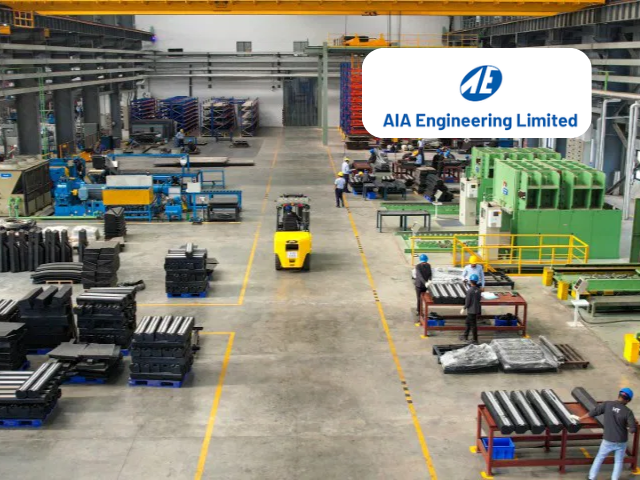
Among Indian manufacturing companies with global relevance, AIA Engineering fundamental analysis often leads to one key question. Is this business close to a monopoly?
AIA Engineering Ltd is a global leader in high-chrome grinding media and wear-resistant castings used primarily in cement and mining industries. These products are mission-critical consumables. Once approved by customers, they are rarely replaced by alternatives. This creates a business that behaves like a near monopoly without being one in a legal sense.
For long-term Indian investors focused on quality, stability, and capital preservation, AIA Engineering stands out as a quietly powerful compounder.
AIA Engineering supplies grinding media used in crushing and grinding operations. These operations run continuously, and the grinding media wears out over time. Replacement is not optional.
A cement plant or mining operation cannot afford inconsistent quality. Even a minor drop in grinding efficiency can increase power costs, reduce throughput, and cause unplanned shutdowns. This makes performance more important than price.
Once AIA Engineering’s products are approved, customers tend to stick for years. This repeat demand creates predictable revenues and strong visibility, a rare feature in industrial manufacturing.
Exports form a significant share of revenues, giving the company geographic diversification and reducing dependence on the Indian infrastructure cycle.
Switching grinding media suppliers is risky. Every mill behaves differently, depending on ore hardness, mill design, and operating conditions. AIA Engineering customizes its alloy composition and product design for each client.
Once this customization is validated, customers avoid switching due to operational risk. This creates monopoly-like behavior without formal market dominance.
The real moat lies in knowledge, not machinery. Decades of metallurgical data, testing, and process optimization give AIA Engineering a clear edge. New entrants can buy machines, but replicating experience takes years.
While competitors exist, very few operate at AIA Engineering’s scale with similar consistency, global reach, and product performance. This allows AIA Engineering to command pricing power without aggressive competition.
AIA Engineering’s financials reinforce its competitive position.
Over the long term, revenues have grown at around 7 to 8 percent, while profits have grown between 9 and 13 percent. This indicates improving efficiency and operating leverage.
Operating margins remain strong at nearly 27 to 28 percent, which is exceptional for a manufacturing company. These margins reflect product differentiation and pricing power rather than cost cutting alone.
The balance sheet is a major strength. The company operates with very low debt and high interest coverage, keeping financial risk minimal. Strong operating cash flows fund expansion and dividends without stressing capital.
Return ratios are stable and healthy. ROE around 15 percent and ROCE close to 19 percent indicate efficient capital use without leverage-driven risk.
At current levels, AIA Engineering trades at a P/E multiple of around 31 times. This is clearly a premium valuation compared to traditional manufacturing peers.
However, the premium reflects its near-monopoly economics, predictable cash flows, and balance sheet strength. The stock may not offer sharp short-term upside, but it suits investors looking for steady compounding and downside protection.
This makes AIA Engineering more suitable for long-term portfolios than for tactical trading strategies.
End-user industries such as cement and mining are cyclical. During global slowdowns, volume growth can soften, even though replacement demand offers some cushion.
Raw material price volatility can temporarily impact margins, especially if cost pass-through lags. Currency fluctuations also affect earnings due to export exposure.
Valuation risk is real. Buying at high multiples limits short-term returns if growth slows.
AIA Engineering reflects India’s evolution from low-cost manufacturing to high-value engineering exports. Its success strengthens India’s position in global industrial supply chains.
As a listed company, it follows SEBI disclosure norms and maintains transparent reporting. This regulatory framework enhances investor confidence and aligns with long-term investing principles.
Understanding near-monopoly businesses requires deeper analysis beyond surface metrics. Swastika Investmart, a SEBI-registered brokerage, provides in-depth equity research, sector insights, and advanced analytical tools to support informed investing.
With tech-enabled platforms, strong customer support, and a focus on investor education, Swastika Investmart helps investors evaluate quality businesses like AIA Engineering with clarity and discipline.
Is AIA Engineering a monopoly?
No, but it displays near-monopoly characteristics due to high switching costs and technical expertise.
Why are margins so high for a manufacturing company?
Strong pricing power, customization, and customer stickiness support superior margins.
Is export exposure a risk?
Exports add diversification, though currency movements can affect short-term results.
Is the stock suitable for short-term investors?
It is better suited for long-term investors focused on stability rather than quick gains.
Does valuation limit future returns?
Premium valuation may cap short-term upside, but long-term compounding remains attractive.
AIA Engineering’s fundamental analysis reveals a business with near-monopoly economics, strong financial discipline, and predictable demand. While valuations are premium, the company remains a high-quality compounder for patient investors seeking consistency and capital protection.
For investors looking to analyze such businesses with confidence and structure, Swastika Investmart offers the research depth, technology, and support needed to make informed decisions.
%20(1).png)
Indian equity markets opened on a mixed note today as investors remain cautious amid global uncertainty and stock-specific action.
While benchmark indices showed limited movement, the broader tone suggests a wait-and-watch approach at the start of the session.
The Nifty 50 opened marginally lower at 26,170.65, down 0.02 percent, reflecting muted sentiment among frontline stocks.
The index is currently consolidating near higher levels after recent gains. Profit booking in select heavyweights is keeping upside capped, while buying interest at lower levels continues to provide support.
• Immediate support near 26,100
• Strong support around 26,000
• Resistance seen near 26,250
• Break above resistance may open further upside
Traders are advised to remain cautious and avoid aggressive positions until a clear directional trend emerges.
The Bank Nifty opened slightly higher at 59,322.95, gaining 0.04 percent, supported by selective buying in private sector banks.
Despite global rate uncertainty, banking stocks continue to show resilience due to stable asset quality expectations and improving credit growth outlook in India.
• Immediate support near 59,000
• Strong support around 58,800
• Resistance placed near 59,600
• Sustained move above resistance may attract momentum buying
Global markets are trading mixed, with investors closely tracking macroeconomic data, interest rate expectations, and geopolitical developments.
In the domestic market, sentiment remains balanced as participants focus on:
• Corporate earnings outlook
• Institutional flows
• Global market direction
• Stock-specific developments
FII and DII activity will remain a key trigger during the session, especially in heavyweight stocks.
At the opening bell, sectoral performance is mixed:
• Banking stocks show marginal strength
• IT stocks trade cautiously amid global tech uncertainty
• FMCG remains stable
• Auto and metal stocks are seeing selective activity
Stock-specific moves are expected to dominate trading action today.
• Intraday traders should trade with strict stop-loss
• Avoid chasing momentum at higher levels
• Focus on stock-specific opportunities
• Positional traders may wait for confirmation above resistance levels
Volatility may remain limited unless there is a strong trigger from global markets.
Swastika Investmart provides traders and investors with:
• Real-time market insights
• Research-backed trading levels
• Advanced trading platforms
• Dedicated customer support
Our SEBI-compliant approach ensures disciplined and informed decision-making in dynamic market conditions.
👉 Trade smarter with Swastika Investmart
The Indian market has opened on a cautious yet stable note, with Nifty 50 trading slightly lower and Bank Nifty showing mild strength.
As the session progresses, global cues and institutional activity will guide further direction. Traders are advised to stay disciplined and focus on risk management.
👉 Trade smarter with Swastika Investmart
Stay informed. Stay disciplined. 📊
When the Adani Group acquired Ambuja Cements and ACC, it signalled a decisive shift in India’s cement landscape. What initially looked like a strategic entry into a core infrastructure sector has now evolved into a much larger consolidation story. The proposed merger of Ambuja Cements and ACC marks a defining moment for both the Adani Group and the Indian cement industry.
For investors, this move is not just about corporate restructuring. It raises important questions around market dominance, cost synergies, regulatory oversight and the future valuation of cement stocks.
Understanding the Ambuja–ACC merger impact on stocks requires looking beyond short-term price reactions and into the structural implications of scale, efficiency and capital allocation.
Ambuja Cements and ACC are two of India’s most established cement companies, with strong brand recall, pan-India manufacturing footprints and deep dealer networks. Together, they command a significant share of India’s cement capacity.
Under the Adani Group, the merger aims to unlock operational efficiencies by combining logistics, procurement, power sourcing and distribution. Cement is a scale-driven business, where cost leadership often determines profitability. Larger volumes allow better bargaining power on fuel, freight and raw materials.
For Adani, the merger strengthens its ambition to become one of the world’s largest cement producers, aligned with India’s long-term infrastructure growth story.
Cement is a critical input for roads, housing, railways, ports and urban infrastructure. India’s government-led capital expenditure cycle has created sustained demand visibility for the sector.
The Adani Group’s strategy focuses on backward integration and logistics optimisation. With access to ports, rail networks, power assets and renewable energy, Adani can potentially reduce cement production and transportation costs over time.
By merging Ambuja and ACC, the group simplifies structure, reduces duplication and enhances capital efficiency. This is particularly important in an industry where margins are sensitive to fuel costs and freight expenses.
From a shareholder perspective, the merger raises both opportunities and concerns.
On the positive side, operational synergies could improve profitability over the medium term. Shared logistics, unified procurement and better capacity utilisation may lead to margin expansion, especially during favourable demand cycles.
However, near-term market reactions often reflect uncertainty. Integration costs, merger ratios and regulatory approvals can influence stock performance in the short run. Investors also closely watch how debt levels and capital expenditure plans evolve post-merger.
Historically, cement mergers have rewarded patient investors once synergy benefits become visible in earnings rather than immediately after announcements.
Large mergers in capital-intensive sectors attract regulatory scrutiny. The Competition Commission of India plays a key role in evaluating market concentration and pricing power.
While the Indian cement market remains competitive with multiple national and regional players, consolidation does increase the influence of large groups. Regulators typically focus on ensuring fair competition and preventing monopolistic practices.
For investors, regulatory approvals are a procedural risk rather than a fundamental threat, but timelines and conditions can affect sentiment.
The Ambuja–ACC merger could accelerate consolidation across the cement sector. Smaller regional players may face increased pricing pressure as larger groups optimise costs and expand distribution reach.
At the same time, stronger balance sheets and scale allow major players to invest in capacity expansion, green energy and alternative fuels. This supports long-term sustainability goals and aligns with evolving environmental regulations in India.
For the Indian markets, a stronger cement sector supports infrastructure development, employment and capital formation.
Despite the strategic logic, risks remain.
Integration execution is critical. Merging operations, cultures and systems requires disciplined management. Any delays in synergy realisation can impact earnings expectations.
Cement demand is cyclical and linked to construction activity. A slowdown in infrastructure spending or housing demand can affect volumes.
Input costs such as coal, pet coke and freight remain volatile. Although scale provides some cushion, margin pressures cannot be eliminated entirely.
Finally, high expectations embedded in stock prices can lead to short-term volatility if results do not immediately reflect synergy benefits.
The Ambuja–ACC merger under the Adani Group is a long-term structural story rather than a short-term trading event. Investors with a medium to long-term horizon may view consolidation as a positive development, provided balance sheet discipline and execution remain strong.
Tracking quarterly performance, cost trends and capacity expansion plans will be crucial in evaluating progress.
Corporate actions of this scale require careful analysis rather than headline-driven decisions. Understanding regulatory processes, synergy timelines and sector cycles can make a meaningful difference to outcomes.
This is where Swastika Investmart, a SEBI-registered brokerage, adds value. With in-depth research, sector expertise, robust trading platforms and investor education initiatives, Swastika Investmart helps investors navigate complex corporate developments with clarity and confidence.
Why is the Ambuja–ACC merger significant?
The merger creates a larger, more efficient cement platform under the Adani Group, unlocking cost synergies and strengthening market positioning.
How does this merger impact Ambuja and ACC stocks?
In the short term, stock performance may remain volatile. Over the long term, synergy benefits and improved profitability could support valuations.
Will regulators approve the Ambuja–ACC merger?
The merger will be reviewed by the Competition Commission of India to ensure fair competition. Such approvals are common in large consolidations.
Does this merger make Adani a cement monopoly?
No. While Adani becomes a major player, the Indian cement industry remains competitive with several large and regional producers.
Is the cement sector attractive for long-term investors?
Cement benefits from infrastructure growth but remains cyclical. Long-term investors should focus on balance sheet strength and cost leadership.
The Ambuja–ACC merger marks a bold step in Adani Group’s cement strategy. While short-term market reactions may fluctuate, the long-term narrative centres on scale, efficiency and alignment with India’s infrastructure growth.
For investors seeking to understand and act on such structural themes with confidence, research-backed insights are essential.
If you are exploring opportunities in cement and infrastructure stocks, consider partnering with Swastika Investmart for informed investing and seamless execution.


Trust Our Expert Picks
for Your Investments!



As 2025 draws to a close, the Indian economy stands on a foundation of resilience rather than exuberance. This year was not about flashy rallies or one sided optimism. It was about balance, recalibration and maturity.
India navigated global headwinds ranging from volatile US bond yields to uneven growth in Europe, while maintaining domestic momentum. The Nifty 50 and Sensex reflected this reality with phases of consolidation interspersed with selective sectoral leadership rather than broad based froth.
Banking and financial services emerged as stabilisers. Capital goods, defence and infrastructure mirrored the government’s capex push. Technology stocks saw valuation resets early in the year but gradually regained investor confidence as global tech indices like the Nasdaq stabilised.
What truly defined 2025 was the strength of domestic participation. Systematic investment flows, growing retail discipline and improving corporate balance sheets helped Indian markets absorb global shocks better than many emerging peers.
Indian markets in 2025 did not move in isolation. Global indices played a crucial psychological and liquidity driven role.
The S&P 500’s performance influenced risk appetite during the first half of the year, especially when expectations around US rate cuts kept shifting. The Dow Jones reflected industrial cycle signals, impacting metals and export oriented stocks in India.
Meanwhile, movements in Asian indices like the Nikkei and Hang Seng affected sentiment around manufacturing, electronics and supply chain diversification. India benefited as global investors increasingly viewed it as a structural growth story rather than a tactical trade.
This global linkage reinforced one key trend. India is no longer just reacting to global cues. It is increasingly shaping its own narrative.
Heading into 2026, expectations remain constructive but realistic. GDP growth is likely to stay supported by domestic demand, infrastructure execution and private investment recovery. However, growth will be more quality driven than quantity driven.
Sectors aligned with productivity, digitisation, renewable energy and advanced manufacturing are expected to lead. Consumption may grow steadily but without excess leverage.
Indian equity markets in 2026 are expected to reward discipline. Stock selection will matter more than sector chasing. Earnings visibility, balance sheet strength and governance will separate long term winners from speculative noise.
Global indices will continue to influence short term volatility, especially around US elections, geopolitical developments and commodity cycles. However, India’s relative insulation through domestic liquidity and policy stability could keep downside risks contained.
Bond markets may see increased participation as interest rate clarity improves, offering investors a more balanced portfolio approach.
From a policy standpoint, continuity is likely to be the biggest advantage going into 2026. Regulatory clarity from SEBI, stable RBI communication and ongoing reforms in capital markets, investor protection and financial inclusion strengthen trust.
Digital compliance, faster disclosures and improved transparency further enhance India’s credibility among global investors.
The transition from 2025 to 2026 represents a shift from recovery mode to consolidation and compounding mode. This is where informed decision making matters more than timing the market.
Investors who focus on asset allocation, risk management and long term themes are better positioned than those chasing short term momentum. This environment favours research backed investing rather than noise driven trading.
The Indian economy in 2025 proved one thing clearly. Stability is the new strength. As we move into 2026, the opportunity lies not in predicting every market move but in aligning with India’s structural growth journey.
With strong regulatory oversight, improving corporate quality and expanding investor participation, India continues to stand out in a complex global landscape.
For investors looking to navigate this transition with confidence, having the right research, tools and guidance makes all the difference. Swastika Investmart, a SEBI registered entity, combines in depth market research, tech enabled investing platforms and strong customer support to help investors stay informed and prepared.
If you are planning to align your investments with India’s next phase of growth, this is the right time to take the first step.
Every election season brings a familiar question among investors. Does election affect stock market in India or is it just noise created by short term traders?
The answer is nuanced. Elections do impact Indian stock markets, but not always in the way headlines suggest. While volatility often rises, long term wealth creation depends more on economic policies, reforms, and governance continuity than on who wins or loses.
Understanding this relationship helps investors stay calm, avoid emotional decisions, and spot opportunities when markets overreact.
India is a policy driven economy. Government decisions directly affect taxation, infrastructure spending, banking reforms, and foreign investment flows. Because of this, elections become a period of uncertainty.
Markets generally dislike uncertainty. When investors are unsure about future policies, they tend to reduce exposure, leading to short term volatility.
Key factors that move markets during elections include:
• Expectations of economic reforms or policy reversals
• Stability of the incoming government
• Impact on fiscal deficit and public spending
• Signals on privatization, disinvestment, and infrastructure push
For example, the 2014 and 2019 general elections saw strong market rallies as investors expected policy continuity and reform oriented governance.
In the months leading up to elections, markets often turn range bound and volatile. Traders react to opinion polls, political speeches, and exit survey speculation.
Foreign Institutional Investors may reduce risk exposure temporarily, while domestic investors remain relatively steady. Banking, PSU stocks, and infrastructure companies often see sharp price swings during this phase.
However, historical data shows that major corrections purely due to elections are rare unless accompanied by global or economic shocks.
Once results are announced, uncertainty fades quickly. Markets respond decisively to the clarity.
If the outcome signals political stability and reform continuity, markets tend to rally sharply. If results point to coalition instability or unclear policy direction, short term corrections may follow.
Importantly, these reactions usually stabilize within weeks, reinforcing that elections create volatility, not permanent damage.
Different sectors react differently to election outcomes.
Banks react positively when investors expect policy stability, controlled NPAs, and capital reforms. PSU banks are especially sensitive to changes in government stance.
Election manifestos focusing on roads, railways, housing, and energy typically boost infrastructure stocks. A strong mandate often leads to higher government capex expectations.
Consumer goods companies remain relatively defensive during elections. Rural spending promises and subsidy announcements influence this sector.
Sectors aligned with Make in India, defense indigenization, and PLI schemes gain when policy continuity is expected.
One reason Indian markets remain resilient during elections is strong regulation.
SEBI ensures transparency, prevents excessive speculation, and monitors abnormal trading patterns. Circuit limits, disclosure norms, and surveillance mechanisms help protect retail investors from extreme volatility.
This regulatory stability ensures that even during politically charged periods, Indian markets function efficiently and fairly.
This is where experience matters.
Seasoned investors do not overhaul portfolios based on election outcomes alone. Instead, they focus on:
• Asset allocation aligned with risk profile
• Quality companies with strong fundamentals
• Long term growth themes independent of politics
Short term traders may find opportunities during volatility, but for long term investors, staying invested has historically delivered better outcomes.
For example, investors who stayed invested through election years like 2009, 2014, and 2019 benefited from strong post election rallies.
During the 2019 general elections, markets were volatile ahead of results due to uncertainty around seat projections. Once the results confirmed a stable government, benchmark indices rallied sharply in the following weeks.
Similarly, state elections often cause limited market impact unless they signal a shift in national political momentum.
These patterns reinforce one truth. Markets reward clarity, not speculation.
Navigating election driven markets requires discipline, research, and reliable support.
Swastika Investmart stands out with:
• SEBI registered credibility and compliance
• In depth research tools covering equities, derivatives, and commodities
• Tech enabled trading platforms designed for clarity and speed
• Strong customer support to guide investors during volatile phases
• Continuous investor education to build long term confidence
Rather than reacting to noise, Swastika helps investors make informed decisions backed by data and experience.
Open your trading account today and invest with confidence
Does election affect stock market in India every time?
Elections increase volatility, but long term market direction depends on economic growth, earnings, and reforms.
Is it safe to invest during election periods?
Yes, for long term investors. Volatility can even create buying opportunities in quality stocks.
Do FIIs exit Indian markets during elections?
Some FIIs reduce exposure temporarily due to uncertainty, but they usually return once clarity emerges.
Which sectors are safest during elections?
FMCG, pharmaceuticals, and utilities tend to be more stable compared to cyclical sectors.
Should I wait for election results before investing?
Timing the market is difficult. A systematic and goal based approach is more effective.
So, does election affect stock market in India? Yes, but mostly in the short term through volatility and sentiment shifts. History shows that Indian markets reward patience, policy clarity, and economic growth rather than political speculation.
For investors, elections are less about predicting winners and more about staying disciplined.
If you want expert research, stable platforms, and guidance that cuts through election noise, Swastika Investmart is well positioned to support your investing journey.
%20(1).png)
The Indian stock market performance today on 17 December 2025 began on a positive note, reflecting steady investor confidence amid mixed global cues. Benchmark indices opened in the green, indicating that market participants are cautiously optimistic while keeping an eye on both domestic and international developments.
At the opening bell, the Sensex stood at 84,856.26, marking a gain of 0.21 percent. The Nifty 50 opened at 25,902.40, up by 0.16 percent, while the Nifty Bank index traded slightly higher at 59,072.80, registering a modest increase of 0.06 percent.
Although the gains were not aggressive, the positive opening set a constructive tone for the trading session.
Global markets provided a relatively supportive backdrop for Indian equities on 17 December 2025. Asian markets were largely stable during early trade, while overnight cues from US markets showed limited volatility. This helped domestic markets avoid sharp opening swings.
Such global stability often leads to measured buying rather than sharp rallies, which was evident in today’s opening trend.
Institutional activity remains a key driver of Indian market performance. Both Foreign Institutional Investors and Domestic Institutional Investors appeared cautious but supportive at the open.
When institutional flows remain balanced, markets tend to open positive but trade within a range, offering stability rather than sharp momentum.
Banking stocks played a stabilising role in today’s market opening. While Bank Nifty gains were limited, heavyweight private banks helped keep the index above key levels.
A stable banking sector often acts as a foundation for broader market strength, especially during consolidation phases.
The Sensex opening above 84,800 is technically significant. Holding this level during the day could encourage incremental buying, especially in large cap stocks.
Any sustained move above this zone may improve short term sentiment.
Nifty opening near the 25,900 mark reflects resilience in index heavyweights. This zone is seen as an important support area for traders and investors.
If the index holds above this level, it may continue to attract stock specific participation.
Bank Nifty trading near 59,000 indicates consolidation. While momentum is currently muted, stability in banking stocks reduces downside risk for the overall market.
For long term investors, today’s market performance reinforces the importance of staying disciplined. Positive openings like this often signal underlying strength, even if immediate gains are limited.
For short term traders, confirmation through volumes and price action after the first hour of trade becomes crucial. Range bound strategies often work better in such market conditions.
Retail investors should focus on fundamentally strong stocks rather than reacting to intraday noise.
Indian equity markets continue to operate under a robust regulatory framework guided by SEBI. Transparency, investor protection, and risk management remain central to market operations.
On the economic front, investors are closely tracking inflation trends, RBI policy outlook, and upcoming corporate updates. A positive opening on 17 December 2025 suggests that markets are factoring in stable macroeconomic expectations.
In markets that open positive but remain cautious, informed decision making becomes critical. Swastika Investmart, a SEBI registered stock broker, offers strong research backed insights, advanced trading platforms, and responsive customer support to help investors navigate such conditions.
With a focus on investor education, technology enabled investing, and timely market analysis, Swastika Investmart empowers both new and experienced investors to stay confident even during range bound sessions.
Whether you are tracking index levels or planning long term investments, having access to reliable research and professional support makes a meaningful difference.
👉 Open your trading account today
Why did the Indian market open positive today on 17 December 2025
The positive opening was driven by stable global cues, balanced institutional activity, and support from banking and large cap stocks.
Is a positive opening a signal of a strong rally
Not necessarily. A positive opening indicates sentiment support, but sustained gains depend on volumes, sector participation, and broader market cues.
How important is Bank Nifty for overall market direction
Bank Nifty plays a crucial role as banking stocks have significant weightage in benchmark indices and often influence overall sentiment.
What should long term investors do in such markets
Long term investors should remain invested, focus on quality stocks, and avoid reacting to short term market fluctuations.
The market performance today on 17 December 2025 reflects cautious optimism rather than aggressive bullishness. With benchmark indices opening in the green and key sectors offering stability, the broader trend remains constructive.
For investors looking to navigate such market phases with confidence, partnering with a trusted and research driven platform like Swastika Investmart can add clarity and discipline to investment decisions.
Stay informed, stay invested, and invest with confidence.
.png)
For Indian stock market participants, FII and DII data today offers valuable insight into institutional sentiment. On 16 December 2025, the numbers highlighted a familiar but important pattern: foreign investors continued to reduce exposure, while domestic institutions attempted to stabilize the market.
Foreign Institutional Investors recorded a net sell of ₹2,381.92 crore, while Domestic Institutional Investors stepped in with a net buy of ₹1,077.48 crore. Despite domestic buying, the overall institutional flow for the day remained negative at ₹1,304.44 crore, explaining the cautious tone seen across benchmark indices.
Understanding what drives this divergence can help investors make more informed decisions rather than reacting emotionally to daily market moves.
FIIs represent global capital and are often influenced by international factors such as US interest rates, global inflation trends, currency movements, and geopolitical developments. Their selling pressure can impact index heavyweights like banking, IT, and energy stocks.
On 16 December 2025, continued foreign selling reflected a risk off approach rather than a judgement on India’s long term growth story.
DIIs include mutual funds, insurance companies, pension funds, and Indian financial institutions regulated by SEBI. Their buying is largely driven by domestic savings, SIP inflows, and long term asset allocation strategies.
The ₹1,077.48 crore buying by DIIs today suggests confidence in market valuations and underlying fundamentals despite near term uncertainty.
Here is how institutional money moved on 16 December 2025:
This gap between foreign selling and domestic buying often results in range bound markets, where stock specific action dominates over broad rallies.
With global interest rates remaining elevated, foreign investors tend to rebalance portfolios towards safer assets. Even strong emerging markets like India are not immune to such reallocations.
A fluctuating rupee and selective valuation concerns in certain sectors can also prompt profit booking by FIIs, especially after strong rallies earlier in the year.
FII selling does not always indicate pessimism. Often, it reflects routine year end portfolio adjustments, profit booking, or exposure shifts across global markets.
Domestic investors have played a crucial stabilizing role in recent years. Regular SIP inflows, growing retail participation, and long term investment horizons allow DIIs to absorb temporary selling pressure.
On days like 16 December 2025, DII buying helps prevent sharp corrections and provides a base for quality stocks to hold key support levels.
In the near term, continued net selling by FIIs can lead to volatility, especially in index heavy stocks. Traders should remain cautious and avoid over leveraged positions.
Historically, periods of FII selling combined with DII buying have often created attractive accumulation opportunities for long term investors, provided stock selection is backed by solid research.
SEBI regulated institutions and research driven platforms play a critical role in helping investors navigate such phases with discipline rather than speculation.
Instead of reacting to a single day’s numbers, investors should track trends over weeks and months. Consistent FII outflows paired with sustained DII inflows often indicate a transition phase rather than a breakdown of market structure.
Tools that combine institutional data with technical levels, earnings visibility, and sector rotation insights can significantly improve decision making.
What is FII and DII data in the stock market
It shows the daily buying and selling activity of foreign and domestic institutional investors in Indian equities.
Why is FII selling important to track
FIIs deploy large capital, and their moves can influence market direction, liquidity, and volatility.
Is DII buying a positive sign
Yes, it reflects domestic confidence and often cushions the market during periods of foreign selling.
Should retail investors worry about today’s negative net flow
Not necessarily. One day’s data should be viewed in the context of broader trends and fundamentals.
The FII and DII data today for 16 December 2025 reflects short term pressure from foreign investors, partially offset by steady domestic buying. While the net flow remains negative at ₹1,304.44 crore, the underlying participation of DIIs signals resilience in the Indian market.
For investors, the key is not to react impulsively but to rely on structured research, regulatory compliant guidance, and long term clarity. Platforms like Swastika Investmart, a SEBI registered brokerage, combine in depth market research, advanced trading tools, responsive customer support, and strong investor education to help investors navigate such market phases with confidence.
👉 Open your trading and investment account today
Staying informed is important. Acting with the right research partner makes all the difference.

Global markets are once again reacting to renewed diplomatic signals around a possible Russia–Ukraine peace agreement. Headlines suggesting ceasefire discussions or diplomatic engagement tend to trigger quick rallies in equities, bonds, and commodities.
For investors, the question is not whether peace is good for markets. The real question is whether portfolios need repositioning based on early-stage geopolitical optimism.
The Russia–Ukraine conflict has influenced global inflation, energy prices, supply chains, and central bank policies over the last few years. Any credible de-escalation can reshape these variables, but markets often price hope faster than reality.
Whenever peace prospects improve, global equities often see a relief rally. Investors rotate out of safe-haven assets like gold and government bonds into equities, particularly cyclical sectors.
European markets usually respond first, followed by emerging markets that benefit from reduced global uncertainty.
Energy, metals, and agricultural commodities tend to move sharply on peace expectations. Russia and Ukraine are key suppliers of oil, gas, fertilisers, and grains. Even the possibility of supply normalisation can push prices lower.
This is important because commodity prices directly affect inflation expectations worldwide.
India imports most of its crude oil. Any sustained peace between Russia and Ukraine reduces geopolitical risk premiums in oil prices. Lower crude helps India manage inflation, fiscal deficits, and current account pressure.
Sectors such as aviation, FMCG, chemicals, paints, and logistics benefit from softer energy costs.
Lower global commodity prices ease inflationary pressures. This gives the Reserve Bank of India greater flexibility on interest rate decisions, which is supportive for equity valuations.
Rate-sensitive sectors like banking, real estate, and automobiles often perform better in such environments.
India’s direct trade exposure to Russia and Ukraine is limited compared to Europe. However, indirect effects through commodities, fertilisers, and global capital flows matter significantly.
Stability in Eastern Europe reduces volatility across global financial markets, benefiting emerging markets like India.
Oil marketing companies can benefit from stable crude prices and predictable margins. However, government pricing policies and excise duties remain important variables.
Upstream oil producers may see pressure if crude prices soften sharply, although currency movements can offset some impact.
Metal prices often cool down when geopolitical tensions ease. This may impact metal producers in the short term, but lower input costs support downstream industries like infrastructure and manufacturing.
Defence stocks often rally during periods of heightened geopolitical tension. Peace expectations can lead to profit booking in these stocks, especially if valuations have run ahead of fundamentals.
Long-term defence modernisation plans, however, remain intact irrespective of short-term geopolitics.
Markets often react quickly to peace headlines, but negotiations can take months or years. Premature portfolio shifts based purely on news flow can hurt long-term returns.
History shows that many geopolitical rallies fade if talks stall or expectations change.
Rather than rotating portfolios aggressively, investors should focus on structurally strong businesses that benefit from stable macros such as banks, consumption-driven companies, and infrastructure players.
Peace-driven optimism works best as a tailwind, not the core investment thesis.
Geopolitical uncertainty rarely disappears completely. Maintaining diversification across sectors and asset classes remains essential.
Investors should rebalance based on valuations, earnings visibility, and risk appetite rather than geopolitical predictions.
Indian regulators such as SEBI continue to emphasise long-term investing and risk disclosure. Sudden portfolio churn driven by global news events can increase transaction costs and risk exposure.
A disciplined approach aligned with regulatory best practices is crucial, especially during geopolitically sensitive periods.
Periods of geopolitical optimism often blur the line between opportunity and speculation. This is where research-backed investing adds clarity.
Swastika Investmart supports investors with SEBI-registered research, in-depth macro and sectoral analysis, advanced screening tools, and a tech-enabled trading experience. Its strong customer support and investor education initiatives help investors stay focused on fundamentals rather than headlines.
Will Russia–Ukraine peace directly boost Indian stock markets?
Indirectly, yes. Peace can lower commodity prices and global risk premiums, which supports Indian markets over time.
Which Indian sectors benefit the most from peace hopes?
Oil-sensitive sectors, consumption-driven businesses, and rate-sensitive sectors benefit the most from improved macro stability.
Should investors exit defence stocks due to peace talks?
Not necessarily. Long-term defence spending depends more on national security policies than short-term geopolitical developments.
Is it wise to rebalance portfolios immediately on peace news?
Sudden rebalancing based purely on news flow can be risky. Long-term fundamentals should drive portfolio decisions.
Russia–Ukraine peace hopes offer optimism, but markets often move faster than reality. For Indian investors, the real benefit lies in improved macro stability rather than short-term rallies.
Instead of repositioning portfolios aggressively, investors should focus on strong businesses, reasonable valuations, and long-term growth drivers. Geopolitical developments should be treated as risk modifiers, not investment triggers.
If you are looking to navigate global uncertainty with clarity and discipline, Swastika Investmart provides the research depth, tools, and support needed for confident investing.

India’s power sector is at a critical turning point. Rising electricity demand, rapid renewable energy adoption, and frequent grid stress events have made energy reliability a national priority. Against this backdrop, the SHANTI Bill 2025 has emerged as a key legislative step aimed at improving the stability, accountability, and infrastructure of India’s power ecosystem.
For investors, this is not just another policy announcement. Power sector reforms often have long-lasting effects on capital expenditure cycles, regulated returns, and sector valuations. Understanding what the SHANTI Bill proposes and how it reshapes incentives is essential for making informed investment decisions.
The SHANTI Bill 2025 is designed to address structural inefficiencies in India’s power transmission and distribution framework. While power generation capacity has expanded rapidly, transmission bottlenecks and grid reliability issues have increasingly come under focus.
The bill aligns with India’s long-term goals of energy security, renewable integration, and sustainable growth, while strengthening regulatory oversight.
One of the central objectives of the SHANTI Bill is to improve grid stability. Power outages and load management challenges have highlighted the need for modernised transmission systems and real-time monitoring.
The bill proposes stricter compliance standards for grid operators, encouraging investments in smart grid technologies and advanced forecasting systems.
The SHANTI Bill introduces clearer accountability norms for transmission and distribution companies. This includes defined performance benchmarks, timelines for fault resolution, and penalties for repeated non-compliance.
For well-managed utilities, this could actually be positive, as it rewards efficiency and governance while discouraging operational laxity.
Delays in land acquisition and approvals have historically slowed transmission projects. The bill aims to streamline approval processes for strategic power infrastructure, especially those linked to renewable energy evacuation.
This provision could accelerate project execution and reduce cost overruns for developers.
With India targeting large-scale renewable capacity additions, integrating intermittent energy sources into the grid is a growing challenge. The SHANTI Bill promotes investments in energy storage, flexible transmission networks, and grid balancing solutions.
This supports India’s broader clean energy transition while ensuring reliability.
Transmission-focused companies are likely to be among the biggest beneficiaries. Increased grid investments, predictable regulatory frameworks, and long-term tariff visibility can improve earnings stability.
These companies typically operate under regulated return models, making them attractive for long-term investors seeking steady cash flows.
Efficient power distribution companies may benefit from improved systems and reduced technical losses. However, poorly managed utilities could face pressure due to tighter accountability norms.
This divergence makes stock selection critical rather than taking a broad sector approach.
Renewable energy developers benefit indirectly from better transmission infrastructure. Faster evacuation of power reduces curtailment risks and improves project viability.
Energy storage and grid technology providers may also see rising demand as utilities adapt to new requirements.
Historically, power sector reforms have led to gradual re-rating rather than immediate spikes. The SHANTI Bill 2025 could improve long-term investor confidence by reducing regulatory uncertainty and enhancing infrastructure quality.
Capital expenditure cycles in the power sector often span several years. Investors should look at balance sheet strength, execution track records, and regulatory clarity when evaluating opportunities.
Policy-driven rallies can be volatile. Instead of reacting to headlines, investors should assess which companies are structurally positioned to benefit from long-term grid investments and regulatory reforms.
Stronger accountability norms mean companies with sound governance and operational efficiency are likely to outperform. Regulated utilities with transparent tariff mechanisms often provide better downside protection.
Implementation details, tariff revisions, and project pipelines will determine actual earnings impact. Monitoring regulatory announcements is as important as tracking financial results.
Power sector investing requires deep understanding of regulation, cost structures, and execution risks. This is where research-backed platforms add real value.
Swastika Investmart supports investors with SEBI-registered research, detailed sector insights, advanced screening tools, and a tech-enabled investing experience. Combined with strong customer support and ongoing investor education, it helps investors navigate complex policy-driven themes like the SHANTI Bill with confidence.
What is the SHANTI Bill 2025?
The SHANTI Bill 2025 is a proposed legislation aimed at improving grid stability, accountability, and infrastructure development in India’s power sector.
Which power sector companies benefit the most from this bill?
Transmission companies, grid infrastructure providers, and renewable energy-linked players are expected to benefit the most.
Does the SHANTI Bill impact electricity tariffs?
Tariff outcomes will depend on regulatory decisions, but improved efficiency and reduced losses could support long-term tariff stability.
Is the SHANTI Bill positive for long-term investors?
Structurally, yes. It supports infrastructure upgrades and regulatory clarity, which are positive for long-term sector growth.
The SHANTI Bill 2025 reflects India’s intent to build a more reliable, efficient, and future-ready power sector. While short-term market reactions may be muted, the long-term implications are significant for companies involved in transmission, grid management, and renewable integration.
For investors, the opportunity lies in identifying quality businesses that can execute well under evolving regulations. A disciplined, research-driven approach is essential to capture value while managing risks.
If you are looking to invest with clarity, backed by credible research and modern tools, Swastika Investmart offers a trusted platform to support your investment journey.