%20(3).png)
Indian equity markets ended the first trading session of the New Year on a positive note on 1 January 2026, supported by steady buying in banking and technology stocks. Benchmark indices closed marginally higher, reflecting cautious optimism as investors began the year with selective positioning rather than aggressive risk-taking.
The overall tone of the market remained stable, with sector-specific strength helping indices maintain gains through the session.
At the close of trade today, key indices settled as follows:
The closing data highlights modest but broad-based strength, led primarily by IT and banking stocks.
The Nifty 50 closed marginally in the green, indicating a steady start to the New Year. Buying interest was visible in select large-cap stocks, while others remained range-bound. The index continued to consolidate near higher levels, suggesting that investors are waiting for stronger triggers such as earnings updates and global cues before taking decisive positions.
The muted yet positive close reflects disciplined participation rather than speculative momentum.
Bank Nifty outperformed the broader market, closing with healthy gains. The index benefited from selective buying in banking and financial stocks as investors remained confident about credit growth, asset quality stability, and regulatory clarity under RBI norms.
The strength in Bank Nifty also helped support the broader indices, reinforcing the role of financial stocks as market anchors during early-year sessions.
The standout performer today was the Nifty IT index, which closed significantly higher. IT stocks gained traction on the back of stable global technology cues, currency comfort, and expectations of steady demand visibility from overseas clients.
IT stocks often attract interest during periods of cautious market sentiment due to their defensive nature and export-linked earnings, which was clearly visible in today’s trade.
The first trading session of 2026 was marked by controlled volatility and selective participation. There were no major global shocks, allowing domestic factors to guide price action. Investors appeared focused on portfolio alignment rather than chasing quick gains.
Lower volumes, typical of early January sessions, also contributed to a measured market move.
As the market settles into the New Year, investors may keep an eye on:
For traders, disciplined risk management remains key, while long-term investors may continue to accumulate quality stocks gradually.
Navigating daily market movements requires timely insights and reliable research. Swastika Investmart, a SEBI-registered brokerage, empowers investors with:
Whether markets are trending or consolidating, having structured research and tools can make a meaningful difference.
The Indian stock market closed the first trading day of 2026 on a positive note, with gains led by Bank Nifty and Nifty IT. The calm and constructive close sets a steady tone for the days ahead, as investors focus on fundamentals and long-term opportunities.
If you’re planning to approach 2026 with a disciplined and informed strategy, Swastika Investmart is here to support your investing journey.
👉 Open your trading and investment account today
Stay informed. Trade smart. Invest with confidence.
.png)
The New Year is not just a change in dates it marks the beginning of a fresh investment cycle. For market participants, it is a time for portfolio realignment, renewed institutional participation, and a shift towards structured, theme-based investing.
As Indian equity markets enter New Year 2026, investor sentiment remains constructive. With stable macroeconomic indicators, improving global cues, and strong domestic fundamentals, the focus is gradually moving away from short-term trading and toward quality, theme-driven stock selection.
To help investors begin 2026 with clarity, Swastika Investmart has curated a New Year–themed stock list, designed around long-term growth visibility, balance-sheet strength, and sectoral relevance.
| STOCK | CMP (As on 31-12-25) | TARGET | UPSIDE |
|---|---|---|---|
| Sandur Manganese & Iron Ores Ltd | 240 | 400 | 61% |
| AIA Engineering Ltd | 3900 | 5500 | 41% |
| GMR Airport | 103 | 140 | 36% |
| TCS | 3250 | 4200 | 28% |
| GMDC | 595 | 880 | 46% |
| Shriram Pistons and Rings | 3160 | 4800 | 49% |
| Data Patterns | 2600 | 4000 | 47% |
| Samvardhana Motherson | 119 | 150 | 27% |
| SRF | 3040 | 4500 | 44% |
| Nuvama Wealth Management | 1455 | 2100 | 40% |
| NBCC | 120 | 160 | 33% |
| HDFC Bank | 991 | 1250 | 26% |
Theme-based investing allows investors to participate in broader economic and structural trends rather than reacting to daily market volatility.
As 2026 begins, several factors support this approach:
Instead of chasing momentum, thematic investing helps build portfolios aligned with economic continuity and sustainability.
The opening weeks of a new year often bring renewed participation across global and domestic markets. In India, this phase is typically characterised by:
With supportive domestic indicators and measured global expectations, early 2026 provides a favourable environment for selective stock positioning.
The New Year 2026 stock list has been curated around key investment themes, keeping in mind sector relevance, earnings visibility, and long-term sustainability.
These themes are shared for investor awareness and education, not as investment recommendations.
The New Year period often supports continued demand across consumer-facing businesses.
This theme typically includes companies with:
Such businesses tend to benefit from sustained consumption momentum extending into the early part of the year.
Financial services remain a core pillar of the Indian economy as 2026 begins.
Stocks aligned with this theme generally demonstrate:
These characteristics often attract institutional interest during portfolio resets.
Digital adoption and technology-led efficiency continue to shape corporate performance.
This theme focuses on businesses with:
Technology-linked themes remain relevant for medium- to long-term portfolios.
India’s infrastructure and capital expenditure cycle continues to offer long-term opportunities.
Companies under this theme are typically supported by:
Early-year phases often see gradual accumulation in such stocks.
At the beginning of a new year, many investors also reassess asset allocation.
Precious metals play a role by:
Gold and silver remain important components of balanced portfolios in 2026.
Indian markets remain influenced by global developments. Key indicators to monitor include:
A stable global environment generally supports equity participation during the early weeks of the year.
Rather than rushing into trades, experienced investors often use the New Year to align portfolios thoughtfully.
A disciplined approach includes:
The New Year is best viewed as a planning phase, not a speculative one.
Swastika Investmart follows a research-driven, compliance-focused approach to investing.
What investors value:
This approach helps investors navigate markets with confidence, especially during transitional phases like the start of a new year.
Is the New Year a good time to invest in stocks?
The New Year often brings stable participation and fresh allocations, making it suitable for selective, quality investing.
Do FIIs and DIIs invest at the start of the year?
Institutional investors frequently rebalance portfolios in January, leading to selective activity in fundamentally strong stocks.
Should investors focus on themes rather than individual stocks?
Themes help investors align with long-term trends and reduce short-term decision-making noise.
Are New Year themed stock ideas suitable for long-term investors?
Yes, when supported by strong fundamentals and growth visibility, thematic ideas align well with long-term investing.
A New Year symbolises clarity, balance, and thoughtful decisions. The same principles apply to investing. With supportive institutional behaviour, stable global cues, and well-defined themes, New Year 2026 offers an opportunity to strengthen portfolios with purpose.
If you are looking for structured research, investor education, and long-term market guidance, Swastika Investmart is here to support your investing journey throughout 2026 and beyond.
📈 Begin the New Year with informed investing
🎯 Explore New Year 2026 themed insights today
.png)
The New Year is not just a change in dates it marks the beginning of a fresh investment cycle. For market participants, it is a time for portfolio realignment, renewed institutional participation, and a shift towards structured, theme-based investing.
As Indian equity markets enter New Year 2026, investor sentiment remains constructive. With stable macroeconomic indicators, improving global cues, and strong domestic fundamentals, the focus is gradually moving away from short-term trading and toward quality, theme-driven stock selection.
To help investors begin 2026 with clarity, Swastika Investmart has curated a New Year–themed stock list, designed around long-term growth visibility, balance-sheet strength, and sectoral relevance.
| STOCK | CMP (As on 31-12-25) | TARGET | UPSIDE |
|---|---|---|---|
| Sandur Manganese & Iron Ores Ltd | 240 | 400 | 61% |
| AIA Engineering Ltd | 3900 | 5500 | 41% |
| GMR Airport | 103 | 140 | 36% |
| TCS | 3250 | 4200 | 28% |
| GMDC | 595 | 880 | 46% |
| Shriram Pistons and Rings | 3160 | 4800 | 49% |
| Data Patterns | 2600 | 4000 | 47% |
| Samvardhana Motherson | 119 | 150 | 27% |
| SRF | 3040 | 4500 | 44% |
| Nuvama Wealth Management | 1455 | 2100 | 40% |
| NBCC | 120 | 160 | 33% |
| HDFC Bank | 991 | 1250 | 26% |
Theme-based investing allows investors to participate in broader economic and structural trends rather than reacting to daily market volatility.
As 2026 begins, several factors support this approach:
Instead of chasing momentum, thematic investing helps build portfolios aligned with economic continuity and sustainability.
The opening weeks of a new year often bring renewed participation across global and domestic markets. In India, this phase is typically characterised by:
With supportive domestic indicators and measured global expectations, early 2026 provides a favourable environment for selective stock positioning.
The New Year 2026 stock list has been curated around key investment themes, keeping in mind sector relevance, earnings visibility, and long-term sustainability.
These themes are shared for investor awareness and education, not as investment recommendations.
The New Year period often supports continued demand across consumer-facing businesses.
This theme typically includes companies with:
Such businesses tend to benefit from sustained consumption momentum extending into the early part of the year.
Financial services remain a core pillar of the Indian economy as 2026 begins.
Stocks aligned with this theme generally demonstrate:
These characteristics often attract institutional interest during portfolio resets.
Digital adoption and technology-led efficiency continue to shape corporate performance.
This theme focuses on businesses with:
Technology-linked themes remain relevant for medium- to long-term portfolios.
India’s infrastructure and capital expenditure cycle continues to offer long-term opportunities.
Companies under this theme are typically supported by:
Early-year phases often see gradual accumulation in such stocks.
At the beginning of a new year, many investors also reassess asset allocation.
Precious metals play a role by:
Gold and silver remain important components of balanced portfolios in 2026.
Indian markets remain influenced by global developments. Key indicators to monitor include:
A stable global environment generally supports equity participation during the early weeks of the year.
Rather than rushing into trades, experienced investors often use the New Year to align portfolios thoughtfully.
A disciplined approach includes:
The New Year is best viewed as a planning phase, not a speculative one.
Swastika Investmart follows a research-driven, compliance-focused approach to investing.
What investors value:
This approach helps investors navigate markets with confidence, especially during transitional phases like the start of a new year.
Is the New Year a good time to invest in stocks?
The New Year often brings stable participation and fresh allocations, making it suitable for selective, quality investing.
Do FIIs and DIIs invest at the start of the year?
Institutional investors frequently rebalance portfolios in January, leading to selective activity in fundamentally strong stocks.
Should investors focus on themes rather than individual stocks?
Themes help investors align with long-term trends and reduce short-term decision-making noise.
Are New Year themed stock ideas suitable for long-term investors?
Yes, when supported by strong fundamentals and growth visibility, thematic ideas align well with long-term investing.
A New Year symbolises clarity, balance, and thoughtful decisions. The same principles apply to investing. With supportive institutional behaviour, stable global cues, and well-defined themes, New Year 2026 offers an opportunity to strengthen portfolios with purpose.
If you are looking for structured research, investor education, and long-term market guidance, Swastika Investmart is here to support your investing journey throughout 2026 and beyond.
📈 Begin the New Year with informed investing
🎯 Explore New Year 2026 themed insights today
.png)
In Indian stock markets, the 52-week high and 52-week low are widely tracked indicators by traders, investors, mutual funds, and institutional participants. These levels represent the highest and lowest prices a stock has traded at over the past one year on NSE or BSE.
In 2026, with Indian markets seeing higher retail participation, algorithmic trading, and faster information flow, these levels have become even more important in identifying momentum stocks and potential value opportunities.
But the key question remains:
Should you buy strength at 52-week highs or buy weakness at 52-week lows?
Let’s break both strategies down clearly.
A 52-week high strategy focuses on stocks that are trading at or near their highest price in the last one year. Contrary to traditional belief, strong stocks often continue to rise due to sustained demand.
Stocks hitting 52-week highs often indicate:
In 2026, with FII and DII flows driving momentum, many breakout stocks emerge from 52-week high lists.
Stocks like leading PSU banks, capital goods companies, and select IT names have historically made multiple 52-week highs during long bull phases, rewarding momentum traders.
While momentum can be powerful, it is not risk-free.
Key risks include:
This is why volume confirmation, earnings visibility, and broader market trend analysis are critical.
A 52-week low strategy focuses on stocks trading near their lowest price of the last year. These stocks may be under pressure due to temporary challenges or broader sector weakness.
For long-term investors, such phases can sometimes present value opportunities.
Stocks at 52-week lows may reflect:
In 2026, sectors like metals, chemicals, or mid-cap IT may throw up selective value opportunities when sentiment turns pessimistic.
Not every cheap stock is a good investment.
A value trap occurs when:
Many stocks remain at 52-week lows for years without recovery. This is why fundamental analysis is non-negotiable.
52-week high is momentum-driven
52-week low is value-driven
Highs: Short to medium-term traders
Lows: Long-term investors
Highs: Volatility risk
Lows: Fundamental risk
Highs: Volume, trend, earnings momentum
Lows: Balance sheet, cash flows, recovery potential
There is no single correct answer.
In trending bull markets, 52-week high strategies tend to outperform as capital chases winners.
In volatile or sideways markets, selective 52-week low investing may deliver better long-term returns if backed by strong fundamentals.
Smart investors in 2026 increasingly use a blended approach:
A balanced approach could look like this:
SEBI-regulated brokers and research platforms help investors track such opportunities with structured tools and insights.
Whether you follow highs or lows, success depends on:
At Swastika Investmart, investors benefit from SEBI-registered research, technology-enabled platforms, and continuous investor education to navigate such strategies responsibly.
It can be risky if done without confirmation. Stocks with strong earnings momentum and volume support often continue trending higher.
No. Some stocks are at 52-week lows due to permanent business issues, making them value traps.
Beginners should focus on understanding fundamentals and risk management before using either strategy aggressively.
Yes, if the company has strong growth visibility and sustainable earnings, long-term investors can hold momentum stocks as well.
In 2026, both 52-week high and 52-week low strategies remain relevant in Indian markets. The real edge comes not from choosing one over the other, but from applying research, patience, and discipline.
If you’re looking to build a structured approach with expert-backed insights, Swastika Investmart offers a trusted ecosystem with research support, advanced tools, and investor-first guidance.
.png)
In Indian stock markets, stocks touching 52-week lows often trigger mixed emotions. Some investors see opportunity, while others fear catching a falling knife. As we move into 2026, with markets becoming more information-driven and sentiment-sensitive, understanding how to approach 52-week low stocks has become an essential investing skill.
A stock at a 52-week low is not automatically cheap, just as a stock at a high is not always expensive. The real question investors must ask is simple: Is this a temporary decline or a long-term problem? This blog explains how investors can spot genuine value at 52-week lows and, more importantly, how to avoid value traps in Indian markets.
A 52-week low represents the lowest price a stock has traded at over the last one year. This often reflects negative sentiment, weak earnings, sectoral headwinds, or broader market corrections.
However, not all 52-week lows are created equal.
Understanding why a stock is falling is the first step toward intelligent decision-making.
By 2026, Indian markets have evolved significantly. Retail participation is higher, institutional data is more accessible, and price movements react faster to news and numbers.
Key changes investors must account for:
As a result, buying blindly at 52-week lows is riskier than before, while selective value investing has become more rewarding.
A stock is attractive at a 52-week low only if earnings are expected to recover. Investors should look for:
A falling stock without earnings support often continues to fall.
In uncertain environments, financially strong companies survive and recover faster.
Key indicators to watch:
In Indian markets, many past recoveries from 52-week lows were led by companies with strong balance sheets, not leveraged ones.
Sometimes, entire sectors go through downcycles. Investors should evaluate:
For example, cyclical sectors like metals or capital goods often hit lows during downturns but recover strongly when cycles turn.
FIIs and DIIs may reduce exposure during weak phases, but selective accumulation often starts quietly near lows. Monitoring shareholding patterns and delivery volumes can offer early signals.
SEBI-mandated disclosures and exchange data provide valuable insights into institutional behavior.
This is where most investors make mistakes.
A low price alone does not make a stock attractive. Fundamentals do.
The same stock can be an opportunity for one and a mistake for another, depending on time horizon.
Indian equities have historically rewarded investors who bought quality businesses during pessimistic phases. Many well-known companies created long-term wealth after spending time near 52-week lows during economic slowdowns or sector corrections.
However, patience must be paired with discipline. Not every fallen stock deserves a second chance.
At Swastika Investmart, SEBI-registered research and investor-first tools help clients:
Our focus remains on education, research-backed insights, and long-term wealth creation, supported by technology-enabled investing platforms.
👉 Open your account and start investing smarter
It can be safe if the fall is temporary and fundamentals remain strong. Blind buying without analysis is risky.
No. Many stocks continue to underperform if business issues are structural rather than cyclical.
Beginners should be cautious and focus on financially strong companies with clear recovery signs.
Recovery timelines vary. Some stocks rebound quickly, while others take years or may never recover.
No. Price must always be evaluated alongside earnings, balance sheet strength, and sector outlook.
In 2026, investing in stocks at 52-week lows requires more than courage. It demands clarity, patience, and discipline. While some lows offer genuine value opportunities, others hide long-term risks.
The key is not predicting the bottom, but understanding the business behind the price. Investors who focus on fundamentals, sector trends, and risk management are better positioned to separate value stocks from value traps.
For research-driven insights and a disciplined investing approach, connect with Swastika Investmart, where experience meets technology to support smarter investment decisions.
.png)
In Indian stock markets, few events grab attention like a stock touching a 52-week high. For traders, it signals momentum. For investors, it raises an important question: Is it already too expensive?
As we move into 2026, with rising retail participation, algorithmic trading, and sharper institutional strategies, understanding 52-week high breakout stocks has become more important than ever. This blog explains how traders identify momentum stocks using breakout strategies and whether buying stocks at a 52-week high actually makes sense in Indian markets.
A 52-week high is the highest price a stock has traded at in the last one year. When a stock breaks above this level, it often enters uncharted territory, where there is no historical resistance.
In India, many market leaders like large-cap banks, IT stocks, and infrastructure companies have historically created long-term wealth after making repeated 52-week highs.
Momentum traders do not blindly buy every stock at a high. They look for specific confirmation signals.
A genuine breakout is usually accompanied by higher-than-average trading volumes. This suggests participation from large players like FIIs, DIIs, and proprietary desks.
Example:
If a stock breaks its 52-week high with 2–3 times its average volume, it signals strong conviction rather than speculative buying.
Traders prefer stocks that:
Such stocks often deliver smoother trends, reducing whipsaws.
In 2026, sector rotation continues to play a big role. Breakouts work best when:
For example, if capital goods or PSU banks are leading the market, stocks from those sectors breaking 52-week highs tend to sustain momentum longer.
Smart traders compare stock performance against Nifty 50 or sectoral indices. A stock making a 52-week high while outperforming the index is often a momentum candidate.
This is one of the most searched questions among Indian investors. The answer is yes, but not blindly.
Many believe that stocks at 52-week highs are “overvalued.” In reality, strong stocks often remain strong.
You can consider buying if:
Historically, several Indian stocks that created long-term wealth spent years making new highs, not collapsing immediately after.
Avoid buying if:
Risk management matters more than entry price.
Both approaches can coexist if aligned with your time horizon.
In Indian markets, FIIs and DIIs often accumulate quality stocks near highs, not lows. Rising institutional ownership near 52-week highs usually reflects confidence in future earnings growth rather than short-term speculation.
SEBI disclosures and exchange data regularly show increased institutional activity in momentum stocks during strong market phases.
Even the best breakout strategies fail without discipline. Traders and investors should:
In 2026, with faster information flow and algo-driven volatility, risk control is your biggest edge.
At Swastika Investmart, SEBI-registered research and technology-driven tools help traders and investors:
Our focus remains on education, disciplined investing, and research-led strategies.
👉 Open your trading account here
It can be risky if done without analysis. With strong fundamentals and trend confirmation, it can also be rewarding.
No. Only stocks with earnings support and institutional interest tend to sustain momentum.
Beginners should start cautiously and focus on learning risk management before active trading.
Yes, FIIs often buy stocks at highs when they expect long-term earnings growth.
Yes, but stricter stop-losses and smaller position sizes are essential.
In 2026, 52-week high breakout strategies remain relevant for traders seeking momentum and investors looking for market leaders. The key is not avoiding highs, but understanding why a stock is making new highs.
With the right mix of technical confirmation, fundamental strength, and disciplined risk management, buying stocks at a 52-week high can be a strategy, not a mistake.
For research-backed insights and smarter investing tools, connect with Swastika Investmart, where market experience meets technology-driven decision-making.
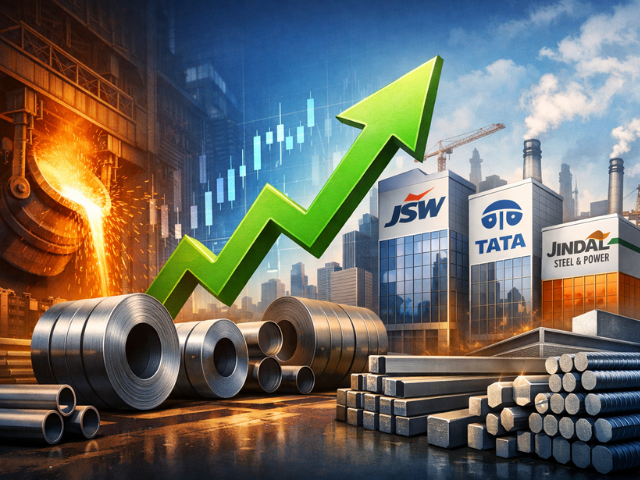
The announcement of safeguard duty boosting steel shares became one of the most talked about developments in Indian equity markets this year. Almost immediately, steel stocks rallied, with JSW Steel, Tata Steel and Jindal Steel leading the surge. For investors, this was not just a knee jerk reaction to a policy headline, but a signal of changing fundamentals in the domestic steel industry.
Safeguard duties are designed to protect local manufacturers from a sudden surge in imports. In India’s case, the move came at a time when global steel prices were under pressure and domestic producers were facing margin stress due to low cost imports. The policy intervention altered the demand supply equation overnight.
A safeguard duty is a temporary import duty imposed to protect domestic industries from serious injury caused by rising imports. Unlike anti dumping duties, safeguard duties do not target specific countries. They apply broadly and are permitted under World Trade Organization rules.
In India, such measures are notified after detailed investigation and recommendations by the Directorate General of Trade Remedies, under the Ministry of Commerce.
The Indian steel industry had been witnessing a steady rise in imports, particularly from countries with surplus capacity. Domestic producers flagged concerns over pricing pressure and underutilization of capacity. The safeguard duty was introduced to restore balance and give Indian manufacturers breathing space.
JSW Steel reacted positively as investors anticipated better realizations and improved margins. With lower import competition, domestic pricing power strengthened. Analysts also highlighted JSW’s operational efficiency and strong balance sheet as additional positives in a protected market environment.
Tata Steel’s Indian operations stood to benefit significantly from the safeguard duty. While its global exposure adds complexity, the domestic business gained pricing stability. The stock saw renewed buying interest from institutional investors looking for quality names within the steel space.
Jindal Steel and Power also emerged as a key beneficiary. With expanding capacity and exposure to infrastructure driven demand, the safeguard duty improved revenue visibility and earnings outlook.
The most immediate impact was on steel prices in the domestic market. Reduced import pressure allowed companies to stabilize prices, which is crucial in a capital intensive industry like steel where margins are highly sensitive to realizations.
With imports becoming less attractive, domestic producers saw better capacity utilization. This is especially important as India continues to invest heavily in infrastructure, housing and manufacturing under various government initiatives.
Ancillary sectors such as mining, logistics and capital goods also benefited indirectly. Higher steel production typically leads to increased demand across the value chain.
India is in the midst of a multi year infrastructure push, spanning roads, railways, power and urban development. Steel remains a core input for all these segments. The safeguard duty aligns policy support with long term demand growth.
Globally, steel markets have been volatile due to fluctuating demand from China and uneven recovery across economies. By insulating domestic producers from external shocks, the safeguard duty reduced earnings uncertainty for Indian companies.
Safeguard duties are temporary by nature. Investors should track government reviews and any changes in duty structure, as these can impact stock prices.
While pricing power improves, companies still face raw material and energy cost risks. Efficient players with captive resources or long term contracts are better positioned.
SEBI regulations ensure transparency in disclosures related to policy impact and earnings. Investors should rely on company filings and credible research rather than market speculation.
Policy driven rallies can be powerful but also volatile. Not every steel stock benefits equally. This is where structured research and disciplined investing become essential.
Platforms like Swastika Investmart, with SEBI registration, strong research tools and tech enabled investing platforms, help investors evaluate sectoral opportunities with clarity. Their focus on investor education and responsive customer support enables better decision making, especially during policy induced market moves.
What triggered the rally in steel stocks?
The announcement of safeguard duty on steel imports reduced competition from cheaper imports, improving pricing power for domestic producers.
Which steel companies benefited the most?
JSW Steel, Tata Steel and Jindal Steel were among the biggest beneficiaries due to their scale, domestic exposure and operational strength.
Is safeguard duty permanent?
No. Safeguard duties are temporary and subject to periodic review by the government.
Does this policy help long term investors?
It can improve near to medium term earnings visibility, but long term returns still depend on efficiency, demand growth and cost control.
The development where safeguard duty boosts steel shares highlights how policy decisions can reshape sector dynamics. The rally in JSW, Tata Steel and Jindal reflects renewed confidence in India’s steel industry amid infrastructure growth and regulatory support.
For investors, such phases offer opportunities but also demand careful analysis. With its SEBI registered framework, in depth research capabilities and investor focused approach, Swastika Investmart supports informed participation in evolving market trends.


Trust Our Expert Picks
for Your Investments!


When a global banking giant takes a meaningful stake in an Indian financial company, markets pay attention. MUFG Bank’s decision to acquire around a 20% stake in Shriram Finance is one such development that has sparked interest across Dalal Street.
This is not just another foreign investment headline. It reflects growing global confidence in India’s financial system, the non-banking finance company space, and Shriram Finance’s business model. For investors, the key question is simple: what does this deal really mean for future returns and risk?
Mitsubishi UFJ Financial Group, Japan’s largest financial group, is known for its conservative approach and long-term investments. Its entry into Shriram Finance is strategic rather than speculative.
Shriram Finance is a major player in retail lending, with strong exposure to commercial vehicle finance, MSME loans, and rural-focused credit. Over the years, it has built deep distribution networks in semi-urban and rural India.
A 20% stake is significant. It gives MUFG meaningful influence without taking over operational control. This signals partnership, not disruption.
In a high interest rate and volatile global environment, foreign institutions are cautious. Capital flows into emerging markets are increasingly selective, favoring companies with strong governance, scalable models, and consistent asset quality.
MUFG’s entry suggests Shriram Finance meets these criteria.
Indian NBFCs went through a tough phase after liquidity stress and tighter regulations. Over time, stronger players adapted by improving balance sheets, tightening credit underwriting, and aligning closely with RBI norms.
This deal reinforces the view that the sector has matured.
A global partner improves funding confidence. It can help Shriram Finance diversify borrowing sources and potentially reduce long-term funding costs.
Lower funding costs, even marginally, can support net interest margins in a competitive lending environment.
Global banks operate under strict regulatory and risk frameworks. MUFG’s presence can strengthen internal controls, risk monitoring, and compliance processes.
For long-term investors, this reduces tail risks rather than boosting short-term profits.
MUFG has deep experience in Asia-focused financial services. This alignment supports sustainable growth rather than aggressive expansion, which markets increasingly reward.
Historically, Indian stocks that attract strategic foreign investors tend to see improved valuation comfort over time. The immediate stock price reaction may vary, depending on broader market conditions, but the long-term narrative often improves.
Investors usually reassess such companies on three parameters:
Shriram Finance already had a strong base in these areas. The MUFG stake further strengthens investor confidence.
The Reserve Bank of India and SEBI have consistently pushed for better governance, capital adequacy, and transparency in financial institutions.
Foreign strategic investments undergo regulatory scrutiny, ensuring alignment with Indian laws and financial stability norms. This deal fits well within India’s broader push for stable and well-capitalized financial intermediaries.
For investors, regulatory clearance itself acts as a quality filter.
The deal is a positive signal, but investing decisions should not rely on headlines alone.
Key factors to monitor include:
Long-term wealth creation comes from consistent execution, not one-time events.
Understanding complex stake deals requires more than surface-level news. Investors benefit from structured research, sector comparisons, and risk analysis.
Swastika Investmart, a SEBI-registered brokerage, supports investors with:
Such tools help investors separate long-term opportunity from short-term noise.
Why did MUFG choose Shriram Finance?
Shriram Finance has a strong retail lending franchise, deep rural reach, and improving governance, making it attractive for a long-term strategic partner.
Does a 20% stake mean MUFG controls the company?
No. It provides influence and partnership benefits without operational control.
Is this positive for existing shareholders?
Generally yes, as it improves capital strength, governance confidence, and long-term growth visibility.
Will this immediately boost profits?
Not immediately. The benefits are structural and long-term rather than short-term earnings jumps.
MUFG’s entry into Shriram Finance is a strong vote of confidence in Indian financial markets and the NBFC sector’s evolution. For investors, it reinforces the importance of quality, governance, and long-term partnerships.
While the deal strengthens the investment case, returns will ultimately depend on execution and market conditions. Investors looking to analyze such opportunities with clarity can benefit from research-backed platforms like Swastika Investmart.
If you want to track high-impact deals and make informed investment decisions, consider opening an account with Swastika Investmart and access structured insights designed for Indian markets.

A Demat account is the foundation of every investor’s journey. It holds your shares, mutual funds, ETFs, and bonds electronically.
But in 2025, the Demat ecosystem is no longer just a digital locker.
It’s an intelligent investment hub, powered by Artificial Intelligence (AI) that simplifies decision-making, enhances security, and personalizes your experience.
Let’s explore how AI is reshaping Demat accounts in India and why brokers like Swastika Investmart are at the forefront of this evolution.
When SEBI introduced Dematerialization in the late 1990s, the goal was simply to eliminate paper certificates.
Today, the purpose has evolved to empowering investors with automation, real-time analytics, and seamless integration with trading and banking systems.
| Era | Technology Focus | Investor Experience |
|---|---|---|
| 1990s | Paper to Digital Conversion | Basic record keeping |
| 2000–2015 | Online Trading Integration | Access via web & apps |
| 2020–2025 | AI, Automation, Predictive Analytics | Smart, Personalized, Real-time Investing |
AI algorithms analyze your investment history, goals, and risk profile to recommend stocks, ETFs, or mutual funds.
You get custom watchlists, auto alerts, and insights like:
Platforms like Swastika Investmart use AI-driven insight engines built on real trading data to guide investors more effectively.
AI models monitor trading patterns, device fingerprints, and location mismatches to instantly flag suspicious activity.
SEBI has encouraged such innovations to prevent unauthorized transactions or phishing.
Example:
If your Demat account logs in from two cities within an hour, the system flags it for verification powered by AI anomaly detection.
In 2025, investing is becoming conversational.
AI assistants let you trade using voice commands:
“Buy 10 shares of HDFC Bank” or “Show my mutual fund returns.”
These are integrated into trading apps via NLP (Natural Language Processing) , the same technology behind modern chatbots like ChatGPT.
Swastika Investmart assists you with multi-language AI chatbots to support investors in English, Hindi, and regional languages.
AI-powered Demat platforms analyze real-time market data, Open Interest (OI), and news sentiment to forecast trends.
Example:
If data shows rising OI in Gold ETFs and AI sentiment analysis detects positive commodity outlook, the system suggests a sectoral opportunity.
These predictive insights help traders plan entries and exits more efficiently no need to read 20 reports.
AI-driven systems track your asset allocation and automatically rebalance it based on:
So if your equity exposure rises beyond 70%, AI might suggest shifting some funds into debt or gold ETFs maintaining balance without manual effort.
| Feature | AI Advantage | Investor Benefit |
|---|---|---|
| Smart Alerts | Pattern-based notifications | Timely buy/sell decisions |
| Portfolio Tracking | Machine learning analytics | Understand risk & diversification |
| Fraud Detection | Behavior-based anomaly scans | Enhanced security & compliance |
| Chatbots & Voice AI | Conversational support | Ease of access for all investors |
| Predictive Forecasting | AI sentiment & pattern models | Better market timing |
AI bridges the gap between information overload and actionable insight, helping retail investors make smarter, faster, and safer investment decisions.
As one of India’s trusted SEBI-registered brokers, Swastika Investmart combines human research excellence with AI-backed analytics.
What sets Swastika apart:
The Securities and Exchange Board of India (SEBI) encourages brokers to adopt RegTech and AI compliance frameworks to improve:
AI ensures these systems are proactive, not reactive, reducing human error and improving investor protection.
1. How does AI make Demat accounts smarter?
AI automates insights, alerts, and portfolio management saving time and improving accuracy for investors.
2. Is it safe to use AI-based Demat apps?
Yes, as long as they are SEBI-registered and NSDL/CDSL-linked like Swastika Investmart, which follows strict encryption and compliance.
3. Can AI replace human advisors?
AI enhances human advice; it provides data-backed insights, but experienced financial advisors still guide emotion and judgment.
4. What’s next for AI in investing?
Expect voice-enabled trading, personalized robo-advisory, and AI-driven tax optimization by 2026.
5. Does Swastika Investmart offer AI-based investing tools?
Yes, Swastika integrates AI in its research, trading platform, and customer dashboards for intelligent investing and portfolio management.
The integration of AI in Demat accounts marks a new chapter in India’s investing journey, one defined by personalization, protection, and precision.
With AI-driven insights, investors no longer need to spend hours analyzing markets your Demat account itself becomes your intelligent financial partner.
As pioneers in this transformation, Swastika Investmart continues to merge AI, research, and SEBI compliance, ensuring every investor enjoys the future of smart investing today.
AI doesn’t replace intelligence, it amplifies it. And your Demat account just got smarter.

• Financials, autos, and defence stocks dominated the gainers list
• IT stocks clearly underperformed and dragged the losers pack
• Sectoral rotation played a bigger role than overall market direction
• Stock-specific fundamentals mattered more than index movement
The last one year in the Indian equity markets has been a perfect example of how stock selection can make or break returns. While Nifty moved higher in phases, individual stocks showed extreme divergence. Some stocks delivered near 50 percent returns, while others corrected sharply despite being index heavyweights.
This sharp contrast makes it important to study Nifty’s top 5 gainers and losers of the last one year and understand what actually drove these moves. The insights are especially relevant for retail investors who often assume index stocks move together.
Indian markets over the past year saw a mix of strong domestic growth, sector rotation, and changing global cues. Capital flowed into sectors linked to consumption, defence, and financial services, while export-oriented IT stocks faced pressure.
What stood out was that leadership changed within the index itself. Defensive names struggled, while growth-focused businesses rewarded investors handsomely.
Bajaj Finance moved from around 694 to over 1009, delivering a return of about 45 percent. The stock benefited from consistent performance in retail lending, improving asset quality, and strong investor confidence in the NBFC space.
As credit demand stayed healthy and risk concerns eased, investors were willing to pay a premium for predictable growth.
Maruti Suzuki surged roughly 46 percent over the year, rising from about 11209 to 16377. Strong demand for passenger vehicles, better product mix, and improved margins helped the stock outperform.
The rally highlighted how consumption-led themes continued to attract long-term investors despite concerns around input costs.
Shriram Finance delivered close to 47 percent returns, moving from about 583 to nearly 859. The company gained from robust demand in the commercial vehicle financing space and improving profitability metrics.
This performance underlined the market’s preference for well-managed lenders with niche dominance.
Eicher Motors also rose around 47 percent, climbing from approximately 4885 to 7190. Strong Royal Enfield sales, improving exports, and operating leverage played a major role.
The stock reflected how brand strength and execution can drive rerating even in a competitive auto market.
Bharat Electronics gained about 33 percent, moving from around 294 to 390. The stock benefited from steady defence-related orders and positive sentiment towards indigenous manufacturing.
This performance showed how policy-driven sectors can generate stable returns during uncertain global conditions.
| S. No. | Top Gainer Stock Name | Price on 01/01/2025 | Price on 19/12/2025 | % Change |
|---|---|---|---|---|
| 1 | Bajaj Finance Ltd | 693.97 | 1009.10 | 45% |
| 2 | Maruti Suzuki India Ltd | 11208.30 | 16377.00 | 46% |
| 3 | Shriram Finance Ltd | 583.75 | 858.80 | 47% |
| 4 | Eicher Motors Ltd | 4885.30 | 7190.00 | 47% |
| 5 | Bharat Electronics Ltd (BEL) | 293.90 | 390.10 | 33% |
| 6 | SBI Life Insurance | 1400.40 | 2017.30 | 44% |
The common thread among gainers was earnings visibility and sectoral tailwinds. Financials benefited from credit growth, autos from domestic demand, and defence from structural government support.
Importantly, these stocks rewarded patience rather than short-term trading.
Trent was the biggest loser, falling nearly 43 percent from around 7068 to 4032. After strong previous rallies, the stock saw profit booking and valuation correction.
This highlighted how even quality retail stories can correct sharply when expectations run too far ahead.
TCS declined about 19.5 percent, dropping from roughly 4112 to 3311. Slower global IT spending and cautious client outlook impacted the stock.
Despite being a market leader, sentiment turned negative as growth visibility weakened.
Infosys fell around 12.4 percent over the year, moving from about 1883 to 1649. Deal delays and margin concerns weighed on investor confidence.
The correction showed that size does not guarantee downside protection.
HCL Tech declined nearly 13.9 percent, from around 1912 to 1646. Pressure on discretionary tech spending and sector-wide concerns played a role.
Wipro slipped close to 11.8 percent, falling from about 300 to 265. Weak revenue growth outlook kept the stock under pressure.
| S. No. | Top 5 Losers Stock Name | Price (Earlier) | Price (Latest) | % Change |
|---|---|---|---|---|
| 1 | Trent Ltd. | 7068.05 | 4032.20 | -42.95% |
| 2 | TCS | 4112.45 | 3310.60 | -19.50% |
| 3 | Infosys Ltd. | 1882.50 | 1648.90 | -12.41% |
| 4 | HCL Tech Ltd. | 1911.95 | 1646.20 | -13.90% |
| 5 | Wipro Ltd. | 300.30 | 264.75 | -11.84% |
| 6 | ITC | 456.80 | 400.95 | -12.23% |
| 7 | Power Grid | 310.40 | 260.20 | -16.17% |
The IT sector faced multiple headwinds. Global clients cut discretionary budgets, deal closures slowed, and currency benefits failed to offset growth concerns.
This resulted in a clear underperformance of IT stocks within Nifty, despite their heavyweight status.
For investors, this one-year period reinforced a key lesson. Index investing provides stability, but alpha comes from understanding sector cycles and company fundamentals.
The divergence between gainers and losers also highlighted why risk management and portfolio diversification are critical.
When markets show such sharp contrasts, relying on headlines alone can be costly. Research-driven investing helps identify when momentum is backed by fundamentals and when corrections are driven by structural issues.
Swastika Investmart, a SEBI-registered brokerage, supports investors with strong research tools, sector insights, and technology-driven platforms. Their focus on investor education and responsive customer support helps investors stay disciplined during volatile phases.
Why did financial stocks outperform the market?
Financial stocks benefited from strong credit demand, improving balance sheets, and better earnings visibility.
Why did IT stocks fall despite being large companies?
Slower global spending and weak growth outlook impacted sentiment across the IT sector.
Does one year performance decide long-term potential?
No. One-year performance reflects cycles. Long-term returns depend on consistent fundamentals.
Should investors avoid underperforming stocks?
Not necessarily. Some corrections create opportunities, but only after proper analysis.
How can retail investors manage such market extremes?
By diversifying portfolios, tracking fundamentals, and using research-backed platforms.
Nifty’s top 5 gainers and losers of the last one year clearly show that markets reward clarity and punish uncertainty. Sector rotation, earnings visibility, and valuations played a bigger role than overall index movement.
For investors, the takeaway is simple. Stay informed, stay selective, and stay disciplined.
If you want to invest with structured research, smart tools, and professional support, consider Swastika Investmart.

• Large-cap indices showed relative stability while mid and small caps saw sharper swings
• Sector-specific indices reflected clear rotation during the year
• Broader markets rewarded selective stock picking, not blanket investing
• Index behaviour highlights the importance of asset allocation and discipline
The Indian stock market rarely moves in a straight line, and this year was a clear reminder of that reality. While headline indices often grab attention, a closer look shows that different indices behaved very differently. Some rewarded patience, others tested investor nerves, and a few quietly outperformed without much noise.
Understanding how Indian stock market indices behaved this year is not just an academic exercise. It offers practical lessons for investors on diversification, risk management, and expectations. Let us break it down in a simple, investor-friendly way.
This year was shaped by a mix of domestic strength and global uncertainty. India’s economy remained resilient, supported by consumption, government spending, and stable banking health. At the same time, global cues like interest rate uncertainty and uneven growth kept volatility alive.
Against this backdrop, Indian indices did not move in sync. Performance depended heavily on market capitalisation, sector exposure, and earnings visibility.
Large-cap indices like Nifty and Sensex showed relatively steady movement through the year. While there were periods of correction, sharp crashes were largely avoided.
This stability came from strong balance sheets, predictable earnings, and leadership from sectors like financials, autos, and select industrials. For many long-term investors, large-cap indices acted as shock absorbers during volatile phases.
Large-cap indices may not always deliver eye-catching returns in a single year, but they provide consistency. Investors relying on these indices for core portfolio allocation benefited from lower volatility and smoother returns.
Midcap indices experienced higher volatility compared to large caps. There were phases of strong rallies driven by earnings optimism and liquidity flows. However, these rallies were often followed by sharp corrections when valuations stretched.
This behaviour reminded investors that midcaps amplify both opportunity and risk.
Midcap exposure needs discipline. Chasing momentum without valuation comfort proved costly for some investors. Those who focused on quality midcap businesses with earnings visibility fared better.
Small cap indices showed the widest swings this year. Periods of strong optimism were followed by equally strong sell-offs. Liquidity-driven moves played a major role, making price action more emotional than fundamental at times.
Retail participation was high, which added to volatility.
Small caps demand patience and strong research. Blind diversification within small caps did not work. Investors who treated small caps as long-term bets rather than quick trades managed risk better.
Financial and auto-related indices showed relative strength during the year. Stable demand, improving margins, and regulatory comfort supported these sectors.
Banks and NBFCs benefited from credit growth and healthy balance sheets, while auto companies gained from steady domestic consumption.
IT indices faced pressure due to global demand slowdown and cautious client spending. Defensive sectors also underperformed in phases when risk appetite improved.
This divergence highlighted how sector cycles matter as much as overall market direction.
One key takeaway from this year is that Indian markets are becoming more selective. Index-level movement no longer tells the full story.
SEBI’s continuous focus on transparency, governance, and investor protection has strengthened market depth. As a result, stock-specific fundamentals are playing a bigger role than broad market sentiment.
For investors, this means passive investing alone may not capture all opportunities.
Different indices serve different purposes. Large caps provide stability, midcaps offer growth, and small caps add optional upside. A balanced allocation helps smooth returns across cycles.
Many investors assume index returns reflect their portfolio returns. This year showed that stock selection within indices can lead to very different outcomes.
With divergence across indices and sectors, research-backed investing becomes critical. Understanding earnings quality, valuations, and sector trends helps avoid emotional decisions.
In a market where indices move differently, investors need more than basic tools. They need insights, timely analysis, and guidance.
Swastika Investmart, a SEBI-registered brokerage, supports investors with strong research capabilities, tech-enabled trading platforms, and a focus on investor education. Their customer support and analytical tools help investors interpret market trends rather than react to them.
Whether you are tracking index performance or building a diversified portfolio, access to reliable research adds confidence.
Why do different indices behave differently in the same year?
Because each index represents a different set of companies, sectors, and risk profiles.
Is investing only in Nifty enough?
Nifty provides stability, but combining it with selective mid and small-cap exposure can improve long-term returns.
Are sectoral indices useful for retail investors?
Yes, they help understand sector trends, but direct investing requires timing and research.
Does volatility mean markets are weak?
Not necessarily. Volatility often reflects changing expectations rather than poor fundamentals.
How should new investors use index data?
As a guide for allocation and risk understanding, not as the sole basis for stock selection.
This year clearly showed that Indian stock market indices do not move as one. Each index told a different story, shaped by fundamentals, liquidity, and investor behaviour.
For investors, the lesson is simple. Respect market cycles, diversify wisely, and rely on research rather than noise.
If you are looking to invest with clarity, technology, and professional research support, consider Swastika Investmart.
%20(2).png)
Indian equity markets ended the session on 24 December 2025 on a weak note, giving up intraday gains amid profit booking and cautious sentiment across sectors.
Despite a stable start and a positive mid-day move on 24 December 2025, benchmark indices failed to sustain higher levels and slipped into negative territory by the closing bell.
The market began the day on 24 December 2025 with a mixed opening, reflecting cautious global cues and selective stock action.
• Nifty 50 opened at 26,170.65, marginally lower by 0.02 percent
• Bank Nifty opened at 59,322.95, up 0.04 percent
Early trade saw limited momentum as investors remained watchful amid global and domestic cues.
By mid-session on 24 December 2025, markets showed signs of recovery supported by buying interest in select heavyweight stocks.
• Nifty 50 traded at 26,189.80, up 0.05 percent
• Bank Nifty traded at 59,316.70, up 0.03 percent
The recovery was driven by short covering and selective accumulation, though volumes remained moderate.
As the session progressed on 24 December 2025, selling pressure emerged at higher levels, leading to a reversal in benchmark indices.
• Nifty 50 closed at 26,142.10, down 0.13 percent
• Nifty Bank closed at 59,183.60, down 0.20 percent
Late-session profit booking in banking and heavyweight stocks weighed on overall market sentiment.
Several factors influenced market movement on 24 December 2025:
• Profit booking after recent gains
• Lack of strong global cues
• Cautious positioning ahead of upcoming macro events
• Stock-specific selling in banking and frontline stocks
Despite intraday recovery, markets lacked fresh triggers to sustain upward momentum.
Sector performance remained mixed throughout the session:
• Banking stocks saw mild selling pressure
• IT stocks traded cautiously
• FMCG remained relatively stable
• Auto and metal stocks witnessed selective activity
Broader markets also traded with mild volatility, indicating cautious participation.
The market continues to consolidate near higher levels after the session on 24 December 2025. While the long-term structure remains intact, short-term volatility may persist.
Key factors to watch in upcoming sessions include:
• Global market trends
• FII and DII activity
• Movement in banking and heavyweight stocks
• Key technical support and resistance levels
Swastika Investmart supports traders and investors with:
• Real-time market insights
• Research-backed trading views
• Advanced, tech-enabled trading platforms
• Dedicated customer support
Our SEBI-compliant approach ensures informed and disciplined decision-making across market conditions.
The trading session on 24 December 2025 highlighted the importance of caution at higher levels. Despite intraday recovery, benchmark indices closed lower due to profit booking.
As markets consolidate, a stock-specific and risk-managed approach remains key.
%20(3).png)
Indian equity markets closed on a positive note on Friday, 19 December 2025, extending their upward momentum for the second consecutive session. Buying interest across banking, financials, and select heavyweight stocks helped benchmark indices end near the day’s highs.
The overall tone of the market remained optimistic, supported by stable global cues, steady institutional participation, and expectations of continued economic growth in India.
At the closing bell, benchmark indices posted healthy gains:
Markets opened on a firm note and gradually moved higher as buying interest picked up during the mid-session, especially in banking and large-cap stocks.
The session began with cautious optimism. Early trade saw Nifty 50 hovering around 25,911, while Bank Nifty traded near 59,047. Gradual accumulation by institutional investors helped indices inch higher.
By mid-session, markets consolidated gains without major profit booking. This phase reflected confidence among participants despite year-end volatility typically seen in December.
In the final hour, fresh buying lifted indices to close near the day’s highs. Nifty 50 traded around 25,957, while Bank Nifty crossed 59,020, confirming strong intraday support levels.
Banking stocks remained the backbone of today’s rally. Private sector banks and select PSU banks attracted buying interest, supporting Bank Nifty’s steady performance near record territory.
Heavyweights across FMCG, IT, and capital goods sectors contributed to market stability. Investors preferred quality large-cap stocks amid ongoing global uncertainties.
Mid-cap and small-cap stocks traded with a positive bias, indicating healthy risk appetite. Market breadth favored advancers, suggesting broad-based participation rather than a narrow rally.
Several factors influenced the positive close:
With inflation largely under control and corporate earnings visibility improving, investor confidence remains intact.
For short-term traders, today’s close above key levels reinforces a positive trend, especially in banking and index heavyweights.
For long-term investors, the steady rise reflects confidence in India’s growth story. Phased investing and disciplined allocation continue to remain sensible strategies in current market conditions.
SEBI-regulated market frameworks and transparent disclosures continue to strengthen trust among retail investors participating through digital platforms.
In markets like today, where momentum builds gradually, having access to reliable research and real-time insights becomes crucial.
Swastika Investmart, a SEBI-registered stockbroker, supports investors through:
This combination helps investors make informed decisions rather than emotional ones.
👉 Open your trading and investment account with Swastika Investmart
Why did the Indian stock market close higher today?
Positive global cues, banking sector strength, and steady institutional buying helped markets end higher.
What was the closing level of Nifty 50 today?
Nifty 50 closed at 25,966.40 on 19 December 2025.
How did Bank Nifty perform today?
Bank Nifty ended at 59,069.20, maintaining strength near record levels.
Is the market trend bullish after today’s close?
The trend remains positive, but investors should stay cautious of short-term volatility.
Should investors enter the market at current levels?
A staggered investment approach with proper research is generally advisable.
The market closing today on 19 December 2025 reflects sustained optimism in Indian equities. With Nifty, Sensex, and Bank Nifty holding strong levels, sentiment remains constructive heading into the final trading days of the year.
For investors looking to participate confidently in India’s growth journey, combining disciplined strategies with expert research is key.
👉 Open your trading and investment account with Swastika Investmart
Invest smart. Invest informed.