

%20(3).png)

Indian equity markets ended the first trading session of the New Year on a positive note on 1 January 2026, supported by steady buying in banking and technology stocks. Benchmark indices closed marginally higher, reflecting cautious optimism as investors began the year with selective positioning rather than aggressive risk-taking.
The overall tone of the market remained stable, with sector-specific strength helping indices maintain gains through the session.
At the close of trade today, key indices settled as follows:
The closing data highlights modest but broad-based strength, led primarily by IT and banking stocks.
The Nifty 50 closed marginally in the green, indicating a steady start to the New Year. Buying interest was visible in select large-cap stocks, while others remained range-bound. The index continued to consolidate near higher levels, suggesting that investors are waiting for stronger triggers such as earnings updates and global cues before taking decisive positions.
The muted yet positive close reflects disciplined participation rather than speculative momentum.
Bank Nifty outperformed the broader market, closing with healthy gains. The index benefited from selective buying in banking and financial stocks as investors remained confident about credit growth, asset quality stability, and regulatory clarity under RBI norms.
The strength in Bank Nifty also helped support the broader indices, reinforcing the role of financial stocks as market anchors during early-year sessions.
The standout performer today was the Nifty IT index, which closed significantly higher. IT stocks gained traction on the back of stable global technology cues, currency comfort, and expectations of steady demand visibility from overseas clients.
IT stocks often attract interest during periods of cautious market sentiment due to their defensive nature and export-linked earnings, which was clearly visible in today’s trade.
The first trading session of 2026 was marked by controlled volatility and selective participation. There were no major global shocks, allowing domestic factors to guide price action. Investors appeared focused on portfolio alignment rather than chasing quick gains.
Lower volumes, typical of early January sessions, also contributed to a measured market move.
As the market settles into the New Year, investors may keep an eye on:
For traders, disciplined risk management remains key, while long-term investors may continue to accumulate quality stocks gradually.
Navigating daily market movements requires timely insights and reliable research. Swastika Investmart, a SEBI-registered brokerage, empowers investors with:
Whether markets are trending or consolidating, having structured research and tools can make a meaningful difference.
The Indian stock market closed the first trading day of 2026 on a positive note, with gains led by Bank Nifty and Nifty IT. The calm and constructive close sets a steady tone for the days ahead, as investors focus on fundamentals and long-term opportunities.
If you’re planning to approach 2026 with a disciplined and informed strategy, Swastika Investmart is here to support your investing journey.
👉 Open your trading and investment account today
Stay informed. Trade smart. Invest with confidence.



The Commonwealth Sports Federation recently awarded Ahmedabad the rights to host the 2030 edition, signalling a major milestone for Indian sports and urban infrastructure.
For markets and investors, such a big-ticket event often acts as a catalyst — triggering years of building activity, public-private investments, and demand across sectors that go far beyond just sports. Analysis of previous global sporting events shows that host cities often undergo rapid transformation: new stadiums, upgraded transport, expanded hospitality, and increased tourism.
Given its strategic location, existing infrastructure base (like large venues and airports), and the government's plan to build new complexes, an Athlete Village, improved transport connectivity and world-class facilities, Ahmedabad is positioning itself for more than just a one-off event.
Large-scale development work is already being planned: from sports complexes to athlete housing, hotels, and urban infrastructure.
A major multi-sport event typically draws athletes, media, officials and tourists from across 70+ Commonwealth nations.
To handle influx of people — athletes, officials, tourists — infrastructure like multimodal transport hubs, enhanced rail/road connectivity and public transit upgrades are planned.
A large sporting event demands planning, coordination, logistics, security, media covering, broadcasting infrastructure, marketing, and more.
Events draw crowds; crowds spend. Hotels, retail shops, local vendors, transport services, eateries — all see short-term spikes.
For investors on Dalal Street, the 2030 CWG in Ahmedabad could present an interesting long-term thematic play. Here’s what to watch:
However, caution is warranted. As with any mega-event, inflation in real-estate prices, execution delays, or under-utilisation of facilities post-event can pose risks. Historically, benefits of mega-sports events turn out to be uneven — some sectors boom, others may see under-use or slow returns.
Global evidence suggests hosting large sports events can yield substantial economic benefits. According to a report, staging the Games has previously boosted GDP of host cities significantly and generated thousands of jobs during and after the event.
In India, such events have often accelerated urban development — new stadiums, improved transport, increased tourism, and growth in allied sectors.
But there is also a reality check: mega events sometimes lead to short-term job creation, with many jobs being temporary; infrastructure maintenance and long-term viability remain a concern.
Hence, for Dalal Street investors, the ideal strategy would be to focus on companies with strong balance sheets, proven execution track record, and diversified exposure — rather than speculative bets.
Q: Could this announcement directly impact stocks in next 1–2 years?
A: It’s possible for companies already engaged in early preparations — infrastructure, construction, real estate and hospitality — to see a near-term uptick in stock price. However large-scale benefits will likely materialize over a longer horizon (3–5 years), as development ramps up.
Q: Is there risk if projects get delayed or not executed properly?
A: Yes — delays, budget overruns, under-utilised facilities post-Games, or regulatory/policy hurdles can reduce the anticipated benefits. Investors should monitor execution, corporate disclosures and project progress carefully.
Q: Will this benefit small or mid-cap companies more than large caps?
A: Mid-cap or small-cap firms with exposure to Gujarat’s real-estate, infrastructure or hospitality could see higher growth potential. But with higher reward comes higher risk — making it crucial to do proper due diligence.
Q: Does this affect only Gujarat or broader India?
A: While Ahmedabad/Gujarat stands to benefit most directly, there could be positive spill-overs across India through supply-chain companies, national hospitality chains, logistics companies, and other firms servicing the Games-related demand.
Q: Should foreign investors worry about regulatory or environmental backlash?
A: Regulatory oversight, especially around land use, environmental norms and compliance with local laws, will be important — as with any large infrastructure or urban project. Environmental and social sustainability commitments by local authorities, as per the Games’ bid, may help reduce risks.
The awarding of the 2030 Commonwealth Games to Ahmedabad marks a landmark moment — not just for Indian sports, but for urban development, infrastructure and investment opportunities linked with it. For equity investors on Dalal Street, sectors like real-estate, construction, hospitality, transport, and services are worth watching closely.
If you want to act now and build a structured investing plan around this theme — backed by robust research tools, technological ease and SEBI-registered advisory — consider exploring Swastika Investmart. With its strong research capabilities and investor-education support, Swastika Investmart can help you identify promising opportunities without speculative hype.
👉 Open your account with Swastika Investmart today
today and stay informed as the story unfolds.
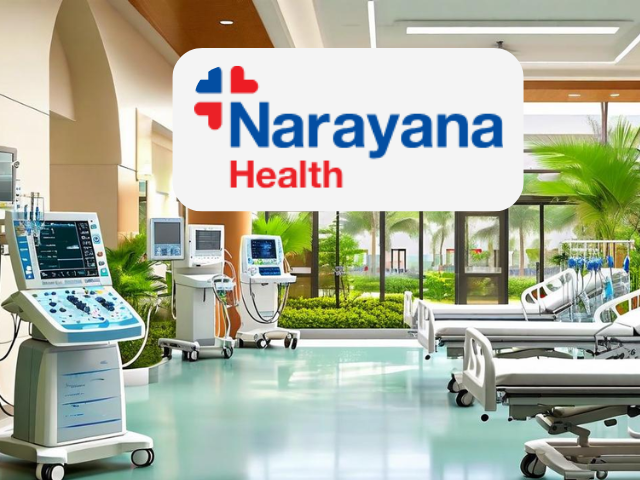
As you enter the reception lobby of NH, you see long queues moving surprisingly fast, doctors switching between cases with precision, and prices displayed transparently.
This isn’t accidental.
NH was built on one mission:
“Deliver high-quality healthcare at the lowest possible cost.”
This philosophy is the foundation of its business model—high volume, high efficiency, low cost leakage, and razor-sharp focus on critical specialties like cardiology, oncology, neuro-sciences, and cardiac surgery.
While most hospital chains chase luxury, NH focuses on scalability and affordability.
And that’s where the story becomes different.
The moment you move deeper inside the hospital, you start noticing something:
Everything is optimized. Everything is standardized.
From operation theatres to patient flow systems, NH has mastered the “assembly-line” approach to complex healthcare.
This is exactly what drives:
These exceptional capital efficiency numbers do not happen by chance—they come from an operations model that squeezes maximum productivity out of every facility.
Suddenly, the environment changes. You step into a quieter, more premium-looking section.
This represents NH’s Cayman Islands operations—a strategic arm that enhances profit quality.
Why is this wing important?
It’s like NH has one foot in affordable Indian healthcare and another in premium global healthcare—creating the perfect mix of volume + margin.
Now imagine entering a room where balance sheets and income statements come alive.
They begin to speak:
This financial stability gives NH enough oxygen to grow aggressively without stressing its balance sheet.
You walk into a hallway filled with mirrors.
Each mirror shows the same reflection: P/E ~46x.
The question rises:
“Is NH expensive?”
Yes, the valuation is premium.
But premium is earned—when a business demonstrates consistent growth, high return ratios, and strong cash flows.
Two bright lights in this corridor shine extra strong:
✨ Promoter Holding: 64%+
A promoter skin-in-the-game always boosts investor confidence.
✨ New Growth Engines: ARIA (insurance vertical) & new clinics
These additions widen NH’s future runway.
The risk room is dimly lit—because every business has shadows.
Here’s what you notice:
These risks don’t weaken the story but help maintain realistic expectations.
As you walk into the final room, the atmosphere feels hopeful.
NH isn’t done growing.
In fact, it’s just warming up.
Some analysts expect NH to head toward ₹3,000 levels in 2–3 years, powered by margin expansion, new clinics, and strong demand.
This is where fundamentals meet future potential.
Yes. Strong ROE/ROCE, high cash flows, healthy margins, and low debt make NH one of the strongest listed hospital chains.
Because the market values its scalability, efficiency-focused model, and future growth potential.
High capex requirement and margin sensitivity to regulatory or staff cost changes.
Yes. It boosts overall margin profile and diversifies revenue.
For those looking at structural healthcare growth and high-quality management, NH can be a strong long-term core holding.
Your journey through Narayana Hrudayalaya’s fundamentals shows one thing clearly:
This is not just a healthcare business; it is a disciplined machine built to scale.
Strong management, efficient operations, global diversification, and consistent financial performance make NH a compelling long-term story.
But like all premium stocks, patience—not speculation—is the key.
If you’re exploring high-quality companies in healthcare and building a disciplined, research-backed portfolio, Swastika Investmart can help you get started with expert research tools, SEBI-registered advisory, and a seamless investing platform.
👉 Open your account with Swastika Investmart today
today and stay informed as the story unfolds.

Every December, investors begin asking the same question: Will there be a Santa Rally?
In global markets, a Santa Rally refers to a short but meaningful rise in equity indices during the last week of December and first trading days of January.
While the concept originated from the US markets, Indian markets have also shown similar year-end patterns—though not consistently. With 2025 nearing its close, investors are again looking for clues: Will the Santa Rally make a comeback this year?
Let’s break down historical trends, triggers, risks, and what investors should realistically expect.
A Santa Rally typically occurs due to a combination of factors:
In India, December is also notable for:
These elements often create an environment where sentiment-driven rallies become possible.
The Santa Rally effect in India is not as strong or predictable as in Western markets.
However, the pattern shows a mild bullish bias during the last trading days of December.
Based on historical Nifty data:
For investors, this means the Santa Rally is possible, but not guaranteed. A lot depends on global cues, local liquidity, and market positioning heading into December.
With 2025 nearly closing, multiple interconnected triggers will shape market direction.
India continues to receive steady inflows through:
Strong domestic liquidity acts as a cushion even when FIIs remain inconsistent.
The market is already positioning for Q3 FY25:
A positive earnings tone can strengthen the possibility of a year-end rally.
Key global factors that may impact the Santa Rally 2025 include:
If global markets enter a risk-on phase, India often participates strongly.
India's macro environment remains stable, supported by:
Regulatory clarity often boosts investor confidence during year-end trades.
Year-end portfolio reshuffling by:
can sometimes result in sharp moves in both largecaps and midcaps, contributing to the Santa Rally.
While seasonal trends are not guaranteed, certain themes tend to attract year-end interest.
Strong credit growth, stable NIMs, and healthy asset quality make BFSI a late-year favourite.
If global sentiment improves, IT stocks often participate in the rally due to their high correlation with US markets.
Year-end festive and winter shopping trends support consumption-linked companies.
December is peak travel season; companies in aviation, hotels, and tourism often see positive sentiment.
Year-end liquidity often pushes broader markets, though valuations should be tracked carefully.
Even though the setup looks supportive, several headwinds may limit the rally:
Weakness in the US markets or tightening financial conditions could spill over into India.
Rising crude can pressure inflation and hit sectors like aviation & paint companies.
Heavy foreign outflows in the final days of the year may dampen sentiment.
After a strong year, investors may book profits, capping upside momentum.
Any unexpected policy update from RBI or SEBI may impact short-term trading behaviour.
The Santa Rally, if it occurs, usually results in:
However, investors should treat it as a short-term event, not a long-term investment strategy.
A sustainable market uptrend still depends on:
1. Is the Santa Rally guaranteed every year?
No. While global markets often see a late-December uptrend, Indian markets show mixed results depending on macro and liquidity conditions.
2. Which sectors tend to benefit most during a Santa Rally?
Banking, IT, consumption, midcaps, and travel-linked sectors often benefit when sentiment is positive.
3. Should investors buy stocks specifically for a Santa Rally?
It is better to focus on fundamentals. Seasonal trends should be only an additional factor in decision-making.
4. Do FIIs influence the chances of a Santa Rally?
Yes. FII inflows often amplify year-end momentum, while heavy selling can limit the rally.
5. How should retail investors approach year-end investing?
Stay diversified, avoid short-term speculation, and prefer companies with strong balance sheets and earnings visibility.
A Santa Rally in 2025 is possible, especially if domestic liquidity stays strong and global markets remain stable. But investors should balance optimism with caution and focus on fundamentals. Seasonal rallies may offer short bursts of momentum, but long-term wealth creation depends on disciplined investing.
If you're looking for research-backed insights, easy trading tools, and SEBI-registered guidance, Swastika Investmart provides a trusted platform for investors at all levels.
👉 Open your account with Swastika Investmart today
today and stay informed as the story unfolds.
.png)
The Christmas–New Year period is traditionally the strongest travel season in India. Flight searches jump, hotel bookings surge, and tourist hubs—from Goa to Kashmir—record their highest footfall of the year.
But the big question for investors is: Will the holiday rush translate into meaningful upside for Indian travel, hospitality, and aviation stocks in 2025?
This analysis explores demand indicators, sector-wise expectations, regulatory context, and how the festive rush could shape the outlook for listed companies on the Indian stock market.
The December quarter (Q3 FY25) is historically strong for tourism and aviation players. For listed companies, this period often contributes significantly to cash flows, margins, and sentiment-driven stock movements.
Some notable examples from past festive seasons:
This year, early data from travel platforms suggests higher-than-usual advance bookings, driven by long weekends, cooler weather, and a rise in domestic leisure spending.
According to industry travel trackers and airline booking patterns, the December 20–January 5 window is expected to be one of the busiest in the last five years.
Key demand signals:
For investors, strong domestic consumption often provides near-term support to sector stocks, especially those with robust balance sheets and diversified revenue streams.
Airlines typically gain from festive demand, but profitability depends on several variables.
High demand usually leads to:
IndiGo and Air India could see strong numbers in December–January due to increased leisure travel and corporate travel returning to pre-holiday activity.
Spot fares on popular holiday routes are already showing elevated levels, which could support airline revenue.
Aviation-linked companies that might benefit include:
A key risk: ATF (Aviation Turbine Fuel) prices, influenced by global crude benchmarks.
If crude rises sharply, cost pressure could offset gains from festive demand.
The DGCA's regulatory oversight and new safety norms also impact operational cost structures—important for investors tracking the aviation theme.
Hotels are typically the biggest winners of the holiday season.
Listed hospitality companies continue to show growth in:
Companies likely to gain:
These firms benefit from strong brand equity, high occupancy rates, and pricing power during peak festive weeks.
Many listed hotel chains have been expanding via management contracts, reducing capex pressures.
This boosts:
Inbound tourism is recovering steadily, especially from Europe, UAE, and Southeast Asia.
This supports hotels in metros and cultural circuits like Jaipur, Delhi, and Mumbai.
OTAs are likely to see:
Market-relevant examples include:
Strong booking volumes can support revenue growth for Q3, though margins depend on promotional expenses and competitive pricing.
Even with strong demand, several risks may influence stock performance:
Sudden jumps in crude can weaken aviation profitability.
Geopolitical tensions may impact international travel demand.
DGCA norms, hotel industry GST policies, and airline operational guidelines can impact cost structures.
New airline routes, aggressive discounting by OTAs, and hotel price wars may affect margins.
The holiday season often boosts sentiment-driven trades in travel-related stocks.
However, long-term investors should assess:
In the broader market, increased consumption and services-sector activity can support indices linked to:
While the festive spike is positive, sustainable performance depends on post-season demand and cost dynamics.
1. Do aviation stocks usually rise during the festive season?
They often see positive sentiment due to strong passenger traffic, but crude oil prices and operational costs play a major role in actual profitability.
2. Are hotel stocks a good pick before the holiday season?
Hotel chains typically benefit from high occupancy and premium pricing in December–January, supporting short-term performance.
3. Which sectors benefit the most from Christmas–New Year travel?
Hospitality, airlines, OTAs, tourism services, and select consumer discretionary companies see strong seasonal demand.
4. What risks should investors watch before investing in travel or aviation stocks?
Crude oil volatility, regulatory changes, competitive pricing, and global travel disruptions are key risks.
5. Does the festive season impact the broader Indian market?
Yes. Strong travel spending boosts discretionary consumption indicators, which can support certain sectoral indices.
The Christmas–New Year travel rush is expected to be strong this year, indicating potential momentum for travel, hospitality, and aviation-related stocks. However, investors should balance festive optimism with a clear view of fundamentals, cost pressures, and regulatory changes.
For investors seeking research-backed decisions, seamless investing tools, and reliable support, Swastika Investmart offers SEBI-registered advisory, robust research insights, and an easy-to-use trading platform.
👉 Open your account with Swastika Investmart today
today and stay informed as the story unfolds.
%20(2)%20(6).png)
The ongoing Russia–Ukraine negotiations are not just about geopolitics. They have direct financial-market consequences. For Indian investors, the outcome could reshape commodity prices, capital flows, and risk perceptions.
Russia remains a major oil exporter, and any easing of sanctions could boost its supply to global markets, cooling down crude. That’s exactly what markets are now pricing in: during recent talks, oil prices dropped as investors anticipated higher Russian output.
At the same time, the peace dialogue interacts with macro risks like U.S. interest rates, trade policy, and liquidity. For India which imports a significant chunk of its crude these shifts matter deeply.
Q: How likely is it that peace talks will bring back full Russian oil supply?
A: While optimism has risen, full normalization is uncertain. Sanctions may ease in phases, but structural and regulatory hurdles remain.
Q: If oil prices drop due to peace, will Indian oil companies suffer?
A: Possibly in export/refining segments, but domestic demand could benefit, and input inflation may ease for many sectors.
Q: Should I exit energy exposure now?
A: Not necessarily. A prudent approach is to review your exposure, hedge where you can, and diversify. Sudden shifts in geopolitics could reverse gains or losses.
Q: How will this affect the rupee?
A: A successful peace deal could boost global risk appetite, strengthening the rupee. But a breakdown or renewed tension could reverse the trend.
Q: Can individual investors leverage Swastika Investmart for these macro calls?
A: Yes Swastika Investmart offers research, analyst commentary, and tools for macro and thematic investing, backed by SEBI regulation and strong support.
The Russia–Ukraine peace talks don’t just carry political weight — they are a major lever for commodity markets, investor flows, and macro stability, all of which directly impact Indian investors. While a successful deal could drive down oil prices and ease inflation, the road ahead is fraught with risk.
To navigate this complexity, access to high-quality analysis and a trusted broker becomes crucial. Swastika Investmart, with its SEBI registration, tech-enabled platform, strong research team, and emphasis on investor education, is well-equipped to help investors stay ahead.
Want to start building a strategy?
👉 Open your account with Swastika Investmart today
today and stay informed as the story unfolds.
.png)
Vedanta Ltd, one of India’s most diversified natural-resources companies with stakes across aluminium, oil & gas, power, steel, and base metals, has embarked on a bold demerger plan. The idea? To spin off its business verticals into specialized listed entities, unlocking value, improving operational focus, and making each business more investable.
Anil Agarwal, Vedanta’s chairman, has called this a “3D” strategy. Demerger, Diversification, and Deleveraging to double the size of Vedanta. The demerger is not just financial housekeeping; it's a long-term play to let each business chart its own course, raise capital independently, and attract investors with very different risk appetites.
Originally, Vedanta proposed a six-way split. But after revising the plan, it now aims for five demerged companies:
Each shareholder will get one additional share in each of the four new companies (i.e., in addition to their existing Vedanta shares).
Q1: When will the demerger actually complete?
A1: Vedanta has extended its demerger timeline to March 31, 2026, because it is still waiting for NCLT approval and approvals from various government bodies.
Q2: How many shares will I get in the new companies?
A2: According to the demerger scheme, every existing Vedanta shareholder will receive 1 share in each of the four newly demerged companies on completion.
Q3: What are the major risks for shareholders?
A3: Key risks include regulatory delays, possible financial stress in demerged units (e.g., the government has flagged Malco Energy’s viability), and loss of cross-business support once splitting occurs.
Q4: Why did Vedanta drop its base metals demerger plan?
A4: Vedanta revised its earlier 6-way demerger plan and decided not to demerge base metals for now. They may consider it later when the business matures further.
Q5: How can I monitor the progress of the demerger?
A5: Keep an eye on Vedanta’s stock-exchange filings (e.g., BSE/NSE announcements), NCLT updates, and trusted financial news portals. You can also consult your broker’s research tools for detailed corporate-action tracking.
Vedanta’s 2025 demerger is a landmark restructuring, aimed at unlocking hidden value and giving each business vertical enough room to grow independently. For shareholders, it presents both an exciting opportunity (more control, potential re-rating) and real risks (regulatory delays, financing issues).
If you're an investor looking to navigate this transformation, having a reliable broker is key. That’s where Swastika Investmart comes in: SEBI-registered, backed by strong research tools, tech-enabled investing platforms, and a deep commitment to investor education and support.
Ready to act?
👉 Open your account with Swastika Investmart today
today and stay ahead as Vedanta writes its next chapter.


Trust Our Expert Picks
for Your Investments!


.webp)
.png)

.png)


.png)


%20(2).png)