



Telegram is Getting Banned: Here's What Every Indian Retail Trader Must Do Right Now
.webp)

On June 16, 2026, millions of Indian traders woke up to a shocking surprise. Telegram was gone.
For them, this means no morning trade alerts, no buy-this-stock messages, no updates from the trading groups they had been following for months, sometimes years. Just silence.
The Indian government blocked Telegram across the entire country using Section 69A of the IT Act. The official reason was to stop fraud during the NEET-UG re-exam, where cheating rackets were reportedly selling fake question papers for ₹5,000 to ₹50,000. But the impact went far beyond students.
For India's massive retail trading community, this was not just a messaging blackout. It was a sudden cut-off from the app that millions had built their entire trading routine on.
India has over 15 crore unique registered investors today. A large portion of them were depending on Telegram groups every single day for trade tips, buy and sell signals, and market news. When the app went dark, so did their trading compass.
This blog is for every retail trader who felt that panic. We will tell you what happened, what the real risks were all along, and most importantly, what you should do right now.
Why Did Retail Traders Love Telegram So Much?
To understand why the ban hurt so many traders, you first need to understand why Telegram became so important to them in the first place.
It was not just a messaging app. For retail traders in India, Telegram was infrastructure. It was where trading happened before the market even opened.
Anyone could join a channel and start receiving buy and sell calls within seconds. No fees. No registration. No waiting. Telegram trading groups had up to 1 lakh members, and it genuinely felt like being inside a live trading room where hundreds of people were sharing real-time ideas together.
Breaking news, result announcements, F&O data, intraday ideas, everything came straight to your phone the moment it happened. And unlike Instagram or Twitter, Telegram showed every single message in order. Nothing was filtered or hidden by any algorithm.
Around 80% of young adults in India now receive financial advice through social media, and Telegram was the biggest hub for real-time trading signals. It felt like the smartest, fastest, most connected way to trade.
But there was a very dangerous side to all of this. And most traders chose not to look at it.
What the Telegram Ban Means for Traders
The ban has directly disrupted the daily trading life of crores of Indians. Here is what has changed overnight.
The buy and sell calls you depended on every morning are no longer arriving. For intraday traders especially, missing even one alert can mean a missed opportunity or an unexpected loss. The fast news updates and F&O data you were getting from channels are no longer accessible. The communities where you discussed ideas and learned from others are suddenly silent.
Trading is a routine-driven activity. When a core part of that routine disappears overnight, decision-making becomes harder and more stressful. Many traders are feeling genuinely lost right now.
But here is the question worth sitting with for a moment. Was depending on Telegram for all of this actually helping your trading? Or was it quietly working against you? The honest answer may surprise you.
The Risks of Telegram Trading That Nobody Talked About
Most traders never thought too deeply about where their tips were coming from. The signals felt real, the groups felt active, and occasionally a call would actually work out. That was enough to keep the habit going, but here is what was actually happening behind the scenes.
You were Trusting Strangers With Your Money
Most Telegram trading channels are run by completely anonymous people. You have no idea who they are, whether they have any real knowledge of markets, or whether they are even registered with SEBI as investment advisors. Every time you acted on one of those tips, you were trusting your hard-earned savings to someone you knew absolutely nothing about.
Nobody Was Accountable When Things Went Wrong
When a tip goes wrong, and you lose money, what happens? The channel admin either disappears, blames the market, or simply moves on to the next call. There is no accountability. No refund. No explanation. You bear the entire loss alone.
You were not getting tips. You were being used as the exit for someone else's trade.
The 93% Loss Number That Every Trader Must Know
SEBI conducted a landmark study on retail trader performance in India. The results were devastating. Between 91% and 93% of retail investors in the Futures and Options segment suffered losses in FY25. The total losses across these traders added up to ₹1.05 lakh crore. The average loss per trader was around ₹1.1 lakh.
The Telegram ban has removed something you depended on. But for many traders, it has also removed something that was quietly destroying their financial and mental wellbeing.
What Should An Investor Do Right Now?
First, do not panic because the ban is temporary. Use this week to make changes that will protect you long after Telegram comes back.
Stop Acting on Unverified Tips
This is the single most important decision you can make. If you do not know who is giving you advice, what their track record is, and whether they are registered with SEBI, do not put your money on the line based on what they say. It really is that simple.
Look for SEBI-Registered Advisors and Platforms
There are registered investment advisors and research analysts in India who are legally accountable for the recommendations they make. These are people who cannot simply disappear when a call goes wrong. Seek them out. Pay for proper advice if needed. It will cost far less than the losses from bad tips.
Start Building Your Own Understanding of Markets
Even basic knowledge helps. Learning how to read a chart, understanding what support and resistance mean, or knowing how to look at a company's quarterly results can dramatically reduce your dependence on external signals. Use this quiet week to start.
Spread Your Information Sources
Follow official BSE and NSE updates. Read credible financial news. Do not funnel everything through one app that can disappear overnight.
Meet Sarthi: The Trading Companion Built for You
At Swastika Investmart, we have been watching this problem grow for years. We understood the need traders have for timely, useful market ideas. And we built a proper solution.
Sarthi is a dedicated trade ideas feature inside the Swastika Investmart app, built specifically for Indian retail traders who want reliable, research-backed guidance without any of the risks that come with Telegram groups. Here is what Sarthi actually does for you every single day.
Complete Trade Ideas Across Equity, F&O, Intraday, and Commodity
Whether you trade stocks, futures and options, or commodities, Sarthi covers it all. Every trade idea comes with a clear entry price, a target price, and a stop loss. You know exactly where to enter, what profit you are aiming for, and at what point to exit if the trade goes against you. No guesswork. No vague "buy this stock" messages. Just complete, actionable information every time.
Call Type Notifications So You Never Miss a Trade
Sarthi sends you call type notifications directly through the Swastika app the moment a new trade idea is published. You do not need to keep checking a group chat or scrolling through hundreds of messages to find the one tip that matters. The alert comes to you, clearly labelled, ready to act on.
One Click Trade
This is where Sarthi truly stands apart. When you receive a trade call and want to act on it, you do not need to open a separate trading app, search for the stock, and manually fill in all the details. Simply tap Trade on the call. Sarthi takes you directly to the trading dashboard with everything already filled in, such as the stock, the entry price, the stop loss, and the target. All you need to do is enter the quantity and tap to place your order. That is it. From seeing the idea to placing the trade, the whole thing takes just a few seconds. In a market where timing matters, this is a genuine advantage.
A Full Track Record of Every Call Made
This is something no Telegram group ever gave you. Sarthi shows you the complete performance history of every trade idea that has been published. You can see exactly how past calls performed, what the success rate looks like, and how the research team has done over time. Full transparency, nothing hidden. Before you follow any idea, you already know the track record behind it.
Built for Both Beginners and Experienced Traders
Whether you have been trading for ten years or you are just starting, Sarthi is designed to make sense to you. The trade ideas are presented in simple, clear language. A beginner can understand what to do without needing to decode jargon. An experienced trader gets the depth and detail they need to make a confident decision. Everyone gets the same quality of research.
Telegram vs Sarthi: A Comparative View
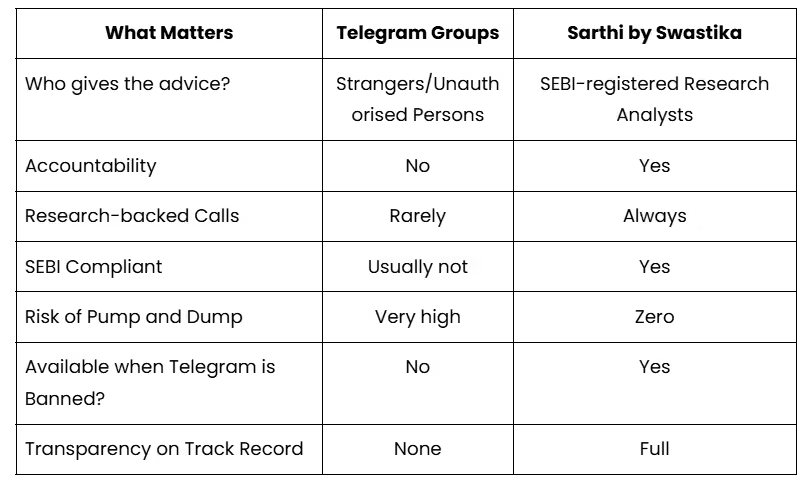
Overall, we can say that one is a gamble dressed up as a trading community. The other is a system built on trust, research, and accountability.
Over to You: Invest Your Money Wisely
The Telegram ban will lift on June 22, 2026. The app will come back. The groups will reopen. The tips will start flowing again, but you do not have to go back to the way things were.
SEBI's data tells us that 93 out of every 100 retail traders in the F&O segment lost money last year. That is not bad luck. That is a pattern. And a large part of that pattern is driven by the impulsive, herd-driven tip culture that Telegram made so easy to fall into.
This week of silence is a rare gift. A forced pause. A moment to honestly ask yourself: Am I trading with a proper system, or am I just following the crowd and hoping for the best?
The best traders are not the ones who get the most tips. They are the ones who get the right advice, from the right people, backed by real research. That is exactly what Sarthi is built to give you. Do not wait for the next ban to change how you trade. Make the shift today.
Disclaimer: This blog is for informational purposes only and does not constitute investment advice. Stock market investments are subject to market risks. Please read all scheme-related documents carefully before investing.





.avif)
.avif)
.avif)





