.png)

The US economy remains the single most influential force in global financial markets. From equity flows to currency movements and commodity prices, decisions taken in Washington and by the US Federal Reserve ripple across economies worldwide. As we look ahead, understanding what to expect from the US economy in 2026 becomes essential for Indian investors, traders, exporters and policymakers.
In this blog, we break down the expected economic trends in the US for 2026 and explain how these developments could shape Indian stock markets, interest rates, currency movements and investment strategies.
After years of post pandemic recovery and policy tightening, the US economy is expected to enter 2026 with stable momentum. Most global institutions expect GDP growth to remain around the long term average rather than the sharp expansion seen earlier in the decade.
Key drivers include strong consumer spending, government infrastructure investment and continued capital expenditure in technology and artificial intelligence. At the same time, high base effects and tighter financial conditions could limit rapid growth.
For Indian investors, stable US growth is generally positive as it supports global risk appetite without creating excessive inflationary pressure.
Inflation is expected to trend closer to the US Federal Reserve’s comfort zone by 2026, though it may not settle perfectly at two percent. Wage pressures, energy prices and supply chain restructuring will continue to influence price levels.
Lower inflation reduces the need for aggressive monetary tightening and supports equity markets globally.
One of the most watched elements of the US economy in 2026 will be interest rates. If inflation continues to ease, the Federal Reserve may shift towards a more accommodative stance or maintain stable rates.
For India, this matters because lower US interest rates often lead to increased foreign portfolio inflows into emerging markets like India, improving liquidity and supporting equity valuations.
The US dollar’s trajectory in 2026 will depend largely on interest rate differentials and economic confidence. A stable or slightly weaker dollar typically benefits emerging market currencies, including the Indian rupee.
A stronger rupee can help reduce imported inflation for India, especially in crude oil and raw materials. However, exporters may face margin pressure if currency appreciation becomes sharp.
Foreign Institutional Investors closely track US bond yields and equity performance. If US yields remain stable and growth continues without shocks, India is likely to attract sustained FII inflows.
Historically, periods of US economic stability have coincided with strong performance in Indian sectors such as IT, banking, capital goods and consumer discretionary.
Trade policy remains a key variable. Any shift towards protectionism or tariff changes can affect Indian exports to the US, particularly in textiles, engineering goods and specialty chemicals.
However, diversification away from China continues to create long term opportunities for Indian manufacturers under the China plus one strategy.
From an Indian regulatory standpoint, SEBI continues to emphasize transparency, investor protection and risk management. Global volatility originating from the US economy reinforces the importance of disciplined investing, asset allocation and regulatory compliance.
Platforms like Swastika Investmart, a SEBI registered intermediary, play a crucial role by offering research backed insights, technology driven trading platforms and investor education that helps clients navigate global uncertainty confidently.
👉 Open your trading and investment account today
Long term wealth creation depends on staying invested with a clear strategy rather than timing global events perfectly.
How will the US economy in 2026 affect Indian stock markets?
A stable US economy usually supports global risk appetite, leading to better FII inflows and positive sentiment in Indian equities.
Will US interest rate changes impact Indian investors?
Yes. Lower or stable US rates often encourage foreign investments into India, improving liquidity and market valuations.
Which Indian sectors are most influenced by the US economy?
IT, pharmaceuticals, metals and export oriented manufacturing sectors are most sensitive to US economic trends.
Is a weaker US dollar good for India?
Generally yes, as it supports the rupee and reduces import costs, though exporters may face some pressure.
Understanding what to expect from the US economy in 2026 is essential for making informed investment decisions in India. While global uncertainties will always exist, a balanced US growth outlook combined with easing inflation could create a supportive environment for Indian markets.
With expert research, robust trading platforms and strong customer support, Swastika Investmart helps investors stay ahead of global trends while focusing on long term financial goals.



Corporate actions quietly shape investor returns, often without grabbing headlines like earnings or market crashes. In 2025, Indian markets witnessed a steady rise in corporate actions as companies rewarded shareholders, improved liquidity, and restructured capital efficiently.
From bonus issues and stock splits to dividends and buybacks, these decisions played a meaningful role in how stocks performed and how investors perceived value. As we move into 2026, understanding corporate actions is no longer optional for serious investors, it is essential.
This blog explains how corporate actions affected Indian markets in 2025 and what investors should watch out for in 2026.
Corporate actions are decisions taken by a company’s board that directly affect shareholders. These actions can change the number of shares, impact cash flows, or influence stock prices.
Common corporate actions in India include:
While these actions do not always change a company’s intrinsic value, they significantly affect market perception, liquidity, and investor returns.
In 2025, several large-cap and cash-rich Indian companies increased dividend payouts. With interest rates stabilising and fixed-income returns moderating, dividend-paying stocks gained renewed attention.
For long-term investors, dividends provided:
SEBI’s disclosure norms ensured timely and transparent dividend announcements, reducing uncertainty for retail investors.
Bonus issues were one of the most visible corporate actions in 2025. Companies across sectors rewarded shareholders by issuing additional shares without changing overall valuation.
The key impact:
For example, mid-cap stocks that announced bonuses often saw higher trading volumes as more investors entered at psychologically attractive price levels.
Stock splits played a crucial role in making high-priced stocks more accessible. In 2025, companies used splits strategically to widen their investor base.
A lower share price:
However, experienced investors understood that stock splits alone do not create value unless supported by strong fundamentals.
Share buybacks gained traction in 2025, especially among companies with excess cash and limited expansion needs.
Buybacks sent a clear message:
SEBI’s buyback guidelines ensured fair pricing and equal opportunity for retail shareholders, maintaining market integrity.
Some companies opted for rights issues to strengthen balance sheets or fund growth plans. In 2025, investors became more selective, rewarding rights issues backed by clear business expansion rather than debt reduction alone.
Rights issues impacted stocks differently depending on:
Corporate actions influenced Indian markets in subtle but powerful ways.
This reinforced an important lesson for investors: corporate actions enhance value only when fundamentals remain strong.
SEBI continued to play a critical role in 2025 by strengthening disclosure norms and ensuring fairness in corporate actions.
Key regulatory focus areas included:
This regulatory environment improved trust and participation among retail investors.
As India enters 2026, corporate actions are expected to remain an important tool for capital management.
What investors can expect:
With market valuations becoming selective, companies will need to justify corporate actions with solid earnings and cash flows.
Instead of reacting to announcements, investors should ask:
Using research-backed platforms and staying aligned with SEBI regulations can help investors avoid short-term noise and focus on sustainable wealth creation.
Swastika Investmart, a SEBI-registered brokerage, equips investors with timely updates, research insights, and easy-to-use tools to track corporate actions.
Key strengths include:
This helps investors understand not just what action was announced, but why it matters.
Do corporate actions increase stock value automatically?
No. Corporate actions impact perception and liquidity, but long-term value depends on business fundamentals.
Are dividends better than bonus shares?
It depends on investor goals. Dividends provide income, while bonuses increase share count without cash inflow.
How do buybacks benefit shareholders?
Buybacks reduce outstanding shares and can improve earnings per share if executed efficiently.
Are corporate actions regulated in India?
Yes. SEBI regulates all major corporate actions to ensure transparency and fairness.
Corporate actions in 2025 reinforced one clear truth: announcements alone do not create wealth. The real impact lies in understanding intent, fundamentals, and long-term strategy.
As we move into 2026, investors who look beyond headlines and focus on quality corporate actions will be better positioned to build resilient portfolios.
If you want to track corporate actions with clarity and invest through a SEBI-registered, research-driven platform, Swastika Investmart offers the tools and support to help you invest with confidence.
Entering the stock market for the first time can feel overwhelming. News headlines swing between record highs and sudden crashes, social media is filled with stock tips, and everyone seems to have a “sure shot” idea. That is exactly why portfolio building matters more than ever as you start your investing journey in 2026.
A well-structured portfolio is not about chasing the hottest stock. It is about creating a system that protects your capital, grows your wealth steadily, and helps you stay invested through market cycles. This guide breaks down portfolio building in a simple, practical way, especially for Indian investors.
Indian markets have matured significantly. With higher retail participation, faster information flow, and global linkages, volatility has become a permanent feature rather than an exception.
In 2026, investors will be navigating:
A portfolio helps you manage these uncertainties. Instead of reacting emotionally to daily market movements, a diversified portfolio keeps your long-term plan intact.
Portfolio building means spreading your investments across different asset classes and instruments to reduce risk while aiming for consistent returns.
Think of it like running a household. You do not spend your entire income on one expense. You allocate money for rent, savings, emergencies, and future goals. Investing works the same way.
A portfolio typically includes:
The mix depends on your age, income stability, goals, and risk tolerance.
Before investing a single rupee, ask yourself what you are investing for.
Short-term goals may include:
Long-term goals often include:
For example, a 25-year-old salaried professional in India can afford higher equity exposure compared to someone nearing retirement. Your portfolio should reflect this reality.
Asset allocation is the backbone of portfolio building. Multiple SEBI studies have highlighted that asset allocation drives a large portion of portfolio returns over time.
Equities offer higher growth potential but come with volatility. Indian investors can gain equity exposure through:
For beginners, starting with fundamentally strong companies or diversified funds is often safer than speculative trades.
Debt provides stability and predictable returns. Options include:
Debt helps cushion your portfolio during market corrections, which are inevitable.
Having liquidity allows you to:
One of the most common mistakes new investors make is overexposure to a single stock or sector. Indian market history offers many lessons, from infrastructure booms to technology slowdowns.
Diversification across:
reduces the impact of any single event on your portfolio.
A balanced portfolio does not eliminate losses, but it limits damage and improves recovery.
Risk is not the enemy. Unmanaged risk is.
SEBI repeatedly advises investors to avoid leverage, unverified tips, and emotional trading. Portfolio building is about discipline:
For instance, during market corrections, disciplined investors continue investing, while emotional investors exit and lock in losses.
Markets evolve, and so should your portfolio. Review your investments at least once a year or when there is a major life change.
Rebalancing ensures that equity or debt allocation does not drift excessively due to market movements. It helps you book profits and reinvest where needed.
Using a tech-enabled platform with strong research support makes this process simpler and more transparent.
Swastika Investmart, a SEBI-registered brokerage, focuses on empowering investors rather than pushing shortcuts. With robust research tools, market insights, and responsive customer support, it helps investors make informed decisions.
What sets Swastika Investmart apart:
For investors starting their journey in 2026, having a reliable partner can make a meaningful difference.
Is portfolio building suitable for beginners in India?
Yes. In fact, beginners benefit the most from structured portfolio building as it reduces mistakes driven by emotions or misinformation.
How much money do I need to start investing?
You can start with small amounts through SIPs or direct equity investments, depending on your comfort and goals.
How often should I rebalance my portfolio?
Once a year is usually sufficient unless there is a major change in income, goals, or market conditions.
Is equity investing risky in the short term?
Yes, equity markets can be volatile in the short term, which is why long-term investing and diversification are essential.
Do SEBI regulations protect retail investors?
SEBI continuously works to enhance transparency, disclosures, and investor protection across Indian markets.
Starting your stock market journey in 2026 is not about predicting the next multibagger. It is about building a portfolio that aligns with your life goals, risk appetite, and time horizon.
A disciplined, diversified approach supported by the right tools and guidance can help you navigate market cycles with confidence. If you are looking for a SEBI-registered partner that values research, education, and long-term investing, Swastika Investmart is worth considering.
Take the first step toward structured investing today.
%20(1).png)
The Indian stock market setup for 19 December 2025 reflects a cautiously optimistic tone, supported by strong domestic institutional participation but capped by global uncertainty. While US markets ended on a positive note, early signals from Dow futures suggest mild pressure, keeping Asian markets mixed.
At the opening bell, benchmark indices are expected to react to a combination of FII flows, options data, and key technical levels rather than broad global momentum.
Global cues remain mixed going into today’s session.
This suggests that while sentiment is not risk-off, traders may prefer selective buying rather than aggressive positioning.
Domestic flows continue to act as a strong cushion for Indian markets.
Such consistent participation from DIIs often reflects long-term confidence in India’s economic and earnings outlook, especially during phases of global uncertainty.
Options data points to a mixed but range-bound structure.
FII derivative positioning shows heavy activity on both sides, suggesting hedged strategies rather than directional bets. This usually leads to intraday volatility but limited follow-through.
Nifty is currently trading in a volatile yet defined range.
For traders, this setup favors range-based strategies and disciplined risk management rather than aggressive directional trades.
Bank Nifty continues to consolidate, reflecting mixed sentiment in financial stocks.
This sideways movement indicates that stock-specific action within the banking space may offer better opportunities than index trades.
With India VIX at historically low levels, markets are not pricing in major risk events. However, low volatility phases often precede sharp moves, making it important for traders to stay alert.
Retail investors should avoid overleveraging and instead focus on quality stocks, staggered entry, and portfolio diversification. Long-term investors can continue SIPs and accumulation in fundamentally strong sectors.
From a regulatory perspective, SEBI’s continued emphasis on transparency, risk disclosure, and investor protection has helped build confidence in Indian capital markets, especially among retail participants.
Swastika Investmart, a SEBI-registered brokerage, supports traders and investors with:
These strengths help clients navigate volatile and range-bound markets with greater confidence and clarity.
It suggests a range-bound session with stock-specific opportunities rather than a strong trending move.
Fresh longs should be considered only on a confirmed breakout above key resistance levels with volume support.
Low volatility indicates calm markets but also warns traders to be prepared for sudden moves.
Strong institutional buying often provides downside support and reflects confidence in the broader market.
Final Thoughts
The Indian stock market setup for 19 December 2025 points toward cautious optimism backed by strong domestic flows and stable volatility. While headline indices may remain range-bound, informed traders and investors can still find meaningful opportunities through disciplined strategies and reliable research.
If you are looking to trade or invest with confidence, guided by expert research and modern technology, consider opening an account with Swastika Investmart.
👉 Open your trading Account Today with Swastika
Stay informed, stay disciplined, and trade smart.
%20(3).png)
Foreign Institutional Investors and Domestic Institutional Investors once again played a crucial role in shaping Indian equity market sentiment. On 18 December 2025, combined institutional activity across NSE, BSE and MSEI reflected healthy net buying, offering stability to benchmark indices amid mixed global cues.
Institutional flows are closely tracked by traders and long-term investors alike, as they often signal confidence, liquidity direction, and medium-term market trends.
Based on official exchange data from the capital market segment:
Domestic Institutional Investors recorded strong buying interest, reflecting continued confidence from mutual funds, insurance companies and pension funds.
DII participation remains a key stabilising force for Indian markets, especially during periods of foreign fund volatility.
Foreign Institutional Investors showed measured optimism, continuing their selective accumulation strategy.
While FII buying was moderate, the fact that foreign investors stayed net positive reflects improving confidence in India’s macro fundamentals.
Combining both DIIs and FIIs, the total net institutional inflow stood at ₹6,296.14 crore, providing a solid liquidity boost to equities.
This level of participation generally:
Such inflows often translate into steady movements in heavyweight stocks from banking, IT, FMCG and capital goods sectors.
Several domestic and global factors influenced institutional behaviour:
India continues to remain one of the fastest-growing major economies. Controlled inflation, stable interest rate expectations, and strong GST collections keep domestic funds confident.
Foreign investors appear to be rotating funds towards emerging markets with stronger earnings visibility. India benefits due to:
December often sees institutional rebalancing, where funds adjust allocations before the new calendar year. This supports steady buying in fundamentally strong stocks.
Institutional buying helped limit downside pressure in benchmark indices:
While global markets remain sensitive to interest rate expectations and geopolitical cues, domestic liquidity continues to act as a strong buffer.
For Indian investors, daily institutional data offers valuable insights:
However, trading decisions should never rely on flows alone. They must be combined with technical levels, earnings outlook, and sector-specific trends.
Understanding institutional activity becomes easier with the right tools and research support. Swastika Investmart, a SEBI-registered stockbroker, empowers investors with:
Whether you are a beginner or an experienced trader, access to accurate data and expert interpretation makes a measurable difference.
👉 Open your trading account here
What is FII and DII trading activity?
It refers to buying and selling done by foreign and domestic institutional investors in Indian stock markets.
Why is DII buying important for Indian markets?
DIIs provide stability during volatile phases and support long-term market growth.
Is net buying always bullish?
Net buying is generally positive, but markets also depend on global cues, earnings, and macroeconomic factors.
Where can investors track daily FII and DII data?
Official data is published by NSE, BSE and market analytics platforms.
Should retail investors follow institutional flows blindly?
No. Institutional data should be used as a supporting indicator, not a standalone strategy.
The FII & DII trading activity on 18 December 2025 highlights continued institutional confidence in Indian equities. With total net inflows of ₹6,296.14 crore, markets received crucial support amid global uncertainties.
As India heads toward the new year, sustained domestic participation and cautious foreign buying could keep volatility in check and offer selective opportunities for informed investors.
With the right research, disciplined strategy, and trusted partners like Swastika Investmart, navigating market movements becomes more structured and rewarding.
Ready to take the next step in your investing journey?
👉 Open your trading account here and stay ahead of the markets.
%20(2).png)
The Indian stock market closing today on 18 December 2025 reflected a phase of consolidation after recent volatility. Benchmark indices struggled to find clear direction and ended marginally lower, as investors remained cautious ahead of upcoming global cues, interest rate expectations, and year-end positioning.
Despite intraday swings, the broader sentiment stayed neutral, indicating that markets are taking a breather rather than signaling a strong trend reversal.
At the close of trade, benchmark indices settled slightly in the red:
The narrow range movement suggests that traders preferred to stay light on positions, especially in large-cap stocks.
Asian markets traded mixed, while US futures remained subdued. Investors are closely tracking signals around interest rate trajectories and inflation trends in major economies. This global uncertainty capped aggressive buying in Indian equities.
After Nifty and Sensex hovered near record zones in recent sessions, selective profit booking was visible in heavyweight stocks. This was particularly evident in banking and FMCG names, which had seen strong runs earlier.
Bank Nifty underperformed marginally as private banks traded mixed and PSU banks lacked fresh triggers. Investors appeared hesitant to take fresh bets ahead of cues on credit growth and asset quality updates.
Banking stocks showed muted action. While select private lenders found support, overall momentum remained weak. Traders are awaiting clarity on interest margins and loan demand before making directional calls.
IT shares traded cautiously as the rupee remained stable and global tech sentiment stayed mixed. With deal activity updates expected in the coming weeks, IT stocks are currently in a consolidation phase.
Defensive stocks provided limited support. While FMCG remains a long-term favorite due to stable earnings, near-term upside was capped due to rich valuations.
Broader markets traded mixed. Stock-specific action dominated, with investors focusing more on fundamentals rather than chasing momentum.
The market closing today on 18 December 2025 highlights a classic consolidation phase. Such sessions are important because they often lay the foundation for the next directional move.
From an Indian market perspective:
Historically, similar flat-to-negative sessions near highs have preceded either a gradual breakout or a healthy pullback, depending on global cues and domestic data.
From a technical standpoint:
As long as these supports hold, the broader trend remains intact. Short-term traders may continue to adopt a buy-on-dips strategy, while long-term investors can use such phases to accumulate quality stocks.
For retail investors and traders, today’s market action reinforces the importance of discipline. Flat markets test patience, but they also offer opportunities to reassess portfolios, rebalance allocations, and focus on fundamentally strong companies.
SEBI-regulated market participants continue to emphasize long-term investing backed by research and risk management rather than short-term speculation.
In sideways or uncertain markets like today, having the right research and tools makes a significant difference. Swastika Investmart, a SEBI-registered brokerage, supports investors with:
Whether markets trend sharply or move sideways, informed decision-making remains the key to long-term success.
What was the Indian stock market closing today on 18 December 2025?
The market closed marginally lower, with Nifty at 25,815.55, Sensex at 84,481.81, and Bank Nifty at 58,912.85.
Why did the market trade flat today?
Markets remained range-bound due to cautious global cues, profit booking at higher levels, and lack of fresh domestic triggers.
Is a flat market a negative sign for investors?
Not necessarily. Flat markets often indicate consolidation and can provide good entry opportunities for long-term investors.
Which index underperformed today?
Bank Nifty underperformed slightly due to muted action in banking stocks.
How should investors approach such market conditions?
Investors should focus on fundamentally strong stocks, maintain diversification, and avoid impulsive trading decisions.
The market closing today on 18 December 2025 reflects a pause rather than panic in Indian equities. With benchmarks holding key support levels, the broader outlook remains stable, though short-term volatility cannot be ruled out.
If you want to navigate such markets with confidence, backed by research, technology, and trusted guidance, consider investing with Swastika Investmart.
Take the next step and open your trading account today:
👉 Open your Trading Account with Swastika
Smart investing begins with informed decisions and the right partner by your side.

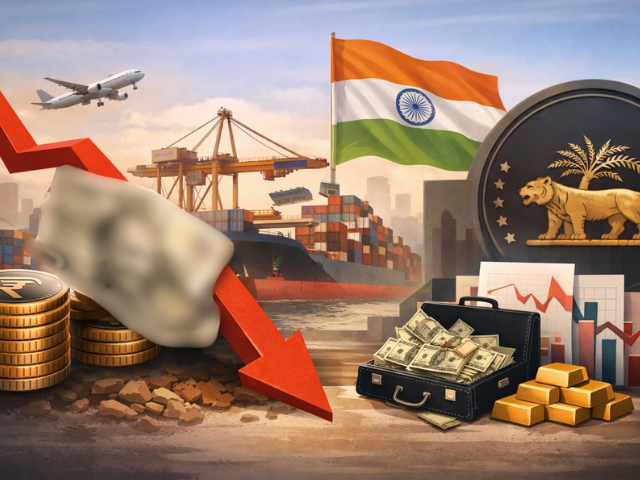
The global financial narrative often frames dollar strength as bad news for emerging markets. Historically, a rising US dollar led to capital outflows, currency depreciation, and pressure on equity markets. However, the current cycle tells a more nuanced story.
Despite phases of sustained dollar strength, the Indian rupee has remained relatively stable compared to many peer currencies. More importantly, Indian equities have continued to attract long-term interest. This shift reflects structural improvements in India’s economy and the maturity of its capital markets.
Understanding how dollar strength and rupee stability interact is key to assessing what lies ahead for Indian equities.
The US Federal Reserve’s higher interest rate regime has supported the dollar. Higher yields attract global capital, strengthening the currency against most others.
This dynamic is global in nature and not India-specific. Many developed and emerging market currencies have felt the impact.
Periods of global uncertainty, whether driven by geopolitical risks or growth concerns, typically push investors toward safe-haven assets. The US dollar remains the preferred choice during such phases.
India’s robust foreign exchange reserves provide a crucial buffer. The Reserve Bank of India actively manages volatility, ensuring orderly currency movements rather than sharp swings.
This stability reassures global investors and reduces panic-driven capital flight.
India’s current account dynamics, steady capital inflows, and resilient domestic demand contribute to rupee stability. Unlike earlier decades, India is not heavily dependent on volatile short-term capital to fund growth.
The RBI focuses on controlling excessive volatility rather than defending a specific level. This pragmatic approach allows the rupee to adjust gradually while maintaining confidence in the financial system.
Currency movements do not impact all companies uniformly. The effect of dollar strength on Indian equities depends on revenue exposure, cost structure, and balance sheet positioning.
Export-oriented sectors often benefit, while import-dependent sectors may face pressure.
Indian IT services and pharmaceutical companies earn a large portion of revenues in foreign currencies. A stable or mildly weaker rupee improves earnings visibility and margin support.
This is why such sectors often outperform during phases of global currency volatility.
Sectors dependent on imports, particularly crude oil, may face margin pressure if dollar strength leads to higher input costs. However, rupee stability helps mitigate extreme shocks.
For Indian equities, stability matters more than absolute currency direction.
Earlier, dollar strength often triggered aggressive FII selling in Indian equities. Today, foreign investors are more selective.
India’s growth prospects, corporate earnings visibility, and political stability often outweigh short-term currency concerns.
Strong domestic participation through mutual funds and direct equity investing has reduced market dependence on foreign flows. This has helped Indian indices remain resilient even during periods of global risk aversion.
Indian equity valuations are increasingly driven by earnings growth rather than currency movements. Structural themes such as manufacturing, infrastructure, and financial inclusion play a larger role.
This shift reduces sensitivity to external shocks like dollar strength.
Short-term currency fluctuations rarely derail long-term equity returns. Investors who focus on fundamentals rather than headlines tend to navigate such phases better.
India’s capital markets operate under a strong regulatory framework guided by SEBI and RBI. Transparent disclosure norms, improved corporate governance, and robust market infrastructure support investor confidence.
This regulatory stability is one reason Indian equities continue to attract long-term capital despite global currency volatility.
Instead of reacting to currency headlines, investors should focus on quality businesses with strong balance sheets and diversified revenue streams.
Diversification across sectors helps manage currency-related risks.
Dollar strength cycles come and go. Overreacting often leads to missed opportunities rather than risk reduction.
A disciplined approach aligned with long-term goals remains the most effective strategy.
Understanding macro trends like dollar strength and rupee stability requires clarity, not noise. Swastika Investmart, a SEBI-registered brokerage, supports investors with:
This approach empowers investors to make informed decisions even during uncertain global phases.
No. The impact depends on sector exposure, earnings growth, and domestic fundamentals rather than currency movement alone.
Strong forex reserves, prudent RBI management, and improved macro fundamentals support stability.
IT services, pharmaceuticals, and export-oriented companies often benefit from foreign currency earnings.
Long-term investors should avoid frequent changes and focus on fundamentals and asset allocation.
RBI intervenes to smooth excessive volatility while allowing market-driven adjustments.
The relationship between dollar strength, rupee stability, and Indian equities is no longer one-dimensional. India’s evolving economic structure, strong regulatory framework, and rising domestic participation have changed the equation.
For investors seeking clarity, discipline, and research-backed insights in this environment, Swastika Investmart offers a reliable platform to navigate both global and domestic market trends.
Invest with perspective, not panic.


Trust Our Expert Picks
for Your Investments!


.webp)
.png)

.png)