.png)

Shares of Multi Commodity Exchange of India (MCX) are firmly in the spotlight as the stock trades ex-date for its first-ever stock split. This corporate action marks a historic moment for MCX since its listing in 2012 and has drawn strong attention from investors tracking capital market and exchange-related stocks.
The development has sparked discussion not only because of the sharp price adjustment seen on trading screens, but also due to what it means for liquidity, retail participation, and long-term investor sentiment in the Indian stock market.
MCX has approved a 5:1 stock split, meaning one equity share with a face value of ₹10 has been subdivided into five equity shares of face value ₹2 each.
The company fixed January 2, 2026, as the record date to determine shareholder eligibility. As a result, MCX shares traded ex-date on this day, leading to a proportionate adjustment in the share price.
This is the first stock split in MCX’s history, making it a significant corporate milestone.
To understand this clearly, consider a simple example.
If an investor held 10 MCX shares before the record date, those holdings will now convert into 50 shares after the split. While the number of shares increases fivefold, the overall investment value remains unchanged.
Before the split, MCX shares closed around ₹11,015. Post split, the stock naturally trades at a much lower price, reflecting the revised face value and increased share count.
Any sharp fall visible on trading apps is purely technical, not a reflection of value erosion.
Many investors may notice an apparent drop of nearly 80 percent in MCX share price on certain platforms. This happens because some trading apps initially display the unadjusted pre-split price.
There is no cause for concern. Once prices are fully adjusted for the stock split, the charts normalize. The company’s market capitalisation and investor wealth remain exactly the same.
Such adjustments are standard for stock splits and are regulated under SEBI’s corporate action framework.
Eligibility is straightforward.
Investors who held MCX shares in their demat accounts as of January 1, 2026, before market close, are eligible for the split.
Those purchasing MCX shares on or after the ex-date will not receive additional shares under this corporate action.
Typically, shares arising from a stock split are credited to demat accounts within one to two working days after the record date.
Stock splits are often undertaken to make shares more accessible to a broader investor base.
For MCX, the stock had reached a 52-week high of ₹11,218 in December 2025, making the ticket size relatively high for smaller investors. A lower post-split price improves affordability and encourages wider retail participation.
Additionally, stock splits tend to:
However, it is important to note that stock splits do not alter earnings, profitability, or business strength.
The stock split does not change MCX’s underlying business fundamentals. The exchange continues to benefit from strong momentum in commodity derivatives trading and rising participation across energy, bullion, and metals.
Brokerage commentary has highlighted sustained volume growth and elevated commodity volatility as near-term drivers. Profit growth expectations remain supported by increased trading activity and product expansion.
Upside risks include higher traction in commodity options and new product introductions, while risks may arise from regulatory changes, technology transitions, or lower volatility impacting volumes.
While stock splits and bonus issues may appear similar, their objectives differ.
A stock split reduces the face value and increases the number of shares, keeping share capital unchanged. Dividend per share adjusts proportionately.
A bonus issue distributes free shares from accumulated reserves without changing face value. Dividend entitlement remains unchanged in a bonus issue.
Understanding this distinction helps investors interpret corporate actions more clearly.
For existing shareholders, no action is required. The split is automatic, and holdings adjust accordingly.
For new investors, the lower post-split price makes MCX more accessible, but entry decisions should always be backed by research rather than corporate actions alone.
Long-term returns will continue to depend on MCX’s trading volumes, regulatory environment, and growth in India’s commodity markets.
Tracking corporate actions, understanding technical price adjustments, and evaluating fundamentals requires timely insights. Swastika Investmart, a SEBI-registered financial services provider, supports investors with strong research tools, tech-enabled platforms, and responsive customer support.
With a focus on investor education and data-backed analysis, Swastika helps clients navigate events like stock splits with clarity and confidence.
Why are MCX shares in focus today
MCX shares are in focus as they are trading ex-date for their first-ever 5:1 stock split.
What is the MCX stock split ratio
MCX has announced a 5:1 stock split, where one ₹10 face value share becomes five ₹2 shares.
Does the MCX stock split affect fundamentals
No, the stock split does not impact MCX’s business, earnings, or market value.
Who is eligible for the MCX stock split
Investors holding MCX shares before market close on January 1, 2026, are eligible.
Why does the share price look sharply lower after the split
The price drop is a technical adjustment due to the increased number of shares.
The MCX stock split is a structural move aimed at improving liquidity and accessibility, not a reflection of changes in business strength. For investors, understanding the mechanics behind such corporate actions is far more important than reacting to headline price movements.
If you are looking to track stocks in focus, corporate actions, and market trends with expert-backed insights, Swastika Investmart can be your trusted investing partner.
.png)


The New Year is not just a change in dates it marks the beginning of a fresh investment cycle. For market participants, it is a time for portfolio realignment, renewed institutional participation, and a shift towards structured, theme-based investing.
As Indian equity markets enter New Year 2026, investor sentiment remains constructive. With stable macroeconomic indicators, improving global cues, and strong domestic fundamentals, the focus is gradually moving away from short-term trading and toward quality, theme-driven stock selection.
To help investors begin 2026 with clarity, Swastika Investmart has curated a New Year–themed stock list, designed around long-term growth visibility, balance-sheet strength, and sectoral relevance.
Theme-based investing allows investors to participate in broader economic and structural trends rather than reacting to daily market volatility.
As 2026 begins, several factors support this approach:
Instead of chasing momentum, thematic investing helps build portfolios aligned with economic continuity and sustainability.
The opening weeks of a new year often bring renewed participation across global and domestic markets. In India, this phase is typically characterised by:
With supportive domestic indicators and measured global expectations, early 2026 provides a favourable environment for selective stock positioning.
The New Year 2026 stock list has been curated around key investment themes, keeping in mind sector relevance, earnings visibility, and long-term sustainability.
These themes are shared for investor awareness and education, not as investment recommendations.
The New Year period often supports continued demand across consumer-facing businesses.
This theme typically includes companies with:
Such businesses tend to benefit from sustained consumption momentum extending into the early part of the year.
Financial services remain a core pillar of the Indian economy as 2026 begins.
Stocks aligned with this theme generally demonstrate:
These characteristics often attract institutional interest during portfolio resets.
Digital adoption and technology-led efficiency continue to shape corporate performance.
This theme focuses on businesses with:
Technology-linked themes remain relevant for medium- to long-term portfolios.
India’s infrastructure and capital expenditure cycle continues to offer long-term opportunities.
Companies under this theme are typically supported by:
Early-year phases often see gradual accumulation in such stocks.
At the beginning of a new year, many investors also reassess asset allocation.
Precious metals play a role by:
Gold and silver remain important components of balanced portfolios in 2026.
Indian markets remain influenced by global developments. Key indicators to monitor include:
A stable global environment generally supports equity participation during the early weeks of the year.
Rather than rushing into trades, experienced investors often use the New Year to align portfolios thoughtfully.
A disciplined approach includes:
The New Year is best viewed as a planning phase, not a speculative one.
Swastika Investmart follows a research-driven, compliance-focused approach to investing.
What investors value:
This approach helps investors navigate markets with confidence, especially during transitional phases like the start of a new year.
Is the New Year a good time to invest in stocks?
The New Year often brings stable participation and fresh allocations, making it suitable for selective, quality investing.
Do FIIs and DIIs invest at the start of the year?
Institutional investors frequently rebalance portfolios in January, leading to selective activity in fundamentally strong stocks.
Should investors focus on themes rather than individual stocks?
Themes help investors align with long-term trends and reduce short-term decision-making noise.
Are New Year themed stock ideas suitable for long-term investors?
Yes, when supported by strong fundamentals and growth visibility, thematic ideas align well with long-term investing.
A New Year symbolises clarity, balance, and thoughtful decisions. The same principles apply to investing. With supportive institutional behaviour, stable global cues, and well-defined themes, New Year 2026 offers an opportunity to strengthen portfolios with purpose.
If you are looking for structured research, investor education, and long-term market guidance, Swastika Investmart is here to support your investing journey throughout 2026 and beyond.
📈 Begin the New Year with informed investing
🎯 Explore New Year 2026 themed insights today
.png)
In Indian stock markets, the 52-week high and 52-week low are widely tracked indicators by traders, investors, mutual funds, and institutional participants. These levels represent the highest and lowest prices a stock has traded at over the past one year on NSE or BSE.
In 2026, with Indian markets seeing higher retail participation, algorithmic trading, and faster information flow, these levels have become even more important in identifying momentum stocks and potential value opportunities.
But the key question remains:
Should you buy strength at 52-week highs or buy weakness at 52-week lows?
Let’s break both strategies down clearly.
A 52-week high strategy focuses on stocks that are trading at or near their highest price in the last one year. Contrary to traditional belief, strong stocks often continue to rise due to sustained demand.
Stocks hitting 52-week highs often indicate:
In 2026, with FII and DII flows driving momentum, many breakout stocks emerge from 52-week high lists.
Stocks like leading PSU banks, capital goods companies, and select IT names have historically made multiple 52-week highs during long bull phases, rewarding momentum traders.
While momentum can be powerful, it is not risk-free.
Key risks include:
This is why volume confirmation, earnings visibility, and broader market trend analysis are critical.
A 52-week low strategy focuses on stocks trading near their lowest price of the last year. These stocks may be under pressure due to temporary challenges or broader sector weakness.
For long-term investors, such phases can sometimes present value opportunities.
Stocks at 52-week lows may reflect:
In 2026, sectors like metals, chemicals, or mid-cap IT may throw up selective value opportunities when sentiment turns pessimistic.
Not every cheap stock is a good investment.
A value trap occurs when:
Many stocks remain at 52-week lows for years without recovery. This is why fundamental analysis is non-negotiable.
52-week high is momentum-driven
52-week low is value-driven
Highs: Short to medium-term traders
Lows: Long-term investors
Highs: Volatility risk
Lows: Fundamental risk
Highs: Volume, trend, earnings momentum
Lows: Balance sheet, cash flows, recovery potential
There is no single correct answer.
In trending bull markets, 52-week high strategies tend to outperform as capital chases winners.
In volatile or sideways markets, selective 52-week low investing may deliver better long-term returns if backed by strong fundamentals.
Smart investors in 2026 increasingly use a blended approach:
A balanced approach could look like this:
SEBI-regulated brokers and research platforms help investors track such opportunities with structured tools and insights.
Whether you follow highs or lows, success depends on:
At Swastika Investmart, investors benefit from SEBI-registered research, technology-enabled platforms, and continuous investor education to navigate such strategies responsibly.
It can be risky if done without confirmation. Stocks with strong earnings momentum and volume support often continue trending higher.
No. Some stocks are at 52-week lows due to permanent business issues, making them value traps.
Beginners should focus on understanding fundamentals and risk management before using either strategy aggressively.
Yes, if the company has strong growth visibility and sustainable earnings, long-term investors can hold momentum stocks as well.
In 2026, both 52-week high and 52-week low strategies remain relevant in Indian markets. The real edge comes not from choosing one over the other, but from applying research, patience, and discipline.
If you’re looking to build a structured approach with expert-backed insights, Swastika Investmart offers a trusted ecosystem with research support, advanced tools, and investor-first guidance.
.png)
In Indian stock markets, stocks touching 52-week lows often trigger mixed emotions. Some investors see opportunity, while others fear catching a falling knife. As we move into 2026, with markets becoming more information-driven and sentiment-sensitive, understanding how to approach 52-week low stocks has become an essential investing skill.
A stock at a 52-week low is not automatically cheap, just as a stock at a high is not always expensive. The real question investors must ask is simple: Is this a temporary decline or a long-term problem? This blog explains how investors can spot genuine value at 52-week lows and, more importantly, how to avoid value traps in Indian markets.
A 52-week low represents the lowest price a stock has traded at over the last one year. This often reflects negative sentiment, weak earnings, sectoral headwinds, or broader market corrections.
However, not all 52-week lows are created equal.
Understanding why a stock is falling is the first step toward intelligent decision-making.
By 2026, Indian markets have evolved significantly. Retail participation is higher, institutional data is more accessible, and price movements react faster to news and numbers.
Key changes investors must account for:
As a result, buying blindly at 52-week lows is riskier than before, while selective value investing has become more rewarding.
A stock is attractive at a 52-week low only if earnings are expected to recover. Investors should look for:
A falling stock without earnings support often continues to fall.
In uncertain environments, financially strong companies survive and recover faster.
Key indicators to watch:
In Indian markets, many past recoveries from 52-week lows were led by companies with strong balance sheets, not leveraged ones.
Sometimes, entire sectors go through downcycles. Investors should evaluate:
For example, cyclical sectors like metals or capital goods often hit lows during downturns but recover strongly when cycles turn.
FIIs and DIIs may reduce exposure during weak phases, but selective accumulation often starts quietly near lows. Monitoring shareholding patterns and delivery volumes can offer early signals.
SEBI-mandated disclosures and exchange data provide valuable insights into institutional behavior.
This is where most investors make mistakes.
A low price alone does not make a stock attractive. Fundamentals do.
The same stock can be an opportunity for one and a mistake for another, depending on time horizon.
Indian equities have historically rewarded investors who bought quality businesses during pessimistic phases. Many well-known companies created long-term wealth after spending time near 52-week lows during economic slowdowns or sector corrections.
However, patience must be paired with discipline. Not every fallen stock deserves a second chance.
At Swastika Investmart, SEBI-registered research and investor-first tools help clients:
Our focus remains on education, research-backed insights, and long-term wealth creation, supported by technology-enabled investing platforms.
👉 Open your account and start investing smarter
It can be safe if the fall is temporary and fundamentals remain strong. Blind buying without analysis is risky.
No. Many stocks continue to underperform if business issues are structural rather than cyclical.
Beginners should be cautious and focus on financially strong companies with clear recovery signs.
Recovery timelines vary. Some stocks rebound quickly, while others take years or may never recover.
No. Price must always be evaluated alongside earnings, balance sheet strength, and sector outlook.
In 2026, investing in stocks at 52-week lows requires more than courage. It demands clarity, patience, and discipline. While some lows offer genuine value opportunities, others hide long-term risks.
The key is not predicting the bottom, but understanding the business behind the price. Investors who focus on fundamentals, sector trends, and risk management are better positioned to separate value stocks from value traps.
For research-driven insights and a disciplined investing approach, connect with Swastika Investmart, where experience meets technology to support smarter investment decisions.
.png)
In Indian stock markets, few events grab attention like a stock touching a 52-week high. For traders, it signals momentum. For investors, it raises an important question: Is it already too expensive?
As we move into 2026, with rising retail participation, algorithmic trading, and sharper institutional strategies, understanding 52-week high breakout stocks has become more important than ever. This blog explains how traders identify momentum stocks using breakout strategies and whether buying stocks at a 52-week high actually makes sense in Indian markets.
A 52-week high is the highest price a stock has traded at in the last one year. When a stock breaks above this level, it often enters uncharted territory, where there is no historical resistance.
In India, many market leaders like large-cap banks, IT stocks, and infrastructure companies have historically created long-term wealth after making repeated 52-week highs.
Momentum traders do not blindly buy every stock at a high. They look for specific confirmation signals.
A genuine breakout is usually accompanied by higher-than-average trading volumes. This suggests participation from large players like FIIs, DIIs, and proprietary desks.
Example:
If a stock breaks its 52-week high with 2–3 times its average volume, it signals strong conviction rather than speculative buying.
Traders prefer stocks that:
Such stocks often deliver smoother trends, reducing whipsaws.
In 2026, sector rotation continues to play a big role. Breakouts work best when:
For example, if capital goods or PSU banks are leading the market, stocks from those sectors breaking 52-week highs tend to sustain momentum longer.
Smart traders compare stock performance against Nifty 50 or sectoral indices. A stock making a 52-week high while outperforming the index is often a momentum candidate.
This is one of the most searched questions among Indian investors. The answer is yes, but not blindly.
Many believe that stocks at 52-week highs are “overvalued.” In reality, strong stocks often remain strong.
You can consider buying if:
Historically, several Indian stocks that created long-term wealth spent years making new highs, not collapsing immediately after.
Avoid buying if:
Risk management matters more than entry price.
Both approaches can coexist if aligned with your time horizon.
In Indian markets, FIIs and DIIs often accumulate quality stocks near highs, not lows. Rising institutional ownership near 52-week highs usually reflects confidence in future earnings growth rather than short-term speculation.
SEBI disclosures and exchange data regularly show increased institutional activity in momentum stocks during strong market phases.
Even the best breakout strategies fail without discipline. Traders and investors should:
In 2026, with faster information flow and algo-driven volatility, risk control is your biggest edge.
At Swastika Investmart, SEBI-registered research and technology-driven tools help traders and investors:
Our focus remains on education, disciplined investing, and research-led strategies.
👉 Open your trading account here
It can be risky if done without analysis. With strong fundamentals and trend confirmation, it can also be rewarding.
No. Only stocks with earnings support and institutional interest tend to sustain momentum.
Beginners should start cautiously and focus on learning risk management before active trading.
Yes, FIIs often buy stocks at highs when they expect long-term earnings growth.
Yes, but stricter stop-losses and smaller position sizes are essential.
In 2026, 52-week high breakout strategies remain relevant for traders seeking momentum and investors looking for market leaders. The key is not avoiding highs, but understanding why a stock is making new highs.
With the right mix of technical confirmation, fundamental strength, and disciplined risk management, buying stocks at a 52-week high can be a strategy, not a mistake.
For research-backed insights and smarter investing tools, connect with Swastika Investmart, where market experience meets technology-driven decision-making.
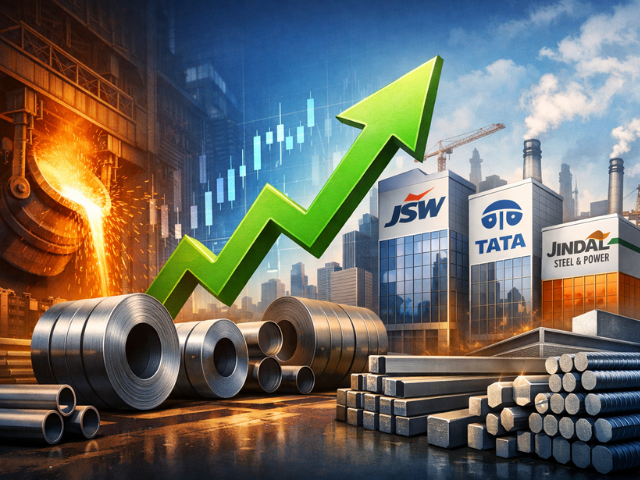
The announcement of safeguard duty boosting steel shares became one of the most talked about developments in Indian equity markets this year. Almost immediately, steel stocks rallied, with JSW Steel, Tata Steel and Jindal Steel leading the surge. For investors, this was not just a knee jerk reaction to a policy headline, but a signal of changing fundamentals in the domestic steel industry.
Safeguard duties are designed to protect local manufacturers from a sudden surge in imports. In India’s case, the move came at a time when global steel prices were under pressure and domestic producers were facing margin stress due to low cost imports. The policy intervention altered the demand supply equation overnight.
A safeguard duty is a temporary import duty imposed to protect domestic industries from serious injury caused by rising imports. Unlike anti dumping duties, safeguard duties do not target specific countries. They apply broadly and are permitted under World Trade Organization rules.
In India, such measures are notified after detailed investigation and recommendations by the Directorate General of Trade Remedies, under the Ministry of Commerce.
The Indian steel industry had been witnessing a steady rise in imports, particularly from countries with surplus capacity. Domestic producers flagged concerns over pricing pressure and underutilization of capacity. The safeguard duty was introduced to restore balance and give Indian manufacturers breathing space.
JSW Steel reacted positively as investors anticipated better realizations and improved margins. With lower import competition, domestic pricing power strengthened. Analysts also highlighted JSW’s operational efficiency and strong balance sheet as additional positives in a protected market environment.
Tata Steel’s Indian operations stood to benefit significantly from the safeguard duty. While its global exposure adds complexity, the domestic business gained pricing stability. The stock saw renewed buying interest from institutional investors looking for quality names within the steel space.
Jindal Steel and Power also emerged as a key beneficiary. With expanding capacity and exposure to infrastructure driven demand, the safeguard duty improved revenue visibility and earnings outlook.
The most immediate impact was on steel prices in the domestic market. Reduced import pressure allowed companies to stabilize prices, which is crucial in a capital intensive industry like steel where margins are highly sensitive to realizations.
With imports becoming less attractive, domestic producers saw better capacity utilization. This is especially important as India continues to invest heavily in infrastructure, housing and manufacturing under various government initiatives.
Ancillary sectors such as mining, logistics and capital goods also benefited indirectly. Higher steel production typically leads to increased demand across the value chain.
India is in the midst of a multi year infrastructure push, spanning roads, railways, power and urban development. Steel remains a core input for all these segments. The safeguard duty aligns policy support with long term demand growth.
Globally, steel markets have been volatile due to fluctuating demand from China and uneven recovery across economies. By insulating domestic producers from external shocks, the safeguard duty reduced earnings uncertainty for Indian companies.
Safeguard duties are temporary by nature. Investors should track government reviews and any changes in duty structure, as these can impact stock prices.
While pricing power improves, companies still face raw material and energy cost risks. Efficient players with captive resources or long term contracts are better positioned.
SEBI regulations ensure transparency in disclosures related to policy impact and earnings. Investors should rely on company filings and credible research rather than market speculation.
Policy driven rallies can be powerful but also volatile. Not every steel stock benefits equally. This is where structured research and disciplined investing become essential.
Platforms like Swastika Investmart, with SEBI registration, strong research tools and tech enabled investing platforms, help investors evaluate sectoral opportunities with clarity. Their focus on investor education and responsive customer support enables better decision making, especially during policy induced market moves.
What triggered the rally in steel stocks?
The announcement of safeguard duty on steel imports reduced competition from cheaper imports, improving pricing power for domestic producers.
Which steel companies benefited the most?
JSW Steel, Tata Steel and Jindal Steel were among the biggest beneficiaries due to their scale, domestic exposure and operational strength.
Is safeguard duty permanent?
No. Safeguard duties are temporary and subject to periodic review by the government.
Does this policy help long term investors?
It can improve near to medium term earnings visibility, but long term returns still depend on efficiency, demand growth and cost control.
The development where safeguard duty boosts steel shares highlights how policy decisions can reshape sector dynamics. The rally in JSW, Tata Steel and Jindal reflects renewed confidence in India’s steel industry amid infrastructure growth and regulatory support.
For investors, such phases offer opportunities but also demand careful analysis. With its SEBI registered framework, in depth research capabilities and investor focused approach, Swastika Investmart supports informed participation in evolving market trends.

The year 2025 will be remembered as a defining year for gold, silver and copper. Prices across all three metals surged sharply, creating what many analysts describe as one of the strongest commodity rallies in more than 40 years. Unlike short lived speculative spikes, this rally was backed by deep structural shifts in the global economy.
From central banks buying gold to the world accelerating towards electrification, the forces driving this rally were powerful and long term in nature. For Indian investors, the move had meaningful consequences, influencing inflation, currency movements, equity sectors and portfolio allocation decisions.
Gold and silver benefited heavily from global uncertainty. Persistent geopolitical tensions, uneven global growth and concerns around sovereign debt pushed investors towards traditional safe havens.
Central banks, particularly from emerging markets, continued adding gold to their reserves. This steady institutional demand created a strong price floor for gold, while silver followed closely due to its dual role as a precious and industrial metal.
While inflation cooled in parts of the world, it remained structurally higher than pre pandemic levels. Real interest rates stayed volatile, and currency fluctuations increased across major economies.
For investors, metals offered a hedge against purchasing power erosion. In India, the rupee’s movement against the dollar further amplified domestic gold and silver prices, making the rally more visible to retail participants.
Copper emerged as the standout performer of 2025. Often called the backbone of electrification, copper demand surged due to rapid investments in electric vehicles, renewable energy, data centers and grid infrastructure.
A single electric vehicle uses significantly more copper than a conventional car. Multiply this across global adoption, and the demand story becomes clear.
Unlike gold, copper supply cannot respond quickly to price signals. New mines take years to develop, and environmental approvals have become stricter worldwide. This supply rigidity met accelerating demand in 2025, creating a classic imbalance that pushed prices sharply higher.
For Indian markets, this translated into renewed interest in metal stocks and mining linked businesses.
Higher gold and silver prices affected jewellery demand, particularly during wedding and festive seasons. While volumes softened at times, value growth remained strong.
Copper prices influenced input costs for sectors like power, construction, cables and electronics. Companies with pricing power managed better, while others faced margin pressure.
Metal stocks regained leadership after years of underperformance. Investors rotated towards companies with exposure to mining, refining and metal processing.
At the same time, higher commodity prices acted as a double edged sword for manufacturing heavy sectors, making stock selection more critical.
From a regulatory standpoint, SEBI continued to strengthen commodity derivatives oversight, improving transparency and participation. Exchanges enhanced risk management norms, making commodity investing more robust for both hedgers and investors.
The 2025 rally reinforced the idea that metals are not just tactical trades. They play a strategic role in diversified portfolios, especially during periods of macro stress.
Gold provided stability, silver offered volatility with upside, and copper represented growth linked to global development.
Sharp rallies also bring sharp corrections. Investors chasing momentum without understanding fundamentals faced higher risk. This is where structured research, data driven insights and disciplined execution matter.
Platforms like Swastika Investmart, with SEBI registration, strong research tools and tech enabled investing solutions, help investors approach commodities with clarity rather than emotion. Continuous investor education and responsive customer support further add to informed decision making.
A retail investor who added gold to their portfolio for stability found protection during equity volatility. Another who understood the copper supply story benefited from exposure to metal linked equities. On the flip side, those entering late without a plan experienced drawdowns during interim corrections.
This contrast defined 2025 as much as the rally itself.
Why was 2025 considered a historic year for gold, silver and copper?
Because all three metals rallied together due to global uncertainty, inflation hedging and structural demand, something rarely seen at this scale in over 40 years.
Did Indian investors benefit from the metal rally?
Yes, through higher domestic prices, metal stocks, ETFs and improved portfolio diversification, though volatility remained high.
Is copper more of a growth metal than a safe haven?
Yes. Copper is closely linked to economic growth, electrification and infrastructure, unlike gold which is primarily a store of value.
Are commodities suitable for long term investors?
When used strategically and backed by research, commodities can enhance diversification and risk adjusted returns.
The gold, silver and copper defining year of 2025 reshaped how investors view commodities. This was not just a rally driven by fear or speculation, but one supported by structural changes in the global economy. For Indian markets, the impact was visible across inflation, equities and investor behavior.
Navigating such powerful trends requires more than headlines. It demands research, discipline and the right platform. Swastika Investmart, with its SEBI registered framework, advanced research capabilities and investor centric approach, supports investors in making informed choices across market cycles.


Trust Our Expert Picks
for Your Investments!


.webp)
.png)

.png)





%20(2).png)
%20(3).png)