.png)
Indian equity markets begin the first trading session of 2026 with supportive global cues and a cautiously optimistic derivative setup. Let’s take a detailed look at today’s market set-up, covering global trends, FII-DII activity, derivatives data, and technical levels for Nifty and Bank Nifty.
Global cues are largely positive as Asian markets trade in the green despite a holiday in the US markets.
Market sentiment: Positive opening bias for Indian equities.
Foreign and domestic institutional flows show mixed participation in the cash market.
While FIIs remained cautious, DIIs continued to provide support, helping stabilize market sentiment.
Key derivatives indicators suggest a balanced-to-positive undertone.
Lower VIX and steady PCR indicate reduced fear and controlled volatility in the near term.
Change in number of contracts shows selective bullish positioning.
Interpretation: FII positioning remains mixed but tilts towards a mildly positive bias in F&O.
Nifty has witnessed a strong bounce from the confluence of its 20-day and 50-day moving averages, indicating buying interest at lower levels.
Sustaining above the 26,050 zone may encourage further upside momentum.
Bank Nifty is showing strength after rebounding from its 50-day moving average.
The index needs to hold above 59,450 to maintain its positive structure.
The overall market set-up suggests a positive start supported by global cues and reduced volatility. However, cautious FII activity indicates that stock-specific action and technical levels will play a crucial role in today’s trade.
Investors and traders should stay disciplined, focus on key support-resistance zones, and align positions with prevailing market trends.
At Swastika Investmart, our SEBI-registered research, real-time market insights, and advanced trading platforms help investors navigate markets with confidence.
.png)
As Indian markets become more active and settlement cycles faster, many investors in 2026 are encountering a new term more frequently settlement holiday. It often creates confusion because, unlike market holidays, trading may still continue.
So what exactly is a settlement holiday, and why does it matter to investors?
A settlement holiday is a day when the clearing and settlement process is paused, even though the stock market may remain open for trading.
Let’s break this down in simple terms.
A settlement holiday is a non-working day for clearing corporations, banks, and depositories, during which:
Unlike a stock market holiday, buying and selling may still happen, but the actual exchange of money and securities does not.
In India, settlement holidays are aligned with bank holidays, as settlements depend heavily on the banking system.
This distinction is important for every investor.
In simple words, trades happen, but completion of trades waits.
Settlement in Indian markets involves multiple institutions:
If banks are closed due to a national or regional holiday, settlements cannot be processed. To avoid partial or failed settlements, exchanges declare a settlement holiday.
This structure protects investors and ensures system-wide stability.
The impact depends on your investing style.
If you buy shares for delivery before a settlement holiday:
Example:
If you buy shares on Monday and Tuesday is a settlement holiday, the T+1 settlement shifts to Wednesday.
For intraday traders, settlement holidays usually have minimal impact, since positions are squared off the same day.
However, margin availability may be affected if funds from previous trades are not yet settled.
Mutual fund investors may notice:
This is especially relevant for equity mutual funds and ETFs.
India moved to a T+1 settlement cycle, making settlement faster and more efficient. However, settlement holidays still pause the process.
In 2026, this means:
This makes awareness more important than ever.
Consider this scenario:
Even though markets were open on Tuesday, the settlement skipped that day.
Such situations are common around festivals and national holidays.
Smart planning helps avoid surprises.
At Swastika Investmart, investors get timely updates, trade confirmations, and clear settlement timelines through tech-enabled platforms backed by SEBI-registered research.
👉 Open your trading and investment account today
Though they may feel inconvenient, settlement holidays serve a critical purpose:
They are a sign of a well-regulated and disciplined financial system.
Can I trade on a settlement holiday?
Yes, trading may be allowed, but settlement is deferred.
Does a settlement holiday affect intraday trades?
Usually no, as intraday trades are squared off the same day.
Will my shares be credited late due to a settlement holiday?
Yes, delivery of shares and funds is postponed to the next working day.
Are settlement holidays announced in advance?
Yes, exchanges publish settlement holiday calendars in advance.
A settlement holiday does not stop the market, but it slows the completion of trades. Understanding how it works helps investors manage liquidity, margins, and expectations more effectively.
With SEBI registration, strong research capabilities, investor education initiatives, and tech-enabled investing tools, Swastika Investmart ensures investors are always informed and prepared.
👉 Open your trading and investment account today
Knowing the rules of settlement is just as important as choosing the right stocks.
.png)
Stock market holidays often raise common questions among Indian mutual fund investors. Will my SIP be skipped? Will I lose returns if the market is closed? How is NAV calculated on a holiday?
With mutual fund participation rising steadily across India, understanding how stock market holidays affect SIPs and mutual fund NAVs has become essential for both new and seasoned investors.
Let’s break this down in a simple, practical way.
A common misconception is that SIPs stop working on market holidays. That’s not true.
If your SIP date falls on a stock market holiday:
This system ensures that investors remain disciplined, regardless of short-term market closures.
Suppose your SIP date is 25th December, and the stock market is closed due to a holiday.
You don’t lose the SIP. It only gets deferred, not cancelled.
NAV, or Net Asset Value, represents the per-unit value of a mutual fund.
On stock market holidays:
This is because NAV calculation depends on closing prices of underlying securities, which are unavailable on holidays.
As per SEBI regulations, mutual fund NAVs are calculated only on business days when markets are operational. This ensures transparency and fairness across all investors.
If you invest a lumpsum amount on a market holiday:
For equity mutual funds, NAV allotment depends on when funds are realized, not just when the order is placed.
For long-term investors, the impact is negligible.
Trying to time SIPs around holidays is usually unnecessary and counterproductive.
Debt funds follow similar rules but with slight nuances.
This makes them suitable for short-term parking, even during holiday-heavy periods.
Many investors panic when they don’t see immediate unit allocation or updated NAVs. Knowing how holidays work helps avoid:
In a growing market like India, financial awareness is as important as financial products.
At Swastika Investmart, we focus on investor education alongside execution.
Our platforms offer:
This ensures investors remain confident, even during market holidays or volatile periods.
👉 Open your Mutual Fund & Trading Account today
Does SIP get cancelled if the market is closed?
No. SIPs are processed on the next working day.
Which NAV is applied if I invest on a holiday?
The NAV of the next business day is applied.
Should I change my SIP date to avoid holidays?
There’s no need. SIP discipline matters more than dates.
Do mutual fund returns stop during holidays?
No. Returns are calculated based on market performance over time.
Stock market holidays are a normal part of a regulated financial system. They do not disrupt SIPs or long-term mutual fund investing. Understanding how NAVs and transactions work helps investors stay confident and focused on their goals.
With strong research support, SEBI registration, and easy-to-use digital platforms, Swastika Investmart empowers investors to invest with clarity and confidence.
👉 Open your Mutual Fund & Trading Account today
Consistency beats timing. Always.
.png)
In 2026, with more Indians actively investing in equities, derivatives, and mutual funds, understanding stock market holidays has become more important than ever. Many investors still ask: Why does the stock market close on weekdays? and What actually happens to my investments on a market holiday?
A stock market holiday is a day when Indian stock exchanges like NSE and BSE are officially closed for trading across segments such as equities, derivatives, and currency markets.
These holidays are announced in advance under SEBI-regulated exchange calendars, ensuring transparency and smooth market functioning.
A stock market holiday is a non-trading day when:
In 2026, stock market holidays are fully aligned with banking holidays, clearing corporations, and depository operations such as NSDL and CDSL.
Indian markets close for practical, regulatory, and systemic reasons.
Markets remain closed on key national occasions such as:
These days coincide with bank closures, making settlement and fund transfers impossible.
India’s financial markets respect its cultural diversity. In 2026, markets close on major festivals including:
Since a large part of the financial ecosystem pauses, exchanges remain shut to avoid operational risks.
Stock markets depend on:
On holidays, these systems may not function. To protect investors and maintain market integrity, trading is suspended.
This structure follows global best practices across markets like the US, UK, and Asia.
This is one of the most searched investor questions in 2026.
Orders placed on holidays are queued and executed on the next trading day once markets open.
India follows a T+1 settlement cycle. If a holiday falls between the trade date and settlement:
Example:
If you buy shares on Friday and Monday is a holiday, settlement happens on Tuesday.
If a weekly or monthly options expiry falls on a holiday, exchanges usually advance the expiry to the previous trading day. Traders must track this closely to avoid losses.
Yes, under specific circumstances.
Every year, including 2026, Indian markets conduct Muhurat Trading, a symbolic one-hour session on Diwali.
Though volumes are lower, many investors participate as a sign of auspicious beginnings.
In rare regulatory or system-testing scenarios, NSE and BSE may announce special trading sessions outside the regular calendar.
Risk management becomes especially important during holiday-shortened weeks.
Smart investing in 2026 requires planning.
At Swastika Investmart, investors get access to SEBI-registered research, smart trading platforms, and timely market alerts that help navigate such market dynamics with confidence.
👉 Open your trading and investment account today
Though they may seem restrictive, market holidays actually:
Globally, structured holiday calendars are a sign of a mature and well-regulated market.
Q1. Are NSE and BSE holidays the same in 2026?
Yes, both exchanges follow the same holiday calendar for equities and derivatives.
Q2. Can I place orders on a market holiday?
Orders can be placed but are executed only on the next trading day.
Q3. Do mutual fund SIPs stop on market holidays?
No, SIPs continue. NAVs are processed based on the previous working day.
Q4. What if an options expiry falls on a holiday in 2026?
The expiry is usually shifted to the previous trading day.
Q5. Where can investors check official holiday lists?
On NSE and BSE websites or through your broker’s trading platform.
As Indian markets grow deeper and more tech-driven in 2026, understanding stock market holidays and their impact is no longer optional — it’s essential.
With SEBI registration, strong research capabilities, investor education initiatives, and tech-enabled investing tools, Swastika Investmart supports investors across every market phase.
.png)
If you’re searching for the Indian stock market holidays, you’re in the right place. Below is the complete and updated list of NSE, BSE, and MCX holidays for 2026, including trading holidays, settlement holidays, and holidays falling on weekends.
This guide helps traders and investors plan trades, investments, and settlements without surprises.
On stock market holidays:
| Day | Date | Holiday | Exchanges |
|---|---|---|---|
| Monday | 26 Jan 2026 | Republic Day | NSE, BSE, MCX |
| Tuesday | 03 Mar 2026 | Holi | NSE, BSE |
| Thursday | 26 Mar 2026 | Shri Ram Navami | NSE, BSE |
| Tuesday | 31 Mar 2026 | Shri Mahavir Jayanti | NSE, BSE |
| Friday | 03 Apr 2026 | Good Friday | NSE, BSE, MCX |
| Tuesday | 14 Apr 2026 | Dr. B.R. Ambedkar Jayanti | NSE, BSE |
| Friday | 01 May 2026 | Maharashtra Day | NSE, BSE |
| Thursday | 28 May 2026 | Bakri Eid | NSE, BSE |
| Friday | 26 Jun 2026 | Moharram | NSE, BSE |
| Monday | 14 Sep 2026 | Ganesh Chaturthi | NSE, BSE |
| Friday | 02 Oct 2026 | Mahatma Gandhi Jayanti | NSE, BSE, MCX |
| Tuesday | 20 Oct 2026 | Dussehra | NSE, BSE |
| Tuesday | 10 Nov 2026 | Diwali – Balipratipada | NSE, BSE |
| Tuesday | 24 Nov 2026 | Guru Nanak Jayanti | NSE, BSE |
| Friday | 25 Dec 2026 | Christmas | NSE, BSE, MCX |
Settlement holidays affect fund and securities settlement, even if trading may happen earlier.
| Day | Date | Holiday |
|---|---|---|
| Thursday | 19 Feb 2026 | Chhatrapati Shivaji Maharaj Jayanti |
| Wednesday | 01 Apr 2026 | Annual Bank Closing |
| Thursday | 27 Aug 2026 | Id-E-Milad |
| Day | Date | Holiday |
|---|---|---|
| Monday | 26 Jan 2026 | Republic Day |
| Friday | 03 Apr 2026 | Good Friday |
| Saturday | 15 Aug 2026 | Independence Day |
| Friday | 02 Oct 2026 | Mahatma Gandhi Jayanti |
| Sunday | 08 Nov 2026 | Diwali – Laxmi Pujan (Muhurat Trading) |
| Friday | 25 Dec 2026 | Christmas |
📌 Markets are already closed on weekends, so no additional trading impact.
| Day | Date | Holiday | Exchanges |
|---|---|---|---|
| Sunday | 15 Feb 2026 | Maha Shivaratri | NSE, BSE |
| Saturday | 21 Mar 2026 | Eid-Ul-Fitr | NSE, BSE |
| Saturday | 15 Aug 2026 | Independence Day | NSE, BSE, MCX |
| Sunday | 08 Nov 2026 | Diwali – Laxmi Pujan | NSE, BSE, MCX |
A settlement holiday is a day when:
This can delay:
👉 Important for delivery traders and investors to track carefully.
This page will help you stay updated with all Indian stock market holidays at one place.

• Zepto’s DRHP filing marks a major milestone for India’s quick-commerce sector
• The IPO revives interest in new-age consumer internet listings
• Investors will closely track profitability, cash burn, and business scalability
• Regulatory disclosures will play a key role in shaping market confidence
Zepto’s plan to file its Draft Red Herring Prospectus is a significant development for India’s capital markets. After a phase of caution around new-age IPOs, the move signals renewed confidence among venture-backed startups to tap public markets. For investors, Zepto’s IPO journey offers a fresh opportunity to evaluate the quick-commerce business model under the lens of public market scrutiny.
Quick commerce has transformed urban consumption habits in India, promising ultra-fast delivery of daily essentials. Zepto has emerged as one of the most prominent players in this space. Its decision to move towards an IPO raises important questions around valuation, sustainability, and long-term returns.
A DRHP filing with the Securities and Exchange Board of India is the formal first step toward an IPO. The document provides detailed disclosures about the company’s business model, financial performance, risks, promoters, and use of proceeds.
For Zepto, this will be the first time investors get a comprehensive view of its revenue trends, operating losses, unit economics, and cash flow position. SEBI’s disclosure framework ensures transparency, allowing investors to make informed decisions rather than relying on market narratives alone.
This stage does not confirm listing dates or issue prices, but it sets the tone for investor perception.
Zepto operates in the quick-commerce segment, promising delivery timelines often under 15 minutes. This requires dense warehousing, efficient supply chains, and heavy investment in logistics and technology.
While the model drives strong customer adoption in metro cities, it is also capital intensive. High fixed costs, competitive pricing, and marketing spends have been common challenges across the sector.
For public market investors, the key question is whether scale can eventually translate into profitability. Past experiences with consumer internet IPOs have shown that growth alone is not enough. Execution and cost discipline matter just as much.
Zepto’s IPO plans come at a time when Indian equity markets are more selective about new listings. Investors have become cautious after mixed post-listing performance of several tech-driven companies.
That said, sentiment has improved compared to the earlier phase of blanket risk aversion. Companies with clearer paths to profitability and transparent disclosures are being viewed more favourably.
If Zepto can demonstrate improving margins, controlled cash burn, and a realistic growth strategy, it could benefit from this evolving mindset.
The DRHP will reveal how fast Zepto’s revenues are growing and how much capital it is consuming to sustain operations. Investors will look beyond top-line numbers and focus on contribution margins and cost structures.
Quick commerce is a crowded space. Investors will assess how Zepto differentiates itself and whether it can defend market share without excessive spending.
SEBI has tightened norms for disclosures, related-party transactions, and risk factors. Strong governance and clarity on compliance can significantly influence investor confidence.
Zepto’s IPO filing could revive interest in the consumer tech and startup ecosystem. A well-received issue may encourage other startups to consider public listings, broadening opportunities for retail investors.
From a sectoral perspective, logistics, warehousing, and digital infrastructure themes may also see renewed attention as investors look at the broader ecosystem supporting quick commerce.
However, market impact will largely depend on valuation expectations and subscription response.
Indian markets have seen both optimism and disappointment in recent tech listings. The key learning has been the importance of realistic pricing and clear communication.
Investors are no longer willing to pay for growth at any cost. Companies that align expectations with fundamentals tend to earn long-term credibility.
Zepto’s DRHP will therefore be crucial in setting realistic benchmarks.
Evaluating IPOs in emerging sectors requires careful analysis. Understanding financial metrics, industry risks, and regulatory disclosures is not always straightforward for retail investors.
This is where a trusted, SEBI-registered brokerage adds value. Swastika Investmart offers strong research capabilities, tech-enabled platforms, and investor education initiatives that help investors navigate IPO opportunities with clarity. Responsive customer support further ensures that investors are not left guessing during critical market events.
What does DRHP filing indicate for Zepto’s IPO?
It signals the formal start of the IPO process and provides detailed information for investors to evaluate the company.
Is Zepto profitable currently?
Details on profitability and losses will be available in the DRHP. Investors should focus on trends rather than standalone numbers.
Is quick commerce a sustainable business model?
The model has strong demand potential, but sustainability depends on execution, cost control, and scale efficiencies.
Should retail investors apply for the Zepto IPO?
Investors should assess risk appetite, valuation, and business fundamentals before making a decision.
How does SEBI protect IPO investors?
SEBI mandates strict disclosure norms and transparency to help investors make informed choices.
Zepto’s move to file its DRHP marks an important moment for India’s startup ecosystem and capital markets. While the quick-commerce story is compelling, public market investors will demand clarity, discipline, and accountability.
As the IPO journey unfolds, informed analysis will be key to separating opportunity from hype. With its SEBI registration, robust research tools, and investor-focused approach, Swastika Investmart supports investors in evaluating such market events with confidence.

• Silver prices opened strongly and continue to trade with positive momentum
• Global cues, industrial demand, and currency trends are supporting prices
• Indian markets are seeing renewed interest in silver as both a hedge and a growth metal
• The trend reflects sentiment and fundamentals, but volatility remains part of the trade
Silver has opened sharply higher in today’s session and continues to maintain a bullish tone, catching the attention of commodity traders and long-term investors alike. Unlike short-lived spikes driven by speculation, the current move in silver reflects a broader shift in sentiment across global commodity markets.
Often referred to as both a precious and industrial metal, silver occupies a unique space. Its price is influenced not only by safe-haven demand but also by industrial activity, especially in sectors such as electronics, renewable energy, and electric vehicles. This dual nature makes silver particularly sensitive to changes in macroeconomic trends.
In this blog, we break down what is driving silver’s bullish momentum, how it impacts Indian markets, and what investors should keep in mind going forward.
One of the key reasons behind silver’s strength is the evolving global economic outlook. When expectations around interest rates soften or bond yields stabilise, precious metals often benefit. Silver tends to react quickly to such shifts because it is more volatile than gold.
Recent global cues suggest that monetary tightening may be nearing its peak in some major economies. This has supported demand for non-yielding assets like silver, as the opportunity cost of holding them reduces.
Silver’s industrial demand story remains strong. The metal is widely used in solar panels, semiconductors, batteries, and electric vehicles. As governments worldwide push for clean energy adoption, silver demand from renewable technologies continues to rise.
For example, India’s increasing focus on solar capacity expansion indirectly supports silver demand. This structural trend gives silver an edge over purely defensive assets.
Movements in the US dollar also play a crucial role. A softer dollar generally supports commodity prices, including silver. When the dollar weakens, metals become more affordable for holders of other currencies, boosting demand.
Indian investors often notice this impact through MCX prices, which reflect both global silver rates and rupee movements.
In India, silver prices are actively tracked on MCX and through physical bullion markets. A strong opening usually leads to increased participation from traders, jewellers, and investors.
Silver has traditionally been popular among Indian households, not just as jewellery but also as an investment asset. In recent years, it has gained traction among younger investors who see it as a way to diversify beyond equities and gold.
When silver opens with strong momentum, it often influences related segments such as commodity mutual funds, ETFs, and structured products linked to metals.
While gold is often the first choice during uncertainty, silver tends to outperform when both risk appetite and inflation expectations rise together. This is because silver benefits from growth as well as hedging demand.
Historically, silver rallies have been sharper but more volatile compared to gold. For traders, this creates opportunities, but it also calls for disciplined risk management.
The current bullish momentum suggests that silver is not merely following gold but is being driven by its own demand dynamics.
For short-term traders, strong opening momentum signals active participation and rising volatility. Such conditions can offer trading opportunities, especially in futures and options, but they also increase risk.
Position sizing and stop-loss discipline become critical during sharp moves.
Long-term investors view silver differently. It is often used as a hedge against inflation and currency weakness, while also offering exposure to industrial growth.
Allocating a portion of the portfolio to silver can help balance risk, especially during periods when equity markets are uncertain.
However, investors should remember that silver prices can fluctuate sharply, and patience is key.
In India, commodity trading is regulated by SEBI, ensuring transparency and standardised contracts on exchanges like MCX. This regulatory framework has improved confidence among retail participants.
Silver ETFs and exchange-traded products also offer investors a regulated and convenient way to gain exposure without dealing with physical storage concerns.
Understanding these options helps investors choose the route that best fits their goals.
Tracking commodities like silver requires awareness of global data, currency movements, and technical signals. This is where having access to quality research and reliable trading platforms makes a difference.
Swastika Investmart, a SEBI-registered brokerage, supports investors with strong research tools, real-time market insights, and tech-enabled platforms designed for both beginners and experienced traders. Its focus on investor education and responsive customer support helps clients navigate volatile markets with greater confidence.
Why is silver opening sharply higher today?
Silver is gaining due to supportive global cues, strong industrial demand expectations, and favourable currency movements.
Is silver a safe-haven asset like gold?
Silver acts as both a precious and industrial metal. While it offers some hedge benefits, it is generally more volatile than gold.
How does silver impact Indian commodity markets?
Silver influences trading volumes on MCX and affects bullion markets, ETFs, and sentiment in the broader commodities space.
Should retail investors invest in silver now?
Investors should align silver exposure with their risk appetite and investment horizon rather than chase short-term price moves.
What are the risks of investing in silver?
Silver prices can be volatile due to global economic shifts, currency movements, and changes in industrial demand.
Silver opening sharply higher and sustaining bullish momentum reflects a mix of global optimism, industrial demand strength, and supportive macro signals. While the trend looks encouraging, silver remains a dynamic asset that rewards informed and disciplined participation.
For investors looking to explore commodities alongside equities, having the right guidance and tools is essential. With its SEBI registration, robust research ecosystem, and investor-centric approach, Swastika Investmart helps investors make sense of market movements and act with clarity.


Trust Our Expert Picks
for Your Investments!


.png)
In Indian stock markets, few events grab attention like a stock touching a 52-week high. For traders, it signals momentum. For investors, it raises an important question: Is it already too expensive?
As we move into 2026, with rising retail participation, algorithmic trading, and sharper institutional strategies, understanding 52-week high breakout stocks has become more important than ever. This blog explains how traders identify momentum stocks using breakout strategies and whether buying stocks at a 52-week high actually makes sense in Indian markets.
A 52-week high is the highest price a stock has traded at in the last one year. When a stock breaks above this level, it often enters uncharted territory, where there is no historical resistance.
In India, many market leaders like large-cap banks, IT stocks, and infrastructure companies have historically created long-term wealth after making repeated 52-week highs.
Momentum traders do not blindly buy every stock at a high. They look for specific confirmation signals.
A genuine breakout is usually accompanied by higher-than-average trading volumes. This suggests participation from large players like FIIs, DIIs, and proprietary desks.
Example:
If a stock breaks its 52-week high with 2–3 times its average volume, it signals strong conviction rather than speculative buying.
Traders prefer stocks that:
Such stocks often deliver smoother trends, reducing whipsaws.
In 2026, sector rotation continues to play a big role. Breakouts work best when:
For example, if capital goods or PSU banks are leading the market, stocks from those sectors breaking 52-week highs tend to sustain momentum longer.
Smart traders compare stock performance against Nifty 50 or sectoral indices. A stock making a 52-week high while outperforming the index is often a momentum candidate.
This is one of the most searched questions among Indian investors. The answer is yes, but not blindly.
Many believe that stocks at 52-week highs are “overvalued.” In reality, strong stocks often remain strong.
You can consider buying if:
Historically, several Indian stocks that created long-term wealth spent years making new highs, not collapsing immediately after.
Avoid buying if:
Risk management matters more than entry price.
Both approaches can coexist if aligned with your time horizon.
In Indian markets, FIIs and DIIs often accumulate quality stocks near highs, not lows. Rising institutional ownership near 52-week highs usually reflects confidence in future earnings growth rather than short-term speculation.
SEBI disclosures and exchange data regularly show increased institutional activity in momentum stocks during strong market phases.
Even the best breakout strategies fail without discipline. Traders and investors should:
In 2026, with faster information flow and algo-driven volatility, risk control is your biggest edge.
At Swastika Investmart, SEBI-registered research and technology-driven tools help traders and investors:
Our focus remains on education, disciplined investing, and research-led strategies.
👉 Open your trading account here
It can be risky if done without analysis. With strong fundamentals and trend confirmation, it can also be rewarding.
No. Only stocks with earnings support and institutional interest tend to sustain momentum.
Beginners should start cautiously and focus on learning risk management before active trading.
Yes, FIIs often buy stocks at highs when they expect long-term earnings growth.
Yes, but stricter stop-losses and smaller position sizes are essential.
In 2026, 52-week high breakout strategies remain relevant for traders seeking momentum and investors looking for market leaders. The key is not avoiding highs, but understanding why a stock is making new highs.
With the right mix of technical confirmation, fundamental strength, and disciplined risk management, buying stocks at a 52-week high can be a strategy, not a mistake.
For research-backed insights and smarter investing tools, connect with Swastika Investmart, where market experience meets technology-driven decision-making.

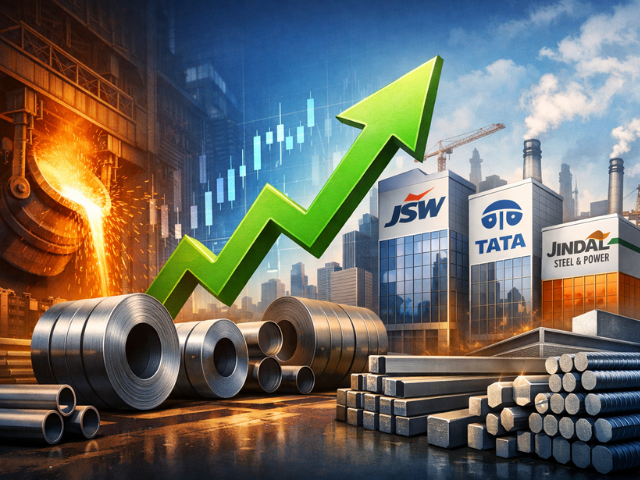
The announcement of safeguard duty boosting steel shares became one of the most talked about developments in Indian equity markets this year. Almost immediately, steel stocks rallied, with JSW Steel, Tata Steel and Jindal Steel leading the surge. For investors, this was not just a knee jerk reaction to a policy headline, but a signal of changing fundamentals in the domestic steel industry.
Safeguard duties are designed to protect local manufacturers from a sudden surge in imports. In India’s case, the move came at a time when global steel prices were under pressure and domestic producers were facing margin stress due to low cost imports. The policy intervention altered the demand supply equation overnight.
A safeguard duty is a temporary import duty imposed to protect domestic industries from serious injury caused by rising imports. Unlike anti dumping duties, safeguard duties do not target specific countries. They apply broadly and are permitted under World Trade Organization rules.
In India, such measures are notified after detailed investigation and recommendations by the Directorate General of Trade Remedies, under the Ministry of Commerce.
The Indian steel industry had been witnessing a steady rise in imports, particularly from countries with surplus capacity. Domestic producers flagged concerns over pricing pressure and underutilization of capacity. The safeguard duty was introduced to restore balance and give Indian manufacturers breathing space.
JSW Steel reacted positively as investors anticipated better realizations and improved margins. With lower import competition, domestic pricing power strengthened. Analysts also highlighted JSW’s operational efficiency and strong balance sheet as additional positives in a protected market environment.
Tata Steel’s Indian operations stood to benefit significantly from the safeguard duty. While its global exposure adds complexity, the domestic business gained pricing stability. The stock saw renewed buying interest from institutional investors looking for quality names within the steel space.
Jindal Steel and Power also emerged as a key beneficiary. With expanding capacity and exposure to infrastructure driven demand, the safeguard duty improved revenue visibility and earnings outlook.
The most immediate impact was on steel prices in the domestic market. Reduced import pressure allowed companies to stabilize prices, which is crucial in a capital intensive industry like steel where margins are highly sensitive to realizations.
With imports becoming less attractive, domestic producers saw better capacity utilization. This is especially important as India continues to invest heavily in infrastructure, housing and manufacturing under various government initiatives.
Ancillary sectors such as mining, logistics and capital goods also benefited indirectly. Higher steel production typically leads to increased demand across the value chain.
India is in the midst of a multi year infrastructure push, spanning roads, railways, power and urban development. Steel remains a core input for all these segments. The safeguard duty aligns policy support with long term demand growth.
Globally, steel markets have been volatile due to fluctuating demand from China and uneven recovery across economies. By insulating domestic producers from external shocks, the safeguard duty reduced earnings uncertainty for Indian companies.
Safeguard duties are temporary by nature. Investors should track government reviews and any changes in duty structure, as these can impact stock prices.
While pricing power improves, companies still face raw material and energy cost risks. Efficient players with captive resources or long term contracts are better positioned.
SEBI regulations ensure transparency in disclosures related to policy impact and earnings. Investors should rely on company filings and credible research rather than market speculation.
Policy driven rallies can be powerful but also volatile. Not every steel stock benefits equally. This is where structured research and disciplined investing become essential.
Platforms like Swastika Investmart, with SEBI registration, strong research tools and tech enabled investing platforms, help investors evaluate sectoral opportunities with clarity. Their focus on investor education and responsive customer support enables better decision making, especially during policy induced market moves.
What triggered the rally in steel stocks?
The announcement of safeguard duty on steel imports reduced competition from cheaper imports, improving pricing power for domestic producers.
Which steel companies benefited the most?
JSW Steel, Tata Steel and Jindal Steel were among the biggest beneficiaries due to their scale, domestic exposure and operational strength.
Is safeguard duty permanent?
No. Safeguard duties are temporary and subject to periodic review by the government.
Does this policy help long term investors?
It can improve near to medium term earnings visibility, but long term returns still depend on efficiency, demand growth and cost control.
The development where safeguard duty boosts steel shares highlights how policy decisions can reshape sector dynamics. The rally in JSW, Tata Steel and Jindal reflects renewed confidence in India’s steel industry amid infrastructure growth and regulatory support.
For investors, such phases offer opportunities but also demand careful analysis. With its SEBI registered framework, in depth research capabilities and investor focused approach, Swastika Investmart supports informed participation in evolving market trends.

The year 2025 will be remembered as a defining year for gold, silver and copper. Prices across all three metals surged sharply, creating what many analysts describe as one of the strongest commodity rallies in more than 40 years. Unlike short lived speculative spikes, this rally was backed by deep structural shifts in the global economy.
From central banks buying gold to the world accelerating towards electrification, the forces driving this rally were powerful and long term in nature. For Indian investors, the move had meaningful consequences, influencing inflation, currency movements, equity sectors and portfolio allocation decisions.
Gold and silver benefited heavily from global uncertainty. Persistent geopolitical tensions, uneven global growth and concerns around sovereign debt pushed investors towards traditional safe havens.
Central banks, particularly from emerging markets, continued adding gold to their reserves. This steady institutional demand created a strong price floor for gold, while silver followed closely due to its dual role as a precious and industrial metal.
While inflation cooled in parts of the world, it remained structurally higher than pre pandemic levels. Real interest rates stayed volatile, and currency fluctuations increased across major economies.
For investors, metals offered a hedge against purchasing power erosion. In India, the rupee’s movement against the dollar further amplified domestic gold and silver prices, making the rally more visible to retail participants.
Copper emerged as the standout performer of 2025. Often called the backbone of electrification, copper demand surged due to rapid investments in electric vehicles, renewable energy, data centers and grid infrastructure.
A single electric vehicle uses significantly more copper than a conventional car. Multiply this across global adoption, and the demand story becomes clear.
Unlike gold, copper supply cannot respond quickly to price signals. New mines take years to develop, and environmental approvals have become stricter worldwide. This supply rigidity met accelerating demand in 2025, creating a classic imbalance that pushed prices sharply higher.
For Indian markets, this translated into renewed interest in metal stocks and mining linked businesses.
Higher gold and silver prices affected jewellery demand, particularly during wedding and festive seasons. While volumes softened at times, value growth remained strong.
Copper prices influenced input costs for sectors like power, construction, cables and electronics. Companies with pricing power managed better, while others faced margin pressure.
Metal stocks regained leadership after years of underperformance. Investors rotated towards companies with exposure to mining, refining and metal processing.
At the same time, higher commodity prices acted as a double edged sword for manufacturing heavy sectors, making stock selection more critical.
From a regulatory standpoint, SEBI continued to strengthen commodity derivatives oversight, improving transparency and participation. Exchanges enhanced risk management norms, making commodity investing more robust for both hedgers and investors.
The 2025 rally reinforced the idea that metals are not just tactical trades. They play a strategic role in diversified portfolios, especially during periods of macro stress.
Gold provided stability, silver offered volatility with upside, and copper represented growth linked to global development.
Sharp rallies also bring sharp corrections. Investors chasing momentum without understanding fundamentals faced higher risk. This is where structured research, data driven insights and disciplined execution matter.
Platforms like Swastika Investmart, with SEBI registration, strong research tools and tech enabled investing solutions, help investors approach commodities with clarity rather than emotion. Continuous investor education and responsive customer support further add to informed decision making.
A retail investor who added gold to their portfolio for stability found protection during equity volatility. Another who understood the copper supply story benefited from exposure to metal linked equities. On the flip side, those entering late without a plan experienced drawdowns during interim corrections.
This contrast defined 2025 as much as the rally itself.
Why was 2025 considered a historic year for gold, silver and copper?
Because all three metals rallied together due to global uncertainty, inflation hedging and structural demand, something rarely seen at this scale in over 40 years.
Did Indian investors benefit from the metal rally?
Yes, through higher domestic prices, metal stocks, ETFs and improved portfolio diversification, though volatility remained high.
Is copper more of a growth metal than a safe haven?
Yes. Copper is closely linked to economic growth, electrification and infrastructure, unlike gold which is primarily a store of value.
Are commodities suitable for long term investors?
When used strategically and backed by research, commodities can enhance diversification and risk adjusted returns.
The gold, silver and copper defining year of 2025 reshaped how investors view commodities. This was not just a rally driven by fear or speculation, but one supported by structural changes in the global economy. For Indian markets, the impact was visible across inflation, equities and investor behavior.
Navigating such powerful trends requires more than headlines. It demands research, discipline and the right platform. Swastika Investmart, with its SEBI registered framework, advanced research capabilities and investor centric approach, supports investors in making informed choices across market cycles.

The record IPO fundraising in 2025 marked a defining moment for Indian capital markets. After years of cautious listings and selective investor appetite, 2025 saw a powerful resurgence, both in terms of the number of issues and the sheer amount of capital raised. At the center of this surge were two heavyweight names, Tata Capital and LG India, whose public issues not only grabbed headlines but also set the tone for the entire primary market.
For retail and institutional investors alike, this phase represented more than just big-ticket IPOs. It reflected confidence in India’s growth story, stronger regulatory oversight, and a maturing investor base willing to back quality businesses with long-term potential.
India entered 2025 with relatively stable macro indicators. GDP growth remained among the highest globally, corporate balance sheets improved, and inflation stayed within manageable limits. This environment created the perfect launchpad for large companies that had been waiting for the right time to go public.
Domestic mutual funds, insurance companies, and retail investors provided deep liquidity. Unlike earlier cycles where foreign flows dictated sentiment, Indian capital played a leading role in absorbing large IPO sizes.
SEBI’s continuous focus on disclosure quality, pricing transparency, and investor protection enhanced trust in the IPO process. Clearer guidelines around offer-for-sale, anchor investor allocation, and risk disclosures ensured that large issues could be executed smoothly without excessive volatility.
This regulatory stability was a key reason why marquee names chose 2025 to tap the markets.
The Tata Capital IPO was widely seen as one of the most anticipated financial services listings in recent years. As a diversified NBFC with exposure to retail lending, infrastructure finance, and corporate credit, Tata Capital offered investors a chance to participate in India’s credit growth story under the trusted Tata brand.
The issue attracted strong demand across categories, including long-term institutional investors, reflecting confidence in its governance standards and scalable business model.
Tata Capital’s listing re-rated the broader NBFC sector. Peer companies saw renewed investor interest, especially those with strong asset quality and prudent risk management. It also reinforced the idea that well-governed financial institutions could command premium valuations despite tighter regulatory norms.
LG India’s IPO was another highlight of the record IPO fundraising in 2025. With a deep footprint in Indian households across televisions, appliances, and electronics, LG’s public issue offered exposure to India’s consumption-led growth.
For investors, it combined global brand strength with local manufacturing, distribution, and demand dynamics.
The success of LG India encouraged other multinational subsidiaries to reconsider India as a listing destination. It showed that Indian markets could support large valuations while offering sufficient liquidity and analyst coverage for global businesses with strong domestic operations.
Unlike earlier IPO waves dominated by technology or PSU listings, 2025 saw balanced participation across financial services, consumer goods, manufacturing, and infrastructure. This diversification reduced concentration risk for investors allocating capital to primary markets.
Improved access through digital platforms, better investor education, and simplified application processes led to higher retail participation. However, with premium valuations in many issues, the importance of research-driven selection became even more critical.
Large IPOs increased market depth and free float, which in turn improved index representation and trading volumes. Over time, this strengthened India’s position in global emerging market indices.
Record fundraising often brings aggressive pricing. Investors need to assess earnings visibility, return ratios, and competitive positioning rather than getting swayed by brand names alone.
SEBI-mandated prospectus disclosures provide valuable insights into risks, use of funds, and promoter background. Reading these carefully can help avoid post-listing disappointment.
This is where platforms like Swastika Investmart add value. With SEBI-registered credentials, robust research frameworks, and tech-enabled investing tools, Swastika helps investors analyze IPOs objectively. Strong customer support and ongoing investor education further empower informed decision-making.
Why was 2025 a record year for IPO fundraising in India?
Strong economic growth, deep domestic liquidity, and regulatory stability encouraged large companies to go public.
What made Tata Capital’s IPO significant?
It offered exposure to India’s expanding credit market under a trusted corporate group, boosting confidence in NBFC listings.
How did LG India’s IPO impact the market?
It highlighted India’s attractiveness for multinational listings and strengthened the consumer sector’s presence in equity markets.
Are record IPO years risky for retail investors?
They can be if valuations are stretched. Careful analysis and long-term perspective are essential.
The record IPO fundraising in 2025 was not just about big numbers. It reflected India’s evolving capital markets, stronger governance, and growing investor sophistication. Listings like Tata Capital and LG India demonstrated that quality businesses, when priced and regulated well, can attract sustained interest across investor segments.
For investors navigating such dynamic phases, the right research, guidance, and technology make all the difference. Swastika Investmart, with its SEBI registration, in-depth research capabilities, and investor-first approach, stands out as a reliable partner in your investment journey.
%20(3).png)
Indian equity markets began the final trading session of the year on a positive note on 31 December 2025, reflecting steady investor sentiment and mild optimism across key indices. Benchmark indices opened in the green, supported by selective buying in heavyweight stocks and stable global cues.
With year-end positioning underway, market participants appeared focused on quality stocks rather than aggressive bets, resulting in a controlled and orderly opening.
At the opening bell on 31 December 2025, major indices were trading as follows:
The positive opening suggests steady participation from investors despite the typically lower volumes seen during year-end sessions.
Both the Sensex and Nifty 50 opened higher, indicating a continuation of the consolidation phase seen in recent sessions. Buying interest in select large-cap stocks helped indices maintain positive territory in early trade.
The opening move reflects cautious optimism, with investors avoiding aggressive positioning while remaining invested ahead of the new calendar year.
The Bank Nifty opened marginally higher, signaling stability in banking stocks. While gains were modest, the index’s ability to hold above key levels continues to provide support to the broader market.
Private and PSU banks remained in focus as investors tracked sector-specific developments and year-end portfolio adjustments.
The Nifty IT index also opened higher, supported by selective buying in IT majors. Stable global technology cues and expectations around steady demand trends helped the sector trade in the green during early hours.
IT stocks often attract attention during year-end sessions due to defensive characteristics and export-linked earnings visibility.
Global markets remained mixed but stable, offering limited directional cues. With no major overnight shocks, domestic markets focused on internal factors such as sector rotation, technical levels, and institutional positioning.
Low volatility and controlled price action suggest that investors are adopting a measured approach on the last trading day of the year.
For traders, maintaining disciplined risk management remains essential, while long-term investors may continue to focus on fundamentally strong stocks.
Navigating daily market moves requires timely insights and reliable research. Swastika Investmart, a SEBI-registered brokerage, supports investors with:
Whether markets are trending or consolidating, having the right tools and research can help you make smarter choices.
The market opening updates for 31 December 2025 indicate a calm and positive start to the final trading session of the year. With benchmark indices opening higher, investors remain cautiously optimistic while staying selective.
If you’re looking to start the new year with a trusted trading partner, explore the opportunities with Swastika Investmart.
Stay informed. Trade smart. Invest with confidence.
%20(2).png)
In 2026, Indian stock markets are deeper, more liquid, and more globally connected than ever before. Daily market moves are no longer driven only by earnings or domestic news. Institutional money flows, especially from Foreign Institutional Investors (FIIs) and Domestic Institutional Investors (DIIs), play a crucial role in shaping market sentiment.
For retail investors and traders, learning how to read FII and DII data is no longer optional. It has become an essential skill to understand whether markets are driven by confidence, caution, or consolidation.
Foreign Institutional Investors (FIIs) include overseas funds, pension funds, hedge funds, and global asset managers investing in Indian equities. Their actions are often influenced by global factors such as US interest rates, currency movements, geopolitical events, and risk appetite.
Domestic Institutional Investors (DIIs) include mutual funds, insurance companies, banks, and pension funds based in India. Their investment decisions are typically aligned with domestic economic growth, corporate earnings, and long-term capital allocation.
Together, FII and DII flows provide a powerful lens to read institutional thinking.
In 2026, FII data continues to act as a sentiment indicator, especially for short-term market direction.
When FIIs are consistently buying, it often signals:
On the other hand, sustained FII selling may reflect:
However, smart investors do not react to one-day data. Instead, they observe trends over multiple sessions to understand whether selling or buying is structural or temporary.
One major shift in recent years has been the growing influence of DIIs. With rising SIP inflows, insurance participation, and retirement funds, domestic money has become a stabilizing force for Indian markets.
Strong DII buying during FII selling often indicates:
In 2026, many market corrections are absorbed faster due to steady domestic inflows. This makes DII data critical for long-term investors.
The real insight comes from reading FII and DII data in combination, not isolation.
Here are common scenarios and what they indicate:
FIIs buying, DIIs buying
This is a strong bullish signal. Markets often trend higher with better breadth and momentum.
FIIs selling, DIIs buying
This usually signals market resilience. Corrections tend to be shallow and short-lived.
FIIs buying, DIIs selling
Often seen during sharp rallies where domestic institutions book profits.
FIIs selling, DIIs selling
This is a cautionary phase, usually seen during global or domestic stress.
Understanding these patterns helps investors avoid emotional decisions.
In 2026, many investors also track FII positioning in derivatives such as index futures and options.
It is important to remember that derivative positioning can change rapidly due to expiries and does not always reflect directional conviction. SEBI-regulated research platforms often emphasize using cash market flows as the primary sentiment indicator.
Many retail investors misinterpret FII and DII data by:
In reality, FII data works best as a confirmation tool, not a standalone trading signal.
For long-term investors, FII and DII data can help:
For traders, it can help:
Platforms that combine flow data with technical and fundamental insights make this process easier and more effective.
In India, FII and DII data is published daily by stock exchanges and monitored under SEBI regulations. This transparency ensures that retail investors have equal access to institutional flow information, reinforcing trust and fairness in the market ecosystem.
Interpreting institutional data correctly requires context, experience, and reliable research. Swastika Investmart, a SEBI-registered brokerage, supports investors by providing:
Whether you are a trader tracking daily sentiment or an investor planning for the long run, having the right guidance matters.
Is FII data enough to predict market direction?
No. FII data should be used along with technical levels, earnings trends, and global cues.
Why do FIIs sell even when Indian fundamentals are strong?
FII decisions are often driven by global factors such as interest rates, currency movements, and portfolio rebalancing.
Can DIIs fully offset FII selling?
In many cases, strong domestic inflows help limit downside, but global sentiment still influences short-term moves.
Is FII data useful for long-term investors?
Yes. It helps investors understand accumulation and distribution phases without reacting emotionally.
Where can investors track reliable FII & DII data?
Stock exchange disclosures and SEBI-registered research platforms provide transparent and timely data.
In 2026, understanding how to read market sentiment using FII and DII data gives Indian investors a significant edge. Instead of reacting to noise, informed investors focus on trends, context, and discipline.
If you want to invest or trade with deeper market insight backed by research and technology, consider getting started with Swastika Investmart.
Smart analysis. Informed decisions. Confident investing.