.png)

Indian equity markets begin the first trading session of 2026 with supportive global cues and a cautiously optimistic derivative setup. Let’s take a detailed look at today’s market set-up, covering global trends, FII-DII activity, derivatives data, and technical levels for Nifty and Bank Nifty.
Global cues are largely positive as Asian markets trade in the green despite a holiday in the US markets.
Market sentiment: Positive opening bias for Indian equities.
Foreign and domestic institutional flows show mixed participation in the cash market.
While FIIs remained cautious, DIIs continued to provide support, helping stabilize market sentiment.
Key derivatives indicators suggest a balanced-to-positive undertone.
Lower VIX and steady PCR indicate reduced fear and controlled volatility in the near term.
Change in number of contracts shows selective bullish positioning.
Interpretation: FII positioning remains mixed but tilts towards a mildly positive bias in F&O.
Nifty has witnessed a strong bounce from the confluence of its 20-day and 50-day moving averages, indicating buying interest at lower levels.
Sustaining above the 26,050 zone may encourage further upside momentum.
Bank Nifty is showing strength after rebounding from its 50-day moving average.
The index needs to hold above 59,450 to maintain its positive structure.
The overall market set-up suggests a positive start supported by global cues and reduced volatility. However, cautious FII activity indicates that stock-specific action and technical levels will play a crucial role in today’s trade.
Investors and traders should stay disciplined, focus on key support-resistance zones, and align positions with prevailing market trends.
At Swastika Investmart, our SEBI-registered research, real-time market insights, and advanced trading platforms help investors navigate markets with confidence.



• RBI plans a large liquidity infusion to ease tight banking conditions
• Open Market Operations and forex swaps are the chosen tools
• Move is supportive for banks, bond markets, and equity sentiment
• Signals RBI’s intent to manage rates without changing policy stance
The Reserve Bank of India has announced a major liquidity infusion of nearly ₹3 trillion into the banking system through Open Market Operations and forex swap mechanisms. At a time when system liquidity has remained tight and short-term rates have stayed elevated, this move has caught the attention of bond traders, equity investors, and banks alike.
While the policy repo rate remains unchanged, liquidity actions like these often have a meaningful impact on market sentiment. This development is not about aggressive easing, but about maintaining orderly financial conditions as credit demand picks up and global factors remain uncertain.
Let us break down what this liquidity infusion means, why RBI has chosen these tools, and how it could influence Indian markets in the near term.
Over the past few weeks, liquidity in the banking system has been under pressure. Factors such as advance tax outflows, government cash balances, and higher credit offtake have contributed to tighter conditions. When liquidity tightens, overnight and short-term borrowing rates tend to move closer to or even above the repo rate.
RBI’s role is not just to set policy rates, but also to ensure that money markets function smoothly. By announcing a ₹3 trillion liquidity infusion, the central bank is signalling that it wants to prevent unnecessary stress in funding markets.
This approach allows RBI to support growth without sending a premature signal of a rate cut.
Open Market Operations involve RBI buying government securities from the market. When RBI buys bonds, it injects money into the banking system, increasing liquidity. This usually helps in lowering bond yields and easing funding costs for banks.
For example, when RBI conducts OMO purchases, banks that sell bonds receive cash, which can then be deployed for lending or meeting regulatory requirements.
In a forex swap, RBI buys dollars from banks and sells them back at a future date. This injects rupee liquidity into the system without permanently altering foreign exchange reserves.
Forex swaps are often used when RBI wants to add liquidity temporarily while managing currency stability. This tool has become increasingly popular in recent years as it provides flexibility without distorting bond markets too much.
Banks are among the biggest beneficiaries of this move. Improved liquidity conditions generally reduce reliance on overnight borrowing and lower short-term funding costs.
For large lenders, this can support net interest margins, while for smaller banks and NBFCs, easier liquidity can improve confidence and lending activity. As credit growth in India remains healthy, ensuring sufficient liquidity becomes essential to sustain momentum.
Historically, such liquidity infusions have helped banking stocks outperform in the short term, especially when valuations are reasonable.
Bond markets tend to react quickly to liquidity announcements. OMO purchases usually provide support to government securities, leading to stable or slightly lower yields.
Lower bond yields improve mark-to-market gains for banks and debt funds. For fixed income investors, this move reinforces the idea that RBI is committed to managing yield volatility even as global interest rates remain unpredictable.
This does not mean a one-way rally in bonds, but it does reduce downside risks in the near term.
For equity markets, liquidity is often as important as earnings. Ample liquidity supports risk appetite and encourages participation from both domestic and foreign investors.
While this RBI move is not a direct equity stimulus, it creates a supportive backdrop. Sectors such as banking, real estate, infrastructure, and rate-sensitive stocks often respond positively to easing liquidity conditions.
It also reassures markets that RBI is proactive in managing macro stability, which helps keep volatility in check.
It is important to note that this liquidity infusion does not change RBI’s policy stance. The central bank continues to focus on inflation management while supporting growth.
By using tools like OMO and forex swaps instead of cutting rates, RBI maintains flexibility. This approach aligns with India’s regulatory framework, where liquidity management complements monetary policy rather than replacing it.
Such calibrated actions enhance RBI’s credibility and predictability, which markets value highly.
For investors, the key takeaway is not to chase short-term moves, but to understand the broader signal. Liquidity support reduces tail risks and improves market confidence.
Equity investors may find comfort in rate-sensitive sectors, while debt investors benefit from a more stable yield environment. However, global factors like US bond yields, crude prices, and currency movements still matter.
Using research-backed insights and disciplined strategies becomes crucial in such macro-driven phases.
Macro events like RBI liquidity actions can create opportunities, but they also require timely information and analysis. Investors benefit from platforms that offer strong research, market insights, and reliable execution.
Swastika Investmart, a SEBI-registered brokerage, supports investors with in-depth market research, tech-enabled trading platforms, responsive customer support, and a strong focus on investor education. This combination helps investors interpret policy actions and align portfolios accordingly.
Why is RBI injecting ₹3 trillion liquidity now
RBI is addressing tight liquidity conditions caused by tax outflows, credit growth, and seasonal factors to ensure smooth functioning of money markets.
Does this mean interest rate cuts are coming soon
No. Liquidity infusion is different from rate cuts. RBI is managing liquidity while keeping its policy stance unchanged.
Which sectors benefit most from this move
Banking, NBFCs, real estate, and other rate-sensitive sectors typically benefit from improved liquidity conditions.
How do forex swaps affect the rupee
Forex swaps inject rupee liquidity while keeping RBI’s foreign exchange reserves stable, helping manage currency volatility.
Should retail investors change their strategy
Retail investors should stay focused on fundamentals and long-term goals rather than react to short-term liquidity-driven moves.
RBI’s decision to infuse ₹3 trillion liquidity through OMO and forex swaps is a timely and measured response to tightening financial conditions. It supports banks, stabilises bond markets, and provides a constructive backdrop for equities without altering the broader policy stance.
For investors navigating such macro developments, informed decision-making is key. With its SEBI registration, strong research capabilities, investor-first approach, and advanced trading platforms, Swastika Investmart helps investors stay ahead of market-moving events.

• Ola Electric shares have gained strong momentum over the last few trading sessions
• Short covering, sentiment improvement, and sector-level tailwinds are key drivers
• EV adoption trends and policy support continue to influence investor interest
• The rally looks momentum-led, with fundamentals still under close scrutiny
Ola Electric shares have staged a notable rally over the last few trading sessions, drawing renewed attention from traders and long-term investors alike. After a period of muted performance and post-listing volatility, the recent price action has sparked a key question across Dalal Street: what exactly is driving this sudden momentum?
While short-term stock moves can often appear random, rallies of this nature usually have a combination of technical, sentiment-based, and sector-specific triggers. In this blog, we break down the key factors behind the recent rise in Ola Electric shares, assess what it means for Indian equity markets, and highlight the risks investors should remain aware of.
Over the past few sessions, Ola Electric shares have seen consistent buying interest, leading to a sharp cumulative gain. Unlike one-day spikes driven purely by news headlines, this move has unfolded gradually, indicating sustained participation from traders.
Such price behaviour often signals a shift in near-term sentiment. Stocks that stay under pressure for weeks tend to build large short positions. When prices start moving up decisively, short covering can amplify gains, especially in a relatively young and volatile stock like Ola Electric.
In the current case, volumes have also picked up, suggesting that the rally is not limited to low-liquidity trades.
One of the biggest contributors to the recent rally appears to be short covering. When traders bet against a stock and prices move higher instead, they are forced to buy back shares to limit losses. This buying pressure can push prices up quickly.
From a technical perspective, Ola Electric shares moved above short-term resistance levels, triggering fresh momentum-based buying. Many traders track such levels closely, especially in newly listed stocks where price discovery is still ongoing.
This is a classic example of how market structure, rather than fundamentals alone, can drive sharp moves in the short run.
The broader electric vehicle space has also seen improved sentiment. Globally, EV adoption continues to grow, and in India, policy support remains intact through incentives, charging infrastructure expansion, and manufacturing-linked schemes.
When sector sentiment improves, investors often revisit stocks that were previously under pressure. Ola Electric, being one of the most visible pure-play EV names in India, naturally benefits from such rotations.
For many traders, the recent rally is less about immediate earnings visibility and more about positioning ahead of future growth narratives.
Post-IPO phases are often volatile, especially for consumer tech and EV companies. Initial optimism gives way to reality checks on profitability, execution, and cash burn. Over time, expectations reset to more realistic levels.
Ola Electric’s recent price movement suggests that some of the earlier pessimism may have been priced in. Even without major positive announcements, stocks can rally once selling pressure exhausts itself.
This pattern has been seen earlier in Indian markets with several new-age listings.
From a long-term investment standpoint, it is important to separate price momentum from business fundamentals.
Ola Electric operates in a capital-intensive segment. Scaling manufacturing, improving margins, managing competition, and navigating regulatory requirements remain ongoing challenges. While revenue growth prospects are linked to EV penetration, profitability timelines are still evolving.
Indian regulators, including SEBI, have increased scrutiny around disclosures and governance for newly listed companies. This improves transparency but also means investors should closely track quarterly updates and operational metrics rather than rely solely on price action.
In simple terms, the recent rally does not automatically signal a structural turnaround. It reflects near-term optimism and market dynamics.
Ola Electric’s move has broader implications for Indian markets, particularly in the context of new-age and EV stocks.
First, it shows that risk appetite among traders remains healthy, especially when liquidity conditions are supportive. Second, it highlights how quickly sentiment can shift in emerging sectors.
For market participants, this serves as a reminder that volatility is not a flaw but a feature of such stocks. Price discovery takes time, and sharp moves in both directions are part of the journey.
Investors tracking Ola Electric should focus on a few key areas:
Short-term traders may continue to play momentum, but long-term investors should anchor decisions in data rather than headlines.
Having access to structured research, timely updates, and risk management tools becomes crucial in such scenarios.
Navigating momentum-driven stocks requires more than just market access. Investors benefit from reliable research, intuitive trading platforms, and responsive customer support.
Swastika Investmart, a SEBI-registered brokerage, offers a strong mix of fundamental and technical research tools, tech-enabled trading platforms, and dedicated investor education initiatives. This helps investors make informed decisions rather than reactive trades, especially in fast-moving segments like EV stocks.
Why are Ola Electric shares rising suddenly?
The recent rally appears driven by short covering, technical breakouts, and improved sentiment around EV stocks rather than a single fundamental announcement.
Is the rally sustainable in the long term?
Sustainability depends on execution, profitability, and business performance. Short-term momentum does not always translate into long-term gains.
Are EV stocks in India still risky?
Yes. While growth potential is strong, EV stocks remain volatile due to high competition, capital requirements, and evolving regulations.
Should long-term investors buy after the rally?
Long-term investors should evaluate fundamentals, valuation, and risk appetite rather than chase short-term price movements.
How can investors manage risk in such stocks?
Using research-backed insights, diversification, and disciplined position sizing can help manage volatility.
The recent rally in Ola Electric shares reflects a combination of technical triggers, sentiment shifts, and broader optimism around the EV theme. While the move has caught attention, investors should remain balanced in their approach, distinguishing short-term momentum from long-term fundamentals.
For those navigating such dynamic market conditions, choosing the right investment partner matters. With its SEBI registration, strong research framework, investor education focus, and responsive support, Swastika Investmart empowers investors to participate confidently in India’s evolving equity landscape.
%20(2).png)
Indian equity markets began the session on 26 December 2025 on a soft note, reflecting cautious investor sentiment after recent market gains. Both benchmark indices opened in the red as participants remained selective, tracking mixed global cues and stock-specific developments.
With year-end approaching, trading volumes are expected to remain moderate, keeping volatility range-bound.
At the opening bell on 26 December 2025, benchmark indices showed mild weakness.
The Nifty 50 opened at 26,121.25, down 0.08 percent, as selling pressure emerged in select heavyweights. The index is currently consolidating near record-high zones, leading to profit booking in early trade.
The Bank Nifty opened lower at 59,092.85, declining 0.15 percent, dragged by selling in select banking stocks.
Global market sentiment remains mixed as investors continue to track:
• Developments in global interest rates
• Inflation data from major economies
• Geopolitical developments
• Currency and bond market movements
Weakness in Asian markets and cautious overnight cues from Wall Street influenced Indian markets at the opening on 26 December 2025.
The Nifty 50 remains in a broader uptrend, but near-term consolidation is visible.
• Immediate support near 26,050
• Major support around 26,000
• Immediate resistance near 26,200
• Break above resistance may trigger fresh momentum
As long as Nifty holds above key support zones, the broader structure remains intact.
The Bank Nifty continues to trade with mild pressure due to profit booking in frontline banking stocks.
• Immediate support near 58,900
• Strong support around 58,700
• Resistance placed near 59,400
• Break above resistance could improve sentiment
Banking stocks remain crucial for overall market direction.
At the start of trade on 26 December 2025, sectoral indices showed mixed trends:
• Banking and financial stocks traded weak
• IT stocks showed mild caution amid global tech cues
• FMCG stocks remained stable
• Auto and metal stocks saw selective buying
Broader markets also traded cautiously, indicating stock-specific action.
Institutional flows continue to play an important role in market movement.
• FII positioning remains cautious amid global uncertainty
• DII participation continues to support market stability
Sustained domestic institutional support is helping limit downside in the broader market.
For the trading session on 26 December 2025, traders may consider:
• Avoid aggressive positions at the opening
• Focus on stock-specific opportunities
• Trade with strict stop-loss
• Watch reaction near key support and resistance levels
Volatility may remain limited unless fresh global cues emerge.
Swastika Investmart empowers market participants with:
• Real-time market updates
• Research-backed trading insights
• Advanced, tech-enabled trading platforms
• Dedicated customer support
Our SEBI-registered framework ensures disciplined and informed investing.
The Indian stock market opened on 26 December 2025 with mild weakness, reflecting cautious sentiment amid mixed global cues and year-end positioning.
As the session progresses, global developments, banking stocks, and institutional flows will guide market direction.

The H-1B rule change has once again brought the Indian IT sector into sharp focus. For decades, Indian IT companies have relied on a mix of offshore talent in India and onsite professionals in the United States to deliver cost-efficient technology services. Any change to the H-1B visa framework naturally raises concerns around costs, margins, and competitiveness.
But does this mark a genuine structural headwind for Indian IT companies, or is it another policy challenge the sector can adapt to? This blog takes a grounded look at the issue, separating short-term noise from long-term fundamentals.
The H-1B visa program allows US companies to employ skilled foreign workers in specialized roles such as software development, data analytics, and engineering. Indian professionals account for a large share of H-1B approvals, making the program critical for Indian IT services companies.
Proposed and periodic changes to H-1B rules often focus on higher wage thresholds, stricter eligibility criteria, and greater scrutiny of visa applications. These measures aim to protect domestic employment in the US but can raise operating costs for companies dependent on onsite staffing.
For Indian IT firms, onsite presence is essential not just for execution but also for client engagement, project oversight, and trust-building.
Stricter H-1B norms can push companies to hire more local talent in the US, which comes at a higher cost. This can lead to near-term margin pressure, especially for mid-sized IT firms with limited pricing power.
Large players such as TCS, Infosys, and HCLTech have already factored in such risks over the years. Their margins may compress slightly, but strong balance sheets and scale help absorb the impact.
Indian IT companies have steadily reduced their dependence on visas by expanding offshore delivery and increasing localization in key markets. Many firms now execute a significant portion of work remotely from India or near-shore centers.
This shift limits the long-term damage from visa restrictions and highlights the sector’s ability to adapt.
A structural headwind permanently alters an industry’s growth potential. The H-1B rule change does not fully meet that definition.
Demand for technology services continues to grow as enterprises invest in cloud migration, cybersecurity, artificial intelligence, and digital transformation. These trends are independent of visa policies.
The real challenge lies in execution. Companies that move faster toward automation, outcome-based pricing, and global talent diversification will emerge stronger.
Smaller IT firms with heavy reliance on onsite billing may struggle, while large, diversified players remain resilient.
Historically, news around H-1B restrictions has triggered short-term volatility in Indian IT stocks. Investors often react first and analyze later.
However, past cycles show that quality IT companies recover once clarity emerges. Indian equity markets have learned to differentiate between headline risk and fundamental damage.
From a regulatory standpoint, Indian IT companies remain compliant with SEBI disclosure norms, ensuring transparency around risks and guidance. This allows investors to assess impact rationally rather than emotionally.
Interestingly, stricter visa norms may accelerate positive structural shifts.
Indian IT firms are investing more in local hiring, upskilling, and automation. This improves client perception and reduces long-term dependence on immigration policies.
Additionally, higher wage costs can push companies toward higher-value services, improving revenue quality over time.
For investors, the key is to avoid blanket assumptions.
Not all IT companies are equally exposed. Market leaders with strong client relationships, diversified geographies, and digital-heavy revenue streams are better placed.
Rather than exiting the sector entirely, investors may need to become more selective and focus on balance sheet strength, client mix, and execution capability.
Policy changes like the H-1B rule update require informed interpretation, not knee-jerk reactions. Swastika Investmart, a SEBI-registered brokerage, supports investors with in-depth sector research, earnings analysis, and scenario-based insights.
With tech-enabled investing platforms, responsive customer support, and a strong focus on investor education, Swastika Investmart helps investors separate short-term uncertainty from long-term opportunity.
Will H-1B rule changes hurt Indian IT growth permanently?
Unlikely. They may impact margins temporarily, but demand for technology services remains strong.
Which IT companies are most affected?
Mid-sized firms with higher onsite dependency face greater risk than large diversified players.
Have Indian IT companies prepared for such changes?
Yes. Most large firms have increased localization and offshore delivery over the years.
Does this impact long-term investors?
Long-term investors should focus on company fundamentals rather than short-term policy changes.
Will automation reduce reliance on visas?
Yes. Automation and remote delivery models reduce the need for large onsite teams.
The H-1B rule change is a challenge, but not a crisis for the Indian IT sector. While near-term pressures on costs and margins are possible, the industry’s adaptability, scale, and global relevance remain intact.
For investors who want to navigate such policy-driven volatility with clarity and confidence, Swastika Investmart offers the research depth, tools, and guidance needed to make informed decisions.

The announcement that Vikram Engineering has bagged a ₹2,035 crore solar EPC order has caught the attention of market participants across Dalal Street. In a sector where order inflows often drive sentiment, such a large contract naturally raises expectations around revenue growth, execution strength, and future profitability.
But for investors, the real question goes beyond the headline. What does this order actually mean for Vikram Engineering’s stock? Is it a turning point or simply another milestone in a competitive EPC landscape? This blog breaks down the implications with a balanced, fundamentals-driven lens.
The ₹2,035 crore order is part of a large-scale solar power project aligned with India’s renewable energy expansion plans. EPC contracts typically include engineering, procurement, and construction, making execution quality as important as order size.
For Vikram Engineering, this order significantly enhances revenue visibility over the next few years. It also reinforces the company’s credibility in handling large and complex renewable projects, an area where client confidence plays a crucial role.
In practical terms, such orders usually translate into phased revenue recognition, depending on project milestones and timelines.
India’s renewable energy push is no longer aspirational. It is policy-backed and execution-driven. With government targets focused on expanding solar capacity, EPC players are seeing increased tender activity and competitive bidding.
Against this backdrop, Vikram Engineering’s order win signals its ability to compete effectively. It also places the company firmly within a sector that enjoys long-term structural tailwinds rather than short-term cyclical demand.
From an Indian market perspective, renewable-focused announcements often attract both institutional and retail interest, especially when backed by tangible order inflows.
A ₹2,035 crore order meaningfully boosts the company’s order book. This improves revenue predictability and supports growth visibility, particularly if execution stays on schedule.
However, investors should remember that EPC businesses are execution-led. Revenue realization depends on timely procurement, construction efficiency, and client approvals.
Solar EPC margins tend to be competitive. While scale helps, profitability depends on procurement efficiency, commodity price management, and project planning.
If Vikram Engineering manages costs well, the order can contribute positively to operating margins. Any delays or cost overruns, however, could pressure profitability.
Large EPC orders often demand higher working capital. Monitoring receivables, advances, and cash flow cycles will be important as the project progresses.
Historically, EPC stocks often see an initial positive reaction to large order wins. However, sustained stock performance depends on follow-through execution and quarterly updates.
Markets tend to reward consistency rather than one-off announcements. If Vikram Engineering demonstrates steady execution and improving financial metrics, investor confidence is likely to strengthen over time.
Short-term volatility is common, especially if broader market sentiment turns risk-averse.
Despite the positive headline, risks remain.
Project execution risk is inherent in EPC businesses. Delays due to supply chain issues, regulatory approvals, or weather conditions can affect timelines.
Competition in the solar EPC space is intense. Pricing pressure remains a reality, especially as more players chase large renewable projects.
Policy clarity is supportive, but changes in tender norms or payment cycles can impact cash flows. Investors should also track commodity price movements, which influence input costs.
India’s renewable energy expansion is supported by policy initiatives and long-term targets. Solar EPC players benefit from this ecosystem, though compliance and execution standards remain high.
As a listed company, Vikram Engineering operates under SEBI disclosure requirements, ensuring transparency around order inflows, execution progress, and financial performance. This regulatory oversight helps investors track developments with clarity.
For long-term investors, the key lies in separating signal from noise. A large order is a positive indicator, but not a guarantee of value creation.
Tracking quarterly execution updates, margin trends, and cash flow discipline will provide a clearer picture than headline numbers alone.
Those with a higher risk appetite may see opportunities during market corrections, while conservative investors may prefer to wait for execution visibility.
Interpreting EPC order wins requires context, not just enthusiasm. Swastika Investmart, a SEBI-registered brokerage, supports investors with detailed research, sector insights, and execution-focused analysis.
With tech-enabled investing platforms, strong customer support, and a commitment to investor education, Swastika Investmart helps investors evaluate whether such announcements translate into sustainable shareholder value.
Is the ₹2,035 crore order positive for Vikram Engineering?
Yes, it improves order book strength and revenue visibility, subject to smooth execution.
Will this immediately boost profits?
Profit impact depends on execution pace, cost control, and margin management.
Is the solar EPC sector competitive?
Yes, competition is high, making execution capability a key differentiator.
Should investors buy the stock on this news?
Investment decisions should consider valuation, execution track record, and risk appetite.
Does policy support reduce risk?
Policy support helps demand, but project-level risks still exist.
Vikram Engineering’s ₹2,035 crore solar EPC order is a meaningful development that strengthens its growth visibility and reinforces its position in India’s renewable energy ecosystem. While the opportunity is clear, execution will ultimately determine shareholder value.
For investors seeking clarity amid market-moving announcements, Swastika Investmart offers the research depth, tools, and guidance needed to make informed, disciplined decisions.
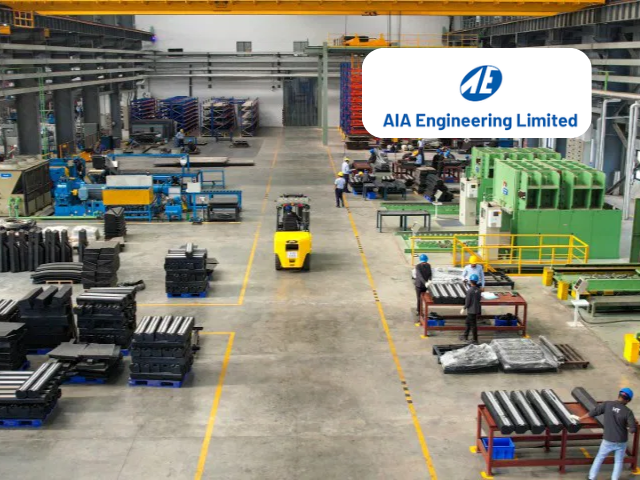
Among Indian manufacturing companies with global relevance, AIA Engineering fundamental analysis often leads to one key question. Is this business close to a monopoly?
AIA Engineering Ltd is a global leader in high-chrome grinding media and wear-resistant castings used primarily in cement and mining industries. These products are mission-critical consumables. Once approved by customers, they are rarely replaced by alternatives. This creates a business that behaves like a near monopoly without being one in a legal sense.
For long-term Indian investors focused on quality, stability, and capital preservation, AIA Engineering stands out as a quietly powerful compounder.
AIA Engineering supplies grinding media used in crushing and grinding operations. These operations run continuously, and the grinding media wears out over time. Replacement is not optional.
A cement plant or mining operation cannot afford inconsistent quality. Even a minor drop in grinding efficiency can increase power costs, reduce throughput, and cause unplanned shutdowns. This makes performance more important than price.
Once AIA Engineering’s products are approved, customers tend to stick for years. This repeat demand creates predictable revenues and strong visibility, a rare feature in industrial manufacturing.
Exports form a significant share of revenues, giving the company geographic diversification and reducing dependence on the Indian infrastructure cycle.
Switching grinding media suppliers is risky. Every mill behaves differently, depending on ore hardness, mill design, and operating conditions. AIA Engineering customizes its alloy composition and product design for each client.
Once this customization is validated, customers avoid switching due to operational risk. This creates monopoly-like behavior without formal market dominance.
The real moat lies in knowledge, not machinery. Decades of metallurgical data, testing, and process optimization give AIA Engineering a clear edge. New entrants can buy machines, but replicating experience takes years.
While competitors exist, very few operate at AIA Engineering’s scale with similar consistency, global reach, and product performance. This allows AIA Engineering to command pricing power without aggressive competition.
AIA Engineering’s financials reinforce its competitive position.
Over the long term, revenues have grown at around 7 to 8 percent, while profits have grown between 9 and 13 percent. This indicates improving efficiency and operating leverage.
Operating margins remain strong at nearly 27 to 28 percent, which is exceptional for a manufacturing company. These margins reflect product differentiation and pricing power rather than cost cutting alone.
The balance sheet is a major strength. The company operates with very low debt and high interest coverage, keeping financial risk minimal. Strong operating cash flows fund expansion and dividends without stressing capital.
Return ratios are stable and healthy. ROE around 15 percent and ROCE close to 19 percent indicate efficient capital use without leverage-driven risk.
At current levels, AIA Engineering trades at a P/E multiple of around 31 times. This is clearly a premium valuation compared to traditional manufacturing peers.
However, the premium reflects its near-monopoly economics, predictable cash flows, and balance sheet strength. The stock may not offer sharp short-term upside, but it suits investors looking for steady compounding and downside protection.
This makes AIA Engineering more suitable for long-term portfolios than for tactical trading strategies.
End-user industries such as cement and mining are cyclical. During global slowdowns, volume growth can soften, even though replacement demand offers some cushion.
Raw material price volatility can temporarily impact margins, especially if cost pass-through lags. Currency fluctuations also affect earnings due to export exposure.
Valuation risk is real. Buying at high multiples limits short-term returns if growth slows.
AIA Engineering reflects India’s evolution from low-cost manufacturing to high-value engineering exports. Its success strengthens India’s position in global industrial supply chains.
As a listed company, it follows SEBI disclosure norms and maintains transparent reporting. This regulatory framework enhances investor confidence and aligns with long-term investing principles.
Understanding near-monopoly businesses requires deeper analysis beyond surface metrics. Swastika Investmart, a SEBI-registered brokerage, provides in-depth equity research, sector insights, and advanced analytical tools to support informed investing.
With tech-enabled platforms, strong customer support, and a focus on investor education, Swastika Investmart helps investors evaluate quality businesses like AIA Engineering with clarity and discipline.
Is AIA Engineering a monopoly?
No, but it displays near-monopoly characteristics due to high switching costs and technical expertise.
Why are margins so high for a manufacturing company?
Strong pricing power, customization, and customer stickiness support superior margins.
Is export exposure a risk?
Exports add diversification, though currency movements can affect short-term results.
Is the stock suitable for short-term investors?
It is better suited for long-term investors focused on stability rather than quick gains.
Does valuation limit future returns?
Premium valuation may cap short-term upside, but long-term compounding remains attractive.
AIA Engineering’s fundamental analysis reveals a business with near-monopoly economics, strong financial discipline, and predictable demand. While valuations are premium, the company remains a high-quality compounder for patient investors seeking consistency and capital protection.
For investors looking to analyze such businesses with confidence and structure, Swastika Investmart offers the research depth, technology, and support needed to make informed decisions.


Trust Our Expert Picks
for Your Investments!


.webp)
.png)

.png)


.png)