

%20(3).png)

The Indian stock market today (2 January 2026) ended the session on a positive note, reflecting steady investor confidence at the start of the new calendar year. Benchmark indices Nifty 50 and BSE Sensex closed firmly in the green, supported by gains in banking and IT stocks, while broader markets also showed resilience.
Despite mixed global cues, domestic factors such as strong credit growth expectations, stable macroeconomic indicators, and continued retail participation helped Indian equities maintain upward momentum.
At the close of trade on 2 January 2026, the key indices settled as follows:
The overall market breadth remained positive, indicating healthy participation beyond just index heavyweights.
The positive close in the Indian stock market today, 2 January 2026, was driven by a mix of sector-specific strength and supportive domestic factors.
The banking sector was the primary driver of today’s gains. Nifty Bank moving above the 60,000 mark highlights confidence in India’s financial system. Expectations of sustained credit growth, improving asset quality, and strong balance sheets across major banks continue to attract long-term investors.
The Reserve Bank of India’s consistent regulatory framework and focus on financial stability have further strengthened trust in banking stocks.
IT stocks ended marginally higher as global technology sentiment remained stable. While demand from overseas markets is still selective, Indian IT companies are benefiting from digital transformation deals, artificial intelligence-led projects, and cost optimisation initiatives.
For Indian investors, IT remains a strategic sector for diversification within equity portfolios.
Domestic institutional investors, supported by strong SIP inflows, continue to provide stability to the markets. Retail participation has also remained consistent, helping absorb short-term volatility and supporting long-term market trends.
This balance between institutional and retail flows has become a key strength of Indian capital markets in recent years.
From a technical perspective, the Nifty 50 continues to trade above key support levels, maintaining a bullish structure. Immediate support is seen near the 26,000 zone, while higher levels may act as short-term resistance.
The Sensex also shows strength, though some consolidation cannot be ruled out at elevated levels. Traders are advised to remain cautious with strict risk management, while long-term investors may consider staggered investments.
For Indian investors, today’s market performance reinforces the importance of staying disciplined and goal-oriented.
SEBI’s continued emphasis on transparency, disclosures, and investor protection has strengthened confidence in Indian markets, making them more accessible and reliable for all categories of investors.
In a dynamic market environment like today, having access to reliable research and seamless execution is crucial.
Swastika Investmart, a SEBI-registered brokerage, empowers investors with:
These strengths help investors navigate markets with greater confidence and clarity.
👉 Open your trading and investment account with Swastika Investmart
Why did the Indian stock market rise today, 2 January 2026?
Positive sentiment, strong banking stocks, and stable domestic economic indicators supported today’s rally.
Is it risky to invest when Nifty is near record levels?
High levels may bring short-term volatility, but long-term investors can stay invested with proper asset allocation.
Which sector performed best today?
The banking sector outperformed, with Bank Nifty leading the gains.
How did IT stocks perform today?
IT stocks closed modestly higher, supported by stable global technology cues.
What should retail investors do after today’s market close?
Remain disciplined, focus on long-term goals, and avoid impulsive trading decisions.
The Indian stock market today, 2 January 2026, delivered a strong start to the year, with benchmark indices closing higher and investor sentiment remaining optimistic. While short-term fluctuations are inevitable, India’s long-term growth story continues to support equity markets.
If you are looking to invest or trade with confidence, partnering with a trusted, research-driven brokerage can make a meaningful difference.
👉 Open your trading and investment account with Swastika Investmart
Stay informed. Invest wisely. Grow with India’s markets.


The Indian stock market today (2 January 2026) ended the session on a positive note, reflecting steady investor confidence at the start of the new calendar year. Benchmark indices Nifty 50 and BSE Sensex closed firmly in the green, supported by gains in banking and IT stocks, while broader markets also showed resilience.
Despite mixed global cues, domestic factors such as strong credit growth expectations, stable macroeconomic indicators, and continued retail participation helped Indian equities maintain upward momentum.
At the close of trade on 2 January 2026, the key indices settled as follows:
The overall market breadth remained positive, indicating healthy participation beyond just index heavyweights.
The positive close in the Indian stock market today, 2 January 2026, was driven by a mix of sector-specific strength and supportive domestic factors.
The banking sector was the primary driver of today’s gains. Nifty Bank moving above the 60,000 mark highlights confidence in India’s financial system. Expectations of sustained credit growth, improving asset quality, and strong balance sheets across major banks continue to attract long-term investors.
The Reserve Bank of India’s consistent regulatory framework and focus on financial stability have further strengthened trust in banking stocks.
IT stocks ended marginally higher as global technology sentiment remained stable. While demand from overseas markets is still selective, Indian IT companies are benefiting from digital transformation deals, artificial intelligence-led projects, and cost optimisation initiatives.
For Indian investors, IT remains a strategic sector for diversification within equity portfolios.
Domestic institutional investors, supported by strong SIP inflows, continue to provide stability to the markets. Retail participation has also remained consistent, helping absorb short-term volatility and supporting long-term market trends.
This balance between institutional and retail flows has become a key strength of Indian capital markets in recent years.
From a technical perspective, the Nifty 50 continues to trade above key support levels, maintaining a bullish structure. Immediate support is seen near the 26,000 zone, while higher levels may act as short-term resistance.
The Sensex also shows strength, though some consolidation cannot be ruled out at elevated levels. Traders are advised to remain cautious with strict risk management, while long-term investors may consider staggered investments.
For Indian investors, today’s market performance reinforces the importance of staying disciplined and goal-oriented.
SEBI’s continued emphasis on transparency, disclosures, and investor protection has strengthened confidence in Indian markets, making them more accessible and reliable for all categories of investors.
In a dynamic market environment like today, having access to reliable research and seamless execution is crucial.
Swastika Investmart, a SEBI-registered brokerage, empowers investors with:
These strengths help investors navigate markets with greater confidence and clarity.
👉 Open your trading and investment account with Swastika Investmart
Why did the Indian stock market rise today, 2 January 2026?
Positive sentiment, strong banking stocks, and stable domestic economic indicators supported today’s rally.
Is it risky to invest when Nifty is near record levels?
High levels may bring short-term volatility, but long-term investors can stay invested with proper asset allocation.
Which sector performed best today?
The banking sector outperformed, with Bank Nifty leading the gains.
How did IT stocks perform today?
IT stocks closed modestly higher, supported by stable global technology cues.
What should retail investors do after today’s market close?
Remain disciplined, focus on long-term goals, and avoid impulsive trading decisions.
The Indian stock market today, 2 January 2026, delivered a strong start to the year, with benchmark indices closing higher and investor sentiment remaining optimistic. While short-term fluctuations are inevitable, India’s long-term growth story continues to support equity markets.
If you are looking to invest or trade with confidence, partnering with a trusted, research-driven brokerage can make a meaningful difference.
👉 Open your trading and investment account with Swastika Investmart
Stay informed. Invest wisely. Grow with India’s markets.

India’s passenger vehicle market ended the year on a strong note, with Maruti Suzuki once again reinforcing its leadership. According to industry data, the Maruti Suzuki Baleno topped the sales chart in December, while the Dzire claimed the crown as the best-selling car of 2025.
These numbers are more than just monthly rankings. They reflect changing consumer preferences, the strength of Maruti Suzuki’s product portfolio, and the broader recovery trend in the Indian automobile sector. For investors and market watchers, the sales performance also offers important insights into demand patterns and sectoral momentum.
The Baleno has consistently been one of India’s most popular premium hatchbacks. Its December sales leadership can be attributed to a mix of urban demand, festive season carryover, and its value proposition in terms of features and fuel efficiency.
In real-world terms, buyers today are looking for cars that balance affordability with technology. Touchscreen infotainment, safety features, and mileage have become non-negotiable. Baleno’s positioning fits well with these expectations, helping it outperform peers in a competitive segment.
Another key factor is Maruti Suzuki’s unmatched dealer and service network. During peak demand periods, availability plays a crucial role. While some manufacturers face supply constraints, Maruti’s scale allows it to convert enquiries into deliveries faster, boosting monthly sales numbers.
The Dzire’s emergence as 2025’s best-selling car underlines the enduring appeal of compact sedans in India. Despite the rise of SUVs, Dzire continues to attract buyers seeking comfort, boot space, and reliability at a reasonable price point.
For fleet operators, first-time buyers, and families alike, Dzire remains a practical choice. Its consistent performance across economic cycles shows how strong brand recall and trust influence purchasing decisions.
Unlike trend-driven launches, Dzire’s success is built on consistency. Incremental upgrades, strong resale value, and low maintenance costs have helped it maintain volumes year after year. This stability is something equity investors often look for when evaluating companies with long-term earnings visibility.
With Baleno and Dzire leading sales charts, Maruti Suzuki continues to command a significant share of the passenger vehicle market. This leadership translates into stable cash flows, pricing power, and resilience during demand fluctuations.
From an investor’s perspective, such dominance reduces earnings volatility and strengthens the company’s long-term fundamentals.
India’s automobile industry operates under evolving regulatory norms, including emission standards and safety requirements. Maruti Suzuki’s ability to adapt its portfolio while maintaining volumes indicates strong compliance capabilities and operational efficiency.
This alignment with regulatory expectations is critical in a market governed by standards set by bodies such as the Ministry of Road Transport and Highways and evolving environmental norms.
Strong sales data from a market leader often lifts sentiment across the sector. Auto ancillaries, component manufacturers, and dealerships tend to benefit from sustained volume growth. Investors usually interpret such data as a sign of healthy consumer demand.
In previous cycles, consistent sales leadership by Maruti Suzuki has coincided with improved earnings visibility for the broader auto ecosystem.
Car sales are closely linked to consumer confidence and disposable income levels. Baleno and Dzire’s performance suggests that demand in the mass and mid-premium segments remains intact, even amid macro uncertainties.
For Indian markets, this supports the narrative of steady domestic consumption, which is a key pillar of economic growth.
While monthly sales rankings grab headlines, long-term investors should focus on trends such as product mix, margin stability, and market share. Maruti Suzuki’s diversified portfolio across hatchbacks, sedans, and SUVs provides balance against shifting consumer preferences.
Interpreting auto sales data requires context. Factors like seasonality, inventory levels, and promotional campaigns all play a role. This is where structured research and investor education become valuable.
SEBI-registered platforms such as Swastika Investmart support investors with research tools, market insights, and tech-enabled investing solutions. Combined with responsive customer support, this helps investors make informed decisions rather than reacting to short-term news.
Why did Maruti Suzuki Baleno lead December sales?
Baleno benefited from strong urban demand, feature-rich positioning, and Maruti Suzuki’s wide dealer network ensuring timely deliveries.
How did Dzire become the best-selling car of 2025?
Dzire’s consistent demand from families and fleet buyers, along with strong brand trust and value-for-money pricing, helped it top annual sales.
Does strong car sales impact Maruti Suzuki’s stock?
Sales leadership generally supports earnings stability, but stock performance also depends on margins, costs, and overall market conditions.
What does this mean for the Indian auto sector?
Strong sales indicate healthy consumer demand, benefiting auto manufacturers and ancillary companies.
Should investors track monthly auto sales data?
Yes, but it should be combined with long-term fundamentals and sector trends for better decision-making.
The fact that Baleno led December sales and Dzire emerged as 2025’s best-selling car highlights Maruti Suzuki’s deep understanding of the Indian consumer. It also reinforces the strength of the domestic automobile market at a time when consumption trends are closely watched by investors.
For those looking to interpret such market signals effectively, access to credible research and regulatory-compliant guidance is essential. Swastika Investmart, with its SEBI registration, strong research framework, investor education initiatives, and tech-enabled investing platform, aims to empower investors to navigate market trends with confidence.
If you want to stay aligned with evolving market opportunities and invest with clarity, now is a good time to take the next step.

The Indian quick service restaurant space is witnessing a major consolidation move. Sapphire Foods and Devyani International have announced a proposed merger, with a swap ratio fixed at 177 shares of Devyani International for every 100 shares of Sapphire Foods. The announcement has drawn strong interest from investors, analysts, and market participants tracking the listed QSR universe.
Mergers in consumer-facing businesses often reshape competitive dynamics. In this case, the deal combines two well-known franchise operators with deep exposure to brands like KFC, Pizza Hut, and other global food chains. The Sapphire Foods–Devyani International merger is being viewed as a strategic step toward building scale, improving margins, and strengthening long-term growth visibility.
A swap ratio of 177:100 means that Sapphire Foods shareholders will receive 177 shares of Devyani International for every 100 shares they currently hold. The ratio is typically derived from relative valuations, future earnings potential, and independent fairness opinions.
For investors, this is not just a numerical adjustment. It reflects how the market and advisors view the comparative strength and growth outlook of both companies. If Devyani International trades at a premium valuation, Sapphire Foods shareholders may see value creation over the medium to long term, provided execution remains strong.
In mergers within the Indian listed space, valuation often considers metrics such as EV to EBITDA, store-level profitability, and same-store sales growth. Both Sapphire Foods and Devyani International operate asset-light franchise models, but differ in geographic mix and brand exposure.
The swap ratio suggests that the combined entity aims to balance scale with profitability, while ensuring fairness to minority shareholders. The merger is subject to approvals from SEBI, stock exchanges, and the National Company Law Tribunal, ensuring regulatory oversight.
India’s QSR industry is growing at a steady pace, driven by urbanisation, rising disposable incomes, and changing consumption habits. However, competition is intense, with both global and domestic players fighting for market share.
By combining operations, Sapphire Foods and Devyani International can leverage procurement efficiencies, better bargaining power with suppliers, and shared technology platforms. Scale also helps in faster expansion into Tier 2 and Tier 3 cities, where organised QSR penetration is still low.
Real-world examples from past mergers in the FMCG and retail space show that backend integration often leads to margin improvement. Shared logistics, common sourcing, and unified digital ordering systems can reduce costs over time.
For investors, the key variable will be how quickly these synergies translate into improved return ratios and free cash flows.
Historically, merger announcements in India trigger short-term volatility. Share prices may move based on perceived valuation fairness, arbitrage opportunities, and expectations of synergy benefits.
In the case of the Sapphire Foods–Devyani International merger, market participants are closely watching trading volumes and price movements to assess institutional sentiment. Mutual funds and long-term investors tend to focus on execution quality rather than immediate price reaction.
This merger highlights a broader trend of consolidation in consumer-facing sectors. As input costs remain volatile and competition rises, scale becomes a critical advantage. Other listed QSR players may also explore strategic partnerships or acquisitions to strengthen their market position.
For the Indian equity market, such consolidation often improves sector maturity and long-term earnings stability.
Mergers of listed entities in India follow a well-defined framework under SEBI regulations and the Companies Act. Independent valuation reports, fairness opinions, and shareholder voting are mandatory steps in the process.
This ensures transparency and protects minority investors. The Sapphire Foods–Devyani International merger will go through these checks, providing confidence around governance standards.
Rather than reacting to short-term price movements, investors should track post-merger metrics such as store additions, margin trends, and return on capital employed. The ability of the combined entity to generate consistent cash flows will ultimately decide shareholder value.
Events like mergers underline why research-backed decision-making matters. SEBI-registered platforms like Swastika Investmart support investors with structured research tools, market insights, and investor education. Tech-enabled investing and responsive customer support help investors interpret complex corporate actions with clarity.
What is the swap ratio in the Sapphire Foods–Devyani International merger?
The swap ratio is 177 shares of Devyani International for every 100 shares of Sapphire Foods.
Will existing Sapphire Foods shares be delisted after the merger?
Post-merger, Sapphire Foods shareholders will hold shares in Devyani International, subject to regulatory approvals.
Why are QSR companies consolidating in India?
Rising competition, cost pressures, and the need for scale are driving consolidation in the QSR sector.
Does the merger guarantee higher returns for investors?
No merger guarantees returns. Value creation depends on execution, synergy realisation, and long-term demand growth.
Is regulatory approval required for this merger?
Yes, approvals from SEBI, stock exchanges, and NCLT are mandatory.
The Sapphire Foods–Devyani International merger marks an important development in India’s evolving QSR landscape. With a clearly defined swap ratio and strategic intent to build scale, the deal has the potential to reshape competitive dynamics in the sector. However, as with any merger, long-term success will depend on integration quality and disciplined execution.
For investors navigating such corporate actions, access to reliable research and regulatory-compliant guidance is crucial. Swastika Investmart, with its SEBI registration, strong research ecosystem, and investor-focused approach, aims to empower investors to make informed decisions in changing market conditions.
If you are looking to stay ahead of market developments and invest with confidence, take the next step.
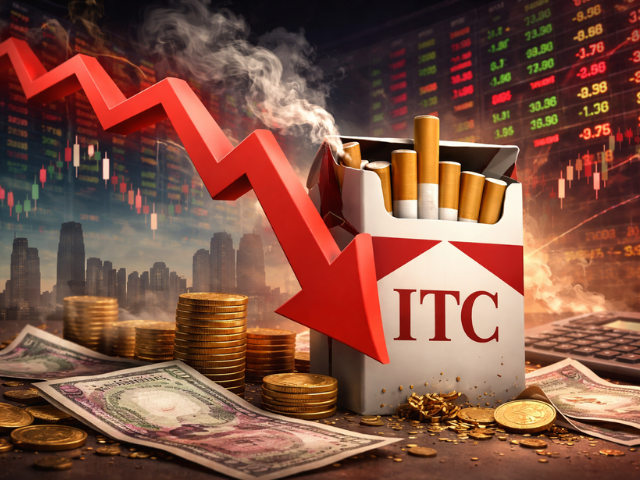
ITC Ltd, one of India’s most tracked large-cap stocks, found itself under sharp selling pressure as its shares slipped close to 10% in a single trading session. The trigger was news around a potential excise duty hike on cigarettes, a core profit driver for the company. What made the fall more striking was the unusually high trading volume, suggesting aggressive participation from institutional investors.
For retail investors, this sudden correction raises important questions. Is this just a knee-jerk reaction to policy news, or does it signal deeper concerns? And more importantly, how should investors approach such events in the Indian equity market?
This blog breaks down what happened, why markets reacted the way they did, and what it could mean for ITC and the broader market.
The primary reason behind the sharp fall in ITC’s stock price was news of a proposed excise duty hike on cigarettes. In India, cigarette taxation is governed by the GST framework along with additional cess, and any increase directly impacts pricing and consumption.
Historically, cigarette volumes are sensitive to price hikes. While ITC has managed to offset some of this impact through calibrated price increases and cost efficiencies, higher taxes usually compress margins in the near term. Markets tend to discount this impact immediately, which explains the sharp sell-off.
What stood out during this decline was the spike in volumes. Such high volumes often indicate large institutional trades rather than panic selling by retail investors. Mutual funds and foreign institutional investors tend to rebalance their positions quickly when regulatory risks emerge.
In previous instances, including past tax hikes on tobacco products, ITC has witnessed similar volume-led corrections, followed by periods of consolidation.
While ITC has successfully diversified into FMCG, hotels, paperboards, and agri-business, cigarettes continue to contribute a significant share of profits. The segment enjoys high margins, which help fund growth in other businesses.
This is why any regulatory change affecting cigarettes disproportionately impacts the stock, even if other segments are performing well.
Over the last decade, ITC has invested heavily in its FMCG portfolio, building strong brands in packaged foods, personal care, and staples. Although margins here are lower compared to cigarettes, consistent growth has reduced the company’s overall risk profile.
In real-world terms, this diversification works like a financial cushion. When one engine slows down, others help keep the company moving forward.
The ITC episode highlights how sensitive Indian markets remain to policy and regulatory developments. Sectors like tobacco, alcohol, mining, and energy are particularly exposed to government decisions.
Whenever such news breaks, it often leads to short-term volatility not just in the stock concerned, but across the sector. For example, FMCG and consumption stocks may see mixed reactions as investors reassess tax pass-through abilities.
For long-term investors, such corrections often test conviction. A sudden fall can feel uncomfortable, especially when headlines are negative. However, experienced investors know that regulatory risks are part of investing in India, and quality companies tend to adapt over time.
This is where disciplined research and a long-term perspective become crucial.
A 10% fall in a large-cap stock like ITC does not automatically mean a structural breakdown. Investors should evaluate factors such as balance sheet strength, cash flows, and management commentary.
Sharp moves provide valuable insights into how markets price risk. Tracking volume patterns, delivery data, and institutional activity can help investors understand market behaviour better.
Platforms backed by strong research frameworks and investor education, like Swastika Investmart, can play a key role here. Being a SEBI-registered entity, Swastika Investmart focuses on transparent research, tech-enabled investing tools, and responsive customer support, helping investors navigate volatile phases with confidence.
Despite near-term challenges, ITC remains one of India’s strongest cash-generating companies. Its zero-debt balance sheet, consistent dividends, and diversified business model provide stability.
Regulatory headwinds may affect short-term performance, but historically, ITC has shown the ability to recalibrate pricing and operations to protect profitability. Long-term investors often track such phases to reassess valuations rather than react emotionally.
Why did ITC stock fall so sharply in one day?
The fall was triggered by news of a potential excise duty hike on cigarettes, which could impact margins and volumes in the short term.
Does the excise duty hike affect ITC’s entire business?
No, it mainly affects the cigarette segment. Other businesses like FMCG and agri continue to operate independently.
Is ITC still a good long-term investment?
That depends on individual risk appetite and investment horizon. ITC’s strong balance sheet and diversification support long-term stability, but regulatory risks remain.
Why were trading volumes so high during the fall?
High volumes usually indicate institutional activity, such as portfolio rebalancing by mutual funds and foreign investors.
How can retail investors handle such market volatility?
By focusing on fundamentals, avoiding panic decisions, and using reliable research and advisory platforms.
The sharp correction in ITC shares following the excise duty hike news is a reminder of how quickly sentiment can change in Indian markets. While the short-term outlook may remain volatile, long-term investors should evaluate the company beyond headlines and understand the broader business dynamics.
Having access to strong research, regulatory-compliant advisory, and investor education can make a meaningful difference during such phases. Swastika Investmart, with its SEBI registration, advanced research tools, and investor-first approach, aims to support investors in making informed decisions rather than emotional ones.
.png)
Shares of Multi Commodity Exchange of India (MCX) are firmly in the spotlight as the stock trades ex-date for its first-ever stock split. This corporate action marks a historic moment for MCX since its listing in 2012 and has drawn strong attention from investors tracking capital market and exchange-related stocks.
The development has sparked discussion not only because of the sharp price adjustment seen on trading screens, but also due to what it means for liquidity, retail participation, and long-term investor sentiment in the Indian stock market.
MCX has approved a 5:1 stock split, meaning one equity share with a face value of ₹10 has been subdivided into five equity shares of face value ₹2 each.
The company fixed January 2, 2026, as the record date to determine shareholder eligibility. As a result, MCX shares traded ex-date on this day, leading to a proportionate adjustment in the share price.
This is the first stock split in MCX’s history, making it a significant corporate milestone.
To understand this clearly, consider a simple example.
If an investor held 10 MCX shares before the record date, those holdings will now convert into 50 shares after the split. While the number of shares increases fivefold, the overall investment value remains unchanged.
Before the split, MCX shares closed around ₹11,015. Post split, the stock naturally trades at a much lower price, reflecting the revised face value and increased share count.
Any sharp fall visible on trading apps is purely technical, not a reflection of value erosion.
Many investors may notice an apparent drop of nearly 80 percent in MCX share price on certain platforms. This happens because some trading apps initially display the unadjusted pre-split price.
There is no cause for concern. Once prices are fully adjusted for the stock split, the charts normalize. The company’s market capitalisation and investor wealth remain exactly the same.
Such adjustments are standard for stock splits and are regulated under SEBI’s corporate action framework.
Eligibility is straightforward.
Investors who held MCX shares in their demat accounts as of January 1, 2026, before market close, are eligible for the split.
Those purchasing MCX shares on or after the ex-date will not receive additional shares under this corporate action.
Typically, shares arising from a stock split are credited to demat accounts within one to two working days after the record date.
Stock splits are often undertaken to make shares more accessible to a broader investor base.
For MCX, the stock had reached a 52-week high of ₹11,218 in December 2025, making the ticket size relatively high for smaller investors. A lower post-split price improves affordability and encourages wider retail participation.
Additionally, stock splits tend to:
However, it is important to note that stock splits do not alter earnings, profitability, or business strength.
The stock split does not change MCX’s underlying business fundamentals. The exchange continues to benefit from strong momentum in commodity derivatives trading and rising participation across energy, bullion, and metals.
Brokerage commentary has highlighted sustained volume growth and elevated commodity volatility as near-term drivers. Profit growth expectations remain supported by increased trading activity and product expansion.
Upside risks include higher traction in commodity options and new product introductions, while risks may arise from regulatory changes, technology transitions, or lower volatility impacting volumes.
While stock splits and bonus issues may appear similar, their objectives differ.
A stock split reduces the face value and increases the number of shares, keeping share capital unchanged. Dividend per share adjusts proportionately.
A bonus issue distributes free shares from accumulated reserves without changing face value. Dividend entitlement remains unchanged in a bonus issue.
Understanding this distinction helps investors interpret corporate actions more clearly.
For existing shareholders, no action is required. The split is automatic, and holdings adjust accordingly.
For new investors, the lower post-split price makes MCX more accessible, but entry decisions should always be backed by research rather than corporate actions alone.
Long-term returns will continue to depend on MCX’s trading volumes, regulatory environment, and growth in India’s commodity markets.
Tracking corporate actions, understanding technical price adjustments, and evaluating fundamentals requires timely insights. Swastika Investmart, a SEBI-registered financial services provider, supports investors with strong research tools, tech-enabled platforms, and responsive customer support.
With a focus on investor education and data-backed analysis, Swastika helps clients navigate events like stock splits with clarity and confidence.
Why are MCX shares in focus today
MCX shares are in focus as they are trading ex-date for their first-ever 5:1 stock split.
What is the MCX stock split ratio
MCX has announced a 5:1 stock split, where one ₹10 face value share becomes five ₹2 shares.
Does the MCX stock split affect fundamentals
No, the stock split does not impact MCX’s business, earnings, or market value.
Who is eligible for the MCX stock split
Investors holding MCX shares before market close on January 1, 2026, are eligible.
Why does the share price look sharply lower after the split
The price drop is a technical adjustment due to the increased number of shares.
The MCX stock split is a structural move aimed at improving liquidity and accessibility, not a reflection of changes in business strength. For investors, understanding the mechanics behind such corporate actions is far more important than reacting to headline price movements.
If you are looking to track stocks in focus, corporate actions, and market trends with expert-backed insights, Swastika Investmart can be your trusted investing partner.
.png)
Exchange Traded Funds, commonly known as ETFs, have steadily moved from being a niche product to a mainstream investment choice in India. As we step into 2026, ETFs are no longer limited to passive index followers. They now play a crucial role in portfolio construction, tactical allocation, and long-term wealth creation for Indian investors.
With market volatility, global uncertainty, and rising awareness around cost-efficient investing, ETFs are becoming a preferred option for both first-time investors and seasoned market participants.
An ETF is a market-linked investment instrument that tracks an index, sector, commodity, or asset class and trades on the stock exchange like a regular share.
For example, when you buy a Nifty 50 ETF, you indirectly invest in the 50 largest companies listed on NSE in the same proportion as the index. The ETF’s price moves in line with the underlying index and can be bought or sold during market hours.
In India, ETFs are regulated by SEBI and managed by fund houses, offering transparency, liquidity, and cost efficiency.
Expense ratios play a big role in long-term returns. ETFs typically have much lower expense ratios compared to actively managed mutual funds. In a long-term investment horizon, even a small cost difference can translate into significant savings.
Unlike mutual funds that are bought at end-of-day NAV, ETFs trade in real time. Investors can see prices, volumes, and holdings during market hours, making decision-making more informed.
Instead of picking individual stocks, ETFs allow investors to gain exposure to an entire sector or index in one transaction. This reduces stock-specific risk and simplifies portfolio management.
These remain the most widely used ETFs in India.
Examples include Nifty 50 ETFs, Sensex ETFs, and Nifty Next 50 ETFs.
They are commonly used as the core of long-term portfolios.
Sector-focused ETFs have seen rising interest, especially in banking, IT, PSU, infrastructure, and manufacturing themes. Thematic ETFs allow investors to participate in trends such as digital transformation, renewable energy, and consumption growth.
Gold ETFs continue to act as a hedge against inflation and market uncertainty. In 2026, many investors use gold ETFs as a stabilizer during volatile equity markets.
Indian investors are increasingly seeking global exposure through ETFs tracking US indices like Nasdaq or S&P 500, helping diversify beyond domestic markets.
While both instruments have their place, ETFs stand out for investors who value cost efficiency, flexibility, and transparency. Mutual funds still appeal to investors seeking active fund management, but ETFs are increasingly preferred for core portfolio allocation.
For example, a long-term investor may use a Nifty 50 ETF as the foundation of their portfolio and complement it with select active funds or stocks.
Systematic investing is no longer limited to mutual funds. Many investors now create disciplined ETF investment plans by buying ETFs regularly through their trading accounts.
ETF SIPs help average market volatility and encourage long-term discipline. This approach is especially popular among young professionals and first-time investors building wealth over time.
ETFs in India are regulated by SEBI, ensuring strict disclosure norms, transparency in holdings, and investor protection. Fund houses are required to disclose daily portfolio data, tracking errors, and expense ratios.
However, investors should still pay attention to liquidity and tracking difference, especially in niche or low-volume ETFs.
During periods of market correction, many investors prefer index ETFs instead of timing individual stocks. For instance, when markets experience short-term volatility due to global cues or interest rate concerns, staggered investments in index ETFs can help investors stay invested without taking concentrated risk.
Similarly, gold ETFs often gain attention when equity markets turn uncertain, offering balance to portfolios.
ETFs are suitable for:
Choosing the right ETF and timing investments requires research and guidance. Swastika Investmart, a SEBI-registered financial services provider, supports investors with strong research insights, advanced trading platforms, and dedicated customer support.
With a focus on investor education and tech-enabled investing, Swastika helps clients understand market trends, ETF strategies, and portfolio alignment based on risk profiles.
Are ETFs safe for Indian investors?
ETFs are regulated by SEBI and offer transparency, but returns are market-linked, so risks remain.
Can I invest in ETFs without a Demat account?
No, a Demat and trading account is required to invest in ETFs.
Are ETFs good for long-term investment?
Yes, especially index ETFs, which are widely used for long-term wealth creation.
Do ETFs pay dividends?
Some ETFs may distribute dividends, while others reinvest them depending on the structure.
How much money is needed to start investing in ETFs?
You can start with the price of one ETF unit, making them accessible for most investors.
ETF investing in 2026 reflects a shift towards smarter, cost-conscious, and transparent investing in India. Whether you are building your first portfolio or refining an existing one, ETFs offer flexibility and efficiency that align well with modern investment goals.
If you are looking to explore ETF investing with reliable research, robust platforms, and expert support, Swastika Investmart can be a trusted partner in your investment journey.


Trust Our Expert Picks
for Your Investments!


.webp)
.png)

.png)


%20(2).png)



%20(3)%20(1).png)