.png)
The US economy remains the single most influential force in global financial markets. From equity flows to currency movements and commodity prices, decisions taken in Washington and by the US Federal Reserve ripple across economies worldwide. As we look ahead, understanding what to expect from the US economy in 2026 becomes essential for Indian investors, traders, exporters and policymakers.
In this blog, we break down the expected economic trends in the US for 2026 and explain how these developments could shape Indian stock markets, interest rates, currency movements and investment strategies.
After years of post pandemic recovery and policy tightening, the US economy is expected to enter 2026 with stable momentum. Most global institutions expect GDP growth to remain around the long term average rather than the sharp expansion seen earlier in the decade.
Key drivers include strong consumer spending, government infrastructure investment and continued capital expenditure in technology and artificial intelligence. At the same time, high base effects and tighter financial conditions could limit rapid growth.
For Indian investors, stable US growth is generally positive as it supports global risk appetite without creating excessive inflationary pressure.
Inflation is expected to trend closer to the US Federal Reserve’s comfort zone by 2026, though it may not settle perfectly at two percent. Wage pressures, energy prices and supply chain restructuring will continue to influence price levels.
Lower inflation reduces the need for aggressive monetary tightening and supports equity markets globally.
One of the most watched elements of the US economy in 2026 will be interest rates. If inflation continues to ease, the Federal Reserve may shift towards a more accommodative stance or maintain stable rates.
For India, this matters because lower US interest rates often lead to increased foreign portfolio inflows into emerging markets like India, improving liquidity and supporting equity valuations.
The US dollar’s trajectory in 2026 will depend largely on interest rate differentials and economic confidence. A stable or slightly weaker dollar typically benefits emerging market currencies, including the Indian rupee.
A stronger rupee can help reduce imported inflation for India, especially in crude oil and raw materials. However, exporters may face margin pressure if currency appreciation becomes sharp.
Foreign Institutional Investors closely track US bond yields and equity performance. If US yields remain stable and growth continues without shocks, India is likely to attract sustained FII inflows.
Historically, periods of US economic stability have coincided with strong performance in Indian sectors such as IT, banking, capital goods and consumer discretionary.
Trade policy remains a key variable. Any shift towards protectionism or tariff changes can affect Indian exports to the US, particularly in textiles, engineering goods and specialty chemicals.
However, diversification away from China continues to create long term opportunities for Indian manufacturers under the China plus one strategy.
From an Indian regulatory standpoint, SEBI continues to emphasize transparency, investor protection and risk management. Global volatility originating from the US economy reinforces the importance of disciplined investing, asset allocation and regulatory compliance.
Platforms like Swastika Investmart, a SEBI registered intermediary, play a crucial role by offering research backed insights, technology driven trading platforms and investor education that helps clients navigate global uncertainty confidently.
👉 Open your trading and investment account today
Long term wealth creation depends on staying invested with a clear strategy rather than timing global events perfectly.
How will the US economy in 2026 affect Indian stock markets?
A stable US economy usually supports global risk appetite, leading to better FII inflows and positive sentiment in Indian equities.
Will US interest rate changes impact Indian investors?
Yes. Lower or stable US rates often encourage foreign investments into India, improving liquidity and market valuations.
Which Indian sectors are most influenced by the US economy?
IT, pharmaceuticals, metals and export oriented manufacturing sectors are most sensitive to US economic trends.
Is a weaker US dollar good for India?
Generally yes, as it supports the rupee and reduces import costs, though exporters may face some pressure.
Understanding what to expect from the US economy in 2026 is essential for making informed investment decisions in India. While global uncertainties will always exist, a balanced US growth outlook combined with easing inflation could create a supportive environment for Indian markets.
With expert research, robust trading platforms and strong customer support, Swastika Investmart helps investors stay ahead of global trends while focusing on long term financial goals.

In the fast-paced world of financial markets, where milliseconds can make all the difference, the integration of Algo Trading Platforms with the Internet of Things (IoT) is revolutionizing how trading decisions are made. This dynamic convergence brings together the power of algorithmic trading strategies with the vast network of interconnected devices, paving the way for unparalleled automation and efficiency in trading.
The IoT encompasses a vast ecosystem of interconnected devices embedded with sensors, software, and other technologies, all capable of collecting and exchanging data in real-time. By leveraging IoT devices, traders gain access to a wealth of diverse data sources, ranging from market feeds and economic indicators to weather forecasts and supply chain information. This abundance of data serves as invaluable input for algorithmic models, enabling traders to make more informed and timely decisions.
One of the key benefits of integrating Algo Trading Platforms with IoT is the seamless integration of diverse data streams. IoT devices can capture data from various sources, including financial markets, social media sentiment, and even physical sensors monitoring factors such as temperature, traffic patterns, or consumer behavior. This multidimensional data provides traders with a comprehensive view of market dynamics, facilitating the development of more robust trading algorithms.
With IoT-enabled Algo Trading Platforms, traders can react swiftly to changing market conditions by receiving real-time insights and updates. For example, sensors deployed in supply chain networks can detect disruptions or delays, triggering automated trading responses to capitalize on emerging opportunities or mitigate risks. Moreover, IoT data can fuel adaptive trading strategies that dynamically adjust to evolving market trends, ensuring optimal performance in volatile environments.
Effective risk management is paramount in algorithmic trading, and IoT integration offers novel approaches to mitigate risks proactively. By monitoring IoT data streams for anomalies or unusual patterns, algorithms can trigger risk mitigation measures automatically, such as adjusting position sizes, hedging strategies, or executing stop-loss orders. This proactive risk management enhances portfolio resilience and safeguards against unforeseen market events.
While the convergence of Algo Trading Platforms and IoT presents tremendous opportunities, it also raises important regulatory and security considerations. Traders must navigate compliance requirements governing the use of IoT data, ensuring adherence to data privacy regulations and cybersecurity protocols. Implementing robust encryption, authentication mechanisms, and secure communication protocols is essential to safeguard sensitive trading data and prevent unauthorized access or manipulation.
As IoT technology continues to evolve and proliferate, the synergy between Algo Trading Platforms and IoT is poised to deepen further. Innovations such as edge computing, artificial intelligence, and blockchain are reshaping the landscape of automated trading, promising even greater efficiency, accuracy, and scalability. Moreover, the democratization of IoT devices and connectivity is democratizing access to data, empowering traders of all sizes to harness the power of automation in their investment strategies.

Are you looking to grow your money and save on taxes at the same time? ELSS funds might be a good fit for you!
ELSS stands for Equity Linked Saving Scheme. In simpler terms, Think of ELSS as a special type of investment that puts your money into stocks (companies) with the goal of making it grow. But unlike regular stock investing, ELSS offers a tax benefit: you can reduce your taxable income by up to ₹1.5 lakh every year! There's a small catch though, you can't take your money out for 3 years (lock-in period).
Imagine a pool of money from many investors like yourself. A manager invests this money in various companies. If these companies do well, the value of your investment goes up. You can't take your money out for 3 years, but after that you can redeem your investment (get your money back).
There are two main ways to invest in ELSS funds:
For example, consider two investors, A and B, who invested ₹1 lakh each in ELSS Funds. Investor A opted for a lump sum investment, while investor B chose to invest through SIPs over a year. After three years, assuming both funds grew at an average rate of 12% per annum, here's how their investments would look:
Investor A (Lump Sum): Investment grows to approximately ₹1,44,000
Investor B (SIP): Investment grows to approximately ₹1,54,000
In this example, despite investing the same amount, Investor B benefited from rupee-cost averaging through SIPs and achieved higher returns.
Up to ₹1.5 lakh you invest in ELSS, can be deducted from your taxable income. This means you pay less tax overall. For example you earn ₹10 lakh and invest ₹1.5 lakh in ELSS. The government lets you deduct that ₹1.5 lakh from your taxable income. So, you only pay tax on ₹8.5 lakh (10 lakh - 1.5 lakh). This saves you money!
ELSS Funds are a category of mutual funds that primarily invest in equity and equity-related instruments. They offer a winning combination of tax benefits, potential for high returns, and flexibility, making them an attractive investment option for tax-saving and wealth creation. However, remember to align your investment decisions with your financial goals and risk tolerance for best results.
.webp)
In the ever-evolving landscape of financial markets, online commodity trading continues to undergo transformative changes. As technology advances and market dynamics shift, traders must adapt to stay ahead of the curve. In this article, we'll explore the exciting emerging trends and technologies shaping the future of online commodity trading.
One of the most promising developments in commodity trading is the integration of blockchain technology. Blockchain offers enhanced transparency, security, and efficiency in trade settlement processes. Smart contracts, powered by blockchain, automate contract execution, reducing the need for intermediaries and minimizing the risk of errors or disputes. This technology streamlines operations and fosters trust among traders, leading to smoother transactions and lower costs.
AI and machine learning algorithms are revolutionizing trading strategies by analyzing vast amounts of data to identify patterns and predict market movements. These technologies enable traders to make data-driven decisions, optimize risk management, and capitalize on emerging opportunities with greater accuracy and speed. AI-powered trading systems can adapt to changing market conditions in real-time, providing a competitive edge in today's fast-paced commodity markets.
Quantitative analysis techniques, such as statistical modeling and algorithmic trading, are becoming increasingly prevalent in commodity trading. These methods leverage mathematical models and historical data to assess market trends, forecast price movements, and optimize trading strategies. Traders proficient in quantitative analytics can uncover hidden insights and exploit market inefficiencies, enhancing profitability and mitigating risks in online commodity trading.
IoT devices and sensor technology are revolutionizing supply chain management in commodity trading. By collecting real-time data on production, storage, and transportation processes, IoT devices provide valuable insights into supply and demand dynamics, inventory levels, and quality control measures. Traders can leverage this information to make informed decisions, optimize logistics, and respond swiftly to market fluctuations, gaining a competitive advantage in online commodity trading.
With growing environmental awareness and regulatory initiatives, sustainable commodities such as renewable energy sources, carbon credits, and responsibly sourced raw materials are gaining traction in commodity markets. Investors increasingly prioritize ethical and environmentally friendly investments, driving demand for sustainable commodities. Online traders can capitalize on this trend by diversifying their portfolios and tapping into emerging markets for eco-friendly commodities.
The rise of decentralized finance (DeFi) platforms and tokenization has the potential to democratize access to commodity markets and unlock new investment opportunities. Through blockchain-based platforms, traders can tokenize physical commodities, enabling fractional ownership and peer-to-peer trading without intermediaries. DeFi protocols offer decentralized lending, borrowing, and trading services, empowering individuals to participate in commodity markets with greater flexibility and efficiency.
In conclusion, the future of commodity trading online is characterized by innovation, efficiency, and sustainability. By embracing emerging trends and technologies such as blockchain, AI, IoT, and sustainable investing, traders can navigate volatile markets, optimize their strategies, and seize opportunities for growth and diversification. As the industry continues to evolve, staying informed and adaptable will be key to success in the dynamic world of online commodity trading.
.webp)
The world of online trading is an exciting one, offering the potential for growth and financial independence. But with a plethora of platforms available, choosing the right one can feel overwhelming. Fear not, aspiring investor! This guide dives into the top 5 features you should prioritize when selecting your online trading platform.
Imagine navigating a maze blindfolded. That's what a complex trading platform can feel like, especially for beginners. Look for a platform with a clean, intuitive interface that's easy to navigate. Here are some key aspects to consider:
Knowledge is power in the trading world. expand more. A good platform should equip you with the resources you need to make informed investment decisions. Look for features like:
Diversification is a cornerstone of successful investing. Choose a platform that offers a wide range of assets to invest in, including:
When it's time to execute a trade, speed and reliability are crucial. Look for features like:
As your trading experience evolves, your platform should too. Look for features that cater to advanced traders, such as:
In today's fast-paced world, the ability to monitor your stock trading and investment on the go is invaluable. Look for a platform with a user-friendly mobile app that offers core functionalities like placing orders, viewing account balances, and accessing real-time market data.
Selecting the right online trading platform is a crucial first step in your investment journey. By prioritizing features that cater to your experience level, investment goals, and preferred trading style, you can empower yourself to navigate the exciting world of online trading with confidence. Remember, don't hesitate to take advantage of demo accounts or free trials offered by many online trading platforms to test-drive their features before committing. With the right tools and knowledge at your disposal, you're well on your way to achieving your financial objectives!
.webp)
In the fast-paced world of currency trading, success often hinges on the ability to navigate the markets with skill and precision. However, even the most seasoned traders can fall prey to common pitfalls that hinder their profitability and success. By understanding and avoiding these mistakes, you can significantly improve your chances of thriving in the currency trading arena. Let's delve into the 10 most common mistakes to steer clear of:
One of the gravest errors a trader can make is overleveraging their positions. While leverage can amplify gains, it also magnifies losses. It's crucial to use leverage judiciously and never risk more than you can afford to lose.
Failing to implement proper risk management techniques is a recipe for disaster in currency trading. Traders should establish stop-loss orders, set realistic profit targets, and diversify their portfolios to mitigate risk effectively.
Trading without a well-defined strategy is akin to sailing without a compass. Every successful trader has a meticulously crafted trading plan that outlines entry and exit points, risk tolerance, and position sizing.
Allowing emotions to dictate trading decisions is a surefire way to incur losses. Fear, greed, and impatience can cloud judgment and lead to impulsive actions. It's essential to maintain discipline and stick to the trading plan, regardless of market fluctuations.
Attempting to recoup losses by increasing trade sizes or taking undue risks often exacerbates the situation. It's crucial to accept losses as part of the trading process and refrain from chasing the market in a desperate bid for redemption.
Trading excessively can exhaust both financial resources and mental energy. Quality over quantity should be the mantra, with traders focusing on high-probability setups rather than constantly seeking action in the markets.
While technical analysis is valuable, neglecting fundamental analysis can leave traders blindsided by significant market-moving events. It's essential to stay abreast of economic indicators, geopolitical developments, and central bank policies that impact currency prices.
Success in currency trading requires patience and perseverance. Rushing into trades or expecting instant results is unrealistic and often leads to poor decision-making. Traders must cultivate patience and wait for optimal trading opportunities to present themselves.
Markets are dynamic and ever-changing, requiring traders to adapt their strategies accordingly. Stubbornly clinging to a single approach without flexibility can result in missed opportunities and losses. Being adaptable and open-minded is key to long-term success.
Continuous learning is essential for staying ahead in the competitive world of currency trading. Traders who neglect to educate themselves on market dynamics, trading strategies, and risk management principles are at a significant disadvantage.
In conclusion, avoiding these common mistakes is crucial for achieving success in forex trading online. By prioritizing risk management, adhering to a well-defined trading plan, and cultivating discipline and patience, traders can tilt the odds of success in their favor. Remember, trading is a marathon, not a sprint, and consistent, prudent decision-making is the key to long-term profitability.
.png)
In the ever-shifting landscape of financial markets, volatility can be both a boon and a bane for investors. While it presents opportunities for profit, it also brings heightened risks that can unsettle even the most seasoned traders. Amidst such turbulence, margin funding emerges as a tool that investors can wield to navigate these uncertain waters with greater stability.
Volatility, in simple terms, refers to the degree of variation in the price of a financial asset over time. In a volatile market, prices can swing dramatically in either direction, driven by factors such as economic indicators, geopolitical events, or market sentiment.
For investors utilizing margin funding, volatility introduces added complexity. While leverage can amplify gains during upswings, it also magnifies losses during downturns. Therefore, it becomes imperative for investors to adopt strategies that mitigate risk and promote stability.
One of the most effective strategies for stability in a volatile market is diversification. By spreading investments across a variety of assets, sectors, and geographical regions, investors can reduce the impact of adverse movements in any single investment.
When employing margin funding, diversification becomes even more critical. By allocating borrowed funds across a diversified portfolio, investors can cushion themselves against significant losses in any individual position. This approach helps to smooth out returns and enhance the overall stability of the investment strategy.
In times of heightened volatility, risk management takes center stage. Establishing clear risk parameters, such as maximum leverage ratios and stop-loss orders, can help investors maintain control over their margin-funded positions.
Setting conservative leverage levels ensures that investors do not overextend themselves, reducing the risk of margin calls and forced liquidations during market downturns. Additionally, implementing stop-loss orders allows investors to limit potential losses by automatically exiting positions if they reach predetermined price thresholds.
Volatile markets require constant vigilance and adaptability. Investors utilizing margin funding must actively monitor their positions and market conditions to identify emerging risks and opportunities promptly.
Regularly reassessing the portfolio's composition and risk exposure enables investors to make timely adjustments to their margin funding strategy. Whether rebalancing allocations, reducing leverage, or hedging against downside risks, proactive measures can help maintain stability and preserve capital in volatile market environments.
In conclusion, volatility in financial markets presents both challenges and opportunities for investors. While margin funding can amplify returns, it also magnifies risks, particularly in turbulent times. However, by employing prudent strategies focused on diversification, risk management, and active monitoring, investors can navigate volatile markets with greater stability and resilience.
Ultimately, success in margin-funded investing during volatile periods hinges on discipline, foresight, and adaptability. By adhering to sound investment principles and remaining vigilant in the face of uncertainty, investors can harness the power of margin funding to pursue their financial goals while safeguarding against the inherent risks of volatile markets.


Trust Our Expert Picks
for Your Investments!


.png)
In Indian stock markets, the 52-week high and 52-week low are widely tracked indicators by traders, investors, mutual funds, and institutional participants. These levels represent the highest and lowest prices a stock has traded at over the past one year on NSE or BSE.
In 2026, with Indian markets seeing higher retail participation, algorithmic trading, and faster information flow, these levels have become even more important in identifying momentum stocks and potential value opportunities.
But the key question remains:
Should you buy strength at 52-week highs or buy weakness at 52-week lows?
Let’s break both strategies down clearly.
A 52-week high strategy focuses on stocks that are trading at or near their highest price in the last one year. Contrary to traditional belief, strong stocks often continue to rise due to sustained demand.
Stocks hitting 52-week highs often indicate:
In 2026, with FII and DII flows driving momentum, many breakout stocks emerge from 52-week high lists.
Stocks like leading PSU banks, capital goods companies, and select IT names have historically made multiple 52-week highs during long bull phases, rewarding momentum traders.
While momentum can be powerful, it is not risk-free.
Key risks include:
This is why volume confirmation, earnings visibility, and broader market trend analysis are critical.
A 52-week low strategy focuses on stocks trading near their lowest price of the last year. These stocks may be under pressure due to temporary challenges or broader sector weakness.
For long-term investors, such phases can sometimes present value opportunities.
Stocks at 52-week lows may reflect:
In 2026, sectors like metals, chemicals, or mid-cap IT may throw up selective value opportunities when sentiment turns pessimistic.
Not every cheap stock is a good investment.
A value trap occurs when:
Many stocks remain at 52-week lows for years without recovery. This is why fundamental analysis is non-negotiable.
52-week high is momentum-driven
52-week low is value-driven
Highs: Short to medium-term traders
Lows: Long-term investors
Highs: Volatility risk
Lows: Fundamental risk
Highs: Volume, trend, earnings momentum
Lows: Balance sheet, cash flows, recovery potential
There is no single correct answer.
In trending bull markets, 52-week high strategies tend to outperform as capital chases winners.
In volatile or sideways markets, selective 52-week low investing may deliver better long-term returns if backed by strong fundamentals.
Smart investors in 2026 increasingly use a blended approach:
A balanced approach could look like this:
SEBI-regulated brokers and research platforms help investors track such opportunities with structured tools and insights.
Whether you follow highs or lows, success depends on:
At Swastika Investmart, investors benefit from SEBI-registered research, technology-enabled platforms, and continuous investor education to navigate such strategies responsibly.
It can be risky if done without confirmation. Stocks with strong earnings momentum and volume support often continue trending higher.
No. Some stocks are at 52-week lows due to permanent business issues, making them value traps.
Beginners should focus on understanding fundamentals and risk management before using either strategy aggressively.
Yes, if the company has strong growth visibility and sustainable earnings, long-term investors can hold momentum stocks as well.
In 2026, both 52-week high and 52-week low strategies remain relevant in Indian markets. The real edge comes not from choosing one over the other, but from applying research, patience, and discipline.
If you’re looking to build a structured approach with expert-backed insights, Swastika Investmart offers a trusted ecosystem with research support, advanced tools, and investor-first guidance.
.png)
In Indian stock markets, stocks touching 52-week lows often trigger mixed emotions. Some investors see opportunity, while others fear catching a falling knife. As we move into 2026, with markets becoming more information-driven and sentiment-sensitive, understanding how to approach 52-week low stocks has become an essential investing skill.
A stock at a 52-week low is not automatically cheap, just as a stock at a high is not always expensive. The real question investors must ask is simple: Is this a temporary decline or a long-term problem? This blog explains how investors can spot genuine value at 52-week lows and, more importantly, how to avoid value traps in Indian markets.
A 52-week low represents the lowest price a stock has traded at over the last one year. This often reflects negative sentiment, weak earnings, sectoral headwinds, or broader market corrections.
However, not all 52-week lows are created equal.
Understanding why a stock is falling is the first step toward intelligent decision-making.
By 2026, Indian markets have evolved significantly. Retail participation is higher, institutional data is more accessible, and price movements react faster to news and numbers.
Key changes investors must account for:
As a result, buying blindly at 52-week lows is riskier than before, while selective value investing has become more rewarding.
A stock is attractive at a 52-week low only if earnings are expected to recover. Investors should look for:
A falling stock without earnings support often continues to fall.
In uncertain environments, financially strong companies survive and recover faster.
Key indicators to watch:
In Indian markets, many past recoveries from 52-week lows were led by companies with strong balance sheets, not leveraged ones.
Sometimes, entire sectors go through downcycles. Investors should evaluate:
For example, cyclical sectors like metals or capital goods often hit lows during downturns but recover strongly when cycles turn.
FIIs and DIIs may reduce exposure during weak phases, but selective accumulation often starts quietly near lows. Monitoring shareholding patterns and delivery volumes can offer early signals.
SEBI-mandated disclosures and exchange data provide valuable insights into institutional behavior.
This is where most investors make mistakes.
A low price alone does not make a stock attractive. Fundamentals do.
The same stock can be an opportunity for one and a mistake for another, depending on time horizon.
Indian equities have historically rewarded investors who bought quality businesses during pessimistic phases. Many well-known companies created long-term wealth after spending time near 52-week lows during economic slowdowns or sector corrections.
However, patience must be paired with discipline. Not every fallen stock deserves a second chance.
At Swastika Investmart, SEBI-registered research and investor-first tools help clients:
Our focus remains on education, research-backed insights, and long-term wealth creation, supported by technology-enabled investing platforms.
👉 Open your account and start investing smarter
It can be safe if the fall is temporary and fundamentals remain strong. Blind buying without analysis is risky.
No. Many stocks continue to underperform if business issues are structural rather than cyclical.
Beginners should be cautious and focus on financially strong companies with clear recovery signs.
Recovery timelines vary. Some stocks rebound quickly, while others take years or may never recover.
No. Price must always be evaluated alongside earnings, balance sheet strength, and sector outlook.
In 2026, investing in stocks at 52-week lows requires more than courage. It demands clarity, patience, and discipline. While some lows offer genuine value opportunities, others hide long-term risks.
The key is not predicting the bottom, but understanding the business behind the price. Investors who focus on fundamentals, sector trends, and risk management are better positioned to separate value stocks from value traps.
For research-driven insights and a disciplined investing approach, connect with Swastika Investmart, where experience meets technology to support smarter investment decisions.
.png)
In Indian stock markets, few events grab attention like a stock touching a 52-week high. For traders, it signals momentum. For investors, it raises an important question: Is it already too expensive?
As we move into 2026, with rising retail participation, algorithmic trading, and sharper institutional strategies, understanding 52-week high breakout stocks has become more important than ever. This blog explains how traders identify momentum stocks using breakout strategies and whether buying stocks at a 52-week high actually makes sense in Indian markets.
A 52-week high is the highest price a stock has traded at in the last one year. When a stock breaks above this level, it often enters uncharted territory, where there is no historical resistance.
In India, many market leaders like large-cap banks, IT stocks, and infrastructure companies have historically created long-term wealth after making repeated 52-week highs.
Momentum traders do not blindly buy every stock at a high. They look for specific confirmation signals.
A genuine breakout is usually accompanied by higher-than-average trading volumes. This suggests participation from large players like FIIs, DIIs, and proprietary desks.
Example:
If a stock breaks its 52-week high with 2–3 times its average volume, it signals strong conviction rather than speculative buying.
Traders prefer stocks that:
Such stocks often deliver smoother trends, reducing whipsaws.
In 2026, sector rotation continues to play a big role. Breakouts work best when:
For example, if capital goods or PSU banks are leading the market, stocks from those sectors breaking 52-week highs tend to sustain momentum longer.
Smart traders compare stock performance against Nifty 50 or sectoral indices. A stock making a 52-week high while outperforming the index is often a momentum candidate.
This is one of the most searched questions among Indian investors. The answer is yes, but not blindly.
Many believe that stocks at 52-week highs are “overvalued.” In reality, strong stocks often remain strong.
You can consider buying if:
Historically, several Indian stocks that created long-term wealth spent years making new highs, not collapsing immediately after.
Avoid buying if:
Risk management matters more than entry price.
Both approaches can coexist if aligned with your time horizon.
In Indian markets, FIIs and DIIs often accumulate quality stocks near highs, not lows. Rising institutional ownership near 52-week highs usually reflects confidence in future earnings growth rather than short-term speculation.
SEBI disclosures and exchange data regularly show increased institutional activity in momentum stocks during strong market phases.
Even the best breakout strategies fail without discipline. Traders and investors should:
In 2026, with faster information flow and algo-driven volatility, risk control is your biggest edge.
At Swastika Investmart, SEBI-registered research and technology-driven tools help traders and investors:
Our focus remains on education, disciplined investing, and research-led strategies.
👉 Open your trading account here
It can be risky if done without analysis. With strong fundamentals and trend confirmation, it can also be rewarding.
No. Only stocks with earnings support and institutional interest tend to sustain momentum.
Beginners should start cautiously and focus on learning risk management before active trading.
Yes, FIIs often buy stocks at highs when they expect long-term earnings growth.
Yes, but stricter stop-losses and smaller position sizes are essential.
In 2026, 52-week high breakout strategies remain relevant for traders seeking momentum and investors looking for market leaders. The key is not avoiding highs, but understanding why a stock is making new highs.
With the right mix of technical confirmation, fundamental strength, and disciplined risk management, buying stocks at a 52-week high can be a strategy, not a mistake.
For research-backed insights and smarter investing tools, connect with Swastika Investmart, where market experience meets technology-driven decision-making.

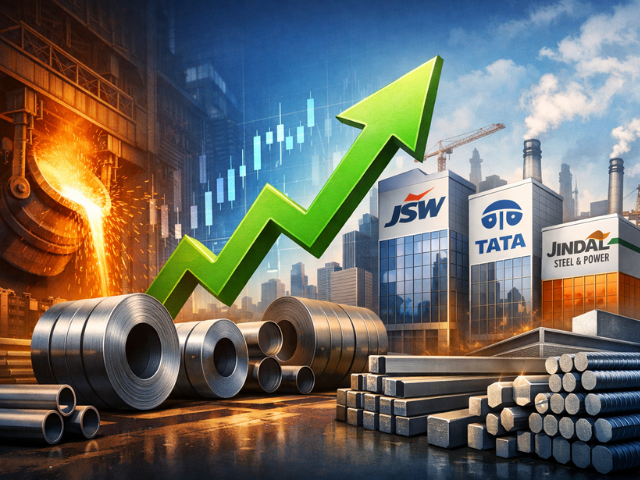
The announcement of safeguard duty boosting steel shares became one of the most talked about developments in Indian equity markets this year. Almost immediately, steel stocks rallied, with JSW Steel, Tata Steel and Jindal Steel leading the surge. For investors, this was not just a knee jerk reaction to a policy headline, but a signal of changing fundamentals in the domestic steel industry.
Safeguard duties are designed to protect local manufacturers from a sudden surge in imports. In India’s case, the move came at a time when global steel prices were under pressure and domestic producers were facing margin stress due to low cost imports. The policy intervention altered the demand supply equation overnight.
A safeguard duty is a temporary import duty imposed to protect domestic industries from serious injury caused by rising imports. Unlike anti dumping duties, safeguard duties do not target specific countries. They apply broadly and are permitted under World Trade Organization rules.
In India, such measures are notified after detailed investigation and recommendations by the Directorate General of Trade Remedies, under the Ministry of Commerce.
The Indian steel industry had been witnessing a steady rise in imports, particularly from countries with surplus capacity. Domestic producers flagged concerns over pricing pressure and underutilization of capacity. The safeguard duty was introduced to restore balance and give Indian manufacturers breathing space.
JSW Steel reacted positively as investors anticipated better realizations and improved margins. With lower import competition, domestic pricing power strengthened. Analysts also highlighted JSW’s operational efficiency and strong balance sheet as additional positives in a protected market environment.
Tata Steel’s Indian operations stood to benefit significantly from the safeguard duty. While its global exposure adds complexity, the domestic business gained pricing stability. The stock saw renewed buying interest from institutional investors looking for quality names within the steel space.
Jindal Steel and Power also emerged as a key beneficiary. With expanding capacity and exposure to infrastructure driven demand, the safeguard duty improved revenue visibility and earnings outlook.
The most immediate impact was on steel prices in the domestic market. Reduced import pressure allowed companies to stabilize prices, which is crucial in a capital intensive industry like steel where margins are highly sensitive to realizations.
With imports becoming less attractive, domestic producers saw better capacity utilization. This is especially important as India continues to invest heavily in infrastructure, housing and manufacturing under various government initiatives.
Ancillary sectors such as mining, logistics and capital goods also benefited indirectly. Higher steel production typically leads to increased demand across the value chain.
India is in the midst of a multi year infrastructure push, spanning roads, railways, power and urban development. Steel remains a core input for all these segments. The safeguard duty aligns policy support with long term demand growth.
Globally, steel markets have been volatile due to fluctuating demand from China and uneven recovery across economies. By insulating domestic producers from external shocks, the safeguard duty reduced earnings uncertainty for Indian companies.
Safeguard duties are temporary by nature. Investors should track government reviews and any changes in duty structure, as these can impact stock prices.
While pricing power improves, companies still face raw material and energy cost risks. Efficient players with captive resources or long term contracts are better positioned.
SEBI regulations ensure transparency in disclosures related to policy impact and earnings. Investors should rely on company filings and credible research rather than market speculation.
Policy driven rallies can be powerful but also volatile. Not every steel stock benefits equally. This is where structured research and disciplined investing become essential.
Platforms like Swastika Investmart, with SEBI registration, strong research tools and tech enabled investing platforms, help investors evaluate sectoral opportunities with clarity. Their focus on investor education and responsive customer support enables better decision making, especially during policy induced market moves.
What triggered the rally in steel stocks?
The announcement of safeguard duty on steel imports reduced competition from cheaper imports, improving pricing power for domestic producers.
Which steel companies benefited the most?
JSW Steel, Tata Steel and Jindal Steel were among the biggest beneficiaries due to their scale, domestic exposure and operational strength.
Is safeguard duty permanent?
No. Safeguard duties are temporary and subject to periodic review by the government.
Does this policy help long term investors?
It can improve near to medium term earnings visibility, but long term returns still depend on efficiency, demand growth and cost control.
The development where safeguard duty boosts steel shares highlights how policy decisions can reshape sector dynamics. The rally in JSW, Tata Steel and Jindal reflects renewed confidence in India’s steel industry amid infrastructure growth and regulatory support.
For investors, such phases offer opportunities but also demand careful analysis. With its SEBI registered framework, in depth research capabilities and investor focused approach, Swastika Investmart supports informed participation in evolving market trends.

The year 2025 will be remembered as a defining year for gold, silver and copper. Prices across all three metals surged sharply, creating what many analysts describe as one of the strongest commodity rallies in more than 40 years. Unlike short lived speculative spikes, this rally was backed by deep structural shifts in the global economy.
From central banks buying gold to the world accelerating towards electrification, the forces driving this rally were powerful and long term in nature. For Indian investors, the move had meaningful consequences, influencing inflation, currency movements, equity sectors and portfolio allocation decisions.
Gold and silver benefited heavily from global uncertainty. Persistent geopolitical tensions, uneven global growth and concerns around sovereign debt pushed investors towards traditional safe havens.
Central banks, particularly from emerging markets, continued adding gold to their reserves. This steady institutional demand created a strong price floor for gold, while silver followed closely due to its dual role as a precious and industrial metal.
While inflation cooled in parts of the world, it remained structurally higher than pre pandemic levels. Real interest rates stayed volatile, and currency fluctuations increased across major economies.
For investors, metals offered a hedge against purchasing power erosion. In India, the rupee’s movement against the dollar further amplified domestic gold and silver prices, making the rally more visible to retail participants.
Copper emerged as the standout performer of 2025. Often called the backbone of electrification, copper demand surged due to rapid investments in electric vehicles, renewable energy, data centers and grid infrastructure.
A single electric vehicle uses significantly more copper than a conventional car. Multiply this across global adoption, and the demand story becomes clear.
Unlike gold, copper supply cannot respond quickly to price signals. New mines take years to develop, and environmental approvals have become stricter worldwide. This supply rigidity met accelerating demand in 2025, creating a classic imbalance that pushed prices sharply higher.
For Indian markets, this translated into renewed interest in metal stocks and mining linked businesses.
Higher gold and silver prices affected jewellery demand, particularly during wedding and festive seasons. While volumes softened at times, value growth remained strong.
Copper prices influenced input costs for sectors like power, construction, cables and electronics. Companies with pricing power managed better, while others faced margin pressure.
Metal stocks regained leadership after years of underperformance. Investors rotated towards companies with exposure to mining, refining and metal processing.
At the same time, higher commodity prices acted as a double edged sword for manufacturing heavy sectors, making stock selection more critical.
From a regulatory standpoint, SEBI continued to strengthen commodity derivatives oversight, improving transparency and participation. Exchanges enhanced risk management norms, making commodity investing more robust for both hedgers and investors.
The 2025 rally reinforced the idea that metals are not just tactical trades. They play a strategic role in diversified portfolios, especially during periods of macro stress.
Gold provided stability, silver offered volatility with upside, and copper represented growth linked to global development.
Sharp rallies also bring sharp corrections. Investors chasing momentum without understanding fundamentals faced higher risk. This is where structured research, data driven insights and disciplined execution matter.
Platforms like Swastika Investmart, with SEBI registration, strong research tools and tech enabled investing solutions, help investors approach commodities with clarity rather than emotion. Continuous investor education and responsive customer support further add to informed decision making.
A retail investor who added gold to their portfolio for stability found protection during equity volatility. Another who understood the copper supply story benefited from exposure to metal linked equities. On the flip side, those entering late without a plan experienced drawdowns during interim corrections.
This contrast defined 2025 as much as the rally itself.
Why was 2025 considered a historic year for gold, silver and copper?
Because all three metals rallied together due to global uncertainty, inflation hedging and structural demand, something rarely seen at this scale in over 40 years.
Did Indian investors benefit from the metal rally?
Yes, through higher domestic prices, metal stocks, ETFs and improved portfolio diversification, though volatility remained high.
Is copper more of a growth metal than a safe haven?
Yes. Copper is closely linked to economic growth, electrification and infrastructure, unlike gold which is primarily a store of value.
Are commodities suitable for long term investors?
When used strategically and backed by research, commodities can enhance diversification and risk adjusted returns.
The gold, silver and copper defining year of 2025 reshaped how investors view commodities. This was not just a rally driven by fear or speculation, but one supported by structural changes in the global economy. For Indian markets, the impact was visible across inflation, equities and investor behavior.
Navigating such powerful trends requires more than headlines. It demands research, discipline and the right platform. Swastika Investmart, with its SEBI registered framework, advanced research capabilities and investor centric approach, supports investors in making informed choices across market cycles.

The record IPO fundraising in 2025 marked a defining moment for Indian capital markets. After years of cautious listings and selective investor appetite, 2025 saw a powerful resurgence, both in terms of the number of issues and the sheer amount of capital raised. At the center of this surge were two heavyweight names, Tata Capital and LG India, whose public issues not only grabbed headlines but also set the tone for the entire primary market.
For retail and institutional investors alike, this phase represented more than just big-ticket IPOs. It reflected confidence in India’s growth story, stronger regulatory oversight, and a maturing investor base willing to back quality businesses with long-term potential.
India entered 2025 with relatively stable macro indicators. GDP growth remained among the highest globally, corporate balance sheets improved, and inflation stayed within manageable limits. This environment created the perfect launchpad for large companies that had been waiting for the right time to go public.
Domestic mutual funds, insurance companies, and retail investors provided deep liquidity. Unlike earlier cycles where foreign flows dictated sentiment, Indian capital played a leading role in absorbing large IPO sizes.
SEBI’s continuous focus on disclosure quality, pricing transparency, and investor protection enhanced trust in the IPO process. Clearer guidelines around offer-for-sale, anchor investor allocation, and risk disclosures ensured that large issues could be executed smoothly without excessive volatility.
This regulatory stability was a key reason why marquee names chose 2025 to tap the markets.
The Tata Capital IPO was widely seen as one of the most anticipated financial services listings in recent years. As a diversified NBFC with exposure to retail lending, infrastructure finance, and corporate credit, Tata Capital offered investors a chance to participate in India’s credit growth story under the trusted Tata brand.
The issue attracted strong demand across categories, including long-term institutional investors, reflecting confidence in its governance standards and scalable business model.
Tata Capital’s listing re-rated the broader NBFC sector. Peer companies saw renewed investor interest, especially those with strong asset quality and prudent risk management. It also reinforced the idea that well-governed financial institutions could command premium valuations despite tighter regulatory norms.
LG India’s IPO was another highlight of the record IPO fundraising in 2025. With a deep footprint in Indian households across televisions, appliances, and electronics, LG’s public issue offered exposure to India’s consumption-led growth.
For investors, it combined global brand strength with local manufacturing, distribution, and demand dynamics.
The success of LG India encouraged other multinational subsidiaries to reconsider India as a listing destination. It showed that Indian markets could support large valuations while offering sufficient liquidity and analyst coverage for global businesses with strong domestic operations.
Unlike earlier IPO waves dominated by technology or PSU listings, 2025 saw balanced participation across financial services, consumer goods, manufacturing, and infrastructure. This diversification reduced concentration risk for investors allocating capital to primary markets.
Improved access through digital platforms, better investor education, and simplified application processes led to higher retail participation. However, with premium valuations in many issues, the importance of research-driven selection became even more critical.
Large IPOs increased market depth and free float, which in turn improved index representation and trading volumes. Over time, this strengthened India’s position in global emerging market indices.
Record fundraising often brings aggressive pricing. Investors need to assess earnings visibility, return ratios, and competitive positioning rather than getting swayed by brand names alone.
SEBI-mandated prospectus disclosures provide valuable insights into risks, use of funds, and promoter background. Reading these carefully can help avoid post-listing disappointment.
This is where platforms like Swastika Investmart add value. With SEBI-registered credentials, robust research frameworks, and tech-enabled investing tools, Swastika helps investors analyze IPOs objectively. Strong customer support and ongoing investor education further empower informed decision-making.
Why was 2025 a record year for IPO fundraising in India?
Strong economic growth, deep domestic liquidity, and regulatory stability encouraged large companies to go public.
What made Tata Capital’s IPO significant?
It offered exposure to India’s expanding credit market under a trusted corporate group, boosting confidence in NBFC listings.
How did LG India’s IPO impact the market?
It highlighted India’s attractiveness for multinational listings and strengthened the consumer sector’s presence in equity markets.
Are record IPO years risky for retail investors?
They can be if valuations are stretched. Careful analysis and long-term perspective are essential.
The record IPO fundraising in 2025 was not just about big numbers. It reflected India’s evolving capital markets, stronger governance, and growing investor sophistication. Listings like Tata Capital and LG India demonstrated that quality businesses, when priced and regulated well, can attract sustained interest across investor segments.
For investors navigating such dynamic phases, the right research, guidance, and technology make all the difference. Swastika Investmart, with its SEBI registration, in-depth research capabilities, and investor-first approach, stands out as a reliable partner in your investment journey.