%20(3).png)
Indian equity markets ended the first trading session of the New Year on a positive note on 1 January 2026, supported by steady buying in banking and technology stocks. Benchmark indices closed marginally higher, reflecting cautious optimism as investors began the year with selective positioning rather than aggressive risk-taking.
The overall tone of the market remained stable, with sector-specific strength helping indices maintain gains through the session.
At the close of trade today, key indices settled as follows:
The closing data highlights modest but broad-based strength, led primarily by IT and banking stocks.
The Nifty 50 closed marginally in the green, indicating a steady start to the New Year. Buying interest was visible in select large-cap stocks, while others remained range-bound. The index continued to consolidate near higher levels, suggesting that investors are waiting for stronger triggers such as earnings updates and global cues before taking decisive positions.
The muted yet positive close reflects disciplined participation rather than speculative momentum.
Bank Nifty outperformed the broader market, closing with healthy gains. The index benefited from selective buying in banking and financial stocks as investors remained confident about credit growth, asset quality stability, and regulatory clarity under RBI norms.
The strength in Bank Nifty also helped support the broader indices, reinforcing the role of financial stocks as market anchors during early-year sessions.
The standout performer today was the Nifty IT index, which closed significantly higher. IT stocks gained traction on the back of stable global technology cues, currency comfort, and expectations of steady demand visibility from overseas clients.
IT stocks often attract interest during periods of cautious market sentiment due to their defensive nature and export-linked earnings, which was clearly visible in today’s trade.
The first trading session of 2026 was marked by controlled volatility and selective participation. There were no major global shocks, allowing domestic factors to guide price action. Investors appeared focused on portfolio alignment rather than chasing quick gains.
Lower volumes, typical of early January sessions, also contributed to a measured market move.
As the market settles into the New Year, investors may keep an eye on:
For traders, disciplined risk management remains key, while long-term investors may continue to accumulate quality stocks gradually.
Navigating daily market movements requires timely insights and reliable research. Swastika Investmart, a SEBI-registered brokerage, empowers investors with:
Whether markets are trending or consolidating, having structured research and tools can make a meaningful difference.
The Indian stock market closed the first trading day of 2026 on a positive note, with gains led by Bank Nifty and Nifty IT. The calm and constructive close sets a steady tone for the days ahead, as investors focus on fundamentals and long-term opportunities.
If you’re planning to approach 2026 with a disciplined and informed strategy, Swastika Investmart is here to support your investing journey.
👉 Open your trading and investment account today
Stay informed. Trade smart. Invest with confidence.
%20(3).png)
Indian equity markets ended the first trading session of the New Year on a positive note on 1 January 2026, supported by steady buying in banking and technology stocks. Benchmark indices closed marginally higher, reflecting cautious optimism as investors began the year with selective positioning rather than aggressive risk-taking.
The overall tone of the market remained stable, with sector-specific strength helping indices maintain gains through the session.
At the close of trade today, key indices settled as follows:
The closing data highlights modest but broad-based strength, led primarily by IT and banking stocks.
The Nifty 50 closed marginally in the green, indicating a steady start to the New Year. Buying interest was visible in select large-cap stocks, while others remained range-bound. The index continued to consolidate near higher levels, suggesting that investors are waiting for stronger triggers such as earnings updates and global cues before taking decisive positions.
The muted yet positive close reflects disciplined participation rather than speculative momentum.
Bank Nifty outperformed the broader market, closing with healthy gains. The index benefited from selective buying in banking and financial stocks as investors remained confident about credit growth, asset quality stability, and regulatory clarity under RBI norms.
The strength in Bank Nifty also helped support the broader indices, reinforcing the role of financial stocks as market anchors during early-year sessions.
The standout performer today was the Nifty IT index, which closed significantly higher. IT stocks gained traction on the back of stable global technology cues, currency comfort, and expectations of steady demand visibility from overseas clients.
IT stocks often attract interest during periods of cautious market sentiment due to their defensive nature and export-linked earnings, which was clearly visible in today’s trade.
The first trading session of 2026 was marked by controlled volatility and selective participation. There were no major global shocks, allowing domestic factors to guide price action. Investors appeared focused on portfolio alignment rather than chasing quick gains.
Lower volumes, typical of early January sessions, also contributed to a measured market move.
As the market settles into the New Year, investors may keep an eye on:
For traders, disciplined risk management remains key, while long-term investors may continue to accumulate quality stocks gradually.
Navigating daily market movements requires timely insights and reliable research. Swastika Investmart, a SEBI-registered brokerage, empowers investors with:
Whether markets are trending or consolidating, having structured research and tools can make a meaningful difference.
The Indian stock market closed the first trading day of 2026 on a positive note, with gains led by Bank Nifty and Nifty IT. The calm and constructive close sets a steady tone for the days ahead, as investors focus on fundamentals and long-term opportunities.
If you’re planning to approach 2026 with a disciplined and informed strategy, Swastika Investmart is here to support your investing journey.
👉 Open your trading and investment account today
Stay informed. Trade smart. Invest with confidence.

The cigarette tax hike announced by the Centre, effective February 1, has once again put the tobacco sector under the spotlight. While tax increases on cigarettes are not new in India, every such move has implications beyond public health. It affects company earnings, government revenues, consumer behavior, and stock market sentiment.
For investors, this development raises familiar questions. Will cigarette companies be able to pass on the higher tax burden? Will volumes take a hit? And how should portfolios respond to renewed regulatory pressure?
This blog breaks down the latest excise duty change, its likely market impact, and what investors should keep in mind.
The Centre has imposed a fresh increase in excise duty on cigarettes, effective from February 1. This duty is levied over and above GST and varies based on cigarette length and filter type.
While the exact increase differs across categories, the intent is clear: raise government revenue while discouraging consumption.
Cigarettes are among the most heavily taxed products in India. Apart from GST, they attract compensation cess and excise duty. Periodic hikes are aligned with public health objectives and fiscal needs.
Such measures are typically notified through changes in excise schedules under the Central Excise Act.
Historically, large cigarette manufacturers have demonstrated strong pricing power. In many past instances, companies have passed on tax hikes through price increases without a sharp fall in volumes.
However, sustained hikes can gradually push consumers towards cheaper alternatives or illicit products, especially in price sensitive markets.
In the near term, margins may face pressure if companies absorb part of the tax increase to protect volumes. Over time, margins stabilize if price hikes are fully passed on.
Investors closely watch how quickly and effectively companies adjust retail prices after such announcements.
Whenever a cigarette tax hike is announced, tobacco stocks often react negatively in the short term. The uncertainty around volumes and margins leads to cautious investor sentiment.
However, history shows that strong players tend to recover as clarity on pricing and demand emerges.
Despite regulatory headwinds, cigarette businesses generate strong cash flows due to low capital intensity. This makes them attractive from a dividend and balance sheet perspective, provided regulatory risks remain manageable.
The cigarette tax hike could weigh on broader FMCG sentiment in the near term, especially for companies with exposure to tobacco. However, diversified FMCG players with non tobacco revenue streams are better positioned to absorb shocks.
Cigarettes remain a significant source of indirect tax revenue. The hike is expected to support fiscal collections, especially in a period where the government balances growth with fiscal discipline.
Repeated tax hikes may encourage down trading or increased use of non duty paid products. This remains a structural risk for the legal cigarette industry and a key variable for long term forecasts.
A cigarette tax hike does not automatically translate into long term value erosion. Investors should assess company specific factors such as pricing strategy, brand strength, and cost control.
Management commentary in upcoming earnings calls will provide insights into volume trends and pricing actions. This information is crucial for making informed decisions.
The government aims to raise revenue and discourage consumption due to public health concerns.
Most likely, manufacturers may raise prices to pass on the higher excise duty, though the timing may vary.
Stocks often face short term pressure, but long term impact depends on pricing power and volume resilience.
Yes, leading players continue to generate strong cash flows, though regulatory risks remain a constant factor.
The latest cigarette tax hike effective February 1 reinforces the regulatory risks associated with the tobacco sector. While short term uncertainty is inevitable, long term outcomes depend on how companies manage pricing, volumes, and compliance.
For investors, this is a reminder to stay informed and research driven rather than reactive. With its strong research framework, investor education initiatives, and customer centric approach, Swastika Investmart helps investors navigate such regulatory developments with clarity and confidence.

Monthly auto sales numbers are among the most closely tracked indicators in the Indian equity markets. They offer early signals on consumer demand, rural income trends, infrastructure activity, and overall economic momentum.
The December auto sales boost has caught market attention, especially with Escorts Kubota and SML Mahindra delivering standout growth. At a time when investors were cautious about demand sustainability, these numbers have added fresh confidence to the auto and auto ancillary space.
Escorts Kubota’s sharp rise in December sales reflects improving rural sentiment. Higher minimum support prices, better reservoir levels, and stable crop realizations have supported farm incomes. Tractors remain a key indicator of rural capital spending, and Escorts Kubota appears to be benefiting directly from this trend.
The company’s diversified product portfolio across mid and high horsepower segments has helped it capture demand from both small farmers and commercial users. Strong dealer networks in north and west India have also supported timely deliveries during the peak season.
Following the December auto sales boost, Escorts Kubota’s stock saw renewed buying interest. Investors are factoring in better volume visibility and operating leverage as capacity utilization improves.
SML Mahindra’s 67% sales growth stands out even within a strong month for autos. The surge reflects a recovery in light and intermediate commercial vehicles, supported by rising logistics activity and last mile delivery demand.
Government spending on roads, housing, and public transport continues to drive demand for buses and haulage vehicles. Additionally, fleet operators are replacing older vehicles due to tighter emission norms and better financing availability.
For a relatively smaller player, such strong growth changes the narrative. The December auto sales boost has positioned SML Mahindra as a turnaround candidate, attracting interest from investors looking beyond large cap auto names.
Tractors, two wheelers, and entry level commercial vehicles are all closely linked to rural demand. December sales suggest that the rural slowdown fears may be easing, at least in pockets where crop output and cash flows remain healthy.
NBFCs and banks have maintained credit flow to vehicle buyers, supported by stable interest rates and improving asset quality. This has helped convert demand into actual sales, particularly in the commercial vehicle segment.
Indian auto companies have adjusted well to emission norms and safety regulations. With most transition costs now absorbed, incremental volumes are translating into better margins, a positive sign for equity markets.
The December auto sales boost has reinforced the auto sector’s role as a market leader during economic recovery phases. Stocks linked to tractors, commercial vehicles, and auto components have seen higher trading volumes and improved sentiment.
Higher vehicle production supports auto ancillary companies involved in engines, axles, tyres, and castings. This creates broader participation across mid cap and small cap segments.
While December numbers are encouraging, sustainability matters. Investors should track upcoming quarterly results, margin trends, and management commentary on demand visibility before taking long term positions.
Strong monthly sales data often leads to short term rallies. Long term investors should focus on companies with strong balance sheets, pricing power, and execution capabilities rather than chasing momentum alone.
Escorts Kubota benefited from improved rural demand, better farm income visibility, and a strong product mix in the tractor segment.
The growth was driven by recovery in light commercial vehicles, infrastructure led demand, and fleet replacement cycles.
Not necessarily. Monthly data is an indicator, but investors should track consistency, margins, and future order visibility.
Better sales often improve earnings expectations, leading to positive stock sentiment, especially in cyclical sectors like autos.
The December auto sales boost has delivered a positive surprise for Indian markets. Escorts Kubota’s 38.5% jump and SML Mahindra’s 67% surge highlight improving demand dynamics in both rural and commercial segments.
While near term sentiment has turned upbeat, smart investing still requires careful analysis and risk management. With its strong research ecosystem, investor education focus, and customer centric approach, Swastika Investmart supports investors in navigating such sectoral opportunities with confidence.

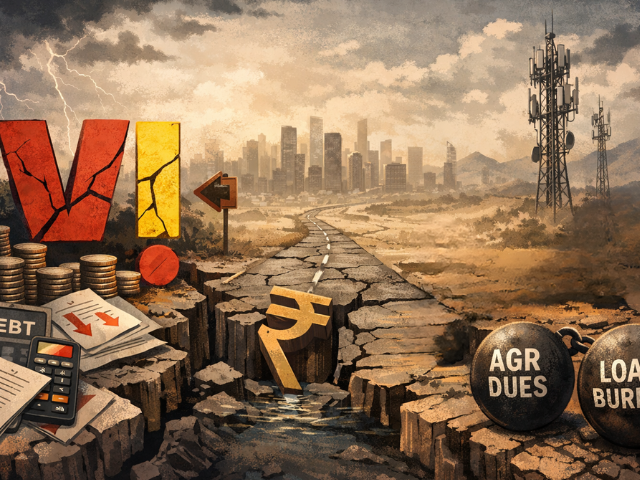
Vodafone Idea’s AGR dues have become one of the most debated issues in India’s telecom sector. For investors, policy watchers, and even everyday mobile users, the question is simple yet crucial: can Vodafone Idea survive under the weight of massive adjusted gross revenue liabilities?
Once a strong challenger in India’s telecom market, Vodafone Idea today represents the fragile balance between regulation, competition, and financial sustainability. Its AGR dues are not just a company problem but a systemic issue with implications for banks, markets, and consumers.
This blog breaks down what lies ahead for Vodafone Idea, what the numbers really mean, and how this situation could shape the future of Indian telecom.
Adjusted Gross Revenue refers to the share of revenue that telecom operators must pay to the government as license fees and spectrum usage charges. In 2019, the Supreme Court ruled that AGR should include not just core telecom revenue but also non telecom income such as interest and rent.
This ruling led to massive retrospective liabilities for telecom companies, with Vodafone Idea emerging as the worst hit.
Vodafone Idea was already dealing with losses due to intense price competition and high debt from past spectrum auctions. The AGR ruling added tens of thousands of crores in dues, pushing the company into a severe liquidity crisis.
Vodafone Idea’s AGR dues run into tens of thousands of crores, making them one of the largest corporate liabilities owed to the government. Even after relief measures like moratoriums and conversion of interest into equity, the dues remain a major overhang.
The government has taken several steps to prevent a market duopoly:
These steps have bought time but have not solved the core issue of long-term profitability.
Vodafone Idea needs fresh capital to survive. Without new equity or strategic investments, meeting future AGR payment schedules will be extremely challenging. The company has repeatedly indicated plans to raise funds, but investor appetite depends on clarity around cash flows and policy stability.
Industry wide tariff hikes have improved average revenue per user. For Vodafone Idea, higher tariffs are essential to generate sustainable operating cash flows. However, tariff increases must balance consumer affordability, especially in price sensitive rural markets.
Even as it struggles financially, Vodafone Idea must invest in network quality and 5G readiness. Falling behind peers on technology could lead to further subscriber losses, creating a vicious cycle.
If Vodafone Idea exits or weakens significantly, India risks moving towards a duopoly. Reduced competition could eventually hurt consumers through higher tariffs and slower innovation.
Vodafone Idea’s debt exposure affects banks and institutional investors. Any adverse development could impact sentiment in telecom related stocks and increase caution toward highly leveraged sectors.
The AGR episode has become a case study in regulatory risk. How the government balances revenue collection with sector sustainability will influence long-term investor confidence in regulated industries.
Vodafone Idea’s stock remains a high risk bet. Price movements are often driven by news flow around government relief, fundraising, or policy changes rather than fundamentals.
For investors, the AGR saga highlights the importance of:
Platforms like Swastika Investmart help investors analyze such risks with structured research tools and SEBI registered advisory frameworks.
Vodafone Idea can meet near term obligations only with continued government support and successful capital raising. Long-term sustainability depends on profitability and tariff growth.
No waiver has been granted. Relief has come in the form of moratoriums, equity conversion, and payment restructuring.
While immediate bankruptcy risk has reduced, financial stress remains high. The company’s future hinges on funding and operational turnaround.
In the long run, high sector costs can lead to higher tariffs and reduced competition, impacting consumer choice.
In complex cases like Vodafone Idea, informed decision making is critical. Swastika Investmart stands out through:
Whether tracking telecom stocks or building a diversified portfolio, having the right research partner makes a real difference.
Vodafone Idea’s AGR dues represent more than a balance sheet issue. They reflect the evolving relationship between regulation, competition, and sustainability in Indian telecom. While government support has kept the company afloat, the road ahead remains challenging.
For investors, this episode reinforces the need for disciplined analysis and reliable advisory support. With its research driven approach and investor first philosophy, Swastika Investmart empowers market participants to navigate such high risk narratives with confidence.
.png)
Indian equity markets began the first trading session of the New Year on a positive note on 1 January 2026, reflecting steady investor confidence and supportive early cues. Benchmark indices opened marginally higher, indicating cautious optimism as participants step into the new calendar year.
With global markets offering mixed but stable signals, domestic investors appear focused on selective buying rather than aggressive positioning. The opening tone suggests an orderly start, with emphasis on quality stocks and key index heavyweights.
At the opening bell on 1 January 2026, major indices were trading as follows:
The mild gains across indices indicate stable participation from investors as the market sets the tone for the year ahead.
The Nifty 50 opened higher, continuing its consolidation near record levels. Early buying interest in select large-cap stocks helped the index maintain positive territory, reflecting confidence without signs of overextension.
This opening move highlights a balanced approach by market participants, where optimism is tempered with caution at elevated valuations.
The Bank Nifty opened in the green, signaling stability in banking stocks. While gains were moderate, the index’s ability to sustain above key levels continues to support overall market sentiment.
Both private and PSU banks remained in focus, as investors track institutional activity and sector-specific developments at the start of the year.
The Nifty IT index opened with modest gains, supported by selective buying in technology stocks. Stable global tech cues and defensive positioning helped the sector maintain a positive bias in early trade.
IT stocks often attract steady interest during periods of market consolidation due to earnings visibility and export-linked revenues.
Global markets remained mixed overnight, providing limited directional cues. In the absence of major global triggers, domestic markets are likely to remain guided by:
Low volatility in early trade suggests a disciplined and measured market environment.
For traders, disciplined risk management remains essential, while long-term investors may continue to focus on fundamentally strong opportunities.
Tracking daily market movements requires timely insights and dependable research. Swastika Investmart, a SEBI-registered brokerage, empowers investors through:
Whether markets are trending or consolidating, the right tools and research can make a meaningful difference.
The market opening on 1 January 2026 reflects a calm and positive start to the New Year, with benchmark indices trading marginally higher. While optimism is visible, investors remain selective and disciplined in their approach.
If you’re planning your investment journey for 2026, partnering with a trusted and research-driven platform can help you stay ahead.
👉 Open your account today with Swastika Investmart
Stay informed. Trade smart. Invest with confidence.

.png)
The first trading session of a new calendar year often sets the tone for short-term market direction. For Indian equities, 01 January 2026 begins with a blend of cautious global cues and strong domestic institutional participation.
With global markets largely shut due to New Year holidays, liquidity remains lighter. In such environments, institutional data, derivatives positioning, and technical levels carry greater significance than headline-driven momentum.
This market set-up provides valuable insight into how traders and investors should approach the opening phase of 2026 with discipline and clarity.
Global cues remain mildly cautious as the year begins.
Key highlights include:
With limited global direction, Indian markets are likely to rely more on domestic flows and technical structure rather than overnight triggers.
Institutional flow data reveals an important divergence.
In the cash market:
This pattern highlights a recurring trend in Indian markets, where domestic institutions act as stabilisers during phases of foreign selling. Such behaviour often limits downside volatility and provides confidence to long-term investors.
For retail participants, this reinforces the importance of tracking net institutional flows rather than isolated selling pressure.
Futures and options data suggests a neutral to cautious market structure.
Key observations:
FII activity in index derivatives shows mixed positioning, with both long and short exposures visible. This indicates lack of aggressive directional conviction, common during holiday-thinned sessions.
From a technical perspective, Nifty is showing signs of short-term pressure.
Current structure indicates:
Unless Nifty decisively reclaims key averages, traders may continue to adopt a cautious approach, focusing on range-based strategies rather than directional bets.
Bank Nifty continues to display relative stability compared to the broader index.
Key technical observations:
This sideways structure suggests that stock-specific action within banking names may outperform index-level movement until a clear breakout emerges.
The 01 January 2026 market set-up points to a measured and selective approach.
Traders may consider:
Investors may focus on:
Early-year sessions often reward patience over urgency.
Market phases with mixed signals require structured decision-making. Relying on verified data, technical levels, and institutional behaviour helps reduce emotional bias.
SEBI-regulated research platforms play a crucial role by offering:
This disciplined approach becomes especially important at the start of a new calendar year.
Swastika Investmart combines regulatory compliance with research depth to support informed investing.
Key strengths include:
Such a framework helps investors navigate evolving market conditions responsibly.
👉 Open your trading and investment account today
Is the first trading session of the year important for markets?
Yes, it provides early clues about sentiment, institutional behaviour, and risk appetite, though trends develop gradually.
Why do DIIs often buy when FIIs sell?
Domestic institutions focus on long-term allocation strategies and often step in to stabilise markets during volatility.
How useful is derivatives data during low-volume sessions?
It helps identify key support and resistance levels but should be used alongside price action.
Should traders avoid markets during holiday weeks?
Not necessarily, but position sizing and risk management become more important due to lower liquidity.
The market set-up for 01 January 2026 reflects a balanced yet cautious environment. While global cues remain mixed, strong domestic institutional participation and defined technical levels offer structure to market participants.
Rather than chasing early moves, investors and traders can benefit from discipline, research-backed insights, and risk-aware strategies as the year begins.
If you are looking for a reliable research partner and a SEBI-registered platform to navigate Indian markets with confidence, Swastika Investmart stands ready to support your journey.


Trust Our Expert Picks
for Your Investments!


%20(2).png)
Indian equity markets began the session on 26 December 2025 on a soft note, reflecting cautious investor sentiment after recent market gains. Both benchmark indices opened in the red as participants remained selective, tracking mixed global cues and stock-specific developments.
With year-end approaching, trading volumes are expected to remain moderate, keeping volatility range-bound.
At the opening bell on 26 December 2025, benchmark indices showed mild weakness.
The Nifty 50 opened at 26,121.25, down 0.08 percent, as selling pressure emerged in select heavyweights. The index is currently consolidating near record-high zones, leading to profit booking in early trade.
The Bank Nifty opened lower at 59,092.85, declining 0.15 percent, dragged by selling in select banking stocks.
Global market sentiment remains mixed as investors continue to track:
• Developments in global interest rates
• Inflation data from major economies
• Geopolitical developments
• Currency and bond market movements
Weakness in Asian markets and cautious overnight cues from Wall Street influenced Indian markets at the opening on 26 December 2025.
The Nifty 50 remains in a broader uptrend, but near-term consolidation is visible.
• Immediate support near 26,050
• Major support around 26,000
• Immediate resistance near 26,200
• Break above resistance may trigger fresh momentum
As long as Nifty holds above key support zones, the broader structure remains intact.
The Bank Nifty continues to trade with mild pressure due to profit booking in frontline banking stocks.
• Immediate support near 58,900
• Strong support around 58,700
• Resistance placed near 59,400
• Break above resistance could improve sentiment
Banking stocks remain crucial for overall market direction.
At the start of trade on 26 December 2025, sectoral indices showed mixed trends:
• Banking and financial stocks traded weak
• IT stocks showed mild caution amid global tech cues
• FMCG stocks remained stable
• Auto and metal stocks saw selective buying
Broader markets also traded cautiously, indicating stock-specific action.
Institutional flows continue to play an important role in market movement.
• FII positioning remains cautious amid global uncertainty
• DII participation continues to support market stability
Sustained domestic institutional support is helping limit downside in the broader market.
For the trading session on 26 December 2025, traders may consider:
• Avoid aggressive positions at the opening
• Focus on stock-specific opportunities
• Trade with strict stop-loss
• Watch reaction near key support and resistance levels
Volatility may remain limited unless fresh global cues emerge.
Swastika Investmart empowers market participants with:
• Real-time market updates
• Research-backed trading insights
• Advanced, tech-enabled trading platforms
• Dedicated customer support
Our SEBI-registered framework ensures disciplined and informed investing.
The Indian stock market opened on 26 December 2025 with mild weakness, reflecting cautious sentiment amid mixed global cues and year-end positioning.
As the session progresses, global developments, banking stocks, and institutional flows will guide market direction.

The H-1B rule change has once again brought the Indian IT sector into sharp focus. For decades, Indian IT companies have relied on a mix of offshore talent in India and onsite professionals in the United States to deliver cost-efficient technology services. Any change to the H-1B visa framework naturally raises concerns around costs, margins, and competitiveness.
But does this mark a genuine structural headwind for Indian IT companies, or is it another policy challenge the sector can adapt to? This blog takes a grounded look at the issue, separating short-term noise from long-term fundamentals.
The H-1B visa program allows US companies to employ skilled foreign workers in specialized roles such as software development, data analytics, and engineering. Indian professionals account for a large share of H-1B approvals, making the program critical for Indian IT services companies.
Proposed and periodic changes to H-1B rules often focus on higher wage thresholds, stricter eligibility criteria, and greater scrutiny of visa applications. These measures aim to protect domestic employment in the US but can raise operating costs for companies dependent on onsite staffing.
For Indian IT firms, onsite presence is essential not just for execution but also for client engagement, project oversight, and trust-building.
Stricter H-1B norms can push companies to hire more local talent in the US, which comes at a higher cost. This can lead to near-term margin pressure, especially for mid-sized IT firms with limited pricing power.
Large players such as TCS, Infosys, and HCLTech have already factored in such risks over the years. Their margins may compress slightly, but strong balance sheets and scale help absorb the impact.
Indian IT companies have steadily reduced their dependence on visas by expanding offshore delivery and increasing localization in key markets. Many firms now execute a significant portion of work remotely from India or near-shore centers.
This shift limits the long-term damage from visa restrictions and highlights the sector’s ability to adapt.
A structural headwind permanently alters an industry’s growth potential. The H-1B rule change does not fully meet that definition.
Demand for technology services continues to grow as enterprises invest in cloud migration, cybersecurity, artificial intelligence, and digital transformation. These trends are independent of visa policies.
The real challenge lies in execution. Companies that move faster toward automation, outcome-based pricing, and global talent diversification will emerge stronger.
Smaller IT firms with heavy reliance on onsite billing may struggle, while large, diversified players remain resilient.
Historically, news around H-1B restrictions has triggered short-term volatility in Indian IT stocks. Investors often react first and analyze later.
However, past cycles show that quality IT companies recover once clarity emerges. Indian equity markets have learned to differentiate between headline risk and fundamental damage.
From a regulatory standpoint, Indian IT companies remain compliant with SEBI disclosure norms, ensuring transparency around risks and guidance. This allows investors to assess impact rationally rather than emotionally.
Interestingly, stricter visa norms may accelerate positive structural shifts.
Indian IT firms are investing more in local hiring, upskilling, and automation. This improves client perception and reduces long-term dependence on immigration policies.
Additionally, higher wage costs can push companies toward higher-value services, improving revenue quality over time.
For investors, the key is to avoid blanket assumptions.
Not all IT companies are equally exposed. Market leaders with strong client relationships, diversified geographies, and digital-heavy revenue streams are better placed.
Rather than exiting the sector entirely, investors may need to become more selective and focus on balance sheet strength, client mix, and execution capability.
Policy changes like the H-1B rule update require informed interpretation, not knee-jerk reactions. Swastika Investmart, a SEBI-registered brokerage, supports investors with in-depth sector research, earnings analysis, and scenario-based insights.
With tech-enabled investing platforms, responsive customer support, and a strong focus on investor education, Swastika Investmart helps investors separate short-term uncertainty from long-term opportunity.
Will H-1B rule changes hurt Indian IT growth permanently?
Unlikely. They may impact margins temporarily, but demand for technology services remains strong.
Which IT companies are most affected?
Mid-sized firms with higher onsite dependency face greater risk than large diversified players.
Have Indian IT companies prepared for such changes?
Yes. Most large firms have increased localization and offshore delivery over the years.
Does this impact long-term investors?
Long-term investors should focus on company fundamentals rather than short-term policy changes.
Will automation reduce reliance on visas?
Yes. Automation and remote delivery models reduce the need for large onsite teams.
The H-1B rule change is a challenge, but not a crisis for the Indian IT sector. While near-term pressures on costs and margins are possible, the industry’s adaptability, scale, and global relevance remain intact.
For investors who want to navigate such policy-driven volatility with clarity and confidence, Swastika Investmart offers the research depth, tools, and guidance needed to make informed decisions.

The announcement that Vikram Engineering has bagged a ₹2,035 crore solar EPC order has caught the attention of market participants across Dalal Street. In a sector where order inflows often drive sentiment, such a large contract naturally raises expectations around revenue growth, execution strength, and future profitability.
But for investors, the real question goes beyond the headline. What does this order actually mean for Vikram Engineering’s stock? Is it a turning point or simply another milestone in a competitive EPC landscape? This blog breaks down the implications with a balanced, fundamentals-driven lens.
The ₹2,035 crore order is part of a large-scale solar power project aligned with India’s renewable energy expansion plans. EPC contracts typically include engineering, procurement, and construction, making execution quality as important as order size.
For Vikram Engineering, this order significantly enhances revenue visibility over the next few years. It also reinforces the company’s credibility in handling large and complex renewable projects, an area where client confidence plays a crucial role.
In practical terms, such orders usually translate into phased revenue recognition, depending on project milestones and timelines.
India’s renewable energy push is no longer aspirational. It is policy-backed and execution-driven. With government targets focused on expanding solar capacity, EPC players are seeing increased tender activity and competitive bidding.
Against this backdrop, Vikram Engineering’s order win signals its ability to compete effectively. It also places the company firmly within a sector that enjoys long-term structural tailwinds rather than short-term cyclical demand.
From an Indian market perspective, renewable-focused announcements often attract both institutional and retail interest, especially when backed by tangible order inflows.
A ₹2,035 crore order meaningfully boosts the company’s order book. This improves revenue predictability and supports growth visibility, particularly if execution stays on schedule.
However, investors should remember that EPC businesses are execution-led. Revenue realization depends on timely procurement, construction efficiency, and client approvals.
Solar EPC margins tend to be competitive. While scale helps, profitability depends on procurement efficiency, commodity price management, and project planning.
If Vikram Engineering manages costs well, the order can contribute positively to operating margins. Any delays or cost overruns, however, could pressure profitability.
Large EPC orders often demand higher working capital. Monitoring receivables, advances, and cash flow cycles will be important as the project progresses.
Historically, EPC stocks often see an initial positive reaction to large order wins. However, sustained stock performance depends on follow-through execution and quarterly updates.
Markets tend to reward consistency rather than one-off announcements. If Vikram Engineering demonstrates steady execution and improving financial metrics, investor confidence is likely to strengthen over time.
Short-term volatility is common, especially if broader market sentiment turns risk-averse.
Despite the positive headline, risks remain.
Project execution risk is inherent in EPC businesses. Delays due to supply chain issues, regulatory approvals, or weather conditions can affect timelines.
Competition in the solar EPC space is intense. Pricing pressure remains a reality, especially as more players chase large renewable projects.
Policy clarity is supportive, but changes in tender norms or payment cycles can impact cash flows. Investors should also track commodity price movements, which influence input costs.
India’s renewable energy expansion is supported by policy initiatives and long-term targets. Solar EPC players benefit from this ecosystem, though compliance and execution standards remain high.
As a listed company, Vikram Engineering operates under SEBI disclosure requirements, ensuring transparency around order inflows, execution progress, and financial performance. This regulatory oversight helps investors track developments with clarity.
For long-term investors, the key lies in separating signal from noise. A large order is a positive indicator, but not a guarantee of value creation.
Tracking quarterly execution updates, margin trends, and cash flow discipline will provide a clearer picture than headline numbers alone.
Those with a higher risk appetite may see opportunities during market corrections, while conservative investors may prefer to wait for execution visibility.
Interpreting EPC order wins requires context, not just enthusiasm. Swastika Investmart, a SEBI-registered brokerage, supports investors with detailed research, sector insights, and execution-focused analysis.
With tech-enabled investing platforms, strong customer support, and a commitment to investor education, Swastika Investmart helps investors evaluate whether such announcements translate into sustainable shareholder value.
Is the ₹2,035 crore order positive for Vikram Engineering?
Yes, it improves order book strength and revenue visibility, subject to smooth execution.
Will this immediately boost profits?
Profit impact depends on execution pace, cost control, and margin management.
Is the solar EPC sector competitive?
Yes, competition is high, making execution capability a key differentiator.
Should investors buy the stock on this news?
Investment decisions should consider valuation, execution track record, and risk appetite.
Does policy support reduce risk?
Policy support helps demand, but project-level risks still exist.
Vikram Engineering’s ₹2,035 crore solar EPC order is a meaningful development that strengthens its growth visibility and reinforces its position in India’s renewable energy ecosystem. While the opportunity is clear, execution will ultimately determine shareholder value.
For investors seeking clarity amid market-moving announcements, Swastika Investmart offers the research depth, tools, and guidance needed to make informed, disciplined decisions.

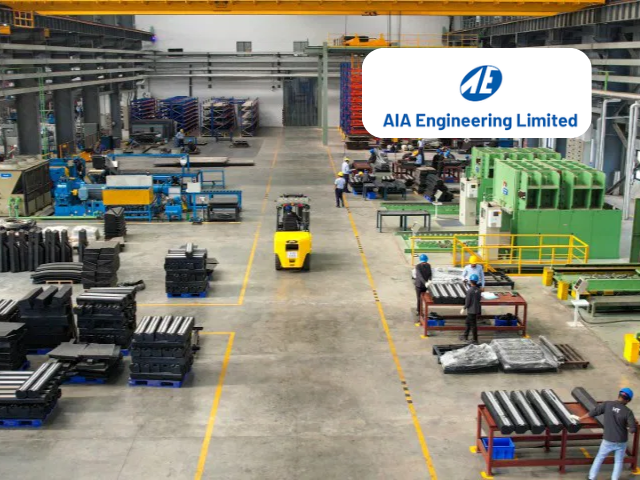
Among Indian manufacturing companies with global relevance, AIA Engineering fundamental analysis often leads to one key question. Is this business close to a monopoly?
AIA Engineering Ltd is a global leader in high-chrome grinding media and wear-resistant castings used primarily in cement and mining industries. These products are mission-critical consumables. Once approved by customers, they are rarely replaced by alternatives. This creates a business that behaves like a near monopoly without being one in a legal sense.
For long-term Indian investors focused on quality, stability, and capital preservation, AIA Engineering stands out as a quietly powerful compounder.
AIA Engineering supplies grinding media used in crushing and grinding operations. These operations run continuously, and the grinding media wears out over time. Replacement is not optional.
A cement plant or mining operation cannot afford inconsistent quality. Even a minor drop in grinding efficiency can increase power costs, reduce throughput, and cause unplanned shutdowns. This makes performance more important than price.
Once AIA Engineering’s products are approved, customers tend to stick for years. This repeat demand creates predictable revenues and strong visibility, a rare feature in industrial manufacturing.
Exports form a significant share of revenues, giving the company geographic diversification and reducing dependence on the Indian infrastructure cycle.
Switching grinding media suppliers is risky. Every mill behaves differently, depending on ore hardness, mill design, and operating conditions. AIA Engineering customizes its alloy composition and product design for each client.
Once this customization is validated, customers avoid switching due to operational risk. This creates monopoly-like behavior without formal market dominance.
The real moat lies in knowledge, not machinery. Decades of metallurgical data, testing, and process optimization give AIA Engineering a clear edge. New entrants can buy machines, but replicating experience takes years.
While competitors exist, very few operate at AIA Engineering’s scale with similar consistency, global reach, and product performance. This allows AIA Engineering to command pricing power without aggressive competition.
AIA Engineering’s financials reinforce its competitive position.
Over the long term, revenues have grown at around 7 to 8 percent, while profits have grown between 9 and 13 percent. This indicates improving efficiency and operating leverage.
Operating margins remain strong at nearly 27 to 28 percent, which is exceptional for a manufacturing company. These margins reflect product differentiation and pricing power rather than cost cutting alone.
The balance sheet is a major strength. The company operates with very low debt and high interest coverage, keeping financial risk minimal. Strong operating cash flows fund expansion and dividends without stressing capital.
Return ratios are stable and healthy. ROE around 15 percent and ROCE close to 19 percent indicate efficient capital use without leverage-driven risk.
At current levels, AIA Engineering trades at a P/E multiple of around 31 times. This is clearly a premium valuation compared to traditional manufacturing peers.
However, the premium reflects its near-monopoly economics, predictable cash flows, and balance sheet strength. The stock may not offer sharp short-term upside, but it suits investors looking for steady compounding and downside protection.
This makes AIA Engineering more suitable for long-term portfolios than for tactical trading strategies.
End-user industries such as cement and mining are cyclical. During global slowdowns, volume growth can soften, even though replacement demand offers some cushion.
Raw material price volatility can temporarily impact margins, especially if cost pass-through lags. Currency fluctuations also affect earnings due to export exposure.
Valuation risk is real. Buying at high multiples limits short-term returns if growth slows.
AIA Engineering reflects India’s evolution from low-cost manufacturing to high-value engineering exports. Its success strengthens India’s position in global industrial supply chains.
As a listed company, it follows SEBI disclosure norms and maintains transparent reporting. This regulatory framework enhances investor confidence and aligns with long-term investing principles.
Understanding near-monopoly businesses requires deeper analysis beyond surface metrics. Swastika Investmart, a SEBI-registered brokerage, provides in-depth equity research, sector insights, and advanced analytical tools to support informed investing.
With tech-enabled platforms, strong customer support, and a focus on investor education, Swastika Investmart helps investors evaluate quality businesses like AIA Engineering with clarity and discipline.
Is AIA Engineering a monopoly?
No, but it displays near-monopoly characteristics due to high switching costs and technical expertise.
Why are margins so high for a manufacturing company?
Strong pricing power, customization, and customer stickiness support superior margins.
Is export exposure a risk?
Exports add diversification, though currency movements can affect short-term results.
Is the stock suitable for short-term investors?
It is better suited for long-term investors focused on stability rather than quick gains.
Does valuation limit future returns?
Premium valuation may cap short-term upside, but long-term compounding remains attractive.
AIA Engineering’s fundamental analysis reveals a business with near-monopoly economics, strong financial discipline, and predictable demand. While valuations are premium, the company remains a high-quality compounder for patient investors seeking consistency and capital protection.
For investors looking to analyze such businesses with confidence and structure, Swastika Investmart offers the research depth, technology, and support needed to make informed decisions.
%20(1).png)
Indian equity markets opened on a mixed note today as investors remain cautious amid global uncertainty and stock-specific action.
While benchmark indices showed limited movement, the broader tone suggests a wait-and-watch approach at the start of the session.
The Nifty 50 opened marginally lower at 26,170.65, down 0.02 percent, reflecting muted sentiment among frontline stocks.
The index is currently consolidating near higher levels after recent gains. Profit booking in select heavyweights is keeping upside capped, while buying interest at lower levels continues to provide support.
• Immediate support near 26,100
• Strong support around 26,000
• Resistance seen near 26,250
• Break above resistance may open further upside
Traders are advised to remain cautious and avoid aggressive positions until a clear directional trend emerges.
The Bank Nifty opened slightly higher at 59,322.95, gaining 0.04 percent, supported by selective buying in private sector banks.
Despite global rate uncertainty, banking stocks continue to show resilience due to stable asset quality expectations and improving credit growth outlook in India.
• Immediate support near 59,000
• Strong support around 58,800
• Resistance placed near 59,600
• Sustained move above resistance may attract momentum buying
Global markets are trading mixed, with investors closely tracking macroeconomic data, interest rate expectations, and geopolitical developments.
In the domestic market, sentiment remains balanced as participants focus on:
• Corporate earnings outlook
• Institutional flows
• Global market direction
• Stock-specific developments
FII and DII activity will remain a key trigger during the session, especially in heavyweight stocks.
At the opening bell, sectoral performance is mixed:
• Banking stocks show marginal strength
• IT stocks trade cautiously amid global tech uncertainty
• FMCG remains stable
• Auto and metal stocks are seeing selective activity
Stock-specific moves are expected to dominate trading action today.
• Intraday traders should trade with strict stop-loss
• Avoid chasing momentum at higher levels
• Focus on stock-specific opportunities
• Positional traders may wait for confirmation above resistance levels
Volatility may remain limited unless there is a strong trigger from global markets.
Swastika Investmart provides traders and investors with:
• Real-time market insights
• Research-backed trading levels
• Advanced trading platforms
• Dedicated customer support
Our SEBI-compliant approach ensures disciplined and informed decision-making in dynamic market conditions.
👉 Trade smarter with Swastika Investmart
The Indian market has opened on a cautious yet stable note, with Nifty 50 trading slightly lower and Bank Nifty showing mild strength.
As the session progresses, global cues and institutional activity will guide further direction. Traders are advised to stay disciplined and focus on risk management.
👉 Trade smarter with Swastika Investmart
Stay informed. Stay disciplined. 📊

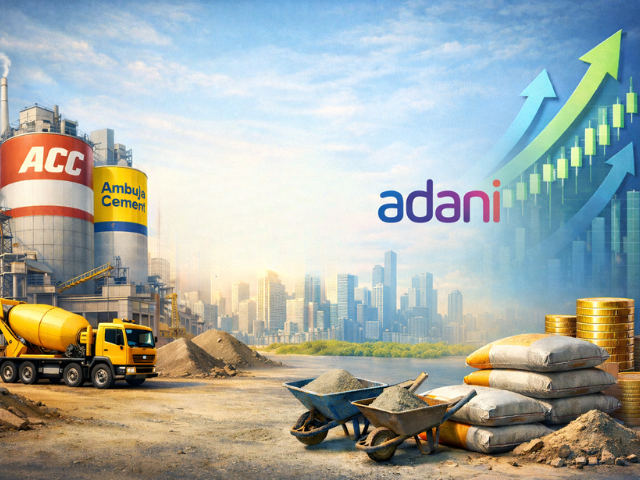
When the Adani Group acquired Ambuja Cements and ACC, it signalled a decisive shift in India’s cement landscape. What initially looked like a strategic entry into a core infrastructure sector has now evolved into a much larger consolidation story. The proposed merger of Ambuja Cements and ACC marks a defining moment for both the Adani Group and the Indian cement industry.
For investors, this move is not just about corporate restructuring. It raises important questions around market dominance, cost synergies, regulatory oversight and the future valuation of cement stocks.
Understanding the Ambuja–ACC merger impact on stocks requires looking beyond short-term price reactions and into the structural implications of scale, efficiency and capital allocation.
Ambuja Cements and ACC are two of India’s most established cement companies, with strong brand recall, pan-India manufacturing footprints and deep dealer networks. Together, they command a significant share of India’s cement capacity.
Under the Adani Group, the merger aims to unlock operational efficiencies by combining logistics, procurement, power sourcing and distribution. Cement is a scale-driven business, where cost leadership often determines profitability. Larger volumes allow better bargaining power on fuel, freight and raw materials.
For Adani, the merger strengthens its ambition to become one of the world’s largest cement producers, aligned with India’s long-term infrastructure growth story.
Cement is a critical input for roads, housing, railways, ports and urban infrastructure. India’s government-led capital expenditure cycle has created sustained demand visibility for the sector.
The Adani Group’s strategy focuses on backward integration and logistics optimisation. With access to ports, rail networks, power assets and renewable energy, Adani can potentially reduce cement production and transportation costs over time.
By merging Ambuja and ACC, the group simplifies structure, reduces duplication and enhances capital efficiency. This is particularly important in an industry where margins are sensitive to fuel costs and freight expenses.
From a shareholder perspective, the merger raises both opportunities and concerns.
On the positive side, operational synergies could improve profitability over the medium term. Shared logistics, unified procurement and better capacity utilisation may lead to margin expansion, especially during favourable demand cycles.
However, near-term market reactions often reflect uncertainty. Integration costs, merger ratios and regulatory approvals can influence stock performance in the short run. Investors also closely watch how debt levels and capital expenditure plans evolve post-merger.
Historically, cement mergers have rewarded patient investors once synergy benefits become visible in earnings rather than immediately after announcements.
Large mergers in capital-intensive sectors attract regulatory scrutiny. The Competition Commission of India plays a key role in evaluating market concentration and pricing power.
While the Indian cement market remains competitive with multiple national and regional players, consolidation does increase the influence of large groups. Regulators typically focus on ensuring fair competition and preventing monopolistic practices.
For investors, regulatory approvals are a procedural risk rather than a fundamental threat, but timelines and conditions can affect sentiment.
The Ambuja–ACC merger could accelerate consolidation across the cement sector. Smaller regional players may face increased pricing pressure as larger groups optimise costs and expand distribution reach.
At the same time, stronger balance sheets and scale allow major players to invest in capacity expansion, green energy and alternative fuels. This supports long-term sustainability goals and aligns with evolving environmental regulations in India.
For the Indian markets, a stronger cement sector supports infrastructure development, employment and capital formation.
Despite the strategic logic, risks remain.
Integration execution is critical. Merging operations, cultures and systems requires disciplined management. Any delays in synergy realisation can impact earnings expectations.
Cement demand is cyclical and linked to construction activity. A slowdown in infrastructure spending or housing demand can affect volumes.
Input costs such as coal, pet coke and freight remain volatile. Although scale provides some cushion, margin pressures cannot be eliminated entirely.
Finally, high expectations embedded in stock prices can lead to short-term volatility if results do not immediately reflect synergy benefits.
The Ambuja–ACC merger under the Adani Group is a long-term structural story rather than a short-term trading event. Investors with a medium to long-term horizon may view consolidation as a positive development, provided balance sheet discipline and execution remain strong.
Tracking quarterly performance, cost trends and capacity expansion plans will be crucial in evaluating progress.
Corporate actions of this scale require careful analysis rather than headline-driven decisions. Understanding regulatory processes, synergy timelines and sector cycles can make a meaningful difference to outcomes.
This is where Swastika Investmart, a SEBI-registered brokerage, adds value. With in-depth research, sector expertise, robust trading platforms and investor education initiatives, Swastika Investmart helps investors navigate complex corporate developments with clarity and confidence.

Why is the Ambuja–ACC merger significant?
The merger creates a larger, more efficient cement platform under the Adani Group, unlocking cost synergies and strengthening market positioning.
How does this merger impact Ambuja and ACC stocks?
In the short term, stock performance may remain volatile. Over the long term, synergy benefits and improved profitability could support valuations.
Will regulators approve the Ambuja–ACC merger?
The merger will be reviewed by the Competition Commission of India to ensure fair competition. Such approvals are common in large consolidations.
Does this merger make Adani a cement monopoly?
No. While Adani becomes a major player, the Indian cement industry remains competitive with several large and regional producers.
Is the cement sector attractive for long-term investors?
Cement benefits from infrastructure growth but remains cyclical. Long-term investors should focus on balance sheet strength and cost leadership.
The Ambuja–ACC merger marks a bold step in Adani Group’s cement strategy. While short-term market reactions may fluctuate, the long-term narrative centres on scale, efficiency and alignment with India’s infrastructure growth.
For investors seeking to understand and act on such structural themes with confidence, research-backed insights are essential.
If you are exploring opportunities in cement and infrastructure stocks, consider partnering with Swastika Investmart for informed investing and seamless execution.