.avif)



The Manipal Health IPO is one of the largest healthcare IPOs in India, offering investors an opportunity to participate in the country's leading multi-speciality hospital network. While the company has an unmatched hospital footprint, strong operating efficiency, and long-term growth potential, the premium valuation, high leverage, and regional concentration warrant careful evaluation before investing.
India's healthcare sector is entering a new growth phase, supported by rising health awareness, increasing insurance penetration, an ageing population, and growing demand for specialised medical care. Against this backdrop, the Manipal Health IPO has emerged as one of the most anticipated public offerings of 2026.
Manipal Health Enterprises Limited (MHEL) is not just another hospital operator. It is India's largest multi-speciality hospital chain by licensed bed capacity, with a diversified presence across major metropolitan cities and rapidly expanding regional markets. Over the past few years, the company has strengthened its position through strategic acquisitions while continuing to improve operational efficiency.
This detailed Manipal Health IPO review covers everything investors need to know, from IPO details and business fundamentals to financial performance, valuation, opportunities, risks, and whether the issue deserves a place in your portfolio.
Key Takeaways
- Manipal Health is India's largest multispecialty hospital chain by licensed bed capacity.
- The company operates 49 hospitals with more than 13,000 licensed beds across 14 states and union territories.
- Most IPO proceeds will be utilised for debt repayment and increasing ownership in Sahyadri Hospitals.
- Strong operational metrics such as industry-leading ALOS and a negative working capital cycle support long-term growth.
- Premium valuation, high leverage, and geographic concentration remain the primary investment concerns.
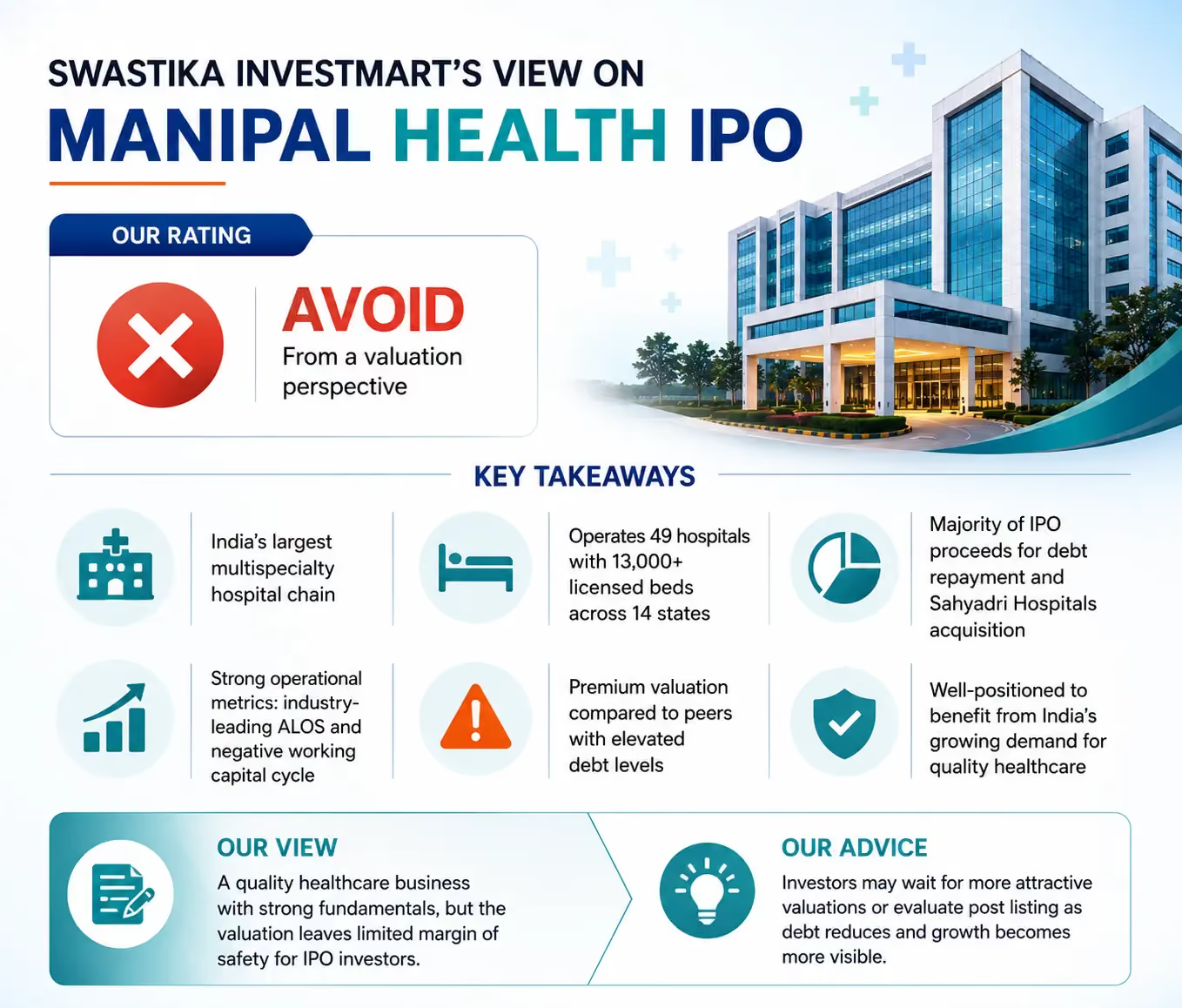
- Swastika Investmart has assigned the IPO an "Avoid" rating from a valuation perspective.
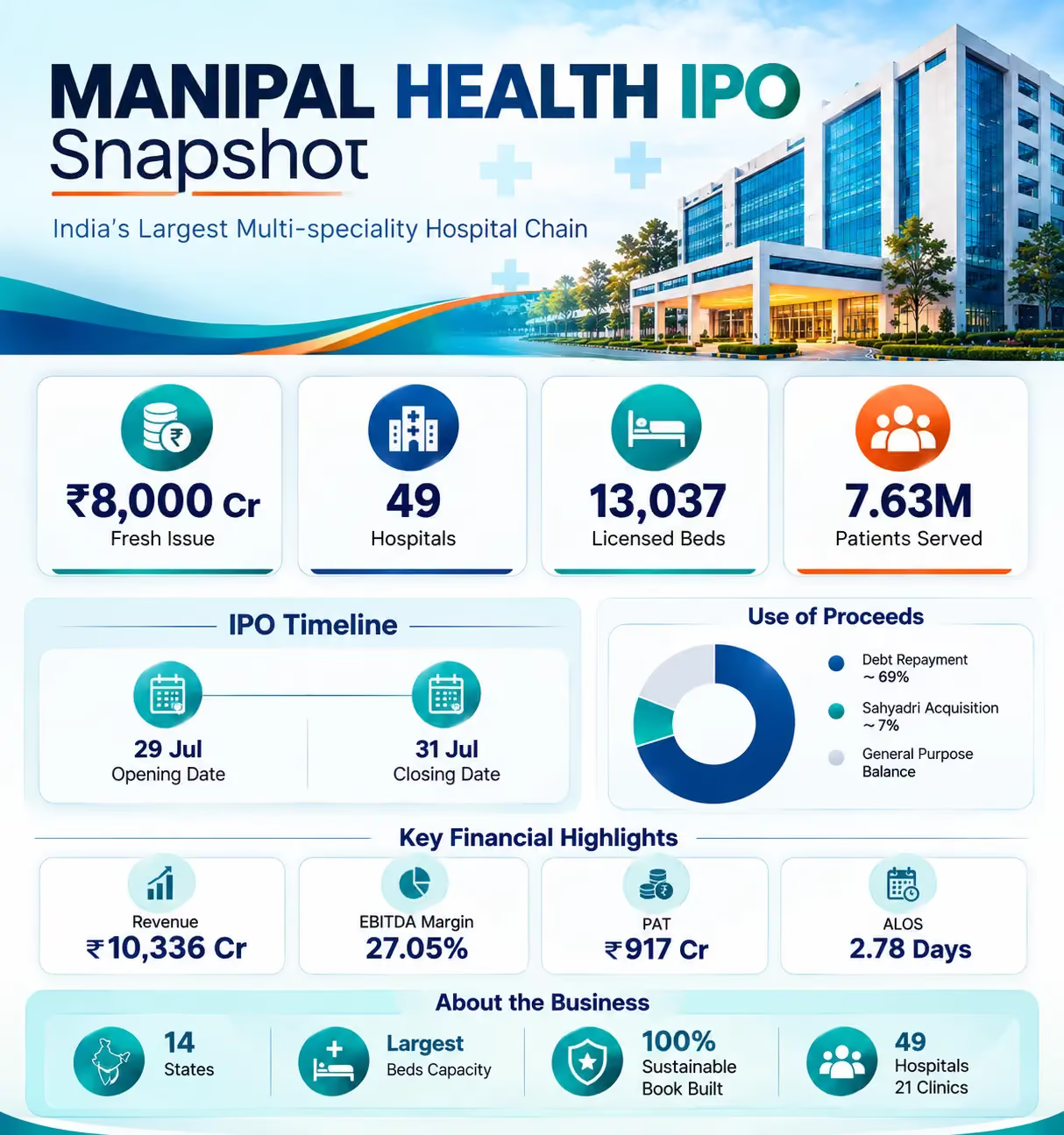
Manipal Health IPO Snapshot
Note: The final price band and bid lot will be announced by the company before the issue opens.
Why is the Manipal Health IPO Drawing Investor Attention?
Unlike many healthcare IPOs that primarily fund expansion projects, the Manipal Health Enterprises IPO is designed to strengthen the company's balance sheet while supporting future growth.
A significant portion of the fresh issue proceeds will be used to reduce debt by repaying borrowings of its subsidiary, Manipal Hospitals Private Limited. Lower debt can improve profitability through reduced interest costs while creating financial flexibility for future acquisitions and hospital expansion. At the same time, the company plans to increase its ownership in Sahyadri Hospitals, further consolidating one of India's fastest-growing hospital networks.
The IPO also provides investors exposure to India's rapidly expanding private healthcare industry, where demand continues to outpace hospital infrastructure across several regions.


Inside Manipal Health Enterprises: India's Largest Hospital Network
Manipal Health Enterprises Limited is the largest pan-India multi-speciality hospital chain by licensed bed capacity, operating an integrated healthcare ecosystem that spans hospitals, outpatient clinics, diagnostics, pharmacies, and advanced tertiary care services. As of March 31, 2026, the company operates:
- 49 multi-speciality hospitals
- 21 outpatient clinics
- Presence across 14 states and union territories
- 13,037 licensed beds
- More than 7.63 million patients served during FY26
Manipal Health has built leadership positions across several major healthcare markets, including Bengaluru, Kolkata, and Pune, making it the only private hospital chain to lead by bed capacity in all three metro regions. Rather than competing solely on hospital count, the company focuses on complex, high-value medical treatments through specialised clinical excellence.
Its major treatment areas include:
- Cardiac Sciences
- Oncology
- Neurosciences
- Gastro Sciences
- Orthopaedics
- Renal Sciences
Collectively known as CONGO-R specialities, these accounted for approximately 64.3% of gross inpatient revenue in FY26, reflecting the company's emphasis on tertiary and quaternary healthcare.
How Does Manipal Health Generate Revenue?
Manipal follows a diversified healthcare delivery model, reducing dependence on any single medical speciality, geography, or patient category.
Its primary revenue streams include:
- Inpatient treatments
- Outpatient consultations
- Advanced surgeries
- Diagnostic services
- Pharmacy sales
- Day-care procedures
- Corporate healthcare partnerships
- Insurance and TPA-based patients
One notable aspect of its business model is its strong relationship with insurers and Third-Party Administrators (TPAs). Nearly half of its patient revenue comes through insurance-backed treatments. Although insurance patients generally yield lower margins than self-paying patients, the company has built efficient billing and collection processes that enable it to maintain a negative working capital cycle of just 13 days, supporting healthy cash flow despite the scale of operations.
India's Healthcare Opportunity Remains Massive
The long-term investment case for the Manipal Health IPO extends beyond the company itself. India continues to face a significant healthcare infrastructure gap.
According to industry data referenced in the company's prospectus, India has approximately 16 hospital beds per 10,000 people, compared with a global average of around 33 beds per 10,000 people. In many non-metro regions, the availability is even lower.
This structural shortage creates a long runway for private hospital operators with strong brands, clinical expertise, and the financial capacity to expand. Manipal Health has already established a nationwide platform and is well-positioned to benefit from increasing healthcare spending, higher insurance penetration, and growing demand for specialised medical care.
Growth Has Been Driven by Both Expansion and Acquisitions
Instead of relying solely on organic expansion, Manipal Health has pursued a disciplined "buy and build" strategy to strengthen its market position. Some of its major acquisitions include:
These acquisitions have significantly expanded the company's geographical footprint while increasing its licensed bed capacity from 9,520 beds in FY24 to 13,037 beds in FY26. The strategy has also helped Manipal establish stronger positions in Eastern and Western India, reducing its dependence on organic expansion alone.
A Closer Look at Manipal Health's Financial Performance
The financial performance of Manipal Health Enterprises Limited reflects the benefits of its aggressive expansion strategy over the past few years. While acquisitions have accelerated revenue growth, they have also increased debt and integration costs, which investors should consider while evaluating the IPO. Here's a snapshot of the company's recent financial performance.
Between FY24 and FY26:
- Revenue from operations grew at a CAGR of 29.41%.
- Profit after tax increased at a CAGR of 31.11%.
- EBITDA margins remained healthy despite the integration of multiple acquisitions.
- The company continued to generate strong operating cash flows through disciplined hospital operations.
Although profitability improved during the period, investors should note that recent acquisitions have temporarily increased leverage and finance costs, making debt reduction one of the key objectives of the IPO.
Beyond Revenue: The Operating Metrics That Differentiate Manipal Health
For hospital businesses, revenue alone doesn't provide the complete picture. Operational efficiency often determines long-term profitability, capital productivity, and return on investment. Manipal Health has consistently performed well across several industry-specific metrics that investors should monitor.
Industry-Leading Average Length of Stay (ALOS)
One of the company's strongest operating indicators is its Average Length of Stay (ALOS), which improved from 2.93 days in FY24 to 2.78 days in FY26. A shorter hospital stay allows beds to become available more quickly, enabling hospitals to treat a higher number of patients without adding new infrastructure.
What's particularly impressive is that this improvement has been achieved even as the company has increased its focus on complex tertiary and quaternary treatments, which typically require longer recovery periods.
Healthy Occupancy Leaves Room for Growth
The company's network reported an occupancy rate of 64.47% during FY26. While this is slightly below some listed peers, management considers it a strategic advantage rather than a weakness.
Hospitals generally begin major capacity expansion when occupancy approaches 70%. Since Manipal still has available capacity across several facilities, it can increase patient volumes and revenue without making significant additional capital investments. This provides an opportunity to improve operating leverage over the coming years.
Strong Revenue Per Occupied Bed
Manipal Health reported an Average Revenue Per Occupied Bed (ARPOB) of approximately ₹68,938 per day in FY26.
A healthy ARPOB indicates the company's ability to generate higher revenue from specialised procedures and premium healthcare services rather than relying solely on patient volume. Combined with its improving ALOS and stable occupancy, this reflects efficient utilisation of hospital assets.
Negative Working Capital Strengthens Cash Flow
Another noteworthy aspect of Manipal's business model is its negative working capital cycle of 13 days. Despite deriving a significant share of revenue through insurance companies and third-party administrators (TPAs), the company has developed efficient billing and collection systems that support healthy cash generation. This improves liquidity while reducing dependence on short-term funding for daily operations.
Where Will the IPO Proceeds Be Used?
Unlike IPOs that primarily fund new expansion projects, the Manipal Health Enterprises IPO focuses on strengthening the company's financial position. The proceeds from the fresh issue will be deployed across three major areas:
The largest allocation is earmarked for reducing outstanding borrowings, including listed non-convertible debentures (NCDs) carrying interest costs. Lower debt could improve earnings by reducing finance expenses while strengthening the balance sheet for future expansion.
The acquisition of the remaining stake in Sahyadri Hospitals will also increase the company's ownership in one of its key hospital platforms, allowing greater operational integration and long-term value creation.
Why Debt Reduction Could Be a Turning Point for Manipal Healthcare?
The company's rapid expansion through acquisitions has significantly increased its borrowings over the past few years. Rather than raising fresh capital solely for capacity expansion, management has prioritised deleveraging. This approach offers several potential benefits:
- Lower annual interest expenses.
- Improved profitability and earnings quality.
- Stronger balance sheet.
- Greater flexibility for future acquisitions.
- Enhanced financial resilience during economic slowdowns.
If executed successfully, the IPO could mark a transition from acquisition-led expansion to improved profitability and operational consolidation.
What Makes Manipal Health a Strong Long-Term Business?
Several structural strengths support the company's long-term growth outlook beyond the IPO.
Market Leadership
Manipal Health is India's largest multi-speciality hospital chain by licensed bed capacity, giving it significant scale advantages across procurement, clinical expertise, technology adoption, and patient acquisition.
Diversified Geographic Presence
The company operates hospitals across 14 states and union territories while maintaining leadership positions in Bengaluru, Kolkata, and Pune. This broad footprint reduces dependence on a single city compared to many regional hospital operators.
High-Value Clinical Specialities
More than 64% of inpatient revenue comes from high-acuity specialities such as cardiac sciences, oncology, neurosciences, gastro sciences, orthopaedics, and renal sciences. These treatments generally command better pricing and create stronger patient trust.
Proven Acquisition Strategy
Instead of pursuing rapid greenfield expansion alone, the company has successfully integrated several leading hospital chains, including Columbia Asia, AMRI, Medica, and Sahyadri. This strategy has accelerated both capacity expansion and market penetration.
Strong Industry Tailwinds
India's healthcare infrastructure remains significantly underpenetrated relative to global standards. Rising healthcare awareness, higher insurance coverage, increasing disposable income, and an ageing population are expected to support long-term demand for organised private healthcare providers.
Risks to Consider Before Applying for the Manipal Health IPO
No IPO is free from risks, and Manipal Health Enterprises is no exception. While the company has built a strong healthcare franchise, investors should evaluate the following factors before making an investment decision.
Premium Valuation Leaves Limited Margin of Safety
One of the biggest concerns is valuation. Based on FY26 earnings, the company is expected to command a premium valuation compared with most listed hospital peers. Such pricing assumes continued growth, successful integration of acquisitions, and sustained profitability. A premium valuation can reduce listing upside if market sentiment weakens or quarterly performance falls short of expectations.
High Debt Despite Planned Repayment
Although a large portion of the fresh issue proceeds will be used to repay debt, the company currently carries significant borrowings due to multiple acquisitions completed over the last few years. While debt reduction should strengthen the balance sheet over time, investors should monitor:
- Interest cost reduction after the IPO
- Improvement in leverage ratios
- Cash flow generation post listing
Heavy Dependence on Karnataka
Nearly 46.4% of FY26 revenue comes from Karnataka, making the business geographically concentrated despite its nationwide presence. Any regulatory changes, pricing restrictions, competitive pressure, or healthcare policy changes in the state could impact financial performance.
Acquisition Integration Risk
Manipal Health has rapidly expanded through acquisitions including:
- Columbia Asia
- AMRI Hospitals
- Medica Synergie
- Sahyadri Hospitals
Although these acquisitions strengthen the network, integrating hospital systems, doctors, technology platforms, and operating processes is a complex exercise that may take several years before delivering full synergies.
Regulatory and Legal Matters
The company has disclosed certain ongoing legal and regulatory matters, including:
- Investigations relating to kidney transplant cases at Manipal Hospital Jaipur.
- Litigation concerning HCMCT Manipal Hospital, Dwarka.
- Disputes involving minority shareholders of acquired subsidiaries.
While management believes these issues are manageable and has disclosed them in the RHP, investors should monitor future developments.
Dependence on High-End Specialities
Around 64.3% of inpatient revenue comes from high-value specialities such as:
- Cardiac Sciences
- Oncology
- Neurosciences
- Gastro Sciences
- Orthopaedics
- Renal Sciences
Although these segments generate better profitability, they also require continuous investment in specialist doctors, medical equipment, and advanced technology.
Should You Apply for the Manipal Health IPO?
The Manipal Health IPO represents an opportunity to invest in one of India's largest and fastest-growing private hospital chains. The company has established a strong presence across major cities, demonstrated healthy revenue growth, maintained industry-leading operational efficiency, and continues expanding through acquisitions and capacity additions.
However, investors should balance these positives against the premium valuation, recent debt-led expansion, and integration risks associated with multiple acquisitions.
According to Swastika Investmart, while Manipal Health is undoubtedly a quality healthcare business with strong long-term prospects, the IPO pricing appears aggressive relative to the current risk-reward equation. Therefore, the issue has been assigned an "Avoid" rating from a valuation perspective. Long-term investors may prefer to monitor the company's post-listing performance, debt reduction, and earnings trajectory before considering an investment.
Frequently Asked Questions (FAQs)
What is the Manipal Health IPO date?
The Manipal Health IPO will open on July 29, 2026, and close on July 31, 2026.
What is the issue size of the Manipal Health IPO?
The IPO includes a Fresh Issue of up to ₹8,000 crore along with an Offer for Sale of up to 21.61 million equity shares.
How will the IPO proceeds be used?
The company plans to utilise the fresh issue proceeds for:
- Repayment of borrowings of Manipal Hospitals Private Limited
- Acquisition of an additional stake in Sahyadri Hospitals
- General corporate purposes
What does Manipal Health Enterprises do?
Manipal Health Enterprises is India's largest multi-speciality hospital network by licensed bed capacity. It operates 49 hospitals, 21 clinics, and serves millions of patients across 14 states and union territories.
Is the Manipal Health IPO good for long-term investment?
The company has a strong business model, leading market position, and long-term growth opportunities. However, investors should carefully evaluate its premium valuation, debt profile, and acquisition-related risks before making an investment decision.
Where can I get the latest Manipal Health IPO updates?
For the latest Manipal Health IPO GMP, subscription status, allotment updates, listing details, and expert IPO analysis, visit Swastika Investmart, where you can access timely market insights and detailed IPO coverage.
Final Thoughts
The Manipal Health IPO offers investors exposure to one of India's leading healthcare providers operating in a sector with significant long-term growth potential. Its strong brand, expanding hospital network, improving operational efficiency, and focus on tertiary and quaternary care make it a quality healthcare business.
That said, IPO investing is not just about the quality of the company but also the price at which it is offered. Given the premium valuation and existing leverage, investors should carefully assess the risk-reward before applying. For the latest Manipal Health IPO GMP, subscription status, allotment updates, listing analysis, and expert IPO reviews, stay connected with Swastika Investmart for timely market insights and comprehensive IPO coverage.