


Paytm Share Price Momentum: RSI Upswing Among SBI Cards And Tata Investment Corporation Signals for Retail Investors


Key Takeaways
- RSI Trending Up flagged three NSE mid-cap stocks on June 25 based on StockEdge.com data.
- One97 Communications (Paytm) shows RSI 55.55 with Prev RSI 48.48 and CMP Rs 1,124.8.
- SBI Cards And Payment Services shows RSI 54.03 with Prev RSI 46.91 and CMP Rs 624.85.
- Tata Investment Corporation shows RSI 51.48 with Prev RSI 48.07 and CMP Rs 678.85.
Momentum traders are watching a handful of NSE mid-cap stocks after a simple rule flashed green: RSI crossing above 50 from below. This RSI Trending Up signal indicates strengthening momentum in price action and a potential upside in the days ahead. Among the trio flagged on June 25, One97 Communications, the Paytm story for many investors, shows a fresh momentum lift. The paytm share price aligns with this RSI move, with RSI 55.55, Prev RSI 48.48, and CMP Rs 1,124.8, based on StockEdge.com data.
RSI, or Relative Strength Index, is a momentum oscillator that scales between 0 and 100. A crossing above the 50 threshold is widely interpreted as a bullish cue, indicating that buying pressure is strengthening relative to selling pressure. In this specific NSE mid-cap cohort, the RSI Trending Up signal is not a standalone call; it serves as a prompt to examine accompanying price action, volume, and prevailing market conditions before committing capital. For a retail trader, RSI alone rarely tells the whole story; it works best when paired with chart patterns, volume spikes, and risk controls. The three tickers highlighted on June 25 exemplify how momentum can emerge at the confluence of favorable RSI dynamics and supportive price levels.
Table snapshot: Quick look at the three stocks that showed an RSI upswing
Beyond the table, a simple takeaway is that RSI values trending up reflect a renewal in momentum rather than a guaranteed rally. The paytm share price, alongside the CPI trajectory of the broader market, will shape the subsequent moves of One97 Communications. StockEdge.com data anchors these observations, but investors should corroborate with price action, volume, and sectoral trends before making decisions. In the Paytm context, the current position at Rs 1,124.8 is a reference point for traders watching incremental gains above recent highs, while respecting risk limits.
For retail investors evaluating momentum-driven markets, several layers matter. First, confirm the trend with a higher time-frame view–if a daily RSI crosses above 50 and stays above it, it may indicate sustained momentum rather than a short-lived squeeze. Second, check for volume confirmation; rising volume during gains reinforces the legitimacy of the RSI signal. Third, evaluate near-term resistance levels and potential entry zones where risk-reward looks favorable. The three stocks flagged in the RSI Trending Up scan–One97 Communications (Paytm), SBI Cards And Payment Services, and Tata Investment Corporation–illustrate how momentum can manifest across different sectors within the NSE mid-cap universe. For Paytm, the combination of a higher RSI and a current market price around Rs 1,124.8 could invite selective entries for traders who align with risk management rules.
As you absorb these signals, consider how a structured approach can help you act decisively. Swastika Investmart offers Sarthi – an AI stock assistant that provides institutional-level research on any stock or index to retail investors. If you want a more data-driven approach to momentum, you can explore Sarthi to test RSI-based triggers across multiple tickers, including paytm share price scenarios, while maintaining a disciplined risk framework. In momentum markets, tools that translate signals into actionable steps can be the difference between chasing noise and catching the next leg of a trend.
What Does paytm share price RSI Momentum Teach Retail Investors About Timing Entries?
The paytm share price example demonstrates how RSI momentum can align with price levels to create potential entry points. An RSI value of 55.55 with a prior RSI of 48.48 implies a rising momentum reading that has crossed the threshold, potentially signaling an expansion in buying interest. For retail investors, this means paying attention to how the stock behaves around current prices and whether price action confirms the RSI signal with higher closes and increasing volume. Remember that RSI adaptations are more reliable when supported by other indicators, such as moving averages or support-resistance dynamics, rather than used in isolation.
RSI Trending Up Signals Across the NSE Mid-Cap Space: What These Three Stocks Imply
The June 25 RSI Trending Up scan highlighted three NSE mid-cap stocks, captured by StockEdge.com data. One97 Communications (Paytm) sits at RSI 55.55, with a Prev RSI of 48.48, and a CMP of Rs 1,124.8. SBI Cards And Payment Services sits at RSI 54.03, Prev RSI 46.91, CMP Rs 624.85. Tata Investment Corporation sits at RSI 51.48, Prev RSI 48.07, CMP Rs 678.85. These readings suggest a broadening momentum across different segments of the mid-cap universe, rather than a single stock story. Retail investors should compare how each stock behaves in intraday action, especially around the observed CMPs, to gauge which names may offer a better risk-adjusted setup in the near term.
For Paytm, the paytm share price is a key reference level around Rs 1,124.8. The RSI reading indicates momentum support, but a prudent approach would await consolidation or a break above local resistance with accompanying volume. For SBI Cards, a neighboring chart dynamic with the sbi cards share price momentum could indicate incremental upside but also requires caution given the volatility typical of financials in a rising-rate environment. For Tata Investment Corporation, observing the stock price of tata investment corporation alongside RSI can help determine whether a longer-term swing is feasible or if this moment is a temporary consolidation within a larger trend. Each ticker deserves its own test; the RSI signal is a starting point, not a destination.
FAQ
What does RSI Trending Up mean for a stock's momentum?
RSI Trending Up means the RSI value has crossed above 50 from below, signaling rising upward momentum in price action. Traders often view this as a bullish cue that can precede a move higher, though it is not a guarantee and should be weighed with other indicators and risk controls.
Which stocks were flagged in the RSI Trending Up scan on June 25 in the NSE mid-cap segment?
The three stocks highlighted were One97 Communications (Paytm), SBI Cards And Payment Services, and Tata Investment Corporation, based on data from StockEdge.com.
What is the RSI and current price for One97 Communications (Paytm)?
RSI: 55.55; Prev RSI: 48.48; CMP: Rs 1,124.8. This indicates momentum staying above the 50 threshold following a prior lower RSI value.
What is the RSI and current price for SBI Cards And Payment Services?
RSI: 54.03; Prev RSI: 46.91; CMP: Rs 624.85. The RSI has crossed above 50, suggesting momentum improvement relative to the previous reading.
What is the RSI and current price for Tata Investment Corporation?
RSI: 51.48; Prev RSI: 48.07; CMP: Rs 678.85. This places Tata Investment Corporation among stocks showing momentum recovery in the RSI Trending Up scan.
Where do these RSI signals come from and how should a retail investor use them?
The RSI signals come from StockEdge.com data for the NSE mid-cap segment. Retail investors should use RSI as a starting point and corroborate with price action, volume, risk management rules, and broader market context before making trading decisions.
Conclusion
The RSI Trending Up signal across One97 Communications (Paytm), SBI Cards And Payment Services, and Tata Investment Corporation indicates momentum in the NSE mid-cap space as of June 25, based on StockEdge.com data. For a retail investor, this is a prompt to observe how paytm share price and its peers act around current levels, while not assuming a guaranteed rally. The key takeaway is that momentum alone does not guarantee success; it invites a structured, disciplined approach to risk and timing.
Latest Articles
Paytm Share Price Momentum: RSI Upswing Among SBI Cards And Tata Investment Corporation Signals for Retail Investors


Key Takeaways
- RSI Trending Up flagged three NSE mid-cap stocks on June 25 based on StockEdge.com data.
- One97 Communications (Paytm) shows RSI 55.55 with Prev RSI 48.48 and CMP Rs 1,124.8.
- SBI Cards And Payment Services shows RSI 54.03 with Prev RSI 46.91 and CMP Rs 624.85.
- Tata Investment Corporation shows RSI 51.48 with Prev RSI 48.07 and CMP Rs 678.85.
Momentum traders are watching a handful of NSE mid-cap stocks after a simple rule flashed green: RSI crossing above 50 from below. This RSI Trending Up signal indicates strengthening momentum in price action and a potential upside in the days ahead. Among the trio flagged on June 25, One97 Communications, the Paytm story for many investors, shows a fresh momentum lift. The paytm share price aligns with this RSI move, with RSI 55.55, Prev RSI 48.48, and CMP Rs 1,124.8, based on StockEdge.com data.
RSI, or Relative Strength Index, is a momentum oscillator that scales between 0 and 100. A crossing above the 50 threshold is widely interpreted as a bullish cue, indicating that buying pressure is strengthening relative to selling pressure. In this specific NSE mid-cap cohort, the RSI Trending Up signal is not a standalone call; it serves as a prompt to examine accompanying price action, volume, and prevailing market conditions before committing capital. For a retail trader, RSI alone rarely tells the whole story; it works best when paired with chart patterns, volume spikes, and risk controls. The three tickers highlighted on June 25 exemplify how momentum can emerge at the confluence of favorable RSI dynamics and supportive price levels.
Table snapshot: Quick look at the three stocks that showed an RSI upswing
Beyond the table, a simple takeaway is that RSI values trending up reflect a renewal in momentum rather than a guaranteed rally. The paytm share price, alongside the CPI trajectory of the broader market, will shape the subsequent moves of One97 Communications. StockEdge.com data anchors these observations, but investors should corroborate with price action, volume, and sectoral trends before making decisions. In the Paytm context, the current position at Rs 1,124.8 is a reference point for traders watching incremental gains above recent highs, while respecting risk limits.
For retail investors evaluating momentum-driven markets, several layers matter. First, confirm the trend with a higher time-frame view–if a daily RSI crosses above 50 and stays above it, it may indicate sustained momentum rather than a short-lived squeeze. Second, check for volume confirmation; rising volume during gains reinforces the legitimacy of the RSI signal. Third, evaluate near-term resistance levels and potential entry zones where risk-reward looks favorable. The three stocks flagged in the RSI Trending Up scan–One97 Communications (Paytm), SBI Cards And Payment Services, and Tata Investment Corporation–illustrate how momentum can manifest across different sectors within the NSE mid-cap universe. For Paytm, the combination of a higher RSI and a current market price around Rs 1,124.8 could invite selective entries for traders who align with risk management rules.
As you absorb these signals, consider how a structured approach can help you act decisively. Swastika Investmart offers Sarthi – an AI stock assistant that provides institutional-level research on any stock or index to retail investors. If you want a more data-driven approach to momentum, you can explore Sarthi to test RSI-based triggers across multiple tickers, including paytm share price scenarios, while maintaining a disciplined risk framework. In momentum markets, tools that translate signals into actionable steps can be the difference between chasing noise and catching the next leg of a trend.
What Does paytm share price RSI Momentum Teach Retail Investors About Timing Entries?
The paytm share price example demonstrates how RSI momentum can align with price levels to create potential entry points. An RSI value of 55.55 with a prior RSI of 48.48 implies a rising momentum reading that has crossed the threshold, potentially signaling an expansion in buying interest. For retail investors, this means paying attention to how the stock behaves around current prices and whether price action confirms the RSI signal with higher closes and increasing volume. Remember that RSI adaptations are more reliable when supported by other indicators, such as moving averages or support-resistance dynamics, rather than used in isolation.
RSI Trending Up Signals Across the NSE Mid-Cap Space: What These Three Stocks Imply
The June 25 RSI Trending Up scan highlighted three NSE mid-cap stocks, captured by StockEdge.com data. One97 Communications (Paytm) sits at RSI 55.55, with a Prev RSI of 48.48, and a CMP of Rs 1,124.8. SBI Cards And Payment Services sits at RSI 54.03, Prev RSI 46.91, CMP Rs 624.85. Tata Investment Corporation sits at RSI 51.48, Prev RSI 48.07, CMP Rs 678.85. These readings suggest a broadening momentum across different segments of the mid-cap universe, rather than a single stock story. Retail investors should compare how each stock behaves in intraday action, especially around the observed CMPs, to gauge which names may offer a better risk-adjusted setup in the near term.
For Paytm, the paytm share price is a key reference level around Rs 1,124.8. The RSI reading indicates momentum support, but a prudent approach would await consolidation or a break above local resistance with accompanying volume. For SBI Cards, a neighboring chart dynamic with the sbi cards share price momentum could indicate incremental upside but also requires caution given the volatility typical of financials in a rising-rate environment. For Tata Investment Corporation, observing the stock price of tata investment corporation alongside RSI can help determine whether a longer-term swing is feasible or if this moment is a temporary consolidation within a larger trend. Each ticker deserves its own test; the RSI signal is a starting point, not a destination.
FAQ
What does RSI Trending Up mean for a stock's momentum?
RSI Trending Up means the RSI value has crossed above 50 from below, signaling rising upward momentum in price action. Traders often view this as a bullish cue that can precede a move higher, though it is not a guarantee and should be weighed with other indicators and risk controls.
Which stocks were flagged in the RSI Trending Up scan on June 25 in the NSE mid-cap segment?
The three stocks highlighted were One97 Communications (Paytm), SBI Cards And Payment Services, and Tata Investment Corporation, based on data from StockEdge.com.
What is the RSI and current price for One97 Communications (Paytm)?
RSI: 55.55; Prev RSI: 48.48; CMP: Rs 1,124.8. This indicates momentum staying above the 50 threshold following a prior lower RSI value.
What is the RSI and current price for SBI Cards And Payment Services?
RSI: 54.03; Prev RSI: 46.91; CMP: Rs 624.85. The RSI has crossed above 50, suggesting momentum improvement relative to the previous reading.
What is the RSI and current price for Tata Investment Corporation?
RSI: 51.48; Prev RSI: 48.07; CMP: Rs 678.85. This places Tata Investment Corporation among stocks showing momentum recovery in the RSI Trending Up scan.
Where do these RSI signals come from and how should a retail investor use them?
The RSI signals come from StockEdge.com data for the NSE mid-cap segment. Retail investors should use RSI as a starting point and corroborate with price action, volume, risk management rules, and broader market context before making trading decisions.
Conclusion
The RSI Trending Up signal across One97 Communications (Paytm), SBI Cards And Payment Services, and Tata Investment Corporation indicates momentum in the NSE mid-cap space as of June 25, based on StockEdge.com data. For a retail investor, this is a prompt to observe how paytm share price and its peers act around current levels, while not assuming a guaranteed rally. The key takeaway is that momentum alone does not guarantee success; it invites a structured, disciplined approach to risk and timing.

A Closer Look at alembic pharmaceuticals share price After FDA Dapsone Gel 5% Approval
Key Takeaways
- alembic pharmaceuticals share price moved higher after the FDA approval, rising 1.89% to Rs 786.05.
- The ANDA approval makes Dapsone Gel 5% therapeutically equivalent to Aczone Gel, 5%, expanding Alembic's acne portfolio.
- Q4 FY26 net profit rose 29.19% YoY to Rs 202.70 crore, with revenue from operations up 4.41% YoY to Rs 1,847.72 crore.
- Total USFDA ANDA approvals stand at 244 (224 final, 20 tentative), signaling a strong regulatory foundation.
Alembic Pharmaceuticals share price: FDA Dapsone Gel 5% approval and what investors should know (alembic pharmaceuticals share price)
Regulatory milestones often act as a catalyst for stock price movements, and this latest USFDA final approval for Dapsone Gel, 5% under Alembic's ANDA program is a case in point. The approval confirms therapeutic equivalence to Aczone Gel, 5% from Almirall, and it links Alembic's topical acne formulation to a proven benchmark in the US market. The move matters not just for the product's potential revenue but also as a signal about Alembic's ability to navigate complex regulatory pathways and bring generics to market with confidence.
The Dapsone Gel, 5% indication is topical treatment for acne vulgaris. By aligning with an established reference product, Alembic reduces regulatory risk and accelerates time-to-market in a competitive segment. For investors, this means potential near-term upside if the product gains traction in the US retail channels, alongside the broader growth narrative from the company's robust, vertically integrated R&D and manufacturing footprint approved by major authorities, including the USFDA.
Understanding the USFDA ANDA approval for Dapsone Gel 5% and its market implications
The specific ANDA approval adds a 5% topical gel to Alembic's line of generic dermatology products. Therapeutic equivalence to Aczone Gel, 5% suggests the product will be seen as a standard-of-care alternative for acne vulgaris with generic pricing dynamics. In the context of Alembic's overall approvals, the 244 total USFDA ANDA approvals (224 final, 20 tentative) reflect a broad regulatory track record that supports the company's ambition to scale as a global generic player. The intersection of regulatory success with a strong Q4 FY26 showing is important for near-term sentiment.
From a portfolio perspective, this Dapsone Gel 5% entry could complement Alembic's existing derm portfolio and help stabilize top-line growth. The company’s vertical integration–covering research, development, and manufacturing–positions it to deploy cost efficiencies and maintain quality across its global products, including those that reach developed markets beyond the US. The FDA's final affirmation of the ANDA signals not only product viability but also the company's ability to execute regulatory milestones–the kind of track record that often translates into investor confidence over successive quarters.
Q4 FY26 financial performance: revenue and profit insights for Alembic
In the quarter ended 31 March 2026, Alembic reported a consolidated net profit of Rs 202.70 crore, up 29.19% year-on-year from Rs 156.89 crore in Q4 FY25. Revenue from operations grew 4.41% year-over-year to Rs 1,847.72 crore in the same quarter. These numbers reflect continued operating leverage and a robust cost structure that could support further expansion as new regulatory milestones materialize and as the company scales its generics portfolio across key markets.
Alongside these top-line numbers, the reaction in the alembic pharmaceuticals stock adds a near-term price momentum that can influence investor sentiment. The 1.89% rise to Rs 786.05 demonstrates market enthusiasm for regulatory catalysts and the company's ability to translate approvals into earnings visibility. Investors should watch not just quarterly earnings but also how management communicates guidance and pipeline progress in dermatology and other high-potential segments.
Regulatory milestone trends: 244 USFDA ANDA approvals to date and what they signal for the company's manufacturing capabilities
The 244 USFDA ANDA approvals to date are composed of 224 final approvals and 20 tentative approvals, which provides a broad baseline for Alembic's ability to introduce and sustain generic products in major markets. This regulatory track record matters for the company's credibility as a global generic manufacturer, and it supports the narrative of a vertically integrated entity that can fund R&D and scale manufacturing with quality controls aligned to international standards. The Dapsone Gel 5% approval adds to a growing suite of dermatology-focused generics that can benefit from US market access and predictable pricing dynamics, even as competition persists in the space.
For investors, the key takeaways are: (1) a credible regulatory track record mitigates execution risk on new launches; (2) a robust portfolio of approved products reduces dependence on any single line; (3) regulatory milestones often act as catalysts for near-term stock movements, as demonstrated by the recent price action around the Dapsone Gel news.
Investment takeaways: opportunities, risks, and how to position around this development
From an investment perspective, the Dapsone Gel 5% approval provides a near-term catalyst and validates Alembic's capability to navigate complex regulatory paths. The combination of a positive earnings print in Q4 FY26 and a rising alembic pharmaceuticals stock can provide momentum, but investors should also assess competitive pressures in dermatology generics, potential pricing dynamics, and foreign exchange risks that can influence margins. The company's growth strategy–leveraging a vertically integrated model to push new generics across developed markets–appears durable, but it is not immune to macro shifts in healthcare policy and regulatory scrutiny.
In practice, retail investors should consider diversifying exposure and using a disciplined framework to assess risk-reward, such as scenario analysis for multiple regulatory outcomes and revenue growth trajectories. Swastika's Sarthi AI stock assistant can help with scenario planning and institutional-grade research on any stock or index, providing an additional layer of insight in this dynamic environment.
Frequently Asked Questions
What does US FDA final approval for Dapsone Gel 5% mean for Alembic?
It confirms the ANDA approval for Dapsone Gel 5% and its therapeutic equivalence to Aczone Gel, 5%, enabling Alembic to market a topical acne treatment in the US and signaling regulatory credibility for its dermatology generics portfolio.
How did the stock react to the FDA approval in the recent session?
The alembic pharmaceuticals stock rose 1.89% to Rs 786.05 following the news, reflecting near-term investor optimism around regulatory milestones and potential revenue visibility from the new product.
What is the indication for Dapsone Gel, 5%?
Dapsone Gel, 5% is indicated for the topical treatment of acne vulgaris.
What are the current USFDA ANDA approvals totals for Alembic?
Alembic has a total of 244 USFDA ANDA approvals to date, comprising 224 final approvals and 20 tentative approvals.
How did Alembic perform financially in Q4 FY26?
Q4 FY26 net profit rose 29.19% year-on-year to Rs 202.70 crore, while revenue from operations grew 4.41% year-on-year to Rs 1,847.72 crore.
Conclusion
Retail investors should view this milestone as a signal of the company's regulatory competence and its ability to translate approvals into earnings visibility. The Dapsone Gel 5% approval, paired with strong Q4 FY26 results, supports a constructive near-term bias for alembic pharmaceuticals stock, while the broad USFDA approvals backdrop underpins long-term growth potential. The key next step for investors is to monitor the product's market uptake, competitive dynamics in the dermatology generic space, and management's commentary on guidance for the upcoming quarters.
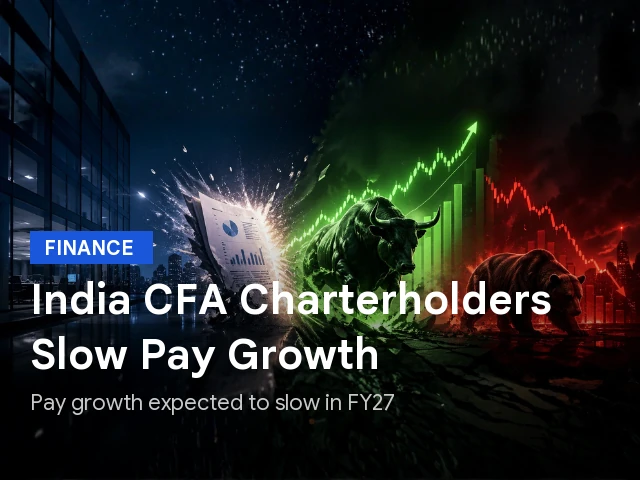
Cfa Institute Salary Outlook: FY27 Trends for Indian CFA Charterholders
Key Takeaways
- FY27 pay growth is cooling after robust 2025 gains.
- 66% plan to relocate to Singapore, the US or Europe.
- 8+ years CFA charterholders earn Rs 40-50 lakh; new charterholders start at Rs 9.8 lakh.
- AI will automate data tasks, but human judgment and sebi investor awareness remain crucial.
Retail investors in India face a paradox: the cfa institute salary landscape is shifting after years of aggressive growth, and FY27 looks cooler even as demand for advanced finance skills keeps climbing. The latest CFA Institute India study, based on responses from 2,770 CFA candidates and charterholders, shows a cautious pay-growth outlook, with 37% of those who saw hikes above 20% in 2025 expecting a similar lift in the next 12 months. Mobility is a big theme too, as 66% plan to relocate to Singapore, the US or Europe. Arati Porwal, Senior Country Head at CFA Institute India, notes that sentiment has shifted toward a more measured path while market integrity remains a priority.
From the perspective of the cfa institute salary landscape, the data mirrors a broader shift: robust past growth is giving way to a steadier trajectory that rewards experience and skill development. The CFA Institute India study–CFA Institute's 2026 CFA Program Impact Study–is based on responses from 2,770 CFA candidates and charterholders in India and highlights several key dynamics shaping compensation, mobility, and career progression in the sector.
The cfa institute salary Outlook: FY27 Projections for Indian CFA Charterholders
Several core numbers anchor the FY27 outlook. Among respondents who were up more than 20% in 2025, 37% expect a similar year-over-year hike in the next 12 months. The study draws on 2,770 responses, making it one of the largest snapshots of India’s CFA community. Mobility is a clear thread: 66% plan to relocate to Singapore, the US or Europe, underscoring an increasingly global job market for skilled investment professionals. The neuro-dependence shift toward automation coexists with sustained demand for human judgment in investing.
Quantitatively, nearly 60% to 70% of CFA charterholders with more than eight years of experience earn annual salaries between Rs 40 lakh and Rs 50 lakh, illustrating a ceiling that still sits above many other finance roles in the country. For newer entrants, the pay ladder starts much lower: average annual income rises from Rs 9.8 lakh for Level I candidates to Rs 44 lakh for new CFA charterholders, signaling strong long-horizon potential for those who complete the program. India is described as the largest market globally for CFA Program candidates, reflecting its role as a production line for global investment talent.
What the CFA Institute India 2026 Impact Study reveals about pay growth and mobility
The 2026 CFA Program Impact Study reinforces that pay growth expectations are moderating after years of rapid gains. Arati Porwal emphasizes that the organization’s intent is to contribute insights and raise awareness about emerging risks around retail participation, finfluencers, and complex products such as derivatives, while supporting policy thinking and market integrity. The study also notes a strong collaboration with regulatory authorities in India, including ongoing engagement with SEBI on investor awareness, capital markets policy, responsible investment and ethical conduct.
Mobility remains a defining factor: the relocation figure of 66% points to a global demand cycle that could affect salary dynamics in domestic markets, especially in sectors that serve multinational clients or cross-border funds. The India Career Accelerator Program, which CFA Institute is expanding, is designed to improve job readiness through practical skills, communication training and closer engagement with employers–an initiative that aligns with the broader need for job-ready talent in a competitive global market.
How much do CFA charterholders earn in India by experience level?
Salary progression in India follows a recognizable ladder. With more than eight years of experience, roughly 60%–70% of CFA charterholders report earnings in the Rs 40 lakh to Rs 50 lakh range, underscoring a meaningful premium for seniority and expertise. The journey begins at about Rs 9.8 lakh for Level I entrants, rising to Rs 44 lakh for fresh CFA charterholders who complete the program. These figures reflect a combination of base pay, allowances and the value placed on CFA qualification in entry- and mid-career roles within investment management, research and advisory services.
In practice, this means a CFA charter can act as both a signal of readiness and a differentiator in the job market, especially for roles that require a global perspective, rigorous risk management, and ethical decision-making. Investors evaluating asset managers or financial advisors should consider how such salary and mobility trends translate into talent quality, service standards, and the likelihood of sustained investment discipline within the firms they choose to work with.
Implications for retail investors: what these trends mean for advice, disclosure, and sebi investor awareness
For retail investors, the trend lines point to a need for credible guidance and transparent disclosures. The CFA Institute’s India collaboration with SEBI underscores a policy objective to improve investor awareness, policy thinking, ESG integration, and market integrity. The emphasis on sebi investor awareness reflects a priority to shield retail participants from unregulated digital guidance and to bolster guardrails around digital financial content. As AI tools grow more capable in data processing and screening, the human element–risk interpretation, final investment decisions and ethical judgment–remains essential for safeguarding investors and maintaining market confidence.
Within this context, retail investors should demand clarity about investment products, costs, and risk disclosures, and should cross-check advice received on social platforms against independent research. The study also highlights that the future of work combines AI with human intelligence. As Arati Porwal puts it, while routine tasks can be automated, vigilant monitoring of risk and thoughtful decision-making require human oversight–and this is where credible research and trusted guidance matter most for retail participation.
For readers seeking practical, data-driven analysis, Swastika’s Sarthi – an AI stock assistant that provides institutional-level research on any stock or index to retail investors – offers a bridge between high-level insights like these and day-to-day decision making. It helps translate salary and mobility trends into investment implications without sacrificing ethical research standards.
How AI and the future of work affect CFA charterholders and investors
The study frames the future of work as AI plus human intelligence. Tasks such as data processing or screening can increasingly be automated, but interpreting results, managing risk and making investment decisions remain human responsibilities. This has two practical implications for investors: first, it reinforces the value of professional judgment when evaluating portfolio construction or manager selections; second, it reinforces the need for credible sources and well-defined guardrails around digital content and financial advice. The emphasis on human judgment also aligns with the CFA Institute’s focus on ethics and professional standards as a differentiator in a rapidly digitizing industry.
From a retail-investor perspective, these insights suggest a two-part approach: (1) align exposure to professional services with credible providers that emphasize risk management and disclosure quality; (2) stay vigilant about digital content and finfluencers–leveraging sebi investor awareness programs and quality research to navigate the evolving landscape. As the ecosystem evolves, the role of skilled, regulation-aligned professionals becomes even more central to protecting and growing capital responsibly.
India’s role in CFA program growth and the push for job-ready talent
India remains the largest global market for CFA Program candidates, reflecting a robust pipeline of talent entering investment roles. The CFA Institute is actively expanding India-focused programs to improve job readiness, including practical skills development, communication training and stronger ties with employers. This ecosystem supports a more seamless transition from education to performance in roles that reward analytical rigor, ethical standards and cross-border perspectives.
Mobility and global competition may elevate salary benchmarks over time, but for retail investors, the practical takeaway is to prioritize research quality and governance when choosing investment partners. The long-run trend suggests that a well-rounded, ethics-first approach–augmented by credible research tools and regulatory awareness–will better serve retail portfolios in a world where human insight remains a precious resource.
Frequently Asked Questions
What does the CFA Institute salary trend indicate for FY27 in India?
The CFA Institute India study shows pay growth is cooling after strong gains in 2025, with 37% of respondents who had hikes over 20% in 2025 expecting a similar increase in the next 12 months. The study covers 2,770 CFA candidates and charterholders and notes a high mobility trend with 66% planning to relocate to Singapore, the US or Europe.
How much do CFA charterholders earn in India by experience level?
Among charterholders with more than eight years of experience, about 60–70% earn Rs 40 lakh to Rs 50 lakh annually. For new entrants, average income rises from Rs 9.8 lakh for Level I candidates to Rs 44 lakh for new CFA charterholders.
What portion of CFA charterholders plans to relocate, and where to?
65% to 66% of CFA charterholders plan to relocate to global locations such as Singapore, the US, or Europe, signaling strong cross-border mobility within the sector.
What does the future of work look like for CFA charterholders and investors?
Executives emphasize 'AI plus human intelligence': tasks like data processing and screening can be automated, but interpreting results, managing risk and making investment decisions remain human responsibilities.
How is SEBI involved in investor awareness and market integrity?
The CFA Institute collaborates with SEBI on investor awareness, capital markets policy, responsible investment and ethical conduct. The emphasis on sebi investor awareness highlights the need for stronger guardrails around digital financial content and improved disclosures.
What programs are expanding to improve job readiness in India?
CFA Institute is expanding its India Career Accelerator Program to improve job readiness through practical skills, communication training and closer engagement with employers.
Conclusion
Retail investors should view the CFA salary and mobility dynamics as a lens on talent quality, governance, and risk capacity within the broader financial ecosystem. The combination of a cooling pay-growth trajectory, strong movement toward global opportunities, and a continued premium for experience signals a market in which disciplined, ethics-driven research and credible advisor guidance matter more than ever. Your next step is to apply a two-ladder mental model: map your own career and learning path against industry demand (the Salary Ladder) and align it with credible investment decisions (the Skill Ladder). This framework helps you interpret salary signals as indicators of talent quality and market discipline, rather than mere numbers.
If you’re an active retail investor, consider using a trusted research tool like Sarthi to translate these macro trends into stock- and sector-level insights, while staying anchored in sebi investor awareness guidelines and robust disclosures. By combining disciplined learning with rigorous research, you can navigate an evolving landscape where AI augments human judgment but does not replace it.

Vedanta share price Outlook: Top Buys This Week in Indian Markets
Key Takeaways
- Vedanta share price has pulled back about 25% from May’s peak and sits near the lower Bollinger band, signaling risk and opportunity.
- Top buys this week are jk paper stock and mahindra and mahindra stock price, with targets of 385 and 3300 respectively.
- FIIs have increased longs by 9% on Friday and 29% week on week, lifting the long-short ratio to 15.2%, while shorts rose 3.3%.
- Derivative data shows around 80% of constituents unwinding longs in the previous session and about 90% on a weekly basis, signaling consolidation toward 11,850.
Vedanta share price: vedanta share price dynamics and levels to watch
What happens when a heavy-weight stock that led the market last month suddenly slides more than 25%? vedanta share price has pulled back a little over 25% from May’s peak and is flirting with the lower bollinger band, a setup that invites both risk and opportunity for retail investors. Nifty’s chart shows steady upward moves for the 3rd consecutive week, but momentum is flattening near the 24,200–24,300 pivot band as oscillators cool after the recent upmove. Seasonality remains supportive: June closes positive about 60% of the time, and July has roughly a 70% probability of gains, with around 2% average returns. Front-loaded unwind during June expiry suggests most position cleanup happened two days ahead of expiry, bringing a degree of stability to the market.
Vedanta’s near-term risk has risen following promoter stake sale, and the stock price of vedanta has turned sensitive to selling pressures. The technicals show the stock price of Vedanta testing critical levels: a horizontal support around 269 and a resistance around 281. A break below 269 may signal further downside, while a decisive move above 281 could temper bearish sentiment and allow for selective risk-taking in the vedanta share price context.
Nifty and sector dynamics shaping the week
Beyond Vedanta, broader market dynamics point to a relatively stable Nifty expiry. The latest market notes suggest the front‑loaded unwind in this month’s options may have already completed two days ahead of expiry, reducing the chance of sudden spikes. The overall chart pattern indicates momentum cooling as the index hovers around the pivot band and oscillators ease off after the recent upmove.
Seasonality remains supportive for the months ahead: June’s positive closes around 60% and July’s probability of gains sits near 70%, with an average gain around 2%. The constructive trend bias supports patient, selective buy strategies rather than blanket bets on dips. The pace of foreign selling seems to be slowing on easing crude oil prices, while the long-short ratio in index futures has risen to 15.2 – the highest since late April – helped by a 9% rise in FIIs’ longs on Friday and a 29% week-on-week gain. However, the ratio did not surge because the short side rose more than 3.3%.
Key market data points to watch include the derivative landscape: nearly 80% of constituents witnessed long unwinding in the previous session and about 90% on a weekly basis, signaling fading bullish momentum and potential consolidation toward the 11,850 level in the near term. In the stock‑specific space, Vedanta’s performance remains a focal point while traders eye the energy and metals pack for strength. The stock price of vedanta may continue to see volatility in the near term as the market reprices risk.
Top stock picks for the week
JK PAPER stock (jk paper stock) with LTP 342 is a Buy with a target of 385 and stop loss at 314. M&M, now referred to as mahindra and mahindra stock price, trades at LTP 3182 with a target of 3300 and SL of 3128. These names form the core of a disciplined, risk-managed playbook for this week.
Other frontline weak stocks to watch in this context include Nalco, stock price tata steel, stock price of hindustan zinc, Jindal Steel, JSW Steel, and SAIL – names that have shown softness in recent sessions. A careful approach to these names, with defined entry and exit rules, can help preserve capital while still keeping exposure to potential rebound opportunities.
For retail investors seeking precise stock research, Swastika’s Sarthi AI stock assistant can provide institutional-level insights on vedanta share price, jk paper stock, and mahindra and mahindra stock price, helping you tailor entry points and risk controls based on the latest price action and volatility signals. Use this to complement your own analysis and to stay disciplined in execution.
FAQ
What does the Vedanta share price action imply for risk management this week?
Vedanta shares fell 11% in the week on promoter stake sale; the stock has pulled back about 25% from May’s peak and sits near the lower Bollinger band, indicating heightened near-term risk but potential for a selective rebound if price action supports a move above 281 and if global flows stabilize.
Which stocks are top buys for the week?
The top buys are jk paper stock and mahindra and mahindra stock price, with targets of 385 and 3300 respectively and stop losses around 314 and 3128.
What are the key price levels to watch for Vedanta?
Key levels are 269 as horizontal support and 281 as resistance to clear; a breach of 269 could signal more downside, while a move above 281 may shift sentiment more constructive.
What does the Nifty expiry outlook look like?
The expiry is expected to be stable with controlled movements, not sharp volatility, supported by favorable seasonality and a front‑loaded unwind that mostly completed ahead of expiry.
What do the FIIs and derivative data indicate?
FIIs have increased longs by 9% on Friday and 29% week on week, lifting the long-short ratio to 15.2% (highest since late April), while short positions rose 3.3%. In derivatives, roughly 80% of constituents unwound longs in the previous session and about 90% on a weekly basis, signaling fading bullish momentum and potential consolidation toward the 11,850 level in the near term.
Conclusion
The retail investor should approach this week with a plan that combines price action with risk controls. The Vedanta share price narrative suggests careful watching of 269 and 281, with emphasis on confirmation before adding new exposure. Meanwhile, JK Paper stock and mahindra and mahindra stock price offer structured, reward-to-risk play opportunities within a constructive macro backdrop, provided you execute with discipline and defined stops.
Next steps: map these ideas into your own playbook using a structured framework, and consider Sarthi for stock-specific insights to fine-tune your entries in vedanta share price, jk paper stock, and mahindra and mahindra stock price. This approach helps you stay invested where risk-adjusted returns look most compelling while avoiding knee-jerk reactions to headlines.
Open your trading and demat account here

Kotak Mahindra Bank stock price Outlook After CEO Exit: What Retail Investors Should Watch
Key Takeaways
- Brokerages remain bullish on Kotak Mahindra Bank stock price after the surprise CEO exit.
- Ashok Vaswani will not seek reappointment; the board has started the succession process to appoint a new MD & CEO, with regulatory timelines guiding the search.
- Target prices: CLSA 440 (7.5%), Jefferies 450 (10%), Morgan Stanley 500 (22%), Citi 485 (18.5%).
- The change is sentiment-driven rather than a fundamental earnings risk; fundamentals remain strong.
Investors watching Kotak Mahindra Bank stock price got a jolt when Ashok Vaswani told the board he will not seek reappointment after his current term ends on December 31, 2026. The Board has, at its meeting held today, initiated the process for appointment of a new Managing Director & CEO. The process will be completed within applicable regulatory timelines. In the near term, brokerages remain bullish on Kotak's fundamentals, even as leadership transition introduces short-term uncertainty.
What the Surprise Exit Means for Kotak Mahindra Bank stock price in the Near Term
The immediate reaction to this leadership shift centers on near-term sentiment rather than a collapse in earnings potential. Citi notes that the CEO exit by Dec 31 triggers a transition and puts the stock in a wait-for-clarity phase. Still, brokerages stress that Kotak's credit growth remains healthy and asset quality is stable, suggesting the core business remains capable of delivering value.
From a funding perspective, CLSA highlights cheaper FCNR (B) deposits and a continued focus on retail funding like 811 deposits to support liquidity and ROE improvement. These elements reinforce the stability of Kotak's funding mix even as leadership changes take place.
For investors tracking the kotak mahindra bank stock price, the near-term path will hinge on how quickly the market assigns a credible leadership successor and how the regulatory process aligns with the bank's internal succession plan. The wait-for-clarity phase is a temporary sentiment shift rather than an indication of deteriorating earnings power. Nevertheless, price action could reflect evolving sentiment as more clarity on the successor emerges.
How the Brokerage Landscape Translates into a Kotak Mahindra Bank stock price Trajectory
Each broker's price target reflects a mix of optimism about the bank's fundamentals and caution around the transition. CLSA maintains Outperform with a target price of Rs 440 and an upside of about 7.5%. Jefferies keeps a Buy rating with a Rs 450 target, about 10% upside. Morgan Stanley endorses an Overweight stance at Rs 500, implying roughly 22% upside. Citi stays positive with a Rs 485 target and about 18.5% upside, while framing the move as wait-for-clarity rather than a disruption to earnings power.
Despite differing price targets, the common thread is that the underlying business remains resilient. The wait-for-clarity phase can translate into short-term volatility, but a durable rerating could unfold as investors gain confidence in the chosen successor and the strategic roadmap. For retail investors, the important thing is to align risk tolerance with the potential upside baked into these targets and to plan a measured approach based on the pace of clarity.
In the broader market context, the Kotak Mahindra Bank stock price trajectory will be influenced by macro dynamics, the health of the banking sector, and valuations across private banks. Kotak remains a large, diversified franchise with a strong retail deposit base and diversified earnings streams, which should underpin resilience as the transition unfolds.
Roe Of Kotak Mahindra Bank And Leadership Transition: What It Means For Investors
roe of kotak mahindra bank is a central metric for investors as the bank navigates leadership changes. Analysts stress that sustained profitability and returns on equity will be critical to any rerating once the new MD & CEO takes charge. While exact ROE figures remain undisclosed here, the market’s focus on ROE underscores the importance of capital efficiency and disciplined risk management during the transition. A robust ROE helps anchor valuations even if the leadership profile is still being determined.
The bank’s internal succession bench – including executives such as Jaideep Hansraj, Paritosh Kashyap and Anup Kumar Saha – is viewed as a source of institutional continuity. Market participants expect the bank to leverage this bench to maintain earnings quality and risk controls, reducing any potential disruption from leadership turnover. As the transition progresses, ROE will likely emerge as a guiding indicator for how quickly the stock price can re-rate on improved clarity.
CEO Succession Timeline And Market Implications
The board's exchange filing confirms that the process to appoint a new MD & CEO will be completed within applicable regulatory timelines. Vaswani's term ends on December 31, 2026, and the bank is evaluating internal and external candidates during a multi-month search. Jefferies notes a six-month process and acknowledges the possibility of external candidates, which could present a short-term overhang. Citi highlights a wait-for-clarity phase but emphasises the internal bench’s preparedness and the likelihood of internal candidates being considered, subject to regulator approval.
From an investor perspective, the orderly approach to succession reduces the risk of a leadership void and supports a smoother rerating path, provided that the new leader demonstrates a track record of strong governance and execution. The market will be watching for signals on the candidate’s profile, strategic priorities, and how quickly the bank can translate leadership change into tangible value creation.
In the weeks ahead, keep an eye on regulatory updates, the bank’s communication about the succession timeline, and any commentary on strategic priorities. While the headlines center on the CEO exit, the long-term growth narrative remains anchored in Kotak's diversified operations, prudent risk management, and resilient retail franchise. A measured approach to participation in the stock during this window can help manage risk while preserving upside potential.
Implications For Retail Investors And How To Position
The central message for retail investors is to separate sentiment from fundamentals. While near-term price action may react to the leadership news, the bank’s core earnings drivers–credit growth, deposit franchise, and revenue diversification–remain supportive. Investors should consider a wait-and-watch stance, followed by a disciplined re-entry plan once there is greater clarity on the successor and strategic focus. A staged approach can help manage risk while participating in potential rerating as the transition resolves.
For those seeking deeper, AI-assisted analysis, Swastika's Sarthi AI stock assistant provides institutional-grade research on Kotak Mahindra Bank stock price and peers, helping retail investors quantify risk and compare scenarios during leadership transitions. This type of tool can complement fundamental research and help you build a structured approach to decision-making.
Frequently Asked Questions
When does Ashok Vaswani's term as MD & CEO of Kotak Mahindra Bank end?
His current term ends on December 31, 2026, and the board has initiated the process to appoint a new MD & CEO with regulatory timelines guiding the process.
What is the market outlook on Kotak Mahindra Bank stock price after the CEO exit?
Brokerages maintain bullish views on the bank's fundamentals and expect upside despite near-term uncertainty. Targets include CLSA Rs 440 (7.5% upside), Jefferies Rs 450 (10%), Morgan Stanley Rs 500 (22%), and Citi Rs 485 (18.5%).
What does the 'Wait-for-Clarity' phase mean for investors?
It refers to a sentiment-driven period where investors await more clarity on the succession plan and the profile of the next MD & CEO, rather than signaling deteriorating earnings fundamentals.
What is the 'roe of kotak mahindra bank' and why is it important?
Roe of Kotak Mahindra Bank is a key profitability metric that guides capital allocation and valuation during leadership transitions. Analysts stress maintaining ROE for a smoother rerating once a successor is in place.
What should retail investors do in light of this leadership transition?
Adopt a wait-and-watch approach, focus on fundamentals, and consider a disciplined re-entry plan once there is greater clarity on the successor and strategic direction. AI-assisted tools like Swastika's Sarthi can help compare targets and assess risk-reward.
Conclusion
The news around Ashok Vaswani’s exit creates a near-term sentiment shift, but it does not undermine Kotak Mahindra Bank stock’s longer-term fundamentals. The four brokerages’ price targets reflect confidence in the bank’s franchise, funding flexibility, and disciplined capital management, suggesting meaningful upside if the successor path is well executed. For retail investors, the prudent course is to give the succession process time to unfold while staying anchored to the bank’s earnings trajectory and risk controls, and to leverage systematic approaches to re-entry when clarity emerges.

Turtlemint share price: Post-listing insights for retail investors after turtlemint ipo
Key Takeaways
- Fresh issue of 43.5 million shares aggregating ₹660.72 crore and OFS of 14.6 million shares aggregating ₹221.95 crore.
- On listing, NSE ₹134.90 and BSE ₹136.20, both below ₹152 issue price by 11.25% and 10.39%.
- RoNW is -47.29% and FY25 revenue around 6.8x; valuation looks expensive given ongoing losses.
- Digital Partner costs account for 70–77% of total expenses; FY24 revenue declined 81% YoY; retail investors should be cautious.
On listing day, the turtlemint share price moved to ₹134.90 on the NSE and ₹136.20 on the BSE, far below the ₹152 issue price. The IPO priced in a band of ₹144-₹152 per share and raised ₹882.67 crore through a fresh issue of 43.5 million equity shares aggregating ₹660.72 crore and an offer for sale (OFS) of 14.6 million shares aggregating ₹221.95 crore. Turtlemint Fintech Solutions operates a technology-enabled insurance distribution platform that connects customers, PoSPs and insurers through a digital ecosystem.
Grey market signals ahead of listing suggested around ₹147 per share, implying a discount of ₹5 to the issue price (about 3.29%). On listing, the stock traded at a discount of 11.25% on the NSE and 10.39% on the BSE to the issue price. These numbers reflect a cautious market mood despite the company’s strong position in the digital insurance distribution business.
As with many high-growth fintech plays, profitability remains a concern. The RoNW stands at -47.29%. The company reported FY24 revenue that declined 81% year on year, raising questions about revenue visibility. Digital Partner costs account for 70–77% of total expenses, underscoring the heavy cost of scaling a large PoSP network. The stock’s valuation sits around 6.8x FY25 revenue, a level that some investors may view as expensive given the ongoing losses.
From the red herring prospectus: the fresh issue will be used for cloud and server infrastructure, salaries for technology and product development teams, marketing, lease payments for existing properties of the company and its wholly owned subsidiary TIB, investment in TIB for working capital requirements, and potential inorganic growth through acquisitions and strategic initiatives, along with general corporate purposes. The OFS proceeds belong to the selling shareholders and do not go to the company. BRLMs include ICICI Securities, Jefferies India, JM Financial, and Motilal Oswal Investment Advisors, while KFin Technologies is the registrar.
The company describes itself as a technology-enabled insurance distribution platform and notes that it operates one of India’s largest PoSP networks, partnering with multiple insurers to offer life, health and motor products. This network and the breadth of insurer partnerships are the core strategic assets that could drive growth if the company can convert scale into sustainable margins.
For retail investors evaluating this name, the post-listing environment can be a stern test of a growth thesis. The 70–77% share of expenses attributed to Digital Partner costs suggests a heavy reliance on tech-enabled distribution; whether this cost structure can compress meaningfully over time will influence the trajectory of margins. Furthermore, the revenue visibility challenges raised by FY24’s 81% YoY decline must be weighed against management’s plan for monetization and expansion into new segments and geographies.
In Swastika Investmart’s view, long-term, high-risk investors with a belief in market leadership could consider the stock if the premium exists in the long term. Short-term investors, however, should maintain caution given the current profitability profile. A useful risk management approach is to map milestones–such as margin expansion, improving RoNW, and revenue growth–and measure the stock against those milestones over quarterly intervals.
One practical framework is to view the post-listing performance through the lens of a structured risk-reward approach. If you require a higher hurdle for profitability, does the 6.8x FY25 revenue multiple justify the potential upside? The negative RoNW acts as a speed bump. The company’s Digital Partner cost structure indicates a heavy burden on margins until scale translates into meaningful earnings. Investors should consider a longer horizon and monitor whether the company can convert growth into earnings and returns on equity.
From a portfolio perspective, this is a case where a well-diversified approach can help. While the turtlemint ipo story has a compelling growth narrative, it has to overcome profitability and visibility challenges. The broader fintech-insurance distribution space in India remains competitive and evolving, with regulatory and competitive dynamics that can influence the trajectory of returns for new entrants.
How to interpret the turtlemint share price movement after listing and what it means for retail investors
Interpreting post-listing price action requires distinguishing price movements from underlying business fundamentals. Here are essential considerations when assessing post-listing trajectory for a tech-enabled insurer platform:
- Listing price reality: The stock opened at ₹134.90 on the NSE and ₹136.20 on the BSE, both below the issue price of ₹152, signaling market re-pricing of risk and near-term visibility concerns.
- IPO structure and fund allocation: Fresh issue of 43.5 million shares aggregating ₹660.72 crore and OFS of 14.6 million shares aggregating ₹221.95 crore. The total size is ₹882.67 crore.
- Valuation versus revenue: A 6.8x FY25 revenue multiple, combined with a negative RoNW of -47.29%, suggests the market is pricing growth but not yet rewarding profitability.
- Cost structure and profitability potential: Digital Partner costs account for 70–77% of total expenses, highlighting the central challenge of achieving margin expansion as scale increases.
- Market sentiment vs. fundamentals: Grey market indications around ₹147 prior to listing and listing-day discounts reflect ongoing debate about true value and the pace of monetization post-listing.
- Subscription and allotment dynamics: The IPO was subscribed 1.20x overall, with QIBs at 1.59x, RIIs at 1.07x, and NII at 0.52x. Basis of allotment finalised on 24 June 2026 at ₹152 per share.
What should a retail investor do? The decision hinges on risk appetite and investment horizon. If you believe the platform’s scale and insurer partnerships will translate into meaningful margins and earnings, a measured accumulation strategy could be considered. If you require visible, near-term profitability, a cautious stance with a disciplined exit plan may be more appropriate. In all cases, it is prudent to monitor quarterly progress on revenue, customer onboarding, and cost leverage.
Frequently Asked Questions
What was the listing price for turtlemint ipo on NSE and BSE?
The stock listed at ₹134.90 on NSE and ₹136.20 on BSE, both below the ₹152 issue price.
What is the RoNW and valuation metrics for turtlemint fintech?
RoNW stands at -47.29% and the stock is valued at around 6.8x FY25 revenue, which is expensive given the ongoing losses.
What were the fresh issue and OFS details in the turtlemint ipo?
Fresh issue of 43.5 million equity shares aggregating ₹660.72 crore and OFS of 14.6 million shares aggregating ₹221.95 crore, totaling ₹882.67 crore.
What are the uses of funds from the fresh issue?
Proceeds will be used for cloud and server infrastructure, salaries for technology and product development, marketing, lease payments, investments in TIB for working capital, and general corporate purposes.
Should retail investors chase or avoid this post-listing stock?
Given the negative RoNW, uncertain revenue visibility, and a higher revenue multiple, the stock carries high risk; investors should consider risk tolerance, horizon, and use a disciplined approach, such as a staged entry and monitoring of key milestones.
Conclusion
Ultimately, the turtlemint ipo case is a reminder that not all high-growth platforms will deliver rapid profitability; the key for a retail investor is to combine growth potential with a credible plan for earnings, and to manage risk with a systematic investment approach. The journey from growth to profitability is a marathon, not a sprint, and a well-structured plan can help you stay the course while protecting capital.
Big Budget


Popular Articles



.avif)
.avif)

.avif)



START YOUR INVESTMENT JOURNEY
Get personalized advice from our experts
- Dedicated RM Support
- Smooth and Fast Trading App
