


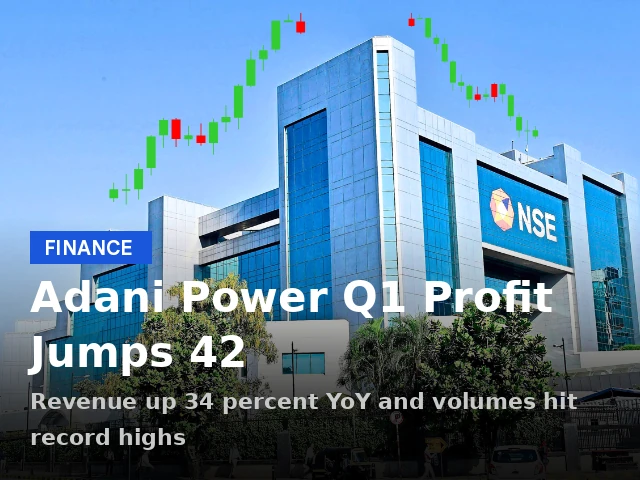
Adani Power Share Price Outlook After Q1 Results And QIP Approval



Key Takeaways
- Adani Power posted a 42% YoY jump in quarterly profit to Rs 4,806 crore.
- Revenue from operations rose 34% YoY to Rs 18,902 crore, marking the highest quarterly performance.
- Power sale volume under PPAs rose 30% to 24.5 billion units; tariff realisation under PPAs is Rs 5.95 per kWh, with merchant realisation at Rs 7.04 per kWh.
- The board approved a Rs 15,000 crore fundraise via QIP or other means.
Investors can gauge the implications by comparing the adani power limited stock price with the underlying earnings growth. The quarter’s strong operational performance, together with a Rs 15,000 crore QIP plan, suggests a constructive recalibration of expectations. The company highlighted that demand growth, higher operating capacity and PPA tie-ups for previously open capacity at the Butibori and Mutiara plants supported volume growth.
This momentum is anchored by the growth in adani power installed capacity, which stood at 18,330 MW in the quarter, up from 17,550 MW a year earlier. The trajectory supports both enhanced generation and broader visibility on future earnings, which could influence the adani power share price as investors reassess the stock against industrial peers. As always, price action will reflect both the durability of earnings and the pace of capital deployment funded by adani power qip. For a deeper, stock-specific analysis, you can explore Swastika's Sarthi AI stock assistant: Swastika's Sarthi AI stock assistant.
Adani Power Share Price Outlook After Q1 Results And Adani Power QIP
The first quarter results paint a picture of both earnings resilience and strategic capital movement. The company’s profit of Rs 4,806 crore marks a 42% YoY rise, while revenue from operations at Rs 18,902 crore reflect a 34% YoY expansion. These figures, described as the highest quarterly operating and financial performance, are attributed to rising power demand and higher capacity utilisation across the portfolio. The pace of growth is supported by a 17% YoY rise in consolidated power sale volume to 28.8 billion units and a generation level of 31 billion units, another record for quarterly output.
On the capacity and utilisation front, installed capacity rose to 18,330 MW, up from 17,550 MW a year earlier, and the plant load factor climbed to 77.9% from 67%. These metrics are crucial because they translate into improved operating leverage and higher EBITDA margins, which stood at Rs 8,369 crore for the quarter – a 36% YoY improvement. Continuing EBITDA, a measure that excludes one-off items, rose 22% to Rs 6,983 crore, suggesting that core operations are generating stronger cash flows even after accounting for higher fuel and financing costs. Net prior-period income added Rs 1,386 crore in the quarter, driven by revisions in historic energy charges under PPAs.
The company’s cost structure shows gravity points: fuel cost rose 30% to Rs 9,513 crore due to higher volumes and elevated landed prices of imported coal. Finance costs increased 5% to Rs 901 crore as the group maintained capital expenditure discipline amid acquisitions. The PPA portfolio remains a key growth lever, with PPAs delivering 24.5 billion units in Q1 FY27 (up 30% YoY). Tariff realisation under PPAs rose 8% to Rs 5.95 per kWh, while merchant and short-term realisation rose 13% to Rs 7.04 per kWh, underscoring the favourable price environment for shorter-term sales in a robust demand scenario.
The quarterly performance, combined with a Rs 15,000 crore fundraise approved by the board for equity issuance via QIP or other means, signals a deliberate push toward funding capacity expansions and portfolio optimisation. The plan aligns with the company’s stated objective of capitalising on growth opportunities in both contracted PPAs and merchant segments, while supporting the scale-up in adani power installed capacity. For investors, the key takeaway is that the combination of higher capacity, improved utilisation, and a directed fundraising plan could yield a more resilient earnings trajectory, even as input costs remain a watchpoint.
Adani Power Quarterly Results: Growth Drivers And Margin Upside
Beyond the headline profits, the quarter’s narrative rests on three pillars: demand growth, capacity utilisation, and a diversified pricing mix. The 42% YoY profit surge is driven by higher revenue and better asset utilisation, with the 34% rise in revenue reinforcing the breadth of the improvement. The 30% YoY rise in PPAs-based power sales to 24.5 billion units indicates stronger demand for contracted supply, while the 17% YoY growth in total power sales to 28.8 billion units shows an expanding consolidated volume base.
Margin momentum is evident in EBITDA expansion. Reported EBITDA grew 36% YoY to Rs 8,369 crore, and continuing EBITDA rose 22% to Rs 6,983 crore, reflecting operational efficiency improvements and the leverage benefits of higher utilisation. The net prior-period income of Rs 1,386 crore further bolsters quarterly profitability, though it is important to view such items as one-offs that may not recur in future periods. The cost structure, notably fuel costs up 30% due to higher volumes and higher coal prices, presents a potential headwind if coal prices stay elevated or if volumes do not hold. Still, tariff realisations under PPAs rose to Rs 5.95 per kWh, and merchant realisations at Rs 7.04 per kWh, offering a favorable mix that could support margins in the near term.
The growth story is anchored by adani power installed capacity and project execution. The quarter confirms that the adani power installed capacity reached 18,330 MW, offering a larger base to drive both PPAs and merchant sales. The company’s plan to raise funds via adani power qip demonstrates a readiness to finance further expansions and asset acquisitions, which could translate into even greater scale and better utilisation in the coming quarters. From an investment standpoint, the improving utilisation metrics and the capacity ramp present a credible case for the sustainability of earnings, assuming input costs remain manageable and demand remains robust.
Adani Power QIP And Its Implications For Financing Adani Power Installed Capacity
The board’s approval of a Rs 15,000 crore fundraise through the issue of equity shares via adani power qip or other means marks a significant step in the company’s funding strategy. This capital does not merely pad the balance sheet; it enables continued capital expenditure on the portfolio and potential acquisitions that could accelerate capacity additions. The expansion away from the current base–edging toward higher installations and a broader generation mix–could underpin a stronger earnings trajectory, provided the financing terms are favourable and the new capacity is brought online with the expected utilisation.
From a long-term investor perspective, the key question is how efficiently these funds are deployed and how quickly new capacity translates into revenue and EBITDA growth. The QIP plan signals management’s intent to accelerate growth; however, it also introduces dilution risk for existing shareholders if the issued equity is not paired with commensurate earnings growth. For those tracking adani power share price, the funding decision adds an additional variable to price formation, as markets will weigh the pace of capacity additions against the costs of capital and the ability to monetize incremental capacity through PPAs and merchant channels.
Investor Takeaways: How The Q1 Results Should Shape Your View On Adani Power Limited Stock Price
The Q1 results deliver a clear message: the business is expanding its earnings power through higher volumes, better utilisation, and a diversified pricing mix. The adani power share price will likely react to the combination of strong quarterly fundamentals and the capital-raising plan. The growth in PPAs and the improving tariff realisations under PPAs provide a credible path for sustainable cash flows, although inputs such as coal prices remain a critical risk factor to monitor.
Frequently Asked Questions
What were Adani Power's Q1 results in the recent quarter?
Profit rose to Rs 4,806 crore, up 42% year on year from Rs 3,385 crore. Revenue from operations was Rs 18,902 crore, up 34% YoY. EBITDA stood at Rs 8,369 crore, with continuing EBITDA at Rs 6,983 crore; net prior-period income was Rs 1,386 crore.
How much had Adani Power approved for QIP fundraising and what is its potential use?
The board approved a Rs 15,000 crore fundraising through the issue of equity shares via adani power qip or other means. This funding is expected to support capex, acquisitions, and expansion of capacity.
What is Adani Power installed capacity after the quarter, and how did it change from the previous year?
Installed capacity stood at 18,330 MW during the quarter, up from 17,550 MW a year earlier.
What were the tariff and merchant realisations under PPAs in Q1?
Tariff realisation under PPAs was Rs 5.95 per kWh, while merchant and short-term realisation rose to Rs 7.04 per kWh.
How did PPAs and overall power sales perform in the quarter?
Power sales under PPAs rose 30% to 24.5 billion units during Q1 FY27, and consolidated power sale volume rose 17% to 28.8 billion units. Power generation was 31 billion units, the highest for a quarterly period.
Conclusion
In the near term, Adani Power’s Q1 showing strengthens the case for a constructive outlook on the adani power share price, supported by higher utilisation, robust PPAs, and a meaningful capital-raising plan. The company’s ability to translate volume gains into earnings hinges on managing input costs and deploying the Rs 15,000 crore QIP efficiently to expand capacity and monetise open capacity. For the retail investor, the practical takeaway is to watch how the capital is allocated and how quickly the incremental capacity translates into free cash flow and earnings upgrades. A useful mental model is to separate earnings quality from one-off items and to assess the efficiency of capital deployment in driving sustainable growth.
Open your trading and demat account here
Reference :
1 : Economictimes
Latest Articles
Adani Power Share Price Outlook After Q1 Results And QIP Approval


Key Takeaways
- Adani Power posted a 42% YoY jump in quarterly profit to Rs 4,806 crore.
- Revenue from operations rose 34% YoY to Rs 18,902 crore, marking the highest quarterly performance.
- Power sale volume under PPAs rose 30% to 24.5 billion units; tariff realisation under PPAs is Rs 5.95 per kWh, with merchant realisation at Rs 7.04 per kWh.
- The board approved a Rs 15,000 crore fundraise via QIP or other means.
Investors can gauge the implications by comparing the adani power limited stock price with the underlying earnings growth. The quarter’s strong operational performance, together with a Rs 15,000 crore QIP plan, suggests a constructive recalibration of expectations. The company highlighted that demand growth, higher operating capacity and PPA tie-ups for previously open capacity at the Butibori and Mutiara plants supported volume growth.
This momentum is anchored by the growth in adani power installed capacity, which stood at 18,330 MW in the quarter, up from 17,550 MW a year earlier. The trajectory supports both enhanced generation and broader visibility on future earnings, which could influence the adani power share price as investors reassess the stock against industrial peers. As always, price action will reflect both the durability of earnings and the pace of capital deployment funded by adani power qip. For a deeper, stock-specific analysis, you can explore Swastika's Sarthi AI stock assistant: Swastika's Sarthi AI stock assistant.
Adani Power Share Price Outlook After Q1 Results And Adani Power QIP
The first quarter results paint a picture of both earnings resilience and strategic capital movement. The company’s profit of Rs 4,806 crore marks a 42% YoY rise, while revenue from operations at Rs 18,902 crore reflect a 34% YoY expansion. These figures, described as the highest quarterly operating and financial performance, are attributed to rising power demand and higher capacity utilisation across the portfolio. The pace of growth is supported by a 17% YoY rise in consolidated power sale volume to 28.8 billion units and a generation level of 31 billion units, another record for quarterly output.
On the capacity and utilisation front, installed capacity rose to 18,330 MW, up from 17,550 MW a year earlier, and the plant load factor climbed to 77.9% from 67%. These metrics are crucial because they translate into improved operating leverage and higher EBITDA margins, which stood at Rs 8,369 crore for the quarter – a 36% YoY improvement. Continuing EBITDA, a measure that excludes one-off items, rose 22% to Rs 6,983 crore, suggesting that core operations are generating stronger cash flows even after accounting for higher fuel and financing costs. Net prior-period income added Rs 1,386 crore in the quarter, driven by revisions in historic energy charges under PPAs.
The company’s cost structure shows gravity points: fuel cost rose 30% to Rs 9,513 crore due to higher volumes and elevated landed prices of imported coal. Finance costs increased 5% to Rs 901 crore as the group maintained capital expenditure discipline amid acquisitions. The PPA portfolio remains a key growth lever, with PPAs delivering 24.5 billion units in Q1 FY27 (up 30% YoY). Tariff realisation under PPAs rose 8% to Rs 5.95 per kWh, while merchant and short-term realisation rose 13% to Rs 7.04 per kWh, underscoring the favourable price environment for shorter-term sales in a robust demand scenario.
The quarterly performance, combined with a Rs 15,000 crore fundraise approved by the board for equity issuance via QIP or other means, signals a deliberate push toward funding capacity expansions and portfolio optimisation. The plan aligns with the company’s stated objective of capitalising on growth opportunities in both contracted PPAs and merchant segments, while supporting the scale-up in adani power installed capacity. For investors, the key takeaway is that the combination of higher capacity, improved utilisation, and a directed fundraising plan could yield a more resilient earnings trajectory, even as input costs remain a watchpoint.
Adani Power Quarterly Results: Growth Drivers And Margin Upside
Beyond the headline profits, the quarter’s narrative rests on three pillars: demand growth, capacity utilisation, and a diversified pricing mix. The 42% YoY profit surge is driven by higher revenue and better asset utilisation, with the 34% rise in revenue reinforcing the breadth of the improvement. The 30% YoY rise in PPAs-based power sales to 24.5 billion units indicates stronger demand for contracted supply, while the 17% YoY growth in total power sales to 28.8 billion units shows an expanding consolidated volume base.
Margin momentum is evident in EBITDA expansion. Reported EBITDA grew 36% YoY to Rs 8,369 crore, and continuing EBITDA rose 22% to Rs 6,983 crore, reflecting operational efficiency improvements and the leverage benefits of higher utilisation. The net prior-period income of Rs 1,386 crore further bolsters quarterly profitability, though it is important to view such items as one-offs that may not recur in future periods. The cost structure, notably fuel costs up 30% due to higher volumes and higher coal prices, presents a potential headwind if coal prices stay elevated or if volumes do not hold. Still, tariff realisations under PPAs rose to Rs 5.95 per kWh, and merchant realisations at Rs 7.04 per kWh, offering a favorable mix that could support margins in the near term.
The growth story is anchored by adani power installed capacity and project execution. The quarter confirms that the adani power installed capacity reached 18,330 MW, offering a larger base to drive both PPAs and merchant sales. The company’s plan to raise funds via adani power qip demonstrates a readiness to finance further expansions and asset acquisitions, which could translate into even greater scale and better utilisation in the coming quarters. From an investment standpoint, the improving utilisation metrics and the capacity ramp present a credible case for the sustainability of earnings, assuming input costs remain manageable and demand remains robust.
Adani Power QIP And Its Implications For Financing Adani Power Installed Capacity
The board’s approval of a Rs 15,000 crore fundraise through the issue of equity shares via adani power qip or other means marks a significant step in the company’s funding strategy. This capital does not merely pad the balance sheet; it enables continued capital expenditure on the portfolio and potential acquisitions that could accelerate capacity additions. The expansion away from the current base–edging toward higher installations and a broader generation mix–could underpin a stronger earnings trajectory, provided the financing terms are favourable and the new capacity is brought online with the expected utilisation.
From a long-term investor perspective, the key question is how efficiently these funds are deployed and how quickly new capacity translates into revenue and EBITDA growth. The QIP plan signals management’s intent to accelerate growth; however, it also introduces dilution risk for existing shareholders if the issued equity is not paired with commensurate earnings growth. For those tracking adani power share price, the funding decision adds an additional variable to price formation, as markets will weigh the pace of capacity additions against the costs of capital and the ability to monetize incremental capacity through PPAs and merchant channels.
Investor Takeaways: How The Q1 Results Should Shape Your View On Adani Power Limited Stock Price
The Q1 results deliver a clear message: the business is expanding its earnings power through higher volumes, better utilisation, and a diversified pricing mix. The adani power share price will likely react to the combination of strong quarterly fundamentals and the capital-raising plan. The growth in PPAs and the improving tariff realisations under PPAs provide a credible path for sustainable cash flows, although inputs such as coal prices remain a critical risk factor to monitor.
Frequently Asked Questions
What were Adani Power's Q1 results in the recent quarter?
Profit rose to Rs 4,806 crore, up 42% year on year from Rs 3,385 crore. Revenue from operations was Rs 18,902 crore, up 34% YoY. EBITDA stood at Rs 8,369 crore, with continuing EBITDA at Rs 6,983 crore; net prior-period income was Rs 1,386 crore.
How much had Adani Power approved for QIP fundraising and what is its potential use?
The board approved a Rs 15,000 crore fundraising through the issue of equity shares via adani power qip or other means. This funding is expected to support capex, acquisitions, and expansion of capacity.
What is Adani Power installed capacity after the quarter, and how did it change from the previous year?
Installed capacity stood at 18,330 MW during the quarter, up from 17,550 MW a year earlier.
What were the tariff and merchant realisations under PPAs in Q1?
Tariff realisation under PPAs was Rs 5.95 per kWh, while merchant and short-term realisation rose to Rs 7.04 per kWh.
How did PPAs and overall power sales perform in the quarter?
Power sales under PPAs rose 30% to 24.5 billion units during Q1 FY27, and consolidated power sale volume rose 17% to 28.8 billion units. Power generation was 31 billion units, the highest for a quarterly period.
Conclusion
In the near term, Adani Power’s Q1 showing strengthens the case for a constructive outlook on the adani power share price, supported by higher utilisation, robust PPAs, and a meaningful capital-raising plan. The company’s ability to translate volume gains into earnings hinges on managing input costs and deploying the Rs 15,000 crore QIP efficiently to expand capacity and monetise open capacity. For the retail investor, the practical takeaway is to watch how the capital is allocated and how quickly the incremental capacity translates into free cash flow and earnings upgrades. A useful mental model is to separate earnings quality from one-off items and to assess the efficiency of capital deployment in driving sustainable growth.
Open your trading and demat account here
Reference :
1 : Economictimes

Cube Highways Trust IPO: Should Retail Apply, Wait, or Watch for Listing?
Key Takeaways
- Price band ₹151–₹152; Issue size 136589480; Open 22-Jul-2026; Close 24-Jul-2026.
- GMP signal: Not available yet; no live subscription data.
- Financials: Not disclosed in available sources.
- Action: Watchlist for now; wait for lot size, GMP, and listing date to be announced.
Cube Highways Trust IPO Background: What Is Cube Highways Trust And What Do They Do?
The source only indicates that Cube Highways Trust is currently open for IPO subscription. It does not provide detailed background on business operations, promoters, assets, or revenue history. This absence of financial visibility suggests investors should be mindful of the risk of investing in a data-light issue.
For deeper insights into the broader market dynamics and this IPO's potential, you can consult Swastika's Sarthi AI stock assistant.
Cube Highways Trust IPO Details And Key Dates
| Open Date | 22-Jul-2026 |
|---|---|
| Close Date | 24-Jul-2026 |
| Price Band | ₹151 to ₹152 |
| Issue Size | 136589480 |
| Exchange | NSE / BSE |
| Listing Date | To be announced |
| Lot Size | To be announced |
| Registrar | To be announced |
| Lead Manager | To be announced |
| GMP | Not available yet |
| Issue Type | IV |
| OFS | To be announced |
| Fresh Issue | To be announced |
Note: Several fields such as Lot Size, Registrar, and Lead Manager are currently To be announced and will be revealed soon.
GMP Signal And Subscription Status For Cube Highways Trust IPO
GMP is Not available yet, and subscriptions data (Retail, NII, QIB, Overall) are Not available yet in the source. This means there is no live demand signal to gauge potential listing gains.
Financial Snapshot And Valuation Considerations For Cube Highways Trust IPO
Financials: Not disclosed in available sources for this IPO.
Note: The source provides no revenue, profit, or growth figures beyond that line. Consequently, there is no basis to compute valuations or compare with peers at this time.
Allotment, Listing Timeline, And How To Apply For Cube Highways Trust IPO
Allotment/Listing considerations are not yet available. Lot Size: To be announced; Listing Date: To be announced. Registrar and Lead Manager: To be announced. For applying, you would typically use ASBA with UPI; consult your broker for exact steps and the official offer document once published. The above fields will be filled in as soon as the issuer updates the information.
Is Cube Highways Trust IPO Worth Applying?
Given the lack of disclosed financials and the fact that several key parameters remain To be announced, this IPO is not a clear buy at this stage. If you have a high risk tolerance and want to take a shot at possible listing gains, you could consider a small exposure, but only after more data is available. For most retail investors, the prudent path is to wait for more clarity on financials and the listing timeline.
Frequently Asked Questions
Is Cube Highways Trust IPO worth applying for at ₹151–₹152?
With only the price band and issue size disclosed and no financials or performance history, the IPO is data-light; consider waiting for more clarity before applying.
What does GMP signal for Cube Highways Trust IPO?
GMP is not available yet, so there is no listing momentum signal at this time.
What is the lot size for Cube Highways Trust IPO?
Lot Size: To be announced.
When will Cube Highways Trust IPO open and close?
Open Date: 22-Jul-2026; Close Date: 24-Jul-2026.
What is the current subscription status for the Cube Highways Trust IPO?
Subscription — Retail: Not available yet; NII: Not available yet; QIB: Not available yet; Overall: Not available yet.
Conclusion
Cube Highways Trust's IPO is a data-light offering with several critical items missing, including financials and lot size, as well as the listing date. This makes it a high-uncertainty bet that should be approached with caution by most retail investors.
Investors should watchlist this IPO for now – because essential details like Lot Size, GMP, and financials are not yet disclosed.

Gold Price Today: Tamil Market Update For Indian Retail Investors
Key Takeaways
- Gold price today signals a volatile but constructive move for retail investors.
- Silver price rate today sits at Rs 245 per gram, with Rs 2,45,000 per kilogram in focus.
- Chennai's 22 karat gold price per tola rose to Rs 1,07,440, and the per gram rate climbed Rs 210 to Rs 13,430.
- Consider Swastika's Sarthi AI stock assistant for deeper market insights.
Gold Price Today: Reading The Latest Bullion And Currency Moves
gold price today has bumped higher as bullion tracks global cues and local demand. Silver price rate today is Rs 245 per gram, Rs 2,45,000 per kilogram, while the pound price has risen by Rs 560 to Rs 1,05,760. In Chennai, the 22 karat gold price rose by Rs 1,680 to Rs 1,07,440 per tola, and the per gram price in Chennai climbed by Rs 210 to Rs 13,430. Across these moves, silver continued to move in tandem with gold, reinforcing the sense that retail buyers should calibrate their entries rather than chase headlines.
What does this combination of moves mean for a retail investor? It suggests that the gold price today and its bullion peers may remain sensitive to currency shifts and local demand. The data reflect intermittent spikes that can be amplified by local supply conditions and festival demand. For an investor, the key is to read the moves with a longer-term view and to avoid knee-jerk reactions to daily price noise.
2 Day Gold Rate In Chennai: What The Data Shows For Local Buyers
In Chennai, the data shows a notable movement in the gold market. The 22 karat gold price per tola rose by Rs 1,680 to Rs 1,07,440. The per gram price in Chennai increased by Rs 210 to Rs 13,430. This pair of moves indicates a local premium on gold ornament markets that can influence consumer buying decisions for festival periods. Investors who want to hedge risk or build a core gold exposure may consider these local signals alongside national price trends.
Gold Price Per Gram In Chennai: The 13,430 Move And The 210 Increase
The Chennai per gram price for gold rose by Rs 210 to Rs 13,430, matching the broader pattern of rising gold prices as the market absorbs macro cues. The 22 karat gold price phrase is common in local markets and indicates price variations by karat grade. For 22 karat gold, the price per tola sits at Rs 1,07,440, up Rs 1,680. Retail buyers should consider not only the per gram price but also the tola-based price for small purchases.
Silver Price Rate Today Movements: From 13,150 To 13,220 And Beyond
The silver price rate today shows the following: two days ago, a price per gram was Rs 13,150; yesterday, it rose by Rs 70 to Rs 13,220 per gram. As of today, the price is Rs 245 per gram with per kilogram at Rs 2,45,000. The stark differences in the numeric values reflect different market segments and currency conversions; it's essential for investors to interpret these numbers in the context of the unit being used.
Table: Key silver price points
| Time | Silver Price Per Gram (Rs) | Notes |
|---|---|---|
| Two Days Ago | Rs 13,150 | Reported in source |
| Yesterday | Rs 13,220 | Rs 70 higher than two days ago |
| Current | Rs 245 | Silver price per gram; + Rs 5 due to recent market moves |
Per kilogram price: Rs 2,40,000 (earlier note) and Rs 2,45,000 (current note) show movement in the same range, with a drift upward in the broader market for silver bullion in the context of this data release.
Gold Price In Chennai: 22 Karat Gold Price And Per Gram Movement
In Chennai, the gold market shows a notable pressure on the 22 karat segment with the per gram price moving Rs 210 higher to Rs 13,430 and the per tola (22K) price rising Rs 1,680 to Rs 1,07,440. The combination of these changes indicates that the 22 karat segment remains a focal point for consumer purchases and jewelry pricing, with local stores pricing that reflect supply-demand dynamics around major festivals. For the 1 sovereign gold price calculations and other karat-tier numbers, investors should refer to current market feeds and consult with a trusted broker.
Silver Price Rate Today: Implications For The Bullion Trader
With silver price rate today showing Rs 245 per gram and Rs 2,45,000 per kilogram in the current session, traders may note that silver often acts as a pro-cyclical metal. When gold price today rises, silver often follows, albeit with a different volatility profile. In this environment, small price moves can compound into meaningful gains or losses, particularly for those with high-frequency trading needs or large physical positions.
To glean deeper insights or to tailor a plan that aligns with your risk tolerance, consider using Swastika's Swastika's Sarthi AI stock assistant for data-driven stock and index analysis. This tool can help you interpret signals and test scenarios before you commit capital.
Investment Takeaways For Retail Investors
Here are the practical steps you can take given the current price moves: First, verify whether your portfolio remains aligned with your risk tolerance; second, consider using a portion of your allocation to hedge with a bullion instrument; third, monitor the daily price movements across gold price today and silver price rate today to identify potential entry points. Keep in mind the Chennai-based price points (1,07,440 per tola; 13,430 per gram; and 245 per gram for silver) as anchor references for domestic price realities.
Frequently Asked Questions
What is the current silver price per gram today?
The current silver price per gram today is Rs 245, with a per-kilogram price of Rs 2,45,000.
What is the Chennai 22 karat gold price per tola today?
In Chennai, the 22 karat gold price per tola rose by Rs 1,680 to Rs 1,07,440.
What is the present gold price per gram in Chennai?
The per-gram price in Chennai rose by Rs 210 to Rs 13,430.
How much did the pound price rise today?
The pound price rose by Rs 560 to Rs 1,05,760.
Where can I learn more about Swastika's Sarthi AI stock assistant?
You can learn more and use the tool here:Swastika's Sarthi AI stock assistant.
Conclusion
Retail investors should recognize that today’s price moves in gold and silver are part of a larger price discovery process that blends domestic demand with global cues. The key takeaway is to calibrate entries with a disciplined plan, focusing on unit costs (per gram and per tola) and your overall risk profile, rather than chasing every tick in the tabloids. A practical next step is to set price alerts for gold price today and silver price rate today across your preferred brokers and consider using Swastika's Sarthi AI stock assistant to test scenarios before committing capital.
By incorporating both bullion and equity signals into a single framework, you can navigate this environment with a more robust mental model for risk and reward. The next step is to define your own threshold for entry and exit, then review it weekly in conjunction with your financial goals.
Open your trading and demat account here
Reference :
1 : Dailythanthi
_reports_standalone_net_loss_.webp)
TTML Share Price Outlook After June 2026 Quarter Results
Key Takeaways
- TTML posted a standalone net loss of Rs 72.15 crore in the June 2026 quarter, narrowing from Rs 324.98 crore in the June 2025 quarter.
- Revenue rose 6.09% YoY to Rs 301.57 crore, with operating profit margin improving to 54.67% from 51.56% in the prior year.
- PBDT was -Rs 38.88 crore and PBT was -Rs 72.15 crore; NP remained negative at -Rs 72.15 crore for the quarter.
- The ttml share price reaction will hinge on whether this improving trajectory sustains and how the market prices the continued losses.
What does it take for a telecom smallcap to flip from heavy losses to a path of potential profitability? The June 2026 quarter presents a nuanced story for TTML, with a standalone net loss of Rs 72.15 crore, narrowed from Rs 324.98 crore in the June 2025 quarter. At the same time, the ttml share price and investors are trying to gauge whether this momentum can persist as revenue grows to Rs 301.57 crore, up 6.09% year over year, and operating profit margin firming to 54.67% from 51.56% in the prior year. These figures set the stage for a deeper look into what the June 2026 quarter means for retail investors across India.
TTML Share Price Outlook After June 2026 Quarter Results
TTML's standalone results for the quarter ended June 2026 show a mixed picture: revenue and margins improved, but net profitability remains negative on a standalone basis. Revenue stood at Rs 301.57 crore in the June 2026 quarter, up from Rs 284.25 crore in the June 2025 quarter, a 6.09% year-over-year rise. The operating profit margin (OPM) rose to 54.67% in June 2026, from 51.56% in June 2025, signaling improving efficiency or mix. However, the company continues to incur a net loss of Rs 72.15 crore in the current quarter, versus a larger net loss of Rs 324.98 crore a year earlier. The PBDT figure for June 2026 is negative Rs 38.88 crore, compared to negative Rs 284.23 crore in June 2025, while PBT and NP are -Rs 72.15 crore for the quarter. These numbers frame how investors may view TTML's path ahead and particularly the near-term trajectory of the ttml share price.
Understanding The Jun 2026 TTML Quarterly Results: Revenue, Margin, And Loss Metrics
To understand what the June 2026 quarter means, it helps to unpack the four core metrics: revenue, operating profit margin, and the two lines of negative profitability (PBDT and PBT) along with net profit (NP). Revenue of Rs 301.57 crore compares with Rs 284.25 crore in the June 2025 quarter, a 6.09% growth. Operating profit margin rose to 54.67% in June 2026 from 51.56% in June 2025, suggesting that cost management or product mix improvements are helping cushion the bottom line. Despite these positives, the bottom line remains negative: net loss is Rs 72.15 crore in the June 2026 quarter, versus Rs 324.98 crore in the prior-year quarter. The PBDT stands at -Rs 38.88 crore, while PBT and NP are -Rs 72.15 crore, underscoring that the company continues to burn cash on a quarterly basis even as revenue trends improve.
| Metric | Jun 2026 Quarter | Jun 2025 Quarter |
|---|---|---|
| Revenue | Rs 301.57 crore | Rs 284.25 crore |
| Net Loss | Rs 72.15 crore | Rs 324.98 crore |
| OPM | 54.67% | 51.56% |
| PBDT | -Rs 38.88 crore | -Rs 284.23 crore |
| PBT | -Rs 72.15 crore | -Rs 321.18 crore |
| NP | -Rs 72.15 crore | -Rs 324.98 crore |
PBDT, PBT, And NP: Reading TTML's Trajectory From Jun 2026 Quarter
The June 2026 quarter data points to a clear pattern: while operating margin improved, the bottom line remained negative. The company posted a negative PBDT of Rs 38.88 crore, and the same quarter shows a negative PBT of Rs 72.15 crore and negative NP of Rs 72.15 crore. This marks an improvement in margins relative to the prior-year quarter, when PBDT was -Rs 284.23 crore, PBT was -Rs 321.18 crore, and NP was -Rs 324.98 crore. The widening gap between revenue growth and profitability suggests that fixed costs or line items beyond direct costs are still exerting pressure. For a retail investor, this implies that the path to profitability hinges on sustaining revenue gains while driving further cost efficiency to convert operating gains into net profits. Investors should watch how the company manages cash flows and whether additional cost controls or strategic revenue initiatives emerge in coming quarters.
TTML's June 2026 Quarter: A Comparative View With Jun 2025 Quarter
The year-over-year comparison offers a story of narrowing losses amid revenue growth. Jun 2026 quarter revenue of Rs 301.57 crore rose 6.09% from Rs 284.25 crore in Jun 2025. Net loss narrowed dramatically to Rs 72.15 crore from Rs 324.98 crore. OPM expanded to 54.67% in Jun 2026, up from 51.56% in Jun 2025, signaling improved operating efficiency. The PBDT, PBT, and NP figures reflect continued negative profitability in the June 2026 quarter, with -Rs 38.88 crore, -Rs 72.15 crore, and -Rs 72.15 crore respectively, compared with -Rs 284.23 crore, -Rs 321.18 crore, and -Rs 324.98 crore in the prior-year period. This juxtaposition of improved margins and ongoing losses suggests a transitional phase rather than a completed turnaround. Retail investors should weigh whether revenue momentum can be sustained long enough to convert the margin gains into meaningful bottom-line improvement over the next few quarters.
Investing Implications For Tata Teleservices Maharashtra Stock
From an investing lens, the June 2026 quarterly performance paints a mixed picture. On one hand, revenue growth and an elevated operating margin point toward improving efficiency and potential upside if growth sustains. On the other hand, the persistent net losses (Rs 72.15 crore in the June 2026 quarter) indicate that profitability has not yet turned positive. For investors evaluating the ttml quarterly results, the key questions are whether revenue can maintain a 6%+ YoY pace and whether fixed costs can be squeezed further to drive a positive net outcome. The ttml share price is likely to respond to ongoing improvements in top-line growth and the trajectory of cash burn. Given the current mix of improving margins and negative profitability, investors may prefer a wait-and-watch stance until a clearer path to sustained profitability emerges. Keep an eye on how the company manages its cost base and whether any strategic revenue initiatives begin to show material impact in coming quarters. For deeper stock-specific insights, you can explore Swastika's Sarthi AI stock assistant: Swastika's Sarthi AI stock assistant.
Frequently Asked Questions
What was TTML's net loss in the June 2026 quarter?
TTML reported a standalone net loss of Rs 72.15 crore for the quarter ended June 2026.
What was TTML's revenue in the June 2026 quarter?
TTML's revenue was Rs 301.57 crore in the quarter ended June 2026.
How did TTML's operating profit margin change from June 2025 to June 2026?
OPM rose to 54.67% in June 2026 from 51.56% in June 2025.
What were TTML's PBDT, PBT, and NP in the June 2026 quarter?
PBDT was Rs -38.88 crore, PBT was Rs -72.15 crore, and NP was Rs -72.15 crore.
How might retail investors interpret TTML's June 2026 quarterly results for the ttml share price?
The results show negative net profit and negative PBT/NP, but a narrowed loss and higher revenue with improved margins; the ttml share price will reflect market expectations and broader sector conditions.
What is the YoY revenue growth for TTML in the June 2026 quarter?
Revenue grew 6.09% YoY from Rs 284.25 crore in Jun 2025 to Rs 301.57 crore in Jun 2026.
Conclusion
TTML’s June 2026 quarter showcases a narrowing loss coupled with revenue growth and margin expansion, yet profitability remains elusive on a standalone basis. For the retail investor, the takeaway is not a guaranteed turn but a clearer signal: if revenue momentum continues and the company sustains cost discipline, the path toward positive earnings could start to show in subsequent quarters. The near-term TTML share price will hinge on whether market expectations align with this improving trajectory and whether additional catalysts emerge (such as favorable pricing, customer wins, or efficiency gains). A practical mental model is to separate “growth signals” from “profitability signals”: monitor whether top-line gains translate into bottom-line gains over the next two to four quarters and adjust expectations accordingly.
Open your trading and demat account here
Reference :
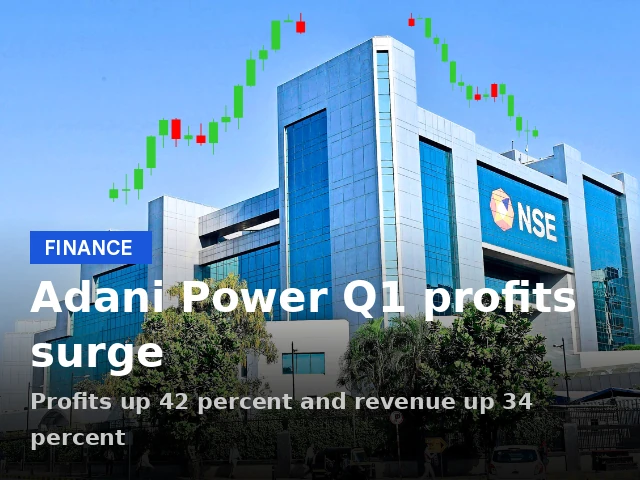
Adani Power Limited Stock Price After Q1 FY27 Results: What Retail Investors Should Know
Key Takeaways
- Adani Power FY27 Q1 revenue rose 34% YoY to Rs 18,902 crore and net profit rose 42% to Rs 4,806 crore.
- EBITDA rose 39.8% YoY to Rs 7,948 crore with EBITDA margin at 42%, up from 40.3% year earlier.
- Board approves raising up to Rs 15,000 crore via adani power qip or other eligible securities, subject to approvals.
- The stock price traded at Rs 218.19 in afternoon trade, down about 0.99%.
In the April-June quarter of FY27, Adani Power Ltd posted a robust set of numbers. Revenue from operations rose 34% YoY to Rs 18,902 crore, while consolidated net profit climbed 42% to Rs 4,806 crore. EBITDA climbed 39.8% YoY to Rs 7,948 crore, and the EBITDA margin expanded to 42% from 40.3% a year ago. For investors watching the adani power limited stock price, these metrics illuminate the durability of earnings and the capacity to fund future growth. The quarter also marks a critical inflection as the board signaled a large capital raise to support expansion.
Specifically, the board approved raising up to Rs 15,000 crore through a qualified institutional placement (QIP) or other eligible securities, subject to necessary approvals. This funding plan, if executed, could support capacity additions, debt management, or other strategic initiatives that influence future cash flows. The decision aligns with a broader pattern seen across the sector where scale, efficiency improvements, and capital deployment decisions converge to drive adani power earnings over the medium term.
Adani Power Limited Stock Price: Q1 FY27 Revenue And Net Profit Analysis
The quarter’s revenue of Rs 18,902 crore marks a 34% YoY improvement. Net profit stood at Rs 4,806 crore, up 42% YoY, and free cash flow dynamics benefited from an EBITDA expansion of 39.8% to Rs 7,948 crore. The EBITDA margin improved to 42%, up from 40.3% in the previous year. For investors tracking the adani power limited stock price, this combination of topline growth and margin expansion signals a more resilient earnings base, potentially supporting a stronger valuation band in the near term.
More than a headline number, the quarterly dynamics suggest that adani power earnings are becoming more predictable, aided by a favorable mix, better operating leverage, and disciplined cost management. However, a key question for market participants is whether this momentum can sustain into the next quarters amid potential variability in fuel costs, regulatory dynamics, and commodity cycles. The broader takeaway is that the company has managed to translate revenue gains into meaningful profitability–an outcome that matters for long-term investors sizing risk and return against the backdrop of a large QIP plan.
For investors seeking deeper, stock-specific analysis, consider Swastika’s Sarthi AI stock assistant for nuanced catalysts, risk factors, and scenario planning. Swastika's Sarthi AI stock assistant.
Adani Power QIP And Its Implications For The Balance Sheet
The board’s approval to raise up to Rs 15,000 crore through adani power qip or other eligible securities reflects a proactive approach to funding growth and optimizing the balance sheet. While the exact deployment will depend on regulatory approvals, the intent is clear: unlock capital for capacity expansion, technology upgrades, or working capital needs that could support a steadier earnings trajectory. From a risk perspective, a larger equity raise could dilute existing shareholding but may also reduce funding costs and provide a cushion for leveraged growth. Investors should watch for the final cap table and the timing of the issue, as these factors will influence the near-term adani power stock price narrative and the longer-term return potential.
In the context of adani power quarterly results, such capital-raising moves are common when a company seeks to fund large-scale projects or refinance debt. The effectiveness of this plan hinges on execution and market conditions at the time of the offering. For readers evaluating the implications for their portfolios, the question is how this capital infusion translates into sustained cash generation and whether any dilution is offset by higher future earnings. The balance between growth and dilution will shape the stock’s trajectory as the company navigates the next phase of its expansion plan.
Share Price Momentum: How The Market Reacted To The Q1 FY27 Numbers
Shares of Adani Power were trading 0.99% lower at Rs 218.19 in afternoon trade after the Q1 FY27 numbers were disclosed. This near-flat to modestly negative reaction indicates that investors are weighing the strong earnings against the potential dilution from the QIP plan and the timing of capital deployment. In the short run, the stock’s direction may hinge on how the management communicates execution milestones for the QIP and how the market prices the future cash flows from the improved margins and potential scale of operations.
For quick context, the performance highlights across the core metrics–revenue, net profit, EBITDA, and EBITDA margin–signal that the business is delivering higher operating cash flow. Yet, the market often prices in forward-looking risk, including project execution risk, commodity price swings, and regulatory changes. The current price action should be interpreted as part of a longer narrative in which the company’s ability to deploy capital efficiently and grow earnings will be the decisive factor for adani power earnings in the coming quarters.
What Retail Investors Should Watch Next: Growth, Leverage, And Valuation
From an investing lens, the Q1 FY27 results emphasize growth quality. Revenue growth at 34% demonstrates scale, but the real test is whether operating leverage and cost control can sustain margins as the company adds capacity. A successful QIP could enable debt reduction and improved capital structure, which would be a positive driver for free cash flow in subsequent quarters. Investors should watch how the company manages its fuel mix, plant utilization, and regulatory environment, as these variables will influence both profitability and capital allocation.
Frequently Asked Questions
What were Adani Power's key metrics in Q1 FY27?
Revenue from operations rose to Rs 18,902 crore, up 34% year-on-year. Consolidated net profit climbed to Rs 4,806 crore, up 42% year-on-year. EBITDA was Rs 7,948 crore, with an EBITDA margin of 42%.
How much is the board planning to raise and how?
The board approved raising up to Rs 15,000 crore through a QIP or other eligible securities, subject to necessary approvals.
How did the Adani Power stock price react after the Q1 FY27 results?
Shares traded at Rs 218.19 in afternoon trade, about 0.99% lower.
What do the earnings and margins imply for future growth?
Adani power earnings show strong top-line growth and margin expansion to 42%, implying improved cash generation and potential capacity expansion funded by the planned QIP.
What should investors watch next after these results?
Investors should monitor the execution of the QIP, deployment of the raised funds, and whether revenue growth remains sustainable in subsequent quarters, along with changes in leverage and cash flow.
Conclusion
The April-June quarter of FY27 confirms that Adani Power Ltd has delivered top-line growth, stronger profitability, and a clear capital-raising plan to back future expansion. The 34% revenue rise to Rs 18,902 crore, the 42% jump in net profit to Rs 4,806 crore, and the 39.8% EBITDA growth to Rs 7,948 crore, with margins compressing from 40.3% to 42%, collectively point to a healthier earnings engine. For the adani power limited stock price, these dynamics translate into a more robust cash-generating ability, albeit with the trade-off of potential dilution if the QIP is executed. Retail investors should weigh the improved profitability against the timing and method of capital deployment when formulating their stance on the stock.
Open your trading and demat account here
Reference :
1 : Moneycontrol

NSE Share Price Trends: Volume: 110,000/month And A Retail Investor's Guide
Key Takeaways
- The nse share price moves in real time based on demand and supply across the market.
- The nse fifty index provides a quick read on broad market momentum for investors.
- infosys stock price movements are influenced by infosys results and infosys dividend decisions, shaping sector sentiment.
- Use credible data sources and Swastika's Sarthi AI stock assistant to research price moves and plan.
Every trading day, the nse share price is the heartbeat of Indian markets, with prices flashing across screens and investors interpreting the meaning in real time. The move from one tick to the next can signal optimism, hesitation, or a looming reversal. This guide peels back the surface to explain why the nse share price moves, what data you should track, and how to translate price signals into a practical plan for a retail investor. We'll cover the role of macro data and corporate news, including infosys results, and the broader market context reflected by the nse fifty index. Volume: 110,000/month
NSE Share Price Dynamics: Key Drivers For Retail Investors
Price discovery on the nse national stock exchange occurs in real time as buyers and sellers place orders. The nse share price responds to macro signals such as inflation, GDP growth, and RBI policy expectations, in addition to company news. When infosys results are released or infosys dividend decisions accompany guidance, investor sentiment for the tech sector can swing. The nse fifty index acts as a broad barometer of market risk appetite, and its direction often foreshadows price moves in many individual stocks.
Infosys Stock Price And Infosys Results: Reading The Signals
Infosys stock price movements are not driven by a single factor. Investors watching infosys results will look for earnings quality, revenue growth, and margin trajectory. Solid infosys results can lift the infosys stock price, while cautious or weak guidance can weigh on the stock. The infosys dividend, its payout policy, can add a dividend-driven element to near-term movements and influence sentiment around the stock.
Nse Fifty Index And The Wider Market Pulse
The nse fifty index tracks 50 of the largest and most liquid stocks on the nse national stock exchange. When the nse fifty index is rising, it generally indicates broad positive momentum, lifting many price moves across individual shares. Conversely, a decline in the index can push market participants to rotate into defensive or value opportunities. For traders, this index provides context for price action in names across sectors.
Practical Steps To Track The NSE Share Price And Build A Simple Investment Plan
Here is a practical framework for retail investors to monitor and act on price moves:
- Set up a reliable price feed from the official exchange or your broker and watch real-time price moves during market hours.
- Use price charts to identify trend lines and support/resistance levels; consider 5-day and 20-day moving averages to gauge momentum, while avoiding over-reliance on a single indicator.
- Track market-wide signals such as the nse fifty index to understand the broader market context behind price moves of a specific stock.
- Monitor company-specific news, including infosys results and infosys dividend announcements if you are tracking the infosys stock price; remember that market expectations can be volatile around earnings dates.
- Acknowledge risk through position sizing and stop-loss discipline; price movements can be sudden, especially on high-volume days (Volume: 110,000/month shows high attention).
- Use a stock research assistant to supplement your own analysis. For example, Swastika's Sarthi AI stock assistant can summarize key signals and help you test ideas before you trade.
Frequently Asked Questions
What is the NSE share price?
The NSE share price is the latest traded price of a security on the National Stock Exchange of India and changes throughout trading hours as buyers and sellers place orders.
How can I track the infosys stock price?
You can track the infosys stock price on the official NSE page, your broker's platform, or trusted financial data providers.
What is the nse fifty index and why does it matter?
The nse fifty index tracks 50 of the largest and most liquid stocks on the nse national stock exchange and serves as a broad market benchmark for momentum.
How do infosys results and infosys dividend affect the infosys stock price?
Infosys results influence near-term expectations for growth and profitability, which can move the infosys stock price; infosys dividend announcements can also cause price adjustments around ex-dividend dates.
Where can I find reliable NSE share price data?
Reliable NSE share price data is available on the official exchange website, through your broker, and on established financial data platforms.
Conclusion
For the retail investor, price movements on the nse share price are not random noise; they reflect macro forces, liquidity, earnings, and risk appetite. Understanding the live price in context–consider the broader picture via the nse fifty index, and pay attention to company-specific signals such as infosys results and any infosys dividend decisions–helps you decide when to act and when to stay patient.
Next steps: Build a simple framework, practice tracking price moves, and use trusted research tools like Swastika's Sarthi AI stock assistant to test ideas before you commit capital. The goal is to align your decisions with objective signals rather than chasing headlines or short-term noise.
Open your trading and demat account here
Reference :
1 : Thehindu
Big Budget


Popular Articles



.avif)
.avif)

.avif)



START YOUR INVESTMENT JOURNEY
Get personalized advice from our experts
- Dedicated RM Support
- Smooth and Fast Trading App
