


Neet Paper Leak Fallout: STF Probes Exam Offences Across India



Key Takeaways
- Delhi Police forms STF to fast-track investigations into exam offences under the 2024 Act.
- The STF will probe exams run by UPSC, SSC, RRBs, IBPS, and NTA.
- The move aims to boost credibility of public recruitment and entrance examinations.
- Investors should monitor policy enforcement and education-sector implications as the NEET paper leak fallout unfolds.
Neet paper leak fallout has triggered a nationwide crackdown on exam integrity and a new era of policy enforcement. The Delhi Police announced the formation of a Special Task Force within the Crime Branch to probe examination offences under the Public Examinations (Prevention of Unfair Means) Act, 2024. The unit will handle cases across exams conducted by UPSC, SSC, RRBs, IBPS, and NTA, and coordinate with prosecuting agencies to push trials on a day-to-day basis. For investors, this signals a shift in risk and opportunity around education services and recruitment fundamentals, including context around the neet paper leak context that sparked protests.
Neet Paper Leak Fallout: STF's Mandate For Public Examinations
The Public Examinations (Prevention of Unfair Means) Act, 2024 provides the statutory spine for the STF's mandate, which the Delhi Police press note describes as a commitment to prompt, professional, and comprehensive investigations into paper leaks and unfair means. The newly formed unit will sit in the Crime Branch with the approval of the Commissioner of Police, Delhi, giving it access to investigative resources, cross-agency coordination, and day-to-day prosecution support. The STF's leadership structure – headed by the Deputy Commissioner of Police, Crime Branch and overseen by the Special Commissioner of Police, Crime Branch – signals administrative strength and clear accountability.
Its scope is broad: it will investigate offences related to recruitment examinations conducted by central government ministries, departments and any other authority notified by the Centre, in addition to exams run by UPSC, SSC, RRBs, IBPS, and NTA. The intent is to strengthen enforcement against examination fraud and improve the credibility of public recruitment and entrance examinations across the country. The move comes in the wake of the NEET paper leak and the protests that followed, underscoring the high-stakes nature of exam integrity and the public's demand for trustworthy recruitment processes. delhi police investigation is now a central narrative shaping policy responses and investor sentiment in the education and testing services space.


What This STF Move Means For Public Recruitment And Education Stocks
From an investor's lens, the STF's arrival shifts risk and opportunity across the education sector and the set of public-recruitment related services. A stronger enforcement regime can bolster the long-run credibility of high-stakes exams, benefiting credible test-prep providers, coaching networks, and exam services that invest in integrity and security. Conversely, the crackdown can pressure weaker players that rely on unfair means, potentially leading to market consolidation in exam-related services and training. The public confidence gained from a credible testing process can support more predictable demand for preparatory services, online practice platforms, and proctored testing solutions.
As the framework extends to UPSC exam updates, the NTA exam news, and even SSC recruitment updates, investors should monitor regulatory momentum and the sectors that stand to gain from improved exam integrity. The delhi police investigation narrative will influence sentiment around education-tech firms, coaching chains, and proctoring service providers. While it might cause short-term volatility in related equities, a transparent and enforceable system can unlock longer-run opportunities for players that invest in quality and compliance. For retail investors, the key is to align with firms that demonstrate robust governance, reliable testing security, and scalable delivery of exam-prep services.
Investors' Playbook: Monitoring Regulatory Developments And Opportunities In Education Services
To navigate the NEET paper leak fallout and the STF's broader remit, build a playbook that blends regulatory tracking with fundamentals. Start by following official notices and press notes for the Act's implementation, and watch for updates across central exams – upsc exam updates, nta exam news, and ssc recruitment updates – as an immediate feed of market-moving information. The delhi police investigation will shape the regulatory tempo, so set up alerts for any enforcement action, convictions, or policy clarifications. In terms of opportunity, look for education technology platforms and proctored testing providers that emphasize security, data privacy, and audit trails, as these capabilities align with the new enforcement regime and may lead to durable revenue drivers.
In practical terms, diversify across credible exam-prep platforms, mock-test providers, and proctoring software vendors that can scale with demand and maintain compliance. Consider how public exams and government job testing influence demand for skill-building courses and digital learning solutions, especially in regions where exam culture and access to coaching vary widely. As the discourse evolves, use a tool like Swastika's Sarthi AI stock assistant to track stock ideas and regulatory developments in real time – Swastika's Sarthi AI stock assistant can help you synthesize the data.
To explore this further, click the link above and see how the Sarthi AI stock assistant distills regulatory signals into investable ideas. Everything you need to understand the implications is at your fingertips, including the scenarios shaped by the 2024 Act and the ongoing delhi police investigation narrative.
Frequently Asked Questions
What is the STF and why was it formed?
The STF is a Special Task Force formed within the Crime Branch of the Delhi Police to probe examination offences under the Public Examinations (Prevention of Unfair Means) Act, 2024, with approval from the Commissioner of Police, Delhi. It is tasked with prompt, professional investigations and close coordination with prosecuting agencies to expedite trials.
Which examinations fall under STF investigations?
The STF will probe examinations conducted by UPSC, SSC, RRBs, IBPS, and NTA, along with recruitment examinations conducted by central government ministries and other authorities notified by the Centre.
Under which Act is the STF empowered?
The STF operates under the Public Examinations (Prevention of Unfair Means) Act, 2024.
What does this mean for public recruitment credibility?
The move is aimed at strengthening enforcement against examination fraud and improving the credibility of public recruitment and entrance examinations across India.
What should retail investors watch next?
Retail investors should monitor policy enforcement tempo and updates on UPSC, NTA, and SSC exams, as these developments can influence education technology and exam-prep sectors. Stay alert to delhi police investigation updates and regulatory rulings.
Conclusion
Retail investors now face a more enforceable and transparent examination landscape as the STF expands its reach across central exams. The NEET paper leak fallout has become a catalyst for stronger governance, which could support credible players in education services and exam-prep ecosystems while challenging incumbents that relied on weaker controls. The key takeaway is a call to measure regulatory momentum against fundamentals: seek scalable, governance-driven businesses that can thrive in a more certifiably secure testing world.
Latest Articles
Neet Paper Leak Fallout: STF Probes Exam Offences Across India


Key Takeaways
- Delhi Police forms STF to fast-track investigations into exam offences under the 2024 Act.
- The STF will probe exams run by UPSC, SSC, RRBs, IBPS, and NTA.
- The move aims to boost credibility of public recruitment and entrance examinations.
- Investors should monitor policy enforcement and education-sector implications as the NEET paper leak fallout unfolds.
Neet paper leak fallout has triggered a nationwide crackdown on exam integrity and a new era of policy enforcement. The Delhi Police announced the formation of a Special Task Force within the Crime Branch to probe examination offences under the Public Examinations (Prevention of Unfair Means) Act, 2024. The unit will handle cases across exams conducted by UPSC, SSC, RRBs, IBPS, and NTA, and coordinate with prosecuting agencies to push trials on a day-to-day basis. For investors, this signals a shift in risk and opportunity around education services and recruitment fundamentals, including context around the neet paper leak context that sparked protests.
Neet Paper Leak Fallout: STF's Mandate For Public Examinations
The Public Examinations (Prevention of Unfair Means) Act, 2024 provides the statutory spine for the STF's mandate, which the Delhi Police press note describes as a commitment to prompt, professional, and comprehensive investigations into paper leaks and unfair means. The newly formed unit will sit in the Crime Branch with the approval of the Commissioner of Police, Delhi, giving it access to investigative resources, cross-agency coordination, and day-to-day prosecution support. The STF's leadership structure – headed by the Deputy Commissioner of Police, Crime Branch and overseen by the Special Commissioner of Police, Crime Branch – signals administrative strength and clear accountability.
Its scope is broad: it will investigate offences related to recruitment examinations conducted by central government ministries, departments and any other authority notified by the Centre, in addition to exams run by UPSC, SSC, RRBs, IBPS, and NTA. The intent is to strengthen enforcement against examination fraud and improve the credibility of public recruitment and entrance examinations across the country. The move comes in the wake of the NEET paper leak and the protests that followed, underscoring the high-stakes nature of exam integrity and the public's demand for trustworthy recruitment processes. delhi police investigation is now a central narrative shaping policy responses and investor sentiment in the education and testing services space.
What This STF Move Means For Public Recruitment And Education Stocks
From an investor's lens, the STF's arrival shifts risk and opportunity across the education sector and the set of public-recruitment related services. A stronger enforcement regime can bolster the long-run credibility of high-stakes exams, benefiting credible test-prep providers, coaching networks, and exam services that invest in integrity and security. Conversely, the crackdown can pressure weaker players that rely on unfair means, potentially leading to market consolidation in exam-related services and training. The public confidence gained from a credible testing process can support more predictable demand for preparatory services, online practice platforms, and proctored testing solutions.
As the framework extends to UPSC exam updates, the NTA exam news, and even SSC recruitment updates, investors should monitor regulatory momentum and the sectors that stand to gain from improved exam integrity. The delhi police investigation narrative will influence sentiment around education-tech firms, coaching chains, and proctoring service providers. While it might cause short-term volatility in related equities, a transparent and enforceable system can unlock longer-run opportunities for players that invest in quality and compliance. For retail investors, the key is to align with firms that demonstrate robust governance, reliable testing security, and scalable delivery of exam-prep services.
Investors' Playbook: Monitoring Regulatory Developments And Opportunities In Education Services
To navigate the NEET paper leak fallout and the STF's broader remit, build a playbook that blends regulatory tracking with fundamentals. Start by following official notices and press notes for the Act's implementation, and watch for updates across central exams – upsc exam updates, nta exam news, and ssc recruitment updates – as an immediate feed of market-moving information. The delhi police investigation will shape the regulatory tempo, so set up alerts for any enforcement action, convictions, or policy clarifications. In terms of opportunity, look for education technology platforms and proctored testing providers that emphasize security, data privacy, and audit trails, as these capabilities align with the new enforcement regime and may lead to durable revenue drivers.
In practical terms, diversify across credible exam-prep platforms, mock-test providers, and proctoring software vendors that can scale with demand and maintain compliance. Consider how public exams and government job testing influence demand for skill-building courses and digital learning solutions, especially in regions where exam culture and access to coaching vary widely. As the discourse evolves, use a tool like Swastika's Sarthi AI stock assistant to track stock ideas and regulatory developments in real time – Swastika's Sarthi AI stock assistant can help you synthesize the data.
To explore this further, click the link above and see how the Sarthi AI stock assistant distills regulatory signals into investable ideas. Everything you need to understand the implications is at your fingertips, including the scenarios shaped by the 2024 Act and the ongoing delhi police investigation narrative.
Frequently Asked Questions
What is the STF and why was it formed?
The STF is a Special Task Force formed within the Crime Branch of the Delhi Police to probe examination offences under the Public Examinations (Prevention of Unfair Means) Act, 2024, with approval from the Commissioner of Police, Delhi. It is tasked with prompt, professional investigations and close coordination with prosecuting agencies to expedite trials.
Which examinations fall under STF investigations?
The STF will probe examinations conducted by UPSC, SSC, RRBs, IBPS, and NTA, along with recruitment examinations conducted by central government ministries and other authorities notified by the Centre.
Under which Act is the STF empowered?
The STF operates under the Public Examinations (Prevention of Unfair Means) Act, 2024.
What does this mean for public recruitment credibility?
The move is aimed at strengthening enforcement against examination fraud and improving the credibility of public recruitment and entrance examinations across India.
What should retail investors watch next?
Retail investors should monitor policy enforcement tempo and updates on UPSC, NTA, and SSC exams, as these developments can influence education technology and exam-prep sectors. Stay alert to delhi police investigation updates and regulatory rulings.
Conclusion
Retail investors now face a more enforceable and transparent examination landscape as the STF expands its reach across central exams. The NEET paper leak fallout has become a catalyst for stronger governance, which could support credible players in education services and exam-prep ecosystems while challenging incumbents that relied on weaker controls. The key takeaway is a call to measure regulatory momentum against fundamentals: seek scalable, governance-driven businesses that can thrive in a more certifiably secure testing world.
Infosys Share Price And Market Signals: A Retail Investor's July 24 Snapshot
Key Takeaways
- Sensex closes at 76,059.77, down 331.62 points or 0.43% on July 24, 2026.
- Intraday fall reached 75,474.43 as the index slipped 1.20% at one point.
- Nifty ends at 23,767.45, down 102.15 points or 0.43%.
- Brent crude dips to USD 96.98 a barrel as FIIs pull Rs 2,999.23 crore and global cues weaken.
From infosys share price movements to the broader Sensex rout, July 24, 2026, Indian retail investors faced a tense crossroads. The Sensex fell 331.62 points, or 0.43%, to 76,059.77, after intraday losses that scraped as low as 75,474.43. The Nifty 50 slipped 102.15 points, or 0.43%, to end at 23,767.45, marking a fifth straight session of declines as fears over US tariffs and Middle East tensions weighed on sentiment. Fresh foreign fund outflows and selling in blue-chip hdfc bank stock price also dented market sentiment.
Infosys Share Price And Market Signals: Reading The July 24 Session
The session underscored how macro headlines and single-name moves can tilt the mood. The Sensex’s five-day selling streak reflected cautiousness across global peers as oil markets showed resilience yet tariffs threaten export cycles. Major laggards in the Sensex pack included Infosys, Asian Paints, Bajaj Finance, Bharti Airtel, Eternal, and Mahindra & Mahindra, signaling that investors were pulling back from high-valuation names. In contrast, a handful of heavyweight names managed to post gains or hold ground; notable gainers included HCL Tech, ITC, Axis Bank, and Tata Consultancy Services, suggesting selective rotations within the market.
According to Ponmudi R of Enrich Money, Indian equity markets extended their losing streak to a fifth consecutive session as investors remained cautious amid lingering geopolitical tensions in the Middle East and renewed concerns over US trade tariffs. Weakness across Asian markets reinforced the risk-off mood, prompting broad-based selling despite signs of easing pressure in energy markets.
Reference :
1 : Thehindu
According to Vinod Nair of Geojit Investments Limited, Market sentiment is likely to remain under pressure in the near term, as sustained oil prices in a higher range could begin to adversely impact key macroeconomic indicators and growth dynamics. Washington's new tariffs on imports added another headwind for export-driven economies, with technology-heavy markets having been hit the most as higher rates weigh on growth and investors are increasingly seeking to diversify their concentrated exposure to other emerging market opportunities.
Price action on the day also reflected global energy dynamics. Brent crude, the global oil benchmark, fell 3.66% to USD 96.98 per barrel, after briefly trading above USD 100 in the previous session. In the domestic arena, FIIs pulled out Rs 2,999.23 crore worth of shares on Thursday, underscoring the risk-off tone that was also visible in Asian markets where South Korea’s KOSPI tumbled 5.72%, and Japan’s Nikkei 225, China’s SSE Composite, and Hong Kong’s Hang Seng index all closed lower. European markets were modestly higher, while US markets ended the previous session in the red.
Market Movers: Leaders And Laggards On The Day
Across the Sensex pack, laggards included Infosys, Asian Paints, Bajaj Finance, Bharti Airtel, Eternal, and Mahindra & Mahindra. The day’s bright spots among blue chips were led by HCL Tech, ITC, Axis Bank, and Tata Consultancy Services, hinting at internal rotation as investors weighed growth trajectories against a higher-rate environment. On the earnings/price-formation front, the market absorbed the mix of macro threats and sector-specific catalysts as it moved toward the close.
In the context of individual stock narratives, some investors turned attention to the price outlooks for heavyweights and the broader IT and financials cluster. For those tracking sector rotation and price momentum, Swastika’s Sarthi AI stock assistant can help you parse stock-specific catalysts and price thresholds. Swastika's Sarthi AI stock assistant can be a useful second screen for odds and probabilities around name-by-name opportunities.
Macro Flags: Tariffs, Oil And Global Markets
The ongoing macro narrative includes rising talk of US tariffs and Middle East tensions, risks that tend to keep bidding for defensive names while pressuring export-focused sectors. Oil price momentum remains a wild card; while Brent’s drop to USD 96.98 per barrel reduces energy cost headwinds in the short term, sustained higher prices could weigh on macro indicators and growth dynamics, as noted by market watchers. The sliding energy costs may be offset by rising interest rates and a risk-off tilt that has persisted into late July in many Asian markets. The global backdrop–mixed European strength and softer US equities–help explain this fifth consecutive session of losses in India.
How Retail Investors Should Read The Data: A Practical Mental Model
| Index | Close (Jul 24, 2026) | Intraday Low | Change |
|---|---|---|---|
| Sensex | 76,059.77 | 75,474.43 | -0.43% |
| Nifty 50 | 23,767.45 | To be announced | -0.43% |
| Metric | Prev Close | Close (Jul 25, 2026) | Change |
|---|---|---|---|
| Sensex | 76,391.39 | 76,391.39 | -0.47% |
| Nifty 50 | 23,869.60 | 23,869.60 | -0.53% |
Related Reads
Frequently Asked Questions
What were the closing levels of Sensex and Nifty on July 24, 2026?
Sensex closed at 76,059.77, down 331.62 points or 0.43%. Nifty closed at 23,767.45, down 102.15 points or 0.43%.
Which stocks were among the major laggards on that day?
Lagging stocks included Infosys, Asian Paints, Bajaj Finance, Bharti Airtel, Eternal, and Mahindra & Mahindra.
Which stocks were among the winners on July 24, 2026?
Winners included HCL Tech, ITC, Axis Bank, and Tata Consultancy Services.
How much did Foreign Institutional Investors offload on that date?
FIIs offloaded equities worth Rs 2,999.23 crore.
What was the Brent crude price movement and why does it matter for markets?
Brent crude fell 3.66% to USD 96.98 per barrel, a move that eases energy-cost pressures in the near term but keeps macro risks in play given tariffs and geopolitical tensions.
What practical step can a retail investor take next?
Diversify across quality names, monitor tariffs and oil prices, and use Swastika's Sarthi AI stock assistant to get stock-level insights for better decision-making.
Conclusion
In summary, stay disciplined, keep learning, and turn volatility into a structured plan for long-term wealth creation. By combining macro awareness with stock-level due diligence and leveraging AI-powered insights, you can navigate the current environment with greater confidence and clarity.
8th Pay Commission Schedule: Delhi Meetings In August 2026 And What It Means For Central Government Employees
Key Takeaways
- The 8th pay commission schedule moves into August 2026 with Delhi meetings set for August 7 and 10.
- Memo submission deadline is July 31, 2026 and requires a unique Memo ID.
- Geographic flexibility allows organizations outside Delhi NCR to book meetings in their own state or nearby.
- Portal-based data submission is mandatory; hard copies or emails are not accepted.
As the 8th pay commission schedule moves into August 2026, Delhi becomes the latest focal point for policy dialogues that could reshape central government salary hikes, pensions, and working conditions for millions of employees and retirees. After a two-week break, the commission issued a notification on its official site announcing the next round of discussions in August 2026, following two meetings in Kolkata on July 9 and July 10. The stage is set for Delhi to host critical exchanges on salary, pension, fitment factor, promotions, and the broader working environment, with more states and UTs later this year.
The Delhi meetings are scheduled for August 7 and August 10, 2026. The purpose is to gather substantive suggestions on salary structures, pension portability, the fitment factor, and career progression, as well as working conditions and other issues raised by central government employee organizations and affiliated unions. The commission published the notification on its official website on July 23, 2026, signaling the continuation of a dialogue that began in Kolkata earlier this month. Organizations that have already submitted their memoranda but have not yet got an appointment in Delhi or in any state/UT can request one; appointments will be allocated with details on the meeting place and time provided separately.
A notable point from the current round is the explicit statement that this is not the last round: more meetings are planned in Delhi and in other states/UTs in the coming months. The commission also announced geographic flexibility for organizations outside Delhi NCR, allowing them to book meetings in their own state/UT or in a nearby region, ensuring broad participation across the country. Future schedules will be published on the commission’s official website, and data submissions will be accepted only through the portal–hard copies or emails will not be considered. During the two-week break, several central government employee and pensioner organizations raised concerns about the pace of work and the possibility of delays; those concerns are part of the context for August’s Delhi discussions.
Upcoming Delhi Meetings In August 2026: Key Dates, Topics, And The Central Government Salary Hike
The August meetings will focus on a range of core issues: salary, pension, fitment factor, promotion, and working conditions. Delegations invited to Delhi in August will submit memoranda explaining their proposed changes and the rationale behind them, with the aim of informing policy makers in the central government. The primary aim of these discussions is to gather structured input that can be translated into proposals for the next phase of negotiations and, ultimately, into a central government salary hike policy aligned with budgetary realities. The two scheduled Delhi sessions, on August 7 and August 10, 2026, reflect a deliberate cadence designed to accommodate both resident organizations and those travelling from other states/UTs. It is important to note that the meeting place and time will be communicated to invited organizations separately, as part of the coordination process.
From an investor’s perspective, the cadence of these deliberations matters: a faster pace may imply quicker visibility into potential adjustments in compensation-related budgets, while delays might signal tighter fiscal constraints. The commission’s July 23 notification and the July 31 memo deadline set a clear timetable for stakeholders who want to influence the outcome. The memo topics typically span salary structure, pension arrangements, and the interplay between fitment and promotion streams–issues that affect pension liabilities and the variable costs embedded in the central government payroll.
For central government employees and pensioners, the central government salary hike is a central theme of these discussions. Retail investors should watch how the proposals balance wage growth with fiscal discipline, especially given broader macroeconomic conditions. The commission has also clarified that future schedules will be published on its official site, so keeping an eye on the portal becomes essential for anyone looking to participate. If you are following the policy closely, this is a critical juncture to observe how input may shape a broader financial roadmap in the months ahead.
Memo Submissions For Central Government Employee Organizations: Deadline And Required Details
Memo submissions remain a key channel for formal input. The commission has set a memo submission deadline of July 31, 2026. Memoranda must include a unique Memo ID and should articulate the organization’s position clearly, with references to specific salary scales, pension arrangements, or promotion policies. Organizations that have already submitted memoranda but have not engaged with the commission in Delhi or any other state/UT can request an appointment; such appointments will be scheduled separately, and meeting details will be provided in due course. The portal remains the sole accepted channel for data submission; hard copies or emails will not be accepted. This streamlined process is designed to consolidate inputs efficiently and ensure that every memorandum can be rapidly reviewed by commission officials.
For organizations, the memo should present concrete proposals, including the rationale, expected financial implications, and potential implementation timelines. The clarity of this input helps the commission translate requests into policy options that can be debated in subsequent rounds. Remember: the deadline is July 31, 2026, and every submission must be accompanied by a unique Memo ID to ensure traceability and a smooth appointment process if you need to appear in Delhi or in a neighboring state/UT.
Geographic Flexibility For State/UT Organizations: Booking In A Local Or Nearby State
One of the notable features of this round is geographic flexibility. Organizations located outside Delhi NCR can book meetings either in their own state/UT or in a nearby state/UT. This approach broadens participation and ensures that voices from across the country can be heard in the ongoing dialogues on salary, pension, and related working conditions. As a reminder, the schedule for future meetings and the exact venue in Delhi or other locations will be published on the commission’s official website. The appointment process follows the same portal-based data submission rules, and organizations should ensure their memoranda are ready for submission by July 31, 2026.
For organizations considering travel, the flexibility means less logistical friction while maintaining the integrity of the process. If your state/UT has already compiled its memorandum, you’ll want to confirm if a Delhi meeting makes strategic sense or if a local session could be more effective for presenting your case. The commission’s approach to inclusivity mirrors broader governance goals–participation and transparency across India’s diverse administrative landscape.
Portal-Based Data Submission: How Organizations Must Prepare And Submit Memoranda
All data submissions–and thus input from organizations–must go through the commission’s portal. The commission has explicitly stated that hard copies or emails will not be accepted. This policy is designed to streamline the intake process, reduce the risk of misplacement, and ensure rapid accessibility for commissioners who must review inputs before August’s Delhi sessions. To prepare, organizations should compile a concise set of recommendations with quantitative anchors: proposed salary bands, pension clarifications, fitment factor adjustments, and the implications for promotions and career progression. Attach supportive data and ensure your Memorandum ID is clearly visible on all submissions.
As you prepare, consider aligning your input with national budget cycles and with known fiscal constraints. For retail investors, understanding the speed and clarity of this submission process can help gauge the likely pace of policy evolution and the potential timing of any salary hike announcements. The July 31 deadline remains a hard cut-off; missed inputs may shift the timeline for consideration in future rounds.
What The Pace Of Work And Delays Could Mean For Policy Outcomes And Investor Sentiment
Several central government employee and pensioner organizations raised concerns about the pace of work during the two-week break, highlighting concerns about potential delays. In the August round, a more rapid pace could translate into clearer timelines for policy proposals and budget approvals, potentially affecting investor sentiment if wage growth or pension costs look likely to alter fiscal projections. Conversely, if delays persist, markets may anticipate a slower cadence of announcements, with potential knock-on effects on government spending plans and display of fiscal prudence in the near term. The commission has signaled its intent to continue with additional Delhi and state/UT meetings in coming months, which underscores the importance of staying attuned to the evolving schedule and accompanying documentation.
For investors, the key takeaway is to track the interplay between policy dialogue and the actual budgetary and payroll implications that emerge from it. The dynamic nature of these discussions will influence expectations around central government salary hikes and pension allocations, thereby shaping how government-related costs are modeled in macro and sectoral analyses. While the immediate policy outcomes are not guaranteed, the ongoing process is a valuable proxy for assessing how public sector compensation dynamics might unfold in the months ahead.
For readers seeking deeper, stock-specific guidance around policy changes, consider Swastika's Sarthi AI stock assistant. Swastika's Sarthi AI stock assistant can help translate policy signals into actionable investment ideas.
Frequently Asked Questions
When are the next Delhi meetings for the 8th pay commission schedule scheduled?
The next Delhi meetings are scheduled for August 7, 2026, and August 10, 2026.
What is the purpose of the Delhi meetings under the 8th pay commission schedule?
To gather suggestions on salary, pension, fitment factor, promotion, working conditions, and other issues from central government employees’ organizations and affiliated unions.
What is the memo submission deadline, and what must memoranda include?
The memo submission deadline is July 31, 2026, and memoranda must include a unique Memo ID.
Is this the last round of meetings, and can organizations outside Delhi participate?
No. The commission says this is not the last round, and organizations outside Delhi NCR can book meetings in their own state/UT or in nearby regions.
How should data be submitted, and what is the role of the portal?
Data submissions must be made exclusively through the commission's portal; hard copies or emails are not accepted.
Where can investors find updates about future schedules and locations?
Future schedules will be published on the commission’s official website.
Conclusion
In the near term, the 8th pay commission schedule signals a continuing, inclusive dialogue that could influence central government salary hike pathways and pension policy. For retail investors, the smartest move is to monitor the August Delhi meetings, the memo submission timeline, and the portal-only data intake as early indicators of where policy discussions might head next and how they could affect macro-financial assumptions. Keep a close eye on the official portal for schedule updates and be ready to adjust your expectations as the commission publishes further rounds and state-level sessions in the coming months.
Open your trading and demat account here
Reference :
1 : Livehindustan
Zomato Share Price Outlook: Delhi Regulation Signals And Retail Investor Takeaways
Key Takeaways
- Delhi Police clarified there is no ban on food-delivery apps in New Delhi; operations continue.
- An advisory focuses on regulating app-based mobility under Section 163 BNSS, 2023, not a blanket ban.
- Retail investors should watch regulatory signals as they can influence zomato share price in the near term.
- Swastika's Sarthi AI stock assistant offers institutional-level research to help navigate these moves.
In a city where policy and protests collide with daily life, a single clarifying note can ripple through markets and app-based commerce alike. There is no ban on food-delivery apps in New Delhi, and for investors watching the zomato share price, the immediate takeaway is that rules are not about blanket shutdowns but about precise movement restrictions around protest sites. The nuance matters because such orders can shape supply dynamics (deliveries, rider movement) and the overall risk profile of growth-oriented tech platforms in India.
From an investor's lens, the absence of a blanket ban reduces some downside risk to near-term operations, but the regulatory environment remains a key variable for the stock's risk-reward. The immediate question for traders is not whether the daily business can continue, but how these rules might shape serviceability in critical corridors and how they affect consumer demand in the short to medium term. For zomato, one of the market's growth stories among Indian delivery platforms, regulatory signals now appear as a persistent, rather than transitory, factor in price discovery.
Zomato Share Price Outlook After Delhi Regulatory Clarifications
The clarifications around New Delhi's operations indicate a calibrated approach to regulation rather than a punitive ban on app-based delivery. In practical terms, deliveries in the city can continue, but riders and logistics are expected to adapt to the restricted corridors around the protest site. For investors tracking the zomato share price, this means a day-to-day focus on how much of the delivery network remains operational during restricted windows and whether any new advisory triggers further movement in the stock. Markets tend to price in regulatory clarity more quickly when it comes to consumer-tech platforms that rely on urban coverage, rider networks, and consumer wallets.
Historically, the near-term price action of zomato share price tends to reflect shifts in sentiment around regulatory risk more than any single data point about user growth. If the environment remains stable–no blanket ban but continued restrictions in specific zones–the stock could experience choppier trading on headlines about protests, traffic advisories, and movement restrictions, followed by relief rallies when authorities reaffirm that operations may continue. Investors should treat these updates as risk levers rather than definitive earnings catalysts; the long-run thesis for zomato remains anchored in its ability to monetize food-delivery volumes, expand coverage, and pursue adjacent growth avenues.
Delhi Police BNSS Restrictions And Their Impact On Food Delivery Stocks
Beyond the Delhi core, the BNSS 2023 framework around protest sites underscores a broader principle: regulatory impact on consumer platforms tends to be location-specific and time-bound. The ban on assemblies of five or more people, the restriction on authorised protest marches toward Parliament, and the limit on app-based mobility near protest sites are designed to maintain public safety while keeping commerce functional where possible. Retail investors should triangulate these updates with traffic advisories, which urge citizens to avoid unnecessary travel to the area and to use alternate routes. The practical impact is a pattern of intermittent operational constraints that can influence delivery times, rider costs, and consumer behavior in the affected zone.
From a price-sensitivity perspective, zones like the area around Jantar Mantar stand as micro-labs for how much regulatory friction a platform like zomato can absorb without a growth thesis collapsing. A temporary slowdown in delivery cycles near protest sites might compress near-term revenue visibility, but it does not negate the underlying demand for on-demand delivery across major urban centers. The key for investors is to separate the noise from the longer-term trend: growth remains intact in segments outside the restricted corridors, and the stock's valuation will hinge on execution, cost control, and market penetration outside the hotspot.
Zomato Blinkit Acquisition: Regulatory Signals And Stock Implications
In the context of stock-market optimization and investor search routines, the phrase zomato blinkit acquisition surfaces in SEO discussions even when not in the current news cycle. While the present regulatory landscape does not confirm any new deal, the hypothetical scenario of a zomato blinkit acquisition highlights how regulatory signals can influence M&A dynamics and, by extension, the zomato share price. If a merger were contemplated, authorities would assess competitive impact, consumer data handling, and antitrust considerations–areas that can materially affect valuation and sentiment in the short run. Until there is any formal development, keep this section as a reference point for what-ifs rather than a forecast.
From a portfolio perspective, investors should monitor corporate calendars for earnings and potential corporate actions, as such announcements can shift the risk-return profile of growth-oriented players like zomato. Even in the absence of a deal, market participants tend to reward clarity: the more transparent the regulatory stance and the more predictable the near-term operational environment, the more the zomato share price can reflect fundamentals rather than headlines.
Zomato Listing And Market Reactions: What To Expect
Another relevant dimension for investors is how ongoing regulatory signals intersect with listing dynamics for growth platforms. While this article does not cover the company’s listing status directly, the broader environment–where policy clarity is a driver of risk appetite–can shape investor expectations for any future public-market actions. A stable regulatory regime around urban deliveries can support a constructive revaluation argument for growth players, especially if the company can demonstrate efficiency gains, improved delivery times, and unit economics that survive elevated costs during protest-adjacent disruptions. For zomato, the reaction of the zomato listing (where applicable) would likely hinge on the clarity of future policy announcements, the resilience of delivery networks, and the company’s ability to translate urban market dynamics into reliable cash generation.
Investors should also track alternative signals such as press releases from the company, management commentary about delivery acceleration in non-restricted zones, and external data on urban mobility to calibrate expectations for the zomato share price. The overall takeaway is that regulatory clarity matters more than the noise, and price action tends to reward companies that demonstrate resilience in supply chains and adaptability in logistics costs across core metros.
Zomato Dividend And Buyback: Navigating Corporate Actions In A Regulatory World
Corporate actions like dividends and buybacks are important milestones for evaluation, but their relevance sits within a broader regulatory and macro context. While the present article does not discuss any announced zomato dividend or buyback, investors should consider how such actions interact with a regulatory environment that can shift capital allocation priorities. If a company moves to distribute cash or buy back shares, the market tends to price these moves against the backdrop of policy signals, delivery growth, and profitability trajectory. In other words, even if profits remain strong, the stock’s reaction will depend on whether investors perceive the corporate action as value accretion given the regulatory risk environment around urban delivery services.
As part of a continuous research process, you can explore nuanced stock-level insights and confirm corporate-action timing using Swastika's Sarthi AI stock assistant, a resource designed for retail investors seeking institutional-grade research. Swastika's Sarthi AI stock assistant.
Frequently Asked Questions
What Is The Current Delhi Police Stance On Food-Delivery Apps In New Delhi?
There is no ban on food-delivery apps across New Delhi; the restrictions apply to movement around protest sites under Section 163 BNSS, 2023, with advisories to regulate operations in restricted zones.
What Are The Key Regulatory Restrictions Around Protest Sites In New Delhi Under BNSS 2023?
The order bans assemblies of five or more people, restricts unauthorised protest marches toward Parliament, and limits app-based mobility near protest sites; traffic advisories urge avoiding travel to the area.
How Could Regulatory News Affect The zomato Share Price In The Near Term?
Regulatory updates that clarify no outright ban but highlight restrictions can influence investor sentiment and, therefore, the zomato share price in the short term.
Where Can Retail Investors Find Deep Stock Research In India?
Retail investors can access institutional-quality insights via Swastika's Sarthi AI stock assistant, which aggregates stock-level analysis to support investment decisions.Swastika's Sarthi AI stock assistant.
What Should I Watch In A Regulatory Landscape That Affects Delivery Apps?
Watch official advisories, BNSS Section 163 updates, and traffic advisories that indicate which zones are restricted and how they affect delivery operations and rider movement. These signals help gauge potential near-term impact on stock prices.
Conclusion
Today’s developments illustrate a nuanced regulatory environment that does not shut off growth for Indian app-based platforms but shapes the risk framework within which investors operate. For zomato share price, the immediate lesson is not a dramatic price move on a single news item, but a reminder that policy clarity, urban-mobility rules, and protest-area advisories can influence delivery economics and investor sentiment in the short run. The long-run story remains intact if the company can expand urban coverage, optimize logistics, and sustain healthy unit economics across a broad metropolitan footprint.
Next steps for a retail investor are simple: quantify the near-term risk by mapping regulator-driven corridors to delivery times and costs, and then apply a disciplined framework that weighs growth potential against policy risk. A practical mental model is to treat any regulatory signal as a risk-tilt in your valuation, not a binary verdict on company viability. If you want deeper stock-level perspectives and structured research to support your decisions, consider using Swastika's Sarthi AI stock assistant as a trusted companion in your ongoing investment journey.

Ravneet Singh Bittu Resignation And The Punjab Elections: A Retail Investor's Guide
Key Takeaways
- Ravneet Singh Bittu resignation signals a new chapter in Punjab's political theatre.
- Punjab's demographic mix remains a critical driver for election outcomes (58% Sikhs, 39% Hindus, 32% Dalits, 16% OBC).
- Beant Singh's grandson's career path from Anandpur Sahib to Ludhiana frames BJP's Punjab strategy, with Amit Shah campaigning him as a Sikh face.
- Retail investors should monitor political developments for potential market implications.
Ravneet Singh Bittu resignation has rattled observers because it merges a high-profile leadership move with Punjab's looming polls, potentially altering policy signals and market sentiment even before the results come in. He left the Indian National Congress to join the Bharatiya Janata Party in March 2024, ahead of the general elections. The President of India Droupadi Murmu accepted his resignation, triggering chatter about the BJP's plan for the state ahead of elections. The resignation comes amid reports of Bittu preparing for the Punjab polls next year. He contested the Ludhiana Lok Sabha seat on a BJP ticket and lost to Congress candidate Amarinder Singh Raja Warring. His political journey includes representing Anandpur Sahib in 2009 before winning from Ludhiana in 2014 and 2019.
Ravneet Singh Bittu Resignation And The BJP's Punjab Election Strategy
The resignation is not a standalone event; it is a strategic signal that BJP is sharpening its Punjab play. The party's central leadership has highlighted Bittu as an important Sikh face in Punjab, a factor that political strategists say could influence voter alignment in a state where religious identity shapes much of the electoral calculus. In March 2024, Bittu switched allegiance from Congress to BJP, and he subsequently contested Ludhiana on a BJP ticket, a race that he did not win. The sequence culminated in his resignation as Union Minister of State for Railways and Food Processing Industries, a move that has intensified planning among rival camps as the next year’s polls approach.
For retail investors, the key takeaway is to watch the continuity of party organization in key Punjab constituencies and how leadership choices align with local issues such as infrastructure, agriculture, and social welfare schemes. Amit Shah's public articulation of Bittu as a Sikh face signals a deliberate positioning in a state with a large Sikh population, underscoring how leadership narratives can affect investor sentiment in the short term. Investors should consider the potential for policy shifts or changes in project execution timelines that can influence earnings visibility for these segments.
Beant Singh's grandson's political arc–representing Anandpur Sahib in 2009, then Ludhiana in 2014 and 2019–adds a deeper layer to the Punjab storyline. The family history of Beant Singh, who was assassinated in 1995, will likely color perceptions about regional leadership styles and policy promises as parties craft messages for the coming polls. As this narrative unfolds, Swastika offers tools to help investors stay informed; consider Swastika's Sarthi AI stock assistant for research that integrates stock-level data with macro events.
Punjab Demographic Dynamics And Voting Patterns: Sikhs At 58%, Hindus 39%, Dalits 32%, And OBC 16%
Punjab remains a complex mosaic where demographic shapes political outcomes as much as policy proposals. The state’s population includes Sikhs who constitute nearly 58% of the electorate, Hindus at about 39%, with Dalits accounting for roughly 32% and OBCs around 16%. This distribution creates a landscape where political messaging often centers on religious and social identity, land ownership, development priorities, and access to welfare programs. For investors, understanding these demographics helps in assessing which sectors–rural infrastructure, consumer staples, financial services, and agritech–are likely to see policy focus. The numbers also illustrate why leaders seek to present themselves as the party best suited to safeguard community interests and deliver tangible development outcomes.
The demographic snapshot can influence market performance in the near term, especially if election results hinge on key swing districts with high dairy, agriculture, or SME activity. In such a context, sector-specific stocks–rural banks, microfinance institutions, and consumer brands with strong rural footprints–may respond to shifts in policy rhetoric or coalition dynamics. Retail investors should stay alert to the cadence of political announcements, budgetary allocations, and implementation timelines that could shape earnings visibility for these segments.
Beant Singh's Grandson: Political Trajectory From Anandpur Sahib To Ludhiana And Implications For Investors
Ravneet Singh Bittu's lineage and career trajectory add a layer of narrative credibility to the BJP's Punjab strategy. The former MP represented Anandpur Sahib in 2009, before winning from Ludhiana in 2014 and 2019. His leadership profile–combined with his family background, being the grandson of former Punjab chief minister Beant Singh (assassinated in 1995)–could influence voter recall and sentiment in upcoming campaigns. The contours of his public role, particularly as Congress' former leader and whip in the Lok Sabha, illustrate a climate in which party discipline and parliamentary experience are part of the political value proposition and may affect investor confidence in the state’s governance framework.
Investor Takeaways: How Punjab's Political Shifts Could Shape Market Sentiment
From a retail investor’s perspective, the Ravneet Singh Bittu resignation and the broader Punjab political dynamic translate into several practical considerations. First, leadership changes often come with shifts in regulatory emphasis and program timing for state-led initiatives such as rural electrification, agricultural subsidies, and infrastructure projects. Even when the direct market impact is muted in the immediate term, sentiment-driven moves in sector ETFs or correlated equities can create brief volatility pockets around major policy announcements or poll results. Investors should avoid overreacting to every headline and instead focus on the relative resilience of fundamental factors like earnings quality, balance-sheet strength, and the quality of management commentary on policy risk.
Second, the demographic reality in Punjab suggests continued attention to consumer and financial sector themes. A Sikh majority in the state means that political narratives may emphasize social welfare, employment generation, and public-services delivery in ways that influence consumer demand and credit cycles. If the upcoming polls yield a policy emphasis on infrastructure development, housing, and financial inclusion, you may see related stock movements in banks, NBFCs, and construction-related names. If growth stories persist, the value of high-quality franchises with strong rural reach could be highlighted as a defensive tilt during uncertain times. Retail investors should monitor policy announcements, budget updates, and earnings calls to gauge how policy risk premium might be priced into stock valuations.
Practical Steps For Retail Investors In A Transitional Political Landscape
Practical steps you can take today include revisiting your asset allocation to reflect a rising political risk backdrop; building a watchlist of stocks with material exposure to Punjab-based spending, agricultural policy, or infrastructure development; and adopting a disciplined approach to risk management, including stop-loss discipline and position sizing. Consider reviewing exposure to sectors likely to be affected by state policies, such as agriculture input suppliers, logistics and transport, consumer staples, and financial services. Regularly read policy updates and quarterly earnings calls from companies with a strong Punjab concentration to gauge how leadership changes could affect their growth trajectories. Finally, maintain a simple mental model: treat political events as moving inputs that influence sentiment, not immediate earnings, and focus on long-term fundamentals for decision-making.
Frequently Asked Questions
What Does Ravneet Singh Bittu Resignation Signify For Punjab Politics?
It signals a strategic shift by BJP in Punjab, with Bittu positioned as a Sikh face and the party seeking to consolidate its standing ahead of next year's elections.
Who Is Ravneet Singh Bittu, And What Were His Past Roles?
He left the Indian National Congress to join the BJP in March 2024 and served as Union Minister of State for Railway and Food Processing Industries; he has represented Anandpur Sahib in 2009 and Ludhiana in 2014 and 2019.
What Happened In Ludhiana In The Context Of This Resignation?
Bittu contested the Ludhiana Lok Sabha seat on a BJP ticket but lost to Congress candidate Amarinder Singh Raja Warring.
What Are Punjab's Demographic Highlights And Why Do They Matter?
Punjab’s electorate comprises Sikhs about 58%, Hindus about 39%, Dalits about 32%, and OBCs about 16%, shaping electoral strategies and policy priorities.
Where Can Investors Access Research Tools To Navigate This Political Transition?
Investors can explore Swastika's Sarthi AI stock assistant for integrated research that factors political and policy risk into stock-level analysis.
Conclusion
The Ravneet Singh Bittu resignation underscores that Punjab’s political narrative remains highly consequential for investors who care about policy momentum, infrastructure spending, and consumer demand in a key Indian state. Retail investors should monitor how party strategies evolve, especially around Sikh leadership visibility and demographic-driven messaging that could influence policy timelines and project execution. The next steps are clear: build a framework to track political developments alongside earnings quality and balance-sheet strength in Punjab-focused or Punjab-exposed companies, and use structured risk scenarios to anticipate how shifts in leadership could alter the business environment.
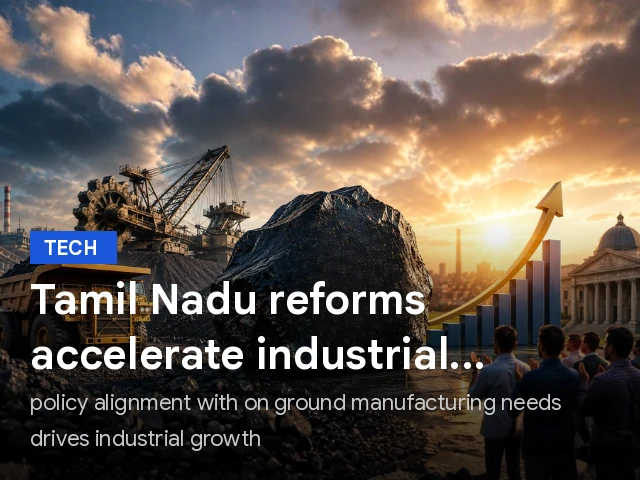
Tamil Nadu Reforms And The MSME Charter: A Roadmap To An Industrial Turnaround
Key Takeaways
- tamil nadu reforms are moving from rhetoric to action with a charter of industry demands landing on the Speaker's desk.
- The MSME Charter Seeks Direct Line To Chief Minister outlines a 10-point wishlist for policy action.
- Budget Session is expected to carry forward reform momentum with fresh, business-friendly measures.
- Retail investors should watch policy clarity and infrastructure moves to assess opportunities in Tamil Nadu's growth narrative.
How Tamil Nadu Reforms Could Accelerate Industrial Growth In The State
tamil nadu reforms are moving from rhetoric to action as industry players push for policy alignment with on-ground manufacturing needs. At the Tamizhar 4.0 Global Trade & Business Summit in Chennai, the Tamil Nadu Legislative Assembly Speaker J C T Prabhakar announced that a charter of demands from industry representatives had landed on his desk on Friday. The charter, presented by the Tamizhar Trade, Business and Agriculture Council – known locally as Tamizhar Thozhil Vaniga Velan Perumandram – is anchored on a 10-point MSME wishlist designed to secure a direct audience with the Chief Minister to walk through proposals in depth. This signals that the forthcoming Budget Session may extend momentum with fresh, business-friendly measures, shaping a broader reform narrative.
Prabhakar framed this as part of a larger pattern: a wave of government announcements pointing toward an industrial turnaround underway in the state. He added that the forthcoming budget session would extend this momentum through fresh, business-friendly measures, and he described the chief minister as someone who has internalised what the public and industry are asking for, down to the finer details, and is willing to act on it.
MSME Charter Ten-Point Wishlist: What Industry Demands From The Tamil Nadu Government
At the heart of the conversation is the MSME charter that the Tamizhar Council delivered to the Speaker. The charter is explicitly framed around a direct line to the Chief Minister and comprises a list of 10 specific asks designed to walk through proposals in depth. The itemized wishlist signals a priority for licensing reforms, power, tax relief, infrastructure, and faster project approvals – all aimed at bolstering micro, small and medium enterprises in Tamil Nadu. While the exact 10 items are not enumerated here, the objective is clear: convert policy intent into practical, actionable steps during the Budget Session. The 10-point charter is being advanced by Tamizhar Trade, Business and Agriculture Council, the local voice behind industry-led reform push efforts.
Beyond the headline of a 10-point list, the charter embodies a direct dialogue framework – a channel through which industry wants to accelerate decisions that impact on-ground operations across districts. This is especially relevant for MSMEs, which form the backbone of employment and regional commerce in Tamil Nadu, spanning sectors from textiles and food processing to engineering services and logistics. The emphasis on timely decisions, streamlined licensing, and predictable incentives could reduce the typical lag between policy intent and project execution.
Tamizhar Thozhil Vaniga Velan Perumandram And Direct Engagement With The Chief Minister
The charter explicitly seeks a direct audience with the Chief Minister. The group handed Prabhakar a list of 10 specific asks meant for in-depth discussion, underscoring the importance of direct engagement between industry bodies and the top echelons of the state government. The Tamizhar Thozhil Vaniga Velan Perumandram – translating to Tamizhar Trade, Business and Agriculture Council – is the organizing body behind the charter, representing voices across manufacturing and MSME ecosystems in Tamil Nadu. This arrangement signals a pragmatic approach to reform where industry and policy are meant to walk in step rather than at cross purposes.
Historically, Tamil Nadu has benefited from a robust manufacturing ecosystem spanning auto, textiles, and consumer goods, with Chennai serving as a major industrial corridor. The council’s push for a direct line to the Chief Minister is an attempt to ensure policy outcomes align closely with the realities of plant floor operations, supplier networks, and regional job creation. When industry bodies can present a coherent, prioritized agenda directly to the state’s top leadership, the odds of implementation accelerations rise, provided the political calendar aligns with technical feasibility and budgetary space.
Budget Session Outlook: Fresh, Business-Friendly Measures In The Tamil Nadu Reform Push
The Speaker indicated that the Budget Session would carry forward reform momentum with fresh measures designed to improve ease of doing business. This represents a clear intent to translate announcements into concrete policy changes, licensing reforms, and infrastructure commitments that can support manufacturing and related services. In this framing, Tamil Nadu's reform push moves beyond rhetoric toward a credible, implementable program that could alter the operating environment for businesses, large and small, in a state with a strong manufacturing heritage.
From the policy design perspective, a successful Budget Session could deliver faster permit approvals, digitized processes for licensing, and targeted incentives for MSMEs to scale up production or upgrade technology. For investors, the clarity around timelines matters as much as the substance of reforms; a well-communicated schedule reduces execution risk and helps companies align capex plans with anticipated policy support. The combination of direct industry input and a structured budgetary plan increases the probability that promised reforms translate into real project pipelines, especially in automotive, electronics, textiles, and logistics corridors around Tamil Nadu’s urban and port-linked nodes.
Market And Investment Implications: Tamil Nadu Reforms Momentum For Retail Investors
From an investor’s lens, policy momentum in Tamil Nadu is a factor that could influence capital allocation decisions. Investors commonly track the current price of reliance industries limited stock price, infosys stock price, tata motors stock price, stock price of wipro, larsen & toubro ltd stock price, and hindustan unilever limited stock price as barometers of market appetite for growth linked to industrial activity in India. In a narrative of tamil nadu reforms, improvements in policy clarity and project viability could lift earnings visibility for manufacturing, logistics, and infrastructure players connected to the state’s growth trajectory. For those seeking actionable insights, Swastika's Sarthi AI stock assistant is a practical way to sift through related opportunities – Swastika's Sarthi AI stock assistant.
Market participants typically react to policy milestones and budgetary announcements with sector rotation. In Tamil Nadu, sectors like automotive components, textiles, machinery, and consumer goods distribution could see improved demand visibility if reform measures reduce costs, shorten lead times, and energize investment in green and digital infrastructure. The statewide emphasis on industrial growth is also likely to accompany public-private partnerships in logistics and power, which can alter the risk-return profile for listed incumbents and new entrants alike. Investors should, therefore, map policy milestones to capex cycles, cross-industry supply chains, and the regional demand patterns that accompany urbanization and manufacturing expansion.
Practical Investment Steps For Navigating Tamil Nadu's Industrial Turnaround
Another practical step is scenario planning: create best-case (fast policy rollout), base-case (gradual implementation), and risk-case (potential policy revisions) scenarios. This helps you quantify the impact of reforms on your stock universe and identify entry and exit points aligned with policy milestones. Consider diversification across sectors with strong regional footprints in Tamil Nadu, and maintain a watchful eye on credit conditions for MSMEs and capital expenditure plans by local manufacturers. The core idea is to use policy momentum as a signal for disciplined thesis-building rather than a spur-of-the-moment trade, ensuring that your portfolio remains resilient through policy evolution.
Frequently Asked Questions
What is the MSME Charter and who presented it?
The MSME Charter is a 10-point wishlist submitted to the Tamil Nadu Speaker by the Tamizhar Trade, Business and Agriculture Council, seeking a direct line to the Chief Minister to discuss proposals in depth.
Who is the Tamil Nadu Assembly Speaker mentioned in the article?
Tamil Nadu Legislative Assembly Speaker J C T Prabhakar.
Where did the charter of demands land, and which event was it associated with?
It landed on the Speaker’s desk at the Tamizhar 4.0 Global Trade & Business Summit in Chennai.
What is the significance of the Budget Session in this reform push?
The Budget Session is expected to carry forward reform momentum with fresh, business-friendly measures, translating announcements into concrete policy changes.
What role does Tamizhar Thozhil Vaniga Velan Perumandram play?
It is the organizing body behind the charter, representing voices across manufacturing and MSMEs in Tamil Nadu.
How should retail investors interpret Tamil Nadu reforms for practical investing?
Investors should monitor policy clarity, licensing reforms, infrastructure announcements, and direct government engagement signals, leveraging tools like Swastika's Sarthi AI stock assistant for sector-specific ideas.
Conclusion
The long-term takeaway for tamil nadu reforms is that policy credibility matters more than headlines. If authorities translate momentum into predictable execution – easing of approvals, targeted incentives, and public-private infrastructure commitments – the state could become a more attractive anchor for manufacturing, logistics, and consumer-driven growth within India’s federal system. Retail investors should keep a flexible thesis and stay aligned with policy progression, so they can add or trim exposure as the reform program unfolds and tangible outcomes emerge.
Big Budget


Popular Articles





.avif)
.avif)

.avif)



START YOUR INVESTMENT JOURNEY
Get personalized advice from our experts
- Dedicated RM Support
- Smooth and Fast Trading App
