


Google Share Price: A Retail Investor's Practical Guide To Tracking Alphabet On Global Markets




Key Takeaways
- Google Share Price movements reflect Alphabet's fundamentals and market sentiment.
- Alphabet trades as GOOGL and GOOG; monitor both classes and their voting rights.
- GOOGL Stock Price and GOOG Stock Price can diverge on after-hours events; track both.
- Explore Swastika's Sarthi AI stock assistant for deeper insights.
Google Share Price is no longer something investors chase in isolation; it's the heartbeat of Alphabet's global business and the tech economy at large. For Indian retail investors, the Google share price–listed on NASDAQ as GOOGL and GOOG–serves as a barometer for ad-revenue cycles, cloud growth, and even currency risk as the rupee fluctuates against the dollar. In this guide, we unpack what moves the price, how to interpret volatility, and practical steps to integrate this data into your investment plan.
Google Share Price Movements: What Retail Investors Need To Know
The Google Share Price quote can swing intraday as markets digest earnings, regulatory news, and macro shifts. Because Alphabet's revenue is heavily dependent on digital advertising and Google Cloud growth, investors watch these pillars when forming opinions about the stock's future direction. For a retail investor in India, the price of Alphabet's US-listed stock offers a lens into global technology demand, while currency movements–especially USD/INR–can amplify or dampen the effective returns when converted back to rupees.
One important distinction for new readers is that Alphabet trades in two main share classes on the NASDAQ: GOOGL and GOOG. GOOGL represents Class A shares with voting rights, while GOOG represents Class C shares with no voting rights. The price may differ between these classes, particularly around corporate actions or corporate governance news, but the core business value remains the same: Alphabet's revenue engine is underpinned by advertising, YouTube, cloud services, and other bets such as AI initiatives. Investors should not treat the price as a standalone signal; rather, it is a real-time reflection of how the market values Alphabet's growth prospects and risks at any given moment.
When you interpret Google Share Price movements, a few questions help separate noise from signal: Are earnings growth and profit margins improving? Is the cloud strategy gaining enterprise traction? How is YouTube performing amid changing monetization rules and regulatory scrutiny? And crucially for Indian investors, how does currency volatility affect the rupee value of US-listed gains or losses? Answering these questions requires combining price awareness with a clear view of fundamentals and market sentiment. If the price dips or surges, look for the underlying cause–revenue guidance, product cycle updates, or macro shifts–before adjusting your strategy.
For readers seeking practical tools, it's helpful to normalize price data with a simple framework: track the live price, note the intraday range, observe the after-hours movement, and compare with recent earnings and product announcements. Digital price feeds published by major exchanges and reputable financial platforms provide the backbone for this tracking. If you want deeper, institutional-grade analysis without leaving your screen, you can explore Swastika's Sarthi AI stock assistant to streamline stock-level insights and index context as you form decisions. Swastika's Sarthi AI stock assistant offers a conversational entry point into structured research on Alphabet and broader market themes.


Alphabet Stock Price Dynamics Across Markets: The Google Stock Narrative
Alphabet's parent company trades primarily in the United States under the tickers GOOGL and GOOG, and the Alphabet stock price tends to mirror the company’s earnings trajectory, operating segment performance, and capital allocation choices. For Indian investors, the key takeaway is that Alphabet stock price movements are a function of global ad demand, cloud business momentum, ongoing AI investments, and regulatory developments–elements that influence investor risk appetite and valuation multiples. Global events–such as central-bank policy shifts, inflation data, or technology sector rotations–can create cross-market correlations that momentarily push the Google share price higher or lower even if the underlying business fundamentals remain stable.
While the headlines may center on US market dynamics, the spillover into Indian markets matters for portfolio construction. Currency exposure (USD vs INR), opportunity cost of capital, and hedging considerations all shape the investor's net return when you convert back to local currency. In practice, this means that a robust appraisal of Alphabet stock price movements requires both global context and an awareness of domestic investment constraints and costs. If you are monitoring Alphabet stock price, compare it with broader tech indices, monitor commodity-driven risk appetite, and consider how macro factors–like global GDP growth and consumer demand–interact with Alphabet's core revenue drivers.
GOOGL Stock Vs GOOG Stock: Key Differences For Indian Investors
The two primary classes of Alphabet stock–GOOGL and GOOG–often trade in close proximity, but there are material governance differences that can influence price behavior around corporate actions or shareholder voting dynamics. GOOGL represents Class A shares with voting rights, while GOOG represents Class C shares with no voting rights. In practice, this difference can affect bid-ask dynamics during periods of volatility, as institutional traders weigh voting rights against price levels. For the Indian investor, this means you may see a price gap between GOOGL and GOOG bands, especially around events such as annual meetings, stock splits, or shareholder proposals. The gap doesn't reflect a change in the underlying business; it reflects the market's discounting of governance leverage and liquidity preferences among participants.
When building a portfolio that includes Alphabet, many local investors adopt a simple approach: they treat GOOGL and GOOG as complementary exposure to Alphabet’s overall business risk and potential upside. Some prefer one class for voting rights (GOOGL) and the other for cost efficiency or liquidity (GOOG), depending on their brokerage access and trading costs. Regardless of the class chosen, the long-run drivers–advertising resilience, cloud growth, AI capabilities, and regulatory risk–remain the same. By understanding the nuances of each ticker, you can tailor your position to align with your ownership rights, liquidity needs, and risk tolerance.
Practical Steps To Monitor Alphabet Stock Price In Real Time
Here is a practical playbook for retail investors who want to stay on top of Alphabet's stock price without getting overwhelmed by every tick:
- Use a reputable live price feed for GOOGL and GOOG to observe real-time moves and intraday ranges.
- Compare intraday price action with major headlines, earnings guidance, and product announcements, rather than reacting to every short-term spike.
- Track post-earnings moves. After an earnings release, analyze the price action for a few sessions to determine whether the move reflects new information or broader market sentiment.
- Consider currency impact. If you’re measuring returns in rupees, account for USD/INR movements that can amplify gains or losses when repatriating funds.
- Differentiate between GOOGL and GOOG in your tracking; if cost or voting rights matter for your strategy, align your choice with your goals.
- Pair price watching with a broader risk framework. Set price alerts, define exit rules, and ensure your risk per trade aligns with your overall plan.
Related Reads
- Google Share Price: A Retail Investor's Guide To Alphabet's Stock Moves
- Google News RSS For Retail Investors: Tracking Alphabet And Google Stock News In India
- Google News Signals: A Retail Investor's Guide To Alphabet Stock And Market Moves
Frequently Asked Questions
What Is Google Share Price and How Is It Determined?
Google Share Price refers to the market price of Alphabet's listed shares on NASDAQ, shown primarily as GOOGL and GOOG. It is determined by supply and demand in the market during trading hours and reflects investors' collective assessment of Alphabet's future earnings, growth prospects, and risk factors.
What Is the Difference Between GOOGL Stock And GOOG Stock?
GOOGL represents Class A shares with voting rights, while GOOG represents Class C shares with no voting rights. Both track Alphabet's business value, but governance rights and post-IPO corporate actions can lead to subtle price differences between the two classes.
Why Should Indian Investors Care About Alphabet Stock Price?
Alphabet stock price offers exposure to a global tech leader's ad revenue, cloud growth, and AI bets. For Indian investors, the price also interacts with currency fluctuations (USD/INR) and cross-market risk, influencing portfolio diversification and currency risk management.
How Can Indian Investors Track Google Share Price Effectively?
Track the live price feeds for GOOGL and GOOG from reputable market data providers, compare price movements with earnings and product updates, and consider currency impact. Use a disciplined framework (alerts, defined exits, and position sizing) to turn price data into actionable decisions.
What Are Practical Ways To Invest In Alphabet From India?
Indian investors can access Alphabet stock via US-listed brokers or through platforms offering indirect exposure to US equities. Always consider taxes, currency risk, fees, and the brokerage's access to the US market when planning an investment in Alphabet.
Conclusion
For the Indian retail investor, the Google share price is not just a number–it is a lens into how a global tech leader translates advertising demand, cloud ambitions, and AI investments into market value. The prudent approach is to read price moves in context: pair live data with an awareness of Alphabet's fundamentals, governance structure, and macro factors that influence risk appetite. By anchoring your decisions in a simple framework and keeping a disciplined risk rule, you can turn price action into meaningful, actionable steps for your portfolio.
Open your trading and demat account here
Reference :
1 : Google
Latest Articles
Google Share Price: A Retail Investor's Practical Guide To Tracking Alphabet On Global Markets


Key Takeaways
- Google Share Price movements reflect Alphabet's fundamentals and market sentiment.
- Alphabet trades as GOOGL and GOOG; monitor both classes and their voting rights.
- GOOGL Stock Price and GOOG Stock Price can diverge on after-hours events; track both.
- Explore Swastika's Sarthi AI stock assistant for deeper insights.
Google Share Price is no longer something investors chase in isolation; it's the heartbeat of Alphabet's global business and the tech economy at large. For Indian retail investors, the Google share price–listed on NASDAQ as GOOGL and GOOG–serves as a barometer for ad-revenue cycles, cloud growth, and even currency risk as the rupee fluctuates against the dollar. In this guide, we unpack what moves the price, how to interpret volatility, and practical steps to integrate this data into your investment plan.
Google Share Price Movements: What Retail Investors Need To Know
The Google Share Price quote can swing intraday as markets digest earnings, regulatory news, and macro shifts. Because Alphabet's revenue is heavily dependent on digital advertising and Google Cloud growth, investors watch these pillars when forming opinions about the stock's future direction. For a retail investor in India, the price of Alphabet's US-listed stock offers a lens into global technology demand, while currency movements–especially USD/INR–can amplify or dampen the effective returns when converted back to rupees.
One important distinction for new readers is that Alphabet trades in two main share classes on the NASDAQ: GOOGL and GOOG. GOOGL represents Class A shares with voting rights, while GOOG represents Class C shares with no voting rights. The price may differ between these classes, particularly around corporate actions or corporate governance news, but the core business value remains the same: Alphabet's revenue engine is underpinned by advertising, YouTube, cloud services, and other bets such as AI initiatives. Investors should not treat the price as a standalone signal; rather, it is a real-time reflection of how the market values Alphabet's growth prospects and risks at any given moment.
When you interpret Google Share Price movements, a few questions help separate noise from signal: Are earnings growth and profit margins improving? Is the cloud strategy gaining enterprise traction? How is YouTube performing amid changing monetization rules and regulatory scrutiny? And crucially for Indian investors, how does currency volatility affect the rupee value of US-listed gains or losses? Answering these questions requires combining price awareness with a clear view of fundamentals and market sentiment. If the price dips or surges, look for the underlying cause–revenue guidance, product cycle updates, or macro shifts–before adjusting your strategy.
For readers seeking practical tools, it's helpful to normalize price data with a simple framework: track the live price, note the intraday range, observe the after-hours movement, and compare with recent earnings and product announcements. Digital price feeds published by major exchanges and reputable financial platforms provide the backbone for this tracking. If you want deeper, institutional-grade analysis without leaving your screen, you can explore Swastika's Sarthi AI stock assistant to streamline stock-level insights and index context as you form decisions. Swastika's Sarthi AI stock assistant offers a conversational entry point into structured research on Alphabet and broader market themes.
Alphabet Stock Price Dynamics Across Markets: The Google Stock Narrative
Alphabet's parent company trades primarily in the United States under the tickers GOOGL and GOOG, and the Alphabet stock price tends to mirror the company’s earnings trajectory, operating segment performance, and capital allocation choices. For Indian investors, the key takeaway is that Alphabet stock price movements are a function of global ad demand, cloud business momentum, ongoing AI investments, and regulatory developments–elements that influence investor risk appetite and valuation multiples. Global events–such as central-bank policy shifts, inflation data, or technology sector rotations–can create cross-market correlations that momentarily push the Google share price higher or lower even if the underlying business fundamentals remain stable.
While the headlines may center on US market dynamics, the spillover into Indian markets matters for portfolio construction. Currency exposure (USD vs INR), opportunity cost of capital, and hedging considerations all shape the investor's net return when you convert back to local currency. In practice, this means that a robust appraisal of Alphabet stock price movements requires both global context and an awareness of domestic investment constraints and costs. If you are monitoring Alphabet stock price, compare it with broader tech indices, monitor commodity-driven risk appetite, and consider how macro factors–like global GDP growth and consumer demand–interact with Alphabet's core revenue drivers.
GOOGL Stock Vs GOOG Stock: Key Differences For Indian Investors
The two primary classes of Alphabet stock–GOOGL and GOOG–often trade in close proximity, but there are material governance differences that can influence price behavior around corporate actions or shareholder voting dynamics. GOOGL represents Class A shares with voting rights, while GOOG represents Class C shares with no voting rights. In practice, this difference can affect bid-ask dynamics during periods of volatility, as institutional traders weigh voting rights against price levels. For the Indian investor, this means you may see a price gap between GOOGL and GOOG bands, especially around events such as annual meetings, stock splits, or shareholder proposals. The gap doesn't reflect a change in the underlying business; it reflects the market's discounting of governance leverage and liquidity preferences among participants.
When building a portfolio that includes Alphabet, many local investors adopt a simple approach: they treat GOOGL and GOOG as complementary exposure to Alphabet’s overall business risk and potential upside. Some prefer one class for voting rights (GOOGL) and the other for cost efficiency or liquidity (GOOG), depending on their brokerage access and trading costs. Regardless of the class chosen, the long-run drivers–advertising resilience, cloud growth, AI capabilities, and regulatory risk–remain the same. By understanding the nuances of each ticker, you can tailor your position to align with your ownership rights, liquidity needs, and risk tolerance.
Practical Steps To Monitor Alphabet Stock Price In Real Time
Here is a practical playbook for retail investors who want to stay on top of Alphabet's stock price without getting overwhelmed by every tick:
- Use a reputable live price feed for GOOGL and GOOG to observe real-time moves and intraday ranges.
- Compare intraday price action with major headlines, earnings guidance, and product announcements, rather than reacting to every short-term spike.
- Track post-earnings moves. After an earnings release, analyze the price action for a few sessions to determine whether the move reflects new information or broader market sentiment.
- Consider currency impact. If you’re measuring returns in rupees, account for USD/INR movements that can amplify gains or losses when repatriating funds.
- Differentiate between GOOGL and GOOG in your tracking; if cost or voting rights matter for your strategy, align your choice with your goals.
- Pair price watching with a broader risk framework. Set price alerts, define exit rules, and ensure your risk per trade aligns with your overall plan.
Related Reads
- Google Share Price: A Retail Investor's Guide To Alphabet's Stock Moves
- Google News RSS For Retail Investors: Tracking Alphabet And Google Stock News In India
- Google News Signals: A Retail Investor's Guide To Alphabet Stock And Market Moves
Frequently Asked Questions
What Is Google Share Price and How Is It Determined?
Google Share Price refers to the market price of Alphabet's listed shares on NASDAQ, shown primarily as GOOGL and GOOG. It is determined by supply and demand in the market during trading hours and reflects investors' collective assessment of Alphabet's future earnings, growth prospects, and risk factors.
What Is the Difference Between GOOGL Stock And GOOG Stock?
GOOGL represents Class A shares with voting rights, while GOOG represents Class C shares with no voting rights. Both track Alphabet's business value, but governance rights and post-IPO corporate actions can lead to subtle price differences between the two classes.
Why Should Indian Investors Care About Alphabet Stock Price?
Alphabet stock price offers exposure to a global tech leader's ad revenue, cloud growth, and AI bets. For Indian investors, the price also interacts with currency fluctuations (USD/INR) and cross-market risk, influencing portfolio diversification and currency risk management.
How Can Indian Investors Track Google Share Price Effectively?
Track the live price feeds for GOOGL and GOOG from reputable market data providers, compare price movements with earnings and product updates, and consider currency impact. Use a disciplined framework (alerts, defined exits, and position sizing) to turn price data into actionable decisions.
What Are Practical Ways To Invest In Alphabet From India?
Indian investors can access Alphabet stock via US-listed brokers or through platforms offering indirect exposure to US equities. Always consider taxes, currency risk, fees, and the brokerage's access to the US market when planning an investment in Alphabet.
Conclusion
For the Indian retail investor, the Google share price is not just a number–it is a lens into how a global tech leader translates advertising demand, cloud ambitions, and AI investments into market value. The prudent approach is to read price moves in context: pair live data with an awareness of Alphabet's fundamentals, governance structure, and macro factors that influence risk appetite. By anchoring your decisions in a simple framework and keeping a disciplined risk rule, you can turn price action into meaningful, actionable steps for your portfolio.
Open your trading and demat account here
Reference :
1 : Google

GRSE Share Price Outlook After Q1 FY27 Results
Key Takeaways
- GRSE is set to announce Q1 FY27 unaudited results, with a focus on margins and order execution.
- The company benefits from robust defence spending and a growing order book.
- GRSE board meeting on July 29 will confirm unaudited results for June 30, 2026.
- GRSE stock has shown a mixed trajectory with YTD gains and a 52-week high near Rs 3,339.
GRSE Share Price remains a focal point as India’s defence budget continues to power naval modernisation and order inflows. Garden Reach Shipbuilders & Engineers (GRSE) stands among the Navratna PSUs that benefit from the government’s push to modernise the naval fleet. Investors are braced for the Q1 FY27 unaudited results as the company prepares for a Board meeting on July 29, 2026. The agenda excludes an interim dividend, and there is no earnings conference call announced yet. In this report, we break down what the results schedule means for margins, execution risk, and the path for the GRSE share price.
The background that matters: naval orders and export opportunities are likely to support revenue execution but margins will hinge on the mix of ships, project delays or acceleration, and cost control. GRSE reported a robust FY26 with an improving order book and healthier profitability metrics and saw a year on year rise in net profit to Rs 303 crore for Q4FY26, on revenue of Rs 2,119 crore. EBITDA was Rs 426.45 crore, and PBT stood at Rs 410.85 crore, representing year on year increases of 27.33% in EBITDA and 26.98% in PBT, while net profit rose 24.14% YoY. These numbers set a high bar for the upcoming quarter and provide context for the ensuing results.
In the near term, the stock’s trajectory will reflect how timely execution aligns with a growing order book and the government’s capital expenditure in defence. The stock has gained 1.19% in the last five trading sessions, but has fallen 6.23% in the past month. On a year to date basis, the GRSE share price is up about 6.56%. The 52 week range, from a low of Rs 1,963.70 on March 30, 2026 to a high of Rs 3,339 on April 29, 2026, frames the risk and opportunity. Investors should watch for updates to order execution timelines and any commentary on potential new orders or export opportunities that could alter the revenue mix.
Meanwhile, the trading window for dealing in GRSE securities is closed from July 1, 2026, until 48 hours after the declaration of the unaudited financial results for Q1 FY27 on June 30, 2026. This is a standard risk management practice under SEBI rules to prevent insider trading during results announcements.
GRSE Share Price Outlook After Q1 FY27 Results
As investors anticipate the Q1 FY27 unaudited results, the key questions revolve around margins and execution risk. Will the margin improvement carry through the quarter to reflect stronger cost control, better product mix, or improved project scheduling? Will the company’s strong order book translate into consistent revenue recognition across quarters, or will execution delays temper the pace of revenue growth? The guidance and commentary from the GRSE Board, given the defence sector’s tailwinds, will play a critical role in shaping the GRSE share price. The company’s status as a Navratna PSU and its exposure to naval modernisation projects tend to cushion earnings against cycles in other industrial sectors, but the pace of margin expansion is what investors will scrutinise most closely.
The conversation around the GRSE share price must also factor in potential export opportunities. If GRSE can translate some of its Navy orders into higher-margin exports, the company could see a more favorable margin profile, which, in turn, would be positive for the share price. In any case, given the order book’s strength, even in the absence of immediate new large orders, the revenue visibility is likely to remain robust in the next few quarters. The emphasis remains on execution stability, project milestones met on time, and cost discipline to convert orders into recognized revenue and profits.
GRSE Board Meeting: What Investors Should Watch
The July 29, 2026 board meeting to consider unaudited Q1 FY27 results for the quarter ended June 30, 2026, is a critical event for investors. The fact that the agenda excludes an interim dividend signals a focus on core profitability and balance sheet strength rather than payout–though investors should monitor if any changes to dividend policy are signalled in the future. Another notable point is that GRSE has not announced an earnings conference call with analysts or investors for this results cycle. In terms of governance, the outcome of the board meeting will set the tone for how the market interprets future order inflows and revenue execution. Traders and long-term investors will comb through the commentary for qualitative signals on export opportunities, potential order backlogs, and the path to export diversification.
For traders, the timing of the results release is important. A clean beat on margins, or a clear path to margin expansion, can prompt a re-rating in the GRSE share price. Conversely, if the results show modest margins or a heavier-than-expected execution risk, the stock could see further volatility. The absence of an earnings conference call reduces the near-term narrative, but the board's comments on upcoming orders and the order book trajectory will be the crucial second-order signals that investors will trade on in the days after the release.
GRSE Order Book: Strength And Execution Timeline
GRSE ended FY26 with a robust order book, which provides a clear revenue visibility cushion amid ongoing naval modernisation. This order book position is a direct beneficiary of India’s defence capital expenditure and the Navy’s continued modernisation drive. For investors, the key takeaway is that a strong order book can support revenue recognition and earnings stability, even if near-term execution timelines shift. The execution timeline for major defence contracts can influence quarterly revenue and margins, so investors will be attentive to the board's commentary on how these contracts progress through milestones and cost management practices to protect margins.
In practice, the order book acts as a rich pipeline of future revenue streams, but the real measure of performance lies in the conversion rate–how quickly orders move from pipeline to billings and how costs are controlled along the way. The GRSE earnings narrative will rely on this conversion, as well as the firm’s ability to manage cost pressures across shipbuilding and supply chains. The broader context–India’s appetite for domestic defence manufacturing–should continue to provide a supportive backdrop for GRSE’s long-run growth trajectory, even if quarterly volatility remains a factor in price discovery.
GRSE Earnings: Q4FY26 And Margin Trajectory
GRSE’s Q4FY26 earnings established a strong baseline for 2026-27. Net profit rose 24.14% year on year to Rs 303 crore in the quarter ended March 31, 2026, while revenue from operations jumped to Rs 2,119 crore from Rs 1,642 crore in the year-ago period, a 29.06% rise. EBITDA rose 27.33% year-on-year to Rs 426.45 crore, and PBT increased 26.98% year-on-year to Rs 410.85 crore. This combination indicates a healthier profitability profile and stronger cash generation than a year earlier, supported by a favourable mix and operating leverage in certain shipbuilding segments.
Looking ahead, the sustainability of these margins will depend on several factors, including the mix of ships, cost discipline across components and labour, and the pace of order execution. The NAVRATNA status often helps in long-term capital allocation and access to more predictable credit terms, but the real test for GRSE remains in turning order inflows into steady revenue and maintaining high utilization of shipyards and supply chains. Investors should see how management frames future targets and the steps planned to achieve them in the upcoming quarterly commentary.
GRSE Stock Performance And Price Trends
From a stock-price perspective, GRSE has shown a range-bound path in the recent period. The stock gained 1.19% in the last five trading sessions, reflecting nuanced momentum rather than a decisive breakout. Over the past month, the stock has fallen 6.23%, but it is up 6.56% year to date. The 52-week high of Rs 3,339 was touched on April 29, 2026, while the 52-week low of Rs 1,963.70 was recorded on March 30, 2026. This price action mirrors the tug-of-war between strong order inflows and execution risk, alongside broader market dynamics affecting defence sector stocks.
For investors seeking deeper, data-driven insights, Swastika's Sarthi AI stock assistant can help parse the underlying drivers behind these price moves and simulate scenarios under different order absorption rates and margin profiles. You can explore it here: Swastika's Sarthi AI stock assistant.
Frequently Asked Questions
When is GRSE's Q1 FY27 results expected?
A board meeting is scheduled for July 29, 2026, to consider and approve the unaudited financial results for the quarter ended June 30, 2026. The agenda does not include an interim dividend, and there is no earnings conference call announced yet.
What were GRSE's Q4FY26 earnings and revenue?
For Q4FY26, GRSE reported net profit of Rs 303 crore, revenue from operations of Rs 2,119 crore, EBITDA of Rs 426.45 crore, and PBT of Rs 410.85 crore, with year‑on‑year growth of 24.14% in net profit, 29.06% in revenue, 27.33% in EBITDA, and 26.98% in PBT.
How strong is GRSE's order book and what does it imply for execution?
GRSE ended FY26 with a robust order book, supported by India's growing defence capital expenditure and a strong order pipeline. This offers revenue visibility, though timely execution of defence contracts remains a key area for investors to monitor.
What has been the recent stock performance of GRSE?
In recent trading sessions, GRSE shares rose 1.19% over the past five sessions, declined 6.23% over the past month, and are up 6.56% year to date. The stock hit a 52-week high of Rs 3,339 on April 29, 2026, and a 52-week low of Rs 1,963.70 on March 30, 2026.
What should retail investors watch in GRSE's board meeting?
Investors should watch the unaudited Q1 FY27 numbers for margins and order execution, any updates on new orders or exports, and guidance on future capital allocation. Note that there is no interim dividend announced and no earnings conference call planned at this time.
Conclusion
In practice, the combination of NAVRATNA status, steady naval capex, and a credible execution platform makes GRSE an attractive long-window exposure for those who can tolerate near-term volatility tied to project milestones. As the results flow and the order book evolves, the GRSE share price may re-rate on clearer visibility and improved margins–but investors should keep a disciplined watch on milestone safety, export potential, and the pace at which orders move from pipeline to revenue.
Open your trading and demat account here
Reference :
1 : Ndtvprofit

RVNL Share Price Outlook After Rs 358.97 Crore EPC Order For Sitamarhi-Raxaul Doubling
Key Takeaways
- RVNL wins a Rs 358.97 crore EPC order from East Central Railway for Sitamarhi-Raxaul Doubling, signaling a fresh growth catalyst.
- The scope covers 41.04 km with earthwork, bridges, stations, and 25-tonne loading design, with a 1,095-day completion target.
- Q4 FY26 shows revenue growth of 4.18% to Rs 6,695.91 crore, but net profit fell 58.92% to Rs 187.07 crore; stock reacted with a 1.23% drop to Rs 221.25.
- As of March 2026, the Government of India held a 72.84% stake; the order is domestic with no related-party transaction.
RVNL Share Price watchers woke up to a fresh catalyst as Rail Vikas Nigam Ltd clinched a Rs 358.97 crore EPC order from East Central Railway to undertake the Sitamarhi-Raxaul Doubling project. The 41.04-km stretch, located in the Samastipur Division, includes earthworks, blanketing, construction of minor and major bridges, station and other railway buildings, platform works, level crossing works, and other allied civil works designed for 25-tonne Indian Railway Standard Loading. The project is slated for completion in 1,095 days, setting a substantial timeline for execution.
From a financial perspective, RVNL posted a mixed Q4 FY26 picture: consolidated net profit fell 58.92 percent to Rs 187.07 crore despite revenue from operations growing 4.18 percent to Rs 6,695.91 crore versus Q4 FY25. The market response was a 1.23 percent slide in RVNL shares to close at Rs 221.25 on the BSE. As of March 2026, the Government of India held a 72.84 percent stake in the company, underscoring the scale of state ownership in the business model and the governance framework that guides project selection and risk sharing.
Important governance notes from the primary source include that the contract was awarded by a domestic entity, the promoter, promoter group and group companies have no interest in the awarding entity, and the contract does not constitute a related-party transaction. Rail infrastructure investment remains a key theme for India's growth story, with RVNL actively implementing projects across the country. The Sitamarhi-Raxaul doubling project sits within the Sitamarhi-Raxaul doubling initiative under East Central Railway's Samastipur Division, illustrating how state-backed tendering channels support capacity expansion.
Looking ahead, investors should monitor RVNL's ability to convert order wins into sustained revenue growth and margin expansion, especially as the company boards more rail projects under the government's ambitious infrastructure program. For deeper stock-level research and data-driven insights, Swastika's Sarthi AI stock assistant can help you model scenarios and risk factors – Swastika's Sarthi AI stock assistant.
Rail Vikas Nigam Stock: Sitamarhi-Raxaul Doubling Project Details And Growth Catalyst
The Sitamarhi-Raxaul Doubling project covers 41.04 km under the Samastipur Division of East Central Railway and involves a broad set of civil works. The 25-tonne loading design means the line is compatible with heavy freight and mixed-traffic operations, potentially expanding RVNL's tendering opportunities as Indian Railways continues to upgrade cross-border and interior routes. The scope includes earthwork and blanketing, construction of minor and major bridges, station buildings, platform works, level crossing upgrades, and allied civil works–all integral for enabling smoother, higher-capacity operations along a key connectivity corridor. The EPC contract, valued at Rs 358.97 crore, comes with a fixed completion window of 1,095 days, a realistic but challenging timeline that will test project-management discipline and coordination with local stakeholders.
Strategically, the award underscores RVNL's role as a Government of India enterprise focused on rail infrastructure delivery. The contract is described as non-related-party and awarded by a domestic entity, reflecting the insulated nature of public procurement in India's infrastructural push. This could buoy RVNL's order book visibility in the next few quarters, potentially supporting revenue recognition as the Sitamarhi-Raxaul project progresses through earthwork, bridging, track work, and station construction.
RVNL Stock News: Market Reaction To East Central Railway EPC Award
Market reaction to the EPC order has been nuanced. While the 41.04 km Sitamarhi to Raxaul doubling project adds a meaningful project to RVNL's pipeline, the immediate price action on the BSE showed a -1.23% move, with shares ending at Rs 221.25. This reflects a composite view of the stock, including ongoing concerns about profitability momentum seen in Q4 FY26, where net profit declined 58.92% year-on-year, even as revenue rose 4.18%. Investors are weighing the longer-term upside of new orders against near-term earnings volatility.
Analysts tend to emphasize that RVNL's growth is sensitive to execution risk, project funding cycles, and the pace of railway infrastructure expansion. The company's governance and stake structure–72.84% owned by the Government of India as of March 2026–adds a layer of policy-driven demand and risk sharing that can cushion volatility but may also limit upside relative to fully private peers. The Sitamarhi-Raxaul doubling project aligns with East Central Railway's broader expansion program, which includes increasing track capacity to support higher freight and passenger traffic.
Financial Snapshot And Timeline: 41.04 Km Doubling In 1,095 Days
Key project parameters for the Sitamarhi-Raxaul doubling order reveal a clear execution path. The EPC scope spans earthwork and blanketing, major and minor bridges, station and railway buildings, platform works, level crossing works, and other civil works, designed for 25-tonne loading. The contract value stands at Rs 358.97 crore, and delivery is expected within 1,095 days. Such a date-driven contract helps RVNL plan procurement, manpower, and subcontractor engagement with more precision than open-ended orders.
Financially, the quarterly trend shows a divergence: revenue from operations rose 4.18% to Rs 6,695.91 crore in Q4 FY26 from Rs 6,447.60 crore in Q4 FY25, while net profit declined 58.92% to Rs 187.07 crore. This juxtaposition indicates that while the top line benefited from ongoing project execution and possibly other EPC activities, bottom-line pressure remained a challenge, perhaps due to higher input costs, financing costs, or favorable tax treatment in the previous year. Investors should track quarterly margins and project-wise profitability as a proxy for earnings quality in upcoming quarters.
Government Stake And Corporate Governance: 72.84% Stake And Related-Party Considerations
As of March 2026, the Government of India held a 72.84% stake in RVNL, reinforcing the public-sector basis of the company's order book and project execution model. The primary notes accompanying the EPC award specify that the promoter, promoter group and group companies have no interest in the awarding entity, and the contract does not constitute a related-party transaction. For retail investors, this governance structure suggests a degree of policy backing and risk containment, though it also implies that the company’s strategic directions may align closely with public sector rail investment priorities rather than pure market-driven incentives.
Frequently Asked Questions
What is the value of the EPC order RVNL won from East Central Railway?
The EPC contract is worth Rs 358.97 crore.
What is the length of the Sitamarhi-Raxaul Doubling project?
The Sitamarhi-Raxaul Doubling project covers 41.04 km.
What is the completion timeline for the Sitamarhi-Raxaul Doubling project?
The project is to be completed in 1,095 days.
What were RVNL's Q4 FY26 revenue and net profit figures?
Revenue from operations was Rs 6,695.91 crore and net profit was Rs 187.07 crore, with net profit down 58.92% year-on-year.
What is the government stake in RVNL as of March 2026 and what governance notes accompany the award?
The Government of India held a 72.84% stake. The contract was awarded by a domestic entity; the promoter, promoter group and group companies have no interest in the awarding entity, and the contract does not constitute a related-party transaction.
How did RVNL stock react to the EPC order news?
RVNL shares fell 1.23% to Rs 221.25 on the BSE.
Conclusion
Retail investors can use this episode as a reminder that infrastructure-led growth in India benefits from policy continuity, execution reliability, and transparent governance. RVNL's scale in East Central Railway and related corridors provides a potential tailwind if execution tracks hold; however, execution risk and margins will be the deciding factors in realizing the growth implied by order wins. With the broader sector facing cyclical demand and funding constraints, disciplined stock selection, ongoing monitoring of project milestones, and a focus on cash generation remain essential practices for investors evaluating RVNL's stock and similar EPC plays.
Open your trading and demat account here
Reference :
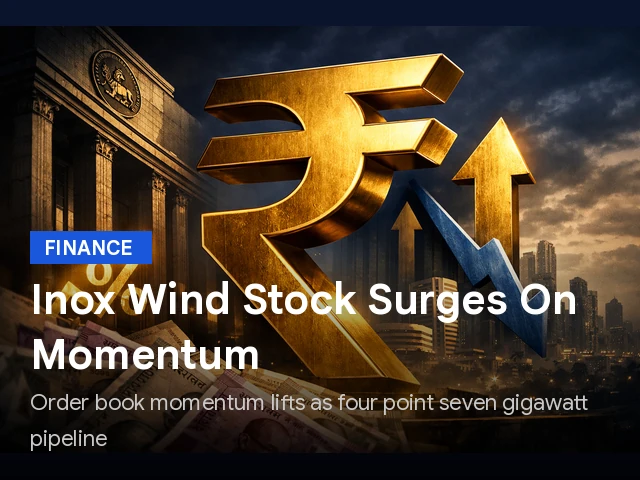
Inox Wind Share Price: Key Drivers, Q4 Results, And Order Book Momentum
Key Takeaways
- Order book stands at 4.7 GW, signaling strong execution visibility for Inox Wind.
- FY26 Q4 net profit was Rs 105.68 crore on revenue of Rs 1,244 crore, with total income at Rs 1,306 crore and expenses of Rs 1,162 crore.
- The stock price fell about 40% in 2026, with a 1-year drop exceeding 50% and a 5-year return near 120%.
- Retail investors should balance long-term order momentum against near-term margin pressure.
Behind every wind turbine there is a stock story. The Inox Wind Share Price has tracked India's renewable energy trajectory, swinging as project wins land and execution hurdles appear. The latest order book update shows a robust pipeline at 4.7 GW, with an end-to-end execution model that positions the company as a turnkey wind energy partner. A 24-month commissioning window from the LoA underscores execution depth and the potential for sustained revenue visibility.
As India accelerates renewable energy capacity, customers increasingly choose experienced wind OEMs who can manage projects from concept to commissioning. Inox Wind sits among those leaders, offering an integrated solution that includes turbine supply, EPC, and post-commissioning maintenance. With a diversified customer base spanning commercial and industrial (C&I), PSUs and independent power producers (IPPs), the company has built a resilient service and project execution footprint. This combination of order book strength and execution capability offers a meaningful signal for the Inox Wind stock price trajectory over the medium term.
Inox Wind Share Price Drivers And Outlook
Inox Wind's core advantage lies in delivering end-to-end wind energy solutions–turbine supply, EPC, and post-commissioning maintenance–allowing the company to capture value across the project lifecycle. The 4.7 GW order book is a primary driver of the stock's long-term trajectory, providing execution visibility across multiple years and reducing reliance on any single contract. A diversified client base across C&I, PSUs and IPPs adds resilience to the growth narrative and helps stabilize revenue streams amid sector cyclicality. The 24-month commissioning window from the Letter of Award (LoA) demonstrates disciplined project planning and execution, which investors often view as a proxy for future cash flows. When management emphasizes operational excellence and timely project delivery, the Inox Wind share price tends to reflect the confidence embedded in the multi-year pipeline.
According to Sanjeev Agarwal of Inox Wind Ltd., Our strong and diversified order pipeline provides us with significant growth visibility. We look forward to working closely with NLC India Limited and successfully delivering this project within the stipulated timeline.
Reference :
1 : Economictimes
The Q4 snapshot confirms execution momentum in the context of a growing backlog. The quarterly numbers matter because they anchor expectations for the next year’s revenue ramp. Inox Wind's strategy to secure large turnkey projects–backed by a diverse customer base–aims to translate order flow into recurring revenue through EPC and O&M services. The market will watch how effectively the company manages cost inflation, logistics, and supplier pricing as it scales, because those factors influence the trajectory of the Inox Wind share price in the near term.
Inox Wind Order Book And Growth Visibility
The order book has increased to 4.7 GW, a figure supported by a diversified customer mix across commercial and industrial (C&I) clients, PSUs, and IPPs. This breadth reduces single-source risk and provides a more predictable earnings runway. NLC India Limited is one of the notable clients on the roster, and the engagement comes with a commissioning timeline of 24 months from the LoA. Such timing anchors help investors gauge when revenue recognition and cash flows should start to crystallize, which is a core input for modeling the stock's value and potential upside in the medium term.
Beyond the raw size of the order book, the quality of the opportunities matters. A broad pipeline across segments means the business is less exposed to a dip in any one market and more likely to endure cyclical headwinds in the energy space. If execution milestones are met and the company sustains its turnkey approach, the order book can convert into steady revenue streams over the next few years, reinforcing a constructive stance on the stock for long-term holders.
Inox Wind Quarterly Results: FY26 Q4 Snapshot
In Q4 FY26, Inox Wind reported a consolidated net profit of Rs 105.68 crore, down 45% year-on-year from Rs 190 crore in the corresponding quarter last year. Revenue from operations fell over 2% year-on-year to Rs 1,244 crore, while total income rose marginally to Rs 1,306 crore. Total expenses climbed by more than 5% year-on-year to Rs 1,162 crore during the quarter under review. The quarter's results reflect near-term margin pressures even as the top-line trend remains tied to the pace of order execution and project completion. The quarterly earnings, in combination with the 4.7 GW order book, help frame a longer horizon where revenue visibility could stabilize once key projects move from commissioning to full O&M lifecycle management.
| Metric | Value |
|---|---|
| Order Book | 4.7 GW |
| Q4 Net Profit | Rs 105.68 crore |
| Q4 Revenue From Operations | Rs 1,244 crore |
| Total Income (Q4) | Rs 1,306 crore |
| Total Expenses (Q4) | Rs 1,162 crore |
From a market reaction standpoint, the price action around Inox Wind has shown notable volatility. While the five-year view reflects a substantial ~120% return to shareholders, the stock declined about 40% in 2026 and was down more than 50% over the past 12 months. Such dispersion between longer-term gains and shorter-term price swings underscores the importance of focusing on the underlying business momentum–chiefly, the execution of a growing back log–rather than on quarterly price moves alone. For retail investors, the key takeaway is to connect the dots between the order book, commissioning timelines, and the trajectory of quarterly margins as projects progress toward O&M milestones.
Inox Wind's next chapters will hinge on seamless execution, cost management, and cash-flow realization from the 4.7 GW of orders. The company has outlined a clear path to convert backlog into recurring revenue through EPC and O&M services, which should support the structural growth story embedded in the stock price over the medium to long term. For more in-depth stock analytics, consider the Swastika Sarthi AI stock assistant, a tool designed to bring institutional-grade insights to retail investors: Swastika's Sarthi AI stock assistant.
Inox Wind Stock Price Trends And Market Reactions
The stock has experienced meaningful volatility, which is not unusual in a capital-intensive sector tied to policy and project execution cycles. The 40% decline in 2026 and the >50% drop over the last year contrast with a five-year return near 120%, illustrating a bifurcated narrative: the long-run capacity to execute and grow versus the short-run tension from quarterly results and margin dynamics. For investors, this dynamic emphasizes the value of a long-horizon framework–where the real test is the ability to translate a growing 4.7 GW backlog into consistent earnings and free cash flow rather than fleeting price movements.
Is Inox Wind Stock A Buy For Long-Term Investors?
From a long-term perspective, the 4.7 GW order book and a diversified client base offer a solid foundation for revenue visibility. If Inox Wind can sustain execution discipline and improve operating leverage on large turnkey projects, the stock could compound meaningfully over multiple years. However, near-term margins remain a risk, and policy shifts, input costs, or supply-chain disruptions could weigh on quarterly earnings. Retail investors should weigh these factors against their own risk tolerance and time horizon, employing a patient, milestone-focused approach rather than chasing quarterly price moves.
Practical Takeaways For Retail Investors
- Monitor the commissioning timeline for the 4.7 GW order book, as the LoA sets a 24-month horizon for at least one major project, shaping revenue recognition windows.
- Assess the quality and breadth of the customer mix across C&I, PSUs, and IPPs to gauge resilience against sector-specific shocks.
- Track margins and cost evolution in quarterly reports to understand the health of project execution and its impact on profitability.
- Adopt a long-term, milestone-driven perspective on wind-energy project cycles rather than reacting to every price move.
- Explore Swastika's Sarthi AI stock assistant for deeper, institutional-grade insights on Inox Wind and other stocks: Swastika's Sarthi AI stock assistant.
Related Reads
Frequently Asked Questions
What is the current size of Inox Wind's order book?
The order book stands at 4.7 GW, with a diversified client base across C&I, PSUs and IPPs.
What were Inox Wind's FY26 Q4 results?
In Q4 FY26, Inox Wind reported a consolidated net profit of Rs 105.68 crore, revenue from operations of Rs 1,244 crore, total income of Rs 1,306 crore, and total expenses of Rs 1,162 crore.
How did Inox Wind's stock perform in 2026?
The stock fell about 40% in 2026 and is down more than 50% over the last year, while a five-year view shows roughly a 120% return to shareholders.
What should retail investors consider before investing in Inox Wind?
Investors should weigh long-term execution visibility from the 4.7 GW order book and diversified client base against near-term margin pressures and stock price volatility.
Where can I get deeper investment insights on Inox Wind?
Swastika's Sarthi AI stock assistant provides institutional-grade research for any stock or index.Swastika's Sarthi AI stock assistant.
Conclusion
For retail investors, the story of Inox Wind is less about a single quarterly beat or miss and more about how a growing, diversified order book translates into sustainable earnings visibility. The 4.7 GW backlog, the 24-month commissioning window, and the breadth of customers create a framework where the stock’s price may begin to reflect execution potential as projects move toward completion and long-term O&M revenue accrues. The near-term drumbeat–margin pressures and quarterly volatility–remains a risk, but it can be managed with a disciplined, milestone-oriented approach that prioritizes real, on-the-ground progress over short-term price moves. The next step for savvy retail investors is to map the execution path against the revenue recognition timeline and to keep a close watch on quarterly margins as projects advance toward commissioning and beyond.
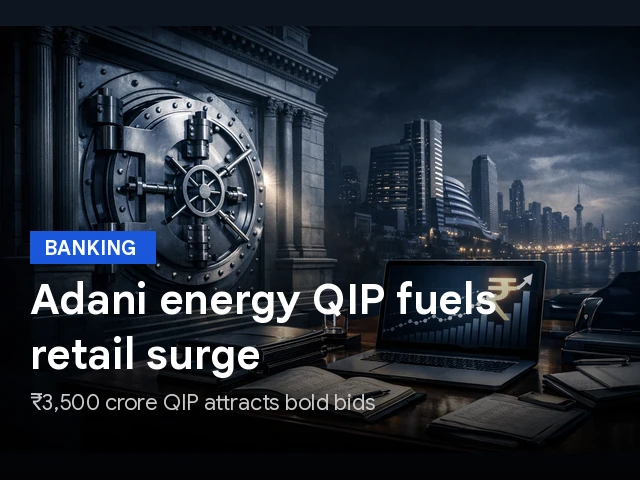
Adani Green Energy Share Price And The Adani Energy QIP: A Retail Investor Guide
Key Takeaways
- Adani Energy Solutions' QIP sized at ₹3,500 crore drew 3.1x demand, signaling strong market interest.
- Pricing stood at ₹1,615 per share with a 4.9% discount to floor ₹1,698.15 and a 5.2% discount to the closing price ₹1,703.30 on July 27.
- Domestic mutual funds and insurers participated actively, complemented by foreign investors, reflecting broad appetite for the Adani green energy theme.
- The QIP opened on July 27, 2026 and, with bids worth ₹10,841 crore, demonstrated sustained investor interest through July 29, 2026.
Adani Green Energy Share Price is in focus as Adani Energy Solutions rolled out a ₹3,500 crore QIP that drew robust demand in a one-day window on July 27, 2026. The bids totalled ₹10,841 crore, signaling broad market appetite for exposure to the energy transition story. The QIP priced at ₹1,615 per share, with a floor price of ₹1,698.15, implying a 4.9% discount to the floor. On the same day, the closing price stood at ₹1,703.30, translating to a 5.2% discount to the close. This mix of domestic mutual funds, insurers, and select foreign investors highlights a diversified demand base for Adani Green Energy and related assets.
Adani Green Energy Share Price: What The QIP Demand Tells Retail Investors
The QIP for Adani Energy Solutions – the Adani group’s energy business – illustrates a rare alignment between a large fund-friendly issuance and deep investor interest. A ₹3,500 crore size with 3.1x subscription points to substantial demand from institutions that often steer long-horizon positioning in growth sectors. The value of bids at ₹10,841 crore underscores the willingness of investors to participate in equity issuance to support expansion in the renewable energy landscape. In the context of Adani Green Energy share price, such demand dynamics can set the stage for meaningful post-issuance price action, particularly if optimistic signals about project pipelines and scaling ambitions persist.
Domestic mutual funds and insurers were active in the QIP, with names including SBI Mutual Fund, ICICI Prudential Mutual Fund, Tata Mutual Fund, Aditya Birla Sun Life Mutual Fund, HSBC Mutual Fund, Edelweiss Mutual Fund, Kotak Mutual Fund, and Quant Mutual Fund. Domestic insurers and investors named included Premji Invest, SBI Life, Kotak Life, ICICI Prudential Life, SBI General, and Edelweiss Life. Foreign investors joined as well, with Manulife Investment Management, Fiera Capital, Think Investments, and Nippon Offshore among participants. This broad participation signals confidence in the Adani green energy ecosystem and its growth trajectory, which can influence the Adani Energy Solutions stock and the broader Adani Green Energy share price narrative.
For a deeper, data-driven read on how this QIP could influence price paths and entry points, Swastika's Sarthi AI stock assistant can help you model scenarios and risk appetites. Swastika's Sarthi AI stock assistant.
| Metric | Value |
|---|---|
| QIP Size | ₹3,500 crore |
| Subscribed | 3.1x |
| Bids Value | ₹10,841 crore |
| Open Date | July 27, 2026 |
| Price Per Share | ₹1,615 |
| Floor Price | ₹1,698.15 |
| Discount to Floor | 4.9% |
| Closing Price (July 27) | ₹1,703.30 |
| Discount to Closing | 5.2% |
| Last Updated | Jul 29, 2026 |
Understanding the pricing context, the final pricing note revealed that Adani Energy Solutions priced the QIP at ₹1,615 per share, offering a 4.9% discount to the floor price of ₹1,698.15 and a 5.2% discount to the closing price of ₹1,703.30 on July 27. This arrangement provided a price discipline mechanism while preserving upside potential for long-term holders who believe in the group’s renewable energy expansion plans. For retail investors watching the Adani Green Energy share price, the discount to floor and close signals a measured pricing approach rather than an aggressive upsell, creating a potential entry window that aligns with broader energy transition trends.
In terms of market psychology, a strong domestic mutual fund and insurer presence – alongside foreign participation – often translates into credible demand signals that can sustain liquidity post-issue. The interplay between the QIP proceeds and the company’s project pipeline can shape earnings visibility over the medium term, a factor investors may weigh when evaluating the Adani Energy Solutions stock against the broader Adani Green Energy stock trajectory.
Adani Energy QIP and Adani Energy Solutions QIP present a practical case study in how large, growth-oriented issuers balance capital-raising needs with market pricing dynamics. The structure, with a ₹3,500 crore size and a ₹1,615 per-share price, is designed to attract high-quality participation while maintaining price credibility. Retail investors can use this framework to assess whether similar offerings align with their risk tolerance and return expectations, particularly in the context of energy sector exposure.
Adani Energy Solutions QIP: Domestic And Foreign Investor Participation
The QIP’s investor mix reflects a broad participation pattern that often underpins the sustainability of post-issue trading. Domestic mutual funds and insurers participated actively, with fund lineups including SBI Mutual Fund, ICICI Prudential Mutual Fund, Tata Mutual Fund, Aditya Birla Sun Life Mutual Fund, HSBC Mutual Fund, Edelweiss Mutual Fund, Kotak Mutual Fund, and Quant Mutual Fund taking part. Domestic insurers and investors named included Premji Invest, SBI Life, Kotak Life, ICICI Prudential Life, SBI General, and Edelweiss Life. Foreign investors joined in as well, with Manulife Investment Management, Fiera Capital, Think Investments, and Nippon Offshore among participants. This diverse mix signals broad conviction in Adani Group’s growth and the broader renewable energy narrative in India.
From a practical standpoint, such a wide investor base can improve liquidity upon listing and reduce the risk of a liquidity dry-up in the early post-issue period. For those tracking Adani Green Energy stock or Adani Energy Solutions stock, this breadth of participation may contribute to more stable trading patterns and support a constructive price path, especially as project execution milestones and financing plans come into sharper focus.
Adani Green Energy Stock Latest News: Immediate Implications From The QIP
The market’s immediate reaction to a robust QIP like this often combines cautious optimism with a re-pricing discipline aimed at long-term fundamentals. In this case, the combination of a sizable QIP, solid domestic participation, and selective foreign interest may translate into supportive liquidity for Adani Energy Solutions stock and, by extension, influence the Adani Green Energy share price trajectory. The key nuance for investors is to monitor how post-issuance trading aligns with project timelines and capacity additions across the Adani group’s renewable energy portfolio.
Adani Green Energy Stock And Related Tactics: Reading The QIP Into A Practical Plan
The QIP narrative provides a practical framework for retail investors to analyze how new equity issuance interacts with stock price dynamics in growth-oriented sectors. The ₹3,500 crore infusion may support Adani Energy Solutions’ expansion plans, project execution, and debt management, all of which can affect future cash flows and, by extension, the Adani Green Energy share price path. Investors can use this information to calibrate their investment thesis and determine whether to participate directly or observe post-issue price formation before taking a position.
Related Reads
Frequently Asked Questions
What was the size of the Adani Energy Solutions QIP?
₹3,500 crore.
How much demand did the QIP attract?
The QIP was subscribed 3.1x.
What was the price per share and the discounts offered?
Price per share was ₹1,615; floor price ₹1,698.15; discount to floor 4.9%; closing price on July 27 was ₹1,703.30; discount to closing 5.2%.
Who participated in the QIP?
Domestic mutual funds and insurers participated actively, including SBI Mutual Fund, ICICI Prudential Mutual Fund, Tata Mutual Fund, Aditya Birla Sun Life Mutual Fund, HSBC Mutual Fund, Edelweiss Mutual Fund, Kotak Mutual Fund, Quant Mutual Fund; Domestic insurers/investors included Premji Invest, SBI Life, Kotak Life, ICICI Prudential Life, SBI General, Edelweiss Life; Foreign investors included Manulife Investment Management, Fiera Capital, Think Investments, and Nippon Offshore.
When did the QIP open and what is the latest update date mentioned?
The QIP opened on July 27, 2026. The latest update date mentioned is July 29, 2026.
Conclusion
The retail takeaway from Adani Energy Solutions’ QIP is that a large but well-structured issue can attract broad investor participation and still present priced entry points for new buyers. The 3.1x subscription, the ₹3,500 crore size, and the pricing mechanics – ₹1,615 per share, 4.9% discount to floor, and 5.2% discount to the closing price – together form a practical framework for evaluating potential long-term upside in the Adani green energy ecosystem while maintaining price discipline. For the retail investor, the next step is to compare the QIP price to your own target entry points and use your mental model to decide whether to participate in the offer or await post-issuance confirmation.
Open your trading and demat account here
Reference :
1 : Economictimes

SK Hynix Share Price Insights: The June Quarter And The AI Memory Boom
Key Takeaways
- SK Hynix posted 60.5 trillion won operating profit in the June quarter, up 557% year-on-year, with revenue of 79.3 trillion won against 64.2 trillion won and 83.9 trillion won estimates.
- Net income surged 1,242% on one-time investment gains, highlighting a strong bottom line even as top-line misses occurred.
- SK Hynix overtook Samsung Electronics to lead the AI memory arena, supported by multiyear contracts with around 10 customers.
- Since June, the company has shed more than $500 billion of value, illustrating a price-sentiment split around AI memory stocks.
SK Hynix share price watchers woke up to a story that blends high-wire profits with the realities of market pricing. In the June quarter, the company posted an operating profit of 60.5 trillion won and revenue of 79.3 trillion won. Yet these numbers landed short of the street’s consensus: 64.2 trillion won for operating profit and 83.9 trillion won for revenue. The discrepancy underlines a familiar tension in AI-driven memory names–a rapid surge in demand can outpace, and at times outgrow, current expectations for margins and top-line growth. Even as investors weighed the miss against the AI memory tailwinds, the result reaffirmed that earnings quality and growth drivers matter, not just headline growth rates.
The same report shows a bottom-line surge that tells a different part of the story: net income jumped an extraordinary 1,242% on one-time investment gains. That surge highlights how occasional non-operating items can dramatically influence reported profitability, even when the core operating metrics miss. For a market that prices AI memory stocks on future potential as much as present numbers, this divergence between the top line (miss) and the bottom line (big gain from one-time items) creates a nuanced picture about what the SK Hynix Share Price might do next.
Beyond the quarterly numbers, SK Hynix continues to position itself as a leader in the AI memory space. The company has overtaken Samsung Electronics Co. to lead the AI memory arena and has secured multiyear contracts with around 10 customers. This positioning matters because AI workloads require specialized memory capacity and bandwidth, a sweet spot where SK Hynix has aimed to build a durable competitive edge. When investors quiz the stock, they often weigh these strategic moves against the day-to-day price action, which can diverge as traders reassess risk, valuation, and the pace of AI adoption across industries.
It’s also a stark reminder that market value can move in a direction that feels counterintuitive to short-term earnings. Since June, SK Hynix has shed more than $500 billion of value–a reflection of how sentiment, macro concerns, and expectations about the AI cycle can dominate the tape even as fundamentals show signs of resilience in a key growth era for semiconductors. For Indian readers tracking the SK Hynix share price, this frame fosters a critical question: when does the market price in AI-driven demand versus the realities of quarterly earnings results? The answer lies in balancing catalyst-driven enthusiasm with the durability of earnings growth over multiple quarters, not just a single reporting period.
For investors who want to quantify these dynamics and explore scenario-based outcomes, Swastika offers a powerful tool. Swastika’s Swastika's Sarthi AI stock assistant can help model price paths under different AI demand scenarios, memory capacity constraints, and competitive moves. It’s a practical way to transform the current headline numbers into a framework for decision-making as you monitor the SK Hynix share price in coming quarters.
SK Hynix Share Price Trends After The June Quarter
The June quarter positioned SK Hynix at a crossroads: robust profit growth on a non-operating basis, coupled with a modest miss on operating profit and revenue. The reported operating profit of 60.5 trillion won sits 4.2 trillion won below the 64.2 trillion won consensus, while revenue of 79.3 trillion won trails the 83.9 trillion won estimate. This pattern–strong profit leverage on one-time items but softness on the core operating line–highlights the volatility around AI memory demand and pricing, especially when the industry is expanding capacity and negotiating multiyear commitments with large buyers.
Investors should also watch how the market prices the long-term AI memory thesis against this quarter’s relative miss. The jump in net income by 1,242% underscores that non-operating gains can dramatically affect reported profitability, yet these gains may not be a repeatable engine of growth. The market’s reaction to price action often weighs the durability of the AI cycle against near-term earnings quality, so traders frequently reprice risk after each results release. The bottom line: the SK Hynix share price will likely reflect a balance of AI cycle optimism and the probability of sustained efficiency gains in a competitive landscape.
| Metric | Actual | Estimates | Beat/Miss |
|---|---|---|---|
| Operating Profit (June Quarter) | 60.5 trillion won | 64.2 trillion won | Miss |
| Revenue (June Quarter) | 79.3 trillion won | 83.9 trillion won | Miss |
| Net Income Growth | 1,242% (onetime gains) | To be announced | To be announced |
| Value Change Since June | Shed more than $500 billion | To be announced | To be announced |
This table clarifies where the market’s disappointment and the fundamentals diverge: the profits tied to non-operating items propelled net income higher, even as the core operating lines did not meet expectations. For long-horizon investors, this distinction matters for setting price targets and risk guards around the SK Hynix share price, particularly in a segment where AI memory demand can be episodic and dependent on customer capex cycles.
SK Hynix Quarterly Results: Reading The Profitability Path And The Revenue Challenge
The quarterly profitability story for SK Hynix is a study in two halves: a bottom line shaped by one-time gains and a top line constrained by a softer operating performance. The substantial year-on-year gain in net income–driven by those one-time investment gains–offsets, to some extent, the softness in operating profit and revenue relative to estimates. This is a classic case of how financial reporting can present a paradox: a company may report a breathtaking net income percentage increase while the core operating metrics show a more modest trajectory. Investors should look beyond the percentage increase in net income and examine whether the earnings quality is sustainable, or if the spike is an artifact of timing and non-operating benefits.
On the strategic front, SK Hynix’s leadership in the AI memory space remains a critical driver. Surpassing Samsung Electronics Co. in AI memory leadership signals a favorable competitive positioning, particularly if the company can convert this leadership into sustainable contract book growth. The presence of multiyear contracts with around 10 customers is a constructive sign that buyers view SK Hynix as a reliable memory supplier in the AI infrastructure cycle. In practical terms, this means potential revenue visibility and a degree of pricing discipline that can support margins over multi-quarter horizons. For investors, the question is whether this trajectory can translate into durable profit growth and a re-rating of the SK Hynix share price as AI demand broadens across industries.
SK Hynix Stock News And Market Valuation: What Traders Should Know
In the context of stock news, SK Hynix has the hallmark of a meme-worthy AI memory stock: leadership in a high-growth niche, a mix of strong contract visibility, and a price action that often reacts to sentiment, not just pure earnings beats or misses. The fact that the company leads the AI memory arena and secures multi-year contracts with a defined set of customers adds a layer of strategic durability to its growth story. However, the valuation narrative can be complex in an environment where investor enthusiasm for AI-driven growth can outpace near-term quarterly performance. Traders may focus on the quality of earnings, order book strength, and the sustainability of profitability beyond one-time gains when forming exposure to SK Hynix stock.
Investment Implications For Indian Retail Investors: How To Approach SK Hynix Stock
For Indian retail investors considering SK Hynix stock, the June quarter acts as a reminder that stock prices can trade on a balance sheet reality that diverges from a single earnings print. The positives–the AI memory leadership, new multiyear contracts, and a robust one-time gain on net income–contrast with the misses on operating profit and revenue relative to consensus. The question for an investor is not simply whether the stock will move higher on the next earnings print, but whether the long-term AI memory cycle justifies a higher multiple given the competitive dynamics and capacity growth in the sector. In this context, the SK Hynix share price could reflect a period of consolidation as markets digest the quality of earnings, the durability of the AI demand, and the scalability of the company’s memory technology roadmap.
Frequently Asked Questions
What were SK Hynix's operating profit and revenue in the June quarter?
Operating profit was 60.5 trillion won and revenue was 79.3 trillion won, versus estimates of 64.2 trillion won and 83.9 trillion won.
How much did SK Hynix's net income grow in that period?
Net income surged 1,242% on one-time investment gains.
What is SK Hynix's position in the AI memory market?
SK Hynix overtook Samsung Electronics Co. to lead the AI memory arena and secured multiyear contracts with around 10 customers.
Has SK Hynix's market value moved since June?
Yes, the company has shed more than $500 billion of value since June.
How many multiyear AI memory contracts did SK Hynix secure?
Around 10 customers.
Conclusion
In any AI memory stock, risk is twofold: cyclicality in data-center demand and the cost dynamics of memory production. The June quarter indicates that while AI-driven demand remains a powerful tailwind, investors must watch for potential headwinds such as price competition, manufacturing efficiency, and the pace at which new memory tiers come online. The opportunity lies in being early to recognize buyers who place long-term commitments, which SK Hynix has demonstrated through multiyear contracts with about 10 customers. A simple mental model to apply is to separate the “growth story” (AI demand and market leadership) from the “execution story” (operating margins, cost control, and topline growth). If the growth story remains intact and the execution story improves, a re-rating around the SK Hynix share price is plausible. If not, risk management becomes the priority, ensuring that exposure aligns with your risk tolerance and investment horizon.
Open your trading and demat account here
Reference :
1 : Finance
Big Budget


Popular Articles





.avif)
.avif)

.avif)



START YOUR INVESTMENT JOURNEY
Get personalized advice from our experts
- Dedicated RM Support
- Smooth and Fast Trading App
