RBI Interest Rates Rationalisation: What It Means For You


Key Takeaways
- RBI Interest Rates rationalisation aims to harmonise guidelines across Regulated Entities with proportionality.
- It addresses operational aspects of MCLR and EBLR, and standardises day count conventions and benchmark reset dates.
- For investors, pricing could become more uniform and transparent, with stronger monetary transmission.
- Stay informed via RBI policy updates and rate changes, and explore insights with Swastika's Sarthi AI stock assistant.
First Published: Aug 06 2026 | 1:31 PM IST. Last Updated: Aug 06 2026 | 1:31 PM IST.
RBI Interest Rates are undergoing a major rethink. The Reserve Bank of India has proposed a principle-based rationalisation of the regulatory framework on interest rates for all Regulated Entities, aimed at bringing uniformity and strengthening monetary transmission for both borrowers and investors.
The proposed rationalisation seeks to accomplish three core goals: first, harmonising guidelines across Regulated Entities while maintaining proportionality; second, addressing operational aspects of the current MCLR and EBLR framework; and third, standardising divergent market practices related to interest charging, including day count convention and benchmark reset dates.
For retail borrowers and other market participants, these changes are intended to promote uniformity, transparency in loan pricing, and stronger consumer protection. In practice, this could reduce the cost disparities across lenders and improve the transmission of monetary policy into actual loan pricing.
RBI Interest Rates Rationalisation: What It Means For You
The principal idea behind the rationalisation is to create a single, principle-based framework that REs can apply, rather than a patchwork of different rules. By standardising the MCLR/EBLR mechanics and the way interest is charged, lenders will have a consistent baseline on which to price loans. This matters because the cost of funds and the way a bank passes through policy changes to borrowers determine your EMI and total interest outgo. The net effect could be a flatter pricing curve across lenders for similar loan products, making comparisons easier for you.
Importantly, the move places emphasis on transparency. When lenders use uniform day-count conventions and standard benchmark reset dates, it becomes easier for you to compare offers, calculate true costs, and negotiate more effectively. The enhanced transparency also supports consumer protection by reducing opportunistic pricing variations that arise from opaque practices.
Harmonising Guidelines Across Regulated Entities: Why Proportionality Matters
Regulated Entities include banks, NBFCs, and housing finance companies. The rationalisation aims to harmonise guidelines while preserving proportionality–meaning that the intensity of the rules scales with the size and risk profile of the entity. For smaller lenders or non-bank peers, the framework should not become a hindrance but instead provide a clear, predictable pricing baseline. For retail investors, that predictability translates into more reliable budgeting for loans and credit facilities.
As a retail investor, you want to know that a loan's price reflects a fair pass-through of policy signals rather than a labyrinth of divergent pricing practices. This is where the RBI Monetary Policy and ensuing RBI Policy Update come into play. The aim is to strengthen monetary transmission–how rate decisions by the central bank translate into borrowing costs across the economy.


Operational Changes To MCLR And EBLR Under The New Framework
Currently, many REs use Marginal Cost of Funds Based Lending Rate (MCLR) or External Benchmark based Lending Rate (EBLR). The rationalisation is designed to streamline these mechanisms to reduce arbitrage between banks and non-banks. In practical terms, you could see faster and more uniform adjustments to lending rates as policy changes pass through more quickly across lenders. The emphasis is on standardisation rather than a patchwork of lender-specific rules, so the overall market pricing should become more coherent over time.
For you, this means better predictability of how an RBI policy action translates into your loan cost. If the policy stance shifts, a standardised pass-through will help you estimate EMI changes more reliably. The transparency uplift reduces the risk of surprise spikes in rates and makes it easier to compare loan offers on an apples-to-apples basis.
Standardising Day Count Conventions And Benchmark Reset Dates: Why It Matters
Day-count convention determines how interest accrues on a loan across a year, and benchmark reset dates define when a loan's reference rate is updated. By standardising these elements, the RBI intends to close gaps in the market and bring uniformity to pricing across all REs. A common framework means that a similar loan product should behave similarly across lenders, simplifying comparison for investors who are evaluating loan products, personal loans, or mortgage options.
From a monetary policy transmission standpoint, standardised conventions help ensure that rate changes are passed through consistently. You will benefit if you routinely compare offers or track how a policy change affects your cost of borrowing. The goal is not just transparency but also a practical reduction in timing mismatches that distort pricing signals in real time.
RBI Monetary Policy, RBI Lending Rate, And The Transmission To Your Wallet
The proposed rationalisation sits within the broader context of RBI monetary policy. As policy rates adjust, the RBI lending rate and the pass-through to retail borrowers becomes more predictable when a standardised framework is in place. The change could help you understand the direction of rate changes and anticipate how the next RBI policy update may influence loan pricing across lenders. In short, the central bank’s policy stance should translate more consistently into the actual cost of credit for your loans.
Investors should watch how the market prices risk in response to policy signals. A transparent, uniform framework reduces surprises on both the upside and the downside, aiding better financial planning. If you want deeper stock-level research or scenario analysis on how these changes could affect equities or fixed-income products, Swastika’s Sarthi AI stock assistant can help you compare how different lenders price similar products across the spectrum. Swastika's Sarthi AI stock assistant.
What Retail Investors Should Do Now: A Practical Playbook
As these reforms roll out, here are practical steps you can take to manage risk and position your portfolio for a period of transition. First, monitor RBI policy updates and RBI rate changes; the rationalisation aims to create more uniform pricing, but the exact timetable and final rules will matter for your planning. Second, compare loan offers on an apples-to-apples basis by focusing on a standard day-count convention and a fixed vs floating benchmark approach rather than relying solely on headline rates. Third, use scenario analysis to understand how a small shift in the policy stance could affect a loan’s total cost over its tenure.
Related Reads
- RBI Policy Update: How The RBI Monetary Policy Shapes Indian Markets
- RBI Monetary Policy Repo Rate: Inflation Eases
- RBI Policy Decision: Navigating The Rupee And Indian Markets
Frequently Asked Questions
What is RBI Interest Rates rationalisation?
The RBI has proposed a principle-based rationalisation of the regulatory framework on interest rates for all Regulated Entities. Its core aims are to harmonise guidelines across REs while maintaining proportionality, address operational aspects of the current MCLR and EBLR frameworks, and standardise divergent market practices on day count conventions and benchmark reset dates. The objective is to ensure uniformity, enhance transparency in loan pricing, strengthen monetary transmission, and bolster consumer protection.
What are the aims of RBI Interest Rates rationalisation?
The rationalisation has three pillars: (1) harmonise guidelines across Regulated Entities while preserving proportionality; (2) address operational aspects of MCLR and EBLR; (3) standardise market practices related to interest charging, including day count conventions and benchmark reset dates. Together, these measures seek to improve uniformity, transparency, monetary transmission, and consumer protection.
How will MCLR and EBLR be affected by the new framework?
The framework targets the operational aspects of MCLR (Marginal Cost of Funds Based Lending Rate) and EBLR (External Benchmark Lending Rate) to reduce arbitrage and create a common baseline for pricing. This could lead to faster and more consistent rate adjustments across Regulated Entities in response to RBI policy, improving predictability for borrowers and investors.
Why is standardising day count conventions and benchmark reset dates important?
Standardising day count conventions and benchmark reset dates reduces pricing ambiguity across lenders, enables apples-to-apples comparisons, and helps ensure rate changes pass through more transparently. This supports smarter decision-making for borrowers and investors and strengthens policy transmission into actual loan costs.
What should investors watch in RBI policy updates and rate changes?
Investors should monitor RBI policy updates and rate changes to gauge how credit prices may move across lenders. Look for adoption of uniform pricing mechanics and any changes to day-count conventions or reset calendars, as these will directly affect loan costs and the valuations of related debt instruments.
Conclusion
The RBI's move toward interest rate rationalisation could bring much-needed clarity to loan pricing, making it easier for you to compare offers and assess true costs. For retail investors, the main takeaway is that standardisation and greater transparency support smarter decisions and better monetary transmission. The next step is to stay attuned to RBI policy updates and rate changes, and to use a robust research tool to model how these shifts will affect your credit costs and investment outcomes.
Open your trading and demat account here
Reference :
Latest Articles
RBI Interest Rates Rationalisation: What It Means For You


Key Takeaways
- RBI Interest Rates rationalisation aims to harmonise guidelines across Regulated Entities with proportionality.
- It addresses operational aspects of MCLR and EBLR, and standardises day count conventions and benchmark reset dates.
- For investors, pricing could become more uniform and transparent, with stronger monetary transmission.
- Stay informed via RBI policy updates and rate changes, and explore insights with Swastika's Sarthi AI stock assistant.
First Published: Aug 06 2026 | 1:31 PM IST. Last Updated: Aug 06 2026 | 1:31 PM IST.
RBI Interest Rates are undergoing a major rethink. The Reserve Bank of India has proposed a principle-based rationalisation of the regulatory framework on interest rates for all Regulated Entities, aimed at bringing uniformity and strengthening monetary transmission for both borrowers and investors.
The proposed rationalisation seeks to accomplish three core goals: first, harmonising guidelines across Regulated Entities while maintaining proportionality; second, addressing operational aspects of the current MCLR and EBLR framework; and third, standardising divergent market practices related to interest charging, including day count convention and benchmark reset dates.
For retail borrowers and other market participants, these changes are intended to promote uniformity, transparency in loan pricing, and stronger consumer protection. In practice, this could reduce the cost disparities across lenders and improve the transmission of monetary policy into actual loan pricing.
RBI Interest Rates Rationalisation: What It Means For You
The principal idea behind the rationalisation is to create a single, principle-based framework that REs can apply, rather than a patchwork of different rules. By standardising the MCLR/EBLR mechanics and the way interest is charged, lenders will have a consistent baseline on which to price loans. This matters because the cost of funds and the way a bank passes through policy changes to borrowers determine your EMI and total interest outgo. The net effect could be a flatter pricing curve across lenders for similar loan products, making comparisons easier for you.
Importantly, the move places emphasis on transparency. When lenders use uniform day-count conventions and standard benchmark reset dates, it becomes easier for you to compare offers, calculate true costs, and negotiate more effectively. The enhanced transparency also supports consumer protection by reducing opportunistic pricing variations that arise from opaque practices.
Harmonising Guidelines Across Regulated Entities: Why Proportionality Matters
Regulated Entities include banks, NBFCs, and housing finance companies. The rationalisation aims to harmonise guidelines while preserving proportionality–meaning that the intensity of the rules scales with the size and risk profile of the entity. For smaller lenders or non-bank peers, the framework should not become a hindrance but instead provide a clear, predictable pricing baseline. For retail investors, that predictability translates into more reliable budgeting for loans and credit facilities.
As a retail investor, you want to know that a loan's price reflects a fair pass-through of policy signals rather than a labyrinth of divergent pricing practices. This is where the RBI Monetary Policy and ensuing RBI Policy Update come into play. The aim is to strengthen monetary transmission–how rate decisions by the central bank translate into borrowing costs across the economy.
Operational Changes To MCLR And EBLR Under The New Framework
Currently, many REs use Marginal Cost of Funds Based Lending Rate (MCLR) or External Benchmark based Lending Rate (EBLR). The rationalisation is designed to streamline these mechanisms to reduce arbitrage between banks and non-banks. In practical terms, you could see faster and more uniform adjustments to lending rates as policy changes pass through more quickly across lenders. The emphasis is on standardisation rather than a patchwork of lender-specific rules, so the overall market pricing should become more coherent over time.
For you, this means better predictability of how an RBI policy action translates into your loan cost. If the policy stance shifts, a standardised pass-through will help you estimate EMI changes more reliably. The transparency uplift reduces the risk of surprise spikes in rates and makes it easier to compare loan offers on an apples-to-apples basis.
Standardising Day Count Conventions And Benchmark Reset Dates: Why It Matters
Day-count convention determines how interest accrues on a loan across a year, and benchmark reset dates define when a loan's reference rate is updated. By standardising these elements, the RBI intends to close gaps in the market and bring uniformity to pricing across all REs. A common framework means that a similar loan product should behave similarly across lenders, simplifying comparison for investors who are evaluating loan products, personal loans, or mortgage options.
From a monetary policy transmission standpoint, standardised conventions help ensure that rate changes are passed through consistently. You will benefit if you routinely compare offers or track how a policy change affects your cost of borrowing. The goal is not just transparency but also a practical reduction in timing mismatches that distort pricing signals in real time.
RBI Monetary Policy, RBI Lending Rate, And The Transmission To Your Wallet
The proposed rationalisation sits within the broader context of RBI monetary policy. As policy rates adjust, the RBI lending rate and the pass-through to retail borrowers becomes more predictable when a standardised framework is in place. The change could help you understand the direction of rate changes and anticipate how the next RBI policy update may influence loan pricing across lenders. In short, the central bank’s policy stance should translate more consistently into the actual cost of credit for your loans.
Investors should watch how the market prices risk in response to policy signals. A transparent, uniform framework reduces surprises on both the upside and the downside, aiding better financial planning. If you want deeper stock-level research or scenario analysis on how these changes could affect equities or fixed-income products, Swastika’s Sarthi AI stock assistant can help you compare how different lenders price similar products across the spectrum. Swastika's Sarthi AI stock assistant.
What Retail Investors Should Do Now: A Practical Playbook
As these reforms roll out, here are practical steps you can take to manage risk and position your portfolio for a period of transition. First, monitor RBI policy updates and RBI rate changes; the rationalisation aims to create more uniform pricing, but the exact timetable and final rules will matter for your planning. Second, compare loan offers on an apples-to-apples basis by focusing on a standard day-count convention and a fixed vs floating benchmark approach rather than relying solely on headline rates. Third, use scenario analysis to understand how a small shift in the policy stance could affect a loan’s total cost over its tenure.
Related Reads
- RBI Policy Update: How The RBI Monetary Policy Shapes Indian Markets
- RBI Monetary Policy Repo Rate: Inflation Eases
- RBI Policy Decision: Navigating The Rupee And Indian Markets
Frequently Asked Questions
What is RBI Interest Rates rationalisation?
The RBI has proposed a principle-based rationalisation of the regulatory framework on interest rates for all Regulated Entities. Its core aims are to harmonise guidelines across REs while maintaining proportionality, address operational aspects of the current MCLR and EBLR frameworks, and standardise divergent market practices on day count conventions and benchmark reset dates. The objective is to ensure uniformity, enhance transparency in loan pricing, strengthen monetary transmission, and bolster consumer protection.
What are the aims of RBI Interest Rates rationalisation?
The rationalisation has three pillars: (1) harmonise guidelines across Regulated Entities while preserving proportionality; (2) address operational aspects of MCLR and EBLR; (3) standardise market practices related to interest charging, including day count conventions and benchmark reset dates. Together, these measures seek to improve uniformity, transparency, monetary transmission, and consumer protection.
How will MCLR and EBLR be affected by the new framework?
The framework targets the operational aspects of MCLR (Marginal Cost of Funds Based Lending Rate) and EBLR (External Benchmark Lending Rate) to reduce arbitrage and create a common baseline for pricing. This could lead to faster and more consistent rate adjustments across Regulated Entities in response to RBI policy, improving predictability for borrowers and investors.
Why is standardising day count conventions and benchmark reset dates important?
Standardising day count conventions and benchmark reset dates reduces pricing ambiguity across lenders, enables apples-to-apples comparisons, and helps ensure rate changes pass through more transparently. This supports smarter decision-making for borrowers and investors and strengthens policy transmission into actual loan costs.
What should investors watch in RBI policy updates and rate changes?
Investors should monitor RBI policy updates and rate changes to gauge how credit prices may move across lenders. Look for adoption of uniform pricing mechanics and any changes to day-count conventions or reset calendars, as these will directly affect loan costs and the valuations of related debt instruments.
Conclusion
The RBI's move toward interest rate rationalisation could bring much-needed clarity to loan pricing, making it easier for you to compare offers and assess true costs. For retail investors, the main takeaway is that standardisation and greater transparency support smarter decisions and better monetary transmission. The next step is to stay attuned to RBI policy updates and rate changes, and to use a robust research tool to model how these shifts will affect your credit costs and investment outcomes.
Open your trading and demat account here
Reference :
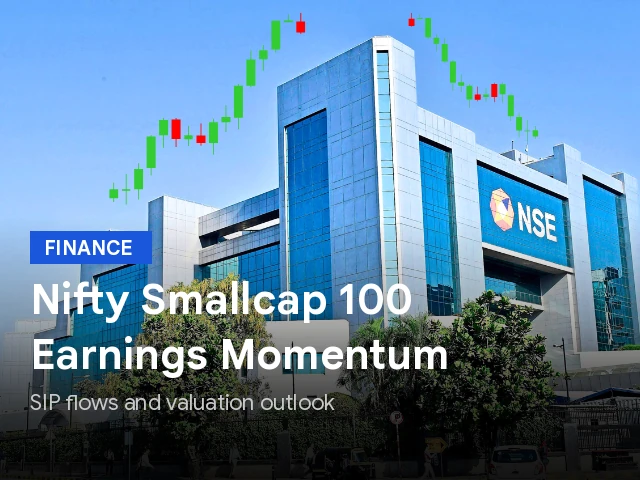
Nifty Smallcap 100 Share Price: Earnings Momentum, SIP Flows, And Valuation Outlook
Key Takeaways
- Nifty Smallcap 100 Share Price Hits Fresh High On Earnings And SIP Inflows.
- Valuations Remain Above Long-Term Norms, Making Earnings Growth The Key To Upside.
- Motilal Oswal Small-Cap Earnings Data Show 32% YoY Growth Across 90 Stocks.
- SIP Inflows Into Small-Cap Funds Provide Liquidity While Valuations Stay Rich.
New highs for the Nifty Smallcap 100 Share Price are setting the pace for India's retail investors, but the real question is whether earnings can justify the premium as valuations stretch beyond long-term norms.
In this phase of the rally, the market breadth has become unusually broad; the small-cap segment has outperformed the Nifty 50 and mid-caps over the last six months, buoyed by strong June-quarter earnings and consistent SIP inflows into small-cap mutual funds. Earnings growth in the June quarter has been around 20% year-on-year, while Motilal Oswal's coverage shows 90 small-cap companies delivering 32% YoY growth, ahead of its 26% estimate. Even after excluding financials, earnings growth stood at 12% YoY, broadly in line with expectations. This combination of profits and liquidity is the backbone of the current rally–and valuation multiples now carry greater weight than earlier in the move.
Nifty Smallcap 100 Share Price: June Quarter Earnings Momentum And What It Means For Retail Investors
The June quarter underscored the earnings momentum that has supported the rally in the small-cap space. Earnings growth around 20% YoY has been the main driver, reinforcing the idea that investors are seeking companies that can justify premium valuations with tangible profit growth. Motilal Oswal's data adds color here: 90 small-cap companies under its watch delivered earnings growth of 32% YoY in the June quarter, ahead of its own 26% estimate. Excluding financials, the growth remains meaningful at 12% YoY, lining up with expectations for the broader sector.
Domestically, the flow of money continues to back the space. AMFI data show small-cap mutual funds attracted ₹5,602 crore in June, up 13.3% from ₹4,946 crore in May. Small-cap funds accounted for about 19% of total equity mutual fund inflows of ₹28,973 crore during the month. This robust liquidity helps sustain demand even as valuations move above long-term averages.
Table: Key Market Metrics Snapshot
| Metric | Value |
|---|---|
| Six-Month Performance | 16% |
| June SIP Inflows (₹ crore) | 5,602 |
| May SIP Inflows (₹ crore) | 4,946 |
| Small-Cap Funds Share Of Equity Inflows | About 19% |
| Total Equity Inflows (₹ crore) In June | 28,973 |
| Nifty Smallcap 100 Price-Earnings Multiple | 31.8x - 32.4x |
| Five-Year Median P/E (Smallcap 100) | 29x |
| Nifty Smallcap 250 P/E Multiple | 34.6x |
| Three-Year Median (Smallcap 250) | ~30x |
| Motilal Oswal Small-Cap Earnings Growth (YoY) | 32% |
| Excluding Financials YoY Earnings Growth | 12% |
Valuation Snapshot: Are We At The Top Of The Rally?
Valuations reflect the nerves of a market that has stretched beyond traditional norms. The Nifty Smallcap 100 price is trading around 31.8x-32.4x earnings, above a five-year median of roughly 29x. The corresponding number for the Nifty Smallcap 250 sits around 34.6x, versus a three-year median near 30x. While this does not automatically rule out further upside, it does suggest the room for multiple expansion is more limited than it was at earlier stages of the rally. In practical terms, investors are now looking for sustained earnings delivery to justify premium valuations.
Market commentary suggests that the premium can stay embedded if earnings growth persists at a healthy pace. But the watchword from analysts is clear: the next phase of gains is likely to hinge more on real profit expansion than on valuation multiples expanding. For retail investors, this means the risk-reward balance shifts toward stock selection quality and earnings visibility rather than broad-based momentum alone.
SIP Inflows And The Liquidity Backbone For Small-Cap Rally
Domestic money continues to chase small-cap opportunities, with mutual fund inflows into the segment remaining sturdy. In June, small-cap mutual funds attracted ₹5,602 crore, up 13.3% from May's ₹4,946 crore. These inflows accounted for about 19% of total equity mutual fund inflows of ₹28,973 crore for the month. The persistence of SIP-driven liquidity helps sustain demand, enabling premium valuations to be supported by actual money coming in from retail investors rather than mere speculative frenzy.
From a practical standpoint, this liquidity cushion matters because it helps the market absorb near-term volatility and provides a longer runway for earnings to catch up with prices. Yet the same data also imply that if earnings growth slows, the valuations could face greater downside pressure, given the high base.
Motilal Oswal Stock Insights: Earnings Growth For Small-Cap Stocks
Motilal Oswal's small-cap stock coverage highlights robust earnings growth. The June quarter saw 90 small-cap companies post a 32% year-on-year earnings increase, ahead of the firm's own 26% estimate. Even when financials are stripped out, the growth remains a healthy 12% YoY, lining up with expectations for the sector. These figures lend credibility to the current premium on small caps, but investors must remain selective and focused on quality metrics rather than chasing broad-based momentum.
As a practical guide, retailers should focus on companies with consistent earnings growth, manageable leverage, and strong cash flow generation. The combination of high-quality earnings and ample liquidity can justify premium pricing, but this condition is not guaranteed to persist. For those seeking deeper analysis, Swastika offers advanced research and a practical tool to help parse opportunities. Swastika's Sarthi AI stock assistant can help screen stocks and assess risk-adjusted return potential in real time.
Takeaways For Retail Investors: How To Gauge The Next Phase Of The Small-Cap Rally
Retail investors should keep a focus on sustainability rather than momentum. As valuations sit above long-term norms, the priority should shift toward identifying earnings durability, cash flow strength, and disciplined risk controls. Invest in a diversified mix of small-cap names that show robust delivery across multiple quarters, with attention to profit margins and balance-sheet quality. Use SIPs to build a core exposure gradually, rather than chasing sudden bursts of performance in a single quarter.
Related Reads
Frequently Asked Questions
What drove the Nifty Smallcap 100 Share Price to a fresh high?
Strong June-quarter earnings growth and persistent SIP inflows into small-cap mutual funds supported the rally.
How are valuations for the Nifty Smallcap 100 and Nifty Smallcap 250 across long-term norms?
Nifty Smallcap 100 price-earnings multiples are around 31.8x-32.4x, vs a five-year median of 29x; Nifty Smallcap 250 trades around 34.6x, vs ~30x median.
What does Motilal Oswal data say about small-cap earnings growth?
Motilal Oswal's data shows 32% YoY earnings growth across 90 small-cap companies in the June quarter; excluding financials, growth is 12% YoY.
What role do SIP inflows play in sustaining the small-cap rally?
AMFI data shows ₹5,602 crore inflows into small-cap funds in June, about 19% of total equity inflows of ₹28,973 crore, providing steady liquidity.
What should retail investors watch next in the small-cap rally?
Investors should focus on earnings delivery and risk controls, because valuations are stretched and further gains depend on actual profit growth.
Conclusion
The current phase of the small-cap rally is anchored by earnings growth and steady domestic liquidity, which gives retail investors a meaningful tailwind. However, valuations are elevated, and the next leg of gains will depend more on actual profit delivery than multiple expansion. The prudent approach today is to focus on durable earnings, maintain diversification, and use a disciplined investment plan–such as systematic SIPs–to participate in the upside while managing risk. This is the moment to apply a 'quality first, price second' mental model and to keep a reserve for volatility.
Firstsource Solutions Share Price: A Deep Dive Into Q1FY27 Results And Outlook
Key Takeaways
- Firstsource Solutions Share Price swung from Rs 337 to Rs 290.20 intraday after Q1FY27 results.
- Q1FY27 net profit declined 19% YoY to Rs 166 crore, while revenue rose 5.5% QoQ to Rs 2,725 crore.
- Analysts stay positive with 14 buys and 1 sell, and a 12-month target of Rs 291.71, implying a small downside.
- RSI at 72.72 and volume at 3.84x 30-day average signal momentum shifts investors should watch ahead of the next earnings cycle.
Firstsource Solutions Share Price swung from Rs 337 to Rs 290.20 intraday after Q1FY27 results, signaling a tension for investors between revenue momentum and profit pressures that will likely shape the stock's near-term moves. This price action sets the stage for a nuanced read of the quarter and what it means for retail investors across India who rely on high-quality research and clear numbers to guide entry and exit decisions.
Firstsource Solutions Share Price And Q1FY27 Results: The Immediate Market Reaction
The June quarter delivered a mixed bag for Firstsource Solutions. Revenue from operations rose 5.5% sequentially to Rs 2,725 crore, underscoring ongoing demand for its outsourced services. On the profitability side, net profit slipped 19% year-on-year to Rs 166 crore, suggesting that the margin recovery story is yet to fully offset higher costs or a shift in the business mix. On the operating front, earnings before interest and tax (EBIT) rose 7.1% QoQ to Rs 337 crore, and EBIT margin expanded by 20 basis points to 12.4% in Q1FY27 from 12.2% in Q4FY26. These metrics show a constructive margin trajectory even as bottom-line profits faced pressure, a classic case of top-line resilience meeting cost and mix challenges.
For investors, the intraday narrative was dramatic. The stock traded around Rs 298.30 after the results were announced, then surged to a high near Rs 337 around 12:47 PM before retreating sharply. By 1:37 PM, the price had slipped to Rs 290.20, representing a drop of as much as 14.51% from the intraday peak. Such moves are not unusual on earnings days when analysts and traders weigh the sustainability of growth against earnings quality. The market activity was notable, with total traded volume running 3.84 times above the 30-day average, signaling robust participation as investors reassessed the quarter’s implications.
The index backdrop also mattered. The NSE Nifty 50 gained 0.10%, indicating a selective stock-specific reaction rather than a broad-market surge. The relative strength index (RSI) of 72.72 placed the stock in an overbought territory, hinting at a risk of a pullback if momentum falters. With 15 analysts tracking the stock, 14 issued a Buy rating while 1 remained a Sell, a consensus that leans toward upside but with caution on near-term volatility. The average 12-month target of Rs 291.71 suggests a potential modest downside from the higher intraday levels, offering a nuanced risk-reward picture for traders and long-term investors alike.
To help readers visualize the intraday dynamics, here is a quick snapshot of the price levels contemporaneous with the headlines:
| Time (IST) | Price (Rs) | Context |
|---|---|---|
| 12:47 PM | 337.00 | Intra-day high before pullback |
| Post-Announcement | 298.30 | Trading level after results |
| 01:37 PM | 290.20 | Decline of up to 14.51% |
Firstsource Solutions Quarterly Results: Revenue Growth And Profit Dip Explained
Looking under the hood, the June quarter’s revenue performance was solid, with Rs 2,725 crore in topline representing a 5.5% sequential rise. This indicates demand stability for its outsourcing services and a continued ability to monetize client engagements. However, the bottom line tells a different story. Net profit declined 19% YoY to Rs 166 crore, underscoring earnings pressure despite top-line gains. This juxtaposition points to a more complex cost structure or a shift in margins that requires closer scrutiny by investors.
On the margins front, EBIT came in at Rs 337 crore, up 7.1% QoQ, while EBIT margin expanded by 20 basis points to 12.4% in Q1FY27 from 12.2% in Q4FY26. The margin expansion is a positive signal, suggesting that the company is managing costs effectively even as revenue grows. For retail investors, the combination of growth in topline and a modest margin improvement can be a prelude to further profitability if operating leverage continues to materialize and costs stabilize. Still, the net profit weakness calls for attention to non-operating items and potential one-offs that could be impacting the bottom line beyond the core operations.
Analysts’ consensus on the stock remains cautiously constructive. With 14 Buy ratings and 1 Sell out of 15 trackers, the street broadly backs the growth story, even as it awaits stronger profit delivery. The 12-month price target sits at Rs 291.71, implying a small downside of about 0.7% from the current price, which reflects a balanced risk-reward setup. In practice, this means investors should weigh the potential for further upside driven by margin expansion and stable cash flows against the near-term earnings volatility that the Q1FY27 results reveal.
Firstsource Solutions Stock Price Momentum: Intraday Levels, RSI, And Volume
Momentum is a critical lens through which investors evaluate price action around earnings. The Firstsource Solutions Stock Price activity on the day in question indicates a high-volatility session with a clear intraday range and substantial trading interest. The RSI reading of 72.72 signals strong near-term momentum, though it also flags the possibility of a pullback if the price remains in that elevated zone. The intraday volume surge–3.84 times the 30-day average–confirms that traders actively participated in parsing the earnings narrative, which can translate into sharper moves in the seconds and hours after the next update.
Comparatively, the stock’s price action against the broad market backdrop shows selective strength. A modest rise in the Nifty 50 on the day indicates that the volatility was stock-specific rather than a broad-market surge. For risk-aware investors, this context matters: outsized moves in select names can create both opportunities and traps, especially when a quarter shows a mix of topline growth and bottom-line pressure.
Firstsource Solutions Price Target And Analyst View
Analyst sentiment around Firstsource Solutions remains broadly constructive. The majority view across trackers supports a favorable long-term trajectory, with a 12-month price target pegged at Rs 291.71. This target implies a subtle downside from the current levels, underscoring a market pricing scenario where upside is contingent on continued margin stabilization and sustained revenue growth. The split among analysts–14 Buy and 1 Sell–adds to the narrative that investors who adopt a longer horizon may find the risk-reward favorable, provided the company can translate topline momentum into stronger earnings in subsequent quarters.
From a strategy standpoint, this dynamic suggests a cautious stance: consider deploying a plan that allows participation in any upside while protecting against a near-term pullback should momentum ease. Given the high RSI and the intraday volatility, patience and a defined target-price framework could help retail investors avoid premature moves while remaining aligned with the company’s longer-term profit trajectory. For those seeking granular, stock-level analysis, Swastika’s Sarthi AI stock assistant can offer institutional-level research insights on Firstsource Solutions and other indices to complement your own due diligence.
Investors who want continuous, data-driven insights can consult Swastika's Sarthi AI stock assistant, a resource designed to translate complex market data into actionable ideas for retail portfolios and trading strategies.
Investing Takeaways For Indian Retail Investors: Practical Steps With Firstsource Solutions
Firstsource Solutions presents a classic case study in the tension between top-line growth and bottom-line profitability. The Q1FY27 results highlight a revenue-positive story but a profit-delivery challenge, a combination that often leads to short-term volatility in the share price. For Indian retail investors, the key is to interpret these results through the lens of sustained earnings quality rather than a single-quarter swing. Margin resilience, cost control, and client mix management will be the critical levers to watch in the next few quarters. The 12-month target of Rs 291.71 suggests that the market is pricing modest downside at current levels, but the stock could re-rate higher if margins continue to expand and if the company demonstrates consistent top-line growth.
Frequently Asked Questions
What triggered the intraday volatility in Firstsource Solutions Share Price after Q1FY27 results?
The results showed a YoY profit decline even as revenue rose; The stock rose to around Rs 337 at midday and later fell to Rs 290.20 as traders priced in mixed signals.
What were the Q1FY27 revenue and net profit numbers for Firstsource Solutions?
Revenue from operations rose 5.5% QoQ to Rs 2,725 crore, while net profit declined 19% YoY to Rs 166 crore.
What is the 12-month price target for Firstsource Solutions according to broker consensus?
The average 12-month price target is Rs 291.71, implying a marginal downside of about 0.7% from the current levels.
How do analysts view Firstsource Solutions stock price movements?
Analysts show a largely bullish stance, with 14 buys and 1 sell out of 15 trackers.
Where can investors get deeper stock analysis from Swastika?
Investors can use Swastika's Sarthi AI stock assistant for institutional-level research on any stock or index.
Conclusion
The story around Firstsource Solutions Share Price after Q1FY27 is a reminder that markets reward revenue momentum but penalize profit volatility. The company posted robust topline growth in a quarter where net profit declined YoY, yet EBIT margin expanded and the overall margin trajectory remains encouraging. For the Indian retail investor, the near-term path may involve continued volatility, but the longer-term setup hinges on sustained margin improvement and consistent earnings power. The prudent approach is to balance the upside potential suggested by a broad analyst Buy rating with a disciplined risk framework that respects intraday volatility and the upcoming earnings cycle.
Open your trading and demat account here
Reference :
1 : Ndtvprofit

Infosys Stock Price Insights For Indian Retail Investors
Key Takeaways
- Infosys Stock Price movements shape both short-term trading and long-term planning.
- Infosys NSE Stock trends reflect market sentiment and quarterly results.
- Infosys Dividend updates influence risk-reward and yields for shareholders.
- Swastika's Sarthi AI stock assistant helps synthesize data and watchlists.
Infosys Stock Price movements shape how Indian retail investors build and rebalance technology exposure. In a market where macro data, currency shifts, and corporate updates collide, the Infosys Stock Price on the NSE and other exchanges serves as a real-time barometer of sentiment and earnings expectations. This Swastika Investmart guide explains how to read the latest price action, what to watch in quarterly results, and how Infosys dividend announcements influence the risk-reward profile for portfolios across the country.
Across this guide, you will see how to interpret Infosys Stock Price movements in tandem with the Infosys NSE Stock dialogue, what the quarterly results imply for future profitability, and how Infosys dividend announcements can shift your payoff profile. The goal is not to chase every spike but to build a disciplined framework that connects price with fundamentals. By aligning your approach with long horizons, you can better weather volatility and participate in IT sector upside.
Infosys Stock Price Trends In 2026: What Retail Investors Need To Know
Infosys Stock Price Trends In 2026 are shaped by a mix of durable earnings power and cyclicality in IT services demand. The company continues to win large digital transformation deals, which supports earnings visibility and cash generation. For a retail investor, price momentum in 2026 will likely respond to how well Infosys translates orders into revenue growth and how margins hold up amid price competition and currency volatility. A disciplined observer will look for sustained revenue growth, improved operating leverage, and steady cash generation as catalysts for a gradual re-rating of the stock.
The practical approach is to combine trend-following with fundamentals. If you see price action confirming a multi-quarter uptrend alongside improving operating metrics, that strengthens the case for incremental allocations. If, however, commentary from management points to margin pressure or slower client wins in a particular quarter, expect price volatility to continue until earnings visibility solidifies. This is where long-term investors can separate noise from signal by focusing on free cash flow, capital allocation, and the company’s ability to reinvest for higher returns over time.
- Long-term driver: Digital services demand and cloud-based transformations continue to support revenue growth and cash flow stability.
- Valuation context: Compare price action with historical multiples and the trajectory of earnings growth.
- Risk: Global growth deceleration, currency headwinds, and competitive pressure can create near-term volatility.
Infosys NSE Stock Performance: How Local Listings Drive Global Sentiment
In India, the Infosys NSE Stock is a primary channel for domestic investors. Price moves on the NSE often reflect local liquidity, policy signals, and earnings cycles, and these moves can influence how global investors view Indian IT stocks. A rising Infosys NSE Stock price can lift tech indices and attract more foreign participation, while negative headlines or macro concerns can trigger swift reversals. For the retail investor, watching the NSE price alongside global peers can provide important context for valuation and risk appetite.
Market participants should also monitor how the stock interacts with broader indices such as the Nifty IT and the sector’s momentum. When the IT sector demonstrates resilience, the price action of Infosys stock often benefits from a favorable risk-on tone. Conversely, during periods of risk-off, even strong earnings narratives may struggle to lift the stock without supportive macro developments. The key takeaway is to use price action as part of a balanced framework rather than as a standalone signal.
- Liquidity and flows: Domestic trading volumes can drive intraday volatility, influencing short-term moves.
- Index correlation: Movements in IT indices can amplify price action and create clearer entry/exit signals.
- Near-term catalysts: Quarterly results and dividend announcements often set the tone for the next few weeks of trading.
Infosys Dividend Outlook: Cash Returns And Impact On The Stock Price
The Infosys Dividend outlook is an important component of total return for shareholders. The company typically balances cash dividends with buybacks to return capital, and policy clarity can help stabilize investor expectations even amid price noise. For a retail investor, dividend announcements provide a tangible cash component that can cushion downside in volatile periods and contribute to a more predictable total return profile over time. Tracking payout ratios and dividend yield trends can offer additional context when evaluating fair value versus growth expectations.
Dividend signals do not operate in isolation. They intertwine with revenue growth, cash flow generation, and capital allocation strategy. In periods of strong earnings visibility, a stable or gradually rising dividend can support multiple compression and price resilience in the stock. Conversely, any cut or significant policy change could temporarily weigh on sentiment, even if long-term fundamentals remain intact. The prudent investor will reconcile dividend expectations with growth potential and capital needs for the business.
- Dividend yield stability: A steady or gradually rising yield can provide a floor for investors during uncertain markets.
- Payout policy: Consistency in payout ratios signals financial discipline and confidence in future cash generation.
- Capital allocation: Buybacks and debt management influence equity value and margin of safety for investors.
Infosys Quarterly Results Analysis: Reading The Numbers For Stock Movement
Infosys Quarterly Results are among the most immediate drivers of near-term price action. Investors should focus on revenue growth, operating margins, and free cash flow, as these indicators shed light on the company’s ability to fund dividends, buybacks, and strategic investments. Commentary around client wins, vertical strength (for instance, digital services, cloud, and automation), and geographic mix provides color on the sustainability of earnings momentum. A quarterly miss can trigger a price downgrade, while a beat with strong guidance often fuels a rally and the potential re-rating of the stock.
To translate quarterly results into actionable decisions, track year-over-year growth and sequential trends, not just one-off beats. Compare performance across regions and service lines to identify where the driver of growth is strongest. In an environment where multiple IT peers are competing for large deals, Infosys stock price can hinge on management’s ability to communicate a clear, executable plan for sustaining profitability, accelerating digital adoption, and managing costs effectively. The result for the patient investor is clarity on whether the stock deserves a premium for growth or whether the current price already reflects the advanced stage of execution.
- Top-line and margin trajectory: Look for sustainable expansion rather than a single-quarter spike.
- Operational efficiency: Free cash flow generation supports dividends and capital returns.
- Guidance and outlook: Management commentary on client activity, horizontal growth, and vertical momentum is critical.
Infosys Annual Report Insights: Strategy, Growth, And Long-Term Valuation
The Infosys Annual Report offers a comprehensive view of strategic priorities, risk factors, and capital allocation that shape multi-year returns. Investors should study growth programs in digital services, AI-enabled offerings, cloud infrastructure, and automation, as these are tied to long-term revenue resilience. The annual report also outlines risk exposures–competitive dynamics, regulatory changes, currency movements, and execution risk–helping investors calibrate the probability of downside surprises. By connecting near-term earnings performance with long-term strategic positioning, retail investors can form a balanced view of fair value and growth potential over multiple years.
Beyond numbers, the annual report communicates governance standards, board oversight, and strategic priorities that influence capital deployment and risk management. Keeping an eye on management commentary regarding price realization, client diversification, and innovation investments can provide early signals about the durability of Infosys’ growth story. When combined with dividend signals and quarterly performance, the annual report becomes a powerful tool for assessing long-run value creation in India's technology sector.
For deeper research on your own terms, try Swastika's Sarthi AI stock assistant to tailor insights on Infosys stock price movements, dividend events, and quarterly results that align with your portfolio strategy.
Related Reads
- Infosys Stock Price Signals And Market Moves: Nifty Ends Lower As IT Leads
- Infosys Stock Price And Q1 FY27 Earnings: A Sector-Wide Roundup For Retail Investors
- Infosys Share Price Today: A Practical Guide For Retail Investors
Frequently Asked Questions
What is the current Infosys stock price?
Infosys stock price changes in real time during market hours. Check your trading platform or a live quote feed for the latest price.
How did Vishal Sikka's resignation affect Infosys stock price?
Leadership changes can impact sentiment temporarily. The stock's reaction around leadership announcements varies by context and market conditions.
What is the difference between Infosys stock price and Infosys NSE stock?
Infosys stock price refers to the company's price on any exchange, while Infosys NSE Stock specifically refers to the price on the National Stock Exchange of India.
When does Infosys pay dividends and where can I find Infosys dividend data?
Infosys pays quarterly dividends; exact dates and amounts are announced on Infosys' investor relations page and stock exchange filings.
Where can I read Infosys annual report for detailed financial data?
Infosys' annual report is available on the Infosys investor relations portal and the stock exchange filings database.
Conclusion
Retail investors should view Infosys stock price as the intersection of fundamentals and market mood. By focusing on long-term growth drivers, dividend potential, and a disciplined approach to price action, you can build a resilient allocation in Indian IT exposure even as near-term moves remain choppy. The price tells a story, but the story is best understood when you anchor decisions in earnings growth, cash generation, and strategic execution over time.
Open your trading and demat account here
Reference :
1 : Google
Hal Share Price Momentum In The Indian Defence Sector Upturn: HAL, Mazagon Dock And Cochin Shipyard Stocks In Focus
Key Takeaways
- Hal share price climbs as the Nifty Defence index hits new highs.
- HAL and other defence stocks rally 3-6% intraday on NSE.
- Policy support, defence budgets, and export growth underpin a multi-year upcycle.
- Retail investors should watch HAL share price alongside Mazagon Dock and Cochin Shipyard, and use Swastika's Sarthi AI stock assistant for deeper insights.
For investors watching the HAL share price, the move signals the breadth of the upturn–it's not just a few names, but a sector-wide shift supported by policy and budget signals that are favouring domestic manufacturing and exports. The structural drivers are clear. CareEdge Ratings expects Indian defence industry to grow from ₹1.78 trillion in FY26 to ₹3 trillion by FY29, maintaining PBILDT margins of 20-22%. The Union Budget for FY27 allocated ₹7.85 trillion to the Ministry of Defence, with policy measures such as FDI liberalisation up to 74% under the automatic route, indigenisation lists, and export promotion initiatives aimed at achieving India's defence export target. This is part of a broader push that has India as the world’s second-largest arms importer during 2021–25, accounting for 8.2% of global imports, while defence exports surged 62.66% to ₹38,424 crore in FY26 over FY25. India aims to scale defence exports to ₹50,000 crore by FY29 and ₹2.8 trillion by 2047 under the Viksit Bharat vision.
Kotak Institutional Equities notes that the defence sector is in a multi-year structural upcycle, with an 11% CAGR in capital expenditure over FY26-30E, and the AON approvals rising roughly tenfold from FY21-26 to ₹9.3 trillion. The domestic procurement share is expected to rise from 54% (FY19) to 70% plus, strengthening the domestic supply chain and reducing reliance on imports. The US remains the largest defence market, with Europe and Armenia emerging as new geographies. Defence exports have grown dramatically in the last decade, and India remains a growing player in a global context.
In the current session, defence-related stocks rallied up to 6% in intraday trades. Names mentioned include MTAR Technologies, HAL, MIDHANI, BDL, GRSE, Mazagon Dock Shipbuilders, Paras Defence, BEML, Cochin Shipyard, Zen Technologies, and Dynamatic Technologies. The breadth suggests that investors are pricing in a longer-term upcycle rather than a one-off move. For retail investors, the key takeaway is to map HAL share price against peers such as Mazagon Dock stock, Cochin Shipyard stock, and GRSE stock to gauge momentum. With policy and budget signals reinforcing domestic manufacturing and export prospects, there may be continued upside for a carefully chosen basket of defence stocks. To explore deeper, consider Swastika's Sarthi AI stock assistant: Swastika's Sarthi AI stock assistant.
Looking ahead, the sector's trajectory remains anchored in fundamentals. The defence sector's performance will likely align with the government's push toward self-reliance in defence production, with the aim of higher export volumes and a broader domestic base. Investors should watch HAL stock NSE alongside Mazagon Dock stock price movements and GRSE stock flows to identify building momentum; the long-term drivers–policy support, budgets, and export growth–are expected to stay in place for the foreseeable future.
Defence Sector Movers On NSE Today: HAL MIDHANI MTAR BDL GRSE Mazagon Dock Cochin Shipyard 3-6% Gains
Defence shares, both private and public sector, were in demand, rallying up to 6% in intraday NSE deals. Hindustan Aeronautics (HAL), Mishra Dhatu Nigam (MIDHANI), MTAR Technologies, Bharat Dynamics (BDL), Garden Reach Shipbuilders & Engineers (GRSE), Mazagon Dock Shipbuilders, Dynamatic Technologies, Cochin Shipyard, Zen Technologies, Paras Defence and BEML were up 3% to 6% on the NSE in intraday deals. The HAL stock NSE movement reflected broad-based enthusiasm for the sector.
The breadth of the move underscores investors' belief that the defence sector's revival is supported by a multi-year cycle rather than a one-off event. This is reinforced by the sector's record-high valuations and the government's continuing push toward indigenisation and exports. The HAL stock NSE signal is the proof of concept that investors expect continued momentum across the sector.
Policy And Budget Catalysts Driving The Defence Upturn
The growth stories are anchored in policy reforms and a larger budget allocation. CareEdge Ratings sees the industry rising from ₹1.78 trillion in FY26 to ₹3 trillion by FY29, with PBILDT margins of 20-22%. The Union Budget for FY27 has allocated ₹7.85 trillion to the Ministry of Defence. This is coupled with policy measures such as 74% FDI under the automatic route, positive indigenisation lists, and export promotion initiatives aimed at achieving a robust defence export target. The sector's global footprint is expanding as India remains the world's second-largest arms importer during 2021–25, accounting for 8.2% of global imports, while defence exports surged 62.66% to ₹38,424 crore in FY26 over FY25. India aims to scale defence exports to ₹50,000 crore by FY29 and ₹2.8 trillion by 2047 under the Viksit Bharat vision.
Kotak Institutional Equities notes that the defence sector is in a multi-year structural upcycle, with an 11% CAGR in capital expenditure over FY26-30E, and the AON approvals rising roughly tenfold from FY21-26 to ₹9.3 trillion. The domestic procurement share is expected to rise from 54% (FY19) to 70% plus, strengthening the domestic supply chain and reducing reliance on imports. The US remains the largest defence market, with Europe and Armenia emerging as new geographies.
Export Growth, Domestic Procurement, And The Long-Term Outlook For Mazagon Dock Share Price And Cochin Shipyard Stock
Defence exports have grown dramatically in the last decade, with India moving from a net importer to a significant exporter in certain segments. The export momentum complements domestic procurement strength, as the government pushes indigenisation and RD investments. The Mazagon Dock share price and Cochin Shipyard stock in particular are tethered to the success of the shipbuilding and defence-export led growth. Mazagon Dock and Cochin Shipyard are among the players that stand to benefit from the domestic push and global demand shifts. The sector's long-run trajectory remains favorable with the government's continued emphasis on R&D and export promotion.
The market's optimism is not only about large players like HAL; it is about how the ecosystem–SMEs and mid-caps such as GRSE, Zen Technologies, Paras Defence, Dynamatic Technologies, and others–participates in the expansion. In short, the defence sector's path has become more resilient with a diversified set of beneficiaries, which bodes well for the HAL stock NSE and the broader group.
Finally, always remember that policy catalysts and export trajectories can evolve, and stock prices can move with macro risk factors. A disciplined method–combining price action analysis, fundamentals, and risk management–will help investors select the right mix of HAL share price exposures and related defence stocks. Retail investors should consider a watchlist focusing on HAL stock NSE, Mazagon Dock stock price, GRSE stock, and Cochin Shipyard stock, with periodic reassessment as new budget announcements and export data arrive. The sector's long-run drivers remain intact for those with a longer time horizon.
Related Reads
Frequently Asked Questions
What drove the Hal Share Price rally in the latest session?
HAL share price moved higher as defence stocks rallied intraday, with HAL and peers rising 3-6% on the NSE; the Nifty India Defence index rose 2.6% to 9,641.50 at 12:41 PM, and the defence index touched a record high of 9,784.60 on June 23, 2026.
Which stocks were among the top movers in the defence sector?
Hindustan Aeronautics (HAL), Mishra Dhatu Nigam (MIDHANI), MTAR Technologies, Bharat Dynamics (BDL), Garden Reach Shipbuilders & Engineers (GRSE), Mazagon Dock Shipbuilders, Dynamatic Technologies, Cochin Shipyard, Zen Technologies, Paras Defence and BEML were up 3% to 6% on the NSE in intraday deals.
What is the medium-term outlook for India’s defence sector?
CareEdge Ratings expects the defence industry to grow from ₹1.78 trillion in FY26 to ₹3 trillion by FY29, with PBILDT margins of 20-22%; the Union Budget for FY27 includes a substantial allocation to defence and policy levers like FDI liberalisation up to 74% to boost domestic procurement and exports.
How does the export outlook look for Indian defence stocks?
Defence exports have surged 62.66% to ₹38,424 crore in FY26 over FY25, with the US as the largest destination and Europe and Armenia emerging as new markets; targets include ₹50,000 crore by FY29 and ₹2.8 trillion by 2047 under the Viksit Bharat vision.
What should a retail investor do now?
Retail investors should monitor HAL share price along with Mazagon Dock stock price movements, Cochin Shipyard stock, and GRSE stock to gauge momentum; consider a diversified approach within defence names and use Swastika's Sarthi AI stock assistant for deeper, institution-level insights.
Conclusion
In the near term, watch the HAL stock NSE and other major defence names against policy developments, budget updates, and export data releases. The sector’s long-run drivers remain intact, and the embedded momentum is likely to persist as India advances its Viksit Bharat vision and strengthens its domestic manufacturing and export capabilities. As always, stay disciplined, stay informed, and let the data guide your investment choices.
Open your trading and demat account here
Reference :
Swiggy Share Price And Five-Year Growth Outlook: From Instamart To Dineout FY31 Targets
Key Takeaways
- Swiggy targets consolidated GOV of Rs 2.5 lakh crore by FY31, a CAGR above 30%.
- Instamart GOV is projected to rise to Rs 1.5 lakh crore by FY31, with 14 million MAU across 130+ cities and nearing EBITDA break-even.
- Dineout GOV is expected to hit Rs 20,000–25,000 crore with Rs 1,000 crore EBITDA by FY31.
- EPS is projected to rebound to Rs 30–33 by FY31, while Swiggy remains debt-free with Rs 14,400 crore in cash.
Swiggy Share Price watchers have a reason to stay glued as the delivery giant unveils a bold five-year plan. The target is to lift consolidated GOV to about Rs 2.5 lakh crore by FY31, a growth rate north of 30% CAGR, anchored by core food delivery, Instamart, and Dineout. Instamart alone is slated to scale GOV to Rs 1.5 lakh crore by FY31 from Rs 28,000 crore in FY26, supported by more than 14 million monthly active buyers across over 130 cities, edging toward EBITDA break-even as density grows. Dineout is expected to contribute a GOV of Rs 20,000-25,000 crore by FY31 with Rs 1,000 crore in Adjusted EBITDA. The business remains debt-free with Rs 14,400 crore on hand, and earnings are projected to rebound from a negative Rs 16 in FY26 to Rs 30-33 by FY31.
Swiggy Share Price Outlook After FY31 Growth Targets
Swiggy's five-year growth plan frames a path to profitability through three engines: core food delivery, Instamart, and Dineout. A GOV target of Rs 2.5 lakh crore by FY31 implies a disciplined expansion of scale and improving unit economics, supported by affordability programs designed to increase order frequency. The projected EPS rebound to Rs 30-33 by FY31 signals a material shift from FY26's negative print, backed by a cash buffer of Rs 14,400 crore that keeps Swiggy insulated as it funds growth. If the plan plays out, the Swiggy share price could reflect the converging growth and profitability narrative.
Swiggy IPO And Listing Outlook: Is A Listing On The Horizon
Investors often ask about if and when Swiggy might list on the public market. The FY31 growth plan provides no explicit listing date; it focuses on scale and profitability milestones across food delivery, Instamart, and Dineout. Market watchers would look for signals of a formal IPO timeline that could unlock value for existing shareholders as Swiggy monetizes scale from Instamart and Dineout alongside food delivery growth. Given the debt-free status and Rs 14,400 crore cash reserve position, it could pursue aggressive expansion while keeping an eye on potential listing considerations in the future.
Swiggy Revenue Growth And GOV Trajectory: How The Core Growth Adds Up
The consolidated GOV target of Rs 2.5 lakh crore by FY31 rests on sustained growth across key segments. The company grew GOV to Rs 67,734 crore in FY26 and aims to more than triple that figure by FY31, delivering a five-year CAGR above 30%. The plan's backbone is a disciplined expansion of the core business, with new affordability programs designed to lift order frequency and deepen wallet share among existing users. The governance framework and cash reserves reinforce the ability to fund fast growth while protecting profitability in the long run.
Swiggy Instamart Growth: GOV Projection And Unit Economics
Instamart, Swiggy's quick-commerce arm, is projected to jump 4- to 5-times to Rs 1.5 lakh crore in GOV by FY31 from Rs 28,000 crore in FY26. The business already serves over 14 million monthly active buyers across more than 130 cities, and it is edging toward EBITDA breakeven as store density grows and unit economics improve. This growth engine is designed to supplement the core delivery business by increasing order frequency at smaller, faster-serving formats, tightening last-mile efficiency, and expanding city coverage. The plan envisions Instamart as a major contributor to the GOV mix and to the eventual profitability story.
Swiggy Dineout Growth Trajectory: Out-Of-Home Dining And EBITDA
Dineout, Swiggy's out-of-home dining arm, is projected to scale GOV to Rs 20,000–25,000 crore by FY31 while contributing about Rs 1,000 crore in Adjusted EBITDA. The expansion reflects the broader shift toward experiential dining and offline partnerships that can monetize higher-value orders and loyalty over time. This segment complements Instamart and core delivery, offering a diversified revenue engine that reduces reliance on a single growth channel and supports the overall GOV target.
Swiggy Share Price Range And Investment Takeaways
The current Swiggy share price has traded between a 52-week low of Rs 235.85 and a high of Rs 473.00, illustrating a wide valuation band as investors weigh growth potential against execution risk. The story of FY31 profitability suggests a trajectory where value could be unlocked as the three growth engines converge into sustainable margins. Retail investors should monitor not only the GOV numbers but also per-share earnings, cash reserves, and the ability to scale Instamart while maintaining unit economics. Given the cash buffers and debt-free stance, Swiggy's long-term investment thesis remains centered on execution over quick wins, with potential upside if Instamart and Dineout achieve scaled profitability.
Related Reads
Frequently Asked Questions
What is Swiggy's FY31 GOV target?
Rs 2.5 lakh crore (GOV) by FY31, with a five-year CAGR above 30% across food delivery, Instamart, and Dineout.
What is Swiggy Instamart GOV projection by FY31?
Rs 1.5 lakh crore GOV by FY31, up from Rs 28,000 crore in FY26, with 14 million monthly active buyers across more than 130 cities and near EBITDA break-even.
What is Swiggy Dineout GOV projection by FY31?
Rs 20,000–25,000 crore GOV by FY31, contributing Rs 1,000 crore in Adjusted EBITDA.
What is Swiggy's expected EPS by FY31?
Rs 30–33 per share by FY31, reversing the FY26 negative EPS of -Rs 16.
What is Swiggy's cash position and debt status?
Debt-free with a cash buffer of Rs 14,400 crore.
What is Swiggy's 52-week share price range?
52-week low Rs 235.85 and 52-week high Rs 473.00.
Conclusion
Swiggy's five-year growth plan outlines a credible path toward stronger GOV, expanding Instamart presence, and a viable Dineout growth engine. For the retail investor, the signal from the Swiggy share price will come as scale translates into improved profitability, supported by a robust balance sheet and generous cash reserves. Next steps: stay anchored to the core metrics–GOV growth, unit economics, and earnings trajectory–and consider using Swastika's Sarthi AI stock assistant for deeper, institution-grade analysis: Swastika's Sarthi AI stock assistant.
Open your trading and demat account here
Reference :
1 : Economictimes
Big Budget


Popular Articles





.avif)
.avif)

.avif)



START YOUR INVESTMENT JOURNEY
Get personalized advice from our experts
- Dedicated RM Support
- Smooth and Fast Trading App