SpaceX Share Price: Q2 2026 Earnings, Revenue Growth, And Outlook




Key Takeaways
- SpaceX posted Q2 2026 revenue of $7.81 billion, topping the $6.93 billion consensus.
- Loss per share was 9 cents, versus an expected 26 cents loss.
- Revenue growth jumped 92% year-over-year while net loss narrowed to $541 million from about $1 billion.
- The stock fell about 8% in extended trading after the results.
The numbers underscore how SpaceX is balancing rapid top-line growth with heavy investment in its rocket programs and related technologies. While the top line is expanding fast, the bottom line still reflects the cash burn associated with scale-up and the capital expenditures required to maintain leadership in reusable rocket technology. Traders initially pushed the SpaceX Share Price lower after the release, with the stock falling roughly 8% in extended trading as investors weighed the near-term costs against the strong revenue performance.
SpaceX Share Price After Q2 2026 Earnings: Key Figures And What They Signal
The quarter's headline figures show a revenue beat and an improvement in profitability indicators relative to the prior year. Revenue reached $7.81 billion, outpacing the $6.93 billion consensus. The reported loss per share came in at $0.09, better than the expected $0.26 loss. Net loss narrowed to $541 million from about $1 billion in the prior year, reflecting an improving bottom line even as the company continues to invest aggressively to scale operations. YoY revenue growth registered at 92%, a strong signal that the company is expanding its addressable market and ramping up commercial activities.
| Metric | Actual (Q2 2026) | Consensus |
|---|---|---|
| Revenue | $7.81 Billion | $6.93 Billion |
| Loss Per Share | -$0.09 | -$0.26 |
| Net Loss | $541 Million | To be announced |
| YoY Revenue Growth | 92% | To be announced |
Investors should note that this is SpaceX's first earnings report since its IPO in June. The company indicated that capital expenditures surged to support expansion in its propulsion and rocket programs, contributing to a larger near-term cash burn. In after-hours trading, SpaceX's stock fell about 8% as investors weighed the high capex against revenue growth.


SpaceX Stock Price Movement After Earnings: Extended Trading Drop And Implications
The immediate market reaction indicates a cautious stance on the stock price trajectory, despite the strong top-line performance. The 8% drop in extended trading suggests investors are weighing the sustainability of revenue growth against near-term profitability and cash needs. Over the longer horizon, the SpaceX stock price will likely hinge on the company’s ability to translate growth into margin expansion and positive cash flow as capex normalizes in later years.
SpaceX Earnings And Revenue Growth: Decoding The 92% Revenue Jump
The standout 92% revenue growth points to a top-line expansion that could reflect aggressive sales momentum, new contracts, and faster ramp in existing programs. However, the quarterly earnings show a non-gap bottom line as SpaceX continues to invest in capabilities. For retail investors, the key takeaway is whether the revenue growth can become sustainable profitability–i.e., whether gross margins can improve as fixed costs spread over a higher revenue base. The strong revenue growth is a positive signal for SpaceX earnings potential in subsequent quarters, even if the near-term earnings per share remain negative.
SpaceX Quarterly Results: What These Figures Say About The Path Ahead
Taken together, the quarterly results outline a story of scale: rapid revenue growth accompanied by capital expenditures needed to sustain that growth. For the SpaceX share price and its long-run trajectory, investors will watch for signs of margin improvement, better capital efficiency, and eventual positive free cash flow. While the current quarter shows a top-line sprint, the bottom line remains a challenge. As a retail investor, consider how long you are willing to wait for a credible path to profitability while monitoring ongoing investments in technology and market expansion.
SpaceX IPO News And The Post-IPO Trading Landscape: What Retail Investors Should Watch
The SpaceX IPO in June injects a new dimension into post-IPO trading: investors must weigh a growth story that requires ongoing investment against the possibility of margin expansion as the business scales. The current earnings release marks a pivotal moment in that narrative, and the SpaceX stock price may oscillate until investors gain more clarity on the cash-flow trajectory and cost management. Retail investors across India should monitor how SpaceX allocates capital and whether the growth story continues to outpace the cost base over the next few quarters.
For deeper stock analysis, consider Swastika's Sarthi AI stock assistant: Swastika's Sarthi AI stock assistant.
Frequently Asked Questions
What were SpaceX's Q2 2026 revenues?
SpaceX posted revenue of $7.81 billion in Q2 2026, versus consensus of $6.93 billion.
What was SpaceX's earnings per share in Q2 2026?
Loss per share was $0.09, compared with a consensus loss of $0.26.
Did SpaceX report a net loss in Q2 2026 and how did it compare to the prior year?
Yes, SpaceX reported a net loss of $541 million in Q2 2026, narrowed from about $1 billion in the prior year.
How did SpaceX's stock price react to the earnings release?
SpaceX's stock fell about 8% in extended trading after the earnings release.
Why is SpaceX IPO news relevant to the current earnings?
The earnings come after SpaceX's IPO in June, marking the first earnings release since the IPO and offering a new context for evaluating the growth trajectory.
Conclusion
Next steps: adopt a growth-aware framework that weighs revenue growth against cash burn, and set clear stop-loss or target ranges to manage downside risk while tracking quarterly progress. Use Sarthi to build a structured view of the stock's risk-reward and to compare SpaceX against peers in the global space-technology arena.
Open your trading and demat account here
Reference :
1 : Cnbc
Latest Articles
SpaceX Share Price: Q2 2026 Earnings, Revenue Growth, And Outlook


Key Takeaways
- SpaceX posted Q2 2026 revenue of $7.81 billion, topping the $6.93 billion consensus.
- Loss per share was 9 cents, versus an expected 26 cents loss.
- Revenue growth jumped 92% year-over-year while net loss narrowed to $541 million from about $1 billion.
- The stock fell about 8% in extended trading after the results.
The numbers underscore how SpaceX is balancing rapid top-line growth with heavy investment in its rocket programs and related technologies. While the top line is expanding fast, the bottom line still reflects the cash burn associated with scale-up and the capital expenditures required to maintain leadership in reusable rocket technology. Traders initially pushed the SpaceX Share Price lower after the release, with the stock falling roughly 8% in extended trading as investors weighed the near-term costs against the strong revenue performance.
SpaceX Share Price After Q2 2026 Earnings: Key Figures And What They Signal
The quarter's headline figures show a revenue beat and an improvement in profitability indicators relative to the prior year. Revenue reached $7.81 billion, outpacing the $6.93 billion consensus. The reported loss per share came in at $0.09, better than the expected $0.26 loss. Net loss narrowed to $541 million from about $1 billion in the prior year, reflecting an improving bottom line even as the company continues to invest aggressively to scale operations. YoY revenue growth registered at 92%, a strong signal that the company is expanding its addressable market and ramping up commercial activities.
| Metric | Actual (Q2 2026) | Consensus |
|---|---|---|
| Revenue | $7.81 Billion | $6.93 Billion |
| Loss Per Share | -$0.09 | -$0.26 |
| Net Loss | $541 Million | To be announced |
| YoY Revenue Growth | 92% | To be announced |
Investors should note that this is SpaceX's first earnings report since its IPO in June. The company indicated that capital expenditures surged to support expansion in its propulsion and rocket programs, contributing to a larger near-term cash burn. In after-hours trading, SpaceX's stock fell about 8% as investors weighed the high capex against revenue growth.
SpaceX Stock Price Movement After Earnings: Extended Trading Drop And Implications
The immediate market reaction indicates a cautious stance on the stock price trajectory, despite the strong top-line performance. The 8% drop in extended trading suggests investors are weighing the sustainability of revenue growth against near-term profitability and cash needs. Over the longer horizon, the SpaceX stock price will likely hinge on the company’s ability to translate growth into margin expansion and positive cash flow as capex normalizes in later years.
SpaceX Earnings And Revenue Growth: Decoding The 92% Revenue Jump
The standout 92% revenue growth points to a top-line expansion that could reflect aggressive sales momentum, new contracts, and faster ramp in existing programs. However, the quarterly earnings show a non-gap bottom line as SpaceX continues to invest in capabilities. For retail investors, the key takeaway is whether the revenue growth can become sustainable profitability–i.e., whether gross margins can improve as fixed costs spread over a higher revenue base. The strong revenue growth is a positive signal for SpaceX earnings potential in subsequent quarters, even if the near-term earnings per share remain negative.
SpaceX Quarterly Results: What These Figures Say About The Path Ahead
Taken together, the quarterly results outline a story of scale: rapid revenue growth accompanied by capital expenditures needed to sustain that growth. For the SpaceX share price and its long-run trajectory, investors will watch for signs of margin improvement, better capital efficiency, and eventual positive free cash flow. While the current quarter shows a top-line sprint, the bottom line remains a challenge. As a retail investor, consider how long you are willing to wait for a credible path to profitability while monitoring ongoing investments in technology and market expansion.
SpaceX IPO News And The Post-IPO Trading Landscape: What Retail Investors Should Watch
The SpaceX IPO in June injects a new dimension into post-IPO trading: investors must weigh a growth story that requires ongoing investment against the possibility of margin expansion as the business scales. The current earnings release marks a pivotal moment in that narrative, and the SpaceX stock price may oscillate until investors gain more clarity on the cash-flow trajectory and cost management. Retail investors across India should monitor how SpaceX allocates capital and whether the growth story continues to outpace the cost base over the next few quarters.
For deeper stock analysis, consider Swastika's Sarthi AI stock assistant: Swastika's Sarthi AI stock assistant.
Frequently Asked Questions
What were SpaceX's Q2 2026 revenues?
SpaceX posted revenue of $7.81 billion in Q2 2026, versus consensus of $6.93 billion.
What was SpaceX's earnings per share in Q2 2026?
Loss per share was $0.09, compared with a consensus loss of $0.26.
Did SpaceX report a net loss in Q2 2026 and how did it compare to the prior year?
Yes, SpaceX reported a net loss of $541 million in Q2 2026, narrowed from about $1 billion in the prior year.
How did SpaceX's stock price react to the earnings release?
SpaceX's stock fell about 8% in extended trading after the earnings release.
Why is SpaceX IPO news relevant to the current earnings?
The earnings come after SpaceX's IPO in June, marking the first earnings release since the IPO and offering a new context for evaluating the growth trajectory.
Conclusion
Next steps: adopt a growth-aware framework that weighs revenue growth against cash burn, and set clear stop-loss or target ranges to manage downside risk while tracking quarterly progress. Use Sarthi to build a structured view of the stock's risk-reward and to compare SpaceX against peers in the global space-technology arena.
Open your trading and demat account here
Reference :
1 : Cnbc

Air India Share Price And The DGCA Turbulence Investigation: Investor Takeaways
Key Takeaways
- Air India AI2379 suffered a turbulence-related altitude loss of about 300 feet during cruise from Phuket to Delhi.
- The flight carried 137 passengers and eight crew and landed safely in Delhi at 11:07 a.m.
- Thirteen passengers and four crew sustained injuries; five were discharged by 6:50 p.m. on Monday.
- The DGCA secured the FDR and CVR and launched a detailed investigation, with medical status updates every two hours.
Air India Share Price And The DGCA Turbulence Investigation: Investor Takeaways. The topic sits at the intersection of aviation safety and market perception. When headlines shift from flight paths to market narratives, retail investors ask how regulators and potential catalysts might influence future valuations. The incident involved Air India AI2379, an Airbus A320neo registered VT-EXO, operating from Phuket to Delhi. During cruise, the aircraft experienced a sudden turbulence-related event that resulted in an abrupt loss of around 300 feet in altitude. The flight was carrying 137 passengers and eight crew members and landed safely at Delhi airport at 11:07 a.m. The DGCA has secured the aircraft's Flight Data Recorder (FDR) and Cockpit Voice Recorder (CVR) to examine the sequence of events. Air India reported that 13 passengers and four crew members sustained injuries, with five passengers discharged by 6:50 p.m. on Monday. The Ministry of Civil Aviation said eight passengers and four cabin crew members were admitted for medical evaluation, all in stable condition. Civil Aviation Secretary Samir Kumar Sinha and DGCA Director General Vir Vikram Yadav accompanied the Civil Aviation Minister to Fortis Hospital in New Delhi to review the injured passengers' conditions. The government has directed a medical status update on each patient every two hours and has instructed DGCA to initiate a detailed investigation into the occurrence.
The numbers themselves matter, but the broader question for investors is how a regulatory inquiry might shape perceptions of Air India as an investment story. Regulators typically scrutinize safety data to establish a clear, factual narrative about what happened and why. In this case, the aircraft involved is an Airbus A320neo with registration VT-EXO, operating AI2379 on a Phuket to Delhi route. The flight landed safely, but the incident prompted immediate regulatory attention, including securing both the Flight Data Recorder and Cockpit Voice Recorder for analysis. For traders focused on the potential stock story, the core takeaway is that safety investigations can influence risk assessments, even if they do not translate into immediate price movements. The DGCA’s ongoing work and any official safety conclusions could become potential catalysts for future coverage around Air India and any associated listings or privatization discussions.
As of now, the government has prioritized health monitoring and a rigorous investigation protocol. The Civil Aviation Ministry has directed medical status updates every two hours and instructed DGCA to complete its detailed inquiry. In parallel, Air India has stated it is fully cooperating with regulators and will support injured passengers, crew members, and their families. Importantly, this report does not provide any current Air India share price data, nor does it announce a listing timeline. For retail investors, the implication is not an immediate price move but an evolving narrative where regulatory clarity, safety outcomes, and corporate catalysts–like potential listing prospects–could alter the stock’s long-run risk-reward profile.
In the context of an equity story, it helps to separate near-term safety outcomes from longer-term market catalysts. This separation matters because the DGCA investigation, the securing of black boxes, and the medical status updates define a framework in which investors assess risk. The incident occurred on a Phuket-Delhi leg, with a serious but non-fatal outcome on the safety front, and the plane continued to operate in a way that did not disrupt the overall schedule. For now, the immediate focus remains on the investigation results and any official communications from the Ministry of Civil Aviation and DGCA. The stock-market implications, if any, will depend on the findings and on whether the event becomes a catalyst in broader market narratives around aviation safety, regulatory oversight, and market-driven expectations for any future Air India listing or privatization moves.
Expert insight is scarce in the immediate aftermath of an incident like this, but one consensus holds: regulatory clarity tends to reduce ambiguity for investors over time. In the meantime, retail investors should be mindful of risk factors, including regulatory updates, safety findings, and potential policy signals that could influence aviation sector valuations. For deeper stock-specific analysis and a proactive view on catalysts, consider using Swastika's Swastika's Sarthi AI stock assistant to monitor evolving narratives around Air India and other aviation stocks.
Air India Share Price And The DGCA Turbulence Investigation: What The Numbers Tell Investors
There are several hard data points tied to AI2379 that investors should anchor to when forming a view. The aircraft is an Airbus A320neo with registration VT-EXO, conducting a Phuket to Delhi flight identified as AI2379. The flight carried 137 passengers and eight crew members. During cruise, the aircraft experienced an abrupt loss of approximately 300 feet in altitude, and the aircraft subsequently landed safely at Delhi airport at 11:07 a.m. The DGCA has secured both the Flight Data Recorder and Cockpit Voice Recorder for detailed analysis. In the immediate aftermath, Air India reported 13 passengers and four crew members sustained injuries, with five passengers discharged by 6:50 p.m. on Monday. The Ministry of Civil Aviation noted that eight passengers and four cabin crew members were admitted for detailed medical evaluation, all in stable condition. The Civil Aviation Secretary and the DGCA Director General accompanied the Civil Aviation Minister to Fortis Hospital to review patients’ conditions.
From an investment lens, the salient point is that the regulator is taking a methodical, data-driven approach. The focus on black-box retrieval and the health status of injured individuals signals a controlled, technical process rather than a rush to conclusions. The DGCA’s path–secure the data, review the flight's data recorders, and publish a transparent assessment–will be the critical narrative that shapes how investors perceive Air India’s risk profile in the near term. In the short run, there is no price data in this report to anchor a trajectory for Air India shares, but the investigation’s outcome could influence future coverage, and by extension, any prospective listing or privatization narrative. Investors should watch DGCA updates and official statements closely, as they are the primary information sources guiding risk assessment in aviation equities.
The government’s commitment to ongoing medical updates every two hours underscores a broader governance approach: transparency and continuous communication with the public and stakeholders. This is a dimension that can influence trust and, over time, investor sentiment around a carrier involved in major regulatory inquiries. The interplay between safety outcomes, regulatory reporting, and potential corporate catalysts is a nuanced space for equity investors to monitor, especially as the aviation sector navigates post-crisis normalization and the possibility of future market events tied to privatization or listing discussions.
Air India Stock: How A Turbulence Event Shapes Investor Sentiment
While the incident itself is a safety matter, it inevitably adds layers to how investors evaluate Air India as a potential stock story. In the absence of an immediate Air India share price data point in this report, the focus shifts to how regulatory clarity and safety outcomes translate into perceived risk and growth potential for the company over time. Turbulence events, even when resolved safely, can influence risk premiums in the aviation sector, particularly for carriers that have recently been in the spotlight for governance and strategic changes. The DGCA investigation’s findings–whatever they may be–will help determine whether the event is viewed as an isolated occurrence or as a data point within a broader pattern of operating risk, maintenance standards, and crew training quality. For investors, this means monitoring both technical safety updates and the narrative around governance and strategic catalysts that could influence long-term valuations, including any listing or privatization signals that could shift the stock's risk-return profile.
In the immediate term, there is no Air India listing timetable announced in this report, and no explicit pricing signal for Air India stock. Yet, a credible regulatory resolution that improves safety and reliability could serve as a foundational element for improved investor confidence. Conversely, protracted investigations or a lack of timely clarity could dampen sentiment in the short run. The key takeaway for investors is to treat any aviation incident as a factor within a broader framework: safety, regulatory transparency, and corporate catalysts together shape the fundamental risk-adjusted return for aviation exposure in Indian markets. As the narrative unfolds, tracking official DGCA statements, hospital status updates, and Air India’s communications will be essential for refining any position related to Air India stock or its future listing prospects.
DGCA Investigation: Key Facts From The Flight AI2379 Incident
The DGCA’s immediate actions reflect a disciplined regulatory process. The regulator has secured the aircraft's Flight Data Recorder and Cockpit Voice Recorder for a detailed examination, which is standard procedure in turbulence-related events with potential safety implications. The aircraft, an Airbus A320neo registered VT-EXO, was operating AI2379 on a Phuket to Delhi route when the abrupt altitude loss occurred during cruise. The aircraft landed safely at Delhi at 11:07 a.m. The incident resulted in injuries to passengers and cabin crew, with Air India reporting 13 passengers and four crew members injured; five of the injured had been discharged by 6:50 p.m. on Monday. The Ministry of Civil Aviation noted that eight passengers and four cabin crew members were admitted for medical evaluation, all in stable condition. In addition to the data capture, government officials accompanied the Civil Aviation Minister to Fortis Hospital in New Delhi to review patient conditions. The government’s posture emphasizes ongoing, real-time medical monitoring and a robust investigative framework that prioritizes safety data and transparent communication.
For investors, the DGCA investigation is a critical variable in assessing risk. The timeline for when a public advisory, safety directive, or procedural change might emerge can influence how the market prices aviation risk. While the current report does not offer a price-level implication, the outcomes of the FDR/CVR analysis, plus any regulatory safety recommendations, could contribute to a longer-term re-rating of aviation risk and, by extension, Air India’s potential market narrative should listing or privatization become a formal catalyst in the future. Retail investors should remain attentive to official DGCA updates and any subsequent safety-related disclosures that could alter the perceived risk profile and future valuation trajectory of the company’s stock story.
Air India Privatization And Air India Listing: Do Investigations Create A Catalyst?
Investors often watch for catalysts such as privatization or listing when assessing potential upside in a state-influenced aviation play. This report does not provide details on privatization progress or a listing timetable for Air India. The focus remains on the DGCA investigation and the regulatory actions taken in response to the incident. In theory, a clean bill of safety and a structured, transparent regulatory process could help pave the way for future market opportunities, including any potential listing or privatization developments. Conversely, protracted investigations or uncertain outcomes could delay such catalysts or lead to a broader reassessment of risk around aviation equities in the near term. For readers seeking to gauge probability and timing, the key is to track official statements from the Civil Aviation Ministry, the DGCA, and Air India itself, and to evaluate how any future announcements could shape the stock narrative, should a listing or privatization move emerge.
Retail Investor Action After A Regulatory Event: Practical Steps
For retail investors navigating this evolving story, several practical steps can help manage risk and position for potential catalysts. First, monitor official DGCA updates and Air India statements for any conclusions or safety directives that could influence long-term valuations. Second, assess your exposure to aviation-specific risk and diversify to mitigate sector-specific volatility. Third, consider the role of regulatory transparency in shaping investor confidence; a clear, data-driven investigation can reduce uncertainty and set foundations for future growth narratives. Finally, stay informed about any potential listing or privatization developments, even if not explicitly announced in this report, as such catalysts can alter risk-reward dynamics over time.
As always, consider augmenting your own research with institutional-grade insights. For retail investors seeking adaptive, AI-powered stock research, Swastika offers a practical tool that can help parse regulatory narratives and company fundamentals across stocks and indices. You can access Swastika's Swastika's Sarthi AI stock assistant to tailor investment research to your preferences and risk tolerance.
Frequently Asked Questions
Does Air India Share Price Exist Right Now?
The report does not provide any current Air India share price; it focuses on the DGCA investigation into the turbulence incident aboard AI2379.
What Is The DGCA Investigation About?
DGCA has launched a detailed investigation into the sudden altitude loss of around 300 feet on Air India AI2379, an Airbus A320neo (VT-EXO) traveling from Phuket to Delhi. The Flight Data Recorder and Cockpit Voice Recorder have been secured for analysis, and the aircraft landed safely in Delhi at 11:07 a.m.
How Many People Were On Board And How Many Were Injured?
The aircraft carried 137 passengers and eight crew members. Air India said 13 passengers and four crew members sustained injuries; five of the injured had been discharged by 6:50 p.m. on Monday. Eight passengers and four cabin crew members were admitted for medical evaluation and were in stable condition.
Will There Be Updates On Medical Status?
Yes. The Civil Aviation Ministry has directed medical status updates every two hours as the investigation proceeds.
Is There Any Mention Of Air India Privatization Or Listing In This Report?
The report does not discuss privatization or listing. It focuses on the DGCA investigation and regulatory actions.
Conclusion
The immediate focus is safety, regulatory procedure, and transparent communication. For retail investors, the takeaway is not a press-ready Air India share price signal but a reminder that regulatory investigations can shape the risk landscape for aviation equities over time. The DGCA’s methodical approach, the securing of black boxes, and the commitment to medical status updates signal a governance framework that, if sustained, can reduce uncertainties and inform the valuation narrative as more findings emerge. The next step is to monitor official updates and integrate those insights into a disciplined risk-management approach, recognizing that any future listing or privatization catalyst would likely be a longer-horizon event rather than an immediate market move.

MV Electrosystems IPO: A Comprehensive Retail Investor Guide
Key Takeaways
- MV Electrosystems IPO opens on July 30, 2026 with a ₹290 crore mainboard issue and a price band of ₹400-₹425 per share.
- Retail investors should note the market lot of 34 shares and the listing on BSE and NSE on August 6, 2026.
- GMP data shows volatility, with a high of ₹120 on July 31 and a low of ₹75 on July 27, and a latest around ₹100.
- Fundamentals matter: MV Electrosystems has in-house propulsion tech and an R&D center in Palwal, Haryana; assess risk and fundamentals before applying.
In an era of rapid modernization of rail infrastructure, MV Electrosystems IPO stands out as a focused play on indigenous electrical and power electronics equipment for railway rolling stock. Retail investors eyeing the sector will want to understand not just the pricing but the full timeline, products, and technology edge the company claims to bring to traction systems across locomotives and coaches.
Open to public participation starts on July 30, 2026 and closes on August 3, 2026. The mainboard IPO is set to raise ₹290 crores, with a face value of ₹5 per equity share and a price band of ₹400 to ₹425 per share. The market lot is 34 shares. The IPO is scheduled to list on BSE and NSE on August 6, 2026. The listing price band is estimated around ₹525 per share, implying about a 23.53% premium over the upper band, though the actual listing may vary with market conditions.
MV Electrosystems IPO: Open Date, Close Dates, And Allotment Timeline
The MV Electrosystems IPO opens on July 30, 2026 and closes on August 3, 2026. This Mainboard IPO plans to raise ₹290 crores entirely through a Fresh Issue. Basis of Allotment is August 4, 2026; refunds and credit to Demat accounts are on August 5; listing on August 6 on both BSE and NSE. The face value is ₹5 per equity share, and the market lot is 34 shares. The price band is ₹400-₹425 per share, and the upper price band implies an estimated listing price around ₹525 per share, about a 23.53% premium over the upper band.
MV Electrosystems IPO Price Band, Face Value, And Market Lot: What Retail Investors Should Know
The offer price band is ₹400-₹425 per share, with a face value of ₹5. The market lot is 34 shares, and the entire issue size is ₹290 crores, with the Fresh Issue slice also ₹290 crores. The listing price band is around ₹525 per share, representing approximately 23.53% premium over the upper band, indicating potential listing gains if demand remains strong.
MV Electrosystems IPO Business Focus: Traction Tech And R&AmpD Capabilities
MV Electrosystems is described as a leading electrical and power electronics equipment manufacturer for railway rolling stock. Its main products include indigenous IGBT-based 3-Phase Drive Propulsion Equipment for electric locomotives, switchgear panels for coaches and EMUs, cable protection systems and related electrical components. The firm focuses on design, development, assembly and production of electrical and power electronics equipment. It has an R&D centre and manufacturing facilities in Palwal, Haryana, that follow high-quality manufacturing standards. The firm has developed its own propulsion technology, a capability that positions it among a handful of players with such in-house traction technology. It has approved prototypes of its traction converter-inverter, auxiliary converter, vehicle control unit, and driver display systems.
For strategic advantage, the company has an in-house propulsion technology and a dedicated R&D centre, which helps them stay ahead of standard rail-electrical equipment. Their manufacturing setup in Palwal adheres to strong quality standards–an important factor for rail suppliers. This combination of in-house propulsion systems and localized manufacturing is a distinctive feature that reduces dependence on third-party suppliers.
MV Electrosystems IPO GMP Trends: What The Market Signals For Listing
GMP data tracked over the observed window shows a high of ₹120 on 31 July 2026 and a low of ₹75 on 27 July 2026. The latest data on 4 August 2026 shows ₹100 with a downward trend from the previous day. While GMP is a market mechanism that can indicate potential listing dynamics, it is not a guaranteed predictor of listing price. Investors should pair GMP with the fundamentals of MV Electrosystems and the broader market environment when forming an view.
| Date (IST) | GMP (Rs) | Trend | Last Updated |
|---|---|---|---|
| 04 Aug 2026 | ₹100 | Down | 16:54 |
| 03 Aug 2026 | ₹115 | Down | 17:44 |
| 31 Jul 2026 | ₹120 | Up | 13:58 |
| 30 Jul 2026 | ₹100 | Down | 19:37 |
| 29 Jul 2026 | ₹105 | No Change | 16:12 |
| 28 Jul 2026 | ₹105 | Up | 18:13 |
| 27 Jul 2026 | ₹75 | To be announced | 16:16 |
GMP high for MV Electrosystems: ₹120 on 31 July 2026. GMP low: ₹75 on 27 July 2026.
Investors should interpret GMP with caution; the data is market-driven and can change on any given day. For deeper stock-level insights, consider Swastika's Sarthi AI stock assistant.
MV Electrosystems IPO Risks And Opportunities For Retail Investors
While MV Electrosystems has a robust product portfolio and in-house propulsion technology, the listing's success depends on demand for rail-electrical equipment and investor appetite for infrastructure plays. The rail modernization push in India could provide a long-term growth tailwind, but procurement cycles and government policy can introduce cyclical risk. The unique technology edge–propulsion in-house–could support differentiation, but it must be balanced against competition and execution risk in a capital-intensive segment.
How To Apply For MV Electrosystems IPO And Maximize Allocation
As with any IPO, ensure you have a demat account, check your application limit, and follow the bidding process outlined by the exchange. Consider your risk tolerance and investment time horizon, and avoid chasing GMP alone. Evaluate the fundamentals–product portfolio, R&D capabilities, and manufacturing footprint–before subscribing. Also, complement your analysis with Sarthi AI stock insights if you want in-depth research before making a decision.
To explore more insights, try Swastika's Sarthi AI stock assistant: Swastika's Sarthi AI stock assistant.
Frequently Asked Questions
When does MV Electrosystems IPO open and close?
Open date is July 30, 2026 and close date is August 3, 2026.
What are the price band, face value, and market lot for MV Electrosystems IPO?
The price band is ₹400-₹425 per share, face value ₹5 per share, and the market lot is 34 shares.
When is the basis of allotment, refunds, and listing for MV Electrosystems IPO?
Basis of Allotment on August 4, 2026; refunds and credit to Demat accounts are on August 5; listing on August 6 on BSE and NSE.
What does GMP data indicate for MV Electrosystems IPO?
GMP has fluctuated from ₹75 to ₹120 around late July 2026; latest data shows ₹100, reflecting volatility in the grey market.
What makes MV Electrosystems unique in its sector?
MV Electrosystems focuses on indigenous propulsion and power electronics for railways, including IGBT-based drive propulsion equipment, with an in-house traction technology and R&D center in Palwal, Haryana.
Should I apply for MV Electrosystems IPO based on the available data?
Decide based on fundamentals and your risk tolerance; the data shows strong product development and a growing market, but pricing and GMP volatility require careful consideration.
Conclusion
In practice, approach this IPO with a clear mental model: treat IPOs as a process of due diligence, not a single day flip. If MV Electrosystems matches your risk profile and you have a selective pipeline for railway-focused infrastructure, you might consider participating with awareness of regulatory timelines and GMP movement. The next step is to gather more evidence, apply disciplined capital allocation, and use the Sarthi tool to verify the fundamentals and market dynamics as the listing day approaches.
Open your trading and demat account here
Reference :
1 : Google
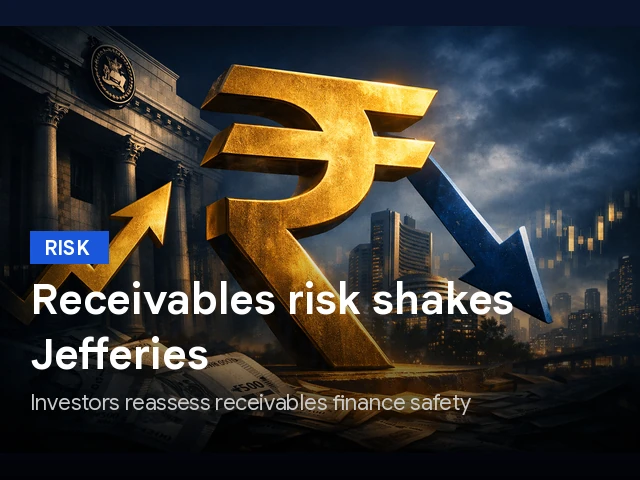
Jefferies Share Price And The Receivables Finance Risk: A Retail Investor's Guide To Radiant World, Vitol, And Sapphire Minmetals
Key Takeaways
- Receivables financing risk extends beyond a single deal, and Jefferies Share Price may reflect that broader risk.
- Some invoices linked to Sapphire Minmetals were flagged as not genuine, raising red flags for lenders.
- Point Bonita fund exposure to Radiant World stock is less than $300 million, with Sapphire Minmetals exposure smaller still and a 5.9% stake in the fund.
- Retail investors should watch for corporate webs and due diligence gaps when receivables-backed loans appear safe.
Receivables finance is pitched as a safe corner of lending: you sell invoices and you get paid. But the latest checks into Radiant World and Sapphire Minmetals reveal how a chain of papers can escalate risk and potentially affect Jefferies Share Price as investors reassess the safety of invoice-backed lending. The story is not just about a single trade; it is about how paper trails, cross-border ownership, and shadow counterparties can magnify risk in a space many retail players rely on for liquidity.
The Point Bonita fund – which Jefferies manages and in which it holds a 5.9% stake – has exposure to Radiant World of less than $300 million, while its Sapphire Minmetals exposure is described as substantially smaller. Radiant World and Sapphire Minmetals share a history: Sapphire Minmetals was majority owned by Radiant World and its founder until 2015, and in the latest filings the parent company is listed as Sino Global Holdings Pte, a Singapore entity that is in turn majority owned by Rakesh Sethi. These details are more than corporate trivia; they map the ownership scaffolding that can complicate risk assessment in invoice-backed lending.
When Jefferies contacted Vitol to verify invoices tied to Sapphire Minmetals, the response presented a sobering reality: some invoices were not genuine. This kind of documentation issue is exactly the kind of friction that can undermine an entire financing structure–even if the underlying trades are real. Sapphire Minmetals publicly responded that the rumors are untrue and unsubstantiated, but the exchange highlights the gap between trade reality and the paperwork that lenders must trust. In such moments, the line between normal business and risk management becomes a test of governance and due diligence, a critical area for any investor watching how Jefferies Share Price behaves in reaction to financing quality signals.
Radiant World stock sits at the center of a broader debate about whether trade-financing programs are truly backed by solid collateral. A number of commodity houses reportedly halted trading with Radiant World amid concerns about falsified documents related to iron ore trades. Radiant World has denied the allegations of wrongdoing, asserting that its relationships with counterparties are normal. The tension here is not just about one invoice; it is about how the reputation of a counterparty and the integrity of supporting documentation affect the perceived safety of the entire receivables-finance stack. And for the Point Bonita fund, the realities of this environment translate into a cautious stance on how much of its portfolio is exposed to Radiant World stock and Sapphire Minmetals stock, and how that exposure is managed within risk budgets.
According to Sethi of Sapphire Minmetals, This is untrue and unsubstantiated.
From a portfolio-management perspective, this case underscores a core truth about receivables finance: the risk is not solely the credit quality of a borrower but the reliability of the entire invoice chain and the governance around it. The Point Bonita fund’s reported numbers–Radiant World exposure under $300 million and a smaller Sapphire Minmetals exposure–provide a baseline, but the true risk is the potential for misstatement or misrepresentation within the underlying documents. In a world where a single misstep can cascade into broader losses for banks and investors, retail players must demand greater transparency, confirmatory due diligence, and robust counterparty risk controls before accepting the perceived safety of an invoice-backed arrangement.
For readers seeking a practical framework to navigate these issues, Swastika offers powerful, institutional-grade insights through Swastika's Sarthi AI stock assistant. It can help you understand how such risk signals translate into price behavior for Jefferies Share Price and related securities. Learn more via this link: Swastika's Sarthi AI stock assistant.
Vitol Stock And The Issue Of Invoices In Trade Financing
The involvement of a major trading house in the verification of invoices adds a layer of salience to the broader risk discussion. When Jefferies sought to confirm the veracity of Sapphire Minmetals invoices with Vitol, the outcome highlighted a fundamental risk in receivables financing: not all invoices that appear to secure a loan are necessarily trustworthy. In such cases, even when the underlying commodities (iron ore, in this context) are legitimate, the validity of the documents that back the financing must withstand scrutiny. The practical implication for investors is simple: data and paperwork quality are as important as the trade itself, particularly when leverage is used to finance working capital against a basket of invoices.
Radiant World Stock: The Controversy Surrounding Iron Ore Trades And Lenders
Radiant World stock lies at the heart of questions about whether trade-finance facilities are safe. After concerns arose about whether the company provided banks with false documentation on iron ore trades, several major commodity firms reportedly paused trading with the company. Radiant World has denied wrongdoing, asserting that its relationships with counterparties are normal. For investors, this dynamic signals that even when the trades themselves may be legitimate, the supporting documentation and the counterparty network can create meaningful risk for lenders and funds that rely on such documentation as collateral. When the price of a stock or a fund like Point Bonita begins to reflect these concerns, Jefferies Share Price and related securities can experience heightened volatility as risk appetite shifts and due diligence tightens across the market.
First Brands Group Stock: The Fallout From The Auto Supplier's Collapse
The broader market narrative also includes the collapse of First Brands Group, a development that has triggered investor lawsuits against the fund manager involved. While the specifics of the lawsuit are beyond the scope of this article, the episode illustrates how the failure of a supplier can ripple through receivables-financed facilities that depend on timely payments for goods and services. The lesson for retail investors is straightforward: a collapse in one upstream counterpart can strain the entire financing chain, even when the underlying trades appear to be real. The risk here is not only credit risk but the potential for cascading liquidity stress that can influence risk premiums and, by extension, stock prices linked to these facilities, including Jefferies Share Price.
Sapphire Minmetals And Sino Global Holdings: Corporate Web And Ownership
The corporate web behind Sapphire Minmetals is intricate. Sapphire Minmetals was majority owned by Radiant World and its founder until 2015, according to corporate filings in Hong Kong. The most recent filings show the parent company of Sapphire Minmetals as Sino Global Holdings Pte, a Singapore company that is in turn majority owned by Rakesh Sethi. This cross-holding structure matters because it highlights how intertwined ownership can become when trade-financing facilities span multiple entities and geographies. Investors should read such filings and consider the implications for the reliability of the collateral underpinning any liquidity facility tied to these entities. In other words, the chain of control can influence how risk is priced and how robust the guarantees behind the financing actually are.
What Retail Investors Should Watch For In Receivables Financing
The core message for retail investors is that receivables finance can still serve as a tool for liquidity, but its safety is conditional. It hinges on robust documentation, clear ownership, and transparent counterparty risk governance. Practical steps include verifying invoice authenticity, mapping ownership chains, and cross-checking related-party relationships across jurisdictions. Investors should also consider how a fund or broker manages counterparty exposure and whether its risk controls are capable of identifying misstatements in the paperwork that supports the financing. In a market where a single misstep can trigger a chain reaction–impacting liquidity, pricing, and investor confidence–the investor's due diligence becomes as important as the expected yield or the stated credit quality.
Frequently Asked Questions
What is the size of Jefferies' exposure to Radiant World?
The Point Bonita fund has exposure to Radiant World of less than $300 million.
Why were certain Sapphire Minmetals invoices questioned?
Vitol informed Jefferies that some invoices linked to Sapphire Minmetals were not genuine.
Who owns Sapphire Minmetals and what is the corporate structure?
Sapphire Minmetals is listed as being owned by Radiant World, with Sino Global Holdings Pte as the parent; Sino Global Holdings Pte is majority owned by Rakesh Sethi.
What has Radiant World stock said about the allegations?
Radiant World has denied wrongdoing and stated that its relationships with counterparties are normal.
What should retail investors watch for in receivables financing?
Investors should verify invoice authenticity, map ownership chains, and assess governance and counterparty risk across jurisdictions.
Where can investors get more actionable risk insights from Swastika?
Investors can use Swastika's Sarthi AI stock assistant for institutional-grade risk insights and decision support. Visit Swastika's Sarthi AI stock assistant at the provided link.
Conclusion
Conclusion Paragraph One: The teaching from this case is that Jefferies Share Price, like many others in a securitized, invoice-backed lending world, is not solely a reflection of credit risk. It is, more importantly, a reflection of the governance, the quality of documentation, and the integrity of counterparty webs behind the financing. The numbers are clear–Radiant World stock exposure is less than $300 million, Sapphire Minmetals exposure is smaller still, and Jefferies holds a 5.9% stake in the Point Bonita fund–but the real story is about what those numbers imply for risk management and investor trust. The risk is structural, not just numerical, and that distinction matters when you assess the safety of such financing against potential misstatements in invoicing.

IRDAI Flood Claims: How The Assam Directive Accelerates Settlements For Retail Investors
Key Takeaways
- IRDAI flood claims directive speeds up settlements in Assam's flood-affected districts.
- District Claims Service Heads and 24x7 helplines centralize oversight and speed payouts.
- Electronic communications and on-account payments reduce friction and time to payout.
- Retail investors should monitor insurer risk exposure and payout trends to manage market risk.
Imagine Assam waking up to floodwaters that interrupt life and livelihoods, then discovering insurance payouts can arrive in days instead of months. The IRDAI flood claims directive is designed to flip that script for policyholders across four districts: Sivasagar, Charaideo, Jorhat, and Golaghat. Insurers are urged to mobilise every resource for an immediate service response, with district-level desks and 24x7 helplines set up to accelerate the process. To speed outcomes, regulators also require surveyors, loss adjusters and investigators to join the quick-settlement effort and compel a senior executive nomination to the Chief Secretary.
The directive also designates a District Claims Service Head for districts reporting large numbers of claims. This creates a central point of accountability and faster escalation if a claim hits delays. In practical terms, policyholders should see quicker processing and settlement, with on-account payments possible along the way. Insurers are encouraged to communicate through electronic channels wherever possible to reduce paperwork and speed up verification.
In essence, this move is a response to the widespread damage to lives, homes, businesses and infrastructure triggered by heavy rains. The four Assam districts – Sivasagar, Charaideo, Jorhat and Golaghat – are now the focus for a tighter, more streamlined claim settlement workflow. The insurer's ability to mobilize surveyors and investigators, along with 24x7 helplines, matters because it reduces the time policyholders spend waiting for money that is meant to help them rebuild. This is about resilience as much as compensation.
For retail investors, the speed of IRDAI flood claims settlements has market implications. Quicker payouts can influence the liquidity profiles of insurers, help reduce policyholder churn, and shape the sector's risk appetite as payout cycles compress. Insurers with robust claims handling infrastructure may demonstrate stronger operating metrics during disaster events, potentially affecting stock valuations and investor confidence.
From a broader perspective, the regulator’s emphasis on digital channels and electronic communications is particularly relevant to modern investing. Faster communication reduces back-and-forth delays and improves overall efficiency. This is also a reminder for investors to monitor how disaster-related payouts influence an insurer’s financial health and its ability to service a large, concentrated claim flow. If you want a deeper dive into the market implications of such claims dynamics, Swastika's Sarthi AI stock assistant offers institutional-grade insights on any stock or index. Swastika's Sarthi AI stock assistant.
IRDAI Flood Claims: How The Assam Directive Optimizes Settlements For Retail Investors
For retail investors, the central takeaway is a more predictable and accelerated payout environment. The four districts in focus–Sivasagar, Charaideo, Jorhat, Golaghat–are now subject to a tighter claims workflow overseen by designated District Claims Service Heads. This creates clearer accountability and a faster escalation path when delays occur. The directive also requires insurers to mobilize surveyors, loss adjusters and investigators to verify and process claims quickly, while communicating the nomination of a senior executive to the Chief Secretary to ensure high-level oversight. In practical terms, policyholders can expect faster claim acknowledgment, swifter verification, and a more responsive settlement timeline, which reduces the stressful wait for funds needed to rebuild homes and businesses.
From an investment viewpoint, insurers with robust field operations and streamlined digital channels are more likely to deliver favorable customer experiences during disaster events. That, in turn, can influence investor sentiment and long-term premium growth expectations. The explicit push toward electronic correspondence also reduces administrative friction, potentially lowering operating costs and freeing up resources to handle a surge in claims. In short, the policy intent behind IRDAI Flood Claims signals a shift toward resilience and efficiency that can affect both policyholder outcomes and insurer fundamentals over the coming quarters.
The Four Districts In Assam And Why They Matter
The IRDAI directive specifically targets four flood-prone districts in Assam: Sivasagar, Charaideo, Jorhat, and Golaghat. These districts have seen recurring flood events due to heavy rainfall, which often disrupts livelihoods and inundates homes and infrastructure. By centering the settlements process in these districts, the regulator aims to reduce delays in claim processing and ensure that payouts reach policyholders quickly. This move is not just about speed; it also reinforces accountability by designating a District Claims Service Head to monitor progress and escalate issues as they arise. For retail investors, the focus on these districts provides a tangible benchmark for evaluating insurer performance during disaster events and helps gauge the resilience of insurance company operations in flood-prone geographies.
From a market perspective, insurers operating effectively in flood-affected regions may demonstrate stronger customer retention, better claim ratio management, and improved stakeholder trust during a period of elevated risk. The four districts serve as a stress test for insurer operations: how quickly claims are registered, verified, and paid, and how adept a company is at communicating with claimants through digital channels. Companies that demonstrate efficiency here could gain a competitive edge, possibly influencing premium growth expectations and valuation multiples over time.
From Registration To Settlement: A Quick Path For Flood Claims
Claim registration typically begins with a 24x7 helpline or district desk, followed by document verification and on-site assessments when needed. The regulator’s directive emphasizes the involvement of surveyors, loss adjusters and investigators to verify damages and determine settlements promptly. Once verified, on-account payments may be issued to provide immediate relief, while final settlements are finalized based on the policy terms. Throughout this journey, insurers are encouraged to use electronic communication channels to minimize paperwork and speed up the exchange of information. By standardizing processes and accelerating the verification cycle, the industry can reduce the overall payout lead time for flood-related claims in Assam.
IRDAI also encourages policyholders to use electronic communication wherever possible for correspondence. This not only speeds up processing but reduces the potential for miscommunication and lost documents, a common drag on claim timelines during floods. As with many regulatory pushes, the real beneficiary is the end consumer: faster payouts translate into faster rebuilding and recovery for households and small businesses alike.
What Retail Investors Should Watch For In Insurance Claims And Market Impacts
For retail investors, the directive’s emphasis on rapid settlements has implications beyond immediate payouts. The speed and efficiency of claims handling can influence insurer solvency metrics, loss adjustment expense ratios, and the reliability of technical provisions during high-claim periods. A carrier that demonstrates disciplined claims management–even in stress tests–may exhibit more predictable earnings and cash flow dynamics, which can appeal to risk-conscious investors. In contrast, insurers with slower processing times or weak digital capabilities might face higher operating costs, reputational risk, and potential outflows that affect short-term profitability.
If you hold or are considering exposure to insurers operating in flood-prone geographies, you should track how quickly claims move from registration to settlement. Look for insurers that consistently meet or beat timelines for 3rd-party verification, emphasize on-account payments, and maintain strong digital channels for claimant communications. These are signals of operational efficiency and customer-centric execution that can translate into more stable earnings during disaster periods. It’s also wise to assess the insurer’s reinsurance program and liquidity buffers, as rapid payouts can strain capital if cat events surge beyond expectations.
Tools And Resources To Track Flood Claims And Insurance Payments
Beyond regulatory directives, there are practical ways to stay informed about how flood claims are processed in Assam and how insurers perform in that cycle. Start with insurer-specific claim desks and their digital portals, monitor the speed of claim acknowledgment and verification, and observe the timeliness of on-account payments that provide interim relief. Use 24x7 helplines to verify status updates and ensure you submit the required documents in digital formats to avoid delays. Digital communications reduce friction and help you see progress in real time, which is especially valuable during flood seasons when claims volumes surge.
Frequently Asked Questions
What is the IRDAI flood claims directive?
The directive instructs insurers to promptly settle flood-related claims in four Assam districts (Sivasagar, Charaideo, Jorhat, Golaghat) by mobilizing resources, establishing district claims desks, and providing 24x7 helplines, while engaging surveyors and investigators to speed settlements.
Which districts are included in the directive?
The districts are Sivasagar, Charaideo, Jorhat, and Golaghat in Assam.
What role does the District Claims Service Head play?
The District Claims Service Head acts as the designated leader to oversee large volumes of claims in a district, ensuring accountability and faster escalation when delays occur.
How can policyholders track the status of their flood claims?
Policyholders should use insurer 24x7 helplines and district-level claims desks, and prefer electronic communications to expedite submission and verification.
What is the investment takeaway from the IRDAI flood claims directive?
The directive highlights insurer efficiency and resilience during disaster events. For investors, monitoring how quickly claims are settled and how insurers manage payouts can inform risk assessment and stock performance expectations.
Conclusion
The IRDAI flood claims framework marks a deliberate shift toward faster, more accountable disaster payouts for Assam’s policyholders. By designating District Claims Service Heads, mobilising field resources, and promoting 24x7 helplines and electronic communications, the regulator aims to shorten payout times and reduce policyholder hardship in Sivasagar, Charaideo, Jorhat, and Golaghat. For investors, the reforms offer a clearer signal about insurer efficiency and resilience during flood events, which can influence risk assessments, earnings quality, and stock performance over the medium term. The practical upshot is simple: faster payouts reduce liquidity stress for households, while insurers with robust claims operations and digital channels are better positioned to maintain customer trust and navigate regulatory expectations.

BPCL Share Price And E20 Fuel Quality Clarifications: Market Insight For Retail Investors
Key Takeaways
- SIAM clarifies that E20 discussions are routine and not a fresh risk to BPCL Share Price.
- MoPNG sets a 3 ppm limit for chloride and sulphur, with 8-12 daily water checks across 87,000+ outlets.
- Over 2,000 fuel samples have been tested for chloride and sulphide contamination, with only two cases detected nationwide.
- Interpret the results with data-backed context rather than isolated excerpts to guide investment decisions.
As India accelerates toward ethanol-blended E20 fuel, the big question for retail investors is whether BPCL Share Price will react to regulatory clarity on fuel quality and testing standards.
The SIAM clarification states that the communication referenced in media reports formed part of routine and ongoing technical deliberations involving industry bodies, oil marketing companies, automobile manufacturers and testing agencies. It also notes that fuel quality testing under India's regulatory framework is rigorous and comprehensive, covering more than 150 parameters routinely monitored by OMCs. The MoPNG has instituted precautionary guidelines of 3 parts per million for chloride and sulphur, and the industry emphasises that the measures address the automobile industry's requirements. Water ingress checks are now conducted 8-12 times daily at more than 87,000 retail outlets, and more than 2,000 fuel samples have been tested for chloride and sulphide contamination, with only two cases detected nationwide. The industry has consistently maintained that there is no cause for concern, and technical issues related to fuel quality have been discussed between automobile manufacturers and OMCs for decades as part of established industry processes.
BPCL Share Price Context Amid E20 Fuel Quality Clarifications
For retail investors, the BPCL share price narrative must be weighed against macro factors like energy demand and refining margins rather than isolated excerpts from internal communications. The statements indicate that the cited notes were part of routine technical deliberations rather than any crisis signal. With testing spanning more than 150 parameters and MoPNG's precautionary 3 ppm guideline for chloride and sulphur, the regulatory framework supports a steady evaluation of fuel quality. Water ingress checks across 87,000 outlets, at a frequency of 8–12 times daily, and the testing of over 2,000 samples reinforce the robustness of the system. In this context, the BPCL Share Price trajectory should be interpreted alongside broader market dynamics and company fundamentals rather than headlines alone.
IOCL Stock And HPCL Stock: Chloride Contamination Data And Market Sentiment
In the same sector, IOCL Stock Price and HPCL Stock Price are often watched by traders for comparative momentum. The data from regulatory checks show a low incidence of chloride contamination nationwide, with only two cases detected after testing more than 2,000 samples. The scale of checks–8–12 daily checks across 87,000 outlets–describes a robust system designed to protect consumer safety and maintain reliability across refining operations. While this data reduces the likelihood of a one-off price shock, investors should monitor BIS specifications and MoPNG updates along with company-specific fundamentals to gauge relative value among BPCL Stock, IOCL Stock, and HPCL Stock.
Reliance Stock And Market Sentiment Across Indian Refinery Stocks
Broader market sentiment also matters. The performance of Reliance Stock can influence how Indian refiners, including BPCL Stock, IOCL Stock, and HPCL Stock, move in tandem. Traders often look to the broader energy complex and macro indicators to gauge near-term direction, especially when regulatory developments emerge. The interplay between large-cap players like Reliance Stock and state-owned refiners creates a dynamic environment where data-backed clarity–such as the MoPNG and SIAM updates–helps frame risk and opportunity more accurately than headlines alone.
HPCL Share Price Drivers Under BIS Specifications And MoPNG Guidelines
HPCL Share Price, like other refining stocks, is shaped by regulatory standards, particularly BIS fuel specifications and MoPNG's chloride and sulphur guidelines. The 3 ppm threshold and ongoing testing across more than 150 parameters create a backdrop of quality assurance that reduces systemic risk. While the price path will reflect macro demand, refining margins, and crude price movements, investors can rely on the underlying robustness of testing programs to provide a degree of price resilience. Keeping an eye on MoPNG updates and BIS amendments will help anticipate potential re-rating opportunities for HPCL Share Price and related stocks.
BPCL Share Price Outlook After Regulatory Clarity
With clear indications that fuel-quality concerns are being managed within the existing regulatory framework, BPCL Share Price momentum is unlikely to be driven by isolated excerpts alone. The more important drivers remain macro and company-specific: refining margins, throughput, and energy demand growth in India. Investors should document the evolving regulatory context and corporate updates to avoid overreacting to single headlines. For deeper stock-level insights, you can use Swastika's Sarthi AI stock assistant.
Related Reads
- IOC Share Price Insights: Petrol And Diesel Prices Hold Steady As Crude Tops $100
- IOC Share Price: A Retail Investor's Guide To IndianOil Stock And The Oil Marketing Sector
- Share Price IOCL And City Fuel Data: Petrol, Diesel, And CNG Trends For Retail Investors
Frequently Asked Questions
What does SIAM clarify about E20 fuel quality concerns?
SIAM states that the communication cited in reports formed part of routine and ongoing technical deliberations among industry bodies, oil marketing companies, automobile manufacturers, and testing agencies. It notes that India's fuel quality testing covers more than 150 parameters, and MoPNG has instituted precautionary guidelines of 3 ppm for chloride and sulphur. Water ingress checks are conducted 8-12 times daily at more than 87,000 retail outlets, with over 2,000 fuel samples tested for chloride and sulphide contamination — only two cases detected nationwide. The industry emphasises there is no cause for concern, and such issues have been discussed for decades as part of established processes.
How many water ingress checks are performed daily and across how many outlets?
Water ingress checks are conducted 8-12 times daily at more than 87,000 retail outlets, according to MoPNG data cited in the clarification.
How many fuel samples were tested for chloride and sulphide contamination?
Over 2,000 fuel samples were tested for chloride and sulphide contamination, with only two cases detected nationwide.
Where can investors get deeper stock insights for such topics?
For deeper stock insights, you can use Swastika's Sarthi AI stock assistant, available here:Swastika's Sarthi AI stock assistant.
What is the significance of the 3 ppm guideline for chloride and sulphur?
The 3 ppm guideline for chloride and sulphur is a precautionary standard instituted by the Ministry of Petroleum and Natural Gas to address fuel quality and automotive equipment safety, ensuring robustness of the regulatory framework.
Conclusion
Retail investors in India can interpret this clarification as a cue to focus on fundamentals–regulatory clarity and testing robustness–rather than short-term headlines when evaluating BPCL Share Price and related stocks. The signal is that the system is designed to catch anomalies early and maintain integrity across the refining network, supporting steadier long-term value creation.
Next, align your investment process with data-backed context, monitor MoPNG and BIS updates, and use tools like Swastika's Sarthi AI stock assistant to refine your stock-level decisions. This approach helps you build a more resilient view of BPCL Share Price and the wider refining sector.
Big Budget


Popular Articles





.avif)
.avif)

.avif)



START YOUR INVESTMENT JOURNEY
Get personalized advice from our experts
- Dedicated RM Support
- Smooth and Fast Trading App