.png)

The US economy remains the single most influential force in global financial markets. From equity flows to currency movements and commodity prices, decisions taken in Washington and by the US Federal Reserve ripple across economies worldwide. As we look ahead, understanding what to expect from the US economy in 2026 becomes essential for Indian investors, traders, exporters and policymakers.
In this blog, we break down the expected economic trends in the US for 2026 and explain how these developments could shape Indian stock markets, interest rates, currency movements and investment strategies.
After years of post pandemic recovery and policy tightening, the US economy is expected to enter 2026 with stable momentum. Most global institutions expect GDP growth to remain around the long term average rather than the sharp expansion seen earlier in the decade.
Key drivers include strong consumer spending, government infrastructure investment and continued capital expenditure in technology and artificial intelligence. At the same time, high base effects and tighter financial conditions could limit rapid growth.
For Indian investors, stable US growth is generally positive as it supports global risk appetite without creating excessive inflationary pressure.
Inflation is expected to trend closer to the US Federal Reserve’s comfort zone by 2026, though it may not settle perfectly at two percent. Wage pressures, energy prices and supply chain restructuring will continue to influence price levels.
Lower inflation reduces the need for aggressive monetary tightening and supports equity markets globally.
One of the most watched elements of the US economy in 2026 will be interest rates. If inflation continues to ease, the Federal Reserve may shift towards a more accommodative stance or maintain stable rates.
For India, this matters because lower US interest rates often lead to increased foreign portfolio inflows into emerging markets like India, improving liquidity and supporting equity valuations.
The US dollar’s trajectory in 2026 will depend largely on interest rate differentials and economic confidence. A stable or slightly weaker dollar typically benefits emerging market currencies, including the Indian rupee.
A stronger rupee can help reduce imported inflation for India, especially in crude oil and raw materials. However, exporters may face margin pressure if currency appreciation becomes sharp.
Foreign Institutional Investors closely track US bond yields and equity performance. If US yields remain stable and growth continues without shocks, India is likely to attract sustained FII inflows.
Historically, periods of US economic stability have coincided with strong performance in Indian sectors such as IT, banking, capital goods and consumer discretionary.
Trade policy remains a key variable. Any shift towards protectionism or tariff changes can affect Indian exports to the US, particularly in textiles, engineering goods and specialty chemicals.
However, diversification away from China continues to create long term opportunities for Indian manufacturers under the China plus one strategy.
From an Indian regulatory standpoint, SEBI continues to emphasize transparency, investor protection and risk management. Global volatility originating from the US economy reinforces the importance of disciplined investing, asset allocation and regulatory compliance.
Platforms like Swastika Investmart, a SEBI registered intermediary, play a crucial role by offering research backed insights, technology driven trading platforms and investor education that helps clients navigate global uncertainty confidently.
👉 Open your trading and investment account today
Long term wealth creation depends on staying invested with a clear strategy rather than timing global events perfectly.
How will the US economy in 2026 affect Indian stock markets?
A stable US economy usually supports global risk appetite, leading to better FII inflows and positive sentiment in Indian equities.
Will US interest rate changes impact Indian investors?
Yes. Lower or stable US rates often encourage foreign investments into India, improving liquidity and market valuations.
Which Indian sectors are most influenced by the US economy?
IT, pharmaceuticals, metals and export oriented manufacturing sectors are most sensitive to US economic trends.
Is a weaker US dollar good for India?
Generally yes, as it supports the rupee and reduces import costs, though exporters may face some pressure.
Understanding what to expect from the US economy in 2026 is essential for making informed investment decisions in India. While global uncertainties will always exist, a balanced US growth outlook combined with easing inflation could create a supportive environment for Indian markets.
With expert research, robust trading platforms and strong customer support, Swastika Investmart helps investors stay ahead of global trends while focusing on long term financial goals.



Christmas is more than a celebration. For market participants, it often marks a period of optimism, portfolio rebalancing, and selective buying driven by global cues and year-end strategies. As Indian markets step into Christmas week 2025, sentiment remains constructive with investors eyeing quality stocks that can benefit from festive demand, institutional flows, and global stability.
This Christmas, Swastika have shortlisted a thematic list of stocks, curated to align with festive consumption, financial strength, and long-term growth visibility.
Let’s unwrap the opportunities.
Historically, global markets often witness a mild year-end rally, popularly known as the Santa Rally. While Indian markets do not always mirror Western trends perfectly, December typically brings stability rather than aggressive selling, supported by institutional flows and global risk appetite.
Key factors shaping Christmas week 2025 include:
• Stable inflation outlook
• Controlled interest rate expectations
• Improving global equity sentiment
• Portfolio rebalancing by FIIs and DIIs
This environment creates a favourable backdrop for quality stock selection rather than speculative trades.
Foreign Institutional Investors have shown selective buying interest in Indian large-caps and sector leaders toward the year-end. This indicates confidence in India’s macro fundamentals despite global uncertainties.
Domestic Institutional Investors continue to act as a shock absorber, ensuring liquidity and reducing sharp downside risks. Their steady participation often strengthens festive-week market stability.
For retail investors, this alignment of FII and DII behaviour creates an opportunity to ride structured trends rather than short-term noise.
These stocks are shortlisted based on sector relevance, balance-sheet strength, earnings visibility, and festive season demand trends. This is not a recommendation but a thematic insight curated for investor awareness.
Festive periods typically boost discretionary spending across retail, fashion, food, and lifestyle segments.
• Strong brand recall
• Consistent revenue growth
• Urban and semi-urban demand resilience
These stocks often benefit from Christmas and New Year consumption momentum, extending into Q4 earnings performance.
Banks and financial companies remain the backbone of the Indian market.
• Stable asset quality
• Improving credit growth
• Strong capital adequacy
During year-end, financial stocks attract institutional allocations due to balance-sheet visibility and regulatory comfort under SEBI and RBI frameworks.
IT and digital-first companies gain attention during festive weeks due to:
• Global client visibility
• Currency stability benefits
• Strong order pipelines
With global tech spending stabilizing, selective IT names remain relevant for medium-term portfolios.
Government capex momentum continues to support infrastructure-linked companies.
• Order book visibility
• Policy continuity
• Execution-driven growth
These stocks often see accumulation during calm market phases like December.
No festive market outlook is complete without mentioning gold and silver.
• Gold remains a preferred hedge against global uncertainty
• Silver benefits from industrial demand and clean energy themes
During Christmas and year-end, investors often rebalance portfolios by increasing allocation to precious metals, adding stability to overall returns.
Indian markets remain globally connected. Christmas week cues to track include:
• US market performance and bond yields
• Dollar index movement impacting FII flows
• Crude oil price stability
• Asian market sentiment
A calm global environment generally supports Indian equities, especially during low-volume holiday sessions.
Swastika Investmart stands out for combining research depth with investor education.
• SEBI-registered, compliance-driven approach
• Research by experienced, NISM-certified analysts
• Tech-enabled platforms for real-time insights
• Strong customer support and guidance
Festive markets require clarity, not speculation. This is where professional research makes a difference.
Instead of chasing quick gains, experienced investors focus on:
• Quality over quantity
• Diversification across equity, metals, and cash
• Risk-managed position sizing
• Long-term visibility
Christmas is best viewed as a portfolio alignment opportunity, not a high-risk trading phase.
Is Christmas week good for investing in stocks?
Christmas week is generally stable with lower volatility, making it suitable for selective, quality investments rather than aggressive trades.
Do FIIs actively invest during year-end?
FIIs often rebalance portfolios in December, leading to selective buying in fundamentally strong Indian stocks.
Should investors include gold during festive seasons?
Yes, gold and silver are commonly used as hedging tools during festive and uncertain periods.
Are festive stock picks suitable for long-term investors?
Festive themes work best when aligned with strong fundamentals and long-term growth visibility.
Christmas is about joy, balance, and thoughtful choices. The same applies to investing. With supportive institutional flows, stable global cues, and selective opportunities across sectors, Christmas 2025 offers a meaningful window to strengthen portfolios.
If you want expert-curated insights, reliable research, and a trusted investing partner, Swastika Investmart is here to guide you through every market season.
🎁 Open your trading and investment account today
Wishing you a Merry Christmas and a prosperous investing journey ahead 📈🎄
%20(1).png)
The Indian equity markets enter 23 December 2025 on a positive note after a buoyant session on 22 December 2025, as year-end optimism, strong global cues, and renewed foreign investor interest lifted sentiment. With the Christmas week underway, traders and investors are watching key support and resistance levels while monitoring global macro developments for directional clues.
Indian indices ended strongly ahead of the holiday-shortened week:
The rally extended recent upside momentum and reflected selective buying across sectors, including IT, banking, and consumer-oriented stocks. Market breadth was healthy, indicating that the advance wasn’t confined only to a few blue-chips. The Times of India
International markets are providing supportive signals:
One of the subtle drivers behind the recent strength has been foreign portfolio investor (FII) interest. After a period of cautious positioning, FII inflows have returned in measured fashion, particularly into large caps and quality names. Reuters
Domestic Institutional Investors (DIIs) continue to support markets with insurance and mutual fund buying, balancing short-term volatility. Institutional participation often lends credibility to trends, reducing the risk of sharp reversals.
For traders aligned with technical charts, several reference points are shaping expectations for today:
Nifty 50
Bank Nifty
These technical thresholds are useful for traders and positional investors alike to manage risk in the thin holiday session.
Another factor closely watched by participants is the Indian Rupee. After strengthening in recent weeks, the rupee saw mild retreat due to increased dollar demand and hedging activity in derivative markets. While this hasn’t derailed market optimism, it underscores the interplay between currency moves and equity flows — especially FIIs evaluating returns in rupee terms. Reuters
Banking & Financials
The banking index’s sturdy performance on 22 Dec suggests continued interest in financials heading into 23 Dec. Stability in interest rates and improving credit growth data underpin confidence.
IT & Tech Stocks
Tech majors ended higher, supported by positive global earnings cues and currency-linked earnings expectations, which often benefit when the rupee stabilizes.
Consumer Cyclicals & Industrial Plays
Selective buying in consumer and industrial stocks reflecting festive demand and broader economic resilience adds depth to the current market move.
For short-term traders, today’s session should focus on intra-day levels with disciplined stop-losses near support zones. A breakout above resistance could fuel short-covering ahead of week’s end.
For longer-term investors, the current backdrop suggests that while data flows may slow due to holidays, structural trends such as foreign allocations to Indian equities and stable macro fundamentals could sustain overall confidence into the new year.
👉 Pro Tip: Use volatility tools and real-time research dashboards (like those offered by Swastika Investmart) to gauge live market sentiment and refine entry points.
Investors should always consider guidelines from India’s market regulator, SEBI (Securities and Exchange Board of India), which enforces transparency and trading norms across exchanges. Keeping abreast of SEBI announcements around index composition, corporate disclosures, and derivatives norms can help in making informed decisions.
Q1: Will the Nifty continue its rally today?
Market setup suggests a positive bias but rally continuation depends on sustaining above key support zones (25,950–26,000) and strong global cues.
Q2: How important are foreign flows for the Indian markets right now?
FII participation remains a key sentiment driver, especially near year-end, as overseas investors rebalance portfolios and reposition for 2026.
Q3: Can small-caps outperform mid/large caps in holiday weeks?
Small and midcaps often show selective strength but typically lag behind large caps in thin sessions unless specific triggers emerge.
Q4: Should traders worry about rupee volatility?
Rupee moves can influence return expectations, but mild volatility doesn’t necessarily derail equity momentum unless currency stress escalates sharply.
Q5: Where can I track live support and resistance levels?
Use robust research tools and real-time dashboards (like Swastika Investmart’s) to monitor dynamic market levels and adjust trades effectively.
The Indian market outlook for 23 December 2025 shows a cautiously bullish setup shaped by strong 22 December 2025 closes, supportive global dynamics, and renewed investor interest. While holiday-thin volumes could lead to range-bound moves, the broader sentiment remains positive.
If you’re looking to track live prices, technical levels, and real-time research insights open your account with Swastika Investmart today for trusted, SEBI-registered support and advanced investing tools.

Smallcap rallies often come with scepticism. Investors frequently ask whether sharp price moves are driven by speculation or by genuine business change. Cupid Ltd’s near 480 percent rally in 2025 stands out because it was powered by visible, measurable improvements across management, business strategy, and financial performance.
This was not an overnight story. Cupid’s transformation unfolded steadily after a decisive shift in ownership and direction, supported by execution on the ground.
The turning point came in late 2023, when the Universal-Halwasiya Group acquired a controlling stake of 41.84 percent in Cupid Ltd, later increasing it to 43.28 percent.
This was more than a routine promoter change. The new management moved decisively away from the company’s earlier identity as a conservative, dividend-focused exporter. Instead, the focus shifted to scale, brand-building, and long-term growth.
Rising promoter ownership sent a clear signal to the market. The people running the company were increasing their own exposure, reinforcing confidence in the strategy ahead.
Earlier, Cupid was largely dependent on B2B contraceptive exports, especially government and institutional tenders. While this provided stable cash flows, growth visibility was limited and highly dependent on tender cycles.
The new strategy focused on diversification. Cupid expanded into:
This transition reduced dependence on a single product line and opened doors to structurally larger markets. It also allowed the company to balance steady export revenues with faster-growing domestic segments.
Cupid’s entry into FMCG surprised the market with its pace of execution.
Within the first year:
For investors, this was critical. Many companies announce diversification plans, but few execute at scale within such a short period. Cupid’s ability to build distribution and generate meaningful revenue validated the new management’s credibility.
The most important driver of Cupid’s re-rating was earnings.
Financial performance showed:
This indicated strong operating leverage. Fixed costs were absorbed quickly as volumes grew, improving margins and return ratios. The market responded by assigning a higher valuation multiple, reflecting improved growth visibility.
While domestic FMCG drove growth, Cupid did not abandon its export strengths. The company secured a five-year national tender in South Africa covering the period from 2025 to 2030.
This contract provides:
Such visibility reduces earnings uncertainty and improves cash flow planning. For investors, this balanced the higher-risk FMCG expansion with predictable export income.
In April 2024, Cupid announced a 1:10 stock split along with a 1:1 bonus issue. While these actions do not change intrinsic value, they improve liquidity and affordability.
As the stock price adjusted lower post-split, retail participation increased. Combined with improving fundamentals, this resulted in higher trading volumes and better price discovery.
Cupid enjoys a strong regulatory edge, which is often underestimated in smallcap analysis.
The company holds:
These approvals are difficult to obtain and create entry barriers. They also enable participation in global tenders, providing a competitive moat against smaller or unorganised players.
Even while expanding capacity by around 2.5 times, Cupid remained debt-free. Growth was funded through internal accruals rather than aggressive borrowing.
A clean balance sheet reduced financial risk and reassured investors that growth was sustainable. In a market increasingly cautious about leverage, this became a major positive.
Perhaps the biggest change was perception. Cupid was no longer viewed as a slow-moving, yield-oriented stock. It was now seen as a high-growth FMCG and healthcare play with global exposure.
As expectations changed, valuation multiples expanded. This combination of earnings growth and re-rating ultimately drove the stock’s 5x move.
Why did Cupid Ltd stock rise sharply in 2025?
The rally was driven by promoter change, business diversification, strong earnings growth, and improved growth visibility.
Was Cupid’s rally speculative in nature?
No. The stock price movement was supported by revenue growth, profit expansion, and long-term contracts.
Is Cupid Ltd still dependent on government tenders?
While exports remain important, the company has diversified into FMCG and diagnostics, reducing dependence on tenders.
Does Cupid carry high financial risk?
No. The company remains debt-free and has funded expansion through internal earnings.
Cupid Ltd’s transformation shows how genuine business change can create outsized returns in smallcap stocks. New promoters, diversified revenue streams, fast execution, regulatory advantages, and clean financials came together to create a credible growth story.
For investors, the lesson is clear. Sustainable wealth creation comes from identifying early signs of execution and governance, not from chasing momentum alone.
At Swastika Investmart, our SEBI-registered research, strong fundamental frameworks, and investor education initiatives help identify such inflection-point stories early while managing risk responsibly.
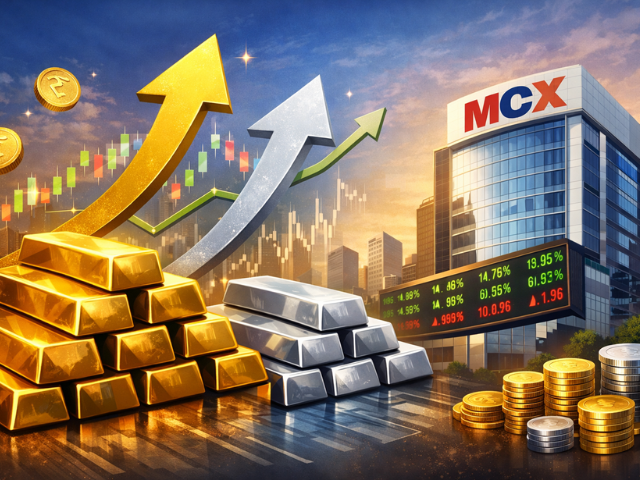
Gold and silver have regained investor attention after a prolonged period of consolidation. Global cues such as geopolitical tensions, expectations of lower global interest rates, and currency volatility have revived demand for precious metals as a hedge.
In India, the story is even more nuanced. Gold is not just an investment asset but also a cultural store of value. Silver, meanwhile, is gaining prominence due to its industrial use in electronics, solar energy, and electric vehicles. As prices move up, trading activity across bullion markets typically accelerates.
This brings an important question for equity investors: should you track MCX stock when gold and silver prices are rising?
One of the biggest drivers of precious metals is interest rate direction. When global central banks signal a pause or potential easing, non-yielding assets like gold become more attractive.
Lower real interest rates reduce the opportunity cost of holding gold and silver, leading to increased investment demand globally.
Periods of geopolitical stress and economic uncertainty often push investors toward safe-haven assets. Gold, in particular, benefits during such phases as portfolios seek stability.
Silver tends to follow gold but also draws strength from industrial demand, making its price movement slightly more volatile but potentially more rewarding.
A softer US dollar and inflation concerns further support precious metal prices. For Indian investors, a stable or strengthening rupee can moderate domestic price swings, but global trends still dominate overall sentiment.
Multi Commodity Exchange of India is the country’s largest commodity derivatives exchange. It provides a regulated platform for trading metals, energy, and agricultural commodities.
MCX earns revenue primarily through transaction fees, which are directly linked to trading volumes rather than commodity prices themselves. This distinction is crucial for equity investors.
When gold and silver prices rise and volatility increases, participation from hedgers, traders, jewellers, and institutional players often picks up. Higher volumes can translate into stronger operating leverage for the exchange.
Historically, commodity exchanges tend to benefit during periods of heightened price movement. Rising gold and silver prices attract retail traders, arbitrageurs, and hedgers, leading to higher turnover.
MCX, being the dominant platform in precious metals trading in India, stands to gain from increased activity rather than directional price bets.
India has seen a steady rise in retail participation in commodities, supported by better digital access, awareness, and regulatory clarity. Gold and silver rallies often act as entry points for first-time commodity investors.
This structural shift supports long-term volume growth for MCX beyond short-term price cycles.
MCX operates under the regulatory oversight of SEBI, which has strengthened market transparency and risk management over time. Improved governance norms have helped restore confidence among participants after past disruptions.
Stable regulation encourages broader participation, which is critical for exchange-led business models.
It is important to note that MCX’s performance is not tied to whether gold or silver prices rise or fall. What matters is market activity, volatility, and participation.
Even during price corrections, active hedging and speculative interest can sustain volumes. This makes MCX a relatively unique way to gain exposure to commodity market growth without directly trading commodities.
For equity investors, MCX represents a play on India’s evolving financial markets rather than a pure commodity bet.
Key factors to track include:
Like all market-linked businesses, MCX earnings can be cyclical, but its long-term prospects are aligned with India’s increasing financialisation and risk management needs.
A sustained rally in gold and silver often coincides with cautious equity sentiment globally. In such phases, investors tend to diversify portfolios across asset classes.
Tracking MCX stock during precious metal rallies can offer insight into broader market participation trends, risk appetite, and hedging behaviour. However, stock selection should always be guided by fundamentals and valuation comfort.
Why are gold and silver prices rising now?
Gold and silver are rising due to global rate cut expectations, geopolitical uncertainty, and demand for inflation hedging.
Does MCX benefit directly from higher gold and silver prices?
MCX benefits from higher trading volumes and participation, not from the price level of commodities.
Is MCX stock a proxy for gold investment?
No. MCX stock reflects commodity market activity, not gold prices. It is an exchange business, not a commodity producer.
Is MCX regulated in India?
Yes. MCX operates under SEBI regulation, ensuring transparency, risk controls, and investor protection.
The rise in gold and silver prices highlights a broader shift toward diversification and risk management in uncertain times. While direct commodity investing is one route, tracking MCX stock offers a different lens into how India’s commodity markets are evolving.
At Swastika Investmart, our SEBI-registered research, advanced trading tools, and strong investor education framework help you understand such thematic opportunities with clarity and discipline. Whether you are exploring commodities or equities, informed decisions make all the difference.

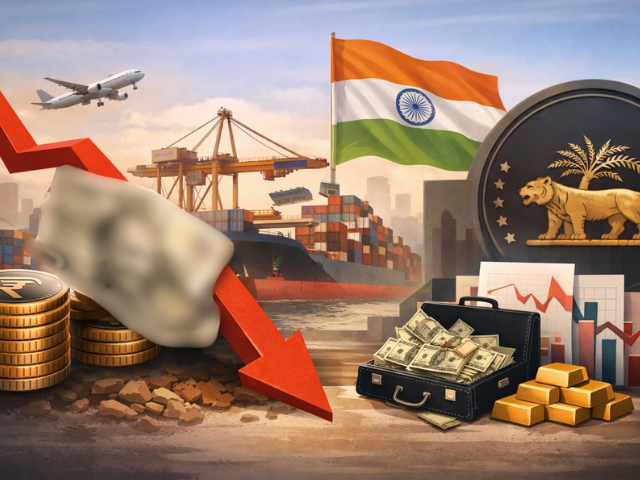
The Indian rupee has shown notable resilience and strength against the US dollar in recent months, surprising many market participants who were bracing for volatility amid global uncertainties. Currency movements may appear technical, but they have a direct bearing on inflation, corporate earnings, foreign investment, and stock market sentiment.
A strengthening rupee is not a standalone event. It is usually the outcome of multiple economic forces moving in sync. For investors, understanding these forces is crucial to identify which sectors benefit and which face headwinds.
One of the biggest drivers of rupee strength has been consistent foreign capital inflows. India continues to attract foreign portfolio investors and long-term global funds due to its relatively strong growth prospects compared to other emerging economies.
When foreign investors bring dollars into Indian equities and bonds, demand for the rupee rises, naturally pushing the currency higher. This trend is often reinforced during periods when India’s macro stability stands out globally.
India’s foreign exchange reserves remain among the highest globally, giving the Reserve Bank of India a strong buffer against excessive volatility. The RBI regularly intervenes in currency markets to smooth sharp movements rather than targeting a specific exchange rate.
This disciplined approach reassures global investors and prevents panic-driven depreciation, contributing to gradual rupee appreciation during stable periods.
While India remains a net importer, moderation in crude oil prices and steady export performance in services such as IT and pharmaceuticals have helped contain the trade deficit.
A narrower current account deficit reduces pressure on the rupee and improves overall currency sentiment. Services exports, in particular, provide consistent dollar inflows that support rupee stability.
Currency strength is always relative. Periods of easing US inflation expectations, potential rate cuts by the US Federal Reserve, or slowing US growth often weaken the dollar index.
When the dollar softens globally, emerging market currencies like the rupee tend to benefit, especially those backed by strong domestic fundamentals.
Companies that rely heavily on imports gain directly from rupee appreciation. Lower input costs help protect margins and reduce pricing pressure.
Key beneficiaries include:
These sectors often see improved profitability during phases of rupee strength.
A stronger rupee helps contain imported inflation. When fuel, fertilisers, edible oils, and electronic goods become cheaper in rupee terms, it indirectly supports household purchasing power.
Lower inflation also gives the RBI greater flexibility in monetary policy, which can be supportive for interest-sensitive sectors like banking, real estate, and automobiles.
Currency stability is a sign of macroeconomic confidence. A strengthening rupee often boosts overall market sentiment, especially among foreign investors who see lower currency risk.
Historically, periods of rupee stability or appreciation have coincided with steady equity market inflows and reduced volatility.
Exporters earn revenues in foreign currency but incur costs largely in rupees. A stronger rupee reduces the value of their dollar earnings when converted back to rupees.
IT services, textiles, and some manufacturing exporters may experience margin pressure if rupee appreciation is sharp or prolonged. However, companies with pricing power or global cost structures are better positioned to absorb this impact.
Indian households dependent on overseas remittances may see slightly lower rupee inflows when the domestic currency strengthens, although this impact is usually marginal unless currency moves are extreme.
Currency trends influence sector rotation within equity markets. During phases of rupee strength, investors often prefer domestically focused sectors such as banking, consumption, infrastructure, and capital goods.
At the same time, selective exporters with strong order books and hedging strategies continue to remain attractive. The key is balance rather than blanket sector calls.
Bond markets also benefit from currency stability, as it encourages foreign participation in Indian debt instruments, improving liquidity and lowering borrowing costs.
The RBI follows a managed float regime, allowing market forces to determine the rupee’s value while intervening to prevent disorderly movements. This policy balance has earned credibility globally.
India’s focus on fiscal discipline, infrastructure spending, and ease of doing business reforms further strengthens the rupee’s long-term outlook without compromising export competitiveness.
Investors should track global interest rate trends, crude oil prices, and RBI policy commentary closely. Sudden shifts in global risk sentiment can still influence currency movements.
Rather than reacting to short-term fluctuations, investors should assess how currency trends align with broader portfolio goals and sector exposure.
Why is the Indian rupee strengthening against the dollar?
The rupee is gaining strength due to strong capital inflows, high forex reserves, controlled inflation, and a relatively weaker US dollar.
Is a strong rupee good for Indian stock markets?
Generally yes. Currency stability improves investor confidence and supports foreign investment inflows into Indian equities.
Which sectors benefit the most from a stronger rupee?
Import-heavy sectors such as oil, aviation, capital goods, and electronics benefit the most from rupee appreciation.
Do exporters lose when the rupee strengthens?
Exporters may face margin pressure, but companies with diversified markets, pricing power, and hedging strategies can manage the impact effectively.
A strengthening Indian rupee is not just a currency story. It reflects confidence in India’s economic fundamentals, policy stability, and long-term growth potential. While some sectors benefit more than others, overall currency stability is a positive signal for markets and investors alike.
At Swastika Investmart, our SEBI-registered research, advanced analytics, and investor education initiatives help you navigate macro trends like currency movements with clarity and confidence. Whether you are positioning for domestic growth or managing global exposure, informed insights make all the difference.
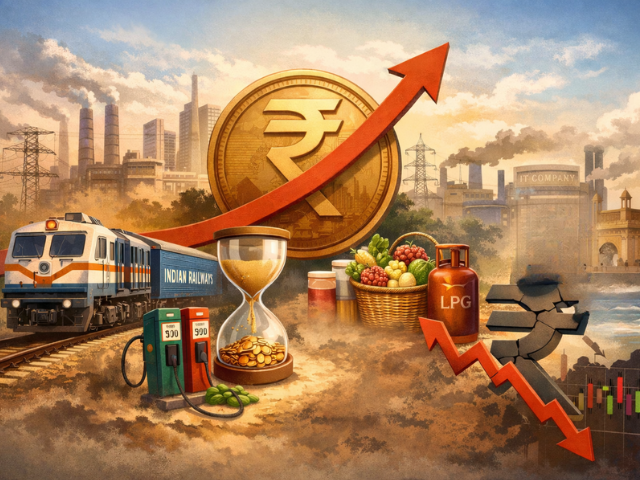
Indian Railways is more than just a transport utility. It is the backbone of India’s economic engine, moving over 20 million passengers and nearly 1.5 billion tonnes of freight annually. Any change in railway fares, even a marginal one, has a cascading impact across households, businesses, and financial markets.
A railway fare increase often sparks public debate, but from an economic and investment lens, it reflects deeper themes such as fiscal discipline, subsidy rationalisation, infrastructure funding, and inflation management. Let’s break down how a railway fare hike travels far beyond ticket counters and into the broader Indian economy.
Indian Railways operates in a complex financial environment. Passenger fares have historically been kept low for social reasons, leading to heavy cross-subsidisation from freight revenues.
Some key reasons behind fare revisions include:
Fuel prices, employee salaries, maintenance expenses, and safety upgrades continue to rise. Indian Railways is one of the largest employers in the country, and wage revisions under Pay Commissions significantly impact its cost structure.
Projects such as Vande Bharat trains, station redevelopment, dedicated freight corridors, and electrification require sustained capital inflows. Fare hikes help fund these long-term investments.
The government has been gradually nudging PSUs, including Indian Railways, toward financial self-reliance. Rationalising fares reduces the fiscal burden on the exchequer.
For millions of middle-class and lower-income families, railways remain the most affordable mode of long-distance travel. Even small fare hikes can affect monthly budgets.
Daily and seasonal commuters feel the immediate pinch, especially those dependent on second-class and sleeper travel. This can reduce discretionary spending in other areas.
Higher passenger fares indirectly contribute to inflation, especially when combined with rising fuel and food prices. While rail fares have a lower weight in CPI compared to fuel, their indirect impact cannot be ignored.
Railways are critical to India’s logistics ecosystem, transporting coal, cement, steel, food grains, and fertilisers.
If freight charges rise alongside passenger fares, companies may pass on higher logistics costs to consumers. Sectors like FMCG, cement, power, and metals are particularly sensitive.
Small manufacturers and traders operating on thin margins may face profitability pressure if transportation costs rise faster than demand growth.
India’s export competitiveness depends partly on efficient inland logistics. Persistent cost escalation can affect pricing power in global markets.
Railway fare hikes are closely tracked by equity markets, not because of the fare itself, but for what it signals.
Markets often view fare rationalisation as a sign of improved financial discipline. This can be sentiment-positive for railway-linked PSUs and infrastructure companies.
Stocks related to rail manufacturing, EPC, signalling, and rolling stock may benefit if higher revenues translate into stronger capex execution.
On the flip side, sectors dependent on mass travel and discretionary spending, such as tourism or budget hospitality, may face near-term demand moderation.
Railway fares are influenced by broader policy objectives rather than pure commercial logic.
This measured approach helps balance social welfare with fiscal sustainability.
For investors, the real story is not the fare hike itself but what follows.
Are higher revenues being reinvested into safety, capacity expansion, and efficiency improvements?
Sustained improvement in freight efficiency can stabilise railway finances without frequent passenger fare hikes.
Any meaningful inflationary pressure could influence monetary policy decisions, affecting interest-sensitive sectors.
Cement, steel, logistics, and PSU banks financing rail projects are key areas to monitor.
Does a railway fare increase directly increase inflation?
Not significantly on its own, but combined with higher freight costs, it can contribute indirectly to inflationary pressure.
Are railway fare hikes good or bad for the economy?
In the short term, they can strain consumers. In the long run, if revenues are invested efficiently, they support infrastructure growth and productivity.
Which sectors are most affected by railway fare increases?
Logistics-heavy sectors like FMCG, cement, steel, power, and tourism feel the impact the most.
Do railway fare hikes impact stock markets immediately?
Markets usually react to the broader policy signal rather than the fare hike itself. The impact is often indirect and sector-specific.
A railway fare increase may feel like a small change at the ticket window, but its economic footprint is far larger. It touches household budgets, corporate margins, inflation trends, and government finances. For investors, understanding these linkages is essential to making informed decisions rather than reacting to headlines.
At Swastika Investmart, our SEBI-registered research framework, advanced market tools, and investor education initiatives help you decode such macro developments and align them with your portfolio strategy. Whether it’s infrastructure themes, PSU opportunities, or inflation-linked trends, having the right insights at the right time makes all the difference.


Trust Our Expert Picks
for Your Investments!


.webp)
.png)

.png)


%20(3).png)
%20(2).png)