


Nifty 50 Morning Market Summary – 30 Jul 2026




Key Takeaways
- Prev close reference: yesterday's close used for today's levels.
- Key level to watch: Nifty 50 pivot 24282.4 (R1 24377.7, R2 24438.25; S1 24221.85, S2 24126.55) and Bank Nifty pivot 57050.92 (R1 57333.23, R2 57518.97; S1 56865.18, S2 56582.87).
- Standout mover: INDOMIM from 485.0 to 741.75 (+52.94%).
- Market-wide Index Options PCR: Not available for this session.
Nifty 50 Support And Resistance Levels For 30 Jul 2026
Nifty Pivot Levels: Pivot 24282.4; R1 24377.7; R2 24438.25; S1 24221.85; S2 24126.55. Below or above pivot, the interpretation: pivot is central; R1 and R2 above pivot; S1 and S2 below pivot; The numbers are from the previous session's close, used as reference today.
Bank Nifty pivot levels: Pivot 57050.92; R1 57333.23; R2 57518.97; S1 56865.18; S2 56582.87. The same logic: resistance above pivot, support below pivot, with yesterday's close-based reference points.
For deeper stock-level insights, you can explore Swastika's Sarthi AI stock assistant.


Top 5 Gainers On 30 Jul 2026
| Ticker | Prev Price | Current Price | Change |
|---|---|---|---|
| INDOMIM | 485.0 | 741.75 | (+52.94%) |
| SMLMAH | 4566.0 | 5479.2 | (+20.00%) |
| GATECH | 0.49 | 0.58 | (+18.37%) |
| LCL | 425.0 | 494.6 | (+16.38%) |
| GATECHDVR | 0.44 | 0.49 | (+11.36%) |
Top 5 Losers On 30 Jul 2026
| Ticker | Prev Price | Current Price | Change |
|---|---|---|---|
| ADFFOODS | 301.8 | 262.35 | (-13.07%) |
| SERVOTECH | 92.25 | 81.83 | (-11.30%) |
| PCBL | 365.7 | 328.0 | (-10.31%) |
| THANGAMAYL | 6452.0 | 5807.0 | (-10.00%) |
| ORCHASP | 1.67 | 1.51 | (-9.58%) |
Market-Wide Index Options PCR
Market-wide Index Options PCR: Not available for this session.
Frequently Asked Questions
What are the Nifty 50 pivot levels for 30 Jul 2026?
Pivot: 24282.4; R1: 24377.7; R2: 24438.25; S1: 24221.85; S2: 24126.55.
What are the Nifty Bank pivot levels for 30 Jul 2026?
Pivot: 57050.92; R1: 57333.23; R2: 57518.97; S1: 56865.18; S2: 56582.87.
Who were the top gainers on 30 Jul 2026?
INDOMIM: 485.0 -> 741.75 (+52.94%); SMLMAH: 4566.0 -> 5479.2 (+20.00%); GATECH: 0.49 -> 0.58 (+18.37%); LCL: 425.0 -> 494.6 (+16.38%); GATECHDVR: 0.44 -> 0.49 (+11.36%).
Who were the top losers on 30 Jul 2026?
ADFFOODS: 301.8 -> 262.35 (-13.07%); SERVOTECH: 92.25 -> 81.83 (-11.30%); PCBL: 365.7 -> 328.0 (-10.31%); THANGAMAYL: 6452.0 -> 5807.0 (-10.00%); ORCHASP: 1.67 -> 1.51 (-9.58%).
Is there a market-wide PCR signal for 30 Jul 2026?
Market-wide Index Options PCR: Not available for this session.
Conclusion
Yesterday's close-based reference levels frame today's open. Watch Nifty 50 Pivot 24282.4 and Bank Nifty Pivot 57050.92; a break above R1 24377.7 or R2 24438.25 on Nifty could push higher, while a break below S1 24221.85 or S2 24126.55 could suggest a firmer downside. The standout mover INDOMIM and the listed losers provide context for risk and opportunities at the open. For deeper stock insights, use Swastika's Sarthi AI stock assistant.
Open with a clear move beyond 24377.7 or 24126.55 to set the bias.
Open your trading and demat account here
Reference :
1 : Nseindia
Latest Articles

HDFC AMC shares ₹54 dividend Should You Invest Today?


Key Takeaways
- HDFC AMC announces a ₹54 per share dividend with ex-date on 05-Jun-2026, potentially boosting returns for existing holders.
- Dividend-related moves may cause short-term price adjustments in HDFC AMC shares and influence mutual fund sector sentiment.
- Financial services and mutual fund stocks could show muted volatility around the ex-date as investors reassess income prospects.
- If you already hold HDFC AMC, consider holding and watching post-ex-date price action rather than chasing the dividend.
HDFC AMC Share Price - Key Data
Why ₹54 per share dividend matters
HDFC Asset Management Company Limited has announced a dividend of ₹54 per share, with the ex-date set for 05-Jun-2026 and the record date aligned on the same day. For retail investors, this means the payout is earmarked for those who hold the stock before the ex-date, potentially boosting short-term returns for existing holders. In practice, markets often see a price adjustment around the ex-date that reflects the payout, but longer-term price movement will depend on broader market conditions and fund flows into equity and fixed income schemes managed by the company.
Deeper context with real details
As a mid-cap financial services stock within the asset management space, the payout is a reminder that total returns include both price appreciation and dividends. While the ₹54 per share dividend boosts income, it should not be viewed in isolation as a trigger for fresh buying without considering valuation, growth prospects of the mutual fund segment, and the overall health of the asset management industry.
What This Means for Investors
How this affects your holdings
Existing shareholders who own HDFC AMC prior to the ex-date are eligible to receive ₹54 per share as a payout. Those entering the stock after the ex-date will not receive this dividend, and the price may adjust downward by an amount close to the payout on the ex-date. Overall, the dividend augments near-term returns for current holders but should not be mistaken for a standalone investment rationale; fundamentals and valuations remain crucial for longer-term decisions.
Which sectors/stocks by name
- 1st Priority: Financial services and asset management peers – the dividend move can influence sentiment around mutual fund and asset management names such as SBI Mutual Fund, Nippon Life AIAM, and UTI AMC.
- 2nd Priority: Banking & capital markets – yield-oriented flow can affect related financials and broader market mood.
- Avoid Now: IT and technology heavy sectors – these are less likely to be influenced meaningfully by a mutual fund dividend payout and may move with other macro drivers.
What SIP, Lumpsum and Traders Should Do Now
- SIP investors: Maintain ongoing SIPs in related mutual funds; avoid adding exposure to the stock solely for the dividend.
- Lumpsum investors: Do not chase the dividend; reassess valuation and fundamentals after the ex-date before taking new exposure.
- Traders: Expect short-term volatility around the ex-date; consider defined risk strategies and avoid aggressive positioning on this event alone.
Swastika Investmart notes that the ex-date dividend of ₹54 per share for HDFC AMC may lead to short-term price adjustments; align any action with your risk tolerance and investment horizon. Our equity research desk recommends focusing on the company’s fundamentals and fund-flow trends rather than chasing the payout for quick gains.
Key Risks
Why HDFC AMC Shares May See Short-Term Movements Around the Ex-Date
- Ex-date adjustments can trigger temporary price volatility as investors rebalance around the payout.
- Dividend-driven demand can be overshadowed by broader market moves or shifts in mutual fund inflows/outflows.
- Regulatory updates or macro changes affecting the financial services sector can override dividend-related moves.
FAQ
What does the ex-date mean for HDFC AMC?
The ex-date is the date on which the stock trades without the right to the declared dividend; you must own the shares before this date to receive ₹54 per share.
Will the stock price drop after the ex-date?
Typically the stock price may adjust downward by approximately the dividend amount on the ex-date, but actual movement depends on market conditions and investor sentiment.
Should I buy for the dividend?
Dividend payments are part of total returns but should not be the sole reason to buy; assess fundamentals and valuation before adding exposure.
Which sectors could be affected by this dividend?
Financial services and mutual fund sectors may see some near-term momentum or volatility, while broader equity risk remains tied to macro developments.
Conclusion
HDFC AMC has announced a ₹54 per share dividend with an ex-date of 05-Jun-2026. While this adds income for existing holders, it should not drive a fresh buy decision; assess valuations and fundamentals first. Consider waiting for post-ex-date price action and use prudent risk controls if you plan to trade around the event.

HDB Financial Services ₹2 Dividend Should You Invest?
Key Takeaways
- HDB Financial Services declares ₹2 dividend per share with ex-date 18-Jun-2026 and record date 18-Jun-2026.
- Investors holding HDB Financial Services shares may see near-term price movement around the ex-date due to the dividend payout in the financial services sector.
- Watch the financial services and NBFC space for similar dividend cues, including HDB's peers and sector dynamics.
- Today, consider holding existing HDB Financial Services shares or waiting for a pullback before adding exposure.
HDB Financial Services Share Price - Key Data
HDB Financial Services has announced a dividend of ₹2 per share on its equity shares. The ex-date and record date for this payout are both 18-Jun-2026. Eligible shareholders will receive the ₹2 per share dividend, subject to settlement timing and holding requirements.
Why HDB Financial Services Declares ₹2 Dividend on Ex-Date 18-Jun-2026?
The ₹2 per share payout reflects the company’s cash position and capital allocation strategy in the NBFC space. For retail investors, the 18-Jun-2026 ex-date is critical to receive the dividend; buying on or after this date may exclude you from the payout.
Deeper context: payout vs price movement in NBFCs
Dividend announcements can be followed by short-term price adjustments as market participants rebalance around the ex-date. In the NBFC segment, liquidity and credit conditions also influence how the stock trades near such payouts. Monitor HDB Financial Services around 18-Jun-2026 for intraday volatility and hedging needs if you hold the stock.
Impact on Investors
How this affects specific holdings
Existing holders of HDB Financial Services shares may experience a modest price adjustment around the ex-date as the dividend is paid out. New buyers should assess whether the dividend yield justifies entry versus waiting for a potential price correction post-ex-date.
Which sectors or stocks to watch by name
- 1st Priority: Financial Services and NBFCs - dividend plays can show near-term price moves.
- 2nd Priority: Banking sector - stability and steady payout potential may drive interest.
- Avoid Now: High-growth tech stocks - dividend events tend to have less impact on valuations here.
What SIP, Lumpsum and Traders Should Do Now
- SIP investors: Maintain regular SIPs in financial services exposure; avoid chasing dividend plays with lump-sum bets.
- Lumpsum investors: Consider incremental additions only if valuations align with risk tolerance; otherwise wait for better levels after ex-date.
- Traders: Use tight risk controls around ex-date; watch for intraday moves and liquidity constraints in NBFCs.
Swastika Investmart notes that HDB Financial Services' ₹2 dividend around the ex-date is a routine event and may lead to short-term price adjustments. Investors relying on dividend plays should consider using Stocks / Investment Trading to manage positions if needed. This is not a call for new commitments; reassess your holdings against current market conditions.
Key Risks to Watch
Regulatory and credit risks around NBFC dividends
- Regulatory changes can impact dividend policies and payout capacity for NBFCs.
- Ex-date price adjustments may lead to short-term capital losses or gains.
- NBFC sector sensitivity to interest rate shifts and liquidity conditions remains a risk.
FAQ
What is the ex-date for the HDB Financial Services dividend?
Ex-date is 18-Jun-2026; you must hold shares by that date to receive ₹2 per share dividend.
How much is the dividend per share?
The dividend amount is ₹2 per share on equity shares.
Should I buy before the ex-date for dividend yield?
Only if you are comfortable with dividend-driven pricing; otherwise consider post-ex-date price movements and fundamentals.
Where can I monitor updates on HDB Financial Services dividend?
Follow HDB Financial Services announcements and Swastika Investmart research for updates on payout timing or policy changes.
Conclusion
HDB Financial Services has announced a ₹2 dividend with an ex-date of 18-Jun-2026. Retail investors should hold existing exposure or wait for better entry levels based on broader market context, while monitoring NBFC sector dynamics. Use our platform to track price action and make informed moves around the ex-date.
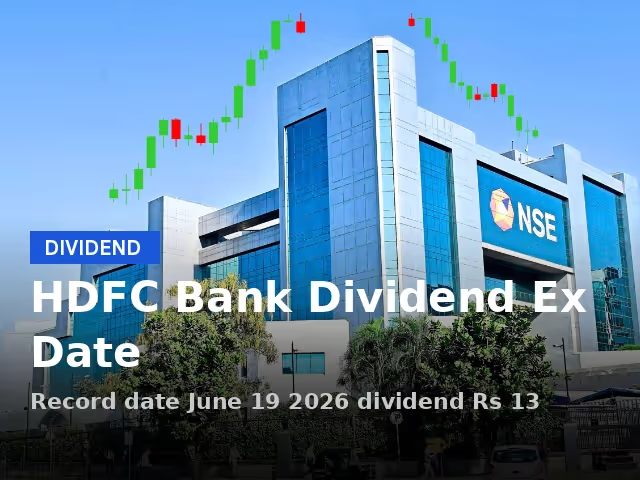
HDFC Bank ₹13 Dividend - Are You Considering Buying After the Payout?
Key Takeaways
- HDFC Bank shares moved after the ₹13 dividend announcement with ex-date on 19-Jun-2026.
- The ₹13 dividend lifts yields on HDFC Bank shares but may trigger short-term price adjustments around the payout window.
- Watch the banking sector and regulatory cues that could influence HDFC Bank shares beyond the payout.
- Consider hedging or waiting for better levels rather than chasing the dividend in HDFC Bank shares.
HDFC Bank has announced a dividend of ₹13 per share for its equity investors. This is a sizable payout for a premier bank stock and adds to the total return for holders. The ex-date and record date appear on the notice as 19-Jun-2026, with the payout expected to influence price dynamics around the payout window. Retail investors should note that this dividend does not guarantee price appreciation and is part of the stock's total return mix.
HDFC Bank Dividend Details
HDFC Bank declares ₹13 per share dividend with record date on 19-Jun-2026. The payout increases per-share return for shareholders and may influence near term price movements as the market prices in the yield component.
Market Context and Why This Dividend Matters
Dividend announcements from large bank stocks like HDFC Bank can influence investor sentiment and sector valuation. While the dividend improves yield, macro factors such as credit growth, interest rates and liquidity conditions in the Indian banking sector will largely drive the stock’s performance beyond the payout. Expect some price action around the ex-date as traders price in the dividend yield and tax considerations.
Impact on Investors - What This Means for You
How This Affects HDFC Bank Shares
The most direct impact is an immediate yield lift for existing holders and a potential one-day price move around the ex-date. New buyers may wait for better levels after the payout window, as the price often adjusts to reflect the dividend payment.
Which Sectors or Stocks to Watch
- 1st Priority: Banking sector - dividend announcements tend to support large-cap bank valuations and provide yield comfort for investors
- 2nd Priority: Financials - financial services peers may see spillover effects in the near term
- Avoid Now: IT services - not directly linked to bank dividend moves and may not participate in this specific trigger
What SIP, Lumpsum and Traders Should Do Now
- SIP investors: Maintain existing allocations to quality financials and avoid chasing the dividend via new purchases in HDFC Bank
- Lumpsum investors: Do not chase the payout; wait for a post ex-date pullback before adding exposure to the stock
- Traders: Use short-term risk controls and consider hedging around the ex-date to protect if you hold the stock
Swastika Investmart notes that the ₹13 dividend on HDFC Bank could create short-term price moves around the ex-date. Investors can use our equity research to gauge post-ex-date price action and time fresh entries accordingly.
Key Risks After the Dividend Announcement
- Dividend-driven moves may cause short-term volatility in HDFC Bank shares around the ex-date 19-Jun-2026
- Banking sector sentiment or regulatory changes can influence valuations beyond the payout
- Tax implications and record date adjustments could affect eligible holders
FAQ
What is the dividend amount declared by HDFC Bank?
Rs 13 per share.
What is the ex-date for the dividend?
19-Jun-2026.
Should I buy HDFC Bank shares before the ex-date to capture the dividend?
Dividend capture strategies can be risky and may not deliver the hoped-for gains; price often adjusts by roughly the dividend amount after the payout window, so invest for long-term value rather than just to collect the dividend.
What should I watch in the banking sector after this dividend?
Look for overall sector yield, liquidity cues, and macro factors such as interest rates and credit growth that drive valuations beyond the payout.
Conclusion
The ₹13 dividend adds a near-term yield boost for HDFC Bank shares but is not a growth trigger. Investors should balance income with long-term value and monitor price action around the ex-date before making new allocations.

Reliance Industries shares 16 dividend stocks You Own?
Key Takeaways
- Reliance Industries shares are part of a 16-stock ex-dividend wave this week, with payouts ranging from Rs 0.01 to Rs 54 per share.
- RIL and other dividend names could influence cash flow for investors in the Financials and Energy sectors.
- RIL and other dividend names warrant attention as ex-dividend dynamics unfold.
- Today you should verify holdings and decide whether to buy before the ex-dividend window closes.
Dividend ex-date sweep: 16 stocks turning ex-dividend
Why 16 stocks turning ex-dividend matters for your wallet
Reliance Industries shares form part of a dividend ex-date cluster that includes 16 stocks such as RIL, HDFC AMC, Bank of Baroda, offering payouts between Rs 0.01 and Rs 54 per share.
Post-ex-date price moves and what it means for your holdings
With a T+1 settlement cycle, today may be the last chance to buy before ex-dividend eligibility, and shares often adjust on the ex-date, affecting short-term returns even when payouts look attractive.
Impact on investors
How this affects specific holdings
Investors holding RIL, HDFC AMC, and Bank of Baroda could receive dividend payouts while the stock price adjusts, so review your positions and trading costs before the ex-date window closes.
Which sectors and stocks to watch
- 1st Priority: Financials - HDFC AMC, Bank of Baroda, due to stable payout history and potential price adjustments
- 2nd Priority: Energy and consumer goods - Reliance Industries shares may benefit from cash flows but watch for volatility
- Avoid Now: High-valuation growth IT stocks - dividend focus may not align with capital gains
What SIP, Lumpsum and Traders Should Do Now
- SIP investors: Do not alter long-term plans; consider dividend plays only if they fit your risk profile
- Lumpsum investors: If you own any of the 16 stocks, plan to receive payouts and manage cost basis; avoid adding new positions solely for the dividend
- Traders: Monitor ex-dividend price adjustments and use hedges where appropriate to protect existing positions
Swastika Investmart notes that dividend events can lead to short-term price moves. If you hold Reliance Industries shares or other dividend stocks, use our Stock Research service to evaluate timing and risk before any additional buys. This helps you align your holdings with the dividend window without overreacting to the immediate price moves.
Key Risks for Dividend Plays
Dividend capture may not deliver expected returns
- Ex-dividend price adjustments can offset the payout
- Tax implications and transaction costs can erode gains
- Stock-specific risks may lead to uneven payouts across the list
FAQ
What does ex-dividend mean for retail investors?
If you own the stock before the ex-dividend date, you are eligible to receive the declared dividend; purchases on or after ex-date typically do not qualify.
Which stocks are paying dividends on the ex-date?
Reports indicate 16 stocks including Reliance Industries, HDFC AMC, and Bank of Baroda turning ex-dividend on June 5 with payouts ranging from Rs 0.01 to Rs 54 per share.
How much can I expect to receive?
Dividend payouts in this window range from Rs 0.01 to Rs 54 per share depending on the stock; actual receipts depend on your holdings and the record date.
Should I buy today for the dividend?
Buying today can help you qualify for the dividend if you hold the stock by the record date, but weigh post-ex-date price changes and fees before committing.
Conclusion
Dividend events across 16 stocks including RIL, HDFC AMC, and Bank of Baroda can offer immediate payouts but may be offset by post-ex-dividend price moves. Verify your holdings today, and consider a measured approach to dividend plays aligned with your risk tolerance and long-term goals.

CMR Green Technologies IPO ₹631 crore Should You Subscribe?
Key Takeaways
- CMR Green Technologies' ₹631 crore IPO saw strong Day 2 subscription with GMP signaling around 31% upside.
- The oversubscription and grey market premium point to potential listing gains for retail investors in the non-ferrous metal recycling space.
- Monitor GMP trends and subscription data to gauge likely listing price and risk before applying.
- If you subscribe, keep allocation small and watch listing day movements for further decisions.
Why CMR Green Technologies IPO stands out at ₹631 crore
CMR Green Technologies offers a scaled-up recycling platform in non-ferrous metals with sustainability tie-ins, aligning with rising clean-technology demand. The ₹631 crore offer size marks a mid-cap listing that could attract long-term funds looking for material recycling-led growth.
How the offer is structured and notable signals
The IPO's mix includes manufacturing and recycling value chains with potential for margin expansion as volumes rise, but pricing remains contingent on demand across retail and institutional investors. Market sentiment shows interest in sustainability-focused plays, which could support listing gains if demand sustains into Day 2 and Day 3.
CMR Green Technologies IPO GMP and Market Sentiment
Grey market premium (GMP) data on Day 2 indicates potential upside around 31%, reflecting strong retail interest and positive expectations about listing gains. However, GMP is not a guaranteed indicator of listing price and real fundamentals should guide long-term decisions.
Should You Apply For CMR Green Technologies IPO?
Whether to apply depends on your risk tolerance and portfolio diversification needs; for a retail investor, a small allocation could be considered if GMP trends and subscription demand look favorable, while avoiding heavy exposure in this mid-cap segment is prudent.
Risks of Investing in CMR Green Technologies IPO
Key Risks of Holding or Buying
- Regulatory and listing risk could affect post-listing performance in early weeks.
- Subscription mix and grey market signals are uncertain indicators of actual listing price.
- Market volatility in the manufacturing and metals recycling space can impact price performance.
What SIP, Lumpsum and Traders Should Do Now
- SIP investors: Consider a staggered application approach or skip until more data on demand is available.
- Lumpsum investors: Limit exposure to a single fill and await more concrete GMP-to-listing data before larger bets.
- Traders: Use stop-loss risk controls and monitor GMP trends to time exits around listing day.
Swastika Investmart notes that the ₹631 crore CMR Green Technologies IPO is attracting strong interest and Day 2 GMP signals upside. A closer look at our IPO Research Desk suggests buyers should track GMP and subscription trends before allocating; a small initial allocation may suit risk-tolerant investors.
Key Risks to Watch
Key Risks of Investing in the IPO
- Valuation risk if post-listing price adjusts sharply from GMP signals.
- Execution and integration risk in scaling up recycling operations.
- Market risk from cyclicality in metals and industrial demand in India.
FAQ
Should I apply for the CMR Green Technologies IPO?
Only if you can tolerate mid-cap volatility and plan a small allocation after reviewing GMP trends and subscription data.
What does GMP signaling 31% upside imply for listing?
It signals potential listing gains but is not guaranteed; actual listing price depends on demand and market conditions.
What are the key risks of this IPO?
Regulatory risk, market volatility, and execution risk in scaling the recycling business are the main concerns.
When is the listing date?
Listing date details will be announced by the exchange; stay updated on the offer and listing notifications.
Conclusion
CMR Green Technologies' ₹631 crore IPO presents a highlighted opportunity with strong Day 2 demand and GMP signals, but listing gains are not guaranteed. Subscribe with caution, use small allocations, and rely on IPO research data to guide decisions; monitor official updates for listing timing.

95.71 rupees per dollar Should You Hedge Your Portfolio Now?
Key Takeaways
- Rupee opened flat at 95.71 per dollar on June 4, 2026 as Asian markets showed mixed signals, reflecting cautious global forex trends.
- Rupee stability could help IT services earnings while import-heavy sectors face steadier input costs, affecting margins.
- Infosys and other IT exporters emerge as watching points for currency-driven earnings resilience in a flat rupee environment.
- Investors should consider currency hedges today to protect portfolios from sudden USD moves and preserve upside.
Key Details: Rupee at 95.71 and Mixed Asian Trends
The rupee opened flat at 95.71 against the U.S. dollar amid mixed Asian currency trends, signaling cautious sentiment in global forex markets.
Why the Rupee Holds at 95.71 Against USD
The 95.71 level reflects a balance between domestic macro cues and external currency flows, with investors awaiting clearer global triggers.
Broader Market Context
Beyond the rupee level, regional peers show divergence as risk appetite remains cautious despite some pockets of strength in select currencies.
Impact on Investors
How this Affects Specific Holdings
The stability in the currency can support export-oriented margins, notably for IT services firms that earn revenue in USD, while import-heavy players may see steadying input costs.
Which sectors/stocks to Watch
- 1st Priority: IT services - rupee stability supports USD revenue margins
- 2nd Priority: Oil & gas importers - import costs could ease with stable currency
- Avoid Now: Auto & consumer discretionary - global demand and currency volatility could keep prices volatile
What SIP, Lumpsum and Traders Should Do Now
- SIP investors: Stay invested in diversified funds, avoid overconcentration in USD-revenue names, and consider currency-hedged funds to shield rupee moves
- Lumpsum investors: Use a phased deployment to build hedged exposure as currency signals unfold
- Traders: Use currency futures/options to hedge USD-rupee exposure and protect existing positions
Swastika Investmart notes that rupee stability around 95.71 per dollar signals mixed global cues and currency volatility ahead. The main risk is a possible USD strength if global risk appetite deteriorates, which could pressure IT and other USD-earning stocks. A natural solution is currency hedging through currency-hedged funds on our platform to shield a portion of equity exposure.
Key Risks to Watch
Key Risks to Watch
- Possible USD strength if global risk appetite deteriorates
- Volatility in USD-earning sectors like IT services
- Oil prices and macro cues from developed markets influencing flows
FAQ
What does rupee at 95.71 mean for my portfolio?
It signals currency stability but currency risk remains; monitor USD earnings exposure.
Which sectors are most affected by rupee moves?
IT services and oil importers are key, with IT likely to benefit from steadier USD revenues while import costs stay manageable.
Should I buy currency-hedged funds now?
If you want to shield returns from USD-rupee moves, consider hedged funds as part of your diversified plan, based on risk tolerance.
What risks could upset the rupee in the next week?
US macro data, oil price swings, and geopolitical tensions can drive sudden currency moves.
Conclusion
Rupee stability at 95.71 against the dollar suggests mixed global cues with currency risk still present. To navigate this, consider measured hedging and stay alert to US data and oil prices; act today to position your portfolio with currency-hedged exposure where appropriate.
Big Budget


Popular Articles





.avif)
.avif)

.avif)



START YOUR INVESTMENT JOURNEY
Get personalized advice from our experts
- Dedicated RM Support
- Smooth and Fast Trading App
