


HSBC Share Price Signals From July PMI - What It Means For Indian Markets



Key Takeaways
- July 2026 composite PMI stands at 54.3, the slowest pace of expansion since March 2022, yet remains above 50.
- Services PMI eased to 53.1 while Manufacturing PMI Output Index rose to 57.0, signaling diverging momentum across sectors.
- Export orders expanded across both manufacturing and services, lifting overall international sales growth to its highest since March.
- Inflationary pressures intensified as input costs rose and output charges climbed, while employment continued to expand for the seventh consecutive month.
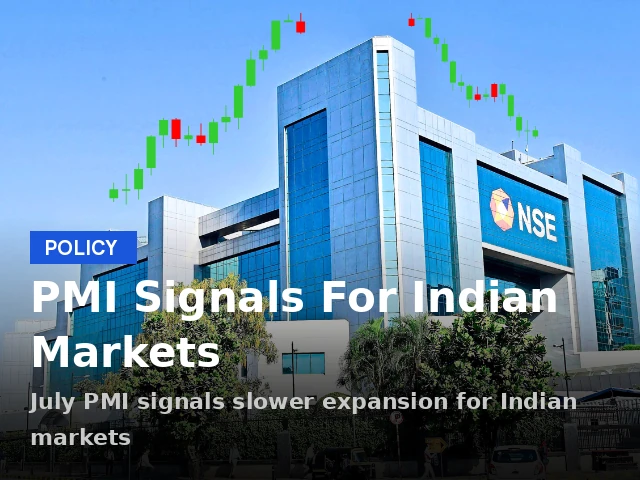
Investors watching the hsbc share price will want to parse July 2026 PMI numbers to gauge the macro terrain for Indian markets. The composite PMI Output Index stood at 54.3 in July, down from 57.1 in June, signaling expansion but at the slowest pace since March 2022. Even with this cooling tempo, the index remains comfortably above the 50 expansion threshold, which keeps the narrative of growth in place but with growing caveats around demand softness and cost pressures. In practical terms, this hints at a private sector that is expanding, yet the pace of that expansion has moderated as softer domestic demand partly offsets the strength seen in external demand.
To put July’s numbers in perspective, the Services PMI slipped to 53.1 from 57.4 in June, while the Manufacturing PMI Output Index advanced to 57.0 from 56.3. The Manufacturing PMI itself eased slightly to 53.9 from 54.2. This dispersion reveals a tale of two speeds: services activity continued to grow, but at a slower rate, whereas manufacturing held onto a brisk expansion driven by production and new orders. The overall snapshot confirms growth, yet highlights a more uneven recovery across sectors–services running cooler while manufacturing remains relatively resilient on output momentum.
Export orders rose across both manufacturing and services, pushing overall international sales growth to its highest level since March. This external demand buoyancy is notable because it cushions the domestic slowdown and provides a support pillar for corporate margins, even as input costs climb. Increasing fuel, labour, transportation, and raw material costs contributed to faster growth in input costs, prompting firms to pass through higher prices. Output charge inflation rose to its highest level since April, signaling that pricing power is beginning to adjust to cost pressures. This combination of rising costs and price pass-through has direct implications for margins and consumer pricing dynamics in the near term.
Employment continued to expand for the seventh consecutive month, although hiring remained moderate overall. Service providers added jobs at a faster pace than manufacturers, underscoring a still-healthy demand environment for services, even as some manufacturing segments feel the drag from slower domestic demand. The release also notes that renewed tensions in the Middle East prompted businesses to build inventories to manage supply-side uncertainty, a dynamic that can influence both purchase behavior and risk management strategies across supply chains. In short, the July PMI data indicates a broadening expansion but with inflationary pressures and mixed sector momentum shaping the investment backdrop.
According to Pranjul Bhandari of HSBC, “renewed tensions in the Middle East prompted businesses to build inventory buffers to manage supply-side uncertainty. She added that purchasing activity and inventories increased alongside export orders, while companies continued to face higher price pressures as they sought to protect margins.”
For investors who track macro signals, the takeaway is nuanced. The private sector remains in growth territory, but the pace decelerates as demand softens at home while external demand provides a counterweight. This has implications for the HSBC share price and related risk assets: sectors closely tied to domestic consumption may see tempered momentum, while exporters and manufacturers with strong exposure to external demand could benefit from the uplift in global demand. As we navigate these signals, it helps to remember that PMI data are engines of sentiment and short-term expectations, not blueprints for every quarter’s earnings. A disciplined approach–balancing domestic demand sensitivity with export exposure–helps in making sense of the current patchwork of growth and price pressures.
If you want to translate these macro signals into stock-ready ideas, consider testing sector bets that leverage export demand and resilient manufacturing output, while maintaining hedges against cost-driven margin pressures. You can also use Swastika's Sarthi AI stock assistant to sift through ideas and quantify stock-level exposure to these macro themes. Swastika's Sarthi AI stock assistant is designed to deliver institutional-grade research insights to retail investors, helping you identify names that historically perform when export growth supports margins and when input costs are on the rise.
July 2026 HSBC Flash PMI Data: Slowing Private Sector Growth In India
The July 2026 PMI shows the private sector continuing to expand, but at the slowest pace in more than four years. The composite index at 54.3 confirms expansion, yet the momentum has cooled from the 57.1 reading recorded in June. This deceleration has practical implications for earnings visibility and valuation multiple compression in cyclically sensitive sectors. For traders, the signal is not a collapse but a cooling of the growth engine, implying more selective stock-picking and a tilt toward segments with improving productivity, steadier demand, and the ability to manage rising costs.
Diverging Momentum Between Services And Manufacturing
Under the hood, the services and manufacturing sub-surveys diverged in July. Services grew at a slower pace, with the Services PMI at 53.1 versus 57.4 in June, while the Manufacturing PMI Output Index rose to 57.0 from 56.3, with the Manufacturing PMI tracking at 53.9 down from 54.2. This split suggests that manufacturing may continue to benefit from external demand and resilient production activity, while services face domestic demand headwinds. Such a dichotomy can influence stock selection–consumer services and discretionary names could see more volatility, whereas industrials and capital goods with export exposure might find relative strength in a high-cost environment.


Export Orders And Price Pressures: The Inflationary Signpost
Export orders expanding across both manufacturing and services lifted international sales growth to its highest level since March. The external demand tailwinds help offset some domestic softness, but inflationary pressures intensified as costs for fuel, labour, transportation, and raw materials rose. Faster growth in input costs, combined with pass-through to output prices, signals a pricing environment that could compress margins if internal productivity does not keep pace. For equity investors, this means monitoring companies with durable pricing power, efficient supply chains, and lean cost structures, particularly in sectors with higher import exposure or energy-intensity.
Employment Trends And Economic Resilience
Employment data in July shows expansion for the seventh consecutive month, with service providers adding jobs at a faster pace than manufacturers. The resilience of payrolls supports consumer demand to some extent, though the pace of hiring indicates a cautious approach by firms as they calibrate capacity with demand signals. This is relevant for stocks tied to the labor market–consumables, retail, and services–where payroll dynamics can influence consumer sentiment and discretionary spending patterns. Yet, a moderated hiring growth also provides a window to reassess capital expenditure plans and project cost structures with more discipline.
What The Data Means For Investors: Practical Reading And Next Steps
For The Retail Investor, the July PMI paints a picture of gradual improvement tempered by cost pressures. The composite index above 50 confirms ongoing expansion, but the slowdown from June underscores the need for selective bets. A balanced approach–favoring exporters, manufacturers with strong order books, and service segments with pricing power–appears prudent in a period of elevated input costs and a mixed domestic demand backdrop. The PMI’s signal of rising export demand can be a critical driver for stock picks that benefit from a global demand rebound, while sectors reliant on domestic consumption may require more selective exposure and tighter risk controls.
How To Apply These Signals In Your Portfolio Today
Begin with a quick sanity check on your current holdings: are you overweighted in domestically sensitive sectors that could soften if consumer confidence wobbles? If yes, rotate toward exporters, capital goods, and materials that benefit from intact external demand. Consider stocks with stable pricing power and efficient cost management to weather rising input costs. Use issue-based screens to identify names with high export exposure, robust margins, and defensible growth trajectories. And remember to calibrate risk by combining macro overlays with stock-specific catalysts–like order backlogs, capacity utilization, and supply chain resilience–before you reallocate capital.
Frequently Asked Questions
What was the July 2026 composite PMI for India and how did it compare to June?
The HSBC Flash India Composite PMI Output Index stood at 54.3 in July 2026, down from 57.1 in June, but still above 50, indicating expansion.
How did the Services and Manufacturing sub-indices perform in July 2026?
Services PMI fell to 53.1 in July from 57.4 in June, while the Manufacturing PMI Output Index rose to 57.0 from 56.3, and the Manufacturing PMI stood at 53.9 from 54.2.
What did export orders indicate in the July PMI data?
Export orders increased across both manufacturing and services, taking overall international sales growth to its highest level since March.
What inflation and cost pressures did the July PMI data highlight?
Inflationary pressures gathered pace as operating costs rose; increases in fuel, labour, transportation and raw material costs led to faster growth in input costs, and output price inflation rose to its highest since April.
What did HSBC's Pranjul Bhandari say about the PMI context?
According to Pranjul Bhandari of HSBC, renewed tensions in the Middle East prompted businesses to build inventory buffers to manage supply-side uncertainty. She added that purchasing activity and inventories increased alongside export orders, while companies continued to face higher price pressures as they sought to protect margins.
Conclusion
The July HSBC flash PMI data confirms that India’s private sector remains in expansion mode, but the pace has cooled from the high momentum seen earlier in the year. With the composite PMI at 54.3 and a Services PMI of 53.1 alongside a Manufacturing PMI of 53.9 with an output index of 57.0, investors face a mixed but still constructive macro backdrop. Export demand provides a counterweight to softer domestic demand, while rising input costs and price pass-through push margin dynamics into sharper relief. The market takeaway is clear: stay focused on quality exposure–export-oriented, cost-efficient manufacturers, and services with pricing power–while maintaining discipline on valuations and risk.
Latest Articles

GNFC Shares in Focus as Middle East Conflict Disrupts LNG Supply Chain.


GNFC Shares in Focus as Middle East Conflict Disrupts LNG Supply Chain
Key Highlights
• Middle East tensions are disrupting LNG supply routes and energy markets
• GNFC shares are drawing investor attention amid rising energy and input cost concerns
• Fertilizer and chemical companies are sensitive to global gas and LNG prices
• Energy supply disruptions may influence inflation and industrial costs in India
• Investors are closely watching energy-linked sectors in the Indian stock market
Why GNFC Shares Are Suddenly in the Spotlight
GNFC shares have recently come into focus after rising geopolitical tensions in the Middle East began disrupting global LNG supply chains. For investors tracking energy sensitive sectors, this development is significant.
The Gujarat Narmada Valley Fertilizers and Chemicals Limited, commonly known as GNFC, operates in fertilizers and chemicals, both of which depend heavily on natural gas as a key input. When global gas prices become volatile, the cost structures of such companies can shift quickly.
With shipping routes and energy flows from the Middle East facing uncertainty, global LNG prices have shown signs of tightening. That ripple effect is now reaching energy dependent industries, including fertilizer and chemical manufacturers.
Understanding the LNG Supply Chain Disruption
Liquefied Natural Gas plays a critical role in global energy trade. LNG allows natural gas to be transported across long distances where pipelines are not feasible.
A large portion of global LNG supply originates from or moves through regions close to the Middle East. When geopolitical tensions escalate in this area, energy markets often react instantly.
Shipping routes may become risky, insurance costs rise, and buyers begin scrambling for alternative supply sources. These changes push global gas prices higher and tighten supply availability.
For industries dependent on gas as a feedstock, such disruptions can impact production costs and margins.
Why Natural Gas Matters for Fertilizer and Chemical Companies
Natural gas is one of the most important raw materials used in fertilizer production, especially for manufacturing urea and ammonia based fertilizers.
Companies like GNFC rely on a stable supply of natural gas to keep production efficient. If LNG prices rise sharply or supply becomes uncertain, the cost of producing fertilizers and chemicals can increase.
In India, fertilizer prices and subsidies are closely monitored by the government. However, global input costs still play a role in shaping profitability for companies in the sector.
Investors therefore keep a close watch on energy prices when evaluating fertilizer and chemical stocks.
How the Market Reacted to the News
Whenever geopolitical tensions affect energy supply, stock markets tend to react quickly.
GNFC shares caught investor attention because energy cost volatility directly affects its business operations. Traders often anticipate changes in margins or production costs before companies release detailed financial updates.
However, it is important to remember that short term market reactions are not always reflective of long term business fundamentals.
Investors typically look at a combination of factors including raw material costs, government policies, export demand, and company efficiency before forming a long term view.
Impact on the Indian Economy
Energy disruptions rarely remain confined to one sector. In India, rising LNG or natural gas prices can influence multiple industries.
Industrial Cost Pressure
Higher energy costs can increase production expenses for chemicals, fertilizers, cement, and steel manufacturers.
Inflation Concerns
Energy price spikes can eventually push up inflation because transportation and manufacturing costs increase.
Currency and Import Bill
India imports a large portion of its energy needs. Higher global energy prices increase the country's import bill and may influence the rupee's stability.
Because of these interconnected effects, energy related geopolitical developments often become key market drivers.
GNFC’s Business Strength and Market Position
Despite short term energy volatility, GNFC remains an established player in India’s fertilizer and chemical sector.
The company operates across multiple product segments including fertilizers, industrial chemicals, and specialized chemical products. Diversification helps cushion the impact of fluctuations in any single input cost.
GNFC has also benefited from strong domestic demand in agriculture and chemical manufacturing, both of which remain vital sectors in India’s growth story.
For investors, evaluating the company requires looking beyond short term commodity movements and focusing on operational efficiency, demand trends, and management strategy.
How Investors Can Navigate Energy Driven Volatility
Geopolitical developments can create temporary turbulence in financial markets. However, experienced investors understand that reacting impulsively to every headline can lead to poor investment decisions.
A disciplined approach involves tracking macroeconomic indicators, sector trends, and credible research insights.
This is where professional investment platforms make a difference. Swastika Investmart, a SEBI registered brokerage firm, provides investors with structured research tools, real time market insights, and technology enabled trading platforms that help investors make informed decisions.
Strong customer support and investor education initiatives further help market participants understand complex developments such as global energy disruptions.
Key Indicators Investors Should Watch
Investors tracking GNFC shares and similar companies should keep an eye on several important factors.
Global LNG prices remain one of the most important indicators.
Shipping and trade routes in the Middle East will determine whether the disruption is temporary or prolonged.
Government policy regarding fertilizer subsidies and gas allocation will also play a major role in shaping company profitability.
Monitoring these elements helps investors form a balanced view rather than reacting to market noise.
Frequently Asked Questions
Why are GNFC shares reacting to LNG supply disruptions
GNFC operates in the fertilizer and chemical sector where natural gas is a key input. Disruptions in LNG supply can increase production costs and influence investor sentiment.
What is LNG and why is it important
LNG stands for Liquefied Natural Gas. It allows natural gas to be transported across oceans and plays a critical role in the global energy supply chain.
How does geopolitical tension affect energy markets
Conflicts in energy producing regions can disrupt supply routes, increase shipping risks, and push energy prices higher across global markets.
Can rising gas prices impact fertilizer companies in India
Yes. Natural gas is a primary raw material for fertilizer production, so higher gas prices can increase manufacturing costs and influence profitability.
Should investors be worried about GNFC’s long term outlook
Short term volatility due to energy prices is common, but long term performance depends on demand trends, government policies, and operational efficiency.
Final Thoughts for Investors
The spotlight on GNFC shares highlights how closely global geopolitics and commodity markets are linked to the Indian stock market. Energy supply disruptions, especially involving LNG, can quickly influence sectors like fertilizers and chemicals.
For investors, the key is to stay informed and focus on fundamentals rather than reacting to short term market fluctuations.
If you want access to research driven insights, powerful trading technology, and investor education resources, opening an account with Swastika Investmart can help you navigate market opportunities with greater confidence.
Gear up with Swastika Investmart's tech edge, research depth, and investor-first approach. Open your account now and trade smarter.
Global Oil Crisis: Trump Says $100+ Oil Is Worth It to Stop Iran
Global Oil Crisis: Trump Says $100+ Oil Is Worth It to Stop Iran
Key Takeaways
• Rising geopolitical tensions in the Middle East could push crude oil prices above $100 per barrel
• Donald Trump’s remarks highlight how geopolitics can influence global energy markets
• Higher oil prices may increase inflationary pressure worldwide, including in India
• Indian sectors like aviation, paint, logistics, and FMCG could face margin pressure
• Investors should watch energy stocks, macro indicators, and global policy responses closely
Why the Global Oil Crisis Is Back in Focus
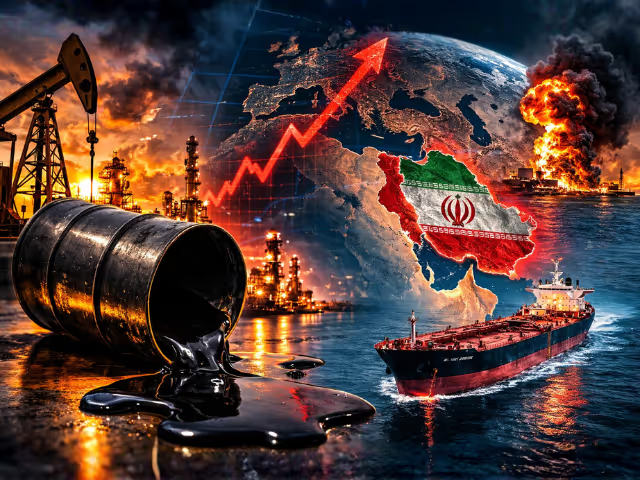
The global oil crisis has once again entered the spotlight after former US President Donald Trump stated that oil prices crossing $100 per barrel would be acceptable if it helps contain Iran’s influence in global geopolitics.
Such statements may appear political on the surface, but energy markets take them seriously. Oil prices are deeply connected with global diplomacy, sanctions, trade routes, and supply chains. Even a hint of tension around major oil producing regions can send crude prices higher.
For investors in India, this development is particularly important. India imports nearly 85 percent of its crude oil requirement, which means any global oil shock quickly flows into domestic inflation, fiscal policy, and corporate earnings.
Understanding the global oil crisis is therefore essential not just for energy traders but for equity investors as well.
Trump’s Statement and Its Geopolitical Context
Donald Trump’s remark about accepting $100 plus oil prices comes in the context of ongoing tensions involving Iran and global sanctions policy.
Iran remains one of the largest oil producers in the Middle East. Restrictions on Iranian exports or heightened regional conflict could disrupt supply channels across the Persian Gulf. Since this region accounts for a large portion of global oil exports, even a small disruption can significantly impact crude benchmarks such as Brent and WTI.
Historically, geopolitical tensions have often triggered sharp oil price movements. For example, during earlier sanctions on Iran and conflicts in the Gulf region, oil prices saw sudden spikes that affected global markets.
Energy traders often factor in these geopolitical risks well before any actual disruption occurs.
What $100 Oil Means for the Global Economy
Oil prices above $100 per barrel typically signal tight supply conditions or geopolitical instability. Such price levels can have ripple effects across the global economy.
First, transportation and logistics costs rise. Airlines, shipping companies, and trucking operators face higher fuel expenses.
Second, manufacturing costs increase because energy is a key input in production processes.
Third, inflationary pressure builds as higher fuel costs translate into more expensive goods and services.
Central banks worldwide often monitor crude prices closely because persistent oil inflation can influence interest rate decisions.
Impact of the Global Oil Crisis on the Indian Economy
India’s dependence on imported crude makes the global oil crisis a critical macroeconomic factor.
Rising Fuel Costs
When international crude prices rise, domestic fuel prices eventually follow unless offset by tax adjustments. Higher petrol and diesel prices increase transportation costs across the economy.
This can lead to higher prices for everyday goods such as groceries, consumer products, and construction materials.
Pressure on Inflation
Crude oil has a direct and indirect impact on inflation. If oil prices remain elevated for an extended period, it can push consumer inflation higher and complicate monetary policy decisions for the Reserve Bank of India.
Impact on the Current Account Deficit
A sustained oil price surge increases India’s import bill. This widens the current account deficit and can place pressure on the Indian rupee.
Currency fluctuations in turn affect foreign investment flows and corporate profitability.
Sectoral Impact on Indian Stock Markets
The global oil crisis does not affect all sectors equally. Some industries face challenges, while others may benefit.
Sectors That May Face Pressure
Aviation companies are among the most sensitive to oil price increases because aviation turbine fuel forms a major part of their operating costs.
Paint and chemical companies also feel the impact since many of their raw materials are crude derivatives.
Logistics and transportation companies may see operating margins shrink if fuel prices rise rapidly.
Sectors That May Benefit
Oil exploration and production companies often benefit from higher crude prices because their realized selling price improves.
Energy companies and select upstream oil firms may see stronger earnings in a high oil price environment.
Investors often rotate toward energy stocks during periods of sustained crude rallies.
Market Volatility and Investor Behaviour
Whenever the global oil crisis resurfaces, markets typically react with heightened volatility.
Traders track crude benchmarks such as Brent closely because sudden spikes can trigger sector specific movements in equities.
However, long term investors generally avoid reacting impulsively to short term commodity fluctuations. Instead, they evaluate how sustained oil trends may influence earnings growth and macroeconomic stability.
This is where professional research and structured insights become valuable.
Platforms like Swastika Investmart provide SEBI registered advisory support, research tools, and investor education that help market participants interpret global developments more objectively.
What Investors Should Watch Going Forward
Several key factors will determine whether the global oil crisis intensifies or stabilises.
First is the geopolitical trajectory involving Iran and the Middle East.
Second is global supply dynamics from major producers such as OPEC and the United States.
Third is demand trends from large economies like China, India, and Europe.
Investors should also monitor central bank policies because rising oil prices can influence inflation outlook and interest rate expectations.
Tracking these indicators helps investors position their portfolios more effectively.
Frequently Asked Questions
Why does geopolitical tension affect oil prices?
Geopolitical tensions can disrupt oil supply routes, production levels, or export capabilities. Markets react quickly to these risks, often pushing crude prices higher.
How does rising oil price affect Indian stock markets?
Higher oil prices can increase inflation, raise fuel costs, and reduce margins for sectors like aviation and logistics while benefiting oil producing companies.
Can crude oil reaching $100 impact inflation in India?
Yes. Higher crude prices generally increase transportation and manufacturing costs, which eventually contribute to higher consumer prices.
Which sectors benefit from high oil prices?
Upstream oil exploration companies and certain energy firms tend to benefit because higher crude prices increase their revenue potential.
How should investors respond to oil price volatility?
Investors should focus on diversification, long term fundamentals, and credible research insights rather than reacting to short term price spikes.
Final Thoughts for Investors
The global oil crisis reminds investors how closely financial markets are tied to geopolitics. Statements from influential leaders, sanctions, and regional tensions can move energy prices and trigger ripple effects across economies.
For Indian investors, understanding these macro developments is essential for navigating market volatility. While short term fluctuations are inevitable, disciplined investing supported by reliable research can help investors make informed decisions.
If you want access to professional research tools, investor education resources, and a technology driven trading platform, consider opening an account with Swastika Investmart.
Gear up with Swastika Investmart's tech edge, research depth, and investor-first approach. Open your account now and trade smarter.
.avif)
Stocks in News India Today 9 March 2026: UltraTech Cement, Poly Medicure, Federal Bank, and Max Estates
Summary
• UltraTech Cement plans a strategic investment in solar energy to meet green power needs
• Poly Medicure is expanding its healthcare product pipeline and increasing R&D spending
• Federal Bank is strengthening its wealth management services across India
• Max Estates has announced a major NCR real estate project with strong revenue potential
These updates reflect broader trends in sustainability, healthcare innovation, financial services expansion, and real estate growth in India.
Key Corporate Updates Investors Should Watch
Indian markets move not only on global cues but also on company-specific developments. Corporate announcements, acquisitions, product launches, and expansion plans often influence short-term price movement and long-term investor sentiment.
On 9 March 2026, several companies made headlines that could draw the attention of traders and long-term investors alike. Notably, updates from UltraTech Cement, Poly Medicure, Federal Bank, and Max Estates are among the most discussed developments in today’s market.
Understanding what these announcements mean for the companies and the broader Indian stock market can help investors make better decisions.
UltraTech Cement Invests in Renewable Energy
UltraTech Cement, India’s largest cement manufacturer, announced that it will acquire a 26.2% stake in Sunsure Solarpark Thirty Eight for ₹6.7 crore. The purpose of this investment is to secure green energy for its operational requirements.
Why this move matters
Cement manufacturing is energy intensive. As India pushes toward sustainability and carbon reduction targets, companies are increasingly turning to renewable power sources.
By investing in solar infrastructure, UltraTech is likely aiming to:
• Reduce long-term electricity costs
• Improve ESG compliance
• Lower carbon footprint
• Secure stable renewable power supply
Market perspective
For investors, this signals that UltraTech is aligning with India’s clean energy transition, which could strengthen its ESG positioning and attract institutional investors who prioritize sustainability.
In sectors like cement, where margins are sensitive to energy costs, renewable power investments can also improve long-term profitability.
Poly Medicure Expands Product Pipeline
Medical device company Poly Medicure shared ambitious expansion plans for the coming years.
The company announced that it plans to:
• Launch 5–6 new critical care products in FY27
• Double its R&D spending over the next few years
• Develop 100+ products currently in pipeline
• Export cardio products after clinical trials and regulatory approvals
Why this matters for the healthcare sector
India’s medical devices market is growing rapidly due to rising healthcare demand, hospital infrastructure expansion, and government initiatives like Make in India for medical devices.
Poly Medicure’s focus on critical care and cardiovascular products indicates a push into high-value medical segments.
Investor takeaway
Investors often view strong R&D pipelines as a positive signal because they indicate:
• Future revenue streams
• Product diversification
• Global market expansion potential
If the company successfully commercializes these products, it could strengthen its position in the global medical devices industry.
Federal Bank Expands Wealth Management Business
Private sector lender Federal Bank has launched a wealth management platform and its first dedicated wealth hub.
The bank also plans to expand this service across multiple key locations in India.
Additionally, Federal Bank will restructure its wealth management services partnership with Equirus, while maintaining an 8.69% shareholding in Equirus.
Strategic importance
Indian wealth management is one of the fastest-growing financial segments due to rising:
• High net-worth individuals (HNIs)
• Financialization of savings
• Investment in equities and mutual funds
Banks are increasingly building integrated platforms to offer:
• Portfolio advisory
• Investment products
• financial planning
• digital wealth services
Impact on banking sector
By strengthening its wealth management offering, Federal Bank aims to increase fee-based income, which helps banks diversify beyond traditional lending revenues.
Max Estates Launches Major NCR Project
Real estate developer Max Estates announced a new project in the NCR region.
According to the company, the development has the potential to generate:
• ₹2,000 crore in total sales potential
• ₹120 crore in annuity rental income
Why NCR remains a key real estate market
The National Capital Region continues to see strong demand due to:
• Corporate office expansion
• Urban infrastructure development
• Growth in residential demand
• Rising commercial leasing activity
Developers focusing on mixed-use or premium commercial projects often generate stable rental income alongside property sales.
What investors should watch
Projects with strong annuity income provide predictable cash flow, which can stabilize earnings for real estate companies.
If executed well, this project could strengthen Max Estates’ long-term revenue visibility.
Broader Impact on the Indian Stock Market
The developments highlighted today reflect several important macro trends shaping the Indian economy:
Sustainability and renewable energy adoption
Industries like cement, steel, and manufacturing are rapidly adopting renewable energy solutions to reduce costs and meet ESG standards.
Healthcare innovation
Companies investing heavily in medical devices and healthcare technology are benefiting from growing domestic and export demand.
Financialization of wealth
Banks expanding wealth management services reflects a shift where more Indian households are investing in equities, mutual funds, and financial assets rather than traditional savings.
Real estate revival
Commercial real estate and mixed-use developments in major urban centers are seeing renewed investor interest.
Together, these developments highlight the diversified growth story of the Indian economy.
How Investors Can Track Stocks in News
News-based investing can be useful for identifying opportunities, but investors should avoid making decisions based only on headlines.
Instead, they should evaluate:
• Company fundamentals
• Industry outlook
• balance sheet strength
• long-term growth potential
Platforms that combine research insights, market data, and advisory tools can help investors interpret such developments effectively.
This is where firms like Swastika Investmart provide value through SEBI-registered research, advanced trading platforms, investor education, and dedicated customer support.
If you want to track such opportunities and invest efficiently, you can open your trading account here
Frequently Asked Questions
What are “stocks in news” in the stock market?
Stocks in news refer to companies that have made significant announcements such as acquisitions, expansions, product launches, or financial updates that could influence their share price.
Do corporate announcements affect stock prices immediately?
Yes, major announcements can trigger short-term price movements as traders react to the news. However, the long-term impact depends on the company’s fundamentals and execution.
Why are renewable energy investments important for companies like UltraTech Cement?
Renewable energy helps reduce operational costs, improves ESG ratings, and supports sustainability goals, which are increasingly important for global investors.
How does wealth management help banks grow?
Wealth management services generate fee-based income and help banks build long-term relationships with high-net-worth clients.
Should investors buy a stock just because it is in the news?
Not necessarily. Investors should always analyze financial performance, industry outlook, and long-term growth prospects before making investment decisions.
Final Thoughts
Corporate developments often provide valuable clues about where companies and industries are headed. Today’s updates from UltraTech Cement, Poly Medicure, Federal Bank, and Max Estates highlight trends such as sustainability adoption, healthcare innovation, financial advisory expansion, and real estate growth.
For investors, tracking such developments can help identify emerging opportunities in the Indian stock market.
If you want to stay ahead with expert research insights, powerful trading technology, and reliable support, consider investing with Swastika Investmart.
Open your trading account today and start your investment journey
%20(3).avif)
Why the Indian Stock Market Is Falling Today (9 March 2026): Key Reasons Investors Should Know
Summary
• Indian stock markets fell sharply today, 9 March 2026, with major indices losing more than 2 percent.
• Banking and IT stocks led the decline across the market.
• Global market weakness, FII selling and profit booking contributed to the fall.
• Long-term investors may view such corrections as potential buying opportunities.
What Happened Today (9 March 2026)
Indian equity markets witnessed a sharp selloff today, 9 March 2026, with benchmark indices slipping significantly during the trading session. The decline was visible across major indices including the Nifty 50, BSE Sensex, Nifty Bank and Nifty IT, reflecting broad-based weakness in the Indian stock market.
Sharp declines often create uncertainty among investors, especially when multiple sectors fall together. However, market corrections are a normal part of the investment cycle. Understanding the factors behind today's fall helps investors make informed decisions instead of reacting emotionally.
Let us understand what triggered the fall in the Indian stock market today, 9 March 2026, and what it means for investors going forward.
Key Reasons Behind Today’s Market Fall
Global Market Weakness
Global market sentiment plays a crucial role in shaping Indian equity movements. When international markets turn volatile, emerging markets like India often experience selling pressure.
Uncertainty around global economic growth, interest rate expectations and weakness in overseas markets contributed to the cautious mood among investors today, 9 March 2026.
Foreign investors often reduce exposure in emerging markets during such periods, which can impact benchmark indices.
Heavy Selling by Foreign Institutional Investors
Foreign Institutional Investors influence liquidity in Indian markets. When FIIs sell large volumes, markets can witness sharp declines.
Recently, foreign investors have been reducing exposure due to changing global interest rate expectations and portfolio rebalancing. This selling pressure became visible in today's market movement on 9 March 2026.
When global capital flows move toward safer assets such as bonds, equity markets often face temporary corrections.
Profit Booking After Strong Market Rally
Another major reason for today's decline (9 March 2026) is profit booking.
Indian markets have delivered strong gains over the past year. Whenever markets reach higher valuations, traders and institutional investors tend to lock in profits.
This natural cycle of buying and selling leads to periodic corrections even when the broader economic outlook remains positive.
Banking Stocks Dragging the Market
Banking stocks hold a significant weight in benchmark indices. Weakness in this sector can quickly impact the entire market.
Today, several major banking stocks declined, pulling down the Nifty Bank and contributing significantly to the overall fall in indices.
Investors remain cautious about global economic trends and interest rate movements, which directly affect banking sector profitability.
Pressure on the IT Sector
The IT sector is closely linked to global economic conditions because most revenue comes from overseas clients.
Concerns about slower global technology spending affected IT stocks today, 9 March 2026, leading to weakness in the Nifty IT.
Whenever US technology companies show weakness, Indian IT stocks often mirror the trend.
What This Means for Investors
Short term market declines can feel alarming, especially for new investors. However, experienced investors know that volatility is a normal feature of equity markets.
Market corrections often create opportunities to buy fundamentally strong companies at more attractive valuations.
Historically, markets that experienced sharp corrections later recovered strongly as economic fundamentals remained intact.
India’s growth story continues to be supported by strong domestic consumption, infrastructure expansion and increasing retail participation in financial markets.
Smart Strategies During Market Volatility
Focus on Long Term Investing
Investors should focus on long term wealth creation rather than reacting to short term volatility. Quality companies with strong earnings potential usually recover faster after corrections.
Maintain Portfolio Diversification
Diversifying investments across sectors such as banking, IT, manufacturing and consumer goods can reduce overall portfolio risk.
Mutual funds and diversified portfolios help investors manage volatility more effectively.
Continue Systematic Investment
Systematic investment plans help investors benefit from market corrections through rupee cost averaging. Investing regularly allows investors to accumulate more units when markets fall.
Why Research Driven Investing Matters
In volatile markets, informed decision making becomes critical. Investors need access to reliable research, market insights and advanced trading tools.
This is where Swastika Investmart adds value. As a SEBI registered financial services company, Swastika Investmart provides strong research support, technology driven trading platforms and dedicated customer service.
The platform also focuses on investor education, helping individuals understand market trends and make better investment decisions.
Investor Protection in Indian Markets
India’s capital markets operate under the supervision of the Securities and Exchange Board of India.
SEBI ensures transparency in financial markets, regulates brokers and protects investor interests. This strong regulatory framework strengthens investor confidence even during volatile market phases.
Frequently Asked Questions
Why did the Indian stock market fall today, 9 March 2026?
The market declined due to global market weakness, selling by foreign investors, profit booking and sectoral pressure in banking and IT stocks.
Is the current market fall a crash?
Most analysts consider this a normal market correction rather than a structural crash. Corrections are common after strong rallies.
Should investors sell during market declines?
Panic selling is usually not recommended. Investors should evaluate company fundamentals and long term growth prospects before making decisions.
Which sectors fell the most today?
Banking and IT sectors faced the most pressure, leading to declines in indices such as the Nifty Bank and Nifty IT.
Can market corrections create buying opportunities?
Yes. Corrections often allow investors to accumulate quality stocks at more reasonable valuations.
Final Thoughts
The sharp decline in Indian markets today, 9 March 2026, highlights how global and domestic factors can influence investor sentiment in the short term.
However, long term investors should remember that market volatility is part of the investment journey. Staying disciplined, diversified and focused on fundamentals remains the best strategy.
With strong research support, advanced trading technology and a commitment to investor education, Swastika Investmart helps investors navigate both rising and falling markets with confidence.
👉 Start your investment journey today by opening a trading account
.avif)
Nifty May Open Weak Today 9 March 2026: Market Setup & Key Levels
Summary
• Global markets are under pressure with the Dow Jones Industrial Average closing lower and futures sharply down.
• Foreign investors continued heavy selling while domestic institutions provided support.
• Derivatives data indicates bearish positioning with strong call writing.
• The Nifty 50 may open below the 24,300 support zone today while the Bank Nifty trades below its 200 day moving average.
Global Markets Signal Weak Start Today
Global cues remain the biggest factor influencing today’s market sentiment.
The US market closed lower in the previous session. The Dow Jones Industrial Average declined 453 points as investors reduced risk exposure amid concerns about global economic growth and interest rate uncertainty.
More importantly, Dow futures are currently trading about 1,064 points lower, indicating that global markets remain under pressure today.
Asian markets are also trading in the red this morning, reflecting weak investor confidence across the region.
Another important signal comes from GIFT Nifty, which is currently indicating a decline of nearly 800 points. This suggests that the Indian market could open sharply lower today.
Institutional Activity: FIIs Continue Selling
Institutional investors play a major role in short term market movements.
Foreign institutional investors sold equities worth nearly ₹6,030 crore in the cash market, showing continued risk reduction by global investors.
Meanwhile, domestic institutional investors purchased ₹6,972 crore, helping absorb some of the selling pressure.
The net flow therefore remains positive at ₹942 crore, but the broader trend still shows cautious participation from foreign investors.
Sustained FII selling often puts pressure on large cap stocks and index heavyweights.
Derivatives Data Signals Bearish Sentiment
Derivatives positioning today indicates that traders are preparing for potential downside.
Key changes in index derivatives include:
• Futures long positions decreased by 3,130 contracts
• Futures short positions increased by 9,313 contracts
• Call long positions increased by 93,903 contracts
• Call short positions surged by 145,592 contracts
• Put long positions increased by 88,392 contracts
These numbers suggest that market participants are building short positions and hedges, which typically reflects cautious sentiment.
The Put Call Ratio currently stands at 0.84 compared with 1.01 earlier, showing a shift toward bearish expectations.
At the same time, the India VIX has jumped about 11 percent to around 19.88, indicating rising volatility in today’s session.
Options Data: Important Levels for Today
Options positioning highlights key levels traders should watch today.
The highest call open interest is seen near the 26,000 strike, suggesting strong resistance at higher levels.
On the put side, the 22,750 strike holds the highest open interest, indicating strong long term support.
The maximum pain level for the current expiry stands around 24,600, which may act as a magnet level as the expiry approaches.
However, short term volatility today could lead to sharp price movements around support zones.
Technical Outlook for Nifty Today
From a technical perspective, the benchmark index remains under pressure.
The Nifty 50 is expected to open below the key support of 24,300 today.
If selling continues, the next downside levels to watch are 23,850 and 23,300, which previously acted as strong demand zones.
On the upside, the 24,300 to 24,600 range now becomes a resistance band.
A sustained move above this zone would be needed to restore short term bullish momentum.
Bank Nifty Technical Outlook
The banking index is also showing weakness in the short term.
The Bank Nifty is likely to open below its 200 day moving average near 57,500 today, which is technically a negative signal.
Key support levels for Bank Nifty are placed at:
• 56,000
• 55,000
If the index attempts a rebound, resistance levels may appear near 57,750 and 58,400.
A strong move above these levels would be required to revive bullish sentiment.
What Today’s Setup Means for Investors
Short term traders should remain cautious today as volatility has increased due to global weakness and derivative positioning.
Intraday swings may be sharper than usual, especially if global markets continue to weaken during the day.
However, long term investors often view market corrections as opportunities to accumulate quality stocks.
Historically, Indian markets have recovered from global shocks once macroeconomic conditions stabilize. India’s long term growth story remains supported by strong domestic consumption, infrastructure expansion, and a rapidly growing investor base.
Using reliable research tools and disciplined strategies can help investors navigate such volatile sessions more effectively.
Frequently Asked Questions
Why is the market expected to open lower today?
Weak global cues, sharp declines in US futures, and heavy FII selling are the main reasons for the expected weak opening today.
What is India VIX and why is it rising?
The India VIX measures market volatility. When it rises, it usually indicates higher uncertainty and larger price swings.
What are the key support levels for Nifty today?
Important support levels are placed around 23,850 and 23,300.
Why do FIIs influence Indian markets so much?
Foreign institutional investors control large capital flows. Their buying or selling decisions can significantly impact liquidity and price movement.
Should investors panic during market corrections?
Market corrections are normal. Investors should focus on long term fundamentals rather than reacting emotionally to short term movements.
Conclusion
The market setup for today, 9 March 2026, suggests a cautious start for Indian equities as global weakness and derivatives positioning weigh on sentiment. Traders should closely monitor support levels in the Nifty and Bank Nifty while managing risk carefully.
For investors looking to navigate volatile markets with research backed insights and advanced trading platforms, partnering with a trusted brokerage can make a big difference.
Swastika Investmart provides SEBI registered brokerage services, strong market research, technology driven trading tools, and investor education support to help investors make informed decisions.
Start your investing journey today.
.avif)
Gold, silver edge higher in global trade amid geopolitical tensions.
TL;DR
- Gold hits $5,137/oz (+1.16%), silver $84.05/oz (+2.27%) on COMEX, fueled by safe-haven buying.
- Geopolitical risks in Middle East drive rally despite strong USD and rising yields.
- MCX silver up 0.69% to ₹2.67/kg; domestic gold dips to ₹1.65 lakh/10g on profit-taking.
- Indian investors eye volatility as Nifty faces weekly lows.
- Safe-haven assets shine; track via advanced tools for smart trades.
Gold and Silver Edge Higher Amid Geopolitical Tensions: What It Means for You
Waking up to headlines of gold and silver edging higher in early Asian trade feels like a familiar script in uncertain times. On Friday, March 6, 2026, spot gold on COMEX climbed to $5,137.70 per ounce, up $59 or 1.16%, while silver surged $1.87 or 2.27% to $84.05 per ounce. The trigger? Escalating geopolitical tensions in the Middle East, sparking fresh safe-haven demand just as global equities teeter.
I've traded commodities through multiple crises—from Ukraine flares to US-China spats—and this rally mirrors those patterns. Investors flock to precious metals when stocks wobble and oil spikes, viewing gold and silver as timeless hedges. But with domestic gold dipping sharply to ₹1.65 lakh per 10 grams on Thursday due to profit-booking, and MCX silver bucking the trend, timing matters more than ever for Indian traders.
This post dives into the drivers, Indian market ripples, and actionable insights. If you're navigating MCX futures or eyeing physical buys, let's unpack why gold and silver prices are stirring again.
Why Are Gold and Silver Prices Rising Now?
Picture this: News wires buzz with US-Israel-Iran frictions, oil poised for its biggest weekly jump in three years, and Asian stocks eyeing a six-year weekly low. Investors hit pause on risk assets, pivoting to bullion. Safe-haven demand propelled the uptick, overriding headwinds like a firmer US dollar and climbing 10-year Treasury yields.
Analyst Renisha Chainani from Augmont nailed it: "Silver and gold rebounded from recent lows as safe-haven demand returned amid rising geopolitical and trade tensions." Silver's 2.27% pop outpaced gold, hinting at industrial demand kicking in alongside haven flows—think solar panels and electronics amid supply fears.
Real-world parallel? During the 2022 Russia-Ukraine onset, gold leaped 10% in weeks. Today's move, though milder, echoes that as Middle East supply risks loom over energy markets.
Global vs. Domestic Trends: COMEX Meets MCX Reality
Globally, the rally shines bright, but India's scene tells a nuanced story. Domestic 99.9% gold plunged ₹7,600 to ₹1.65 lakh/10 grams on March 5, hit by profit-taking after a blistering run. Silver flipped the script: MCX May contracts rose ₹1,844 or 0.69% to ₹2.67 per kg, with 6,353 lots traded.
Why the split? Import duties (currently 15% on gold), rupee at ₹85.50/USD, and SEBI-regulated MCX dynamics play in. Geopolitical jitters boost global spots, but local jewelers and investors book gains ahead of festivals like Akshaya Tritiya. Silver's edge comes from its dual role—50% industrial use globally versus gold's pure store-of-value vibe.
Market context: Nifty 50 dipped 1.2% this week, dragging metal stocks like Titan down 3%. Yet, MCX gold futures hold above ₹93,000/10g, signaling resilience.
AssetGlobal (COMEX)Domestic (MCX/Spot)Key DriverGold$5,137/oz (+1.16%)₹1.65L/10g (-₹7,600)Safe-haven vs. profit-bookSilver$84.05/oz (+2.27%)₹2.67/kg (+0.69%)Industrial + haven demand
This snapshot highlights the arbitrage opportunities savvy traders exploit.
Geopolitical Tensions' Ripple on Indian Financial Markets
No isolated event here—gold and silver edging higher amid geopolitical tensions feeds into India's $3.5 trillion economy. Higher oil (Brent at $92/barrel) stokes inflation fears, pressuring RBI's 6.5% repo rate stance. SEBI's commodity circuit breakers kicked in yesterday on MCX volatility, underscoring regulatory vigilance.
Impact on markets? Broader BSE Sensex faces pressure, with FII outflows at ₹15,000 crore YTD. Precious metals counterbalance: Gold ETFs like Nippon India saw ₹500 crore inflows last month. For retail folks in Indore or Mumbai, this means hedging portfolios—mix 5-10% bullion to weather equity storms.
Relatable example: Remember 2020's COVID crash? Gold hit ₹56,000/10g domestically, cushioning 40% Nifty drops. Today's tensions could spark similar rotations if Iran supply lines snag.
Fed watchers note: Hawkish tones and yields cap upside, but any de-escalation might trigger pullbacks. Track USDINR; a break above 86 could pinch imports.
Investment Strategies and Tools for Volatile Times
Navigating gold and silver price swings demands sharp tools. Beyond gut feel, blend technicals (gold's RSI at 55, neutral) with fundamentals like Fed dots. Physical vs. paper? Sovereign Gold Bonds (SGBs) offer 2.5% interest tax-free, per RBI guidelines.
This is where platforms shine. Swastika Investmart, SEBI-registered (INZ000199837), stands out with Investar Pro—real-time MCX charts, geopolitical alerts, and algo trading. Their 24/7 support and free webinars demystify hedging, unlike bare-bones apps. Clients rave about research reports predicting silver's industrial boom, turning volatility into alpha.
Pro tip: Dollar-cost average into MCX minis for small bets, minimizing downside in choppy trades.
FAQ
Why did domestic gold prices fall despite global gains?
Profit-booking after sharp rises, plus high import duties and stronger rupee pressured spot rates.
Is silver a better bet than gold right now?
Potentially—higher beta to risk-off moves and industrial demand; watch COMEX for cues.
How do geopolitical tensions affect MCX trading?
Boost safe-haven flows but trigger volatility halts under SEBI rules; volumes spike 20-30%.
Will RBI cut rates amid rising gold prices?
Unlikely soon—inflation from oil may keep policy tight; monitor February MPC minutes.
Best way for beginners to invest in gold/silver?
Start with ETFs or MCX futures via regulated brokers; avoid unhedged physical hoarding.
Final Thoughts: Hedge Smart in Uncertain Waters
Gold and silver edging higher amid geopolitical tensions reminds us: In finance, preparation trumps prediction. As Middle East clouds linger, these metals offer ballast for Indian portfolios amid Nifty wobbles.
Gear up with Swastika Investmart's tech edge, research depth, and investor-first approach. Open your account now and trade smarter.
Big Budget


Popular Articles





.avif)
.avif)

.avif)



START YOUR INVESTMENT JOURNEY
Get personalized advice from our experts
- Dedicated RM Support
- Smooth and Fast Trading App
