


Bandhan Bank Results: Q1 FY26 Profit Jumps 34.9% On Lower Provisions



Key Takeaways
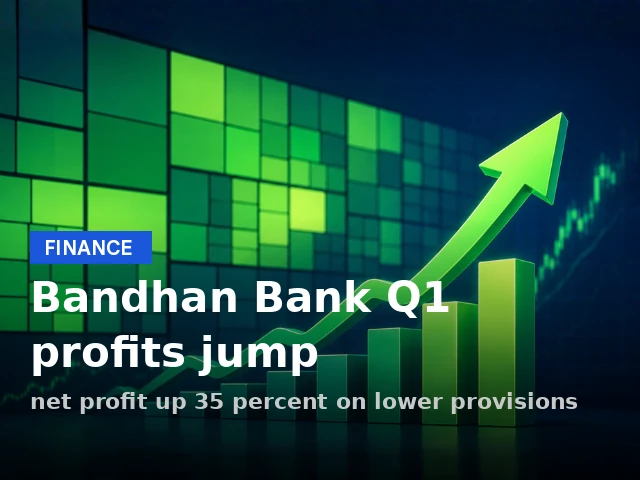
- Bandhan Bank results for Q1 show net profit up 34.9% YoY to Rs 502 crore.
- Net interest income rose 6% YoY to Rs 2,921 crore, with NIM at 6.2%.
- Asset quality improved: GNPA 3.15% and NNPA 0.93%.
- Provisioning declined to Rs 683 crore, enabling stable profitability.
Bandhan Bank results for the June quarter show a sharp profit expansion to Rs 502 crore, up 34.9% YoY from Rs 372 crore a year earlier, according to its regulatory filing. The bandhan bank results reflect cost discipline and improved asset quality. Net interest income (NII) rose 6% YoY to Rs 2,921 crore, while net interest margin (NIM) remained at 6.2% on a sequential basis, underscoring stable core profitability amid tightening credit conditions. Asset quality also improved as GNPA declined to 3.15% from 3.27% in the March quarter, and NNPA eased to 0.93% from 0.97%.
Bandhan Bank Results: Q1 FY26 Profit Jumps 34.9% On Lower Provisions
According to the bank's regulatory filing, the 34.9% YoY rise in profit was driven by lower credit costs. The bank set aside Rs 683 crore in the quarter, significantly lower than Rs 1,147 crore in the year-ago period, though broadly unchanged from Rs 677 crore in the preceding quarter.
| Metric | Value | Comment |
|---|---|---|
| Net Profit (YoY) | Rs 502 crore | Up 34.9% YoY |
| NII | Rs 2,921 crore | Up 6% YoY |
| NIM | 6.2% | Unchanged sequentially |
| GNPA | 3.15% | Down from 3.27% |
| NNPA | 0.93% | Down from 0.97% |
| Provisions | Rs 683 crore | Lower vs Rs 1,147 crore YoY; Rs 677 crore prior quarter |
| Interim CFO | Vinay Jain | Effective Sept 26 |
Analysts note that Bandhan Bank's earnings trajectory remains sensitive to credit costs, even as core profitability holds steady. The improved asset quality reduces the risk of future credit losses and supports sustainable earnings in the near term. Investors should monitor how loan growth, funding costs, and recoveries evolve in the coming quarters to gauge the durability of these gains.
For deeper stock insights, you can explore Swastika's Sarthi AI stock assistant, which offers institutional-grade research on stocks and indices to retail investors.
Frequently Asked Questions
What was Bandhan Bank's standalone net profit in Q1?
Bandhan Bank's standalone net profit rose to Rs 502 crore in the June quarter, up 34.9% from Rs 372 crore a year earlier, per its regulatory filing.
What were Bandhan Bank's net interest income and net interest margin in Q1?
Net interest income stood at Rs 2,921 crore, up 6% YoY, with net interest margin remaining at 6.2% on a sequential basis.
How did Bandhan Bank's asset quality change in Q1?
GNPA eased to 3.15% from 3.27% in the March quarter, and NNPA eased to 0.93% from 0.97%.
What was the provisioning level in Q1, and how does it compare to prior periods?
Provisioning was Rs 683 crore in the quarter, significantly lower than Rs 1,147 crore in the year-ago period and broadly in line with Rs 677 crore in the preceding quarter.
Who was appointed interim CFO at Bandhan Bank?
Vinay Jain was appointed as interim Chief Financial Officer, effective September 26.
Conclusion
Bandhan Bank results point to a healthier credit cost structure and improving asset quality, translating into a steadier earnings base for the quarter. For retail investors, the key takeaway is to watch the trajectory of provisioning and NII in upcoming quarters, as these drivers will determine whether Bandhan Bank can sustain its earnings momentum amid macro headwinds.
Next-step mental model: focus on the quality of growth versus the price of growth. Track NII growth, NIM stability, and any shifts in GNPA/NNPA trends in subsequent quarters, and consider using Swastika's Sarthi AI stock assistant to compare Bandhan Bank with peers and indices as new data arrives.
Open your trading and demat account here
Reference :
1 : Ndtvprofit
Latest Articles

Quantum Computing and Algo Trading: The Next Frontier


In the dynamic world of finance, quantum computing emerges as a disruptive force, promising unparalleled computational power and the ability to solve complex problems at speeds unimaginable with classical computers. As the financial industry seeks ways to gain a competitive edge, quantum computing presents itself as the next frontier in algorithmic trading.
Understanding Quantum Computing
Before delving into its implications for algo trading, it's essential to grasp the basics of quantum computing. Unlike classical computers that rely on bits (which can either be 0 or 1), quantum computers leverage quantum bits or qubits. Qubits can exist in multiple states simultaneously, thanks to the principles of superposition and entanglement. This unique property allows quantum computers to perform a vast number of calculations simultaneously, making them exponentially more powerful than classical computers for certain tasks.
Unleashing Unprecedented Power
Quantum computing's potential impact on algo trading lies in its ability to handle vast datasets and complex algorithms with lightning speed. Tasks that would take classical computers years to complete could be executed in a fraction of the time with quantum computers. This acceleration opens up new possibilities for algorithmic trading strategies, including high-frequency trading, risk management, and portfolio optimization.
Enhancing Algorithmic Strategies
Quantum computing's speed and processing capabilities enable traders to develop and execute more sophisticated trading strategies. Algo trading algorithms can analyze massive datasets in real-time, identifying patterns and correlations that were previously beyond reach. This enhanced analytical power empowers traders to make more informed decisions and capitalize on fleeting market opportunities with precision and agility.
Overcoming Computational Barriers
One of the primary challenges in algo trading is managing computational complexity. As trading strategies become increasingly sophisticated, traditional computing resources may struggle to keep pace. Quantum computing offers a solution to this barrier by dramatically accelerating the execution of complex algorithms. Tasks such as Monte Carlo simulations, optimization problems, and risk assessments can be performed with unprecedented efficiency, enabling traders to explore new frontiers in algorithmic trading.
Mitigating Risks and Uncertainties
While the potential benefits of quantum computing in algo trading are vast, it's essential to acknowledge the challenges and risks associated with this emerging technology. Quantum algorithms are still in the early stages of development, and practical implementation requires overcoming significant technical hurdles, such as qubit stability and error correction. Additionally, the security implications of quantum computing on encryption protocols and cybersecurity must be carefully considered.
Embracing the Future
Despite these challenges, the financial industry is already exploring the potential of quantum computing in algo trading. Major players are investing heavily in research and development to harness the power of quantum algorithms and integrate them into existing trading infrastructure. As quantum computing continues to mature, it holds the promise of revolutionizing the way financial markets operate, ushering in a new era of innovation and opportunity for algo traders.
In conclusion, quantum computing represents the next frontier in algo trading, offering unparalleled computational power and the potential to transform trading strategies and market dynamics. While challenges remain, the financial industry is poised to embrace this disruptive technology and unlock new possibilities for algorithmic trading in the years to come.

Algo Trading Platforms and the Internet of Things (IoT): Automating Trading Decisions
In the fast-paced world of financial markets, where milliseconds can make all the difference, the integration of Algo Trading Platforms with the Internet of Things (IoT) is revolutionizing how trading decisions are made. This dynamic convergence brings together the power of algorithmic trading strategies with the vast network of interconnected devices, paving the way for unparalleled automation and efficiency in trading.
The IoT Advantage in Algo Trading:
The IoT encompasses a vast ecosystem of interconnected devices embedded with sensors, software, and other technologies, all capable of collecting and exchanging data in real-time. By leveraging IoT devices, traders gain access to a wealth of diverse data sources, ranging from market feeds and economic indicators to weather forecasts and supply chain information. This abundance of data serves as invaluable input for algorithmic models, enabling traders to make more informed and timely decisions.
Seamless Data Integration:
One of the key benefits of integrating Algo Trading Platforms with IoT is the seamless integration of diverse data streams. IoT devices can capture data from various sources, including financial markets, social media sentiment, and even physical sensors monitoring factors such as temperature, traffic patterns, or consumer behavior. This multidimensional data provides traders with a comprehensive view of market dynamics, facilitating the development of more robust trading algorithms.
Real-Time Insights and Adaptive Strategies:
With IoT-enabled Algo Trading Platforms, traders can react swiftly to changing market conditions by receiving real-time insights and updates. For example, sensors deployed in supply chain networks can detect disruptions or delays, triggering automated trading responses to capitalize on emerging opportunities or mitigate risks. Moreover, IoT data can fuel adaptive trading strategies that dynamically adjust to evolving market trends, ensuring optimal performance in volatile environments.
Enhanced Risk Management:
Effective risk management is paramount in algorithmic trading, and IoT integration offers novel approaches to mitigate risks proactively. By monitoring IoT data streams for anomalies or unusual patterns, algorithms can trigger risk mitigation measures automatically, such as adjusting position sizes, hedging strategies, or executing stop-loss orders. This proactive risk management enhances portfolio resilience and safeguards against unforeseen market events.
Regulatory Considerations and Security:
While the convergence of Algo Trading Platforms and IoT presents tremendous opportunities, it also raises important regulatory and security considerations. Traders must navigate compliance requirements governing the use of IoT data, ensuring adherence to data privacy regulations and cybersecurity protocols. Implementing robust encryption, authentication mechanisms, and secure communication protocols is essential to safeguard sensitive trading data and prevent unauthorized access or manipulation.
Future Outlook:
As IoT technology continues to evolve and proliferate, the synergy between Algo Trading Platforms and IoT is poised to deepen further. Innovations such as edge computing, artificial intelligence, and blockchain are reshaping the landscape of automated trading, promising even greater efficiency, accuracy, and scalability. Moreover, the democratization of IoT devices and connectivity is democratizing access to data, empowering traders of all sizes to harness the power of automation in their investment strategies.

How to save your taxes with Mutual Funds
Are you looking to grow your money and save on taxes at the same time? ELSS funds might be a good fit for you!
What are ELSS Funds?
ELSS stands for Equity Linked Saving Scheme. In simpler terms, Think of ELSS as a special type of investment that puts your money into stocks (companies) with the goal of making it grow. But unlike regular stock investing, ELSS offers a tax benefit: you can reduce your taxable income by up to ₹1.5 lakh every year! There's a small catch though, you can't take your money out for 3 years (lock-in period).
Features of ELSS Mutual Funds
- Save on Taxes: You can reduce your taxable income by up to ₹1.5 lakh every year by investing in ELSS.
- Invest Small Amounts: Unlike some investments, you can start small with SIPs (Systematic Investment Plans). SIPs allow you to invest a fixed amount regularly, making it suitable even for those with a limited budget.
- Flexibility: You can choose how much to invest and how often.
- Lock-in Period: ELSS comes with a lock-in period of 3 years, which encourages a disciplined approach to investing and helps you stay invested for the long term when stock markets tend to perform better.
- Better Returns: ELSS invests in stocks, which have the potential to offer higher returns compared to traditional tax-saving options like PPF or NSC over time.
How Does ELSS Funds Work?
Imagine a pool of money from many investors like yourself. A manager invests this money in various companies. If these companies do well, the value of your investment goes up. You can't take your money out for 3 years, but after that you can redeem your investment (get your money back).
How Should You Invest in an ELSS Fund?
There are two main ways to invest in ELSS funds:
- Lump Sum Investment: Invest a larger amount of money in one go.
- Systematic Investment Plan (SIP): Invest a fixed amount regularly (monthly or quarterly) over a longer period.
For example, consider two investors, A and B, who invested ₹1 lakh each in ELSS Funds. Investor A opted for a lump sum investment, while investor B chose to invest through SIPs over a year. After three years, assuming both funds grew at an average rate of 12% per annum, here's how their investments would look:
Investor A (Lump Sum): Investment grows to approximately ₹1,44,000
Investor B (SIP): Investment grows to approximately ₹1,54,000
In this example, despite investing the same amount, Investor B benefited from rupee-cost averaging through SIPs and achieved higher returns.
Taxation Rules of ELSS Funds:
Tax on Investment:
Up to ₹1.5 lakh you invest in ELSS, can be deducted from your taxable income. This means you pay less tax overall. For example you earn ₹10 lakh and invest ₹1.5 lakh in ELSS. The government lets you deduct that ₹1.5 lakh from your taxable income. So, you only pay tax on ₹8.5 lakh (10 lakh - 1.5 lakh). This saves you money!
Tax on Earnings:
- When you redeem your ELSS investment (take your money out) after 3 years, any profit you make is considered a Long-Term Capital Gain (LTCG).
- The good news: LTCG from ELSS exceeding ₹1 lakh are taxed at a low rate of 10%.
- There's a tax benefit called indexation that usually reduces LTCG, but ELSS doesn't get that. However, the 10% rate is still good! In investing, indexation refers to adjusting something based on inflation.
Dividends and Taxes:
- Don't worry about taxes on any dividends (small pay-outs) you receive from ELSS funds.
- The mutual fund itself pays a tax on dividends before giving them to you, so you're tax-free!
Why Should You Invest in ELSS Tax Saving Mutual Funds?
- Dual Benefits: ELSS Funds offer the twin advantages of tax savings and wealth creation, making them a popular investment choice.
- Beat Inflation: With their exposure to equities, ELSS Funds have the potential to beat inflation and generate real returns over the long term.
- Flexibility: ELSS Funds offer flexibility in terms of investment amount and tenure, allowing investors to tailor their investments according to their financial goals and risk appetite.
Things to Consider Before Investing
- Risk Profile: ELSS involves investing in stocks, which can be risky. There's always a chance you could lose money.
- Investment Horizon: ELSS is a good option for long-term goals (ideally more than 3 years) to ride out market fluctuations and benefit from potential growth.
- Research: Do your research before choosing an ELSS fund. Consider factors like past performance, fund manager's experience, expense ratio, and investment philosophy.
Conclusion
ELSS Funds are a category of mutual funds that primarily invest in equity and equity-related instruments. They offer a winning combination of tax benefits, potential for high returns, and flexibility, making them an attractive investment option for tax-saving and wealth creation. However, remember to align your investment decisions with your financial goals and risk tolerance for best results.
.avif)
The Future of Online Commodity Trading: Emerging Trends and Technologies
In the ever-evolving landscape of financial markets, online commodity trading continues to undergo transformative changes. As technology advances and market dynamics shift, traders must adapt to stay ahead of the curve. In this article, we'll explore the exciting emerging trends and technologies shaping the future of online commodity trading.
Blockchain and Smart Contracts
One of the most promising developments in commodity trading is the integration of blockchain technology. Blockchain offers enhanced transparency, security, and efficiency in trade settlement processes. Smart contracts, powered by blockchain, automate contract execution, reducing the need for intermediaries and minimizing the risk of errors or disputes. This technology streamlines operations and fosters trust among traders, leading to smoother transactions and lower costs.
Artificial Intelligence and Machine Learning
AI and machine learning algorithms are revolutionizing trading strategies by analyzing vast amounts of data to identify patterns and predict market movements. These technologies enable traders to make data-driven decisions, optimize risk management, and capitalize on emerging opportunities with greater accuracy and speed. AI-powered trading systems can adapt to changing market conditions in real-time, providing a competitive edge in today's fast-paced commodity markets.
Quantitative Analytics
Quantitative analysis techniques, such as statistical modeling and algorithmic trading, are becoming increasingly prevalent in commodity trading. These methods leverage mathematical models and historical data to assess market trends, forecast price movements, and optimize trading strategies. Traders proficient in quantitative analytics can uncover hidden insights and exploit market inefficiencies, enhancing profitability and mitigating risks in online commodity trading.
Internet of Things (IoT) and Sensor Technology
IoT devices and sensor technology are revolutionizing supply chain management in commodity trading. By collecting real-time data on production, storage, and transportation processes, IoT devices provide valuable insights into supply and demand dynamics, inventory levels, and quality control measures. Traders can leverage this information to make informed decisions, optimize logistics, and respond swiftly to market fluctuations, gaining a competitive advantage in online commodity trading.
Renewable Energy and Sustainable Commodities
With growing environmental awareness and regulatory initiatives, sustainable commodities such as renewable energy sources, carbon credits, and responsibly sourced raw materials are gaining traction in commodity markets. Investors increasingly prioritize ethical and environmentally friendly investments, driving demand for sustainable commodities. Online traders can capitalize on this trend by diversifying their portfolios and tapping into emerging markets for eco-friendly commodities.
Decentralized Finance (DeFi) and Tokenization
The rise of decentralized finance (DeFi) platforms and tokenization has the potential to democratize access to commodity markets and unlock new investment opportunities. Through blockchain-based platforms, traders can tokenize physical commodities, enabling fractional ownership and peer-to-peer trading without intermediaries. DeFi protocols offer decentralized lending, borrowing, and trading services, empowering individuals to participate in commodity markets with greater flexibility and efficiency.
In conclusion, the future of commodity trading online is characterized by innovation, efficiency, and sustainability. By embracing emerging trends and technologies such as blockchain, AI, IoT, and sustainable investing, traders can navigate volatile markets, optimize their strategies, and seize opportunities for growth and diversification. As the industry continues to evolve, staying informed and adaptable will be key to success in the dynamic world of online commodity trading.
.avif)
Top 5 Features to Look for in an Online Trading Platform
The world of online trading is an exciting one, offering the potential for growth and financial independence. But with a plethora of platforms available, choosing the right one can feel overwhelming. Fear not, aspiring investor! This guide dives into the top 5 features you should prioritize when selecting your online trading platform.
1. User-Friendly Interface: Simplicity is Key
Imagine navigating a maze blindfolded. That's what a complex trading platform can feel like, especially for beginners. Look for a platform with a clean, intuitive interface that's easy to navigate. Here are some key aspects to consider:
- Clear Layout: Menus and buttons should be well-organized and easy to find.
- Visually Appealing Design: A clutter-free interface reduces information overload and keeps you focused.
- Customization Options: The ability to personalize your workspace with preferred features and layouts can enhance your experience.
2. Robust Research and Education Tools: Empowering Your Decisions
Knowledge is power in the trading world. expand more. A good platform should equip you with the resources you need to make informed investment decisions. Look for features like:
- Real-Time Market Data: Monitor stock prices, charts, and news feeds to stay on top of market movements.
- Financial Analysis Tools: Utilize fundamental and technical analysis tools to research potential investments.
- Educational Resources: Access articles, tutorials, and webinars on various trading topics, catering to all experience levels.
3. Diverse Investment Options: Building a Well-Rounded Portfolio
Diversification is a cornerstone of successful investing. Choose a platform that offers a wide range of assets to invest in, including:
- Stocks: Invest in individual companies or a variety of stocks through ETFs (Exchange-Traded Funds).
- Options: For experienced traders, options contracts can provide advanced strategies for managing risk and potentially increasing returns.
- Mutual Funds: Invest in a professionally managed mutual funds online for a more hands-off approach.
- Bonds: Consider bonds for a more stable, income-generating portion of your portfolio.
4. Reliable Execution and Competitive Fees: Every Penny Counts
When it's time to execute a trade, speed and reliability are crucial. Look for features like:
- Fast Order Execution: Ensure your orders are filled promptly to minimize the impact of market fluctuations.
- Transparent Fee Structure: Understand all associated costs, including commissions, account fees, and inactivity fees.
- Multiple Order Types: Utilize various order types like market orders, limit orders, and stop-loss orders to manage your entries and exits strategically.
5. Advanced Features for the Aspiring Pro: Growing with Your Goals
As your trading experience evolves, your platform should too. Look for features that cater to advanced traders, such as:
- Advanced Charting Tools: Analyze technical indicators and utilize drawing tools to identify potential trading opportunities.
- Level 2 Order Book: Gain insights into order flow and potential market depth.
- Paper Trading: Test your strategies without risking real capital before deploying them in the live market.
Bonus Tip: Consider Mobile Compatibility
In today's fast-paced world, the ability to monitor your stock trading and investment on the go is invaluable. Look for a platform with a user-friendly mobile app that offers core functionalities like placing orders, viewing account balances, and accessing real-time market data.
Conclusion
Selecting the right online trading platform is a crucial first step in your investment journey. By prioritizing features that cater to your experience level, investment goals, and preferred trading style, you can empower yourself to navigate the exciting world of online trading with confidence. Remember, don't hesitate to take advantage of demo accounts or free trials offered by many online trading platforms to test-drive their features before committing. With the right tools and knowledge at your disposal, you're well on your way to achieving your financial objectives!
.avif)
10 Common Mistakes to Avoid in Currency Trading
In the fast-paced world of currency trading, success often hinges on the ability to navigate the markets with skill and precision. However, even the most seasoned traders can fall prey to common pitfalls that hinder their profitability and success. By understanding and avoiding these mistakes, you can significantly improve your chances of thriving in the currency trading arena. Let's delve into the 10 most common mistakes to steer clear of:
Overleveraging
One of the gravest errors a trader can make is overleveraging their positions. While leverage can amplify gains, it also magnifies losses. It's crucial to use leverage judiciously and never risk more than you can afford to lose.
Ignoring Risk Management
Failing to implement proper risk management techniques is a recipe for disaster in currency trading. Traders should establish stop-loss orders, set realistic profit targets, and diversify their portfolios to mitigate risk effectively.
Trading Without a Plan
Trading without a well-defined strategy is akin to sailing without a compass. Every successful trader has a meticulously crafted trading plan that outlines entry and exit points, risk tolerance, and position sizing.
Emotional Trading
Allowing emotions to dictate trading decisions is a surefire way to incur losses. Fear, greed, and impatience can cloud judgment and lead to impulsive actions. It's essential to maintain discipline and stick to the trading plan, regardless of market fluctuations.
Chasing Losses
Attempting to recoup losses by increasing trade sizes or taking undue risks often exacerbates the situation. It's crucial to accept losses as part of the trading process and refrain from chasing the market in a desperate bid for redemption.
Overtrading
Trading excessively can exhaust both financial resources and mental energy. Quality over quantity should be the mantra, with traders focusing on high-probability setups rather than constantly seeking action in the markets.
Neglecting Fundamental Analysis
While technical analysis is valuable, neglecting fundamental analysis can leave traders blindsided by significant market-moving events. It's essential to stay abreast of economic indicators, geopolitical developments, and central bank policies that impact currency prices.
Lack of Patience
Success in currency trading requires patience and perseverance. Rushing into trades or expecting instant results is unrealistic and often leads to poor decision-making. Traders must cultivate patience and wait for optimal trading opportunities to present themselves.
Failing to Adapt
Markets are dynamic and ever-changing, requiring traders to adapt their strategies accordingly. Stubbornly clinging to a single approach without flexibility can result in missed opportunities and losses. Being adaptable and open-minded is key to long-term success.
Ignoring the Importance of Education
Continuous learning is essential for staying ahead in the competitive world of currency trading. Traders who neglect to educate themselves on market dynamics, trading strategies, and risk management principles are at a significant disadvantage.
In conclusion, avoiding these common mistakes is crucial for achieving success in forex trading online. By prioritizing risk management, adhering to a well-defined trading plan, and cultivating discipline and patience, traders can tilt the odds of success in their favor. Remember, trading is a marathon, not a sprint, and consistent, prudent decision-making is the key to long-term profitability.
Big Budget


Popular Articles




.avif)
.avif)

.avif)



START YOUR INVESTMENT JOURNEY
Get personalized advice from our experts
- Dedicated RM Support
- Smooth and Fast Trading App
