


Tax Amendment Bill: What It Means For Investors In India's Make In India Push


Key Takeaways
- The Tax Amendment Bill aims to simplify compliance and boost incentives for key sectors.
- Electronics manufacturing, data centres, and global fund management gain long-term tax certainty.
- Exemptions extend to 2041 for capital goods suppliers to Indian contract manufacturers.
- Diamond trade relief and fund-manager relaxations boost India's global competitiveness.
Tax Amendment Bill 2026 is not just a tax reform; it's a blueprint to attract global capital, simplify compliance, and strengthen India's manufacturing ecosystem. The Centre proposes long-term tax certainty and expanded incentives to electronics, data centers, investment funds, and even the diamond trade. For a retail investor, the ripple effects may show up in how companies allocate capital, how new manufacturing projects scale, and which stocks get priced for growth. So what exactly does the Tax Amendment Bill propose, and how should you think about it when you track Infosys stock price, TCS stock price, Wipro stock price, Larsen & Toubro stock price, HCL Tech stock price, and Tech Mahindra stock price?
Tax Amendment Bill: A Roadmap To A Simpler, More Certain Tax Environment
The central objective is clear: move India up as a global manufacturing, technology and financial hub by simplifying tax rules and providing long-term certainty. Investors should expect easier compliance, less ambiguity around eligibility, and a framework that supports capital-intensive projects. The bill aims to align the tax framework with broader economic priorities like Make in India, while ensuring that incentives are sustainable and transparent for the long run.
For a diversified portfolio, this policy signal matters. When corporate profitability improves through lower friction in tax compliance and extended reliefs, capital expenditure tends to rise. In practice, you might see management teams planning for capacity expansion, new plants, and expanded data centres or IT services capacity, which can translate into higher earnings visibility for eligible companies. If you follow stocks such as Infosys stock price or TCS stock price, you’ll see how investor sentiment shifts alongside clarity in policy expectations. The ultimate question is how this framework translates into real-world investment opportunities and risk management for individual retail investors.
Long-Term Incentives For Manufacturing: Exemptions Extended To 2041
A cornerstone of the package is a 10-year extension of the tax exemption for foreign companies supplying capital goods, machinery, equipment and tooling to Indian contract manufacturers. The extension runs until March 31, 2041, providing policy stability that multinational manufacturers can factor into long-cycle investment decisions. This is especially meaningful for sectors that rely on imported capital goods, where cost of capital and tax certainty influence plant location decisions. As an investor, you should watch how this policy encourages deeper manufacturing footprints by global players and how it may impact sector exposure in your portfolio.
The extended relief is expected to cushion the transition for manufacturers who partner with Indian contract manufacturers, creating a more predictable cost structure. You might observe a tilt toward domestic supply chains and more onshore production, which can support resilient revenue streams for beneficiaries like electronics and industrial firms. In practice, this translates into potential upside for stocks tied to domestic manufacturing ecosystems, including the likes of Larsen & Toubro stock or HCL Tech stock, whose earnings could be supported by stronger capital expenditure cycles.
Specified Electronic Goods And The Electronics Industry: Clarity Brings Certainty
The Bill introduces a comprehensive definition of specified electronic goods, removing ambiguity about which products qualify for tax benefits. The proposed scope covers smartphones, laptops, tablets, servers, ultra-small form factor servers, wearable devices, sub-assemblies and related accessories. For electronics manufacturers looking to invest in India, this clarity means tax incentives will be more reliably linked to concrete product lines, reducing policy risk and helping plan for capital expenditure. It also benefits contract manufacturers who supply to Indian contract manufacturers, as the supply chain becomes more predictable.
From an investor perspective, this definition matters when evaluating exposure to electronics-name stocks. If you monitor Infosys stock price or TCS stock price, you’ll see how demand for digital devices and IT-enabled services interacts with the supply chain and the tax regime in India. A stable tax framework can support margins for electronics players as they scale output and navigate global competition. The clarity also points to opportunities in modules like miniaturized components and sub-assemblies that feed into the final devices, potentially supporting specialized suppliers in the Indian ecosystem.


Data Centers And Cloud Services: A Liberalized Tax Framework For A Digital Era
The government proposes a more liberal tax framework for foreign companies procuring cloud and data centre services from India. The amendments eliminate the need for separate government notifications for eligible foreign companies and specified data centres, allow leased data centre facilities alongside owned infrastructure, and simplify compliance norms. In practice, this could accelerate data centre expansion in India and make it easier for cloud services to source capacity domestically. For a retail investor watching the space, it signals that Indian data centre operators and IT service players could enjoy improved margins and growth opportunities as demand for data storage and processing expands globally.
Consider how this feeds into stock ideas such as HCL Tech stock and Tech Mahindra stock. A friendlier tax environment for data centre and cloud services can translate into more outsourcing and managed services business, which is a key revenue driver for these names. It can also affect the stock prices of related players, including Infosys and TCS, as investors reassess growth trajectories in light of improved cost structures and investment horizons.
Bonded Warehouses And The Electronics Supply Chain: Exemption For Importers
Another important provision is the exemption for foreign companies from tax on income arising from storing electronic components in customs-bonded warehouses for supply to Indian contract manufacturers. The benefit applies where the components are used to manufacture specified electronic goods and prescribed reporting requirements are met. The exemption is available until March 31, 2041, providing a stable framework for the electronics supply chain and potentially reducing working capital costs for manufacturers and assemble-to-order players. This clause targets the reliability of supply chains, a critical factor for electronics companies that rely on component imports and just-in-time manufacturing systems.
For investors, this can translate into more resilient earnings and potentially more predictable capex cycles for electronics players. The sector has historically been sensitive to tariff and tax policy changes; the certainty introduced by this exemption could help justify higher valuations for companies deeply integrated with Indian contract manufacturing networks, including those connected to Wipro stock and Larsen & Toubro stock.
Diamond Trade, SNZ And Mumbai’s Global Position
To reinforce Mumbai’s position in the global rough diamond trade, the Bill proposes a tax exemption for foreign mining companies selling rough diamonds through the Special Notified Zone (SNZ) in Mumbai. The exemption will remain available until March 31, 2041, subject to compliance with prescribed conditions and reporting requirements. This provision recognizes Mumbai’s historical role in the diamond trade and aims to strengthen the city’s competitiveness on the world stage. While not a direct driver for many retail investors, the policy signals can help attract capital to India’s high-value commodity trade segments and related logistics and services providers.
Overseas Investment Funds And Fund Managers: Easing Rules For Global Fund Management
The Bill seeks to make India a more attractive destination for global fund management by reducing the eligibility conditions for qualifying investment funds from 13 to five. It also clarifies that fund management activities carried out in India by eligible managers will not create a taxable business connection, provided prescribed conditions are satisfied. Additional relaxations have also been proposed for fund managers operating from the International Financial Services Centre (IFSC). For investors, this could mean more cross-border investment management activity channelled through Indian managers, potentially improving liquidity and offering more investment options within Indian markets.
Impact On REITs, Business Trusts, And SPVs: Dividend Tax Exemption And A Surcharge
Another dimension of the proposed amendments concerns investors in business trusts. The proposals ensure that investors in business trusts continue to receive dividend income tax exemption even if the underlying SPV opts for the new corporate tax regime. To offset the revenue impact, the government has proposed an additional 15% surcharge on such SPVs. For retail investors, this matters because it preserves the tax efficiency of dividend-focused investment vehicles while acknowledging the dynamic tax choices of corporate structures used in the sector.
What This Means For Investors: Stocks To Watch And How To Position Your Portfolio
In aggregate, the Tax Amendment Bill outlines a policy backdrop that reinforces India’s attractiveness as a manufacturing and technology hub. For stock-pickers and long-term investors, the key takeaway is: look for companies that can capitalize on extended tax reliefs, stronger supply chains, and increased capital expenditure cycles. Stocks like Infosys stock price, TCS stock price, Wipro stock price, HCL Tech stock price, Tech Mahindra stock price, and Larsen & Toubro stock price could reflect these shifts as they expand digital services, cloud capacity, and manufacturing footprints in India. But the impact will not be uniform across sectors; watch for those with clear capital-light, high-margin opportunities tied to policy certainty and domestic demand growth.
For you, the retail investor, this is where strategic thinking matters. Use a framework that weighs tax certainty, sector exposure, and your risk tolerance. If you want deeper, stock-specific insight on how these policy shifts could impact individual names, Swastika offers a resource that compiles institutional-grade analysis and trade-off scenarios. You can explore Swastika's Sarthi AI stock assistant here: Swastika's Sarthi AI stock assistant.
Related Reads
- Infosys Share Price In Focus Amid IT Slump And RBI Watch
- Infosys Share Price Momentum: IT Slump, Bulls Find Green Lights Across Large-Cap And Mid-Cap
- Infosys Share Price And IT Sector Pulse: AI Bets, FPI Flows, And A Possible Rebound
Frequently Asked Questions
What is the Taxation and Other Laws (Amendment) Bill, 2026?
The Centre has proposed amendments to the Income-tax Act, 2025 through the Taxation and Other Laws (Amendment) Bill, 2026, aimed at simplifying tax rules, providing long-term tax certainty, and extending incentives for electronics manufacturing, data centres, investment funds, and the diamond trade.
Which sectors receive extended incentives under the Tax Amendment Bill?
The proposals extend incentives for electronics manufacturing, data centres, investment funds, and the diamond trade.
What is the biggest tax incentive proposed for manufacturers?
The Bill extends, by 10 years until March 31, 2041, the tax exemption available to foreign companies that supply capital goods, machinery, equipment, and tooling to Indian contract manufacturers.
How does the Bill affect data centres and cloud services?
The amendments propose a more liberal tax framework for foreign companies procuring cloud and data centre services from India, removing the need for separate notifications, allowing leased data centre facilities, and simplifying compliance.
What reforms affect overseas investment funds and fund managers?
The Bill reduces the eligibility conditions for qualifying investment funds from 13 to five and clarifies that fund management activities carried out in India by eligible managers will not create a taxable business connection, with additional relaxations for IFSC-based fund managers.
What relief is proposed for the diamond industry?
A tax exemption for foreign mining companies selling rough diamonds through the Special Notified Zone (SNZ) in Mumbai, available until March 31, 2041, subject to prescribed conditions and reporting.
Conclusion
The Tax Amendment Bill is a blueprint for a more predictable, investment-friendly tax regime that could nourish India’s manufacturing renaissance while offering clearer capital allocation signals for corporate India. Retail investors should watch how extended exemptions and simplified compliance reshape capital expenditure, margin structure, and earnings visibility in sectors like electronics and information technology services. The practical takeaway: align your portfolio with beneficiaries of longer-term policy certainty, and be mindful of sector-specific catalysts tied to the bill’s provisions.
Open your trading and demat account here
Reference :
1 : Ndtvprofit
Latest Articles
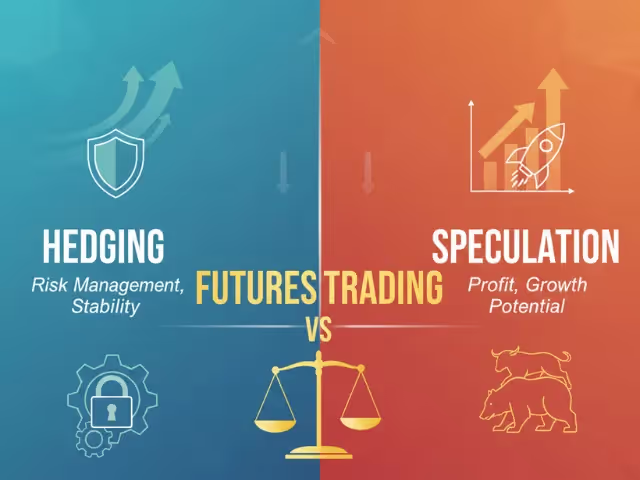
Futures Trading for Hedging vs Speculation: Best Approaches in 2025


Key Takeaways
- Hedging in futures protects investments by reducing price risk.
- Speculation seeks profit by taking market risks through futures contracts.
- Both approaches are critical for market liquidity and price discovery.
- Beginners should align their futures trading approach with their risk tolerance.
- 2025 trends favor combining technology, research, and compliance for success.
Overview
Futures trading in 2025 continues to be a vital tool for both hedgers and speculators in India’s dynamic financial markets. While both approaches revolve around trading futures contracts, their core objectives differ fundamentally. Understanding the distinctions, benefits, and best practices for hedging and speculation can empower investors and businesses to effectively achieve their financial goals.
What is Hedging in Futures Trading?
Hedging is a strategy primarily used for risk reduction. It allows businesses, institutional investors, and individual traders to protect themselves against unfavorable price fluctuations in commodities or securities by locking in prices through futures contracts. For example, an airline company might use futures contracts to hedge against rising fuel costs, or agricultural producers may sell futures to secure stable income despite volatile crop prices.
The main goal of hedging is to create price stability and protect existing investments or business operations, sometimes at the expense of limiting profit potential during favorable market movements.
What is Speculation in Futures Trading?
Speculation, on the other hand, is the pursuit of profit by taking on market risk through futures contracts. Speculators do not typically own the underlying assets but instead seek to capitalize on price volatility by strategically buying or selling futures contracts based on market predictions. This approach increases market liquidity and ensures efficient price discovery, even though it involves higher potential gains and losses.
Speculation requires a thorough understanding of market dynamics, discipline, and risk management to avoid undue losses, especially in high-volatility environments.
Key Differences: Hedging vs Speculation
Popular Futures Trading Strategies in 2025
- Trend Following: Traders use technical indicators like moving averages to follow market direction, buying futures in uptrends and selling in downtrends.
- Spread Trading: Exploiting price differentials between related futures contracts, such as between crude oil and natural gas.
- Breakout Trading: Entering trades when prices break key support or resistance levels, capturing strong momentum moves.
- Pullback Trading: Waiting for temporary reversals in a trend to enter at favorable levels.
- Hedging with Futures: Safeguarding investments against adverse price movements by offsetting positions using futures contracts.
Role of Regulation and Market Safety in India
Indian futures markets operate under strict SEBI regulations that ensure transparency, investor protection, and operational integrity. Exchanges and depositories like NSE, NSDL, and CDSL enforce compliance, making futures trading secure and accessible to retail investors. Well-regulated brokers such as Zerodha, Angel One, Groww, Upstox, and ICICI Direct provide robust platforms for executing hedging and speculative strategies with confidence.
Swastika Investmart’s Position in Futures Trading
Swastika Investmart stands out for its customer-centric approach backed by decades of trust. Their research-driven advisory supports both hedgers and speculators with comprehensive insights catered to Indian markets. With a strong SEBI-compliant setup and advanced technology infrastructure, Swastika enables smooth onboarding and user-friendly futures trading experiences powered by regional support and expert guidance.
Best Practices for Futures Trading in 2025
- Align Strategy with Objectives: Choose hedging if risk reduction and price stability are priorities; select speculation if capitalizing on volatility is preferred.
- Understand Market Dynamics: Follow macroeconomic trends, geopolitical developments, and technical indicators that influence futures pricing.
- Leverage Technology: Utilize broker-provided trading tools, mobile apps, and real-time data to stay updated on market movements.
- Risk Management: Apply stop-loss orders, position sizing, and diversification to protect capital.
- Continuous Learning: Engage with expert resources, training, and communities to refine futures trading skills.
Frequently Asked Questions
Q1. Can beginners use futures trading for both hedging and speculation?
Yes, but beginners should start with hedging or simple directional trades aligned with their risk tolerance and gradually explore complex speculative strategies.
Q2. How does SEBI ensure safety in futures trading?
SEBI regulates futures exchanges, ensuring compliance with risk management, investor protection, and transparent settlement processes.
Q3. What is the difference between futures and options for hedging?
Futures obligate contract fulfillment at expiration, while options provide the right, not obligation, to buy or sell. Both can be used for hedging with different risk profiles.
Q4. How do speculators benefit the futures market?
Speculators enhance liquidity, enable efficient price discovery, and facilitate smoother trade executions for hedgers.
Q5. Where can I learn futures trading strategies suited for the Indian market?
Platforms like Swastika Investmart offer research, educational content, and advisory services tailored to Indian futures markets.
Conclusion
Futures trading in 2025 offers two powerful pathways: hedging to safeguard investments and speculation to tap market potential. Both approaches complement each other, creating an efficient and liquid market. Indian investors can leverage advanced strategies and technology, supported by SEBI compliant brokers like Swastika Investmart, to navigate futures trading effectively. Finding the right balance between risk and reward tailored to individual goals will be key to success in the evolving futures landscape.
👉 Ready to explore futures trading?
Open an account with Swastika Investmart today!
Top Performing Commodity Stocks and ETFs in India: Trends, Leaders & Smart Investing
Key Takeaways
- Explore the best-performing commodity stocks and ETFs in India for 2025
- Learn about critical factors affecting commodity investments
- Understand the role of SEBI and compliance in safeguarding investors
- See how leading brokers and Swastika Investmart enable easy, secure investments
- Get practical insights for beginners navigating commodity trading
Overview
India’s commodity market has witnessed a dynamic shift, with commodity stocks and ETFs gaining remarkable traction among modern investors. As 2025 unfolds, many are seeking exposure to commodities—like gold, energy, and agri-goods—not just for returns, but as a diversification strategy. In this guide, we’ll spotlight current top performers, explore the factors behind their growth, and reveal how Indian investors can harness these opportunities for a future-ready portfolio.
Commodity investing has evolved with the support of robust trading platforms, regulatory frameworks, and growing awareness, making it accessible even to beginners. Let’s dive in!
Top Performing Commodity Stocks in India (2025)
Important: Returns and leaderboard may change as global commodity markets remain volatile; regularly track via your trading platforms.
Leading Commodity ETFs in India (2025)
Why Commodity Stocks & ETFs Are Gaining in 2025
India’s commodities market has seen heightened activity due to global supply chain changes, inflationary pressures, and swings in energy prices. Investors are increasingly turning to commodities to hedge against inflation and to add a non-correlated asset to their equity-heavy portfolios.
Smart investing platforms like Zerodha, Groww, Upstox, Angel One, and ICICI Direct offer seamless access to these asset classes through mobile apps, web platforms, and modern interfaces that facilitate both learning and execution.
Key Points for Beginners:
- Commodity investing requires a demat account, compliant with SEBI and connected to NSDL/CDSL for safety and transparency.
- Brokers must follow SEBI’s strict guidelines, ensuring that client funds and assets have robust investor protection measures.
The Role of SEBI, NSDL, and Investor Protection
The Securities and Exchange Board of India (SEBI) is the primary regulator ensuring commodity trading is fair, transparent, and secure. All exchanges and depositories (NSDL, CDSL) are bound by SEBI’s compliance mandates. This means every trade is backed by clear records, investor grievance redressal, and minimum risk of operational fraud.
New investors typically start by:
- Signing up with a SEBI-registered broker online
- Completing KYC and linking a demat account
- Exploring top-performing commodity stocks and ETFs via research reports and market dashboards
How Brokers Enable Access and Safety
Well-known trading platforms like Zerodha, Upstox, and Angel One champion technology-driven onboarding, user-friendly dashboards, and frequent digital updates to help clients stay ahead.
Swastika Investmart stands out for its:
- Decades-long reputation in customer trust across India
- Advanced research desk producing actionable insights on commodities
- Seamless onboarding with vernacular options for regional support
- SEBI-compliant processes and top-tier advisory services
- Cutting-edge technology stack, mobile investing, and proactive customer support
Ready to begin your journey?
👉 Open a Commodity Investment Account with Swastika Investmart
Experience robust security, expert guidance, and an easy-to-navigate trading experience.
Key Scenarios for Beginners
Imagine a 26-year-old in Indore, beginning with Rs. 5,000 in a gold ETF, guided by Swastika’s research team. Within months, their portfolio grows not just in value but in diversity—by adding metal stocks and agri-commodity ETFs. With SEBI’s regulatory protection and the transparency of NSDL/CDSL, small investors build habits for long-term wealth creation.
Frequently Asked Questions
Q1. How do I start investing in commodity stocks in India?
Open a demat account with a SEBI-registered broker like Swastika Investmart, complete KYC, and use your trading platform to buy shares of listed commodity companies.
Q2. Are commodity ETFs safe for beginners?
Yes, SEBI mandates transparency and safety for all ETFs. These funds are backed by physical commodities or well-structured indices, minimizing counterparty risks.
Q3. Can I invest in commodities using mobile apps?
Absolutely! Leading brokers like Swastika Investmart, Zerodha, and Upstox provide seamless mobile investing, real-time research, and simple onboarding.
Q4. What is the difference between commodity stocks and ETFs?
Commodity stocks refer to shares of companies operating in commodity spaces (e.g., metals, oil); ETFs pool investor money to track underlying commodity assets.
Q5. How do SEBI and NSDL/CDSL protect my investments?SEBI enforces strict compliance and investor protection, while NSDL/CDSL ensure safe demat holdings, digital records, and clear settlement processes.
Conclusion
2025 is an exciting year for commodity investing in India. With top-performing stocks and ETFs leading the way, investors can confidently diversify their portfolios. Support from SEBI regulations, technology-driven brokers, and research-focused partners like Swastika Investmart ensure that every step—from onboarding to trading to monitoring—is safe, user-friendly, and future-focused 😊.
Start your journey now:

Demat Account Hacked in 2025? Complete Security Guide and Recovery Roadmap
Key Takeaways
- Over 15% increase in demat account security breaches reported in 2024, making cybersecurity crucial.
- Immediate actions include changing passwords, contacting your broker, and freezing suspicious transactions.
- Two-factor authentication and regular monitoring can prevent 90% of unauthorized access attempts.
- SEBI guidelines mandate brokers to compensate investors for proven security lapses within specific timeframes.
- Recovery typically takes 7-15 days with proper documentation and swift action from account holders.
Overview
The digital transformation of India's stock market has brought unprecedented convenience to investors, but it has also opened new avenues for cybercriminals. With over 12 crore demat accounts active in India as of 2024, the threat landscape has evolved significantly, making demat account security a top priority for every investor.
Recent reports from cybersecurity firms indicate a 15% surge in financial account breaches targeting retail investors, with demat accounts becoming prime targets due to their direct link to investment portfolios and bank accounts. Understanding how to protect your investments and respond to security breaches has become as important as making sound investment decisions.
Understanding Modern Demat Account Security Threats
Evolving Cyber Attack Methods
Today's cybercriminals employ sophisticated techniques that go beyond traditional password cracking. SIM swapping attacks have become particularly concerning, where fraudsters convince mobile operators to transfer your phone number to their device, bypassing SMS-based two-factor authentication.
Phishing attacks have also evolved to create near-perfect replicas of popular trading platforms. Fake websites mimicking leading brokers are designed to capture login credentials from unsuspecting users. These sites often appear in search results or arrive through SMS links claiming urgent account actions are needed.
Social Engineering and Data Breaches
Social engineering attacks targeting demat account holders have become increasingly sophisticated. Fraudsters often gather information from social media profiles, professional networks, and public databases to create convincing scenarios that prompt users to share sensitive information.
Third-party data breaches pose another risk, where your information might be compromised through services you've used for KYC verification, loan applications, or other financial services. This stolen data is then used to target your investment accounts through personalized attacks that appear legitimate.
Essential Security Measures for 2025
Multi-Layer Authentication Setup
Implementing robust authentication goes beyond simple passwords. Modern demat account protection requires a multi-layered approach that includes biometric authentication, hardware tokens, and app-based authenticators rather than SMS-based systems.
Leading brokers now offer advanced authentication options including fingerprint and face recognition for mobile apps. These biometric methods provide significantly better security than traditional password combinations and are much harder for fraudsters to replicate.
Consider using dedicated authentication apps like Google Authenticator or Microsoft Authenticator instead of SMS-based OTP systems. These apps generate time-based codes that don't rely on mobile network vulnerabilities, providing superior protection against SIM swapping attacks.
Regular Security Audits and Monitoring
Establishing a routine security review process helps identify potential vulnerabilities before they become serious problems. This includes regularly reviewing login history, checking for unusual trading activity, and monitoring linked bank account transactions.
Set up alerts for all account activities including logins from new devices, trade executions, fund transfers, and profile changes. Most modern trading platforms allow granular notification settings that can alert you to suspicious activities in real-time.
Swastika Investmart has been vigilant in security monitoring systems that track unusual patterns and alert both the platform and users about potential security concerns. Their comprehensive approach to client security includes regular security audits and proactive threat monitoring.
Device and Network Security
Using dedicated devices or browsers for trading activities adds an extra layer of protection. Consider setting up a separate user account on your computer specifically for investment activities, with restricted permissions and enhanced security settings.
Avoid using public Wi-Fi networks for accessing your demat account, even with VPN protection. Public networks present numerous vulnerabilities that sophisticated attackers can exploit to intercept your data or inject malicious content.
Keep all your devices updated with the latest security patches and use reputable antivirus software with real-time protection. Mobile devices should have screen locks enabled and apps should be downloaded only from official app stores.
Identifying Signs of Account Compromise
Unusual Account Activities
The first indication of a compromised account often comes through unexpected notifications or activities. Unauthorized trades appearing in your portfolio, mysterious fund transfers, or changes to your personal information are clear red flags requiring immediate attention.
Login notifications from unfamiliar locations or devices should trigger immediate security reviews. Most trading platforms now provide detailed login logs showing IP addresses, device information, and access times that can help identify unauthorized access.
Missing transaction confirmations via email or SMS might indicate that contact information has been changed to redirect communications. Fraudsters often modify email addresses and phone numbers to prevent victims from receiving security alerts.
Communication Red Flags
Receiving calls or messages claiming to be from your broker asking for sensitive information should raise immediate suspicion. Legitimate brokers never ask for passwords, PINs, or OTP codes through unsolicited communications.
Unexpected emails about account verification, urgent security updates, or mandatory compliance actions often signal phishing attempts. These messages typically create artificial urgency to prompt hasty decisions without proper verification.
Be particularly wary of communications requesting remote access to your devices or asking you to download software for "security updates." These are common tactics used to install malware or gain unauthorized system access.
Step-by-Step Recovery Process
Immediate Response Actions
The first few hours after discovering a security breach are crucial for minimizing damage and beginning the recovery process. Quick action can often prevent further unauthorized access and preserve evidence needed for investigation and potential compensation claims.
Immediately change your demat account password and any linked bank account passwords. If you suspect your email has been compromised, secure that account first as it's often used for password resets across multiple services.
Contact your broker's customer support immediately through verified phone numbers or secure channels. Avoid using email or chat systems that might have been compromised. Request immediate account freezing to prevent further unauthorized transactions.
Document everything related to the incident including screenshots of unauthorized transactions, suspicious emails, unusual login alerts, and any communication with fraudsters. This documentation will be crucial for recovery claims and potential legal proceedings.
Working with Your Broker and Authorities
SEBI regulations require brokers to have robust incident response procedures for security breaches. Understanding your rights and the broker's obligations can significantly impact the recovery process and potential compensation.
Most established brokers including ICICI Direct, Upstox, and others have dedicated security teams that can investigate breaches and work with cybercrime units. Provide them with all available evidence and maintain regular communication throughout the investigation.
File a cybercrime complaint with local police and the National Cyber Crime Reporting Portal. These official reports strengthen your case for compensation and help authorities track cybercriminal networks targeting investors.
Documentation and Evidence Preservation
Maintaining detailed records of the incident and recovery process is essential for successful resolution. Create a timeline of events, preserve all communications, and keep copies of official complaints and responses.
Take screenshots of your account before making any changes to preserve evidence of unauthorized activities. Many victims inadvertently destroy evidence by immediately "fixing" problems without proper documentation.
Work closely with your broker's investigation team and provide requested information promptly. The more comprehensive your documentation, the faster the investigation and potential recovery process.
SEBI Guidelines and Investor Protection
Regulatory Framework for Security Breaches
SEBI has established comprehensive guidelines requiring brokers to implement robust cybersecurity measures and compensate investors for proven security lapses. These regulations provide significant protection for retail investors against various types of cyber fraud.
Under current SEBI guidelines, brokers must investigate reported security breaches within specific timeframes and provide interim relief to affected investors. The regulatory framework also requires brokers to maintain cyber insurance and security audits.
Investors have the right to approach SEBI directly if brokers don't respond adequately to security breach complaints. The regulator takes cybersecurity violations seriously and has imposed penalties on brokers failing to meet security standards.
Compensation and Recovery Rights
SEBI regulations mandate that brokers compensate investors for losses due to proven security lapses in their systems. However, investors must demonstrate that they followed reasonable security practices and weren't negligent in protecting their account credentials.
The compensation process typically involves investigation by the broker, review of security protocols, and assessment of investor behavior leading to the breach. Documentation quality significantly impacts compensation decisions and timelines.
Recent SEBI circulars have strengthened investor protection measures, requiring brokers to implement additional security layers and provide clearer disclosure about security risks and investor responsibilities.
Ready to secure your investments with advanced protection?
Open your secure demat account with Swastika Investmart today:
📱 iOS App
FAQs
1. How quickly should I act if I suspect my demat account has been hacked?
Act immediately within the first few hours of discovering suspicious activity. Change passwords, contact your broker, and freeze the account to prevent further damage. Quick response can significantly reduce losses and improve recovery chances.
2. Will I get compensation if my demat account is hacked due to broker security failures?
Yes, SEBI guidelines require brokers to compensate investors for losses due to proven security lapses in their systems. However, you must demonstrate that you followed reasonable security practices and weren't negligent with your credentials.
3. Can I prevent SIM swapping attacks that bypass SMS-based authentication?
Use app-based authenticators instead of SMS for two-factor authentication. Also, contact your mobile operator to add extra security verification for SIM changes and regularly monitor your mobile account for unauthorized modifications.
4. What should I do if I've shared my demat account details with a fraudster?
Immediately change all passwords, contact your broker to freeze the account, file a cybercrime complaint, and monitor all linked bank accounts for unauthorized transactions. Document all interactions with the fraudster for investigation purposes.
5. How can I verify if a communication claiming to be from my broker is legitimate?
Always verify through official channels by calling the broker's verified customer service number or logging into your account through the official website. Legitimate brokers never ask for sensitive information through unsolicited calls or emails.
Conclusion
Protecting your demat account from cyber threats requires a proactive approach combining robust technical measures with smart behavioral practices. As cybercriminals continue to evolve their tactics, staying informed about current threats and maintaining strong security habits becomes increasingly important for every investor.
The good news is that with proper security measures and quick response to any suspicious activity, you can significantly reduce the risk of account compromise and minimize potential losses. SEBI's strengthened regulations provide additional protection, but the first line of defense always remains your own security awareness and practices.
Remember that investing in cybersecurity is just as important as diversifying your investment portfolio. By following the comprehensive security guidelines outlined in this guide and staying vigilant about emerging threats, you can enjoy the benefits of digital investing while keeping your hard-earned money safe from cybercriminals. Your financial security is worth the extra effort!

September 2025 IPO Alert: Glottis, Fabtech, Om Freight & Advance Agrolife – Which One Should You Pick?
Key Takeaways
- September 2025 sees multiple IPOs including Glottis, Fabtech Technologies, Om Freight, and Advance Agrolife Limited.
- Glottis is in multi-modal logistics; valuation looks aggressive, suitable for high-risk investors.
- Fabtech Technologies provides turnkey engineering solutions in pharma & biotech; fully priced, consider cautiously.
- Om Freight operates in 3PL logistics but faces high competition and inconsistency; better to skip.
- Advance Agrolife in agrochemicals has reasonable pricing; minor allocation for aggressive investors seeking listing gains.
Overview of September 2025 IPOs
The Indian stock market is gearing up for a busy week as four notable IPOs are set to hit the market: Glottis, Fabtech Technologies, Om Freight, and Advance Agrolife Limited. Investors often face the dilemma of choosing which IPO to participate in, balancing potential gains with associated risks. Each of these companies represents a distinct sector, and understanding their business models, financials, and market positioning is crucial before making investment decisions.
Glottis: Multi-Modal Logistics Leader
Glottis operates in the multi-modal logistics and freight forwarding sector, offering ocean, air, road, and customs-related services. The company has a strong presence in ocean freight, which exposes it to global trade volatility and shipping rate fluctuations. While this sector has growth potential, the IPO is priced aggressively. Investors looking for short-term listing gains or willing to accept high risk may consider a small allocation.
For example, in the past, logistics-focused IPOs like Container Corporation of India (Concor) saw significant listing gains due to rising trade volumes, but market conditions played a critical role in their performance. Regulatory oversight by the Ministry of Shipping and adherence to SEBI’s IPO guidelines ensure transparency, but global macroeconomic factors remain a key risk.
Fabtech Technologies: Turnkey Engineering Solutions
Fabtech Technologies provides end-to-end engineering solutions for pharma, biotech, and healthcare sectors. Its services include design, implementation, and support, offered under one roof to domestic and international clients. The company has shown steady revenue and profit growth in recent periods. However, the IPO appears fully priced, limiting the margin for immediate gains. High-risk investors might consider a small participation, but cautious investors may prefer to wait for post-listing performance.
Historically, engineering service IPOs tied to pharma have performed well during periods of strong healthcare demand, but valuation remains a critical factor. SEBI regulations on disclosures and risk factors in IPO documents ensure investors are informed about potential downsides.
IPO DateSeptember 29, 2025 to October 1, 2025
Face Value₹10 per share
Issue Price Band₹181 to ₹191 per share
Lot Size75 Shares
Sale TypeFresh Capital
Total Issue Size1,20,60,000 shares (aggregating up to ₹230.35 Cr)
Om Freight: 3PL Integrated Logistics
Om Freight operates in 3PL integrated logistics, catering to both domestic and international clients. While the sector offers long-term growth opportunities, the company has shown inconsistent financial performance and operates in a highly competitive, fragmented market. The IPO is aggressively priced, making it a high-risk and potentially low-return investment, and skipping it may be a prudent choice for conservative investors.
For context, fragmented logistics companies often face pricing pressure and margin volatility, as seen in several mid-cap IPOs over the past two years. Government initiatives like the Logistics Efficiency Enhancement Program aim to support sector growth, but individual company performance varies significantly.
IPO Open Date: September 29, 2025
IPO Close Date: October 3, 2025
Issue Price Band: ₹128 to ₹135 per share
Face Value: ₹10 per share
Lot Size: 111 Shares
Total Issue Size: ₹122.31 Cr
Sale Type: Fresh Issue + Offer for Sale (OFS)
Tentative Listing Date: October 8, 2025
Listing On: BSE and NSE
Advance Agrolife Limited: Agrochemical Manufacturer
Advance Agrolife manufactures a wide range of agrochemical products, serving a sector with consistent demand due to agriculture dependency in India. Compared to its peers, including PI Industries, UPL, and Rallis India, the IPO valuation seems reasonable. However, market share expansion may be challenging due to strong competition. Aggressive investors seeking minor listing gains can consider a small allocation.
India’s agrochemical sector is influenced by monsoon patterns, government subsidies, and regulatory approvals under the Insecticides Act, 1968, making operational efficiency and compliance critical for sustained growth.
IPO Open Date: September 30, 2025
IPO Close Date: October 3, 2025
Issue Price Band: ₹95 to ₹100 per share
Face Value: ₹10 per share
Lot Size: 150 Shares
Total Issue Size: ₹192.86 Cr
Sale Type: Fresh Capital Only
Tentative Listing Date: October 8, 2025
Listing On: BSE and NSE
Investment Strategy & Market Insights
Choosing the right IPO requires aligning with your risk appetite, investment horizon, and portfolio diversification strategy. High-risk investors may explore Glottis or minor allocation in Advance Agrolife, while cautious investors may prefer to wait and observe post-listing performance. Understanding SEBI disclosures, sector trends, and historical IPO performances provides an edge in decision-making.
Swastika Investmart Advantage
When participating in IPOs, platforms like Swastika Investmart can enhance your experience. SEBI-registered and tech-enabled, Swastika Investmart offers:
- Real-time research and expert insights
- Robust customer support for investors
- Advanced tools for tracking and applying to IPOs
- Investor education resources to make informed decisions
Open an account now and access these features: Open Account with Swastika Investmart
Frequently Asked Questions (FAQ)
Q1. Which IPO among these four is considered safest?
Advance Agrolife appears reasonably priced compared to peers and may be suitable for conservative allocation, whereas others are more aggressive or risky.
Q2. Can small investors apply to multiple IPOs simultaneously?
Yes, investors can apply to multiple IPOs, but it’s important to allocate funds based on risk tolerance and investment strategy.
Q3. Are these IPOs suitable for short-term listing gains?
Glottis and possibly Advance Agrolife could offer short-term listing gains, but market conditions and IPO pricing will heavily influence outcomes.
Q4. What regulatory guidelines govern these IPOs?
All IPOs are regulated by SEBI, with disclosures on financials, risk factors, and company operations mandatory under SEBI (ICDR) Regulations, 2018.
Conclusion
September 2025 offers diverse IPO opportunities across logistics, engineering, and agrochemical sectors. While high-risk investors may explore Glottis or small allocation in Advance Agrolife, cautious investors should weigh valuations and sector dynamics carefully. Platforms like Swastika Investmart simplify IPO participation with research-backed insights, investor education, and seamless application processes.
Start exploring IPO opportunities today with Swastika Investmart: Open Account
.avif)
Back-to-Back IPOs! Trualt Bioenergy & Jinkushal Industries – Which One Should You Pick?
Quick Takeaways
- Two Mainboard IPOs—Trualt Bioenergy and Jinkushal Industries—are opening back-to-back.
- Trualt is among India’s leading ethanol producers with a focus on renewable fuels.
- Jinkushal operates in trading and distribution of stainless steel products.
- Investors should weigh sector growth, financial performance, and valuations.
- Research-backed platforms like Swastika Investmart can help simplify IPO investing.
Introduction
The Indian IPO market has been buzzing with activity in 2025, and now investors are looking at two back-to-back SME offerings: Trualt Bioenergy Limited and Jinkushal Industries Limited. Both companies come from very different sectors—renewable fuels and steel trading—yet they are competing for the same pool of retail investors.
So, which one deserves your attention? Let’s break down the details, compare their fundamentals, and evaluate the outlook.
Trualt Bioenergy IPO – Riding the Ethanol Wave
Trualt Bioenergy Limited, incorporated in 2021, is engaged in the production of ethanol and other biofuels. With India’s strong push for ethanol blending (20% by 2025 target under the National Biofuel Policy), companies like Trualt are positioned to benefit significantly.
- Installed Capacity: 2,000 kilo litres of ethanol production annually.
- Business Strengths: Focus on clean energy, reducing crude oil dependency, and tapping into government incentives.
- Growth Drivers: Rising demand for ethanol from oil marketing companies, government subsidies, and India’s commitment to net-zero by 2070.
Example: In 2024, India achieved 12% ethanol blending, up from just 1.5% in 2014. Companies like Trualt are key players in accelerating this growth.
Risks to Note
- Highly regulated sector; changes in policy may impact profitability.
- Dependent on raw materials like sugarcane and maize, which are prone to price volatility.
Outlook & Valuation
- The company operates in the biofuel sector, with a strong focus on ethanol and a diversified product portfolio.
- It is pursuing multiple expansion and diversification initiatives that could be game-changers.
- While it delivered strong results in FY25, it experienced a decline in FY24.
- Considering recent financials, the IPO seems aggressively priced, overlooking some short-term positives.
- Aggressive Investors may consider allocating funds for the listing gains and long term.
Jinkushal Industries IPO – Steel Trading in a Growing Economy
Jinkushal Industries Limited is primarily engaged in trading and distribution of stainless steel products, catering to industries like construction, infrastructure, and manufacturing.
- Business Model: Acts as a supply-chain partner for businesses requiring stainless steel sheets, coils, and plates.
- Market Outlook: With infrastructure spending increasing in India (₹11.11 lakh crore allocation in Union Budget 2025), steel demand is expected to remain strong.
- Strengths: Established supplier relationships and growing distribution network.
Example: The Indian stainless steel market is projected to grow at a CAGR of 6–7% in the next five years, driven by urbanization and housing projects.
Risks to Note
- Thin operating margins typical of trading businesses.
- Exposure to steel price fluctuations and global commodity cycles.
Outlook & Valuation
- The company is engaged in export trading of new/customized/used/refurbished construction machines in global markets.
- The company enjoys niche place in this segment as a preferred partner.
- Based on its recent financial data, the issue appears fully priced.
- Aggressive investors may apply for minor lisitng gains and may go for long term also.
Comparing the Two IPOs
FactorTrualt BioenergyJinkushal IndustriesSectorRenewable Energy (Ethanol)Steel TradingGrowth DriverGovt. push for ethanol blendingInfra & housing demandRiskRegulatory changes, raw material pricesCommodity price volatilityLong-term OutlookAligned with sustainability goalsDependent on cyclical steel market
Investor Perspective:
- If you prefer sustainable, government-backed sectors, Trualt Bioenergy looks promising.
- If you believe in India’s infrastructure boom, Jinkushal may be worth considering.
Impact on the Indian Market
While these SME IPOs may not shift large-cap market trends, they reflect two important themes shaping India’s economy:
- Energy Transition – India reducing oil imports through ethanol adoption.
- Infrastructure Push – Steel demand rising with mega housing and infra projects.
Both companies symbolize opportunities for retail investors to participate in sectors directly linked to India’s growth story.
How to Approach These IPOs as an Investor
Before applying, investors should evaluate:
- Company’s financial performance (revenue, profitability, debt levels).
- Valuation compared to listed peers.
- Use of IPO proceeds.
- Personal risk appetite (cyclical vs policy-driven businesses).
Platforms like Swastika Investmart offer SEBI-registered advisory, detailed IPO analysis, and easy online application tools. Their research-backed insights and investor education initiatives can help you take informed decisions rather than chasing market hype.
👉 Open your Swastika Investmart Account here
FAQs
Q1: Which IPO is safer—Trualt Bioenergy or Jinkushal Industries?
Both carry risks. Trualt is exposed to regulatory policies, while Jinkushal depends on volatile steel prices. Safety depends on your investment horizon.
Q2: Are SME IPOs riskier than mainboard IPOs?
Yes. SME IPOs often have smaller balance sheets, lower liquidity, and higher volatility, though they can deliver strong returns if the business scales.
Q3: Can I apply for both IPOs simultaneously?
Yes. Retail investors can apply to both if they meet eligibility requirements and have funds available.
Q4: How do I know if an IPO is overvalued?
Check the Price-to-Earnings (P/E) ratio, compare with listed peers, and look at profitability trends.
Q5: Why use Swastika Investmart for IPO investing?
Because it offers SEBI-registered research, strong customer support, and tech-enabled investing platforms that make the IPO process seamless.
Conclusion
Both Trualt Bioenergy and Jinkushal Industries IPOs present unique opportunities—one in clean energy and the other in infrastructure-linked steel trading. Your choice should depend on whether you lean towards long-term sustainability themes or cyclical infrastructure demand.
No matter which way you lean, remember that IPO investing works best with informed decisions, not speculation.
👉 Open your Swastika Investmart Account today and stay ahead with expert research, powerful tools, and investor-friendly guidance.
.avif)
3 IPOs in Spotlight 🔍 Jain Resource, BMW Ventures & Epack Prefab – Apply or Avoid?
Quick Takeaways
- Jain Resource Recycling IPO: Large issue, strong growth but fully priced; suitable for medium-to-long-term investors.
- Epack Prefab IPO: Strong order book & expansion plans; priced aggressively, best for risk-taking long-term investors.
- BMW Ventures IPO: Diversified operations but inconsistent performance; better to avoid for now.
- Market Context: IPO momentum continues in India amid positive investor sentiment.
- Swastika Advantage: Trusted SEBI-registered broker with expert research & tech-enabled tools for smarter investing.
Introduction
The Indian IPO market remains vibrant in 2025, with several companies tapping the primary market to raise capital. This week, three IPOs—Jain Resource Recycling, Epack Prefab Technologies, and BMW Ventures—have come into the spotlight.
From recycling non-ferrous metals to prefab steel structures and diversified trading businesses, these IPOs represent different sectors of India’s growth story. But the key question remains: Should you apply or avoid? Let’s break down each IPO, their financials, valuation, and market positioning.
Jain Resource Recycling IPO – Strong Growth, Fully Priced
Business Overview
Jain Resource is engaged in recycling and manufacturing non-ferrous metals such as lead, copper, aluminium, and alloys. With facilities in South India, it has built a niche in the recycling industry, which aligns well with India’s sustainability push.
Key IPO Details
- Price Band: ₹220 – ₹232 per share
- Issue Size: ₹1,250 crore (₹500 crore fresh issue + ₹750 crore OFS)
- Anchor Investors: Raised ₹562.5 crore at ₹232 per share
Financial Snapshot
- Revenue FY25: ₹7,126 crore (61% YoY growth)
- PAT FY25: ₹223.29 crore vs ₹163.83 crore in FY24
- Valuation: ~35.9× FY25 earnings (upper band)
Outlook
While Jain Resource has posted impressive revenue and profit growth, the valuation suggests the IPO is fully priced. Given its competitive and fragmented sector, investors should consider this for a medium to long-term horizon rather than quick listing gains.
Epack Prefab Technologies IPO – Growth with Aggressive Valuation
Business Overview
Epack Prefab is into turnkey pre-engineered steel buildings (PEBs), prefabricated structures, and EPS packaging products. Its facilities in UP, Rajasthan, and Andhra Pradesh provide strong regional coverage.
Key IPO Details
- Price Band: ₹194 – ₹204 per share
- Issue Size: ₹504 crore (₹300 crore fresh + ₹204 crore OFS)
Use of Proceeds:
- New facility at Ghiloth (Rajasthan)
- Expansion at Mambattu (AP)
- Debt repayment & corporate uses
Financial Snapshot
- Revenue FY25: ₹1,140.49 crore vs ₹906.39 crore in FY24
- PAT FY25: ₹59.32 crore vs ₹42.96 crore in FY24
- Order Book: >₹900 crore in prefab business
- Post-issue Market Cap: ~₹2,049 crore
Outlook
Epack Prefab enjoys strong industry tailwinds as infrastructure spending and industrial expansion pick up in India. With a healthy order book and capacity expansion plans, growth visibility is high. However, the IPO appears aggressively priced. Risk-taking investors can consider it for long-term allocation, but conservative investors may wait.
BMW Ventures IPO – Diversified but Inconsistent
Business Overview
BMW Ventures operates in steel trading, tractor engines & spare parts distribution, PVC pipe manufacturing, and pre-engineered buildings. The company has a significant distribution presence in Bihar.
Key IPO Details
- Price Band: ₹94 – ₹99 per share
- Issue Size: ₹231.66 crore (entirely fresh issue of ~2.34 crore shares)
Financial Snapshot
- Revenue FY25: ₹2,067.33 crore
- EBITDA FY25: ₹87.39 crore
- PAT FY25: ₹32.82 crore (modest growth)
Outlook
Although BMW Ventures covers multiple segments, its financial performance has been inconsistent. Operating in a highly fragmented and competitive industry, margins remain thin. Analysts suggest that investors may avoid this IPO for now, unless the company demonstrates sustainable earnings improvement.
Market Context – Why IPOs Matter in 2025
The strong pipeline of IPOs reflects the bullish investor sentiment in India’s equity markets, supported by reforms, robust retail participation, and regulatory oversight from SEBI. However, valuations are a critical factor, as seen in these three IPOs. Retail investors must weigh growth prospects against pricing risks before applying.
FAQs
1. Which IPO is best among Jain Resource, Epack Prefab, and BMW Ventures?
Epack Prefab and Jain Resource show stronger growth, but valuations are high. BMW Ventures looks weaker; better avoided.
2. Are these IPOs good for listing gains?
Given the pricing, listing gains may be limited. Jain and Epack may offer long-term potential, but BMW Ventures seems risky.
3. How do I decide whether to apply for an IPO?
Check business fundamentals, sector outlook, financials, valuations, and anchor investor participation before investing.
4. What role does SEBI play in IPOs?
SEBI ensures transparency, investor protection, and fair disclosure norms in the IPO process.
5. Can Swastika Investmart help me apply for these IPOs?
Yes, Swastika offers tech-enabled investing tools, research-backed insights, and SEBI-registered advisory for IPOs and stock markets.
Conclusion
The three IPOs bring diverse opportunities:
- Jain Resource Recycling: Strong growth but fairly priced – suitable for patient investors.
- Epack Prefab: Solid order book and expansion-led growth – good for long-term risk-takers.
- BMW Ventures: Inconsistent track record – best to avoid at present.
As always, investors should align decisions with their risk appetite and long-term goals.
👉 Ready to participate in IPOs and other market opportunities?
Open an Account with Swastika Investmart today and get expert-backed insights for smarter investing.
Big Budget


Popular Articles





.avif)
.avif)

.avif)



START YOUR INVESTMENT JOURNEY
Get personalized advice from our experts
- Dedicated RM Support
- Smooth and Fast Trading App
