


SEBI Closing Auction Session (CAS): Everything Investors & Traders Need to Know


Key Takeaways
- SEBI's Closing Auction Session (CAS) comes into effect from August 3, 2026, for eligible F&O stocks in the equity cash segment.
- The official closing price will now be determined through a single-price auction rather than the existing 30-minute VWAP methodology.
- Continuous trading for eligible stocks will end at 3:15 PM, followed by a structured 20-minute auction session.
- The new framework aims to improve price discovery, reduce end-of-day price manipulation, and align Indian markets with global exchanges like the NYSE and LSE.
- Intraday traders, investors, ETFs, mutual funds, and F&O participants should understand the revised market timings and order rules before trading.


What is the SEBI Closing Auction Session (CAS)?
The Closing Auction Session (CAS) is a new market mechanism introduced by the Securities and Exchange Board of India (SEBI) to determine the official closing price of eligible stocks through an auction-based process. Instead of calculating the closing price using the Volume Weighted Average Price (VWAP) of the final 30 minutes of trading, SEBI will now collect buy and sell orders during a dedicated auction window and determine a single equilibrium price where the maximum number of shares can be traded.
The objective is simple: make the closing price more transparent, efficient, and resistant to manipulation. Initially, the framework applies to stocks that have active derivatives (F&O) contracts, while other securities will continue using the existing methodology until further phases are introduced.
TRY SARTHI - YOUR AI STOCK ASSISTANT
Why is SEBI Changing the Closing Price Method?
The closing price is one of the most important numbers in the stock market. It is used for:
- Settlement of derivatives
- Mutual fund portfolio valuation
- ETF benchmarking
- Index calculation
- Institutional portfolio valuation
- Daily mark-to-market calculations
Under the previous system, the closing price was determined using the VWAP of trades executed between 3:00 PM and 3:30 PM.
Although effective, this approach could still be influenced by large trades placed during the final few minutes of trading. Institutional orders or sudden spikes in buying or selling sometimes affected the closing value, particularly in highly liquid stocks.
The Closing Auction Session pools all eligible orders together and discovers one common closing price, making the process significantly more transparent.
Old vs New Closing Price System
For traders, this is one of the biggest structural changes in India's equity market in recent years.
How the Closing Auction Session Works
The Closing Auction Session follows a structured timeline after regular market trading ends.
Unlike continuous trading, the auction does not execute trades immediately. Instead, all eligible orders are collected first and matched together once the auction closes. This allows the exchange to determine the fairest possible closing price.
What is the Reference Price?
The Reference Price acts as the starting point for the auction. For actively traded securities, it is calculated using the VWAP between 3:00 PM and 3:15 PM. If a stock has not traded during this period, the exchange follows fallback rules:
- The day's Last Traded Price (LTP) may be used.
- If the stock has not traded during the day, the previous adjusted closing price serves as the reference.
- Corporate actions are also considered while determining the adjusted reference price.
This reference price also determines the ±3% price band within which auction orders are eligible for execution. This ensures that the auction remains orderly and prevents abnormal price movements during closing.
How is the Equilibrium Price Determined?
The official closing price is known as the Equilibrium Price. The exchange identifies the price where the maximum executable quantity can be matched between buyers and sellers. Rather than looking at individual trades, the exchange analyses the complete order book. For every possible price level, it calculates:
- Total cumulative buy quantity
- Total cumulative sell quantity
- Maximum executable volume
The price with the highest executable quantity becomes the equilibrium price. This method allows the market to discover a closing price based on the collective demand and supply of all participants rather than a few last-minute trades.
How Does the Exchange Break a Tie?
Sometimes, more than one price may produce the same executable trading volume during the auction. In such cases, the exchange follows a predefined tie-breaking process to ensure fairness.
Minimum Order Imbalance
The exchange first selects the price that leaves the smallest unmatched quantity between buyers and sellers.
Closest to the Reference Price
If two prices still qualify, the price closest to the reference price is selected.
Reference Price Becomes the Closing Price
If the tie still cannot be resolved, or if the reference price lies exactly between two eligible prices, the reference price itself becomes the official closing price. These predefined rules eliminate subjectivity and ensure that every participant understands how the final closing price is determined.
Which Stocks Will Be Covered Under CAS?
During the initial rollout starting August 3, 2026, the closing auction session applies only to equity cash-segment stocks with active Futures & Options (F&O) contracts. These stocks generally have:
- High trading volumes
- Better liquidity
- Greater institutional participation
Stocks outside the F&O segment will continue with the existing VWAP-based closing price calculation, and continuous trading for these securities will continue until 3:30 PM. SEBI has indicated that the framework may be extended to more securities in future phases after evaluating its effectiveness.
New Market Timings After August 3, 2026
The introduction of the closing auction session changes how the trading day ends for eligible securities.
Additionally, from September 7, 2026, SEBI will align the pre-open session (9:00 AM–9:15 AM) with a similar auction-based framework, including a random market closure before order matching.
How will the Closing Auction Session Affect Intraday Traders?
Intraday traders are likely to experience the biggest operational changes under the new framework. Since continuous trading for eligible stocks now ends at 3:15 PM, many brokers have revised their intraday auto square-off timings to around 3:00 PM or 3:10 PM, depending on their internal risk policies. This means traders should:
- Exit intraday positions earlier than before.
- Check updated broker square-off timings regularly.
- Avoid waiting until the final few minutes of trading for position management.
It is also important to remember that Stop-Loss orders are not permitted during the Closing Auction Session. Any pending stop-loss orders from the continuous session are automatically cancelled when the auction begins.
Similarly, Iceberg Orders and Immediate-or-Cancel (IOC) orders are not allowed during the auction. Understanding these changes can help traders avoid unexpected order cancellations or execution issues.
Impact on F&O Traders
Although trading in eligible cash market stocks stops at 3:15 PM, equity derivatives continue trading until 3:40 PM. This creates a unique scenario. Between 3:15 PM and 3:35 PM, the underlying cash market is in the auction process while derivative contracts remain tradable.
Once the official closing price is announced around 3:35 PM, F&O traders still have approximately five minutes to:
- Square off positions
- Hedge existing trades
- Carry forward positions
- Adjust expiry-day strategies
The new structure provides better visibility into the confirmed closing price before derivative trading concludes. It also improves the accuracy of settlement prices for stock and index derivatives.
What Happens to Existing Orders?
Many traders wonder whether they need to place fresh orders once the auction begins. The answer depends on the type of order.
Orders Automatically Carried Forward
- Eligible Limit Orders
- Orders within the ±3% price band
These retain their original time priority, giving them preference over newly entered limit orders during the auction.
Orders Automatically Cancelled
- Stop-Loss Orders
- Iceberg Orders
- Orders outside the ±3% price band
- Immediate-or-Cancel (IOC) Orders
If you intend to participate in the auction, you should review your order book before 3:15 PM to understand which orders will remain active.
Order Types Allowed During the Closing Auction
During the second order entry phase (3:25 PM–3:30 PM), only Limit Orders can be placed or modified. Market orders become locked and cannot be changed. This structured process helps maintain orderly price discovery while preventing last-second order manipulation.
How Does the Closing Auction Session Improve Price Discovery?
One of the biggest reasons SEBI has introduced the Closing Auction Session (CAS) is to improve price discovery.
In the previous system, the official closing price depended on the Volume Weighted Average Price (VWAP) of trades executed during the final 30 minutes of the trading session. While this method worked well in most situations, it could still be influenced by unusually large trades placed near the market close.
With the auction mechanism, all eligible buy and sell orders are pooled together and matched simultaneously at a single equilibrium price. This ensures that the closing price reflects the maximum consensus between buyers and sellers instead of being driven by a handful of transactions.
The benefits include:
- Fairer and more transparent closing prices.
- Better representation of actual market demand and supply.
- Reduced impact of large institutional orders.
- Lower chances of end-of-day price distortion.
- Improved confidence among retail and institutional investors.
Why is the Closing Price So Important?
Many investors only focus on the opening price or the live market price, but the closing price plays an equally important role in the financial markets. The official closing price is used for:
Index Calculation
Benchmark indices like the Nifty 50 and BSE Sensex use the official closing prices of their constituent stocks to determine the final index value for the day.
Mutual Fund NAVs
Mutual fund portfolios are valued using the official market closing prices. A more accurate closing price helps determine a fairer Net Asset Value (NAV) for investors.
ETF Performance
Exchange-Traded Funds (ETFs) closely track benchmark indices. A transparent closing price reduces tracking error, allowing ETFs to mirror their benchmarks more accurately.
Derivative Settlement
On expiry days, stock futures and options rely on official closing prices for settlement. A robust auction-based mechanism makes these settlements more reliable.
Portfolio Valuation
Retail and institutional investors also see the value of their portfolios based on official closing prices. More accurate closing prices lead to more reliable portfolio reporting.
Actual Index Value vs Indicative Index Value
During the phased implementation of CAS, not every stock in an index will participate in the auction. As a result, exchanges will disseminate two different index values between 3:15 PM and 3:30 PM.
Actual Index Value
This uses the Last Traded Price (LTP) from the continuous trading session for CAS-eligible stocks and the real-time LTP for stocks still trading normally.
Indicative Index Close Value
This reflects what the index closing value is likely to be after considering:
- Indicative equilibrium prices for CAS stocks.
- VWAP-based calculations for non-CAS securities.
This helps traders monitor how the benchmark may finally close before the auction concludes.
A Simple Example of the Closing Auction Session
Let's understand the process with a simplified example. Suppose ABC Ltd. finishes continuous trading at around ₹1,000. Between 3:20 PM and 3:30 PM, investors submit the following orders:
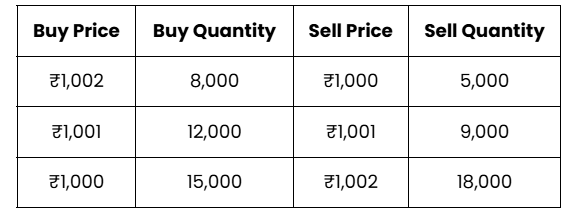
The exchange calculates the cumulative buy and sell quantities at every price level. Suppose the maximum executable quantity is achieved at ₹1,001. In that case:
- ₹1,001 becomes the official closing price.
- All eligible trades execute at this single price.
- Remaining unmatched orders continue as per auction rules or are cancelled if required.
This method produces a closing price based on overall market consensus rather than the last individual trade.
How Does CAS Benefit Different Market Participants?
Retail Investors
Retail investors receive a closing price that is less susceptible to sudden end-of-day volatility. This improves portfolio valuation and reduces confusion caused by sharp price movements in the final seconds of trading.
Institutional Investors
Large institutions often execute high-value trades toward the end of the day for portfolio rebalancing. The auction allows these large orders to be executed more efficiently without significantly impacting market prices.
Mutual Funds and ETFs
Since fund managers rely on official closing prices for valuation and benchmarking, the auction-based mechanism helps reduce pricing inconsistencies and improves fund performance tracking.
Algorithmic Traders
The new framework provides a structured auction process with clearly defined order rules. Algorithmic trading systems can participate in the auction while adapting their execution strategies to the revised timeline.
How Does CAS Align India with Global Markets?
India is not the first country to adopt an auction-based closing mechanism. Many leading global exchanges already use similar systems, including:
- New York Stock Exchange (NYSE)
- London Stock Exchange (LSE)
- Several major European and Asian exchanges
These auction mechanisms have become an accepted global standard because they improve market efficiency, strengthen price discovery, and support institutional trading without creating unnecessary volatility.
With the introduction of the closing auction session, India's equity market moves closer to these internationally accepted market practices while enhancing transparency for all participants.
Advantages of the Closing Auction Session
The closing auction session is more than just a change in market timings. It introduces a more efficient mechanism for determining the official closing price, benefiting retail investors, institutions, and the overall market ecosystem.
Improved Price Discovery
By collecting all buy and sell orders before matching them at a single equilibrium price, CAS ensures that the closing price reflects the actual demand and supply in the market. Instead of relying on trades executed over the last few minutes, the auction considers the collective interest of all participants, leading to a fairer market close.
Reduced Market Manipulation
One of SEBI's primary objectives is to make it more difficult to manipulate closing prices. Under the previous system, aggressive buying or selling near the end of trading could sometimes influence the closing price. Since CAS executes all eligible trades at one auction-discovered price, isolated trades have much less impact. This strengthens market integrity and investor confidence.
Better Execution for Large Orders
Institutional investors, pension funds, insurance companies, and mutual funds frequently execute large orders near the market close. The auction mechanism allows these participants to execute sizeable transactions with minimal market impact, improving liquidity while reducing unnecessary price volatility.
Lower Tracking Error for ETFs and Index Funds
Passive investment products such as ETFs and index funds attempt to replicate benchmark indices. A more accurate official closing price helps these funds closely track their underlying indices, resulting in lower tracking error and improved investment efficiency.
Stronger Global Alignment
Major exchanges such as the New York Stock Exchange (NYSE) and the London Stock Exchange (LSE) have successfully used closing auctions for years. With CAS, India's capital markets adopt globally accepted best practices, making the market more attractive to domestic and international investors.
Challenges Traders Should Know
While the Closing Auction Session offers several long-term advantages, traders should also understand the operational changes that come with the new framework.
Earlier Intraday Square-Off Timings
Since continuous trading for eligible stocks now ends at 3:15 PM, many brokers have revised intraday auto square-off timings to around 3:00 PM–3:10 PM. Traders who fail to adjust their strategies may experience unexpected position closures.
Learning a New Trading Process
Unlike continuous trading, the auction follows different order entry rules, matching logic, and timelines. Investors participating in CAS should familiarise themselves with:
- Order entry windows
- Market order restrictions
- Limit order rules
- Random market closure
- Auction price discovery
Understanding these mechanics can help avoid execution surprises.
Stop-Loss Orders are Not Allowed
One important operational change is that Stop-Loss orders cannot participate in the Closing Auction Session. Any pending stop-loss orders are cancelled before the auction begins.
Traders relying heavily on automated risk management should account for this while planning end-of-day positions.
Multiple Market Closing Timings
The introduction of CAS also creates different closing times for various market segments. For example:
- Eligible cash market stocks stop continuous trading at 3:15 PM.
- Auction concludes around 3:35 PM.
- Equity derivatives continue until 3:40 PM.
Initially, this may require traders to adapt their daily trading routines.
Frequently Asked Questions (FAQs)
What is the Closing Auction Session (CAS)?
The closing auction session is a new mechanism introduced by SEBI to determine the official closing price of eligible stocks through an auction instead of using the last 30-minute VWAP. It comes into effect from August 3, 2026, for selected F&O stocks.
Why has SEBI introduced the Closing Auction Session?
SEBI introduced CAS to improve price discovery, reduce end-of-day price manipulation, facilitate efficient execution of large institutional orders, and align Indian markets with global exchanges.
Which stocks are covered under the Closing Auction Session?
Initially, CAS applies only to equity cash segment stocks with active Futures & Options (F&O) contracts. Other securities will continue using the existing VWAP-based closing price calculation until further phases are introduced.
What is the Reference Price?
The Reference Price is generally the VWAP of trades executed between 3:00 PM and 3:15 PM. It acts as the basis for determining the ±3% auction price band.
What is an Equilibrium Price?
The Equilibrium Price is the single price at which the maximum number of buy and sell orders can be matched during the Closing Auction Session. This price becomes the official closing price of the stock.
Are market orders allowed during the Closing Auction Session?
Yes, market orders are permitted during the first order entry phase (3:20 PM–3:25 PM). During the second phase (3:25 PM–3:30 PM), only limit orders can be placed or modified.
Can I place Stop-Loss or Iceberg Orders during CAS?
No. Stop-Loss, Iceberg, and Immediate-or-Cancel (IOC) orders are not allowed during the Closing Auction Session.
What happens to my pending limit orders?
Eligible limit orders that fall within the prescribed ±3% price band are automatically carried forward into the auction and retain their original time priority.
How does CAS affect F&O traders?
While eligible cash market stocks stop continuous trading at 3:15 PM, equity derivatives continue until 3:40 PM. This gives F&O traders additional time to manage their positions after the official closing price is determined.
Does the Closing Auction Session replace the Post-Close Session?
No. The Post-Close Session continues to operate after the auction and allows eligible trades to be executed at the final discovered closing price.
Final Thoughts
The introduction of the closing auction session marks one of the most significant structural changes in India's equity market in recent years. By replacing the traditional VWAP-based closing price calculation with an auction-driven mechanism, SEBI aims to improve transparency, strengthen price discovery, and create a more efficient closing process for all market participants.
Although traders may need time to adjust to revised market timings, new order rules, and updated broker square-off schedules, the long-term benefits are expected to outweigh the initial learning curve. A more robust closing price mechanism will support better derivative settlements, improve ETF and mutual fund tracking, and reduce the possibility of end-of-day price manipulation.
As Indian markets continue to evolve in line with global standards, understanding regulatory developments like the closing auction session can help investors and traders make more informed decisions.
Whether you're an active trader, a long-term investor, or someone just beginning your investment journey, staying informed about changes in market structure is just as important as tracking stocks. For more insights on market regulations, trading strategies, and investment education, stay connected with Swastika Investmart.
Latest Articles
.avif)
Delisting of Shares and Its Impact on Shareholders


Introduction
Delisting occurs when a company's shares are removed from a stock exchange and are no longer traded publicly. This can be a significant event for investors and can happen for various reasons, such as regulatory issues, financial troubles, or strategic decisions by the company.
What is Delisting?
·Delisting refers to the removal of a company's shares from a stock exchange. Once delisted, the shares are no longer available for trading on that exchange. Delisting can be categorized into two types:
· Voluntary Delisting: The Company chooses to delist its shares, often to go private or restructure. For example, a company might opt to delist to focus on its core operations or restructure its business model.
·Involuntary Delisting: The Company is removed from the exchange due to failure to meet listing requirements, such as financial standards or regulatory compliance. This can happen if a company consistently fails to meet the exchange's criteria for listing.
Reasons for Delisting
·Financial Troubles: Companies facing severe financial difficulties may be delisted if they cannot meet exchange requirements. For instance, if a company consistently reports losses and fails to turn around its financial situation, it may face delisting.
·Regulatory Issues: Non-compliance with exchange rules or regulations can lead to involuntary delisting. If a company does not adhere to regulatory requirements, it risks being removed from the exchange.
·Strategic Decisions: Companies may choose to delist to restructure or go private for strategic reasons. This might involve a strategic overhaul or a shift in focus away from public markets.
·Mergers and Acquisitions: A company may be delisted following a merger or acquisition if it is absorbed into another entity. For example, if Company A acquires Company B, Company B’s shares might be delisted as they are absorbed into Company A.
Impact on Shareholders
·The impact of delisting on shareholders can vary based on whether the delisting is voluntary or involuntary:
·Liquidity: Shareholders may find it challenging to sell their shares as they are no longer traded on the exchange. For example, if a stock like Jet Airways is delisted, finding buyers for its shares can become difficult.
·Value of Shares: The value of delisted shares may drop, especially if the delisting is due to financial issues. This can result in significant losses for shareholders.
·Alternative Trading Venues: After delisting, shares may trade on over-the-counter (OTC) markets, which often have lower liquidity and might not reflect the true value of the shares.
·Compensation: In voluntary delisting, companies may offer compensation or buyback options for their shares. Shareholders might receive a buyout offer, providing them with an option to sell their shares at a predetermined price.
·Investment Strategy: Shareholders need to adjust their investment strategy and may consider seeking legal or financial advice to navigate the changes and mitigate losses.
Let us understand this with an example Suppose a company like Sahara India is delisted due to financial troubles. Shareholders might experience a sharp decline in share value and face difficulties finding buyers. If Sahara India had planned a voluntary delisting to go private, shareholders might receive a buyout offer, providing them with an option to sell their shares at a predetermined price.
Did you know that Suzlon Energy, a major player in the renewable energy sector, was delisted from the Bombay Stock Exchange (BSE) in 2021 due to non-compliance with financial requirements? This delisting was a significant event, impacting many investors and highlighting the importance of financial health in maintaining a public listing.
Conclusion
Delisting of shares can have significant consequences for shareholders, ranging from reduced liquidity to potential loss in value. It's essential for investors to stay informed about the reasons behind the delisting and how it may affect their investments.
Learn more about stock market and its terminologies with Swastika!
.avif)
Understanding Bond ETFs
Introduction
Welcome! Today, we’ll explore Bond ETFs—an investment option that combines the stability of bonds with the flexibility of exchange-traded funds (ETFs). Bond ETFs are increasingly popular among investors looking for a blend of steady income and trading flexibility. Let’s break down what Bond ETFs are, how they work, and why they might be a good fit for your investment strategy.
What are Bond ETFs?
Bond ETFs are exchange-traded funds that invest primarily in bonds. These funds are traded on stock exchanges just like individual stocks and hold a diversified portfolio of bonds. Bond ETFs offer exposure to fixed income securities while providing the benefits of trading flexibility and diversification.
Why Invest in Bond ETFs?
- Diversification: Bond ETFs usually hold a variety of bonds from different issuers and sectors. This diversification helps spread risk and reduces the impact of any single bond defaulting.
- Liquidity: Unlike individual bonds, which might be difficult to buy or sell in large quantities, Bond ETFs can be traded on stock exchanges throughout the trading day. This liquidity provides investors with greater flexibility.
- Cost-Effective: Bond ETFs often have lower expense ratios compared to actively managed bond funds, making them a cost-effective choice for fixed-income investors.
- Transparency: Bond ETFs regularly disclose their holdings, allowing investors to see exactly which bonds are in the portfolio and assess their risk.
How Do Bond ETFs Work?
- Portfolio Composition: A Bond ETF holds a collection of bonds, which might include government bonds, corporate bonds, municipal bonds, or a mix. The ETF manager selects these bonds based on the fund’s investment strategy.
- Trading: Bond ETFs are traded on stock exchanges, so you can buy or sell shares of the ETF just like stocks. The price of the ETF fluctuates throughout the day based on the value of its underlying bonds.
- Distributions: Bond ETFs pay out income from the bonds they hold to investors in the form of dividends, typically on a monthly or quarterly basis.
Benefits of Bond ETFs
- Diversification: By holding a variety of bonds, Bond ETFs help diversify your fixed-income investments and reduce individual bond risk.
- Accessibility: Bond ETFs provide easy access to a broad range of bonds without needing to buy individual bonds directly.
- Flexibility: The ability to trade Bond ETFs throughout the day offers greater flexibility compared to traditional bond investments.
- Transparency and Low Costs: Regular disclosure of holdings and typically lower expense ratios make Bond ETFs an attractive option for cost-conscious investors.
Examples of Bond ETFs in India
- Nippon India ETF – Nifty 10 Year Gilt: This ETF invests in Indian government securities with a maturity of around 10 years. It provides exposure to long-term Indian government bonds, offering stability and low risk.
- ICICI Prudential Corporate Bond Fund – Direct Plan – Growth: This fund focuses on high-quality corporate bonds. It provides exposure to a diversified portfolio of corporate debt, which can offer higher yields compared to government bonds.
- HDFC Bond Fund: A well-known Bond ETF in India, it invests in a mix of government and corporate bonds. This fund offers diversified fixed-income exposure and aims to provide steady returns.
Risks and Considerations
- Interest Rate Risk: Bond ETFs are sensitive to interest rate changes. When interest rates rise, the value of the bonds in the ETF may fall.
- Credit Risk: If a bond issuer within the ETF defaults, it can impact the ETF’s performance. While diversification helps mitigate this risk, it doesn’t eliminate it entirely.
- Market Risk: The price of Bond ETFs can fluctuate based on market conditions and may not always trade at their net asset value (NAV).
Conclusion
Bond ETFs offer a convenient and cost-effective way to invest in bonds while benefiting from the liquidity and flexibility of the stock market. They provide diversification, transparency, and regular income, making them an appealing choice for many investors. However, it’s essential to be aware of the risks, such as interest rate and credit risk, and consider how they fit into your overall investment strategy.
Learn More about stock exchanges and its terminologies with Swastika
.avif)
Understanding Value Stocks
Introduction
Today, we’re diving into the world of value stocks—a fascinating area of investing that can offer great opportunities. But what exactly are value stocks? Simply put, value stocks are shares of companies that appear to be undervalued relative to their true worth. This means they might be trading at a lower price compared to their intrinsic value, presenting a potential investment opportunity.
Characteristics of Value Stocks
- Low Price-to-Earnings (P/E) Ratio: One key characteristic of value stocks is their lower P/E ratio. This ratio compares a company’s current share price to its earnings per share (EPS). A lower P/E ratio often suggests that the stock is undervalued compared to its industry peers.
- High Dividend Yields: Value stocks often offer higher dividend yields. This means that in addition to potential capital gains, investors receive regular income from dividends.
- Strong Fundamentals: These stocks are typically from companies with solid financials. This includes strong earnings, good revenue growth, and a healthy balance sheet.
How to Identify Value Stocks
- Financial Metrics: When looking for value stocks, pay attention to key metrics such as a low P/E ratio, low price-to-book (P/B) ratio, and high dividend yield. These indicators can help you identify stocks that might be undervalued.
- Company Analysis: It’s essential to analyze the company’s overall financial health. This involves looking at earnings reports, understanding management quality, and evaluating the company’s position in its industry.
Benefits of Investing in Value Stocks
- Potential for Capital Appreciation: If the market eventually recognizes the true value of these stocks, there could be significant price increases, leading to potential capital gains for investors.
- Income Generation: High dividend yields provide a steady income stream, which can be particularly appealing for income-focused investors.
Risks Involved
- Market Timing: Value stocks might remain undervalued for extended periods. Patience is crucial, as the market may take time to realize the stock’s true value.
- Company-Specific Risks: There might be underlying issues with the company’s business model or market position that can affect its performance. Always perform thorough research to understand these risks.
Examples of Value Stocks in India
- Tata Steel: Tata Steel is often considered a value stock due to its low P/E ratio compared to industry peers. Despite market fluctuations, it has a strong financial base and offers attractive dividend yields.
- ITC Limited: ITC is another example of a value stock. It has a consistent track record of profitability and offers high dividend yields. Its diversified business model helps it maintain strong fundamentals.
Conclusion
In summary, value stocks are shares of companies that are potentially undervalued compared to their true worth. They often have low P/E ratios, high dividend yields, and strong financial fundamentals. While investing in value stocks can offer benefits such as capital appreciation and income generation, it also comes with risks like market timing and company-specific issues. Always conduct thorough research before investing and consider consulting with a financial advisor to ensure that your investment choices align with your financial goals.
Understand key market terms to make smarter investment decisions. Start Now!
.avif)
Understanding the Quick Ratio
When you're looking at a company's finances, one important measure to check is the quick ratio. It helps you understand how well a company can pay its short-term bills with the money it can quickly turn into cash. Let's break down what the quick ratio is, why it's important, and how you calculate it.
Understanding the Quick Ratio
The quick ratio, also called the acid-test ratio, measures a company's ability to cover its short-term liabilities with its most liquid assets. Liquid assets are those that can be quickly converted into cash, like cash itself, accounts receivable, and marketable securities.
Why is the Quick Ratio Important?
The quick ratio is important for several reasons:
- Liquidity Check: It shows if a company can pay off its immediate debts without having to sell inventory.
- Financial Health: A higher quick ratio means the company is in better financial shape.
- Creditworthiness: Lenders and creditors look at the quick ratio to decide if they should lend money to the company.
How to Calculate the Quick Ratio
The quick ratio is calculated with this formula:
Quick Ratio=Current Assets−InventoryCurrent Liabilities\text{Quick Ratio} = \frac{\text{Current Assets} - \text{Inventory}}{\text{Current Liabilities}}Quick Ratio=Current LiabilitiesCurrent Assets−Inventory
Here’s what each term means:
- Current Assets: Assets that can be turned into cash within a year, like cash, accounts receivable, and marketable securities.
- Inventory: Goods available for sale. Inventory is excluded because it might take longer to sell and convert into cash.
- Current Liabilities: Debts or obligations that need to be paid within a year, like accounts payable and short-term loans.
Example of Quick Ratio Calculation
Imagine a company has:
- Current Assets: $100,000
- Inventory: $30,000
- Current Liabilities: $50,000
The quick ratio would be:
Quick Ratio=100,000−30,00050,000=70,00050,000=1.4\text{Quick Ratio} = \frac{100,000 - 30,000}{50,000} = \frac{70,000}{50,000} = 1.4Quick Ratio=50,000100,000−30,000=50,00070,000=1.4
This means the company has $1.40 in liquid assets for every $1 of short-term liabilities.
What Does the Quick Ratio Mean?
Here’s how to interpret the quick ratio:
- Quick Ratio > 1: More than 1 means the company has more liquid assets than current liabilities, indicating good short-term financial health.
- Quick Ratio = 1: Exactly 1 means the company has just enough liquid assets to cover its short-term liabilities.
- Quick Ratio < 1: Less than 1 means the company might struggle to pay its short-term debts, which could be a red flag.
Limitations of the Quick Ratio
While the quick ratio is helpful, it has some limits:
- Doesn’t Include Inventory: The quick ratio assumes inventory can’t be quickly sold, which might not be true for all businesses.
- Snapshot in Time: It shows the financial situation at a specific moment, not necessarily the future.
- Industry Differences: Different industries have different standards for a healthy quick ratio, so it’s important to compare with industry norms.
Conclusion
The quick ratio is a handy tool for checking a company’s short-term financial health. By understanding and calculating the quick ratio, you can see if a company can meet its immediate obligations. However, remember to consider the quick ratio alongside other financial measures for a complete picture.
The stock market doesn't have to be intimidating—Start Learning Today!
.avif)
What Is Value Investing?
Value investing involves picking stocks that appear to be trading for less than their intrinsic or book value. Value investors actively search for stocks they believe the market is underestimating. They hold the conviction that the market often overreacts to good and bad news, resulting in stock price movements that do not align with a company's long-term fundamentals. This overreaction creates opportunities to purchase stocks at discounted prices.
How Does Value Investing Work?
The main objective of value investing is to purchase stocks when they are on sale and sell them when they reach or exceed their intrinsic value. Value investors look for companies with long-term potential that are experiencing temporary price downturns. They follow a few key steps:
- Identify Undervalued Stocks: Look for stocks trading below their intrinsic value.
- Conduct Fundamental Analysis: Examine financial metrics such as earnings, dividends, management quality, and debt levels.
- Apply a Margin of Safety: Allow a buffer by purchasing stocks at a discount to their intrinsic value to mitigate risk.
- Patience: Wait for the market to recognize the true value of the stocks.
The Margin of Safety:
Value investors use the margin of safety to reduce risk. This means purchasing stocks at a price significantly lower than their intrinsic value. Even if their assessment is slightly off, the lower purchase price minimizes potential losses..
Is value investing right for you?
Value investing can be a great way to build wealth over the long term. However, it requires patience, discipline, and a willingness to do your research. Consider your investment goals and risk tolerance before deciding if value investing is the right approach for you.
Benefits of value investing:
- Lower risk: Because you're buying stocks for less than they're worth, you have a bit of a safety net. Even if the company doesn't grow as fast as expected, you're less likely to lose money.
- Potentially higher returns: When the market corrects the undervaluation, you can earn significant profits.
Things to consider before becoming a value investor:
- Patience: Value investing is a long-term game. It may take time for the market to recognize a company's true value.
- Research: You'll need to do your homework to identify undervalued companies. This involves analyzing financial statements and understanding the company's business.
- Discipline: It's important to stick to your investment strategy and not get swayed by market emotions.
Conclusion
Value investing is an investment strategy where investors seek to buy shares, bonds, real estate, or other assets for less than their intrinsic value. It requires uncovering the true worth of assets and developing the patience to purchase them at prices lower than their intrinsic value. This approach offers a way to profit from market inefficiencies and overreactions, providing substantial returns over the long term.
The stock market doesn't have to be intimidating—Start Learning Today!
.avif)
Over-the-Counter Options: Overview, Types, and Benefits
Options trading is a popular strategy in finance for managing risks and making potential profits. While many people know about options traded on exchanges, there's another flexible option: Over-the-Counter (OTC) options. Let’s break down what OTC options are, the different types, and their benefits.
What Are Over-the-Counter Options?
OTC options are agreements made directly between two parties rather than on a public exchange. These deals are customized to fit the needs of both parties. Unlike exchange-traded options, OTC options come with a risk that one party might not fulfill their part of the deal (known as counterparty risk).
Types of Over-the-Counter Options
OTC options can be simple or quite complex. Here are the main types:
- Vanilla Options: These are straightforward and similar to exchange-traded options. They include:
- Call Options: The buyer has the right to buy an asset at a set price before a certain date.
- Put Options: The buyer has the right to sell an asset at a set price before a certain date.
- Exotic Options: These have unique features and can be more complex:
- Barrier Options: They become active or inactive when the asset price hits a certain level.
- Asian Options: The payout is based on the average price of the asset over a period.
- Binary Options: They provide a fixed payout if certain conditions are met at expiration.
- Swaptions: These give the right to enter into an interest rate swap agreement. They’re often used to manage interest rate risks.
- Structured Options: Highly customized to meet specific needs, these can combine different option features and other financial tools.
Benefits of Over-the-Counter Options
OTC options have several advantages:
- Customization: The biggest benefit is flexibility. Parties can customize terms like the price, expiration date, and underlying asset to suit their needs.
- Unique Assets: They can be written on a wide range of assets, even those not available on exchanges. This allows for hedging or speculating on less common assets.
- Privacy: OTC transactions are private, offering more confidentiality compared to exchange-traded options. This is useful for keeping trading strategies secret.
- Cost Efficiency: For large investors, OTC options can be cheaper since there are no exchange fees and terms are negotiated directly.
- Complex Strategies: Investors can create complex strategies using exotic and structured options that aren’t possible with standard options. This can lead to better risk management and higher potential returns.
Conclusion
Over-the-Counter options are a versatile tool for managing financial strategies. Despite the risk of one party not fulfilling the deal, the benefits of customization, privacy, and cost savings make OTC options valuable. Whether for hedging, speculating, or complex strategies, OTC options offer flexibility and innovation in the financial world.
Learn More about stock market trading with Swastika Investmart.
Big Budget


Popular Articles





.avif)
.avif)

.avif)



START YOUR INVESTMENT JOURNEY
Get personalized advice from our experts
- Dedicated RM Support
- Smooth and Fast Trading App
