


Bandhan Bank Results: Q1 FY26 Profit Jumps 34.9% On Lower Provisions



Key Takeaways
- Bandhan Bank results for Q1 show net profit up 34.9% YoY to Rs 502 crore.
- Net interest income rose 6% YoY to Rs 2,921 crore, with NIM at 6.2%.
- Asset quality improved: GNPA 3.15% and NNPA 0.93%.
- Provisioning declined to Rs 683 crore, enabling stable profitability.
Bandhan Bank results for the June quarter show a sharp profit expansion to Rs 502 crore, up 34.9% YoY from Rs 372 crore a year earlier, according to its regulatory filing. The bandhan bank results reflect cost discipline and improved asset quality. Net interest income (NII) rose 6% YoY to Rs 2,921 crore, while net interest margin (NIM) remained at 6.2% on a sequential basis, underscoring stable core profitability amid tightening credit conditions. Asset quality also improved as GNPA declined to 3.15% from 3.27% in the March quarter, and NNPA eased to 0.93% from 0.97%.
Bandhan Bank Results: Q1 FY26 Profit Jumps 34.9% On Lower Provisions
According to the bank's regulatory filing, the 34.9% YoY rise in profit was driven by lower credit costs. The bank set aside Rs 683 crore in the quarter, significantly lower than Rs 1,147 crore in the year-ago period, though broadly unchanged from Rs 677 crore in the preceding quarter.
| Metric | Value | Comment |
|---|---|---|
| Net Profit (YoY) | Rs 502 crore | Up 34.9% YoY |
| NII | Rs 2,921 crore | Up 6% YoY |
| NIM | 6.2% | Unchanged sequentially |
| GNPA | 3.15% | Down from 3.27% |
| NNPA | 0.93% | Down from 0.97% |
| Provisions | Rs 683 crore | Lower vs Rs 1,147 crore YoY; Rs 677 crore prior quarter |
| Interim CFO | Vinay Jain | Effective Sept 26 |
Analysts note that Bandhan Bank's earnings trajectory remains sensitive to credit costs, even as core profitability holds steady. The improved asset quality reduces the risk of future credit losses and supports sustainable earnings in the near term. Investors should monitor how loan growth, funding costs, and recoveries evolve in the coming quarters to gauge the durability of these gains.
For deeper stock insights, you can explore Swastika's Sarthi AI stock assistant, which offers institutional-grade research on stocks and indices to retail investors.
Frequently Asked Questions
What was Bandhan Bank's standalone net profit in Q1?
Bandhan Bank's standalone net profit rose to Rs 502 crore in the June quarter, up 34.9% from Rs 372 crore a year earlier, per its regulatory filing.
What were Bandhan Bank's net interest income and net interest margin in Q1?
Net interest income stood at Rs 2,921 crore, up 6% YoY, with net interest margin remaining at 6.2% on a sequential basis.
How did Bandhan Bank's asset quality change in Q1?
GNPA eased to 3.15% from 3.27% in the March quarter, and NNPA eased to 0.93% from 0.97%.
What was the provisioning level in Q1, and how does it compare to prior periods?
Provisioning was Rs 683 crore in the quarter, significantly lower than Rs 1,147 crore in the year-ago period and broadly in line with Rs 677 crore in the preceding quarter.
Who was appointed interim CFO at Bandhan Bank?
Vinay Jain was appointed as interim Chief Financial Officer, effective September 26.
Conclusion
Bandhan Bank results point to a healthier credit cost structure and improving asset quality, translating into a steadier earnings base for the quarter. For retail investors, the key takeaway is to watch the trajectory of provisioning and NII in upcoming quarters, as these drivers will determine whether Bandhan Bank can sustain its earnings momentum amid macro headwinds.
Next-step mental model: focus on the quality of growth versus the price of growth. Track NII growth, NIM stability, and any shifts in GNPA/NNPA trends in subsequent quarters, and consider using Swastika's Sarthi AI stock assistant to compare Bandhan Bank with peers and indices as new data arrives.
Open your trading and demat account here
Reference :
1 : Ndtvprofit
Latest Articles
Iti Limited Share Price And The BSNL 4G Expansion Wave


Key Takeaways
- Iti Limited wins Rs 856.39 crore BSNL contract for 7,613 West Zone sites.
- Phase IX.2 previously delivered 23,633 sites across Maharashtra, Goa, Gujarat, Chhattisgarh, Madhya Pradesh and Mumbai LSA for Rs 2,640 crore.
- ITI Limited is executing BharatNet Phase III projects worth ~Rs 7,000 crore across multiple states.
- The stock briefly hit an intraday high of Rs 302.40 amid the news and has shown volatility in recent sessions.
Investors tracking iti limited share price will want to understand how the latest bsnl 4g expansion order shapes ITI Limited's growth trajectory. The company secured Rs 856.39 crore contract to expand BSNL's 4G network across the West Zone, covering 7,613 sites to be planned, engineered, supplied, installed, tested and commissioned on a turnkey basis. This is a significant step in India's Atmanirbhar telecom initiative and adds another layer to ITI's expanding footprint in indigenous equipment deployment. The saturation sites funded under the Digital Bharat Nidhi programme further reinforce the domestic supply chain push and the government's emphasis on local equipment manufacturing.
Iti Limited Share Price In BSNL 4G Expansion Wave
For retail investors, the immediate takeaway is that the new order reinforces ITI Limited's role as a turnkey builder of countrywide mobile infrastructure. The Rs 856.39 crore contract expands the company’s reach within the BSNL 4G program, and the West Zone deployment of 7,613 sites adds scale to ITI’s execution capabilities. In the context of iti limited share price, the news signals execution visibility in a sector where government-led demand supports domestic equipment players. ITI Limited's earlier collaborations, including a Phase IX.2 rollout, set a precedent for rapid deployment and turnkey delivery that investors have tracked in recent months.
According to Rajesh Rai of ITI Limited, It is a very proud moment for ITI Limited as our prestigious client BSNL continues to repose great trust in ITI Limited's execution capability by awarding work order to us.
Reference :
1 : Ndtvprofit
This kind of official affirmation from leadership often translates into a perception of deeper contract execution reliability among investors. The company’s leadership frames the award as part of a broader Atmanirbhar telecom initiative, aligning ITI with a long-term national objective to build indigenous telecom capacity. The market has historically rewarded visible order inflows tied to policy-backed programs, and the 7,613-site expansion aligns with that pattern. If you are monitoring iti limited share price trends, you should watch how this contract interacts with the company’s ongoing obligations under Digital Bharat Nidhi and related saturation-site works.
7,613 West Zone Sites Under BSNL 4G Expansion: Execution And Implications For ITI Limited
The West Zone expansion marks a sizeable step in scaling ITI’s turnkey capability to deliver 4G infrastructure across a wide geography. The West Zone, already familiar with BSNL’s indigenous 4G rollout, now adds 7,613 more sites to the cumulative network built by ITI and its consortium partners. The turnkey nature of the project–encompassing planning, engineering, supply, installation, testing and commissioning–highlights ITI’s end-to-end project execution strength. For iti limited share price, the implication is twofold: first, a clearer revenue visibility over the contract lifecycle, and second, potentially improved market perception of ITI as an enabler of homegrown telecom equipment. The consortium approach, which has previously included Tata Consultancy Services in related workloads, suggests a robust delivery model that can help ITI navigate the complexities of large-scale deployments.
According to Rajesh Rai of ITI Limited, ITI Limited has steadfastly been executing and has proved to be an able ally in the country's Atmanirbhar telecom initiatives,
Looking at iti limited stock price dynamics around such orders, investors often weigh the near-term price response against the longer-term growth trajectory tied to execution risk, equipment monetization and policy-driven demand. The 7,613-site expansion, coupled with saturation sites under Digital Bharat Nidhi, underscores a sustained pipeline that can support revenue recognition over multiple quarters, not just a one-off spike. As the company continues to integrate local manufacturing with network deployment, the market will watch for efficiency metrics, margin stabilization, and any variance in project timelines that could influence iti limited share price levels in the near term.
Phase IX.2 Track Record: 23,633 Sites And Rs 2,640 Crore Turnkey Project
ITI Limited’s Phase IX.2 rollout across six states and the Mumbai Licensed Service Area stands as a concrete track record that informs how the current West Zone expansion could unfold. The prior project–completed on a Rs 2,640 crore turnkey basis and involving 23,633 sites–was executed with Tata Consultancy Services as a consortium partner. That history provides a baseline for expectations regarding project management, supply chain coordination, and field deployment at scale. Investors look at these precedents to gauge ITI’s ability to translate large orders into timely site saturation and revenue. The geographic breadth–covering Maharashtra, Goa, Gujarat, Chhattisgarh, Madhya Pradesh and the Mumbai LSA–also demonstrates ITI’s capability to operate across diverse regulatory and logistical environments, a factor that often weighs on iti limited share price during earnings cycles.
The Phase IX.2 milestone also reinforces the government’s preference for indigenous infrastructure providers, aligning ITI’s business model with a national strategy that prioritizes local manufacturing. This alignment supports a narrative of steady, policy-backed demand for ITI’s products and services, which can provide a degree of price and contract durability that investors value when assessing iti limited stock price volatility over the medium term.
BharatNet Phase III And Digital Bharat Nidhi: ITI Limited's Rs 7,000 Crore BharatNet Projects Across India
Beyond BSNL’s 4G expansion, ITI Limited is actively participating in BharatNet Phase III projects worth about Rs 7,000 crore. These projects span Himachal Pradesh, West Bengal, Andaman and Nicobar Islands, Arunachal Pradesh, Nagaland and Manipur. This multi-state footprint illustrates a broader government push to extend digital connectivity to diverse terrains, including hill states and union territories where domestic manufacturing and deployment expertise are critical. For retail investors, the BharatNet engagement signals a long-duration revenue stream that can complement the BSNL-related work, enhancing overall visibility for ITI’s order book and potentially supporting iti limited share price stability as execution milestones are met.
Market Reaction And ITI Limited Share Price Action After The News
The market response to these government-backed expansion orders has been positive in the short term, with ITI Limited stock showing upward movement on news flow around the new contract and prior Phase IX.2 execution. In intraday trading, the stock touched a high around Rs 302.40, reflecting a degree of enthusiasm among traders and some recovery after a recent downturn. While one-day moves do not redefine a stock’s long-term trajectory, they do indicate the market’s immediate interest in order wins that anchor a company’s growth narrative. Investors should monitor subsequent price action for confirmation of a medium-term uptrend, especially as project milestones begin to materialize and as BharatNet Phase III sites move from planning to execution.
To support more informed decision-making, consider leveraging Swastika's Sarthi AI stock assistant for deeper, institutional-grade research on ITI Limited and related stocks: Swastika's Sarthi AI stock assistant.
What Retail Investors Should Watch: A Practical Approach To Evaluating Indigenous Telecom Stocks
As ITI Limited expands its footprint through the bsnl 4g expansion and BharatNet Phase III, retail investors should focus on several practical angles. First, assess execution risk: can ITI sustain the pace required to deploy 7,613 sites in the West Zone while maintaining quality and site uptime? Second, analyze the revenue recognition timeline: while contract value is Rs 856.39 crore, how quickly will milestones convert into revenue, and what are the gross margins on these turnkey deployments? Third, monitor policy and domestic manufacturing momentum: the Digital Bharat Nidhi and related saturation-site programs aim to accelerate local content, which can positively influence margins and order visibility if ITI continues to win similar tenders. Finally, evaluate the broader market environment for indigenous telecom equipment players, including competitive dynamics with private sector suppliers and the risk of project delays that could impact iti limited stock price momentum.
In practice, investors should combine quarterly earnings updates with policy-oriented news to form a probabilistic view of ITI’s trajectory. The company’s leadership has framed the contract as a signal of trust and a stepping stone within the Atmanirbhar telecom framework, which aligns with a longer-term growth thesis rather than a short-term spike. If you want a structured approach to combining number-driven signals with strategic context, consider a simple mental model: treat each major contract as a milestone toward a more predictable revenue base, and watch for improvements in project execution metrics, such as site commissioning timelines and supply-chain efficiency. For deeper stock-level insights, you can explore Swastika's Sarthi AI stock assistant at the link above.
Frequently Asked Questions
What is the value of the BSNL contract awarded to ITI Limited for expanding the 4G network in the West Zone?
Rs 856.39 crore for deployment at 7,613 sites in the West Zone on a turnkey basis.
How many sites are included in the West Zone BSNL 4G expansion?
7,613 sites.
What was the scope and value of ITI Limited's Phase IX.2 project?
Phase IX.2 covered 23,633 sites across Maharashtra, Goa, Gujarat, Chhattisgarh, Madhya Pradesh and the Mumbai LSA, with a contract value of Rs 2,640 crore on a turnkey basis.
What BharatNet Phase III initiatives is ITI Limited involved in, and what is their approximate value?
ITI Limited is executing BharatNet Phase III projects worth about Rs 7,000 crore across Himachal Pradesh, West Bengal, Andaman and Nicobar Islands, Arunachal Pradesh, Nagaland and Manipur.
What did ITI Limited's chairman say about the BSNL contract?
"It is a very proud moment for ITI Limited as our prestigious client BSNL continues to repose great trust in ITI Limited's execution capability by awarding work order to us."
Conclusion
ITI Limited’s new Rs 856.39 crore bsnl contract to deploy 7,613 additional 4G sites in the West Zone, together with Phase IX.2’s proven track record and BharatNet Phase III opportunities, positions the company as a central player in India’s indigenous telecom push. Retail investors should view these developments as evidence of a long-term growth pathway anchored in domestic capability, not just a one-off order win. The real test will be execution, margin discipline, and the sustainability of revenue visibility as BharatNet sites move from planning to on-ground deployment.
Next-step takeaway: use a simple probability-based framework–weight contract wins by their execution risk and milestone-driven revenue recognition–and apply it to iti limited share price trajectory over the next several quarters. If you want a deeper, AI-assisted analysis that synthesizes policy, project milestones, and market signals, Swastika's Sarthi AI stock assistant can provide a structured, institutional-grade view to help you optimize decisions in this evolving space.
_receives_in-principle_approval_from_I.webp)
Anand Rathi FME IFSC: IFSCA In-Principle Approval And Gift City’s Fund Management Outlook
Key Takeaways
- IFSC regulator grants in-principle approval to Anand Rathi FME IFSC for non-retail fund management at Gift City.
- Final certificate depends on regulatory, capital, and operational prerequisites before launch.
- Anand Rathi Wealth is the parent company behind the FME IFSC.
- Operations begin only after final registration and compliance, with IFSCA oversight.
In Gift City’s quest to become a global hub for financial services, a regulatory milestone just landed: Anand Rathi FME IFSC has secured in-principle approval from IFSCA to register as a Fund Management Entity (Non-retail) at the International Financial Services Centre (IFSC), Gift City, Gujarat. This is not a mere formality–it's a signal that a qualified fund manager can move closer to launching non-retail, cross-border portfolios from Gujarat's flagship financial enclave. The final certificate of registration and commencement of business remain conditional on meeting regulatory, operational, and capital prerequisites laid down by the regulator. Yet the momentum is real, and the implications ripple through how investors think about fund access and governance in Gift City–and beyond.
Anand Rathi FME IFSC: What In-Principle Approval Means For Gift City And Retail Investors
The in-principle approval from the regulator confirms that Anand Rathi Wealth's wholly owned subsidiary can pursue the final certificate to operate a Fund Management Entity (Non-retail) at Gift City's IFSC. The distinction between retail and non-retail is important: this approval applies to non-retail fund management activities slated to be conducted from Gift City's regulated zone, where cross-border investments and structured products can be evaluated under a robust governance framework.
For investors, the key takeaway is not an immediate product launch but a regulated path that could enable more formalized, cross-border fund management offerings once the final registration is granted. The IFSCA governs capital adequacy, risk management, and compliance standards for entities operating in the IFSC; Anand Rathi FME IFSC will have to meet these norms before commencing operations. The journey from in-principle approval to a final certificate typically involves fulfilling the regulator's capital and operational requirements, ensuring proper risk controls, and aligning with anti-money-laundering and KYC norms.
Why Gift City? The IFSC framework here is designed to drive capital markets activity with a global lens, offering tax-efficient structures and regulatory clarity for international inflows. The presence of a fund management entity under the IFSCA umbrella can support cross-border fund strategies, including hedging, gearing, and multi-asset portfolios, subject to compliance and investor protection standards. For a retail investor, the immediate effect might be limited, but the move signals richer options and tighter governance across India's offshore-style hub.
How IFSCA Regulation At Gift City Shapes The Non-Retail Fund Management Landscape
Regulatory oversight from IFSCA at Gift City is designed to foster cross-border fund activity while maintaining investor protection, liquidity norms, and transparent disclosures. The upcoming final registration for Anand Rathi FME IFSC will require a robust risk management framework, clear governance structures, and capital adequacy criteria, all aligned with the regulator's standards. A successful transition from in-principle approval to final registration will enable regulated non-retail fund management from the IFSC, potentially expanding the menu of investment strategies and product structures available to qualified investors through Gift City's hub.
From a market perspective, the IFSCA's criteria aim to reduce systemic risk and mis-selling, while enabling efficiency and cross-border access. The effect on retail investors will depend on how the FME IFSC's offerings are subsequently structured, advertised, and disclosed, and how fund flows are regulated across borders. The regulatory framework is intended to balance investor protection with the introduction of innovative fund management models in Gift City.
Parentage And Regulation: Anand Rathi Wealth's Role In The FME IFSC Journey
Anand Rathi Wealth serves as the parent company to Anand Rathi FME IFSC, providing governance, capital backing, and strategic alignment to the non-retail fund management entity. This parental linkage is important because it suggests a cohesive risk and compliance architecture, built on an established pedigree in wealth and asset management. For domestic investors, this alignment signals a level of fiduciary responsibility and governance oversight that could influence how future Gift City offerings are designed, priced, and disclosed.
Having a strong parent company can help streamline the onboarding of counterparties, a critical factor in cross-border fund management, where liquidity screens, currency controls, and cross-border tax considerations come into play. While the final certificate remains contingent on regulator-approved capital and operational readiness, the parentage arrangement provides confidence that the FME IFSC will deploy structured governance and reporting protocols that align with the broader Anand Rathi Wealth platform.
From In-Principle Approval To Final Registration: A Stepwise Regulatory Roadmap
The formal qualifying steps begin with fulfilling the IFSCA's regulatory requirements for non-retail fund management. The IFSCA will assess capital requirements, risk management frameworks, operational readiness, and back-office controls. The final certificate of registration is granted only after successful completion of these steps, enabling Anand Rathi FME IFSC to commence business activities from Gift City. This phased approach ensures that cross-border fund management activities adhere to high standards of investor protection and governance, reducing systemic risk while enabling efficiency in capital markets across borders.
What does this mean for market participants? It creates a potential environment for more regulated fund management traffic at IFSC. It could facilitate structured products and funds with cross-border investment strategies while maintaining strict oversight on disclosures, risk management, and liquidity. As with any regulatory milestone, the actual market impact will depend on the speed and rigour with which the final registration is granted and the subsequent product approvals, compliance programs, and client onboarding processes that follow.
What This Means For Investors: Opportunities, Risks, And The Road Ahead
For investors, the news centers on potential governance improvements, clearer cross-border fund operations, and enhanced investor safeguards that come from a regulated, globally connected hub. The non-retail designation means Anand Rathi FME IFSC intends to serve fund management operations that are not offered to the general retail public from Gift City. The precise product slate, fee structure, and investment strategies will emerge after the final registration, but the regulatory spine–operational controls, capital adequacy, and risk governance–appears set to be strengthened by IFSCA oversight.
Investors should watch key signals: the final certificate timeline, capital adequacy disclosures, and the introduction of any cross-border fund ranges from Gift City's IFSC. While this is a positive development for governance and market depth, it also requires vigilance around who the clients are, how disclosures are managed, and how liquidity risk is addressed in cross-border fund structures. As always, align this with your own risk tolerance and investment horizon.
For deeper stock-level insights, consult Swastika's Sarthi AI stock assistant for institutional-level research on any stock or index. And for more market context, some investors search terms like anand rathi wealth stock price to gauge how regulatory moves reflect in pricing–though price data is not the focus of this article.
Frequently Asked Questions
What is Anand Rathi FME IFSC?
Anand Rathi FME IFSC is the Fund Management Entity (Non-retail) proposed by Anand Rathi Wealth to operate from Gift City's IFSC, having received in-principle approval from the International Financial Services Centres Authority (IFSCA). The final registration and commencement of business will depend on meeting regulatory and capital requirements set by IFSCA.
What does IFSCA's in-principle approval mean for Gift City?
It signals that regulators have allowed the entity to pursue final registration as a Fund Management Entity (Non-retail) at Gift City's IFSC, subject to completion of regulatory, capital, and operational prerequisites before launch.
Who owns Anand Rathi FME IFSC?
Anand Rathi FME IFSC is a wholly owned subsidiary of Anand Rathi Wealth, with the parent company providing governance and capital backing.
When will Anand Rathi FME IFSC start operations?
Operations will commence only after obtaining the final certificate of registration from IFSCA and satisfying all applicable laws, regulations, and conditions.
What is Gift City and why is IFSC regulation important?
Gift City is India's International Financial Services Centre in Gujarat, created to foster cross-border financial activity with a regulated framework. The IFSCA governs entities operating there to ensure investor protection, governance, liquidity, and cross-border compliance.
Conclusion
The in-principle approval marks a meaningful step in Gift City's evolution as a regulated, globally connected financial hub, while aligning with Anand Rathi Wealth's growth strategy in fund management. For retail investors, the impact is not immediate, but the development signals a maturation of India's cross-border fund infrastructure–one that could deliver richer governance, product diversity, and investor protections in due course.
The practical takeaway is to monitor the final registration timeline and subsequent product roadmaps. Use disciplined due diligence, track disclosures, and apply a clear mental model for how cross-border fund management may affect liquidity, fees, and risk in your portfolio. A natural bridge to action is available through Swastika's Swastika's Sarthi AI stock assistant.
Open your trading and demat account here
Reference :
SBI Funds Management IPO Day 3: Subscriptions, GMP, Anchor Investors, And Listing Outlook
Key Takeaways
- The SBI Funds Management IPO is an OFS of 17.09 crore shares worth Rs 9,795 crore, with a price band of Rs 545-574 per share.
- Anchor investors committed Rs 2,663 crore to the book; major allocations include HDFC MF and ICICI Prudential MF at Rs 200 crore each.
- On Day 3, the subscription stood at 7.77x overall, with QIB 10.11x, Non-Institutional 17.20x, Retail 2.67x.
- Post-listing, SBI's stake falls to 55.46% and Amundi's to 32.56%; listing price signals vary, with GMP around Rs 94 implying potential upside.
As the sbi funds management ipo window enters Day 3, retail investors across India are weighing a Rs 9,795 crore offer for sale (OFS) that values SBI Funds Management at a landmark scale. The upper end of the price band is Rs 574 per share and 17.09 crore equity shares are on offer, with SBI and Amundi exiting a stake through the OFS. A robust anchor investor book – Rs 2,663 crore raised – coupled with a mix of global and domestic institutions sets the stage for a notable listing journey ahead.
In this in-depth analysis, we unpack the Day 3 subscription status, anchor investor dynamics, GMP signals, and what a listing could mean for retail investors who want exposure to India's largest asset management franchise by quarterly average assets under management (QAAUM).
SBI Funds Management IPO: Day 3 Subscriptions And What It Signals For Retail Investors
Day 3 numbers show strong demand with measured participation from retail investors. As of 1:00 pm, the overall subscription stood at 7.77x; QIBs subscribed at 10.11x, Non-Institutional investors at 17.20x, Retail at 2.67x, and Employees Reserved at 3.76x; the Reservation Portion for Shareholders was 7.56x. The anchor book comprised Rs 2,663 crore from anchor investors; domestic mutual funds accounted for 37% of the anchor book, investing through 23 mutual funds across 70 schemes. Among the largest allocations were Rs 200 crore each to HDFC Mutual Fund and ICICI Prudential Mutual Fund, and Rs 180 crore each to Capital World Investors, GIC, and LIC. The Day 3 status confirms that the Rs 9,795 crore offer size aligns with the upper-end price band of Rs 574 and total shares on offer at 17.09 crore.
Post-listing, the sponsor-bank SBI will reduce its stake to 55.46% from 61.76%, while Amundi will bring down its stake to 32.56% after the OFS; SBI plans to sell 6.3% and Amundi 3.7% of their holdings. The anchor book's composition and the OFS mix are crucial for determining initial demand and price discovery on listing day. The growth in QAAUM, the dominance in the asset management space, and the scale of funds in anchor investors' portfolios are supportive signals for the listing narrative.
Anchor Investors And Demand Dynamics In The SBI Funds Management IPO
The anchor investor base for this issue includes global giants such as GIC, Abu Dhabi Investment Authority, Capital World Investors, BlackRock, Fidelity Management & Research, Goldman Sachs Asset Management, and Norges Bank, along with domestic institutions LIC, HDFC Mutual Fund, ICICI Prudential Mutual Fund, Nippon India Mutual Fund, and HDFC Life Insurance. The largest allocations–Rs 200 crore each to HDFC MF and ICICI Prudential MF; Rs 180 crore each to Capital World Investors, GIC, and LIC–underscore strong domestic and international interest. Domestic mutual funds accounted for 37% of the anchor book, with 23 mutual funds investing across 70 schemes, signaling broad involvement from the mutual fund ecosystem.
For readers seeking granular stock analysis, consider Swastika's Sarthi AI stock assistant: Swastika's Sarthi AI stock assistant.
Grey Market Premium And Listing Outlook For SBI Funds Management IPO
The grey market premium (GMP) for SBI Funds Management stands at Rs 94 as of July 16, 1:00 pm, according to market chatter. With the price band at Rs 545-574 per share, the estimated listing price could be around Rs 668 per share, implying a potential listing gain of about 16.38% per share, based on a market estimate from Investorgain. It is important to note that GMP is not official data and reflects speculative appetite ahead of the listing. In the context of the sbi funds management listing, investors should view GMP as a sentiment gauge rather than a guaranteed price signal.
The listing scenario is shaped by the full OFS size and the anchor investor confidence, combined with SBI's plan to reduce its stake and the evolving competitive landscape of Indian asset management. The pricing decision will hinge on real-time demand-supply dynamics, grey market signals, and the global appetite for Indian financial services franchises.
Post-Listing Stake Changes After SBI Funds Management IPO
As part of the OFS, SBI will sell 6.3% of its stake, and Amundi will divest 3.7%, leading to post-listing holdings of 55.46% for SBI and 32.56% for Amundi. These shifts reflect both the market's appetite to participate in SBI Funds Management IPO and the need for existing shareholders to monetize a portion of their positions. The balance of shares will be held by public investors and other stakeholders, allowing for a broader float and potentially higher liquidity in the secondary market.
Company Profile And Market Position In The Indian Asset Management Landscape
Founded in 1987, SBI Funds Management is India's largest asset management company by quarterly average assets under management (QAAUM). The firm reported a QAAUM of Rs 12.51 lakh crore in mutual funds, with a market share of 15.3% as of March 31, 2026. Including portfolio management services (PMS) and alternative investment mandates, the total QAAUM stood at Rs 29.46 lakh crore at the end of FY26. These metrics underscore the company's scale and entrenched position in a rapidly growing Indian investment ecosystem, positioning SBI Funds Management to benefit from ongoing retail participation and corporate pension demand.
Frequently Asked Questions
What is the size and price band of SBI Funds Management IPO?
The IPO size is Rs 9,795 crore at the upper end; it offers 17.09 crore equity shares through an offer for sale by SBI and Amundi, with a price band of Rs 545-574 per share.
When does the SBI Funds Management IPO close and what is Day 3 status?
The IPO closes on Day 3, 16 July 2026. As of 1:00 pm on Day 3, the subscription stood at 7.77x overall, with QIBs at 10.11x, Non-Institutional investors at 17.20x, Retail at 2.67x, and Employees Reserved at 3.76x, plus 7.56x for the reservation portion.
What will SBI Funds Management IPO mean for post-listing stakes?
Post-listing, SBI's stake will be 55.46% (down from 61.76%), and Amundi's stake will be 32.56% (down from earlier levels). SBI will sell 6.3% and Amundi 3.7% of their holdings in the OFS.
What does the grey market premium indicate about SBI Funds Management IPO listing?
The GMP stands at Rs 94 as of July 16, suggesting an estimated listing price around Rs 668 per share, implying a potential upside of about 16.38% if realized; GMP is not official data and is speculative.
Who are the anchor investors and how is the anchor book composed?
Anchor investors include global players like GIC, Abu Dhabi Investment Authority, Capital World Investors, BlackRock, Fidelity Management & Research, Goldman Sachs Asset Management, and Norges Bank, along with LIC, HDFC Mutual Fund, ICICI Prudential MF, Nippon India MF, and HDFC Life Insurance. The largest allocations were Rs 200 crore to HDFC MF and ICICI Prudential MF, and Rs 180 crore to Capital World Investors, GIC, and LIC. Domestic mutual funds accounted for 37% of the anchor book, across 70 schemes in 23 funds.
Conclusion
For retail investors today, SBI Funds Management IPO signals a transition point: a large, anchored OFS with strong domestic and global participation, but with a price discovery process that will ultimately depend on market sentiment and the listing day dynamics. The post-listing stake changes reflect a typical OFS outcome, widening the float and potentially improving liquidity for new shareholders. Investors should monitor the final listing price, the GMP trajectory, and the evolving discounting of the price band, applying a disciplined framework to decide whether to chase listing gains or wait for real price discovery post-listing.
Open your trading and demat account here
Reference :
1 : Ndtvprofit
ABB India Share Price Rally: Drivers Behind The Surge
Key Takeaways
- ABB India share price rose intraday to as high as 10% to Rs 7,923 on the BSE.
- ABB Global reported stronger-than-expected Q2 fundamentals: EBITA at $1.93 billion, revenue at $9.48 billion, and net income at $1.23 billion, with new orders up 30% year-on-year to $12.04 billion.
- abb india order inflows surged 81% YoY in the June quarter, including business from listed and unlisted entities.
- The stock has risen 58% in six months and more than 300% in five years, with 22.12 lakh shares traded by early trade.
ABB India share price moved sharply on Thursday as the global parent posted robust second-quarter results and Indian order inflows surged. The stock jumped as much as 10% to Rs 7,923 on the BSE before trimming gains to around 7% higher. The key trigger was ABB Global's disclosure that order inflows from the India region surged 81% year-on-year during the June quarter, marking the strongest growth seen in several years and including business from both listed and unlisted entities in the country. For investors tracking abb india share price, this move signals a broader momentum in domestic orders and a potential continuation into upcoming earnings.
ABB India Share Price Momentum After Strong Q2 Results
The move in abb india share price is not a one-day phenomenon; it aligns with a pattern of quarterly strength that ABB Global has shown. The June quarter brought a digestion of orders and capacity expansion that translates to higher revenues and earnings for ABB's India operations. The domestic market’s response–an 81% YoY increase in abb india order inflows–suggests that clients in manufacturing and automation sectors are continuing to invest. Such momentum can be driven by longer-term trends in data centres and AI infrastructure, where ABB's electrification and automation solutions play a central role.
From a retail investor's lens, the question is whether the momentum is sustainable. The magnitude of the rally, while substantial, should be weighed against the strength of the order book and the mix of orders–especially those coming from the India region. Buyers should watch for abb india quarterly results to confirm that the sequential momentum in orders persists. In the meantime, the price action indicates the market is pricing in improved domestic demand, aided by ABB Global's global execution and the India team's ability to convert opportunities into orders.
ABB Global Q2 Performance And Its Impact On ABB India Order Inflows
Globally, ABB delivered better-than-expected operating performance for the second quarter. EBITA stood at $1.93 billion for the three months ended June, a 20% increase from a year earlier. Revenue rose 14% year-on-year to $9.48 billion, broadly in line with market expectations, while net income increased 7% to $1.23 billion. The company also reported a sharp increase in new orders, which jumped 30% year-on-year to $12.04 billion. This robust global backdrop supports the India business, reinforcing the case for continued strength in abb india share price as investors digest the earnings cadence. Demand continued to be supported by investments in data centres being built to cater to the growing requirements of AI infrastructure.
Even as ABB's global performance sets the tone, the India story is a greater contributor to the movement in abb india order inflows. The market's focus on India will be on the sustainability of the 81% YoY growth in June, and whether that translates into consistent quarterly gains in abb india quarterly results. Overall, the enterprise's demand environment remains constructive, which bodes well for India's share price trajectory.
Abb India Order Inflows: The 81% YoY Surge And Its Implications
ABB Global's data shows that abb india order inflows rose 81% YoY in the June quarter, marking the strongest growth in several years. The inflows reflect business from both listed and unlisted entities in the country, underscoring ABB's broad footprint in India. In the previous quarter, abb india order inflows grew 26%, while ABB India posted a 25% increase in its own orders. In the December quarter last year, the corresponding figures stood at 49% and 51%, respectively. The sequence demonstrates a sustained uplift in India-focused demand and provides a supportive backdrop for abb india share price momentum.
For investors tracking abb india share price, the trend suggests that the Indian market is becoming a more important driver of ABB's global order book. The resilience of domestic demand in manufacturing, energy, and automation segments will be critical as ABB's India team navigates supply chain dynamics and project execution across large scale infrastructure and data centre builds.
ABB India's Price Action And Volume On The Rally
Market action on Thursday also highlighted a surge in trading activity. As many as 22.12 lakh shares had changed hands by early trade, far exceeding the stock's 20-day average trading volume of around 80,000 shares. This elevated turnover underscores investor enthusiasm and the potential for continued volatility in the near term as new earnings data points emerge. The intraday movement – up to 10% and then up about 7% later – suggests that traders are testing the durability of the rally and looking for confirmation from abb india quarterly results and subsequent commentary from ABB's management.
Long-Term Stock Performance: Six-Month And Five-Year Gains
Beyond the near-term price action, the longer-term trajectory of ABB India's stock remains strong. In the last six months, the stock has risen 58%, while over the past five years, gains exceed 300%. These longer-term figures reflect a combination of improving domestic order inflows, expanding margins, and ABB's ability to translate global demand into value for its Indian operations. For investors, this is a signal to assess sustainability through abb india quarterly results and the stability of abb india order inflows in successive quarters.
What Retail Investors Should Watch Next With ABB India Share Price
Looking ahead, retail investors should watch upcoming quarterly abb india quarterly results and the pace of abb india order inflows. The AI-driven demand impulse and the growth in data-centre investments provide a supportive backdrop for abb india share price, but investors should calibrate expectations, monitor capital allocation, and consider hedging or position-sizing strategies in volatile markets. For deeper, quantitative insight into ABB and similar indices, Swastika's Sarthi AI stock assistant offers institutional-level research on any stock or index to retail investors: Swastika's Sarthi AI stock assistant.
Frequently Asked Questions
What sparked the ABB India share price rally?
ABB Global's strong second-quarter results and the 81% YoY surge in abb india order inflows in the June quarter (including business from listed and unlisted entities) triggered the rally.
How did ABB Global perform in the June quarter?
EBITA reached $1.93 billion, revenue was $9.48 billion, net income was $1.23 billion, and new orders rose 30% YoY to $12.04 billion.
What happened to ABB India's price on the rally day?
ABB India share price rose as high as 10% to Rs 7,923 on the BSE, before trimming gains to around 7%.
What is ABB India's longer-term stock performance?
The stock has risen 58% in the last six months and more than 300% in the last five years.
What was the trading volume during the rally?
Trading activity surged to 22.12 lakh shares by early trade, well above the 20-day average of around 80,000 shares.
Conclusion
This is the end of the article; the next steps for a retail investor involve ongoing monitoring of ABB India's quarterly abb india quarterly results and the domestic order-book trajectory, combined with a practical framework for entry and risk management.
Open your trading and demat account here
Reference :
1 : Economictimes
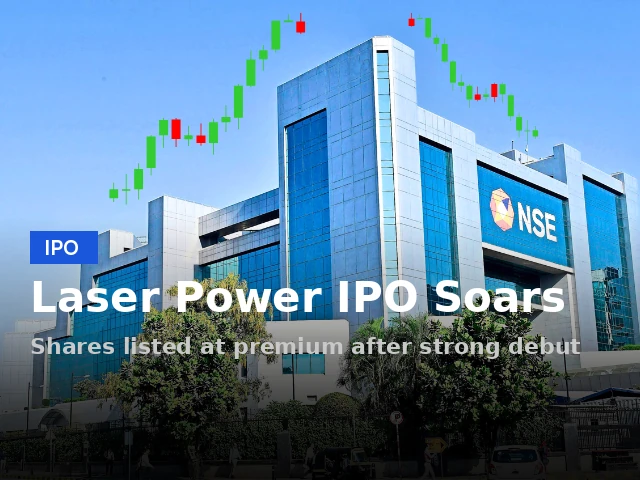
Laser Power Share Price Outlook After Debut: What Investors Should Watch
Key Takeaways
- Laser Power & Infra's laser power ipo debuted with a strong premium on both BSE and NSE.
- The issue size stood at ₹742 crore with a price band of ₹203–₹214 per share and 28.97x overall subscription.
- Proceeds will primarily repay debt, strengthening the balance sheet, with the remainder for general corporate purposes.
- Key risks include reliance on infrastructure spending and potential execution delays.
Retail investors watching the laser power share price after the laser power ipo debut are asking whether momentum will hold. On listing day, BSE opened at ₹269, a premium of 25.70% to the ₹214 issue price, while NSE opened at ₹250, a 16.80% premium. The IPO size stood at ₹742 crore, split into a fresh issue of ₹542 crore and promoter OFS of ₹200 crore. First-day trading signaled strong demand with a grey-market premium around ₹254, signaling robust appetite. The route to growth appears tied to infra spend and debt reduction, but execution risk remains.
Laser Power Share Price Outlook After Debut
The strong start to trading created an anchor for the laser power share price, but investors should look beyond the debut-day pop. The premium on day one reflected both the sector's appeal and the company's plan to reduce debt through a portion of IPO proceeds. While a premium like this can indicate confidence, it is essential to follow how the company utilizes the funds and how quickly it can translate orders into revenue. The indicative GMP around ₹254 further underscores market demand, though GMP is not a guarantee of future returns. Investors should compare this listing with peers in the power and infrastructure segment to gauge relative value and risk.
Beyond the headline numbers, the post-listing trajectory will hinge on execution quality, project win rates, and the ability to sustain cash flow as large orders move from backlog to realization. A disciplined approach–tracking order inflows, project timelines, and debt repayment progress–will help retail investors determine if the initial enthusiasm translates into durable gains or fades as market expectations recalibrate.
Laser Power IPO: Size, Price Band, And Listing Details
The laser power ipo consisted of an issue size of ₹742 crore with a price band of ₹203–₹214 per share. The minimum application size is 70 shares, implying a minimum investment of ₹14,980 at the upper end of the band. The offer comprised a fresh issue of ₹542 crore and an OFS by promoters of ₹200 crore. The overall subscription stood at 28.97 times, indicating strong investor interest. On the day of listing, the stock traded with optimistic enthusiasm, and the exact first-day listing data reaffirms the premium built into the issue price.
- Issue size: ₹742 crore
- Price band: ₹203–₹214 per share
- Minimum application: 70 shares
- Minimum investment at upper band: ₹14,980
- OFS by promoters: ₹200 crore
- Fresh issue: ₹542 crore
- Overall subscription: 28.97x
IPO proceeds will be used in a two-part manner: approximately ₹490 crore for prepayment or repayment of certain borrowings, with the remaining funds for general corporate purposes. This planned debt reduction can strengthen the balance sheet and improve financial flexibility, potentially supporting a more confident trajectory for the laser power share price as leverage declines and interest costs drop.
Use Of Proceeds And Balance Sheet Strengthening
According to the listing documents, roughly ₹490 crore of IPO proceeds will be used for prepayment or repayment of certain borrowings; the balance will support general corporate purposes. This planned debt reduction can strengthen the balance sheet and improve flexibility for future capex or working capital needs. The combination of debt reduction and an ongoing project pipeline provides a potential path for earnings stability, even in a cyclical infra environment. Market participants will be watching how quickly this leverage unwind translates into free cash flow and margin resilience, which could influence the laser power share price over the medium term.
Growth Drivers And Market Environment For Laser Power &Amp Infra IPO
Key growth drivers for this listing include a strong presence in the power and infrastructure sector and a healthy order pipeline supported by ongoing and planned infrastructure spending. The company's positioning in a sector with sizable government and private investments helps support revenue visibility. Additionally, robust participation from institutional investors reflects confidence in the business model. As a retail investor, monitoring these drivers is essential, because the underlying demand, margins, and delivery efficiency will determine how the laser power share price evolves beyond the initial listing pop. A favorable macro environment for infrastructure, coupled with execution capability, can reinforce investor confidence and support upside potential in the weeks ahead.
Risks And Challenges For Retail Investors
Several risks could influence the sustainability of gains from the laser power ipo. The business is heavily dependent on infrastructure and government spending, which can be volatile based on budget cycles, policy changes, and project approvals. Execution delays could erode project profitability, while fluctuating raw material prices might compress margins in a competitive industry. In addition, competition in the infrastructure solutions space can pressure pricing and take time to translate order intake into revenue and earnings. Retail investors should weigh these risks alongside the growth potential when evaluating the laser power share price trajectory.
To conduct deeper stock-specific analysis, explore Swastika's Sarthi AI stock assistant: Swastika's Sarthi AI stock assistant.
Related Reads
- Laser Power Share Price Outlook: Debut And Growth For Laser Power & Infra
- Laser Power Share Price: Debut Premium, IPO Details, And Outlook
Frequently Asked Questions
What is the Laser Power IPO issue size and price band?
The laser power ipo had an issue size of ₹742 crore with a price band of ₹203–₹214 per share.
What was the overall subscription rate for the IPO?
The IPO was subscribed 28.97 times overall.
What will the IPO proceeds be used for?
Approximately ₹490 crore will be used for prepayment or repayment of certain borrowings, with the balance for general corporate purposes.
What was the first-day listing performance on BSE and NSE?
BSE opened at ₹269 (premium of 25.70% over the ₹214 issue price); NSE opened at ₹250 (premium of 16.80% over ₹214).
What are the growth drivers and risks for Laser Power & Infra IPO?
Growth drivers include a strong presence in power and infrastructure sectors, a healthy order pipeline, and strong institutional participation; risks include reliance on infrastructure spending, potential execution delays, fluctuating raw material prices, and competition.
What is the minimum investment and minimum application size for this IPO?
The minimum application size is 70 shares, and the minimum investment at the upper end of the price band is ₹14,980.
Conclusion
For retail investors, the listing's immediate action signals a positive start for the laser power share price, driven by a compelling sector theme and debt reduction potential. However, the true test lies in execution quality, order inflows converting to earnings, and the durability of infrastructure demand in the coming quarters. Consider tracking key metrics such as debt reduction progress, order book depth, and margin trends, and use a disciplined framework to evaluate whether any sustained upside in the laser power share price is supported by fundamentals.
Open your trading and demat account here
Reference :
1 : 5Paisa
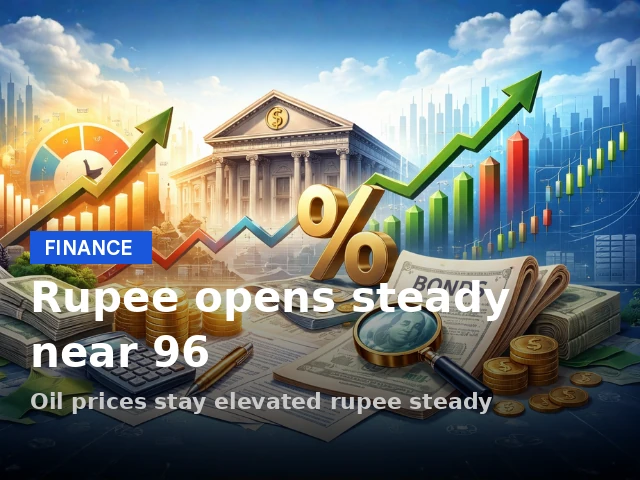
Rupee Pressure, Oil Rally, And The Reliance Share Price: A Retail Investor's Guide
Key Takeaways
- The rupee opened little changed at 96.25 per USD on July 16, signaling continued pressure.
- Brent crude rose to 85.28 dollars a barrel and WTI traded near 80.02 dollars, lifting import bills.
- RBI measures to encourage dollar inflows have faded as crude climbs, keeping macro risk high.
- The rupee remains near its record low, with oil-driven volatility driving near-term market moves.
Sharp tension in the currency markets, elevated crude prices, and renewed geopolitical tensions have put the Indian rupee in focus for retail investors. On Thursday, July 16, the rupee opened little changed at 96.25 per USD, signaling that domestic sentiment is tethered to global energy dynamics. The scene also matters for the reliance share price as investors weigh how macro forces could spill into earnings and valuations. The rupee has declined 1.7% so far in July, and it is moving closer to its record low of 96.96 per USD, recorded in May. This backdrop frames the risk-reward for Indian equity investors, particularly for large caps sensitive to oil and currency moves.
The Middle East tensions intensified, lifting oil benchmarks higher. Brent crude price rose to 85.28 dollars a barrel, while U.S. West Texas Intermediate crude traded at 80.02 dollars a barrel. Higher crude prices can widen India’s import bill and push demand for dollars among importers, pressuring the rupee further. Earlier, lower crude levels had provided some relief, but that support now appears to have faded as geopolitical developments unfold and market sentiment shifts. The rupee’s path will continue to be driven by oil prices and the broader geopolitical landscape.
The RBI had introduced measures aimed at encouraging dollar inflows, which helped support the rupee in earlier sessions. As crude oil prices moved higher and tensions in the Middle East persisted, the benefit from these measures has weakened. The domestic currency is again testing its recent lows, and any sustained oil-price strength would add to pressure on the import bill. Market participants will watch crude prices, foreign currency flows, and geopolitical developments for direction in the session ahead.
The price movement and geopolitical developments remain key drivers for the rupee’s direction. The Middle East conflict intensified, and investors remain concerned about potential disruptions to shipping routes. In this environment, investors should watch oil dynamics closely, as they are a primary driver of currency trajectories and, by extension, equity valuations. The pattern of moves also shapes the performance of major stocks, including the reliance ind stock price and other large caps, as macro risk can translate into sharper price swings. For broader context on stock-level implications, Swastika's Sarthi AI stock assistant can help you analyze how macro shifts could affect any ticker. Swastika's Sarthi AI stock assistant provides institutional-grade insights for retail investors.
RBI Measures And The Currency Outlook: How The Reliance Ind Stock Price And Major Stocks React
Investors should also consider the possibility that oil-market volatility could persist as global supply narratives evolve. The rupee’s path will remain a function of crude flows, geopolitical risk, and foreign capital dynamics, so it’s wise to maintain a flexible plan that can adapt quickly to headlines.
Related Reads
Frequently Asked Questions
What was the rupee's opening rate on July 16?
96.25 per USD.
What are the current Brent and WTI oil prices mentioned in the article?
Brent crude price rose to $85.28 per barrel and U.S. WTI crude stood at $80.02 per barrel.
How much has the rupee declined in July so far?
The rupee has declined 1.7% so far in July.
What is the rupee’s near-term record low level mentioned in the article?
The rupee is moving toward its record low of 96.96 per USD, recorded in May.
What did the RBI do and how did it affect the rupee according to the text?
The RBI introduced measures to encourage dollar inflows, which had provided support to the rupee earlier, but that support faded as crude prices rose and geopolitical tensions persisted.
Conclusion
This article was published without a generated conclusion. Please review and add a conclusion before publishing.
Open your trading and demat account here
Reference :
1 : 5Paisa
Big Budget


Popular Articles



.avif)
.avif)

.avif)



START YOUR INVESTMENT JOURNEY
Get personalized advice from our experts
- Dedicated RM Support
- Smooth and Fast Trading App
