
India’s passenger vehicle market ended the year on a strong note, with Maruti Suzuki once again reinforcing its leadership. According to industry data, the Maruti Suzuki Baleno topped the sales chart in December, while the Dzire claimed the crown as the best-selling car of 2025.
These numbers are more than just monthly rankings. They reflect changing consumer preferences, the strength of Maruti Suzuki’s product portfolio, and the broader recovery trend in the Indian automobile sector. For investors and market watchers, the sales performance also offers important insights into demand patterns and sectoral momentum.
The Baleno has consistently been one of India’s most popular premium hatchbacks. Its December sales leadership can be attributed to a mix of urban demand, festive season carryover, and its value proposition in terms of features and fuel efficiency.
In real-world terms, buyers today are looking for cars that balance affordability with technology. Touchscreen infotainment, safety features, and mileage have become non-negotiable. Baleno’s positioning fits well with these expectations, helping it outperform peers in a competitive segment.
Another key factor is Maruti Suzuki’s unmatched dealer and service network. During peak demand periods, availability plays a crucial role. While some manufacturers face supply constraints, Maruti’s scale allows it to convert enquiries into deliveries faster, boosting monthly sales numbers.
The Dzire’s emergence as 2025’s best-selling car underlines the enduring appeal of compact sedans in India. Despite the rise of SUVs, Dzire continues to attract buyers seeking comfort, boot space, and reliability at a reasonable price point.
For fleet operators, first-time buyers, and families alike, Dzire remains a practical choice. Its consistent performance across economic cycles shows how strong brand recall and trust influence purchasing decisions.
Unlike trend-driven launches, Dzire’s success is built on consistency. Incremental upgrades, strong resale value, and low maintenance costs have helped it maintain volumes year after year. This stability is something equity investors often look for when evaluating companies with long-term earnings visibility.
With Baleno and Dzire leading sales charts, Maruti Suzuki continues to command a significant share of the passenger vehicle market. This leadership translates into stable cash flows, pricing power, and resilience during demand fluctuations.
From an investor’s perspective, such dominance reduces earnings volatility and strengthens the company’s long-term fundamentals.
India’s automobile industry operates under evolving regulatory norms, including emission standards and safety requirements. Maruti Suzuki’s ability to adapt its portfolio while maintaining volumes indicates strong compliance capabilities and operational efficiency.
This alignment with regulatory expectations is critical in a market governed by standards set by bodies such as the Ministry of Road Transport and Highways and evolving environmental norms.
Strong sales data from a market leader often lifts sentiment across the sector. Auto ancillaries, component manufacturers, and dealerships tend to benefit from sustained volume growth. Investors usually interpret such data as a sign of healthy consumer demand.
In previous cycles, consistent sales leadership by Maruti Suzuki has coincided with improved earnings visibility for the broader auto ecosystem.
Car sales are closely linked to consumer confidence and disposable income levels. Baleno and Dzire’s performance suggests that demand in the mass and mid-premium segments remains intact, even amid macro uncertainties.
For Indian markets, this supports the narrative of steady domestic consumption, which is a key pillar of economic growth.
While monthly sales rankings grab headlines, long-term investors should focus on trends such as product mix, margin stability, and market share. Maruti Suzuki’s diversified portfolio across hatchbacks, sedans, and SUVs provides balance against shifting consumer preferences.
Interpreting auto sales data requires context. Factors like seasonality, inventory levels, and promotional campaigns all play a role. This is where structured research and investor education become valuable.
SEBI-registered platforms such as Swastika Investmart support investors with research tools, market insights, and tech-enabled investing solutions. Combined with responsive customer support, this helps investors make informed decisions rather than reacting to short-term news.
Why did Maruti Suzuki Baleno lead December sales?
Baleno benefited from strong urban demand, feature-rich positioning, and Maruti Suzuki’s wide dealer network ensuring timely deliveries.
How did Dzire become the best-selling car of 2025?
Dzire’s consistent demand from families and fleet buyers, along with strong brand trust and value-for-money pricing, helped it top annual sales.
Does strong car sales impact Maruti Suzuki’s stock?
Sales leadership generally supports earnings stability, but stock performance also depends on margins, costs, and overall market conditions.
What does this mean for the Indian auto sector?
Strong sales indicate healthy consumer demand, benefiting auto manufacturers and ancillary companies.
Should investors track monthly auto sales data?
Yes, but it should be combined with long-term fundamentals and sector trends for better decision-making.
The fact that Baleno led December sales and Dzire emerged as 2025’s best-selling car highlights Maruti Suzuki’s deep understanding of the Indian consumer. It also reinforces the strength of the domestic automobile market at a time when consumption trends are closely watched by investors.
For those looking to interpret such market signals effectively, access to credible research and regulatory-compliant guidance is essential. Swastika Investmart, with its SEBI registration, strong research framework, investor education initiatives, and tech-enabled investing platform, aims to empower investors to navigate market trends with confidence.
If you want to stay aligned with evolving market opportunities and invest with clarity, now is a good time to take the next step.
%20(1).png)
Indian equity markets opened on a mixed note today as investors remain cautious amid global uncertainty and stock-specific action.
While benchmark indices showed limited movement, the broader tone suggests a wait-and-watch approach at the start of the session.
The Nifty 50 opened marginally lower at 26,170.65, down 0.02 percent, reflecting muted sentiment among frontline stocks.
The index is currently consolidating near higher levels after recent gains. Profit booking in select heavyweights is keeping upside capped, while buying interest at lower levels continues to provide support.
• Immediate support near 26,100
• Strong support around 26,000
• Resistance seen near 26,250
• Break above resistance may open further upside
Traders are advised to remain cautious and avoid aggressive positions until a clear directional trend emerges.
The Bank Nifty opened slightly higher at 59,322.95, gaining 0.04 percent, supported by selective buying in private sector banks.
Despite global rate uncertainty, banking stocks continue to show resilience due to stable asset quality expectations and improving credit growth outlook in India.
• Immediate support near 59,000
• Strong support around 58,800
• Resistance placed near 59,600
• Sustained move above resistance may attract momentum buying
Global markets are trading mixed, with investors closely tracking macroeconomic data, interest rate expectations, and geopolitical developments.
In the domestic market, sentiment remains balanced as participants focus on:
• Corporate earnings outlook
• Institutional flows
• Global market direction
• Stock-specific developments
FII and DII activity will remain a key trigger during the session, especially in heavyweight stocks.
At the opening bell, sectoral performance is mixed:
• Banking stocks show marginal strength
• IT stocks trade cautiously amid global tech uncertainty
• FMCG remains stable
• Auto and metal stocks are seeing selective activity
Stock-specific moves are expected to dominate trading action today.
• Intraday traders should trade with strict stop-loss
• Avoid chasing momentum at higher levels
• Focus on stock-specific opportunities
• Positional traders may wait for confirmation above resistance levels
Volatility may remain limited unless there is a strong trigger from global markets.
Swastika Investmart provides traders and investors with:
• Real-time market insights
• Research-backed trading levels
• Advanced trading platforms
• Dedicated customer support
Our SEBI-compliant approach ensures disciplined and informed decision-making in dynamic market conditions.
👉 Trade smarter with Swastika Investmart
The Indian market has opened on a cautious yet stable note, with Nifty 50 trading slightly lower and Bank Nifty showing mild strength.
As the session progresses, global cues and institutional activity will guide further direction. Traders are advised to stay disciplined and focus on risk management.
👉 Trade smarter with Swastika Investmart
Stay informed. Stay disciplined. 📊
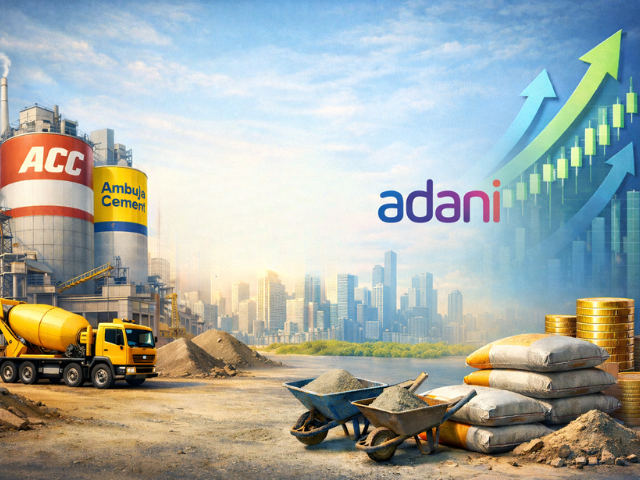
When the Adani Group acquired Ambuja Cements and ACC, it signalled a decisive shift in India’s cement landscape. What initially looked like a strategic entry into a core infrastructure sector has now evolved into a much larger consolidation story. The proposed merger of Ambuja Cements and ACC marks a defining moment for both the Adani Group and the Indian cement industry.
For investors, this move is not just about corporate restructuring. It raises important questions around market dominance, cost synergies, regulatory oversight and the future valuation of cement stocks.
Understanding the Ambuja–ACC merger impact on stocks requires looking beyond short-term price reactions and into the structural implications of scale, efficiency and capital allocation.
Ambuja Cements and ACC are two of India’s most established cement companies, with strong brand recall, pan-India manufacturing footprints and deep dealer networks. Together, they command a significant share of India’s cement capacity.
Under the Adani Group, the merger aims to unlock operational efficiencies by combining logistics, procurement, power sourcing and distribution. Cement is a scale-driven business, where cost leadership often determines profitability. Larger volumes allow better bargaining power on fuel, freight and raw materials.
For Adani, the merger strengthens its ambition to become one of the world’s largest cement producers, aligned with India’s long-term infrastructure growth story.
Cement is a critical input for roads, housing, railways, ports and urban infrastructure. India’s government-led capital expenditure cycle has created sustained demand visibility for the sector.
The Adani Group’s strategy focuses on backward integration and logistics optimisation. With access to ports, rail networks, power assets and renewable energy, Adani can potentially reduce cement production and transportation costs over time.
By merging Ambuja and ACC, the group simplifies structure, reduces duplication and enhances capital efficiency. This is particularly important in an industry where margins are sensitive to fuel costs and freight expenses.
From a shareholder perspective, the merger raises both opportunities and concerns.
On the positive side, operational synergies could improve profitability over the medium term. Shared logistics, unified procurement and better capacity utilisation may lead to margin expansion, especially during favourable demand cycles.
However, near-term market reactions often reflect uncertainty. Integration costs, merger ratios and regulatory approvals can influence stock performance in the short run. Investors also closely watch how debt levels and capital expenditure plans evolve post-merger.
Historically, cement mergers have rewarded patient investors once synergy benefits become visible in earnings rather than immediately after announcements.
Large mergers in capital-intensive sectors attract regulatory scrutiny. The Competition Commission of India plays a key role in evaluating market concentration and pricing power.
While the Indian cement market remains competitive with multiple national and regional players, consolidation does increase the influence of large groups. Regulators typically focus on ensuring fair competition and preventing monopolistic practices.
For investors, regulatory approvals are a procedural risk rather than a fundamental threat, but timelines and conditions can affect sentiment.
The Ambuja–ACC merger could accelerate consolidation across the cement sector. Smaller regional players may face increased pricing pressure as larger groups optimise costs and expand distribution reach.
At the same time, stronger balance sheets and scale allow major players to invest in capacity expansion, green energy and alternative fuels. This supports long-term sustainability goals and aligns with evolving environmental regulations in India.
For the Indian markets, a stronger cement sector supports infrastructure development, employment and capital formation.
Despite the strategic logic, risks remain.
Integration execution is critical. Merging operations, cultures and systems requires disciplined management. Any delays in synergy realisation can impact earnings expectations.
Cement demand is cyclical and linked to construction activity. A slowdown in infrastructure spending or housing demand can affect volumes.
Input costs such as coal, pet coke and freight remain volatile. Although scale provides some cushion, margin pressures cannot be eliminated entirely.
Finally, high expectations embedded in stock prices can lead to short-term volatility if results do not immediately reflect synergy benefits.
The Ambuja–ACC merger under the Adani Group is a long-term structural story rather than a short-term trading event. Investors with a medium to long-term horizon may view consolidation as a positive development, provided balance sheet discipline and execution remain strong.
Tracking quarterly performance, cost trends and capacity expansion plans will be crucial in evaluating progress.
Corporate actions of this scale require careful analysis rather than headline-driven decisions. Understanding regulatory processes, synergy timelines and sector cycles can make a meaningful difference to outcomes.
This is where Swastika Investmart, a SEBI-registered brokerage, adds value. With in-depth research, sector expertise, robust trading platforms and investor education initiatives, Swastika Investmart helps investors navigate complex corporate developments with clarity and confidence.
Why is the Ambuja–ACC merger significant?
The merger creates a larger, more efficient cement platform under the Adani Group, unlocking cost synergies and strengthening market positioning.
How does this merger impact Ambuja and ACC stocks?
In the short term, stock performance may remain volatile. Over the long term, synergy benefits and improved profitability could support valuations.
Will regulators approve the Ambuja–ACC merger?
The merger will be reviewed by the Competition Commission of India to ensure fair competition. Such approvals are common in large consolidations.
Does this merger make Adani a cement monopoly?
No. While Adani becomes a major player, the Indian cement industry remains competitive with several large and regional producers.
Is the cement sector attractive for long-term investors?
Cement benefits from infrastructure growth but remains cyclical. Long-term investors should focus on balance sheet strength and cost leadership.
The Ambuja–ACC merger marks a bold step in Adani Group’s cement strategy. While short-term market reactions may fluctuate, the long-term narrative centres on scale, efficiency and alignment with India’s infrastructure growth.
For investors seeking to understand and act on such structural themes with confidence, research-backed insights are essential.
If you are exploring opportunities in cement and infrastructure stocks, consider partnering with Swastika Investmart for informed investing and seamless execution.

Christmas is more than a celebration. For market participants, it often marks a period of optimism, portfolio rebalancing, and selective buying driven by global cues and year-end strategies. As Indian markets step into Christmas week 2025, sentiment remains constructive with investors eyeing quality stocks that can benefit from festive demand, institutional flows, and global stability.
This Christmas, Swastika have shortlisted a thematic list of stocks, curated to align with festive consumption, financial strength, and long-term growth visibility.
Let’s unwrap the opportunities.
Historically, global markets often witness a mild year-end rally, popularly known as the Santa Rally. While Indian markets do not always mirror Western trends perfectly, December typically brings stability rather than aggressive selling, supported by institutional flows and global risk appetite.
Key factors shaping Christmas week 2025 include:
• Stable inflation outlook
• Controlled interest rate expectations
• Improving global equity sentiment
• Portfolio rebalancing by FIIs and DIIs
This environment creates a favourable backdrop for quality stock selection rather than speculative trades.
Foreign Institutional Investors have shown selective buying interest in Indian large-caps and sector leaders toward the year-end. This indicates confidence in India’s macro fundamentals despite global uncertainties.
Domestic Institutional Investors continue to act as a shock absorber, ensuring liquidity and reducing sharp downside risks. Their steady participation often strengthens festive-week market stability.
For retail investors, this alignment of FII and DII behaviour creates an opportunity to ride structured trends rather than short-term noise.
| Stock | CMP (as on 10-12-25) |
Target | Upside |
|---|---|---|---|
| GMR AIRPORT | 103.5 | 130.5 | 26% |
| BSOFT | 433 | 530 | 22% |
| NATIONALUM | 273 | 328 | 18% |
| FEDERAL BANK | 259 | 307 | 18% |
| LEMON TREE | 164.5 | 195 | 18% |
| ASHOK LEYLAND | 161 | 187 | 16% |
| AURO PHARMA | 1218 | 1400 | 15% |
| ASIAN PAINTS | 2969 | 3400 | 14% |
These stocks are shortlisted based on sector relevance, balance-sheet strength, earnings visibility, and festive season demand trends. This is not a recommendation but a thematic insight curated for investor awareness.
Festive periods typically boost discretionary spending across retail, fashion, food, and lifestyle segments.
• Strong brand recall
• Consistent revenue growth
• Urban and semi-urban demand resilience
These stocks often benefit from Christmas and New Year consumption momentum, extending into Q4 earnings performance.
Banks and financial companies remain the backbone of the Indian market.
• Stable asset quality
• Improving credit growth
• Strong capital adequacy
During year-end, financial stocks attract institutional allocations due to balance-sheet visibility and regulatory comfort under SEBI and RBI frameworks.
IT and digital-first companies gain attention during festive weeks due to:
• Global client visibility
• Currency stability benefits
• Strong order pipelines
With global tech spending stabilizing, selective IT names remain relevant for medium-term portfolios.
Government capex momentum continues to support infrastructure-linked companies.
• Order book visibility
• Policy continuity
• Execution-driven growth
These stocks often see accumulation during calm market phases like December.
No festive market outlook is complete without mentioning gold and silver.
• Gold remains a preferred hedge against global uncertainty
• Silver benefits from industrial demand and clean energy themes
During Christmas and year-end, investors often rebalance portfolios by increasing allocation to precious metals, adding stability to overall returns.
Indian markets remain globally connected. Christmas week cues to track include:
• US market performance and bond yields
• Dollar index movement impacting FII flows
• Crude oil price stability
• Asian market sentiment
A calm global environment generally supports Indian equities, especially during low-volume holiday sessions.
Swastika Investmart stands out for combining research depth with investor education.
• SEBI-registered, compliance-driven approach
• Research by experienced, NISM-certified analysts
• Tech-enabled platforms for real-time insights
• Strong customer support and guidance
Festive markets require clarity, not speculation. This is where professional research makes a difference.
Instead of chasing quick gains, experienced investors focus on:
• Quality over quantity
• Diversification across equity, metals, and cash
• Risk-managed position sizing
• Long-term visibility
Christmas is best viewed as a portfolio alignment opportunity, not a high-risk trading phase.
Is Christmas week good for investing in stocks?
Christmas week is generally stable with lower volatility, making it suitable for selective, quality investments rather than aggressive trades.
Do FIIs actively invest during year-end?
FIIs often rebalance portfolios in December, leading to selective buying in fundamentally strong Indian stocks.
Should investors include gold during festive seasons?
Yes, gold and silver are commonly used as hedging tools during festive and uncertain periods.
Are festive stock picks suitable for long-term investors?
Festive themes work best when aligned with strong fundamentals and long-term growth visibility.
Christmas is about joy, balance, and thoughtful choices. The same applies to investing. With supportive institutional flows, stable global cues, and selective opportunities across sectors, Christmas 2025 offers a meaningful window to strengthen portfolios.
If you want expert-curated insights, reliable research, and a trusted investing partner, Swastika Investmart is here to guide you through every market season.
🎁 Open your trading and investment account today
Wishing you a Merry Christmas and a prosperous investing journey ahead 📈🎄
%20(1).png)
The Indian equity markets enter 23 December 2025 on a positive note after a buoyant session on 22 December 2025, as year-end optimism, strong global cues, and renewed foreign investor interest lifted sentiment. With the Christmas week underway, traders and investors are watching key support and resistance levels while monitoring global macro developments for directional clues.
Indian indices ended strongly ahead of the holiday-shortened week:
The rally extended recent upside momentum and reflected selective buying across sectors, including IT, banking, and consumer-oriented stocks. Market breadth was healthy, indicating that the advance wasn’t confined only to a few blue-chips. The Times of India
International markets are providing supportive signals:
One of the subtle drivers behind the recent strength has been foreign portfolio investor (FII) interest. After a period of cautious positioning, FII inflows have returned in measured fashion, particularly into large caps and quality names. Reuters
Domestic Institutional Investors (DIIs) continue to support markets with insurance and mutual fund buying, balancing short-term volatility. Institutional participation often lends credibility to trends, reducing the risk of sharp reversals.
For traders aligned with technical charts, several reference points are shaping expectations for today:
Nifty 50
Bank Nifty
These technical thresholds are useful for traders and positional investors alike to manage risk in the thin holiday session.
Another factor closely watched by participants is the Indian Rupee. After strengthening in recent weeks, the rupee saw mild retreat due to increased dollar demand and hedging activity in derivative markets. While this hasn’t derailed market optimism, it underscores the interplay between currency moves and equity flows — especially FIIs evaluating returns in rupee terms. Reuters
Banking & Financials
The banking index’s sturdy performance on 22 Dec suggests continued interest in financials heading into 23 Dec. Stability in interest rates and improving credit growth data underpin confidence.
IT & Tech Stocks
Tech majors ended higher, supported by positive global earnings cues and currency-linked earnings expectations, which often benefit when the rupee stabilizes.
Consumer Cyclicals & Industrial Plays
Selective buying in consumer and industrial stocks reflecting festive demand and broader economic resilience adds depth to the current market move.
For short-term traders, today’s session should focus on intra-day levels with disciplined stop-losses near support zones. A breakout above resistance could fuel short-covering ahead of week’s end.
For longer-term investors, the current backdrop suggests that while data flows may slow due to holidays, structural trends such as foreign allocations to Indian equities and stable macro fundamentals could sustain overall confidence into the new year.
👉 Pro Tip: Use volatility tools and real-time research dashboards (like those offered by Swastika Investmart) to gauge live market sentiment and refine entry points.
Investors should always consider guidelines from India’s market regulator, SEBI (Securities and Exchange Board of India), which enforces transparency and trading norms across exchanges. Keeping abreast of SEBI announcements around index composition, corporate disclosures, and derivatives norms can help in making informed decisions.
Q1: Will the Nifty continue its rally today?
Market setup suggests a positive bias but rally continuation depends on sustaining above key support zones (25,950–26,000) and strong global cues.
Q2: How important are foreign flows for the Indian markets right now?
FII participation remains a key sentiment driver, especially near year-end, as overseas investors rebalance portfolios and reposition for 2026.
Q3: Can small-caps outperform mid/large caps in holiday weeks?
Small and midcaps often show selective strength but typically lag behind large caps in thin sessions unless specific triggers emerge.
Q4: Should traders worry about rupee volatility?
Rupee moves can influence return expectations, but mild volatility doesn’t necessarily derail equity momentum unless currency stress escalates sharply.
Q5: Where can I track live support and resistance levels?
Use robust research tools and real-time dashboards (like Swastika Investmart’s) to monitor dynamic market levels and adjust trades effectively.
The Indian market outlook for 23 December 2025 shows a cautiously bullish setup shaped by strong 22 December 2025 closes, supportive global dynamics, and renewed investor interest. While holiday-thin volumes could lead to range-bound moves, the broader sentiment remains positive.
If you’re looking to track live prices, technical levels, and real-time research insights open your account with Swastika Investmart today for trusted, SEBI-registered support and advanced investing tools.


Trust Our Expert Picks
for Your Investments!



%20(2).png)
Indian equity markets began the session on a slightly negative note today, 27 December 2025, reflecting a cautious investor mood as the year draws to a close. Traders and investors are taking a careful approach amid mixed domestic and global signals.
The near-flat opening of Nifty 50 indicates a balanced approach between buying interest and profit booking, while Bank Nifty shows mild weakness due to selective selling in financial stocks.
At Swastika Investmart, investors gain access to:
This empowers both long-term investors and active traders to stay informed and confident.
As of 27 December 2025, Indian markets have opened marginally lower, signaling cautious sentiment ahead of year-end. Traders should monitor key support and resistance levels, while long-term investors can continue to focus on disciplined investing and portfolio management.
👉 Open your trading account today with Swastika Investmart
Smart planning leads to smarter investing.
%20(2).png)
The Indian stock market on December 30, 2025, opens amid cautious global signals and year-end positioning. With Gift Nifty marginally down at 25,932, traders eye a flat-to-weak start while monthly F&O expiry adds layers of intrigue.
US markets closed lower with Dow Jones dropping 240 points, signaling profit booking in tech-heavy Nasdaq. Asian peers trade mixed—Hang Seng dips 0.71% while Shanghai edges up 0.04%—as year-end flows dominate.
This setup mirrors recent patterns where foreign portfolio investors (FPIs) stay cautious, offloading amid US Dollar strength above 104. Domestic institutions, however, provide a floor, buying dips as seen in prior sessions with net inflows over ₹5,700 crore.
For Indian traders, such cues mean focusing on intraday ranges rather than big bets. SEBI's market-wide position limits ensure orderly expiry trading, curbing excessive speculation in F&O contracts.
Gift Nifty at 25,932 (down 11.5 points) points to a subdued Nifty 50 open near 25,900-25,950. This aligns with Swastika Investmart's research noting high Gift open interest at 25,946—above recent lows but testing 20-day SMA weakness.
| Index | Previous Close | Gift Indication | Key Support |
|---|---|---|---|
| Nifty 50 | 25,943 | 25,932 | 25,830 |
| Bank Nifty | 58,980 | 58,700 | 58,500 |
A break below 25,830 could accelerate selling toward 25,700, while sustained bids above 25,900 favor bounce to 26,000. Real-world context: Last week's expiry saw similar Gift dips bought aggressively by retail, but FPIs trimmed positions.
Swastika's SEBI-registered research (INH000024073) highlights how Gift levels guide 70% of early trades, empowering users with real-time alerts via their app.
Swastika's FNO snapshot reveals Nifty open interest dominance at highs: 2.64cr lots (max 2.95cr), signaling bullish positioning despite recent 50-point pullback. Flip data shows calls strong at 25,950-26,000 strikes, puts clustered at 25,830 support.
This data underscores SEBI's MWPL norms, preventing over-leveraging. For instance, during November expiry, similar setups led to 150-point Nifty swings—traders using Swastika's tools caught 80% of moves via automated scanners.
Nifty grinds lower toward 25,800 before expiry close, locked in 25,700-26,200 range for two months. Resistance builds at 26,050-26,100; breach below 25,850 triggers 25,700 test.
Bank Nifty defends 58,980 but eyes 58,600 (50-DEMA) if breached. Sector rotation favors defensives like FMCG amid high-beta corrections.
Practical Trade Plans:
Swastika Investmart shines here—its tech platform integrates live FNO data, backtested strategies, and 24/7 support, helping users navigate like pros.
Year-end expiry coincides with low participation, amplifying FPI flows' weight. Recent DII buying (₹23,000cr+ sessions) cushions falls, but sustained FPI selling (₹1,300cr last week) pressures midcaps.
SEBI's oversight ensures transparency: F&O bans like Sammaan Capital's curb speculation, while research regulations boost trust. Impact? Stable rupee aids inflows, but global yields keep indices range-bound into 2026.
Relatable scenario: A Mumbai trader last expiry used Swastika's alerts to flip Nifty puts at 25,830 support, banking 12% returns—proof of education-driven edges.
What does Gift Nifty at 25,932 mean for December 30 opening?
It signals flat bias; Nifty likely opens 25,900-25,950 unless Asian cues shift sharply.
Key Nifty support and resistance on expiry day?
Support: 25,830 (50-EMA), 25,700 major. Resistance: 25,950-26,000.
Why high Nifty OI despite market dip?
Reflects bullish bets; max pain 25,900 with call writing at 26,000.
Is Bank Nifty safe above 58,980?
Yes for now, but 58,700 breach eyes 58,500—watch PSU banks.
How does Swastika help with FNO expiry trades?
SEBI-registered tools offer real-time OI, scanners, and education webinars.
As markets consolidate into 2026, disciplined trading with reliable research pays off. Open a Swastika Investmart account today for seamless access to advanced charts, instant support, and investor education—your edge in volatile times. SEBI-registered, tech-powered, and trader-focused.

• Coforge raised around $550 million through a QIP to fund growth and acquisitions.
• The Encora acquisition strengthens Coforge’s presence in digital engineering and global delivery.
• The move signals a clear shift toward scale, higher value services, and overseas expansion.
• For investors, execution, margins, and integration will be key to tracking long term value creation.
In a sector where organic growth has moderated and global clients are becoming selective with IT spending, Coforge has made a decisive move. The company’s $550 million Qualified Institutional Placement followed by the acquisition of Encora is a clear signal that management is betting on scale, capabilities, and global reach to drive the next phase of growth.
For Indian IT services investors, this is not just a capital raise or a routine acquisition. It reflects how mid tier IT companies are repositioning themselves in a competitive and evolving global technology landscape.
A QIP allows listed companies in India to raise capital from institutional investors under SEBI regulations. Coforge’s decision to tap this route suggests confidence in long term growth opportunities and investor appetite.
Raising capital through equity gives Coforge financial flexibility. Instead of stretching leverage, the company has chosen to strengthen its balance sheet, which is crucial when pursuing overseas acquisitions and scaling operations.
For investors, this approach lowers financial risk while enabling strategic expansion.
Large QIPs are often interpreted as a signal of management intent. Coforge’s fund raise indicates that the company sees meaningful opportunities ahead, rather than focusing only on incremental growth.
Encora is a global digital engineering services firm with a strong presence in product engineering, cloud, data, and emerging technologies. These are areas where client spending remains relatively resilient despite broader IT budget pressures.
Traditional IT services are increasingly commoditised. Growth is shifting toward digital transformation, platform engineering, and specialised technology solutions.
By acquiring Encora, Coforge strengthens its positioning in high value services that command better pricing and longer client engagements.
Encora brings a stronger presence in North America and Latin America, along with a diversified client base. This helps Coforge reduce dependence on a limited set of geographies and industries.
For Indian IT companies, geographic diversification is becoming critical to manage regional demand cycles.
Clients increasingly prefer vendors that can offer scale, domain expertise, and end to end solutions. Mid sized IT firms often struggle to compete with larger peers on breadth.
The Encora acquisition helps Coforge bridge this gap by adding both talent and capabilities.
With an expanded service portfolio, Coforge can cross sell Encora’s digital engineering services to its existing clients and vice versa. This can improve wallet share without relying solely on new client wins.
Capital raises can initially create dilution concerns. However, markets often look beyond short term impact and focus on how effectively the capital is deployed.
In Coforge’s case, the combination of a QIP and a strategic acquisition positions the move as growth oriented rather than defensive.
The Indian IT sector is navigating slower global growth, cautious client spending, and pricing pressure. In such an environment, companies that invest in differentiated capabilities and global reach may be better placed to outperform over the cycle.
Coforge’s move aligns with this broader trend.
Both the QIP and acquisition fall under SEBI’s regulatory framework for listed companies. Transparency in fund utilisation, disclosures, and shareholder communication plays a key role in maintaining investor trust.
Indian markets generally reward companies that follow clear governance practices while pursuing growth.
No strategic move is without risk. Investors should monitor a few key factors closely.
Merging teams, cultures, and systems across geographies can be complex. Smooth integration of Encora will be critical to realise synergies.
While digital services offer higher margins, integration costs and talent retention can pressure margins in the short term.
Global technology spending cycles still matter. Even with strong capabilities, sustained growth depends on client demand trends.
Coforge’s strategy reflects a larger shift within Indian IT. Mid tier companies are no longer content with incremental growth. They are actively using capital markets to fund scale and specialisation.
For investors, this underscores the importance of company specific research rather than broad sector calls.
Corporate actions like QIPs and acquisitions need careful evaluation. Headlines alone do not capture long term impact.
Swastika Investmart, a SEBI registered financial services firm, supports investors with strong research tools, detailed company analysis, and tech enabled investing platforms. Its focus on investor education and responsive customer support helps investors assess such developments with clarity rather than speculation.
Why did Coforge choose a QIP instead of debt?
Equity funding strengthens the balance sheet and provides flexibility without increasing leverage, which is important for overseas acquisitions.
What does Encora add to Coforge’s business?
Encora enhances Coforge’s digital engineering, cloud, and product development capabilities along with a stronger global presence.
Is dilution a concern for existing shareholders?
Short term dilution is possible, but long term impact depends on how effectively the capital is deployed and integrated.
Does this signal confidence from management?
Yes. Raising capital and pursuing acquisitions typically reflects confidence in future growth opportunities.
Coforge’s $550 million QIP and the Encora acquisition mark a decisive step toward building scale and strengthening global competitiveness. In an IT sector undergoing structural change, this strategy positions the company to move up the value chain rather than compete on price alone.
For investors, the real story will unfold over the coming quarters through execution, integration, and margin performance. A research led approach is essential to separate short term noise from long term value creation.
If you want to track such corporate developments with deeper insights, robust tools, and a trusted platform, consider opening an account with Swastika Investmart.

• Copper prices are showing strong momentum due to global supply tightness and rising demand from EVs and infrastructure.
• India’s capex push, renewable energy expansion, and power sector growth are key domestic drivers.
• MCX copper prices are closely tracking global cues like China demand and USD movement.
• Copper’s rally has broader implications for metals, power, capital goods, and infrastructure stocks.
Copper has quietly moved into the spotlight of India’s commodity market. Over recent months, the red metal has displayed strong and consistent momentum, attracting traders, investors, and industry participants alike. While gold and crude oil often dominate headlines, copper’s rally carries deeper economic signals.
Often called the metal with a PhD in economics, copper reflects the health of industrial activity. Its recent strength is not accidental. It is backed by a mix of global supply constraints, structural demand growth, and India’s own infrastructure and energy transition story.
Understanding why copper is on fire helps investors decode where the broader economy may be heading.
Copper is a critical input across sectors. From power cables and transformers to electric vehicles, renewable energy projects, housing, railways, and data centres, copper demand cuts across the modern economy.
In India, copper consumption is closely linked to economic growth. When capex spending rises and industrial activity improves, copper demand tends to follow. This makes copper not just a commodity trade, but a macroeconomic indicator.
Copper mining is capital intensive and time consuming. New mines take years to come online, while existing mines face declining ore grades and regulatory challenges. Disruptions in major copper producing regions have further tightened global supply.
At the same time, inventories on global exchanges have remained relatively low. This imbalance between supply and demand has created a supportive price environment for copper.
China remains the world’s largest consumer of copper. Any improvement in Chinese manufacturing, infrastructure spending, or power sector activity quickly reflects in copper prices.
Even marginal signs of stabilisation in global manufacturing activity have provided strong support to copper prices, especially when supply remains constrained.
India’s focus on infrastructure development is a major tailwind for copper. Power transmission lines, metro rail projects, smart cities, and housing all require significant copper usage.
The government’s continued emphasis on capital expenditure has created steady demand visibility for industrial metals, including copper.
India’s transition towards renewable energy is copper intensive. Solar installations, wind farms, energy storage systems, and electric vehicle charging infrastructure all rely heavily on copper for conductivity and efficiency.
Electric vehicles, in particular, use significantly more copper than conventional vehicles. As EV adoption increases, copper demand is expected to rise structurally rather than cyclically.
India is a net importer of refined copper. This makes domestic prices sensitive to global trends and currency movement. A weaker rupee can further amplify copper prices in the Indian market, adding to the momentum seen on MCX.
MCX copper prices have reflected this strong global and domestic setup. Traders have observed sustained buying interest, supported by both fundamentals and technical factors.
Rising open interest along with price strength often indicates fresh participation rather than short covering. This suggests confidence in the underlying trend.
For market participants, copper has shifted from being a short term trade to a theme driven by structural demand visibility.
Higher copper prices can improve margins for global producers and benefit domestic downstream players involved in copper products, wires, and cables.
Strong copper demand signals healthy order flows for power equipment manufacturers, EPC players, and capital goods companies linked to infrastructure and energy projects.
While rising copper prices reflect growth, they can also increase input costs for certain industries. Investors often track whether companies can pass on higher costs or face margin pressure.
Commodity trading in India is regulated by SEBI, ensuring transparency, risk management, and fair price discovery. MCX plays a central role in providing a platform for hedging and price discovery in copper.
For businesses, copper futures offer a way to manage price risk. For investors and traders, they provide an opportunity to participate in global commodity trends within a regulated framework.
Copper is influenced by multiple variables such as global growth expectations, currency movement, interest rates, and policy developments. While momentum is strong, commodities remain volatile by nature.
A disciplined approach that combines fundamental understanding with risk management is essential. Tracking global cues, inventory trends, and domestic demand indicators can help navigate copper’s price movement more effectively.
Themes like copper require more than surface level analysis. Understanding whether a rally is cyclical or structural makes a significant difference in decision making.
Swastika Investmart, a SEBI registered financial services firm, supports investors with strong research tools, tech enabled trading platforms, and responsive customer support. Its focus on investor education helps clients understand not just what is moving, but why it is moving.
This approach is especially valuable in commodities, where global linkages and volatility demand informed participation.
Why is copper called an economic indicator?
Copper demand rises with industrial and infrastructure activity, making its price movement a reflection of economic health.
Is copper’s current rally driven more by global or Indian factors?
Both play a role. Global supply constraints and China demand support prices, while India’s infrastructure and energy push adds domestic strength.
How can Indian investors participate in copper momentum?
Through MCX futures or by tracking equity sectors linked to copper consumption, while maintaining proper risk management.
Does currency movement affect copper prices in India?
Yes. Since India imports copper, a weaker rupee can push domestic prices higher even if global prices are stable.
Copper’s strong momentum is not just a short term spike. It reflects deeper shifts in global supply dynamics and India’s long term growth priorities. From infrastructure to clean energy, copper sits at the centre of multiple structural themes shaping the Indian economy.
For investors, copper offers insights into where economic momentum is building. Participating in such themes requires research driven decision making and a reliable trading ecosystem.
If you are looking to explore commodity opportunities with strong research backing, advanced platforms, and investor focused support, consider opening an account with Swastika Investmart.

• India is accelerating its ambition to become a global shipbuilding hub through policy reforms and strategic incentives.
• Government initiatives aim to reduce import dependence and boost exports in the maritime sector.
• Shipbuilding growth can benefit infrastructure, metals, logistics, and capital goods sectors.
• Investors should track policy execution, order inflows, and global trade trends closely.
India’s manufacturing story is entering a new phase, and shipbuilding is fast emerging as a strategic focus area. With rising global trade, supply chain diversification, and India’s own maritime ambitions, the government has intensified efforts to position the country as a competitive global shipbuilding hub.
The key question for investors and industry watchers is simple: can India realistically challenge established shipbuilding giants and convert policy intent into execution? Let us break this down from an economic, market, and investment perspective.
Shipbuilding is not just about building vessels. It has deep linkages with steel, heavy engineering, power equipment, electronics, ports, and logistics. Countries with strong shipbuilding capabilities often enjoy strategic advantages in trade, defence, and employment generation.
For India, the opportunity is significant. Nearly 95 percent of India’s trade by volume moves through sea routes, yet a large portion of vessels used are foreign-built. This dependence leads to foreign exchange outflow and limits domestic value creation.
A stronger shipbuilding ecosystem aligns directly with broader national goals such as Make in India, Atmanirbhar Bharat, and export-led growth.
The government has rolled out targeted policy measures to revive and scale up shipbuilding and ship repair. This includes financial assistance schemes aimed at reducing cost disadvantages faced by Indian shipyards compared to global peers.
Shipbuilding is capital intensive and long gestation in nature. To address this, the policy framework focuses on improving access to financing, reducing project risk, and enhancing long-term visibility of orders.
Alongside new shipbuilding, ship repair and ship recycling are receiving attention. India already has a strong presence in ship recycling, particularly in Gujarat. Expanding repair capabilities helps generate steady cash flows and positions Indian yards as service hubs for global shipping routes passing through the Indian Ocean.
Defence shipbuilding remains a critical anchor. Indian Navy and Coast Guard orders provide scale, learning, and technological capability. At the same time, growth in coastal shipping, inland waterways, and energy transportation creates incremental domestic demand.
Countries like China, South Korea, and Japan dominate global shipbuilding due to scale, technological depth, and state-backed financing. India does not aim to replicate their volume leadership overnight.
Instead, India’s approach appears focused on niche segments such as specialised vessels, defence ships, offshore support vessels, and green energy-linked shipping.
India’s labour cost advantage, improving port infrastructure, and strategic geographic location are structural positives. With the right policy execution, these factors can help Indian yards win regional and export orders over time.
A sustained shipbuilding push benefits capital goods manufacturers, heavy engineering firms, and equipment suppliers. Order inflows in shipyards often translate into demand for domestic ancillaries.
Shipbuilding is steel intensive. Any structural increase in ship orders supports domestic steel consumption, benefiting upstream metal producers.
A stronger maritime ecosystem improves port utilisation, coastal trade, and logistics efficiency. This has long-term positive implications for port operators and logistics companies.
Defence-linked shipyards and suppliers align with India’s broader defence indigenisation theme, which has been gaining investor attention in recent years.
Shipbuilding operates under multiple regulatory touchpoints including maritime authorities, defence procurement frameworks, and environmental norms. Policy clarity, faster approvals, and consistency remain key execution variables.
India’s regulators have been gradually improving transparency and timelines, which supports investor confidence. However, project execution and cost discipline will remain under close market scrutiny.
Shipbuilding is a long-cycle industry. Short-term volatility should be expected, but structural policy backing improves long-term visibility.
Emerging policy-led themes require disciplined research rather than headline-driven investing. Understanding sector cycles, company-specific execution, and regulatory nuances is critical.
Swastika Investmart, a SEBI-registered financial services firm, supports investors with in-depth research, robust trading platforms, and strong customer support. Its tech-enabled investing tools and focus on investor education help market participants make informed decisions, especially in evolving sectors like maritime manufacturing.
Is shipbuilding a long-term opportunity for India?
Yes, given India’s trade growth, defence needs, and policy focus, shipbuilding has long-term strategic relevance.
Which sectors benefit most from shipbuilding growth?
Capital goods, steel, ports, logistics, and defence manufacturing are key beneficiaries.
Can Indian shipyards compete globally?
India may not lead in volume immediately but can compete in specialised and regional segments.
Is this theme suitable for retail investors?
It can be, but investors should focus on fundamentals, execution capability, and long-term horizon.
India’s ambition to become a global shipbuilding hub is no longer just a vision statement. With policy support, strategic demand, and improving infrastructure, the foundations are being laid. While challenges remain, the direction is clearly positive.
For investors, this theme underscores the importance of staying aligned with structural economic shifts rather than short-term noise. A research-driven approach can help identify sustainable opportunities within this evolving landscape.
If you are looking to explore such policy-driven investment themes with professional research support and a reliable trading platform, consider opening an account with Swastika Investmart.
%20(2).png)
Indian equity markets closed lower today, 26 December 2025, as investors remained cautious amid profit booking at higher levels. Both benchmark indices, Nifty 50 and Nifty Bank, ended the session in the red after opening weak and failing to build meaningful intraday momentum.
The broader market tone reflected consolidation after recent gains, with traders opting to reduce risk exposure ahead of the year-end.
Indian equity markets opened on a cautious note on 26 December 2025, reflecting subdued investor sentiment at the start of the session.
The initial weakness was largely influenced by mixed global cues and mild selling pressure in select heavyweight stocks.
Selling pressure picked up as the day progressed, preventing any meaningful recovery and resulting in a weaker close for benchmark indices.
The softer close indicates the absence of fresh positive triggers and continued profit booking near higher index levels.
After a strong run in recent weeks, investors chose to book profits, especially in index heavyweights. This capped upside momentum and dragged indices lower through the session.
With the calendar year nearing its end, many market participants preferred to stay light on positions. Reduced participation and selective selling are common during the last trading sessions of December.
Banking stocks underperformed slightly, keeping Bank Nifty under pressure. PSU and private bank stocks saw limited buying interest, impacting overall index strength.
Overall market breadth leaned negative, indicating cautious sentiment across segments.
From a technical perspective:
A decisive move above resistance or below support may guide the next short-term trend.
For long-term investors, short-term market fluctuations should not distract from asset allocation and disciplined investing.
For traders, it is important to:
Markets are likely to remain range-bound unless fresh triggers emerge.
At Swastika Investmart, investors benefit from:
Our focus is on helping investors navigate both volatile and consolidating markets with confidence.
On 26 December 2025, Indian markets closed lower, reflecting cautious sentiment and profit booking at higher levels. With year-end approaching, markets may continue to consolidate in the near term.
Staying informed, disciplined, and aligned with long-term goals remains key.
👉 Open your trading and investment account with Swastika Now
Smart investing starts with staying updated.