.png)
Shares of Multi Commodity Exchange of India (MCX) are firmly in the spotlight as the stock trades ex-date for its first-ever stock split. This corporate action marks a historic moment for MCX since its listing in 2012 and has drawn strong attention from investors tracking capital market and exchange-related stocks.
The development has sparked discussion not only because of the sharp price adjustment seen on trading screens, but also due to what it means for liquidity, retail participation, and long-term investor sentiment in the Indian stock market.
MCX has approved a 5:1 stock split, meaning one equity share with a face value of ₹10 has been subdivided into five equity shares of face value ₹2 each.
The company fixed January 2, 2026, as the record date to determine shareholder eligibility. As a result, MCX shares traded ex-date on this day, leading to a proportionate adjustment in the share price.
This is the first stock split in MCX’s history, making it a significant corporate milestone.
To understand this clearly, consider a simple example.
If an investor held 10 MCX shares before the record date, those holdings will now convert into 50 shares after the split. While the number of shares increases fivefold, the overall investment value remains unchanged.
Before the split, MCX shares closed around ₹11,015. Post split, the stock naturally trades at a much lower price, reflecting the revised face value and increased share count.
Any sharp fall visible on trading apps is purely technical, not a reflection of value erosion.
Many investors may notice an apparent drop of nearly 80 percent in MCX share price on certain platforms. This happens because some trading apps initially display the unadjusted pre-split price.
There is no cause for concern. Once prices are fully adjusted for the stock split, the charts normalize. The company’s market capitalisation and investor wealth remain exactly the same.
Such adjustments are standard for stock splits and are regulated under SEBI’s corporate action framework.
Eligibility is straightforward.
Investors who held MCX shares in their demat accounts as of January 1, 2026, before market close, are eligible for the split.
Those purchasing MCX shares on or after the ex-date will not receive additional shares under this corporate action.
Typically, shares arising from a stock split are credited to demat accounts within one to two working days after the record date.
Stock splits are often undertaken to make shares more accessible to a broader investor base.
For MCX, the stock had reached a 52-week high of ₹11,218 in December 2025, making the ticket size relatively high for smaller investors. A lower post-split price improves affordability and encourages wider retail participation.
Additionally, stock splits tend to:
However, it is important to note that stock splits do not alter earnings, profitability, or business strength.
The stock split does not change MCX’s underlying business fundamentals. The exchange continues to benefit from strong momentum in commodity derivatives trading and rising participation across energy, bullion, and metals.
Brokerage commentary has highlighted sustained volume growth and elevated commodity volatility as near-term drivers. Profit growth expectations remain supported by increased trading activity and product expansion.
Upside risks include higher traction in commodity options and new product introductions, while risks may arise from regulatory changes, technology transitions, or lower volatility impacting volumes.
While stock splits and bonus issues may appear similar, their objectives differ.
A stock split reduces the face value and increases the number of shares, keeping share capital unchanged. Dividend per share adjusts proportionately.
A bonus issue distributes free shares from accumulated reserves without changing face value. Dividend entitlement remains unchanged in a bonus issue.
Understanding this distinction helps investors interpret corporate actions more clearly.
For existing shareholders, no action is required. The split is automatic, and holdings adjust accordingly.
For new investors, the lower post-split price makes MCX more accessible, but entry decisions should always be backed by research rather than corporate actions alone.
Long-term returns will continue to depend on MCX’s trading volumes, regulatory environment, and growth in India’s commodity markets.
Tracking corporate actions, understanding technical price adjustments, and evaluating fundamentals requires timely insights. Swastika Investmart, a SEBI-registered financial services provider, supports investors with strong research tools, tech-enabled platforms, and responsive customer support.
With a focus on investor education and data-backed analysis, Swastika helps clients navigate events like stock splits with clarity and confidence.
Why are MCX shares in focus today
MCX shares are in focus as they are trading ex-date for their first-ever 5:1 stock split.
What is the MCX stock split ratio
MCX has announced a 5:1 stock split, where one ₹10 face value share becomes five ₹2 shares.
Does the MCX stock split affect fundamentals
No, the stock split does not impact MCX’s business, earnings, or market value.
Who is eligible for the MCX stock split
Investors holding MCX shares before market close on January 1, 2026, are eligible.
Why does the share price look sharply lower after the split
The price drop is a technical adjustment due to the increased number of shares.
The MCX stock split is a structural move aimed at improving liquidity and accessibility, not a reflection of changes in business strength. For investors, understanding the mechanics behind such corporate actions is far more important than reacting to headline price movements.
If you are looking to track stocks in focus, corporate actions, and market trends with expert-backed insights, Swastika Investmart can be your trusted investing partner.

The cigarette tax hike announced by the Centre, effective February 1, has once again put the tobacco sector under the spotlight. While tax increases on cigarettes are not new in India, every such move has implications beyond public health. It affects company earnings, government revenues, consumer behavior, and stock market sentiment.
For investors, this development raises familiar questions. Will cigarette companies be able to pass on the higher tax burden? Will volumes take a hit? And how should portfolios respond to renewed regulatory pressure?
This blog breaks down the latest excise duty change, its likely market impact, and what investors should keep in mind.
The Centre has imposed a fresh increase in excise duty on cigarettes, effective from February 1. This duty is levied over and above GST and varies based on cigarette length and filter type.
While the exact increase differs across categories, the intent is clear: raise government revenue while discouraging consumption.
Cigarettes are among the most heavily taxed products in India. Apart from GST, they attract compensation cess and excise duty. Periodic hikes are aligned with public health objectives and fiscal needs.
Such measures are typically notified through changes in excise schedules under the Central Excise Act.
Historically, large cigarette manufacturers have demonstrated strong pricing power. In many past instances, companies have passed on tax hikes through price increases without a sharp fall in volumes.
However, sustained hikes can gradually push consumers towards cheaper alternatives or illicit products, especially in price sensitive markets.
In the near term, margins may face pressure if companies absorb part of the tax increase to protect volumes. Over time, margins stabilize if price hikes are fully passed on.
Investors closely watch how quickly and effectively companies adjust retail prices after such announcements.
Whenever a cigarette tax hike is announced, tobacco stocks often react negatively in the short term. The uncertainty around volumes and margins leads to cautious investor sentiment.
However, history shows that strong players tend to recover as clarity on pricing and demand emerges.
Despite regulatory headwinds, cigarette businesses generate strong cash flows due to low capital intensity. This makes them attractive from a dividend and balance sheet perspective, provided regulatory risks remain manageable.
The cigarette tax hike could weigh on broader FMCG sentiment in the near term, especially for companies with exposure to tobacco. However, diversified FMCG players with non tobacco revenue streams are better positioned to absorb shocks.
Cigarettes remain a significant source of indirect tax revenue. The hike is expected to support fiscal collections, especially in a period where the government balances growth with fiscal discipline.
Repeated tax hikes may encourage down trading or increased use of non duty paid products. This remains a structural risk for the legal cigarette industry and a key variable for long term forecasts.
A cigarette tax hike does not automatically translate into long term value erosion. Investors should assess company specific factors such as pricing strategy, brand strength, and cost control.
Management commentary in upcoming earnings calls will provide insights into volume trends and pricing actions. This information is crucial for making informed decisions.
The government aims to raise revenue and discourage consumption due to public health concerns.
Most likely, manufacturers may raise prices to pass on the higher excise duty, though the timing may vary.
Stocks often face short term pressure, but long term impact depends on pricing power and volume resilience.
Yes, leading players continue to generate strong cash flows, though regulatory risks remain a constant factor.
The latest cigarette tax hike effective February 1 reinforces the regulatory risks associated with the tobacco sector. While short term uncertainty is inevitable, long term outcomes depend on how companies manage pricing, volumes, and compliance.
For investors, this is a reminder to stay informed and research driven rather than reactive. With its strong research framework, investor education initiatives, and customer centric approach, Swastika Investmart helps investors navigate such regulatory developments with clarity and confidence.

Monthly auto sales numbers are among the most closely tracked indicators in the Indian equity markets. They offer early signals on consumer demand, rural income trends, infrastructure activity, and overall economic momentum.
The December auto sales boost has caught market attention, especially with Escorts Kubota and SML Mahindra delivering standout growth. At a time when investors were cautious about demand sustainability, these numbers have added fresh confidence to the auto and auto ancillary space.
Escorts Kubota’s sharp rise in December sales reflects improving rural sentiment. Higher minimum support prices, better reservoir levels, and stable crop realizations have supported farm incomes. Tractors remain a key indicator of rural capital spending, and Escorts Kubota appears to be benefiting directly from this trend.
The company’s diversified product portfolio across mid and high horsepower segments has helped it capture demand from both small farmers and commercial users. Strong dealer networks in north and west India have also supported timely deliveries during the peak season.
Following the December auto sales boost, Escorts Kubota’s stock saw renewed buying interest. Investors are factoring in better volume visibility and operating leverage as capacity utilization improves.
SML Mahindra’s 67% sales growth stands out even within a strong month for autos. The surge reflects a recovery in light and intermediate commercial vehicles, supported by rising logistics activity and last mile delivery demand.
Government spending on roads, housing, and public transport continues to drive demand for buses and haulage vehicles. Additionally, fleet operators are replacing older vehicles due to tighter emission norms and better financing availability.
For a relatively smaller player, such strong growth changes the narrative. The December auto sales boost has positioned SML Mahindra as a turnaround candidate, attracting interest from investors looking beyond large cap auto names.
Tractors, two wheelers, and entry level commercial vehicles are all closely linked to rural demand. December sales suggest that the rural slowdown fears may be easing, at least in pockets where crop output and cash flows remain healthy.
NBFCs and banks have maintained credit flow to vehicle buyers, supported by stable interest rates and improving asset quality. This has helped convert demand into actual sales, particularly in the commercial vehicle segment.
Indian auto companies have adjusted well to emission norms and safety regulations. With most transition costs now absorbed, incremental volumes are translating into better margins, a positive sign for equity markets.
The December auto sales boost has reinforced the auto sector’s role as a market leader during economic recovery phases. Stocks linked to tractors, commercial vehicles, and auto components have seen higher trading volumes and improved sentiment.
Higher vehicle production supports auto ancillary companies involved in engines, axles, tyres, and castings. This creates broader participation across mid cap and small cap segments.
While December numbers are encouraging, sustainability matters. Investors should track upcoming quarterly results, margin trends, and management commentary on demand visibility before taking long term positions.
Strong monthly sales data often leads to short term rallies. Long term investors should focus on companies with strong balance sheets, pricing power, and execution capabilities rather than chasing momentum alone.
Escorts Kubota benefited from improved rural demand, better farm income visibility, and a strong product mix in the tractor segment.
The growth was driven by recovery in light commercial vehicles, infrastructure led demand, and fleet replacement cycles.
Not necessarily. Monthly data is an indicator, but investors should track consistency, margins, and future order visibility.
Better sales often improve earnings expectations, leading to positive stock sentiment, especially in cyclical sectors like autos.
The December auto sales boost has delivered a positive surprise for Indian markets. Escorts Kubota’s 38.5% jump and SML Mahindra’s 67% surge highlight improving demand dynamics in both rural and commercial segments.
While near term sentiment has turned upbeat, smart investing still requires careful analysis and risk management. With its strong research ecosystem, investor education focus, and customer centric approach, Swastika Investmart supports investors in navigating such sectoral opportunities with confidence.
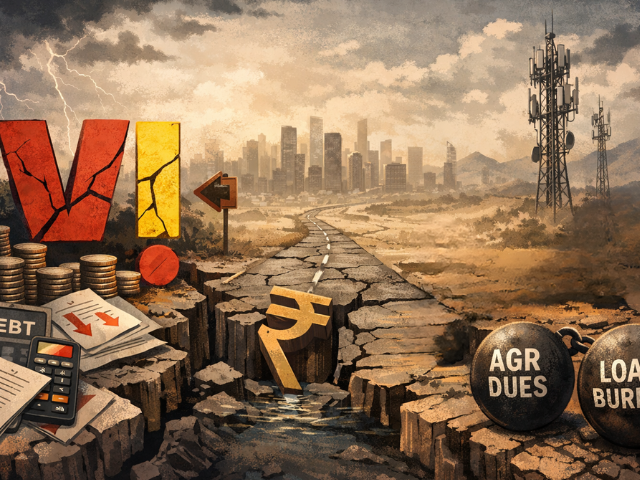
Vodafone Idea’s AGR dues have become one of the most debated issues in India’s telecom sector. For investors, policy watchers, and even everyday mobile users, the question is simple yet crucial: can Vodafone Idea survive under the weight of massive adjusted gross revenue liabilities?
Once a strong challenger in India’s telecom market, Vodafone Idea today represents the fragile balance between regulation, competition, and financial sustainability. Its AGR dues are not just a company problem but a systemic issue with implications for banks, markets, and consumers.
This blog breaks down what lies ahead for Vodafone Idea, what the numbers really mean, and how this situation could shape the future of Indian telecom.
Adjusted Gross Revenue refers to the share of revenue that telecom operators must pay to the government as license fees and spectrum usage charges. In 2019, the Supreme Court ruled that AGR should include not just core telecom revenue but also non telecom income such as interest and rent.
This ruling led to massive retrospective liabilities for telecom companies, with Vodafone Idea emerging as the worst hit.
Vodafone Idea was already dealing with losses due to intense price competition and high debt from past spectrum auctions. The AGR ruling added tens of thousands of crores in dues, pushing the company into a severe liquidity crisis.
Vodafone Idea’s AGR dues run into tens of thousands of crores, making them one of the largest corporate liabilities owed to the government. Even after relief measures like moratoriums and conversion of interest into equity, the dues remain a major overhang.
The government has taken several steps to prevent a market duopoly:
These steps have bought time but have not solved the core issue of long-term profitability.
Vodafone Idea needs fresh capital to survive. Without new equity or strategic investments, meeting future AGR payment schedules will be extremely challenging. The company has repeatedly indicated plans to raise funds, but investor appetite depends on clarity around cash flows and policy stability.
Industry wide tariff hikes have improved average revenue per user. For Vodafone Idea, higher tariffs are essential to generate sustainable operating cash flows. However, tariff increases must balance consumer affordability, especially in price sensitive rural markets.
Even as it struggles financially, Vodafone Idea must invest in network quality and 5G readiness. Falling behind peers on technology could lead to further subscriber losses, creating a vicious cycle.
If Vodafone Idea exits or weakens significantly, India risks moving towards a duopoly. Reduced competition could eventually hurt consumers through higher tariffs and slower innovation.
Vodafone Idea’s debt exposure affects banks and institutional investors. Any adverse development could impact sentiment in telecom related stocks and increase caution toward highly leveraged sectors.
The AGR episode has become a case study in regulatory risk. How the government balances revenue collection with sector sustainability will influence long-term investor confidence in regulated industries.
Vodafone Idea’s stock remains a high risk bet. Price movements are often driven by news flow around government relief, fundraising, or policy changes rather than fundamentals.
For investors, the AGR saga highlights the importance of:
Platforms like Swastika Investmart help investors analyze such risks with structured research tools and SEBI registered advisory frameworks.
Vodafone Idea can meet near term obligations only with continued government support and successful capital raising. Long-term sustainability depends on profitability and tariff growth.
No waiver has been granted. Relief has come in the form of moratoriums, equity conversion, and payment restructuring.
While immediate bankruptcy risk has reduced, financial stress remains high. The company’s future hinges on funding and operational turnaround.
In the long run, high sector costs can lead to higher tariffs and reduced competition, impacting consumer choice.
In complex cases like Vodafone Idea, informed decision making is critical. Swastika Investmart stands out through:
Whether tracking telecom stocks or building a diversified portfolio, having the right research partner makes a real difference.
Vodafone Idea’s AGR dues represent more than a balance sheet issue. They reflect the evolving relationship between regulation, competition, and sustainability in Indian telecom. While government support has kept the company afloat, the road ahead remains challenging.
For investors, this episode reinforces the need for disciplined analysis and reliable advisory support. With its research driven approach and investor first philosophy, Swastika Investmart empowers market participants to navigate such high risk narratives with confidence.
.png)
Indian equity markets began the first trading session of the New Year on a positive note on 1 January 2026, reflecting steady investor confidence and supportive early cues. Benchmark indices opened marginally higher, indicating cautious optimism as participants step into the new calendar year.
With global markets offering mixed but stable signals, domestic investors appear focused on selective buying rather than aggressive positioning. The opening tone suggests an orderly start, with emphasis on quality stocks and key index heavyweights.
At the opening bell on 1 January 2026, major indices were trading as follows:
The mild gains across indices indicate stable participation from investors as the market sets the tone for the year ahead.
The Nifty 50 opened higher, continuing its consolidation near record levels. Early buying interest in select large-cap stocks helped the index maintain positive territory, reflecting confidence without signs of overextension.
This opening move highlights a balanced approach by market participants, where optimism is tempered with caution at elevated valuations.
The Bank Nifty opened in the green, signaling stability in banking stocks. While gains were moderate, the index’s ability to sustain above key levels continues to support overall market sentiment.
Both private and PSU banks remained in focus, as investors track institutional activity and sector-specific developments at the start of the year.
The Nifty IT index opened with modest gains, supported by selective buying in technology stocks. Stable global tech cues and defensive positioning helped the sector maintain a positive bias in early trade.
IT stocks often attract steady interest during periods of market consolidation due to earnings visibility and export-linked revenues.
Global markets remained mixed overnight, providing limited directional cues. In the absence of major global triggers, domestic markets are likely to remain guided by:
Low volatility in early trade suggests a disciplined and measured market environment.
For traders, disciplined risk management remains essential, while long-term investors may continue to focus on fundamentally strong opportunities.
Tracking daily market movements requires timely insights and dependable research. Swastika Investmart, a SEBI-registered brokerage, empowers investors through:
Whether markets are trending or consolidating, the right tools and research can make a meaningful difference.
The market opening on 1 January 2026 reflects a calm and positive start to the New Year, with benchmark indices trading marginally higher. While optimism is visible, investors remain selective and disciplined in their approach.
If you’re planning your investment journey for 2026, partnering with a trusted and research-driven platform can help you stay ahead.
👉 Open your account today with Swastika Investmart
Stay informed. Trade smart. Invest with confidence.
.png)
The first trading session of a new calendar year often sets the tone for short-term market direction. For Indian equities, 01 January 2026 begins with a blend of cautious global cues and strong domestic institutional participation.
With global markets largely shut due to New Year holidays, liquidity remains lighter. In such environments, institutional data, derivatives positioning, and technical levels carry greater significance than headline-driven momentum.
This market set-up provides valuable insight into how traders and investors should approach the opening phase of 2026 with discipline and clarity.
Global cues remain mildly cautious as the year begins.
Key highlights include:
With limited global direction, Indian markets are likely to rely more on domestic flows and technical structure rather than overnight triggers.
Institutional flow data reveals an important divergence.
In the cash market:
This pattern highlights a recurring trend in Indian markets, where domestic institutions act as stabilisers during phases of foreign selling. Such behaviour often limits downside volatility and provides confidence to long-term investors.
For retail participants, this reinforces the importance of tracking net institutional flows rather than isolated selling pressure.
Futures and options data suggests a neutral to cautious market structure.
Key observations:
FII activity in index derivatives shows mixed positioning, with both long and short exposures visible. This indicates lack of aggressive directional conviction, common during holiday-thinned sessions.
From a technical perspective, Nifty is showing signs of short-term pressure.
Current structure indicates:
Unless Nifty decisively reclaims key averages, traders may continue to adopt a cautious approach, focusing on range-based strategies rather than directional bets.
Bank Nifty continues to display relative stability compared to the broader index.
Key technical observations:
This sideways structure suggests that stock-specific action within banking names may outperform index-level movement until a clear breakout emerges.
The 01 January 2026 market set-up points to a measured and selective approach.
Traders may consider:
Investors may focus on:
Early-year sessions often reward patience over urgency.
Market phases with mixed signals require structured decision-making. Relying on verified data, technical levels, and institutional behaviour helps reduce emotional bias.
SEBI-regulated research platforms play a crucial role by offering:
This disciplined approach becomes especially important at the start of a new calendar year.
Swastika Investmart combines regulatory compliance with research depth to support informed investing.
Key strengths include:
Such a framework helps investors navigate evolving market conditions responsibly.
👉 Open your trading and investment account today
Is the first trading session of the year important for markets?
Yes, it provides early clues about sentiment, institutional behaviour, and risk appetite, though trends develop gradually.
Why do DIIs often buy when FIIs sell?
Domestic institutions focus on long-term allocation strategies and often step in to stabilise markets during volatility.
How useful is derivatives data during low-volume sessions?
It helps identify key support and resistance levels but should be used alongside price action.
Should traders avoid markets during holiday weeks?
Not necessarily, but position sizing and risk management become more important due to lower liquidity.
The market set-up for 01 January 2026 reflects a balanced yet cautious environment. While global cues remain mixed, strong domestic institutional participation and defined technical levels offer structure to market participants.
Rather than chasing early moves, investors and traders can benefit from discipline, research-backed insights, and risk-aware strategies as the year begins.
If you are looking for a reliable research partner and a SEBI-registered platform to navigate Indian markets with confidence, Swastika Investmart stands ready to support your journey.
.png)
The New Year is not just a change in dates it marks the beginning of a fresh investment cycle. For market participants, it is a time for portfolio realignment, renewed institutional participation, and a shift towards structured, theme-based investing.
As Indian equity markets enter New Year 2026, investor sentiment remains constructive. With stable macroeconomic indicators, improving global cues, and strong domestic fundamentals, the focus is gradually moving away from short-term trading and toward quality, theme-driven stock selection.
To help investors begin 2026 with clarity, Swastika Investmart has curated a New Year–themed stock list, designed around long-term growth visibility, balance-sheet strength, and sectoral relevance.
| STOCK | CMP (As on 31-12-25) | TARGET | UPSIDE |
|---|---|---|---|
| Sandur Manganese & Iron Ores Ltd | 240 | 400 | 61% |
| AIA Engineering Ltd | 3900 | 5500 | 41% |
| GMR Airport | 103 | 140 | 36% |
| TCS | 3250 | 4200 | 28% |
| GMDC | 595 | 880 | 46% |
| Shriram Pistons and Rings | 3160 | 4800 | 49% |
| Data Patterns | 2600 | 4000 | 47% |
| Samvardhana Motherson | 119 | 150 | 27% |
| SRF | 3040 | 4500 | 44% |
| Nuvama Wealth Management | 1455 | 2100 | 40% |
| NBCC | 120 | 160 | 33% |
| HDFC Bank | 991 | 1250 | 26% |
Theme-based investing allows investors to participate in broader economic and structural trends rather than reacting to daily market volatility.
As 2026 begins, several factors support this approach:
Instead of chasing momentum, thematic investing helps build portfolios aligned with economic continuity and sustainability.
The opening weeks of a new year often bring renewed participation across global and domestic markets. In India, this phase is typically characterised by:
With supportive domestic indicators and measured global expectations, early 2026 provides a favourable environment for selective stock positioning.
The New Year 2026 stock list has been curated around key investment themes, keeping in mind sector relevance, earnings visibility, and long-term sustainability.
These themes are shared for investor awareness and education, not as investment recommendations.
The New Year period often supports continued demand across consumer-facing businesses.
This theme typically includes companies with:
Such businesses tend to benefit from sustained consumption momentum extending into the early part of the year.
Financial services remain a core pillar of the Indian economy as 2026 begins.
Stocks aligned with this theme generally demonstrate:
These characteristics often attract institutional interest during portfolio resets.
Digital adoption and technology-led efficiency continue to shape corporate performance.
This theme focuses on businesses with:
Technology-linked themes remain relevant for medium- to long-term portfolios.
India’s infrastructure and capital expenditure cycle continues to offer long-term opportunities.
Companies under this theme are typically supported by:
Early-year phases often see gradual accumulation in such stocks.
At the beginning of a new year, many investors also reassess asset allocation.
Precious metals play a role by:
Gold and silver remain important components of balanced portfolios in 2026.
Indian markets remain influenced by global developments. Key indicators to monitor include:
A stable global environment generally supports equity participation during the early weeks of the year.
Rather than rushing into trades, experienced investors often use the New Year to align portfolios thoughtfully.
A disciplined approach includes:
The New Year is best viewed as a planning phase, not a speculative one.
Swastika Investmart follows a research-driven, compliance-focused approach to investing.
What investors value:
This approach helps investors navigate markets with confidence, especially during transitional phases like the start of a new year.
Is the New Year a good time to invest in stocks?
The New Year often brings stable participation and fresh allocations, making it suitable for selective, quality investing.
Do FIIs and DIIs invest at the start of the year?
Institutional investors frequently rebalance portfolios in January, leading to selective activity in fundamentally strong stocks.
Should investors focus on themes rather than individual stocks?
Themes help investors align with long-term trends and reduce short-term decision-making noise.
Are New Year themed stock ideas suitable for long-term investors?
Yes, when supported by strong fundamentals and growth visibility, thematic ideas align well with long-term investing.
A New Year symbolises clarity, balance, and thoughtful decisions. The same principles apply to investing. With supportive institutional behaviour, stable global cues, and well-defined themes, New Year 2026 offers an opportunity to strengthen portfolios with purpose.
If you are looking for structured research, investor education, and long-term market guidance, Swastika Investmart is here to support your investing journey throughout 2026 and beyond.
📈 Begin the New Year with informed investing
🎯 Explore New Year 2026 themed insights today


Trust Our Expert Picks
for Your Investments!


The global financial narrative often frames dollar strength as bad news for emerging markets. Historically, a rising US dollar led to capital outflows, currency depreciation, and pressure on equity markets. However, the current cycle tells a more nuanced story.
Despite phases of sustained dollar strength, the Indian rupee has remained relatively stable compared to many peer currencies. More importantly, Indian equities have continued to attract long-term interest. This shift reflects structural improvements in India’s economy and the maturity of its capital markets.
Understanding how dollar strength and rupee stability interact is key to assessing what lies ahead for Indian equities.
The US Federal Reserve’s higher interest rate regime has supported the dollar. Higher yields attract global capital, strengthening the currency against most others.
This dynamic is global in nature and not India-specific. Many developed and emerging market currencies have felt the impact.
Periods of global uncertainty, whether driven by geopolitical risks or growth concerns, typically push investors toward safe-haven assets. The US dollar remains the preferred choice during such phases.
India’s robust foreign exchange reserves provide a crucial buffer. The Reserve Bank of India actively manages volatility, ensuring orderly currency movements rather than sharp swings.
This stability reassures global investors and reduces panic-driven capital flight.
India’s current account dynamics, steady capital inflows, and resilient domestic demand contribute to rupee stability. Unlike earlier decades, India is not heavily dependent on volatile short-term capital to fund growth.
The RBI focuses on controlling excessive volatility rather than defending a specific level. This pragmatic approach allows the rupee to adjust gradually while maintaining confidence in the financial system.
Currency movements do not impact all companies uniformly. The effect of dollar strength on Indian equities depends on revenue exposure, cost structure, and balance sheet positioning.
Export-oriented sectors often benefit, while import-dependent sectors may face pressure.
Indian IT services and pharmaceutical companies earn a large portion of revenues in foreign currencies. A stable or mildly weaker rupee improves earnings visibility and margin support.
This is why such sectors often outperform during phases of global currency volatility.
Sectors dependent on imports, particularly crude oil, may face margin pressure if dollar strength leads to higher input costs. However, rupee stability helps mitigate extreme shocks.
For Indian equities, stability matters more than absolute currency direction.
Earlier, dollar strength often triggered aggressive FII selling in Indian equities. Today, foreign investors are more selective.
India’s growth prospects, corporate earnings visibility, and political stability often outweigh short-term currency concerns.
Strong domestic participation through mutual funds and direct equity investing has reduced market dependence on foreign flows. This has helped Indian indices remain resilient even during periods of global risk aversion.
Indian equity valuations are increasingly driven by earnings growth rather than currency movements. Structural themes such as manufacturing, infrastructure, and financial inclusion play a larger role.
This shift reduces sensitivity to external shocks like dollar strength.
Short-term currency fluctuations rarely derail long-term equity returns. Investors who focus on fundamentals rather than headlines tend to navigate such phases better.
India’s capital markets operate under a strong regulatory framework guided by SEBI and RBI. Transparent disclosure norms, improved corporate governance, and robust market infrastructure support investor confidence.
This regulatory stability is one reason Indian equities continue to attract long-term capital despite global currency volatility.
Instead of reacting to currency headlines, investors should focus on quality businesses with strong balance sheets and diversified revenue streams.
Diversification across sectors helps manage currency-related risks.
Dollar strength cycles come and go. Overreacting often leads to missed opportunities rather than risk reduction.
A disciplined approach aligned with long-term goals remains the most effective strategy.
Understanding macro trends like dollar strength and rupee stability requires clarity, not noise. Swastika Investmart, a SEBI-registered brokerage, supports investors with:
This approach empowers investors to make informed decisions even during uncertain global phases.
No. The impact depends on sector exposure, earnings growth, and domestic fundamentals rather than currency movement alone.
Strong forex reserves, prudent RBI management, and improved macro fundamentals support stability.
IT services, pharmaceuticals, and export-oriented companies often benefit from foreign currency earnings.
Long-term investors should avoid frequent changes and focus on fundamentals and asset allocation.
RBI intervenes to smooth excessive volatility while allowing market-driven adjustments.
The relationship between dollar strength, rupee stability, and Indian equities is no longer one-dimensional. India’s evolving economic structure, strong regulatory framework, and rising domestic participation have changed the equation.
For investors seeking clarity, discipline, and research-backed insights in this environment, Swastika Investmart offers a reliable platform to navigate both global and domestic market trends.
Invest with perspective, not panic.

Market corrections are not new. What has changed is how Indian investors respond to them. The theme of corrections without panic has become increasingly visible in recent years. Instead of rushing to exit positions at the first sign of volatility, investors are choosing patience, discipline, and long-term thinking.
Even during sharp global events such as aggressive interest rate hikes, geopolitical tensions, or sudden FII selling, Indian markets have shown relative stability. Corrections still happen, but the fear-driven selling that once defined downturns is noticeably lower.
This shift reflects a deeper maturity in India’s investing ecosystem.
Earlier market cycles were marked by retail panic. Small corrections often triggered heavy selling, locking in losses and missing recoveries. Today, many investors invest with defined goals such as retirement, children’s education, or wealth creation.
Goal-based investing has reduced emotional decision-making. When markets correct, investors now see it as a phase rather than a failure.
Systematic Investment Plans have fundamentally changed how Indian investors participate in equities. Monthly SIP inflows continue even during market corrections, providing stability and consistent demand.
This steady flow of domestic money often cushions declines caused by foreign investor selling. It also reinforces the mindset that corrections are opportunities rather than threats.
One of the most important shifts in recent years is the growing influence of domestic investors. Mutual funds, insurance companies, and retail participants now play a larger role in market direction.
When FIIs reduce exposure due to global concerns, domestic flows frequently absorb the impact. This has reduced volatility and limited sharp drawdowns.
During recent global sell-offs, Indian benchmark indices corrected but recovered faster compared to earlier decades. Strong domestic demand, stable banking systems, and ongoing infrastructure spending helped restore confidence quickly.
This resilience reflects a market supported not just by global capital, but by domestic belief.
India’s capital markets are regulated by SEBI, which has consistently strengthened disclosure norms, corporate governance standards, and investor protection mechanisms.
Measures such as tighter mutual fund regulations, improved transparency, and risk disclosure norms have made investors more informed and confident.
Digital platforms, simplified KYC processes, and easy access to research have democratized investing. Investors today can track portfolios, understand risks, and access quality insights in real time.
This accessibility reduces uncertainty, which is often the root cause of panic selling.
Corrections help markets cool excesses and reset valuations. Mature investors understand that temporary price declines do not necessarily mean long-term business deterioration.
Instead of exiting completely, many investors now rebalance portfolios, add quality stocks, or increase SIP contributions during downturns.
The shift toward long-term investing has reduced speculative behaviour. Investors are more aware of compounding benefits and the cost of missing market recoveries.
This mindset change is one of the strongest indicators of maturity in Indian markets.
Market maturity does not eliminate volatility. It reduces fragility. Corrections will continue, but extreme panic reactions are less likely when investors are informed and disciplined.
This stability makes Indian markets more attractive to long-term global investors as well.
With more investors focusing on fundamentals, quality companies tend to attract long-term capital. This improves market depth and supports sustainable growth.
In a maturing market, the right guidance matters. Swastika Investmart, a SEBI-registered brokerage, supports investors through:
Such an ecosystem helps investors stay calm during corrections and focused on goals rather than noise.
Improved financial literacy, SIP discipline, and long-term goal-based investing have reduced emotional reactions.
Yes. Corrections involve volatility, but informed investors manage risk through diversification and asset allocation.
Consistent domestic inflows often offset foreign selling, reducing sharp market swings.
SIPs help average costs and maintain discipline, making them effective during volatile phases.
Strong SEBI regulations improve transparency and trust, encouraging long-term participation.
The era of corrections without panic reflects how far Indian investors have come. Experience, education, and regulatory strength have transformed market behaviour from fear-driven to fundamentally sound.
For investors seeking a structured, research-backed approach in this evolving landscape, Swastika Investmart offers the right balance of technology, insight, and support.
Invest with discipline and clarity.

Risk-off phases occur when investors reduce exposure to risky assets and move capital toward safer options such as cash, bonds, gold, or defensive equities. These phases are typically triggered by global uncertainty such as rising interest rates, geopolitical tensions, recession fears, or liquidity tightening by central banks.
During such periods, all risky assets correct. However, the speed and depth of correction differ significantly across asset classes. This is where the contrast between crypto vs equity markets becomes most visible.
Equity markets are supported by tangible fundamentals such as earnings, dividends, cash flows, and balance sheets. Even during sharp corrections, long-term investors can assess valuations using metrics like price-to-earnings ratios or book value.
Cryptocurrencies, on the other hand, largely lack intrinsic valuation benchmarks. Prices are driven by demand, sentiment, network activity, and speculative positioning. When fear dominates, there is no fundamental floor to slow down selling.
This is a key reason why crypto prices tend to collapse faster during risk-off phases.
Crypto markets have a higher proportion of retail traders compared to equity markets. Retail participation often comes with higher emotional decision-making and aggressive use of leverage.
When prices start falling:
In contrast, equity markets include long-term institutional investors such as mutual funds, pension funds, and insurance companies who tend to rebalance rather than exit completely.
Unlike equity markets, which operate during fixed trading hours, crypto markets trade round the clock. This means price reactions to global events are instant.
For example, during global risk-off events like aggressive US Federal Reserve tightening, cryptocurrencies often drop sharply overnight, while equity markets react more gradually during trading hours.
This continuous trading structure magnifies volatility and downside momentum.
Liquidity dries up quickly in crypto markets during stress periods. When buyers step back, even modest sell orders can lead to steep price declines.
Equity markets, especially large-cap stocks in India, benefit from deeper liquidity pools, market makers, and regulatory safeguards such as circuit breakers.
This structural difference explains why equity corrections are often more orderly compared to crypto crashes.
While institutional participation in crypto has increased, it is still opportunistic rather than structural. When risk appetite declines, institutions are quicker to reduce crypto exposure as it is classified as a high-risk asset.
In equities, institutions often rotate from cyclicals to defensives instead of exiting the market entirely.
In India, equity markets are regulated by SEBI, offering transparency, investor protection, and strict disclosure norms. This regulatory framework builds long-term confidence and stability.
Cryptocurrencies, while legal to trade, operate in a regulatory grey zone. Taxation rules are clear, but investor protection mechanisms remain limited. This uncertainty increases downside risk during volatile phases.
Indian investors often enter crypto markets during bull phases driven by global rallies. However, during risk-off cycles, sharp drawdowns test risk tolerance.
Equity investors, particularly those invested through mutual funds or diversified portfolios, experience relatively smoother corrections. Domestic institutional flows also help cushion equity market declines in India.
During global tightening cycles, cryptocurrencies have witnessed drawdowns exceeding 50 percent in short periods. Equity markets also corrected but recovered faster as earnings growth and domestic factors provided support.
Indian benchmark indices historically show resilience due to strong domestic consumption, government capex, and financial sector strength. Crypto assets do not benefit from such structural tailwinds.
Not necessarily. Crypto can be viewed as a high-risk satellite allocation rather than a core investment. Position sizing and risk management are crucial.
Equities, especially Indian equities, remain better suited for long-term wealth creation due to:
Market volatility highlights the importance of research-driven investing. Platforms that emphasize investor education, structured research, and risk management help investors avoid impulsive decisions.
SEBI-registered brokerage firms with strong analytics and advisory frameworks enable investors to focus on long-term strategies rather than short-term noise.
Crypto lacks fundamental valuation anchors and has higher speculative participation, leading to sharper sell-offs during market stress.
Equities are relatively less volatile and benefit from regulation, earnings support, and institutional participation, making them more suitable for long-term investors.
Crypto often sees sharp rebounds, but recoveries are unpredictable and heavily sentiment-driven.
Equities should form the core portfolio, while crypto exposure should be limited and aligned with risk tolerance.
Yes. Strong regulation in equity markets reduces systemic risk and improves investor confidence during volatile periods.
The debate around crypto vs equity markets becomes most relevant during risk-off phases. Crypto assets fall faster due to structural volatility, speculative participation, and limited valuation support. Equities, particularly in India, offer relatively better downside protection and long-term compounding potential.
For investors seeking stability, transparency, and research-backed insights, Indian equity markets remain a stronger foundation.
Swastika Investmart, a SEBI-registered brokerage, supports investors with robust research tools, technology-driven platforms, dedicated customer support, and ongoing investor education. This approach helps investors navigate volatile phases with discipline and confidence.
Take a structured approach to investing.

The Bank of Japan rate decision may appear distant for Indian investors, but its ripple effects are very real. Japan is the world’s third-largest economy and one of the biggest sources of global liquidity. For years, the Bank of Japan followed ultra-loose monetary policies, keeping interest rates near zero or negative to stimulate growth.
Whenever the Bank of Japan tweaks its interest rates or signals a shift in stance, global markets pay close attention. This is because Japanese investors, institutions, and funds are deeply intertwined with global capital markets, including India.
In today’s interconnected financial system, central bank decisions do not remain confined within borders. What happens in Tokyo often finds its way to Dalal Street.
Japan has historically been a low-interest-rate economy. This encouraged global investors to borrow cheaply in yen and invest in higher-yielding assets elsewhere, a strategy known as the carry trade.
When the Bank of Japan keeps rates low, money flows into emerging markets such as India, Indonesia, and Brazil. When it signals tightening or rate hikes, that flow can reverse.
The yen is often considered a safe-haven currency. A shift in the Bank of Japan rate decision can strengthen the yen, reducing risk appetite globally. This impacts equity markets, commodities, and currencies across Asia.
Foreign Institutional Investors play a crucial role in Indian equities and debt markets. A tighter policy stance from the Bank of Japan can lead to:
For example, during periods when global central banks hinted at policy normalization, Indian markets often witnessed short-term corrections driven by FII selling.
Currency markets react swiftly to global rate changes. If the Bank of Japan rate decision leads to a stronger yen and stronger US dollar, the Indian rupee may face depreciation pressure.
A weaker rupee affects:
The Reserve Bank of India closely monitors such global developments while framing its own policy decisions.
Indian banks may not be directly exposed to Japan, but global risk sentiment affects valuations. Increased volatility often leads investors to prefer safer assets, impacting financial stocks in the short term.
A weaker rupee triggered by global currency shifts can benefit IT services and export-driven companies. Revenues earned in dollars or yen translate into higher rupee earnings, improving margins.
Japan is a major consumer of commodities. Changes in its economic outlook can impact global commodity prices, which in turn affect Indian metal stocks and infrastructure companies.
Indian markets operate under a robust regulatory framework guided by SEBI and RBI. While SEBI ensures market stability and transparency, the RBI balances inflation, growth, and currency stability.
Global cues such as the Bank of Japan rate decision influence:
India’s strong forex reserves act as a buffer during periods of global uncertainty, helping absorb external shocks.
Instead of reacting emotionally to global news, investors should revisit asset allocation. Equity, debt, and gold allocation should align with risk tolerance and long-term goals.
Global central bank decisions often lead to short-term volatility but do not necessarily change India’s long-term growth story. Domestic consumption, infrastructure spending, and manufacturing continue to remain strong drivers.
Having access to reliable research, timely insights, and expert guidance becomes critical during volatile phases. SEBI-registered brokers with strong research ecosystems help investors make informed decisions rather than speculative bets.
Navigating global events like the Bank of Japan rate decision requires clarity, not noise. Swastika Investmart stands out through:
Such strengths help investors stay disciplined even when global headlines create uncertainty.
Because it influences global liquidity, currency movements, and foreign investor flows, which directly impact Indian equities and bonds.
Not always. It may cause short-term volatility, but long-term market direction depends on India’s domestic fundamentals.
IT, banking, metals, and export-oriented sectors tend to react more to global monetary shifts.
Yes. While RBI decisions matter most, global central banks shape overall market sentiment and capital flows.
By maintaining diversified portfolios, focusing on quality stocks, and relying on research-driven insights.
The Bank of Japan rate decision may be announced thousands of kilometers away, but its influence can be felt across Indian markets. Understanding these global linkages empowers investors to stay prepared rather than reactive.
For investors seeking disciplined strategies, reliable research, and a trusted SEBI-registered partner, Swastika Investmart provides the tools and support needed to navigate both global and domestic market cycles.
Ready to invest with confidence?

India’s stock market is no longer just a long-term investment destination. It has evolved into a dynamic trading ecosystem powered by economic growth, policy reforms, technology, and global capital flows. As 2026 approaches, many investors and professionals are evaluating whether this is the right time to actively participate in trading.
The answer, based on economic indicators and market structure, points strongly in favor. Understanding why start trading in 2026 and identifying the trading opportunities in India in 2026 can help you enter the markets with clarity rather than speculation.
India continues to remain one of the fastest-growing major economies globally. With sustained GDP growth supported by domestic consumption, manufacturing expansion, and infrastructure investment, corporate earnings are expected to stay resilient.
Government-led capital expenditure on roads, railways, ports, and digital infrastructure creates a ripple effect across sectors. For traders, this economic momentum translates into higher market participation, improved liquidity, and consistent price movements across indices and stocks.
A growing economy also attracts long-term institutional money, which adds depth and stability to the markets while creating short-term trading opportunities.
One of the strongest reasons to start trading in 2026 is India’s policy continuity. Stable governance and a clear economic roadmap reduce uncertainty, which markets value highly.
Regulatory bodies like SEBI have strengthened market integrity through tighter disclosure norms, improved risk management systems, and enhanced investor protection. Faster settlement cycles and stricter margin rules have reduced systemic risks, making trading safer for retail participants.
Such reforms create a balanced environment where opportunities exist without excessive volatility driven by speculation alone.
Global geopolitical shifts are reshaping capital flows. As multinational companies diversify supply chains, India is emerging as a strategic alternative to traditional manufacturing hubs. Strong diplomatic relations with the US, Europe, Middle East, and Asia-Pacific regions support trade growth and foreign investment.
Foreign institutional investors play a crucial role in Indian markets. Their participation often drives trends, volumes, and volatility, all of which are essential for active trading strategies.
In 2026, India’s positioning as a trusted global partner enhances market sentiment and supports long-term bullishness with intermittent short-term opportunities.
Trading in India has become increasingly technology-driven. Advanced charting tools, real-time data, mobile trading apps, and AI-supported research are now easily accessible to retail traders.
This technological evolution lowers entry barriers and allows individuals to make informed decisions. However, tools are effective only when combined with reliable research and education. Platforms that focus on trader awareness, strategy-building, and risk management stand out in this environment.
By 2026, tech-enabled trading is expected to become even more seamless, offering faster execution and deeper insights.
Several sectors and themes are expected to offer strong trading opportunities in India in 2026.
Infrastructure and capital goods companies benefit from sustained government spending. Banking and financial services are supported by credit growth and improving asset quality. Renewable energy and electric mobility align with India’s sustainability goals and global commitments.
Additionally, mid-cap and small-cap stocks may offer higher volatility and momentum-based opportunities, provided traders approach them with proper risk controls.
Index-based trading through Nifty and Bank Nifty remains popular due to liquidity and transparency, making them suitable for both beginners and experienced traders.
Starting trading in 2026 allows beginners to learn in a relatively mature and regulated market. Increased focus on investor education, better compliance standards, and access to professional research reduce the chances of costly mistakes.
A young professional or entrepreneur who starts trading alongside long-term investing can develop market discipline, improve financial literacy, and gradually build capital over time.
The key lies in starting with realistic expectations, controlled risk, and continuous learning.
While market conditions matter, choosing the right broker is equally important. A SEBI-registered brokerage with strong research capabilities, advanced trading tools, and responsive customer support can significantly enhance the trading experience.
Swastika Investmart brings together research-driven insights, technology-enabled platforms, and investor education initiatives. Its focus on transparency, compliance, and client support helps traders navigate market cycles with confidence.
From beginner guidance to advanced trading strategies, having a reliable partner ensures consistency and trust.
👉 Open your trading account today
Is 2026 a good year to start trading in India?
Yes. Strong economic growth, regulatory stability, and evolving market structure make 2026 a favorable entry point.
What trading segments are suitable for beginners?
Equity cash and index derivatives are often preferred due to liquidity and availability of research.
How much capital is required to start trading?
Trading can be started with modest capital, provided risk management and position sizing are followed.
Are Indian markets well regulated for traders?
Indian markets are regulated by SEBI, ensuring transparency, investor protection, and fair practices.
The combination of economic growth, political stability, global relevance, and technology-driven access makes 2026 a compelling year to start trading. For those willing to approach markets with discipline and learning, trading opportunities in India in 2026 are both diverse and rewarding.
If you are planning to take your first step or upgrade your trading setup, consider partnering with Swastika Investmart. With strong research, tech-enabled investing tools, and dedicated customer support, it offers a solid foundation for your trading journey.

As 2025 draws to a close, Indian investors have a lot to reflect on. Equity markets moved through phases of optimism, global uncertainty, interest rate adjustments, and sector-specific rallies. Amid all this, mutual funds in India continued to play a steady and dependable role for retail investors.
Looking ahead, 2026 is shaping up to be a year where informed and disciplined investing could pay off well. Let us break down how mutual funds performed in 2025 and why investing in mutual funds in 2026 could be a smart financial decision.
The year 2025 was marked by fluctuating global cues, geopolitical tensions, and cautious central bank policies. Indian equity markets experienced intermittent corrections, which tested short-term investors. However, long-term mutual fund investors who stayed invested saw the power of compounding at work.
Equity-oriented mutual funds benefited from India’s domestic consumption story, infrastructure push, and digitization across sectors. Debt funds provided stability during uncertain phases, while hybrid funds helped balance risk and return.
Systematic Investment Plans once again proved their value in 2025. Investors who maintained SIP discipline benefited from rupee cost averaging during market dips. Monthly SIP inflows remained strong, reflecting growing investor maturity and trust in mutual funds as a long-term investment avenue.
Funds focused on manufacturing, defense, energy transition, and technology saw increased interest. While sectoral funds carry higher risk, informed investors used them tactically alongside diversified equity funds.
SEBI continued to enhance transparency, risk labeling, and investor protection norms. Clear disclosures and standardized risk-o-meters helped investors make informed decisions, reinforcing trust in mutual funds regulated under Indian financial laws.
Investors who diversified across equity, debt, and hybrid mutual funds were better positioned to handle volatility. 2025 reinforced the importance of aligning investments with financial goals and risk appetite.
Trying to time the market remained difficult. Those who stayed invested through market cycles benefited more than those who frequently exited and re-entered.
Investors using research-backed platforms and professional guidance made better fund selections. Quality research, portfolio reviews, and ongoing support became increasingly important.
India continues to be one of the fastest-growing major economies. Government focus on infrastructure, manufacturing, digital public platforms, and financial inclusion is expected to support corporate earnings over the long term. Mutual funds offer an efficient way to participate in this growth.
With inflation expected to remain under control and policy reforms continuing, equity mutual funds could benefit from improved business confidence. Starting investments early in 2026 allows investors to capture growth across market cycles.
Investing in mutual funds in 2026 with a long-term horizon can significantly enhance wealth creation. Even modest monthly investments through SIPs can grow meaningfully when given time.
From large-cap stability to mid-cap growth and balanced hybrid funds, investors in 2026 have access to a broad spectrum of mutual fund categories. This allows customization based on goals such as retirement, child education, or wealth creation.
Mutual funds remain one of the most beginner-friendly investment options. With low entry amounts and professional fund management, new investors can start their journey confidently.
SIPs align perfectly with monthly income cycles. Automated investing ensures discipline without requiring constant market tracking.
Debt and hybrid mutual funds can provide relatively stable returns and regular income options, subject to market risks.
Swastika Investmart brings together experience, technology, and research to support investors at every stage. Being a SEBI-registered entity, Swastika follows strict regulatory standards, ensuring transparency and investor safety.
Key strengths include in-depth research tools, easy-to-use digital platforms, responsive customer support, and a strong focus on investor education. Whether you are reviewing your 2025 portfolio or planning fresh investments for 2026, having a trusted partner makes a meaningful difference.
Are mutual funds safe to invest in for 2026?
Mutual funds are regulated by SEBI and managed by professional fund managers. While market risks exist, diversification and long-term investing help manage risk effectively.
Is 2026 a good time to start SIPs?
Yes. Starting SIPs early allows investors to benefit from compounding and market volatility through rupee cost averaging.
Which mutual funds are suitable for long-term goals?
Equity mutual funds and balanced hybrid funds are commonly used for long-term wealth creation, depending on risk tolerance.
How much should one invest in mutual funds?
Investment amounts depend on income, goals, and expenses. Even small monthly SIPs can be effective when continued consistently.
Mutual funds in 2025 proved their resilience and value for disciplined investors. As 2026 approaches, the combination of economic growth, regulatory strength, and evolving investor awareness makes mutual funds a compelling investment option.
If you are planning to invest smarter and stay aligned with your financial goals in 2026, consider starting or reviewing your mutual fund investments with Swastika Investmart. With expert research, technology-driven platforms, and trusted support, your investment journey can be both informed and confident.
Take the next step towards your financial goals.