.png)
The US economy remains the single most influential force in global financial markets. From equity flows to currency movements and commodity prices, decisions taken in Washington and by the US Federal Reserve ripple across economies worldwide. As we look ahead, understanding what to expect from the US economy in 2026 becomes essential for Indian investors, traders, exporters and policymakers.
In this blog, we break down the expected economic trends in the US for 2026 and explain how these developments could shape Indian stock markets, interest rates, currency movements and investment strategies.
After years of post pandemic recovery and policy tightening, the US economy is expected to enter 2026 with stable momentum. Most global institutions expect GDP growth to remain around the long term average rather than the sharp expansion seen earlier in the decade.
Key drivers include strong consumer spending, government infrastructure investment and continued capital expenditure in technology and artificial intelligence. At the same time, high base effects and tighter financial conditions could limit rapid growth.
For Indian investors, stable US growth is generally positive as it supports global risk appetite without creating excessive inflationary pressure.
Inflation is expected to trend closer to the US Federal Reserve’s comfort zone by 2026, though it may not settle perfectly at two percent. Wage pressures, energy prices and supply chain restructuring will continue to influence price levels.
Lower inflation reduces the need for aggressive monetary tightening and supports equity markets globally.
One of the most watched elements of the US economy in 2026 will be interest rates. If inflation continues to ease, the Federal Reserve may shift towards a more accommodative stance or maintain stable rates.
For India, this matters because lower US interest rates often lead to increased foreign portfolio inflows into emerging markets like India, improving liquidity and supporting equity valuations.
The US dollar’s trajectory in 2026 will depend largely on interest rate differentials and economic confidence. A stable or slightly weaker dollar typically benefits emerging market currencies, including the Indian rupee.
A stronger rupee can help reduce imported inflation for India, especially in crude oil and raw materials. However, exporters may face margin pressure if currency appreciation becomes sharp.
Foreign Institutional Investors closely track US bond yields and equity performance. If US yields remain stable and growth continues without shocks, India is likely to attract sustained FII inflows.
Historically, periods of US economic stability have coincided with strong performance in Indian sectors such as IT, banking, capital goods and consumer discretionary.
Trade policy remains a key variable. Any shift towards protectionism or tariff changes can affect Indian exports to the US, particularly in textiles, engineering goods and specialty chemicals.
However, diversification away from China continues to create long term opportunities for Indian manufacturers under the China plus one strategy.
From an Indian regulatory standpoint, SEBI continues to emphasize transparency, investor protection and risk management. Global volatility originating from the US economy reinforces the importance of disciplined investing, asset allocation and regulatory compliance.
Platforms like Swastika Investmart, a SEBI registered intermediary, play a crucial role by offering research backed insights, technology driven trading platforms and investor education that helps clients navigate global uncertainty confidently.
👉 Open your trading and investment account today
Long term wealth creation depends on staying invested with a clear strategy rather than timing global events perfectly.
How will the US economy in 2026 affect Indian stock markets?
A stable US economy usually supports global risk appetite, leading to better FII inflows and positive sentiment in Indian equities.
Will US interest rate changes impact Indian investors?
Yes. Lower or stable US rates often encourage foreign investments into India, improving liquidity and market valuations.
Which Indian sectors are most influenced by the US economy?
IT, pharmaceuticals, metals and export oriented manufacturing sectors are most sensitive to US economic trends.
Is a weaker US dollar good for India?
Generally yes, as it supports the rupee and reduces import costs, though exporters may face some pressure.
Understanding what to expect from the US economy in 2026 is essential for making informed investment decisions in India. While global uncertainties will always exist, a balanced US growth outlook combined with easing inflation could create a supportive environment for Indian markets.
With expert research, robust trading platforms and strong customer support, Swastika Investmart helps investors stay ahead of global trends while focusing on long term financial goals.
.png)
Exchange Traded Funds, commonly known as ETFs, have steadily moved from being a niche product to a mainstream investment choice in India. As we step into 2026, ETFs are no longer limited to passive index followers. They now play a crucial role in portfolio construction, tactical allocation, and long-term wealth creation for Indian investors.
With market volatility, global uncertainty, and rising awareness around cost-efficient investing, ETFs are becoming a preferred option for both first-time investors and seasoned market participants.
An ETF is a market-linked investment instrument that tracks an index, sector, commodity, or asset class and trades on the stock exchange like a regular share.
For example, when you buy a Nifty 50 ETF, you indirectly invest in the 50 largest companies listed on NSE in the same proportion as the index. The ETF’s price moves in line with the underlying index and can be bought or sold during market hours.
In India, ETFs are regulated by SEBI and managed by fund houses, offering transparency, liquidity, and cost efficiency.
Expense ratios play a big role in long-term returns. ETFs typically have much lower expense ratios compared to actively managed mutual funds. In a long-term investment horizon, even a small cost difference can translate into significant savings.
Unlike mutual funds that are bought at end-of-day NAV, ETFs trade in real time. Investors can see prices, volumes, and holdings during market hours, making decision-making more informed.
Instead of picking individual stocks, ETFs allow investors to gain exposure to an entire sector or index in one transaction. This reduces stock-specific risk and simplifies portfolio management.
These remain the most widely used ETFs in India.
Examples include Nifty 50 ETFs, Sensex ETFs, and Nifty Next 50 ETFs.
They are commonly used as the core of long-term portfolios.
Sector-focused ETFs have seen rising interest, especially in banking, IT, PSU, infrastructure, and manufacturing themes. Thematic ETFs allow investors to participate in trends such as digital transformation, renewable energy, and consumption growth.
Gold ETFs continue to act as a hedge against inflation and market uncertainty. In 2026, many investors use gold ETFs as a stabilizer during volatile equity markets.
Indian investors are increasingly seeking global exposure through ETFs tracking US indices like Nasdaq or S&P 500, helping diversify beyond domestic markets.
While both instruments have their place, ETFs stand out for investors who value cost efficiency, flexibility, and transparency. Mutual funds still appeal to investors seeking active fund management, but ETFs are increasingly preferred for core portfolio allocation.
For example, a long-term investor may use a Nifty 50 ETF as the foundation of their portfolio and complement it with select active funds or stocks.
Systematic investing is no longer limited to mutual funds. Many investors now create disciplined ETF investment plans by buying ETFs regularly through their trading accounts.
ETF SIPs help average market volatility and encourage long-term discipline. This approach is especially popular among young professionals and first-time investors building wealth over time.
ETFs in India are regulated by SEBI, ensuring strict disclosure norms, transparency in holdings, and investor protection. Fund houses are required to disclose daily portfolio data, tracking errors, and expense ratios.
However, investors should still pay attention to liquidity and tracking difference, especially in niche or low-volume ETFs.
During periods of market correction, many investors prefer index ETFs instead of timing individual stocks. For instance, when markets experience short-term volatility due to global cues or interest rate concerns, staggered investments in index ETFs can help investors stay invested without taking concentrated risk.
Similarly, gold ETFs often gain attention when equity markets turn uncertain, offering balance to portfolios.
ETFs are suitable for:
Choosing the right ETF and timing investments requires research and guidance. Swastika Investmart, a SEBI-registered financial services provider, supports investors with strong research insights, advanced trading platforms, and dedicated customer support.
With a focus on investor education and tech-enabled investing, Swastika helps clients understand market trends, ETF strategies, and portfolio alignment based on risk profiles.
Are ETFs safe for Indian investors?
ETFs are regulated by SEBI and offer transparency, but returns are market-linked, so risks remain.
Can I invest in ETFs without a Demat account?
No, a Demat and trading account is required to invest in ETFs.
Are ETFs good for long-term investment?
Yes, especially index ETFs, which are widely used for long-term wealth creation.
Do ETFs pay dividends?
Some ETFs may distribute dividends, while others reinvest them depending on the structure.
How much money is needed to start investing in ETFs?
You can start with the price of one ETF unit, making them accessible for most investors.
ETF investing in 2026 reflects a shift towards smarter, cost-conscious, and transparent investing in India. Whether you are building your first portfolio or refining an existing one, ETFs offer flexibility and efficiency that align well with modern investment goals.
If you are looking to explore ETF investing with reliable research, robust platforms, and expert support, Swastika Investmart can be a trusted partner in your investment journey.
.png)
Date: 2 January 2026
Indian equity markets opened on a steady note today, reflecting a cautious but stable start to the first trading session of the New Year. Benchmark indices are trading marginally higher, while sectoral trends show mixed participation in early trade.
At the opening bell, frontline indices are holding mild gains, supported by selective buying in heavyweight stocks.
The broader market sentiment remains balanced, with investors closely watching global cues and stock-specific triggers.
The Nifty 50 has opened marginally higher, indicating a lack of aggressive buying or selling pressure at the start. The index continues to trade near record levels, suggesting consolidation after the recent rally.
Market participants are focusing on:
A decisive move above early resistance levels could attract fresh momentum during the day.
Bank Nifty is showing relative strength compared to the broader market, trading modestly higher in early trade. Buying interest in select private banking stocks is supporting the index.
Key observations:
Sustained strength in Bank Nifty often plays a crucial role in determining overall market direction.
The Nifty IT index has opened marginally lower, indicating mild profit booking after recent gains. Weakness in global tech cues and cautious sentiment around IT spending trends may be weighing on the sector.
Sector view:
Investors are expected to remain selective within the IT space.
The overall market opening suggests a range-bound to mildly positive session unless fresh triggers emerge. With limited cues at the start, intraday movement may be driven by institutional activity, global market trends, and sector rotation.
Traders are advised to stay disciplined, follow key technical levels, and avoid aggressive positions during early hours.
Staying ahead in fast-moving markets requires timely insights and reliable execution. At Swastika Investmart, investors benefit from SEBI-registered research, advanced trading platforms, and dedicated customer support to navigate every market phase with confidence.
👉 Open your trading account today
Smart starts lead to smarter trades.
.png)
Indian equity markets begin the first trading session of 2026 with supportive global cues and a cautiously optimistic derivative setup. Let’s take a detailed look at today’s market set-up, covering global trends, FII-DII activity, derivatives data, and technical levels for Nifty and Bank Nifty.
Global cues are largely positive as Asian markets trade in the green despite a holiday in the US markets.
Market sentiment: Positive opening bias for Indian equities.
Foreign and domestic institutional flows show mixed participation in the cash market.
While FIIs remained cautious, DIIs continued to provide support, helping stabilize market sentiment.
Key derivatives indicators suggest a balanced-to-positive undertone.
Lower VIX and steady PCR indicate reduced fear and controlled volatility in the near term.
Change in number of contracts shows selective bullish positioning.
Interpretation: FII positioning remains mixed but tilts towards a mildly positive bias in F&O.
Nifty has witnessed a strong bounce from the confluence of its 20-day and 50-day moving averages, indicating buying interest at lower levels.
Sustaining above the 26,050 zone may encourage further upside momentum.
Bank Nifty is showing strength after rebounding from its 50-day moving average.
The index needs to hold above 59,450 to maintain its positive structure.
The overall market set-up suggests a positive start supported by global cues and reduced volatility. However, cautious FII activity indicates that stock-specific action and technical levels will play a crucial role in today’s trade.
Investors and traders should stay disciplined, focus on key support-resistance zones, and align positions with prevailing market trends.
At Swastika Investmart, our SEBI-registered research, real-time market insights, and advanced trading platforms help investors navigate markets with confidence.
.png)
The Indian stock market begins 2026 with a strong flow of corporate updates and regulatory developments. For active investors and traders, tracking stocks in news today is critical as such announcements often influence short-term price action and long-term valuation trends.
On 2 January 2026, select stocks are in focus across electric vehicles, quick service restaurants, metals, and industrial manufacturing. Let’s break down the key updates, their relevance, and what they could mean for Indian markets.
Daily stock-specific news plays a crucial role in shaping market sentiment. Corporate actions such as mergers, technology breakthroughs, pricing changes, and regulatory approvals often act as immediate triggers for volatility and volume spikes.
For Indian investors, combining news-based insights with fundamentals and technicals helps in making informed decisions, especially in a regulatory environment governed by SEBI norms and disclosure standards.
Ola Electric is among the prominent stocks in news today after announcing the successful development of India’s first dry electrode battery cell, the 4680 Bharat Cell, built entirely from scratch.
India’s EV ecosystem has long depended on imported battery technology. A domestically developed dry electrode cell improves cost efficiency, energy density, and scalability. This aligns well with the Government of India’s focus on self-reliance under the Make in India initiative.
For investors, such innovation-driven developments usually signal long-term value creation rather than immediate price gains.
Sapphire Foods has announced its merger with Devyani International, effective 1 April 2026. Under the approved swap ratio, Sapphire shareholders will receive 177 Devyani shares for every 100 Sapphire shares held.
The Indian QSR sector continues to benefit from rising urban consumption, food delivery penetration, and brand-led growth. Consolidation in this space often results in improved operating leverage and stronger brand reach.
This merger places the combined entity in a stronger competitive position within India’s fast-growing organised food services market.
MOIL has announced a 3 percent increase in manganese ore prices across both higher-grade and lower-grade ferro manganese categories.
Manganese is a critical input for steel manufacturing. With infrastructure and construction demand remaining steady in India, pricing power reflects stable industrial demand.
Price hikes in commodity-linked companies often signal improving demand dynamics rather than speculative moves.
Time Technoplast received approval from the Petroleum and Explosives Safety Organisation (PESO) to manufacture and supply high-pressure cylinders with 2-litre capacity.
PESO approvals are mandatory for safety-critical industrial products in India. Such clearances enhance credibility and expand addressable markets.
For long-term investors, regulatory approvals often act as enablers for sustainable business expansion.
Collectively, today’s stock-specific developments highlight four key market themes:
Investors tracking stocks in news today can use these insights to identify sectoral opportunities while aligning them with broader market trends.
Navigating daily market news requires more than headlines. At Swastika Investmart, investors benefit from:
By combining real-time news with expert research, Swastika empowers investors to make confident, well-informed decisions.
👉 Open your account with Swastika Investmart
Which stocks are in news today on 2 January 2026
Ola Electric, Sapphire Foods, Devyani International, MOIL, and Time Technoplast are in focus due to major corporate and regulatory updates.
Why is Ola Electric’s battery development significant
It marks India’s first indigenous dry electrode cell, reducing dependence on imported EV battery technology.
What does the Sapphire Foods merger mean for investors
The merger with Devyani International could unlock synergies, improve scale, and strengthen presence in the QSR segment.
How do commodity price hikes affect stock prices
Price hikes often improve revenue outlook but depend on demand sustainability and cost management.
Are regulatory approvals important for stock performance
Yes, approvals enhance business credibility and enable expansion into regulated markets.
The start of 2026 highlights how innovation, consolidation, pricing strategies, and regulatory compliance continue to shape Indian equities. Tracking stocks in news today helps investors identify actionable trends while staying aligned with market realities.
If you want expert-backed insights, seamless trading, and reliable research support, now is the right time to get started.
👉 Open your account with Swastika Investmart
Smart investing begins with informed decisions.
%20(3).png)
Indian equity markets ended the first trading session of the New Year on a positive note on 1 January 2026, supported by steady buying in banking and technology stocks. Benchmark indices closed marginally higher, reflecting cautious optimism as investors began the year with selective positioning rather than aggressive risk-taking.
The overall tone of the market remained stable, with sector-specific strength helping indices maintain gains through the session.
At the close of trade today, key indices settled as follows:
The closing data highlights modest but broad-based strength, led primarily by IT and banking stocks.
The Nifty 50 closed marginally in the green, indicating a steady start to the New Year. Buying interest was visible in select large-cap stocks, while others remained range-bound. The index continued to consolidate near higher levels, suggesting that investors are waiting for stronger triggers such as earnings updates and global cues before taking decisive positions.
The muted yet positive close reflects disciplined participation rather than speculative momentum.
Bank Nifty outperformed the broader market, closing with healthy gains. The index benefited from selective buying in banking and financial stocks as investors remained confident about credit growth, asset quality stability, and regulatory clarity under RBI norms.
The strength in Bank Nifty also helped support the broader indices, reinforcing the role of financial stocks as market anchors during early-year sessions.
The standout performer today was the Nifty IT index, which closed significantly higher. IT stocks gained traction on the back of stable global technology cues, currency comfort, and expectations of steady demand visibility from overseas clients.
IT stocks often attract interest during periods of cautious market sentiment due to their defensive nature and export-linked earnings, which was clearly visible in today’s trade.
The first trading session of 2026 was marked by controlled volatility and selective participation. There were no major global shocks, allowing domestic factors to guide price action. Investors appeared focused on portfolio alignment rather than chasing quick gains.
Lower volumes, typical of early January sessions, also contributed to a measured market move.
As the market settles into the New Year, investors may keep an eye on:
For traders, disciplined risk management remains key, while long-term investors may continue to accumulate quality stocks gradually.
Navigating daily market movements requires timely insights and reliable research. Swastika Investmart, a SEBI-registered brokerage, empowers investors with:
Whether markets are trending or consolidating, having structured research and tools can make a meaningful difference.
The Indian stock market closed the first trading day of 2026 on a positive note, with gains led by Bank Nifty and Nifty IT. The calm and constructive close sets a steady tone for the days ahead, as investors focus on fundamentals and long-term opportunities.
If you’re planning to approach 2026 with a disciplined and informed strategy, Swastika Investmart is here to support your investing journey.
👉 Open your trading and investment account today
Stay informed. Trade smart. Invest with confidence.

The cigarette tax hike announced by the Centre, effective February 1, has once again put the tobacco sector under the spotlight. While tax increases on cigarettes are not new in India, every such move has implications beyond public health. It affects company earnings, government revenues, consumer behavior, and stock market sentiment.
For investors, this development raises familiar questions. Will cigarette companies be able to pass on the higher tax burden? Will volumes take a hit? And how should portfolios respond to renewed regulatory pressure?
This blog breaks down the latest excise duty change, its likely market impact, and what investors should keep in mind.
The Centre has imposed a fresh increase in excise duty on cigarettes, effective from February 1. This duty is levied over and above GST and varies based on cigarette length and filter type.
While the exact increase differs across categories, the intent is clear: raise government revenue while discouraging consumption.
Cigarettes are among the most heavily taxed products in India. Apart from GST, they attract compensation cess and excise duty. Periodic hikes are aligned with public health objectives and fiscal needs.
Such measures are typically notified through changes in excise schedules under the Central Excise Act.
Historically, large cigarette manufacturers have demonstrated strong pricing power. In many past instances, companies have passed on tax hikes through price increases without a sharp fall in volumes.
However, sustained hikes can gradually push consumers towards cheaper alternatives or illicit products, especially in price sensitive markets.
In the near term, margins may face pressure if companies absorb part of the tax increase to protect volumes. Over time, margins stabilize if price hikes are fully passed on.
Investors closely watch how quickly and effectively companies adjust retail prices after such announcements.
Whenever a cigarette tax hike is announced, tobacco stocks often react negatively in the short term. The uncertainty around volumes and margins leads to cautious investor sentiment.
However, history shows that strong players tend to recover as clarity on pricing and demand emerges.
Despite regulatory headwinds, cigarette businesses generate strong cash flows due to low capital intensity. This makes them attractive from a dividend and balance sheet perspective, provided regulatory risks remain manageable.
The cigarette tax hike could weigh on broader FMCG sentiment in the near term, especially for companies with exposure to tobacco. However, diversified FMCG players with non tobacco revenue streams are better positioned to absorb shocks.
Cigarettes remain a significant source of indirect tax revenue. The hike is expected to support fiscal collections, especially in a period where the government balances growth with fiscal discipline.
Repeated tax hikes may encourage down trading or increased use of non duty paid products. This remains a structural risk for the legal cigarette industry and a key variable for long term forecasts.
A cigarette tax hike does not automatically translate into long term value erosion. Investors should assess company specific factors such as pricing strategy, brand strength, and cost control.
Management commentary in upcoming earnings calls will provide insights into volume trends and pricing actions. This information is crucial for making informed decisions.
The government aims to raise revenue and discourage consumption due to public health concerns.
Most likely, manufacturers may raise prices to pass on the higher excise duty, though the timing may vary.
Stocks often face short term pressure, but long term impact depends on pricing power and volume resilience.
Yes, leading players continue to generate strong cash flows, though regulatory risks remain a constant factor.
The latest cigarette tax hike effective February 1 reinforces the regulatory risks associated with the tobacco sector. While short term uncertainty is inevitable, long term outcomes depend on how companies manage pricing, volumes, and compliance.
For investors, this is a reminder to stay informed and research driven rather than reactive. With its strong research framework, investor education initiatives, and customer centric approach, Swastika Investmart helps investors navigate such regulatory developments with clarity and confidence.


Trust Our Expert Picks
for Your Investments!


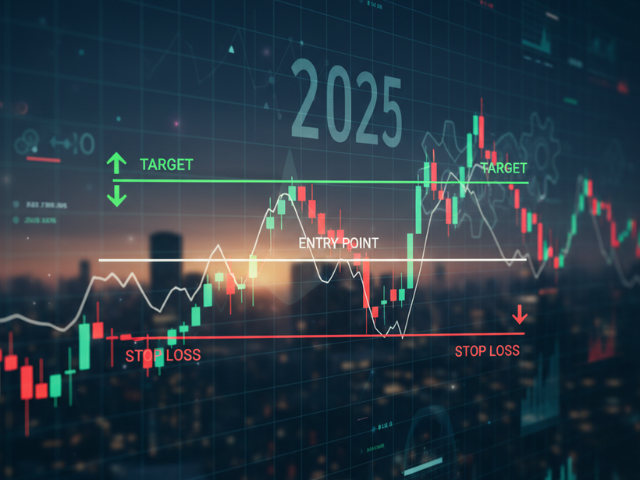
In intraday trading, profitability isn’t about how many trades you win it’s about how much you lose when you’re wrong.
That’s why professional traders swear by two golden tools:
Setting them wisely protects you from emotional trading and ensures consistent returns.
Let’s explore how to calculate and execute stop loss and target levels using both data and discipline.
A Stop Loss is a pre-decided exit price that limits your potential loss.
It ensures that one bad trade doesn’t wipe out your capital.
Example:
You buy Infosys at ₹1,500 expecting a rise to ₹1,530.
If your Stop Loss is ₹1,490, your maximum loss = ₹10 per share.
Stop Loss is your safety shield, not a weakness.
✅ Protects capital in volatile markets.
✅ Removes emotional decision-making.
✅ Builds discipline and consistency.
A Target Price (TP) is the level at which you plan to book profit.
It’s usually based on your risk–reward ratio or technical resistance levels.
Example:
If you risk ₹10 per share and aim for ₹20 gain, your target is ₹1,520 (2× your risk).
That’s a 1:2 risk–reward ratio the benchmark for sustainable trading.
The Risk–Reward Ratio (RRR) compares how much you could gain to how much you’re risking.
Risk–Reward Ratio = (Target – Entry) ÷ (Entry – Stop Loss)
| Entry Price | Stop Loss | Target | Risk–Reward Ratio |
|---|---|---|---|
| ₹1,500 | ₹1,490 | ₹1,520 | 1:2 |
| ₹1,000 | ₹990 | ₹1,030 | 1:3 |
| ₹800 | ₹790 | ₹810 | 1:1 |
Pro Tip:
Never take trades below 1:1.5 risk–reward. Professionals aim for 1:2 or higher, ensuring small losses, big wins.
There’s no “one-size-fits-all” stop loss it depends on your strategy and volatility.
Use support or resistance zones on charts:
Use Average True Range (ATR) to set SL dynamically.
Stop Loss = Entry – (1.5 × ATR) for buy trades.
Stop Loss = Entry + (1.5 × ATR) for sell trades.
ATR adapts your stop to market volatility tighter when calm, wider when volatile.
Decide risk per trade as a % of your capital (e.g., 1%).
If your capital = ₹1,00,000, you can risk ₹1,000 per trade.
If stock = ₹500, lot size = 100 shares → ₹10 per share risk = ₹1,000 total.
Targets should always align with market structure not just your wish list.
Use ratios like 1:2 or 1:3 (risk ₹10 → aim ₹20–₹30 profit).
Identify the next resistance (for buy) or support (for sell) on charts as your target.
These dynamic indicators show where price may pause or reverse perfect for setting smart targets in intraday trades.
Let’s put it all together 👇
| Trade Type | Entry Price | Stop Loss | Target | Outcome |
|---|---|---|---|---|
| BUY (Reliance) | ₹2,400 | ₹2,380 | ₹2,440 | 1:2 Reward, Trade Hits Target |
| SELL (HDFC Bank) | ₹1,600 | ₹1,615 | ₹1,570 | 1:2 Reward, Trade Profitable |
This approach lets you plan the trade before placing it, ensuring emotion-free decision-making.
🚫 Moving Stop Loss after entry discipline first!
🚫Setting tight SL in volatile stocks allow breathing room.
🚫 No defined target leads to greed-based exits.
🚫 Ignoring trailing stop loss use it to lock in profits as price moves in your favor.
The Securities and Exchange Board of India (SEBI) mandates robust risk systems for intraday traders.
Modern brokers like Swastika Investmart enhance this with:
Trading with a SEBI-regulated broker ensures your trades are secure, transparent, and compliant.
AI now plays a big role in intraday trading.
AI-powered systems track your trade history, volatility patterns, and win-loss ratios to suggest personalized stop loss and target levels.
Swastika Investmart’s next-gen platforms are integrating machine learning analytics that automatically recommend stop levels based on past volatility and trader behavior a big leap toward smarter, emotion-free trading.
1. What is the ideal risk–reward ratio for intraday traders?
A minimum of 1:2 ensures your average profits outweigh occasional losses.
2. How to choose between fixed and dynamic stop loss?
Use fixed SL for stable stocks and ATR-based SL for volatile ones like Bank NIFTY or crude oil.
3. Should I always place a stop loss?
Yes skipping SL is the number one reason traders lose money. Always protect your downside.
4. What is a trailing stop loss?
A trailing SL moves up as the price moves in your favor locking profits without exiting too early.
5. How does Swastika Investmart help in stop loss management?
Swastika provides auto SL order types, AI alerts, and risk calculators, making trade management easy, even for beginners.
In intraday trading, success doesn’t come from predicting it comes from protecting.
Your stop loss defines how much you can lose; your target defines how much you can earn.
By applying a disciplined risk–reward strategy, aligning trades with support/resistance or ATR levels, and using AI-powered broker tools like those from Swastika Investmart, you can trade confidently and sustainably.
Because in the long run, traders who control risk control success.

The Securities and Exchange Board of India (SEBI) has once again stepped up to tighten the regulatory framework around index derivatives — one of the most actively traded segments in India’s financial markets.
The move comes after SEBI observed rising speculative activity and excessive short-term volatility in index futures and options, especially in popular benchmarks like Nifty50 and Bank Nifty.
These changes are not meant to discourage trading but to ensure that derivatives serve their true purpose — risk management and hedging, not unchecked speculation.
Here’s a simple breakdown of what SEBI’s new rules bring to the table 👇
Earlier, exchanges could easily introduce new sectoral or thematic indices for trading in futures and options.
Now, SEBI mandates that:
Impact: This ensures that new indices are less prone to manipulation and have sufficient depth for fair price discovery.
SEBI has asked exchanges to review lot sizes and contract values regularly.
Example: If a Nifty derivative lot currently represents ₹10 lakh exposure, the revised rules may increase this threshold to ₹15–20 lakh depending on volatility.
Impact: Retail traders will need to manage position sizing and margin requirements more prudently.
To prevent extreme swings, SEBI has strengthened its risk and margin framework:
Outcome: A more stable and resilient derivatives ecosystem, especially during high-stress events like elections or global market shocks.
In recent years, weekly options — especially Bank Nifty contracts — have become a trader favorite. But they’ve also increased short-term speculative volatility.
SEBI has asked exchanges to review and rationalize the number of weekly expiries available for trading.
Impact: This may reduce ultra-short-term speculation but improve long-term market health by focusing on monthly contracts.
Exchanges must now publish more detailed data on open interest, position concentration, and volatility patterns.
This gives retail investors and analysts better visibility into market behavior.
Investor Benefit: Transparent data leads to more informed decision-making and helps prevent herd behavior.
Over the past year, India’s derivatives volumes have exploded — daily F&O turnover crossed ₹400 trillion, far outpacing the cash market. While high participation signals growing market depth, it also raises concerns about:
By tightening the rules, SEBI aims to strike a balance between accessibility and accountability. The reforms align India’s markets with global best practices, similar to frameworks followed by the U.S. SEC and European ESMA.
For Indian markets, this is a sign of maturing regulation — a necessary step to protect investors and ensure sustainable growth.
As a SEBI-registered brokerage and research house, Swastika Investmart combines robust research tools with investor education and real-time market analytics.
With features like:
Swastika helps both beginners and experienced traders adapt to regulatory changes smoothly — ensuring your trades remain informed, compliant, and efficient.
1. Why did SEBI introduce new rules for index derivatives?
To reduce excessive speculation, enhance transparency, and strengthen risk management in India’s fast-growing F&O market.
2. Will these rules affect retail traders?
Yes, mainly through higher contract values and dynamic margining, encouraging disciplined and risk-aware trading.
3. Are weekly options being removed?
No, but SEBI has advised exchanges to rationalize weekly expiries to curb short-term volatility.
4. How do these changes benefit long-term investors?
Lower volatility and better liquidity create a more stable market, benefiting investors with long-term equity positions or index-based portfolios.
5. How can I prepare for these changes?
Stay informed, manage your positions conservatively, and use research-backed platforms like Swastika Investmart for guidance.
SEBI’s new rules for index derivatives mark a crucial step toward a healthier and more disciplined market structure. While traders may initially feel the pinch of tighter margins and contract adjustments, the long-term impact is overwhelmingly positive — improved transparency, reduced volatility, and stronger market integrity.
For investors and traders who want to stay ahead with expert insights, Swastika Investmart offers a trusted, SEBI-registered platform with advanced research tools and personalized assistance to help you make smarter, safer trading decisions.

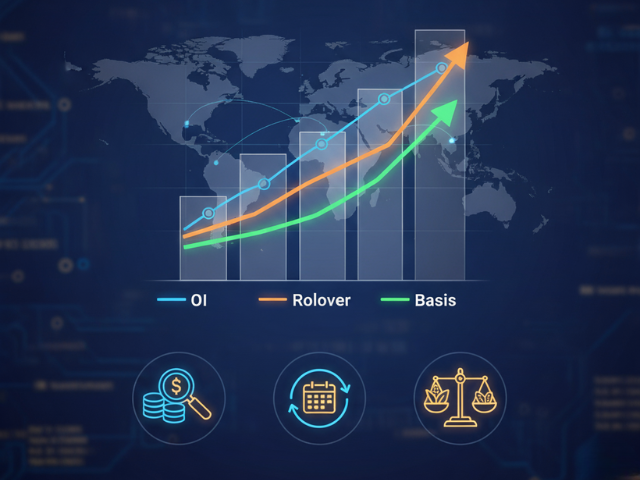
Commodity futures trading in India has evolved into a data-driven discipline. Successful traders today don’t just rely on price they decode Open Interest (OI), Rollover, and Basis to understand market positioning, strength, and sentiment.
Whether you trade on the Multi Commodity Exchange (MCX) or National Commodity & Derivatives Exchange (NCDEX), learning to interpret these metrics can transform the way you make decisions.
Let’s break them down in simple terms and see how brokers like Swastika Investmart help you read them efficiently.
Open Interest (OI) refers to the total number of outstanding contracts (buy or sell) that remain open in a commodity’s futures market.
In simple words: OI shows how many traders are active and how confident they are in the trend.
| Price Action | OI Movement | Market Indication |
|---|---|---|
| Price ↑ | OI ↑ | Fresh Longs (Bullish) |
| Price ↓ | OI ↑ | Fresh Shorts (Bearish) |
| Price ↑ | OI ↓ | Short Covering |
| Price ↓ | OI ↓ | Long Unwinding |
Example:
If Crude Oil futures prices rise from ₹6,800 to ₹7,000 and OI also rises, it means new long positions are being added bullish sentiment.
Swastika Investmart’s live OI trackers and heatmaps help traders identify these patterns in real time across commodities.
Futures contracts have expiry dates monthly for most commodities. As expiry nears, traders either square off or roll over their positions to the next month’s series.
Rollover (%) = (Next Month OI / Current Month OI) × 100
A higher rollover percentage shows continuity of conviction traders are carrying their view forward.
| Rollover Trend | Observation | Interpretation |
|---|---|---|
| High Rollover + Rising OI | Fresh Positions | Strong Trend Continuation |
| High Rollover + Falling OI | Weak Carry Forward | Neutral to Negative |
| Low Rollover + Falling OI | Position Unwinding | Bearish / Pause in Trend |
Example:
If Gold futures rollover is 85%, it means most traders are confident about the trend continuing in the next month’s contract.
Swastika Investmart’s derivatives dashboard visually compares rollover ratios across series, helping you track where institutional money is flowing.
Basis = Futures Price – Spot Price
It measures the difference between current futures and spot (cash) prices.
Negative Basis (Futures < Spot): Bearish tone (weak demand or oversupply).
| Basis Type | Condition | Market Signal |
|---|---|---|
| Positive Basis | Futures > Spot | Traders Expect Prices to Rise |
| Negative Basis | Futures < Spot | Traders Expect Prices to Fall |
Example:
If Copper spot = ₹720 and Futures = ₹730, basis = +₹10 → bullish undertone.
If Futures = ₹710 → basis = –₹10 → bearish tone or oversupply.
Smart traders don’t look at these metrics in isolation they combine all three to read the full market picture.
| OI Trend | Rollover | Basis | Market Signal |
|---|---|---|---|
| ↑ | High | Positive | Strong Bullish Continuation |
| ↑ | High | Negative | Bearish Build-Up |
| ↓ | Low | Positive | Short Covering Rally |
| ↓ | Low | Negative | Profit Booking / Weak Market |
SEBI (Securities and Exchange Board of India) ensures commodity futures trading remains transparent and regulated through:
Swastika Investmart’s trading systems follow all SEBI guidelines, ensuring traders have safe, compliant access to futures data.
The future of commodity analysis is AI-enhanced.
Modern platforms now use machine learning to analyze OI spikes, basis fluctuations, and rollover trends.
AI tools can even predict probable breakouts in commodities like Gold, Crude, or Copper by studying patterns across contracts.
1. What does Open Interest indicate in commodity futures?
It shows total open contracts rising OI means new positions (bullish or bearish), falling OI means closure or unwinding.
2. How can rollover help traders?
Rollover reveals how many traders carry positions to the next month, reflecting conviction in the trend.
3. What does basis tell us?
Basis shows whether futures are trading at a premium or discount to spot indicating market sentiment.
4. How is SEBI involved in commodity futures?
SEBI regulates all trading activity, margins, and reporting standards to ensure transparency and investor protection.
5. How does Swastika Investmart help commodity traders?
Swastika offers real-time analytics, AI-integrated insights, and SEBI-compliant execution, helping traders decode OI, rollover, and basis effectively.
Reading commodity futures data is the art of understanding what the market is thinking not just what the price is doing.
By tracking Open Interest, Rollover, and Basis, you gain insights into trader psychology, institutional positioning, and upcoming trends.
And when you trade through Swastika Investmart, you combine that insight with research-backed data, advanced dashboards, and SEBI-regulated safety.
In the AI-driven era of 2025, data isn’t just information it’s your competitive advantage.
👉 Open your Demat & Trading Account with Swastika Investmart — trusted SEBI-registered broker with expert research, powerful tools, and dedicated customer support.
Lenskart Solutions Ltd., founded in 2008, has transformed from an online eyewear seller into India’s largest tech-enabled eyewear retailer. With over 2,723 stores across India and overseas, the company manufactures, designs, and retails prescription glasses, sunglasses, and contact lenses through its own platform and app (over 100 million downloads).
After years of steady growth, Lenskart turned profitable in FY25 with a net profit of ₹297 crore and an EBITDA margin of 13.85%, up from 11.98% in FY24. The company’s revenue jumped 22.6% YoY to ₹6,652 crore, showing strong operating momentum.
But is that enough to justify its ₹70,000 crore market cap? Let’s break it down.
| Particulars | Details |
|---|---|
IPO Size |
₹7,278 crore |
Price Band |
₹382 – ₹402 per share |
Fresh Issue |
₹2,150 crore |
Issue Opens |
31 Oct 2025 |
Issue Closes |
4 Nov 2025 |
Market Cap(Post-Issue) |
₹69,726 crore |
The company plans to use the IPO proceeds for:
India’s eyewear industry is under-penetrated, with a large unorganized segment. Lenskart’s direct-to-consumer approach, backed by tech-driven supply chains and omnichannel reach, gives it a strong foothold in this expanding market.
With affordable yet trendy eyewear, Lenskart enjoys strong customer loyalty, particularly among millennials and Gen Z consumers.
The entry of Radhakishan Damani, a respected market veteran, has boosted confidence among investors and analysts alike.
Lenskart’s valuation metrics are sky-high.
At these levels, the stock is priced for perfection, leaving minimal room for error if growth slows or margins shrink.
FY25’s ₹297 crore profit primarily came from a one-time non-cash accounting gain, raising questions about the sustainability of earnings in future periods.
Over 40% of raw material and component sourcing is tied to Chinese suppliers via joint ventures, exposing the company to geopolitical risks and supply disruptions.
Competition is rising from both online and offline eyewear players, including Titan’s Eye+ and new D2C startups. Maintaining growth while preserving margins could be challenging.
The Lenskart IPO arrives at a time when investor appetite for consumer tech companies is strong, but valuations are under scrutiny. With peers like Mamaearth and Boat facing post-listing volatility, investors are becoming cautious.
The company’s ₹7,278 crore issue, where 70% of funds (OFS) go to existing shareholders, signals that much of the offer is an exit opportunity for early investors rather than a pure growth capital raise.
Swastika Investmart has assigned a Neutral Rating to the Lenskart IPO.
The business fundamentals are solid — large customer base, strong brand, scalable tech model — but valuation comfort is missing.
For long-term investors, it may be worth watching post-listing performance before taking exposure.
1. What is the Lenskart IPO price band?
The price band is set between ₹382 and ₹402 per share.
2. How much of the IPO is fresh issue?
₹2,150 crore is a fresh issue, while ₹5,128 crore is an offer for sale by existing shareholders.
3. Is Lenskart profitable?
Yes, the company turned profitable in FY25 with ₹297 crore net profit, though most of it came from a one-time accounting gain.
4. What is Swastika’s recommendation?
Swastika Investmart gives a Neutral rating — strong business, but valuations are on the higher side.
5. Should retail investors apply?
Apply only if you believe in long-term growth potential and can tolerate near-term valuation risk.
Lenskart’s IPO brings together a powerful mix of brand strength, tech-driven growth, and a booming consumer market. However, the steep valuation and profit quality concerns make it a case of “great company, expensive price.”
For investors looking for balanced, research-backed guidance and reliable support, Swastika Investmart offers SEBI-registered expertise, strong research tools, and tech-enabled investing platforms to help you make informed decisions.
👉 Open your Demat & Trading Account with Swastika Investmart — trusted SEBI-registered broker with expert research, powerful tools, and dedicated customer support.
For owners and promoters of successful, growing companies, seeking private capital often feels like a complicated and crucial process. You know your firm has tremendous potential, but turning that potential into a successful partnership with a Private Equity (PE) investor demands a clear strategy, not just strong performance.
This is the central promise of a specialized Boutique Investment Bank. It involves a step-by-step approach designed to boost your company's value, manage its presentation to the market, and guarantee long-term alignment with a new investor. Our Investment Banking experts explain this proven journey, from the initial planning stages to securing the necessary funds.
Every successful private equity deal starts by clearly defining a goal. The company, guided by an Investment Bank, must decide precisely what it wants to achieve: Is it raising capital for expansion, selling a portion of the company, or planning a full merger or sale?
This clear direction is formally captured in a mandate letter. This document ensures the promoter, management, and the investment bank are fully aligned on roles, timelines, and the ideal investor profile. This upfront agreement is vital, ensuring the process is focused on the company's long-term value creation, not just a quick cash injection.
Determining your company's worth, or Valuation, is the foundation of any transaction. A skilled investment banker uses rigorous financial analysis combined with real-time market knowledge to arrive at a fair and defensible value range.
We determine the basis of valuation using several standard approaches, including:
The final valuation figure is more than just a spreadsheet result; it is also influenced by industry outlook and how well the company aligns with major investor trends, such as deep-tech or sustainability. In fact, reports confirm that India has seen significant mid-market growth investments, proving that the opportunity for well-prepared companies is strong.
Once the valuation is clear, the focus shifts to Deal Structuring. This means deciding on the best type of capital to raise—such as common shares or preferred shares—to balance the new investor’s returns with the promoter’s continued control and operational freedom. A smart structure significantly impacts the partnership's success.
With the groundwork laid, the Investment Bank begins presenting the company's compelling story to the market. This phase goes beyond simple marketing; it is a focused campaign to find the perfect strategic partner.
The main document used, often called an Information Memorandum (IM), details the business model, financial results, management team quality, and the value creation plan. This step outlines how Investor Outreach is done by finding investors who are truly the right fit.
The Investment Bank identifies and contacts a select group of potential investors, including dedicated private equity funds and family offices, who have a track record of investing in companies of the client's size and sector. Effective outreach relies on:
When a serious investor expresses interest, they issue a Term Sheet, and the process moves into the critical negotiation game in equity. While the purchase price attracts the most attention, the most defining aspects of the partnership are found in the detailed clauses covering governance and rights.
The Investment Bank acts as an essential transaction advisor here. They help the promoter navigate complex issues like board composition, special rights for the investor, how the founders are incentivized, and plans for the eventual exit. Key elements under negotiation include:
The banker’s main job is to broker a balanced agreement that protects the promoter’s long-term vision while meeting the institutional investor’s requirements for a strong return, leading to a successful, aligned partnership.
The final phase involves legally documenting the deal, turning the agreed-upon Term Sheet into a legally binding contract. This execution stage demands extreme focus on detailed paperwork and regulatory adherence.
The importance of Compliance in Equity is paramount, especially in a regulated market. Legal teams draw up final agreements, the investor completes their final due diligence and finalises the Shareholder’s Agreement (SHA)& Shareholders Share Subscription Agreement (SSA), and all required documents are filed with government & regulatory authorities and signed by involved parties to finalise and seal the deal. Accuracy is key, as small compliance errors can significantly delay the final closure.
Closing the transaction is a milestone, not an end. A good Boutique Investment Bank continues to provide advice after the deal is done, offering crucial support in areas like new board governance, investor communication, and long-term strategic planning.
Maintaining a relationship with a trusted Investment Bank ensures a company is positioned for ongoing success. It facilitates future funding rounds, supports strategic acquisitions (bolt-ons), and prepares the company for a maximum-value exit later on—a true demonstration of partnership and sustained value creation..
.png)
We’ve entered an era where algorithms predict market moves, AI tools build personalized portfolios, and data-driven insights guide investment decisions.
Yet, at the center of this high-tech transformation lies a humble yet vital foundation the Demat Account.
A Demat (Dematerialized) Account is more than a place to hold your shares digitally it’s the gateway to AI-powered wealth creation, offering security, automation, and integration with new-age trading tools.
Let’s explore why every investor beginner or seasoned needs one in the AI-driven era of investing.
A Demat Account stores shares, ETFs, bonds, and mutual fund units in electronic form, eliminating the need for physical certificates.
It’s regulated by SEBI and maintained through depositories like NSDL (National Securities Depository Limited) and CDSL (Central Depository Services Limited).
In simpler terms, it’s your digital locker where all your investments live securely.
You can open one through SEBI-registered brokers like Zerodha, Groww, Angel One, Upstox, or Swastika Investmart, each connected to NSDL/CDSL systems.
In the past, investors tracked stock certificates manually. Today, everything from IPOs to ETFs happens digitally.
Without a Demat account, you can’t even buy or sell listed securities on Indian exchanges.
But in 2025, the importance goes beyond compliance it’s about unlocking AI-powered efficiency.
Here’s why 👇
AI systems analyze your holdings to recommend rebalancing, risk management, and tax-efficient moves all possible through your linked Demat data.
Modern trading platforms use machine learning to monitor price movements and auto-trigger stop-loss or alerts based on your Demat positions.
AI-powered brokers use predictive analytics to optimize entry/exit points, saving time and reducing emotional bias.
AI dashboards visualize your holdings in real time across stocks, mutual funds, ETFs, and bonds all synced to your Demat account.
AI algorithms track unusual transactions, flagging unauthorized access, and protecting investors under SEBI’s investor protection framework.
The integration of Artificial Intelligence with Demat systems has revolutionized how investors interact with markets.
| AI Feature | How It Uses Demat Data | Investor Benefit |
|---|---|---|
| Robo-Advisory Platforms | Analyze Demat holdings to build optimal portfolios | Personalized asset allocation |
| AI-Based Risk Scanners | Detect high-volatility or overexposed holdings | Improved capital protection |
| Predictive Trade Engines | Use market data + Demat positions for trade timing | Smarter entry and exit decisions |
| Sentiment Analysis Bots | Correlate investor sentiment with Demat movement | Behavioral insight & sentiment mapping |
As AI grows, your Demat account becomes the central nervous system of your financial profile, connecting multiple apps, analytics, and strategies in one ecosystem.
Even in this high-tech world, SEBI remains the ultimate safeguard.
It ensures brokers, platforms, and AI tools adhere to transparency, risk disclosure, and investor data protection norms.
Key measures include:
This ensures that technology serves investors not the other way around.
While fintech startups focus on automation, Swastika Investmart combines the best of both worlds human expertise + artificial intelligence.
Here’s why it stands out in 2025:
In short, Swastika isn’t just offering a Demat account it’s offering a secure, intelligent, and intuitive investing experience.
Let’s take Riya, a 27-year-old new investor from Pune.
She opens a Swastika Demat account, links it to an AI-driven app, and starts her first SIP in ETFs.
The AI platform analyzes her portfolio:
Her investments are safe (SEBI-regulated), accessible (24/7 dashboard), and optimized (AI-driven).
That’s the future where AI and Demat work hand-in-hand for wealth creation.
| Feature | Traditional Investing | AI-Driven Investing |
|---|---|---|
| Decision-Making | Manual & Emotion-Based | Data-Driven & Automated |
| Portfolio Tracking | Spreadsheet-Dependent | Real-Time Dashboards Linked to Demat |
| Risk Management | Reactive | AI Predictive Alerts |
| Security | Paper Certificates, Fraud Risk | SEBI-Compliant Digital Security (TPIN, eDIS) |
1. Why is a Demat account important in the AI era?
Because AI-driven platforms depend on Demat-linked data to analyze, automate, and execute smart investment decisions securely.
2. Can AI trade using my Demat account automatically?
Yes, through SEBI-approved APIs and eDIS authorization, AI platforms can execute trades with your consent.
3. Is my data safe in an AI-linked Demat account?
Absolutely. SEBI, NSDL, and CDSL enforce data encryption and dual-factor authentication to ensure safety.
4. Which broker offers the best AI-integrated experience?
Swastika Investmart stands out with its AI tools, transparent advisory, and regionally personalized investor support.
5. Can beginners benefit from AI-driven investing?
Yes. AI tools simplify analysis, automate risk alerts, and guide SIPs, making it easier for new investors to start smartly.
In an age where AI analyzes trillions of data points before a single trade is placed, your Demat account becomes the bridge between human intelligence and machine precision.
From real-time insights to fraud detection, it powers the next generation of smart investing.
By choosing a SEBI-regulated broker like Swastika Investmart, you combine AI innovation, research-backed strategy, and old-school trust exactly what investors need in this digital era.
Because the future of investing isn’t just about returns it’s about intelligence, safety, and evolution.
👉 Open your Demat & Trading Account with Swastika Investmart — trusted SEBI-registered broker with expert research, powerful tools, and dedicated customer support.