
Rajiv Kumar's Appointment and the hdfc bank share price: Governance, Growth, and Retail Investor Implications


Key Takeaways
- Rajiv Kumar has been named Part-Time Chairman (Non-Executive) for three years and Additional Independent Director for four years, subject to RBI and shareholder approvals.
- After the resignation of Atanu Chakraborty, the stock fell 12% in three days, wiping around Rs 1.6 lakh crore from market value.
- Kumar's 1984 IAS batch background and tenure as Finance Secretary signal governance reforms aligned with the bank's 4R strategy.
- Puneet Sharma will be CFO-designate from September 1 and CFO from December 1; investors should watch governance and capital moves, with market cap around Rs 12.28 lakh crore.
Two governance pivots, one sharp question: will Rajiv Kumar's appointment reset the trajectory of HDFC Bank's growth and the hdfc bank share price? On June 29, 2026, the lender's board approved his appointment as Part-Time Chairman (Non-Executive) for a three-year term, subject to RBI approval, and as Additional Independent Director for four years with effect from June 30, 2026. The Independent Director appointment will require shareholder approval. This move follows the abrupt resignation of Atanu Chakraborty, an event that had previously triggered a notable reaction in the bank's stock.
Rajiv Kumar, now 66, belongs to the 1984 IAS batch and retired as Finance Secretary of India in February 2020. He is also known for steering the clean-up of public sector bank balance sheets between 2017 and 2020, a period encapsulated by the 4R framework: Recognition, Resolution, Recapitalisation and Reforms. His public-sector experience includes service on the Central Board of the RBI, the Financial Stability and Development Council, the Bank Board Bureau, and the boards of State Bank of India and NABARD. Notably, he also served as the 25th Chief Election Commissioner of India, supervising the 2024 General Elections to the Lok Sabha. This blend of finance, governance, and election administration is what markets are watching as HDFC Bank navigates capital needs and regulatory expectations.
What Rajiv Kumar's appointment means for HDFC Bank governance and stock outlook
The appointment signals a renewed emphasis on governance and risk oversight at the bank. The three-year Part-Time Chairman role and the four-year Additional Independent Director role introduce a non-executive oversight layer that could influence strategic timing, capital allocation, and risk controls. Both terms are contingent on regulatory clearance from RBI and, for the Independent Director seat, shareholder approval. In this context, the hdfc bank share price will remain a focal barometer for investors as governance signals are translated into policy and execution.”
How RBI approval and shareholder votes shape HDFC Bank's path
RBI clearance for the Part-Time Chairman role and shareholder consent for the Independent Director appointment are pivotal gates. The pace and outcome of these approvals can affect the bank's capital planning, asset quality initiatives, and strategic reforms. While the bank's market capitalization sits near Rs 12.28 lakh crore, market participants will closely monitor how these governance decisions translate into operational discipline and long-term value creation. Investors should understand that regulatory approvals can introduce a temporary cadence to decision-making but also provide a framework for more robust oversight.
Impact of Chakraborty's resignation on stock and market sentiment
The resignation of Atanu Chakraborty precipitated a sharp immediate reaction: the stock declined 12% in the subsequent three trading days, erasing roughly Rs 1.6 lakh crore from the bank's market value. Such volatility underscores how leadership changes in large financial institutions can swing investor sentiment and valuation in a short window. If governance changes materialize smoothly and regulatory clarity improves, the hdfc bank share price could stabilize as confidence in leadership and strategic direction grows.
Kumar's Public Sector Bank Reforms experience and the 4R framework
Kumar's track record as Finance Secretary and his role in implementing the 4R strategy–Recognition, Resolution, Recapitalisation and Reforms–help explain why markets are paying close attention to his appointment. The 4R approach accompanied a broad push to bank balance-sheet clean-up, substantial capital infusions into public sector banks (over Rs 3 lakh crore), and the consolidation of 27 PSBs into 12. His governance lens suggests a potential emphasis on disciplined risk management, capital adequacy, and governance reforms, which could influence HDFC Bank's strategic direction even though it is a private lender. Investors should watch how his policy instincts translate into bank-wide decisions on credit, risk, and capital planning.
CFO transition, market cap, and implications for retail investors
Puneet Sharma has been named CFO-designate with effect from September 1, and will assume the CFO role from December 1. In the near term, investors will be tracking how the CFO transition aligns with earnings delivery, capital deployment, and strategic initiatives. The stock chronology shows the bank has gained 3% in one week and 7% in one month but remains down about 20% in 2026. With the bank trading around a Rs 12.28 lakh crore market cap, retail investors should incorporate governance signals, leadership changes, and capital strategy into their decision framework. For deeper stock-level insights, Swastika's Sarthi AI tool can help model scenarios and compare outcomes across multiple governance and market variables.
Frequently Asked Questions
What is Rajiv Kumar's role at HDFC Bank and what are the terms?
The board approved Rajiv Kumar as Part-Time Chairman (Non-Executive) for three years, subject to RBI approval, and as Additional Independent Director for four years from June 30, 2026; shareholders will need to approve the Independent Director appointment.
How did Atanu Chakraborty's resignation affect HDFC Bank's stock?
The resignation on March 18 led to a 12% fall in the stock over the next three trading days, wiping around Rs 1.6 lakh crore from the bank's market value.
Who is Rajiv Kumar and why is his appointment significant?
Kumar is a 66-year-old IAS officer from the 1984 batch, former Finance Secretary of India, and ex-Chief Election Commissioner; he played a key role in public sector bank reforms, including the 4R framework.
What does Kumar's appointment imply for HDFC Bank's governance and reforms?
The appointment signals a focus on governance reforms and capital planning, aligning with past PSB reforms and ongoing institutional strengthening to support risk management and strategic execution.
What should retail investors watch next?
Watch RBI approvals for the Part-Time Chairman role, shareholder approval for the Independent Director seat, the CFO transition (Puneet Sharma designated from Sep 1 and full duties from Dec 1), and the trend in the hdfc bank share price as the bank's market cap remains near Rs 12.28 lakh crore.
Conclusion
The road ahead for HDFC Bank hinges on how quickly and effectively RBI approvals and shareholder votes align with a refreshed governance framework under Rajiv Kumar. For retail investors, this is less about a one-off leadership change and more about whether governance clarity translates into disciplined execution, capital stability, and a clearer growth path for earnings. The immediate next steps are to monitor the RBI's stance on the Part-Time Chairman role, the shareholder vote for the Independent Director seat, and the CFO transition timeline, while watching the hdfc bank share price as a live proxy for evolving investor sentiment.
Latest Articles
Rajiv Kumar's Appointment and the hdfc bank share price: Governance, Growth, and Retail Investor Implications


Key Takeaways
- Rajiv Kumar has been named Part-Time Chairman (Non-Executive) for three years and Additional Independent Director for four years, subject to RBI and shareholder approvals.
- After the resignation of Atanu Chakraborty, the stock fell 12% in three days, wiping around Rs 1.6 lakh crore from market value.
- Kumar's 1984 IAS batch background and tenure as Finance Secretary signal governance reforms aligned with the bank's 4R strategy.
- Puneet Sharma will be CFO-designate from September 1 and CFO from December 1; investors should watch governance and capital moves, with market cap around Rs 12.28 lakh crore.
Two governance pivots, one sharp question: will Rajiv Kumar's appointment reset the trajectory of HDFC Bank's growth and the hdfc bank share price? On June 29, 2026, the lender's board approved his appointment as Part-Time Chairman (Non-Executive) for a three-year term, subject to RBI approval, and as Additional Independent Director for four years with effect from June 30, 2026. The Independent Director appointment will require shareholder approval. This move follows the abrupt resignation of Atanu Chakraborty, an event that had previously triggered a notable reaction in the bank's stock.
Rajiv Kumar, now 66, belongs to the 1984 IAS batch and retired as Finance Secretary of India in February 2020. He is also known for steering the clean-up of public sector bank balance sheets between 2017 and 2020, a period encapsulated by the 4R framework: Recognition, Resolution, Recapitalisation and Reforms. His public-sector experience includes service on the Central Board of the RBI, the Financial Stability and Development Council, the Bank Board Bureau, and the boards of State Bank of India and NABARD. Notably, he also served as the 25th Chief Election Commissioner of India, supervising the 2024 General Elections to the Lok Sabha. This blend of finance, governance, and election administration is what markets are watching as HDFC Bank navigates capital needs and regulatory expectations.
What Rajiv Kumar's appointment means for HDFC Bank governance and stock outlook
The appointment signals a renewed emphasis on governance and risk oversight at the bank. The three-year Part-Time Chairman role and the four-year Additional Independent Director role introduce a non-executive oversight layer that could influence strategic timing, capital allocation, and risk controls. Both terms are contingent on regulatory clearance from RBI and, for the Independent Director seat, shareholder approval. In this context, the hdfc bank share price will remain a focal barometer for investors as governance signals are translated into policy and execution.”
How RBI approval and shareholder votes shape HDFC Bank's path
RBI clearance for the Part-Time Chairman role and shareholder consent for the Independent Director appointment are pivotal gates. The pace and outcome of these approvals can affect the bank's capital planning, asset quality initiatives, and strategic reforms. While the bank's market capitalization sits near Rs 12.28 lakh crore, market participants will closely monitor how these governance decisions translate into operational discipline and long-term value creation. Investors should understand that regulatory approvals can introduce a temporary cadence to decision-making but also provide a framework for more robust oversight.
Impact of Chakraborty's resignation on stock and market sentiment
The resignation of Atanu Chakraborty precipitated a sharp immediate reaction: the stock declined 12% in the subsequent three trading days, erasing roughly Rs 1.6 lakh crore from the bank's market value. Such volatility underscores how leadership changes in large financial institutions can swing investor sentiment and valuation in a short window. If governance changes materialize smoothly and regulatory clarity improves, the hdfc bank share price could stabilize as confidence in leadership and strategic direction grows.
Kumar's Public Sector Bank Reforms experience and the 4R framework
Kumar's track record as Finance Secretary and his role in implementing the 4R strategy–Recognition, Resolution, Recapitalisation and Reforms–help explain why markets are paying close attention to his appointment. The 4R approach accompanied a broad push to bank balance-sheet clean-up, substantial capital infusions into public sector banks (over Rs 3 lakh crore), and the consolidation of 27 PSBs into 12. His governance lens suggests a potential emphasis on disciplined risk management, capital adequacy, and governance reforms, which could influence HDFC Bank's strategic direction even though it is a private lender. Investors should watch how his policy instincts translate into bank-wide decisions on credit, risk, and capital planning.
CFO transition, market cap, and implications for retail investors
Puneet Sharma has been named CFO-designate with effect from September 1, and will assume the CFO role from December 1. In the near term, investors will be tracking how the CFO transition aligns with earnings delivery, capital deployment, and strategic initiatives. The stock chronology shows the bank has gained 3% in one week and 7% in one month but remains down about 20% in 2026. With the bank trading around a Rs 12.28 lakh crore market cap, retail investors should incorporate governance signals, leadership changes, and capital strategy into their decision framework. For deeper stock-level insights, Swastika's Sarthi AI tool can help model scenarios and compare outcomes across multiple governance and market variables.
Frequently Asked Questions
What is Rajiv Kumar's role at HDFC Bank and what are the terms?
The board approved Rajiv Kumar as Part-Time Chairman (Non-Executive) for three years, subject to RBI approval, and as Additional Independent Director for four years from June 30, 2026; shareholders will need to approve the Independent Director appointment.
How did Atanu Chakraborty's resignation affect HDFC Bank's stock?
The resignation on March 18 led to a 12% fall in the stock over the next three trading days, wiping around Rs 1.6 lakh crore from the bank's market value.
Who is Rajiv Kumar and why is his appointment significant?
Kumar is a 66-year-old IAS officer from the 1984 batch, former Finance Secretary of India, and ex-Chief Election Commissioner; he played a key role in public sector bank reforms, including the 4R framework.
What does Kumar's appointment imply for HDFC Bank's governance and reforms?
The appointment signals a focus on governance reforms and capital planning, aligning with past PSB reforms and ongoing institutional strengthening to support risk management and strategic execution.
What should retail investors watch next?
Watch RBI approvals for the Part-Time Chairman role, shareholder approval for the Independent Director seat, the CFO transition (Puneet Sharma designated from Sep 1 and full duties from Dec 1), and the trend in the hdfc bank share price as the bank's market cap remains near Rs 12.28 lakh crore.
Conclusion
The road ahead for HDFC Bank hinges on how quickly and effectively RBI approvals and shareholder votes align with a refreshed governance framework under Rajiv Kumar. For retail investors, this is less about a one-off leadership change and more about whether governance clarity translates into disciplined execution, capital stability, and a clearer growth path for earnings. The immediate next steps are to monitor the RBI's stance on the Part-Time Chairman role, the shareholder vote for the Independent Director seat, and the CFO transition timeline, while watching the hdfc bank share price as a live proxy for evolving investor sentiment.

Mcx Gold Price: Ahead of US-Iran Talks and Market Moves
Key Takeaways
- mcx gold price slipped to Rs 1,38,630 per 10 grams as MCX gold futures fell 1.3% to that level at 9:01 am.
- Intraday global price stood at $3,943 per ounce, down as much as 1.8%.
- Gold has fallen about 25% since late February, while the dollar index has jumped more than 2% this month.
- Investors should monitor US-Iran talks in Doha and Iran's stance on traffic through the Strait of Hormuz.
Geopolitics is rewriting the script for gold as fresh US-Iran talks loom, and the mcx gold price is flashing the tension in real time. By 9:01 am on Tuesday, MCX gold July futures had fallen 1.3% or Rs 1,824 to Rs 1,38,630 per 10 grams, while intraday global price hovered around $3,943 per ounce, still below the wider $4,000 mark in global markets. The dollar index has jumped more than 2% this month, amplifying the pressure on bullion as inflationary pressures from the ongoing war weigh on risk appetites.
What is driving the mcx gold price movement ahead of US-Iran talks?
Gold prices today are being shaped by a convergence of geopolitical risk, macro data, and the evolving posture of key players in the Middle East. Negotiations are scheduled to begin on Tuesday in Doha, with Iran saying it would send a delegation of experts and ruling out direct talks–an approach echoed by Deputy Foreign Minister Kazem Gharibabadi. In this environment, Iran's plan to oversee traffic through the Strait of Hormuz adds a dimension of regional risk that can influence risk sentiment and, by extension, the mcx gold price. Since the war began in late February, gold has already lost around 25%, underscoring how geopolitical frictions can swing risk assets. The dollar index jump of over 2% this month adds another layer of pressure on gold as investors reassess inflation and monetary policy paths.
Key Price Data You Need Today on mcx gold price
| Instrument | Price | Change | Notes |
|---|---|---|---|
| MCX gold July futures | Rs 1,38,630/10 g | -1.3% (-Rs 1,824) | 9:01 am snapshot |
| MCX silver September futures | Rs 2,20,745/kg | -0.85% | Intraday |
| Intraday global gold price | $3,943/oz | -1.8% | Intraday price level |
How global factors and the dollar index interplay with mcx gold price
On the global stage, bullion trades with a tug-of-war between geopolitical risk and macro cues. The intraday price sits below the $4,000 per ounce psychological level, even as the MCX gold price mirrors domestic price discovery. The intraday price of $3,943 per ounce reflects sensitivity to the dollar’s strength and the prevailing risk-off sentiment amid geopolitical developments. A dollar index that has risen more than 2% this month tends to exert downward pressure on non-yielding assets like gold, even as inflationary concerns and central-bank expectations keep some support under bullion. In such a war-impacted inflationary backdrop, gold may stay choppy rather than trend decisively, until headlines on US-Iran talks, sanctions, or Middle East risk shift the risk calculus for investors.
What US-Iran Talks Mean for Indian Retail Investors: Implications for mcx gold price
For Indian retail investors, the evolving US-Iran talks backdrop translates into a nuanced risk environment. The MCX gold price data–Rs 1,38,630 per 10 g for MCX gold July futures–provides a local price anchor, while global cues and currency moves challenge that anchor. The roughly 25% drop since late February shows gold’s sensitivity to geopolitical shock and the sense that bullion can behave as a hedge but also as a volatile asset during periods of geopolitical negotiation and currency stress. Investors should balance hedging needs with diversification, recognizing that a rising dollar can dampen bullion upside even when inflation remains elevated. If you hold gold as a hedge, consider how geopolitical developments could alter demand for safe-haven assets and how you time exposures within your overall portfolio.
Strategies for Navigating mcx gold price Movements in a Geopolitically Charged Environment
Practical steps for retail traders and long-term investors alike start with a clear risk framework. Maintain a defined gold exposure limit, diversify across asset classes to avoid over-concentration, and employ disciplined risk controls such as stop-loss mechanisms or staged entry points to participate in potential upside while limiting downside. In this environment, research-driven decisions become more important than chasing headlines. If you need a research edge, Swastika’s Sarthi AI stock assistant can provide institutional-level insights on stocks and indices to retail investors, helping you contextualize gold moves within the broader market and economics landscape.
Frequently Asked Questions
What is the current mcx gold price and what happened today?
At 9:01 am on Tuesday, MCX gold July futures fell 1.3% or Rs 1,824 to Rs 1,38,630 per 10 grams.
How did US-Iran talks affect mcx gold price movements?
The movement occurred ahead of negotiations scheduled to begin in Doha; gold prices have been pressured as geopolitical risk and the dollar index rose.
What are the MCX silver price data and momentum today?
MCX silver September futures declined 0.85% to Rs 2,20,745 per kg.
What is the intraday global price of gold and how did it move?
Intraday global price was $3,943 per ounce, after sliding as much as 1.8%.
What macro factors are influencing mcx gold price today?
A stronger dollar index, up more than 2% this month, and war-related inflationary pressures are influencing gold's direction.
What should Indian retail investors consider in this environment?
Consider diversification within gold and other assets, monitor US-Iran talks, and use research tools such as Swastika's Sarthi AI stock assistant to access institutional-level insights.
Conclusion
The mcx gold price backdrop today signals that retail investors should treat gold as a strategic risk-management tool rather than a one-way bet on geopolitical risk. In the near term, the combination of geopolitical headlines, a dollar index that has jumped over 2% this month, and a gold price hovering around Rs 1,38,630/10 g for MCX gold July futures suggests a continued, potentially volatile, range. Build your plan around defined risk, monitor the US-Iran talks with a focus on how any settlement or escalation could shift risk sentiment, and use research tools to stay informed about shifts in global dynamics that affect bullion demand and price discovery.
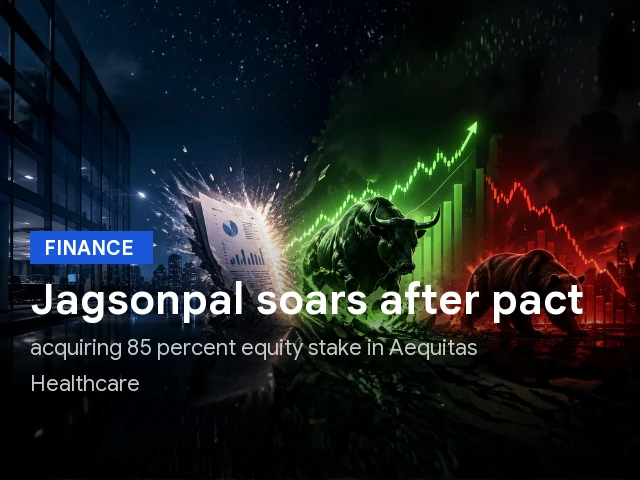
Jagsonpal Pharmaceuticals share price: Aequitas deal reshapes India's hospital-focused growth
Key Takeaways
- Jagsonpal inks an 85% stake in Aequitas Healthcare for Rs 20.8 crore funded from internal accruals.
- The deal includes a 15% stake retention by Aequitas' current directors and a closing target of July 15, 2026.
- Aequitas turnover Rs 53.31 crore in FY26; Jagsonpal's Q4 FY26 net profit Rs 8.76 crore on revenue Rs 64.20 crore.
- Hospital segment currently accounts for about 10% of pharma industry sales and is growing faster, enabling Jagsonpal's omnichannel strategy.
Retail investors across India are watching Jagsonpal pivot its business model as a hospital delivery platform takes shape. In a move that signals a strategic pivot, jagsonpal pharmaceuticals share price moved after the definitive agreement to acquire 85% of Aequitas Healthcare, a Mumbai-based hospital-focused firm. The Rs 20.8 crore transaction will be funded from internal accruals and aims to strengthen Jagsonpal's presence in the hospital ecosystem. The hospital segment, which currently contributes around 10 percent of pharma industry sales, is growing faster and being targeted for higher-volume, higher-margin opportunities. Aequitas is an eight-year-old player focused on hospital-level pharmaceutical distribution, with revenue lines tied to hospital procurement and institutional partnerships. This move is designed to create an omnichannel specialty healthcare platform in India, where hospital channels are increasingly important for reaching physicians and patients.
The deal structure envisages the current directors of Aequitas retaining a 15 percent stake and continuing to be associated with the business. The total consideration of Rs 20.8 crore will be funded entirely from Jagsonpal's internal accruals, underscoring the balance-sheet discipline of the buyer. The transaction remains subject to customary closing conditions and is expected to be concluded by 15 July 2026, subject to regulatory approvals and due diligence. These timing provisions create a window for investors to assess integration milestones, operating synergies, and any potential working-capital implications.
Jagsonpal's board and senior management view this as a structurally transformative pivot. Amrut Medhekar, chief operating officer, described the deal as moving Jagsonpal from a legacy retail prescription player to an omnichannel specialty healthcare business in India, anchored by strong brand portfolios in gynaecology, orthopaedics, dermatology and child care. Manish Gupta, managing director, noted that the deal would leverage Aequitas' institutional relationships to expand the reach of Jagsonpal's established brands, delivering sustainable long-term value to shareholders. The hospital axis offers a longer growth runway as India builds its hospital infrastructure and procurement frameworks for hospitals.
Beyond the headline numbers, Jagsonpal's Q4 FY26 standalone results showed a net profit of Rs 8.76 crore on revenue of Rs 64.20 crore, up 33.13 percent in net profit and 9.63 percent in revenue over Q4 FY25. This quarterly performance provides a glimpse of underlying operating leverage as Jagsonpal expands into the hospital space, though it remains a primarily retail-prescription maker with a portfolio spanning gynaecology, orthopaedics, dermatology, and child care. The company will need to manage the transition risks associated with channel shifts, procurement, and field-force realignment as it scales the hospital-focused business line.
For retail investors, the big takeaway is the strategic pivot toward a hospital-centric, omnichannel model with a defined funding plan and a clear closing timetable. If the integration delivers the expected scale and cross-selling across Jagsonpal's portfolio, the combined entity could improve hospital-channel penetration and brand reach. This is a longer-term story that requires patience and disciplined execution from management. If you want ongoing, institutional-grade research on this stock, Swastika offers Sarthi, its AI stock assistant, to give you deeper insights into any stock or index.
What jagsonpal pharmaceuticals share price signals after the Aequitas deal
The market reaction to this definitive agreement was pronounced, with Jagsonpal Pharmaceuticals share price moving higher as investors priced in the potential for expanded hospital-channel access, stronger institutional relationships, and a higher-margin mix from hospital procurement. While the stock had already shown volatility typical of mid-cap pharma names, the 85% stake entry creates a visible trajectory toward an omnichannel platform that combines Jagsonpal's established prescription brands with Aequitas' hospital-facing capability. The immediate reaction–an upmove in the stock price and heightened trading volume–suggests that investors are pricing in growth optionality from cross-selling and institutional partnerships that could emerge as operations scale.
Looking forward, the key price-mate for Jagsonpal Pharmaceuticals share price will be the speed and quality of the integration. Investors should watch for milestones around hospital procurement wins, quarterly cross-sell numbers, and any working-capital adjustments required to support hospital channel growth. The Rs 20.8 crore deal size sits in a compact funding envelope, since Jagsonpal plans to finance it through internal accruals rather than external debt, which reduces near-term balance-sheet risk but places greater emphasis on post-merger cash flow management. The market will reward demonstrable synergies that translate into higher margins and more stable revenue streams over the next 12 to 24 months.
Another layer worth monitoring is Jagsonpal's product portfolio in gynaecology, orthopaedics, dermatology, and child care. If Aequitas can supply reliable hospital relationships, Jagsonpal's brands could gain faster traction in hospital procurement channels, boosting order sizes and reducing channel fragmentation. The combination has the potential to unlock cost efficiencies and accelerate product reach, but it will require disciplined execution to avoid overstated synergy expectations. In short, the jagsonpal pharmaceuticals share price path will hinge on how effectively the integration translates into real-world hospital orders, brand reach, and a more diversified revenue mix.
An 85% Stake In Aequitas Healthcare: Deal Structure And Closing Timeline For Investors
From a structural perspective, the agreement contemplates Jagsonpal acquiring 85% of Aequitas Healthcare for Rs 20.8 crore, with the balance 15% retained by Aequitas' current directors who will continue to be involved. The Rs 20.8 crore price will be funded from internal accruals, a detail that signals a conservative financing approach and keeps the balance sheet comparatively clean. The deal is expected to close by July 15, 2026, subject to customary closing conditions, regulatory approvals, and due diligence. This structure reduces near-term dilution risk for Jagsonpal’s existing shareholders while preserving continuity in management and operational know‑how from Aequitas’ side. The transaction underscores Jagsonpal’s intent to deploy a measured, capital-efficient strategy as it pivots toward hospital channels, rather than relying solely on its traditional retail prescription business.
The Aequitas leadership also gains a measured yet meaningful stake, retaining 15% while continuing to contribute to the business’s strategic direction. This arrangement can enhance governance and stability during the integration, helping both sides align on procurement strategies, hospital relationships, and product mix optimization. For retail investors, the closing timetable offers a transparent catalyst window to assess progress, verify milestone delivery, and gauge any initial operating frictions that commonly accompany such transitions.
Hospital Segment Growth Potential In India And Jagsonpal's Expansion Plan
India’s hospital ecosystem is expanding, and hospital procurement remains a meaningful, if still modest, share of the broader pharma market. The hospital segment already accounts for about 10% of pharma industry sales, and this slice is growing faster than traditional retail channels. Jagsonpal’s strategic pivot leverages Aequitas’ institutional relationships to accelerate the reach of its portfolio across hospitals, with a cross-sell thesis that could amplify brand penetration in both existing and new therapeutic areas. The combination aims to create an omnichannel specialty healthcare business that can address the needs of hospital procurement teams, physicians, and patients by offering a broader portfolio of trusted brands and hospital-ready products. For retail investors, this growth path could translate into higher-margin revenues and more predictable demand cycles as hospital channels expand their share of India’s pharmaceutical purchases. This is not an overnight re-rating, but a measured strategy that aligns with India’s healthcare infrastructure expansion and evolving hospital procurement practices.
Management commentary frames this move as a structurally transformative pivot. The leadership emphasizes operational excellence, disciplined execution, and patient-centric growth as the guardrails for creating sustainable value. As Jagsonpal integrates Aequitas’ distribution network, investors should monitor the pace of hospital orders, the extent of cross-selling across Jagsonpal’s product lines, and the degree to which operating margins stabilize as the business scales beyond traditional retail channels.
Q4 FY26 Performance And Its Impact On Valuation
Beyond the strategic pivot, the recent quarterly numbers provide a snapshot of Jagsonpal’s current operating status as it eyes a longer horizon of growth. In Q4 FY26, Jagsonpal reported a standalone net profit of Rs 8.76 crore on revenue of Rs 64.20 crore, marking a 33.13% rise in net profit and a 9.63% increase in revenue over Q4 FY25. These numbers reflect a degree of operating leverage, even as the company navigates the costs associated with channel realignment and the early stages of hospital-focused expansion. Investors should view these figures as a snapshot of profitability on the cusp of a strategic expansion, rather than a pure play on retail prescription sales alone. The result signals the potential for stronger cash generation if the hospital channel adds scale in a measured, controllable way.
The hospital pivot will likely change Jagsonpal’s revenue mix over time. While the current portfolio remains centred on gynaecology, orthopaedics, dermatology, and child care, the hospital channel could bring in higher-value, contract-driven revenues associated with hospital procurement. This path may come with short-term margin pressures as the company reorients its sales force and supply chain, but the longer-term potential lies in a more diversified and resilient revenue base. For now, investors should maintain a balanced view, recognizing both the near-term integration costs and the longer-term upside of hospital-focused growth in a fast-evolving Indian healthcare market.
From a price-trend viewpoint, jagsonpal pharmaceuticals share price responses will depend on how quickly the integration yields hospital orders, how effectively cross-selling expands margins, and how well Jagsonpal maintains cash generation while funding the Rs 20.8 crore deal from internal accruals. The convergence of established brands with hospital procurement relationships offers a plausible path to enhanced profitability if the operational integration is executed with discipline and clear governance. As always with mid-cap pharma transitions, market expectations will be sensitive to quarterly milestones, regulatory clearances, and any macro headwinds affecting hospital demand or hospital procurement budgets.
Funding And Governance: Internal Accruals, Control, And Risk
The Rs 20.8 crore funding plan underscores a capital-efficient approach. By financing the acquisition from internal accruals, Jagsonpal reduces the near-term balance-sheet risk associated with debt or equity dilution. This approach also suggests a continuity bias: the management intends to preserve the existing cash-generating core while absorbing Aequitas’ hospital relationships. Governance-wise, the retention of a 15% stake by Aequitas’ current directors ensures continuity and a degree of alignment on strategic priorities, especially in hospital procurement, contracts, and channel development. For retail investors, this governance architecture can help stabilize execution during the integration and mitigate abrupt strategic pivots that could raise concern about execution risk. The closing timeline of 15 July 2026 provides a concrete milestone to monitor for capital structure adjustments, working-capital needs, and early operating synergies.
As Jagsonpal navigates this transition, the interplay between core prescription business and hospital-focused growth will become a key determinant of valuation. The stock’s response to the deal is a function of both the strategic rationale and the perceived ability to translate the plan into tangible quarterly results. Investors should examine the first few quarterly numbers post-close for evidence of cross-selling momentum, hospital procurement wins, and any changes in working capital that could influence cash flow. While the long-term thesis remains compelling, the near-term focus will be on how well management executes the integration plan while maintaining financial discipline.
Frequently Asked Questions
What is the Jagsonpal-Aequitas deal structure?
Jagsonpal will acquire 85% equity stake in Aequitas Healthcare for Rs 20.8 crore, funded from internal accruals, with the current directors of Aequitas retaining 15% stake and continuing with the business. The transaction is expected to close by 15 July 2026, subject to customary closing conditions.
What is Aequitas Healthcare's business and FY26 turnover?
Aequitas Healthcare is an eight-year-old Mumbai-based company that sells pharmaceutical products to hospitals. It reported a turnover of Rs 53.31 crore in FY26.
How did Jagsonpal's share price react to the deal?
The Jagsonpal Pharmaceuticals share price rose 9.79% to Rs 253.90 following the announcement of the definitive agreement to acquire the stake.
What is the strategic rationale for Jagsonpal's pivot into hospital channels?
The acquisition provides a ready platform for a meaningful presence in India's hospital segment, which contributes about 10% of pharma industry sales and is growing faster. It enables an Omnichannel Specialty healthcare business by leveraging Aequitas' institutional relationships and Jagsonpal's established brands.
When is the closing of the deal expected and what are key milestones?
Closing is expected by 15 July 2026, subject to customary closing conditions. The Rs 20.8 crore deal will be funded from internal accruals, and the current directors of Aequitas will retain 15% stake.
Conclusion
This acquisition marks a significant pivot in Jagsonpal's growth trajectory, moving the company beyond its legacy retail prescription business into a hospital-centric, omnichannel healthcare platform. The deal structures, funding approach, and milestone-based closing plan demonstrate a disciplined path toward scaling hospital-channel opportunities while preserving balance-sheet strength. For retail investors, the strategic thesis is clear: if the hospital-focused expansion translates into meaningful cross-selling, better procurement contracts, and a diversified revenue mix, this move could enhance long-term profitability and resilience in India's growing healthcare ecosystem.
The practical takeaway for investors is to monitor the closure progress, integration milestones, and early operating results tied to the hospital channel. A simple mental model is to treat this as a staged expansion into hospital procurement with measurable milestones for cross-sell effectiveness, order conversion rates, and net margins. Watch the jagsonpal pharmaceuticals share price as a barometer of market sentiment regarding the integration’s success and the pace at which the hospital platform contributes to overall profitability. As the deal progresses, be attentive to any new catalysts–regulatory approvals, hospital procurement wins, or partner collaborations–that could validate or challenge the growth thesis and alter the risk-reward equation for Jagsonpal shareholders.
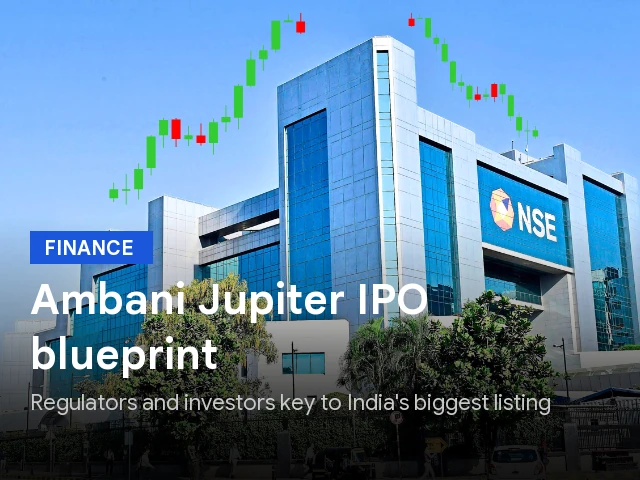
Reliance jio ipo: Project Jupiter and the Birth of India's Biggest Listing
Key Takeaways
- Project Jupiter shifted the reliance jio ipo from OFS to a full primary issue, keeping about $4 billion with the company.
- Regulators eased dilution norms, lowering the public float threshold to 2.5% for large valuations.
- The IPO syndicate expanded from two bankers (Kotak and Morgan Stanley) to 19 banks by March 2026.
- Draft prospectus filed on June 19, 2026, guided by 19 advisers.
India's capital markets were watching a quiet, meticulously choreographed drama around the reliance jio ipo. A plan code-named Project Jupiter would not only guide Jio's public debut but potentially redefine how large Indian listings blend regulatory flexibility with domestic capital retention. The tale isn't just about a clock-driven timetable; it is about a sequence of calibrated moves–secrecy, regulatory sensitivity, and investor alignment–that culminated in a landmark listing designed to keep funds within India and empower Reliance's digital ecosystem. The project extended from Aug 2025 when Ambani signaled a listing in H1 2026, through a series of regulatory changes and syndicate expansions, to a June 2026 draft prospectus that put numbers behind the plan and a path to a public float that would catch the eye of retail investors across the country.
The journey wasn't linear. Initially, the plan looked like an offer-for-sale (OFS) exercise, with the aim of bringing existing stakes into the public market. As market dynamics shifted, the structure evolved into a full primary issuance, ensuring roughly $4 billion stayed within Reliance and continued to fund growth initiatives in India. This pivot mattered, because it preserved capital for domestic deployment while expanding the instrumented float that public investors would use to participate in India's biggest IPO.
Unlocking the reliance jio ipo: From OFS to primary issuance and the biggest listing in India
The August 2025 signal that Jio would pursue a public debut in the first half of 2026 set the tempo for a regulatory and market approach that favoured domestic capital and investor confidence. In October 2025, Reliance activated Project Jupiter, marking a milestone in the program's operational reality. By December 2025, the IPO syndicate had expanded beyond the initial two bankers–Kotak Mahindra Capital Co. and Morgan Stanley–to a larger panel. A crucial pivot occurred in May 2026 when the IPO structure shifted from OFS to all-primary issuance, ensuring roughly $4 billion would remain with the company and be deployed for growth within India.
As the calendar advanced, the execution risk tightened. Filing delays in February 2026, pending notification of revised IPO rules, underscored the sensitivity of market conditions to big listings. By March 13, 2026, the government notified new minimum dilution norms, and just four days later, Reliance expanded the syndicate to 19 investment banks. The readiness reach expanded again in December 2025, when four more investment banks joined the mandate, culminating in a 19-bank roster by March 17, 2026. The June 19, 2026, filing of the draft prospectus with 19 advisers was a watershed moment that made the process increasingly tangible for retail investors across the country.
| Date | Event |
|---|---|
| Aug 2025 | Ambani announces plan to list Jio in H1 2026. |
| Sept 2025 | SEBI eases minimum dilution rule for large IPOs. |
| Oct 2025 | Kotak and Morgan Stanley appointed as bankers. |
| Dec 2025 | Syndicate expands to four more banks (total growing). |
| Feb 2026 | Filing delayed pending revised IPO rules. |
| Mar 13, 2026 | New minimum dilution norms notified. |
| Mar 27, 2026 | Filing deferred again due to weak market conditions. |
| Mar 17, 2026 | Syndicate expands to 19 banks. |
| May 2026 | IPO structure changed from OFS to primary issuance. |
| Jun 19, 2026 | Draft prospectus filed with 19 advisers. |
Notably, the plan included a public float arrangement that involved dilution among existing investors. Investors including KKR & Co., Meta Platforms Inc., and Alphabet Inc. agreed to dilute about 8% of their holdings on a pro-rata basis to meet public float requirements. This is a meaningful signal about how the float would be constructed and how the public market would absorb the new shares without triggering a sudden sell-off from major shareholders.
Reliance jio ipo details: regulatory evolution, dilution norms, and market timing
The regulatory backdrop around such a large IPO was shaped by a mix of policy evolution and market safeguards. The government moved to ease the dilution norms for大型 IPOs, particularly those valued above a certain threshold. The new rule lowered the dilution requirement from 5% to 2.5%, a significant change designed to improve public float while keeping the core capital within the company. This change occurred in March when the government notified the revised norms. The broader implication was that giants like Jio could meet float targets more easily, given a more flexible framework for primary issuances and reorganized syndicate support.
As part of the same regulatory arc, the timeline of the project moved through a series of market events. September 2025 saw the rule easement for large IPOs; October 2025 added Kotak and Morgan Stanley to the bank panel; December 2025 witnessed the addition of four more investment banks; February 2026 brought a delay in filing due to revised IPO rules; March 2026 brought the notification of fresh dilution norms and the expansion to 19 investment banks; and May 2026 marked the shift to an all-primary issuance. The June 19 draft prospectus filing with 19 advisers signaled this new regime of openness and structural clarity for potential investors, particularly retail players across India.
For retail investors, this sequence underscored a central theme: the economics of the Reliance jio ipo detail and its funding plan are deeply connected to policy choices that aim to preserve domestic capital while expanding the base of public ownership. The net effect is a listing expectation anchored in a robust, diversified, and well-advised syndicate, supported by a regulatory environment that recognizes the importance of large, homegrown listings to India's growth story.
Reliance jio listing: syndicate growth and readiness for the listing
From the outset, Kotak Mahindra Capital Co. and Morgan Stanley led the charge as the first investment banks on the mandate. The syndicate widened in December 2025 with the addition of four more banks, and by March 17, 2026, Reliance expanded the panel to 19 investment banks. This expansion reflected the complexity of a listing of this scale, where distribution, due diligence, and communications to a broad base of investors–from retail to foreign institutions–need extreme coordination. Market conditions also added a note of caution; by March 27, 2026, filings were deferred again due to weak market conditions, postponing the official issuance while the firm recalibrated the approach.
The structural choice to pivot from OFS to a primary issue reappeared in May 2026. The move had a clear arithmetic: roughly $4 billion would remain in the company and be deployed for domestic growth, a consequence that reinforced the idea of a homegrown expansion rather than a quick, externally funded listing. The drafting and adviser list grew to 19, signaling a broad-based, methodical approach to public scrutiny and investor education ahead of the listing. In short, the listing readiness that followed the early steps of Project Jupiter was a product of both strategic capital planning and an adaptable corporate deal architecture.
Reliance jio investors: dilution, float, and impact on public investors
One of the most watched dimensions of the reliance jio ipo was how existing investors would contribute to the public float. Investors including KKR & Co., Meta Platforms Inc., and Alphabet Inc. agreed to dilute about 8% of their holdings on a pro-rata basis to meet public float requirements. This was a material concession given the magnitude of the listing and the need to preserve liquidity for new investors while not displacing the strategic aims of the promoter group. For retail investors, the resulting float distribution would matter for price discovery, liquidity, and the speed at which new shares could be churned on exchanges.
Forewarned by earlier market cycles, the approach combined with the broader dilution norms created an environment where the float would be credible and attractive to retail participants. The 8% dilution figure also underscored the balance required when dealing with large, strategic investors–often global institutions–that hold sizeable stakes but remain committed to India’s growth story. The combination of a robust float and a disciplined, well-advised market introduction was aimed at sustaining investor interest and preventing a sudden price contraction as the stock began trading in its early days.
Draft prospectus and the regulatory backdrop: what retail investors should know
The June 19, 2026, filing of the draft prospectus with 19 advisers symbolized a major milestone in the project. The broad advisor roster signaled not only the due diligence discipline but also the breadth of outreach that would be necessary to educate a diverse retail investor base about the offering, its risks, and its opportunities. The change from an OFS to a primary issuance, combined with the dilution levers and the new rule set, suggested a structure designed to maximize domestic capital retention and provide a credible market float for common investors, who comprise the majority of Swastika Investmart’s client base. In practice, retail investors would look at the price discovery path, the post-issue liquidity, and the long-run fundamentals of Reliance’s Jio ecosystem to calibrate their participation in the offering and subsequent trading.
Notable numeric symmetry and numbers behind Project Jupiter
The narrative of the Project Jupiter initiative also carries a few numerically intriguing touchpoints. Ambani’s birthday is on the 19th of April, a line that the article pointed to as a piece of numerical symmetry embedded in the process. In addition, the syndicate’s growth to 19 investment banks and the plan for 19 advisers on the draft prospectus highlight a deliberate emphasis on a wide and diverse set of market participants. The shift from OFS to primary issuance was also substantial from a numbers perspective: roughly $4 billion would stay with Reliance to fuel domestic growth. The dilution norms themselves–lowering the threshold to 2.5% from 5% for large valuations–are a reminder that policy levers can alter the arithmetic of a listing and the mix of public and private ownership that follows.
Beyond these core figures, other milestones anchor the timeline: August 2025’s plan, September’s dilution relaxation, October's bankers’ appointment, December’s onboarding of four additional banks, and the March 2026 unlocking of the 19-bank syndicate. June 19, 2026’s prospectus filing capped a period of intense regulatory navigation, market testing, and strategic alignment that retail investors should study if they are evaluating high-profile domestic IPOs.
Frequently Asked Questions
What is Project Jupiter and how did it influence the reliance jio ipo timeline?
Project Jupiter was the internal plan to prepare Jio's IPO, evolving from an offer-for-sale to an all-primary issuance, keeping roughly $4 billion with the company and aligning the timing to India's biggest stock-market listing.
Why did the reliance jio ipo switch from an OFS to a primary issue?
Switching to a primary issuance ensured funds remained with Reliance, enabling reinvestment in India while meeting public float requirements.
What regulatory changes enabled a larger public float for the IPO?
The government eased the minimum dilution rule for large IPOs, lowering the threshold to 2.5% from 5% for companies valued above 5 trillion rupees.
Who joined the IPO syndicate and how did it grow?
Initial bankers were Kotak Mahindra Capital Co. and Morgan Stanley; by December 2025 four more banks joined, and by March 17, 2026, the syndicate expanded to 19 banks.
When was the draft prospectus filed and what does it indicate for the listing?
The draft prospectus was filed on June 19, 2026, with 19 advisers, signaling readiness for the next phase of the listing process.
What is the significance of the 8% dilution for investors like KKR, Meta, Alphabet?
Investors including KKR & Co., Meta Platforms Inc., and Alphabet Inc. agreed to dilute about 8% of their holdings on a pro-rata basis to meet public float requirements.
Conclusion
For the retail investor, the reliance jio ipo demonstrates how policy, corporate strategy, and market-cycle timing can converge to create the conditions for a landmark listing. The project illustrates that large domestic IPOs are not just about the size of the float; they are about how capital retention, float credibility, and investor education can coexist with aggressive growth ambitions. The lesson is practical: keep an eye on not just the valuation, but also the regulatory context, the public float mechanics, and the syndicate's breadth when evaluating an opportunity of this scale.

Nalco share price: What the latest moves mean for retail investors
Key Takeaways
- Nalco share price fell 2.35% to Rs 338.95 today.
- Over the last month, Nalco is down 20.05% while the BSE Metal index fell 8.25%.
- The stock hit a record high of Rs 445.1 on 27 Apr 2026.
- The 52-week low was Rs 180.1 on 04 Aug 2025, highlighting volatility.
nalco share price movement is in focus after a 2.35% slip to Rs 338.95, a data point that raises questions about near-term momentum in the aluminium sector. For retail investors, this is not just a daily number; it’s a signal about sector-wide volatility and company-specific dynamics. In the past month, nalco share price has fallen 20.05% as the BSE Metal index declined 8.25% while the SENSEX rose 2.98%.
As the day progresses, the BSE Metal index is down 0.29% to 40155.7, underscoring the wider drag on metal stocks. The index is down 8.25% over the last one month. Over the last year, the BSE Metal index rose 26.69% even as the benchmark SENSEX fell 7.9%. Among the metal sector peers, Hindalco Industries Ltd decreased 1.14% and Steel Authority of India Ltd lost 0.94% on the day. The price action shows how stock-specific moves can diverge from sector momentum.
| Metric | Value |
|---|---|
| Nalco share price | Rs 338.95 |
| Daily change | -2.35% |
| Last 1 month change | -20.05% |
| 52-week high | Rs 445.1 (Apr 27, 2026) |
| 52-week low | Rs 180.1 (Aug 4, 2025) |
| Trading volume today | 33,221 shares |
| Avg daily volume (past month) | 5.87 lakh shares |
Nalco share price history: nalco share price history and the 52-week range
Two numbers anchor nalco share price history: The stock hit a record high of Rs 445.1 on 27 Apr 2026 and a 52-week low of Rs 180.1 on 04 Aug 2025. The trajectory over the past month shows a 20.05% decline, while the BSE Metal index has moved differently–down 8.25% in the same window. Over the last year, the BSE Metal index has risen 26.69%, contrasting with the overall direction of the SENSEX, which is down 7.9% in that period. This history underscores the volatility and the importance of looking at price history when sizing risk for nalco share price.
Nalco stock chart: nalco stock chart and momentum signals for the current period
Looking at the nalco stock chart over the recent period, the move from a record high of 445.1 to the current Rs 338.95 reflects a retracement of roughly 23-24% from the peak. The sharp daily move today (-2.35%) comes amid thin intraday participation–33,221 shares traded so far, well below the month-average of about 5.87 lakh shares. Such dynamics can suggest either a pause in momentum or the early stage of a consolidation phase. For a retail investor, this is a reminder to watch how price action interacts with the broader metal sector and to confirm signals with volume and price patterns before acting on the nalco share price path.
Impact of the BSE Metal index on Nalco share price: Sector-level signals for retail investors
The sector's performance offers essential context: the BSE Metal index is down 0.29% today, at 40155.7. It has fallen 8.25% over the last month, but rose 26.69% over the last year, a clear example of the sector’s volatility and longer-term tendency to swing with global commodity cycles. Hindalco Industries Ltd fell 1.14% and Steel Authority of India Ltd declined 0.94% on the day, showing that stock-specific moves can diverge from sector direction. For nalco share price, the correlation with the index means that sector momentum matters as a backdrop to any one-day move.
Retail investor takeaways: How to approach Nalco share price now
Retail investors should treat the current setup as a reminder of the risk within metal stocks. The near-term action suggests focusing on price action and risk controls rather than chasing headlines. A practical approach includes monitoring the price around Rs 338.95 and watching for any meaningful break with credible volume. Diversification across the metal sector and other cyclicals can help manage idiosyncratic risk. If you want deeper, AI-driven stock insights for Nalco share price and related indices, consider Swastika’s Sarthi – an AI stock assistant designed to provide institutional-level research for retail investors.
Frequently Asked Questions
What is Nalco share price today?
Nalco share price stood at Rs 338.95 after a 2.35% drop today.
How did Nalco perform in the last one month?
Nalco has fallen 20.05% over the last one month, while the BSE Metal index declined 8.25% and the SENSEX rose 2.98%.
What is Nalco's 52-week high and low?
Nalco hit a record high of Rs 445.1 on 27 Apr 2026 and a 52-week low of Rs 180.1 on 04 Aug 2025.
How does the BSE Metal index relate to Nalco share price?
The BSE Metal index is down 0.29% today, and down 8.25% over the last month; over the last year it rose 26.69% while the SENSEX fell 7.9%.
What should a retail investor do next about Nalco share price?
Consider price action, risk controls, and diversification. Set price alerts and use research tools like Swastika's Sarthi AI stock assistant for deeper analysis.
Conclusion
The latest movements in nalco share price reflect both sector volatility and stock-specific dynamics. For a retail investor, the key takeaway is to balance risk with opportunity: the stock has shown a wide price range–from a 52-week low of Rs 180.1 (Aug 4, 2025) to a record high of Rs 445.1 (Apr 27, 2026)–and it now trades near Rs 338.95 after today’s 2.35% drop. This combination of volatility and history suggests a cautious, rules-based approach to exposure: set a price alert on the current level, monitor the volume, and make decisions within a diversified framework.

Hdfc Bank Share Price Insights: Motilal Oswal's Top 4 Banking Picks Ahead of Q1 FY27 Earnings
Key Takeaways
- Motilal Oswal flags stronger MSME credit demand ahead of Q1 FY27 results.
- HDFC Bank Buy with a target of Rs 1,100.
- ICICI Bank Buy with a target of Rs 1,750; SBI Buy with Rs 1,300.
- AU Small Finance Bank Buy with a target of Rs 1,275.
hdfc bank share price narratives are shaping retail investor decisions as Q1 FY27 earnings season looms. Motilal Oswal Financial Services signals a stronger MSME credit demand in the April-June quarter and a rising working capital cycle, suggesting a favorable backdrop for banks with robust SME lending. Private banks are gaining traction at higher ticket sizes, while public sector banks win share on competitive pricing and CGTMSE-backed lending. Unsecured business loans are also rising, even as housing loan growth cools, underscoring the need to watch asset quality in an inflationary environment. Bottom line for investors: the Q1 results could reframe risk and reward across HDFC Bank, ICICI Bank, SBI, AU Small Finance Bank, and peers.
Hdfc Bank Share Price: Hdfc Bank Share Price And Motilal Oswal's Q1 Earnings Bets
HDFC Bank stands out among Motilal Oswal's top private sector picks. The brokerage notes the bank's leadership in high-value segments such as HCV and MHCV and in the loan against property space, projecting solid asset quality. Motilal Oswal assigns a Buy rating with a target price of Rs 1,100 for the bank's shares. In the recent month, the stock has edged higher by around 7%, though it has declined about 20% so far in 2026, signaling an important price-earnings dynamic as Q1 unfolds. This context helps explain why many retail investors watch the hdfc bank share price closely as earnings near. The bank's underwriting discipline and technology edge are seen as key differentiators in a competitive landscape.
icici bank stock: Icici Bank Stock: Tech Edge And Asset Quality Momentum
ICICI Bank is also a Motilal Oswal top private sector pick, focusing on its competitive edge driven by superior tech capabilities and a strong overdraft facility offering. The brokerage says the bank has a profitable growth trajectory and robust asset quality. A Buy rating accompanies a target price of Rs 1,750 on the shares. Investors following the icici bank stock will note the bank's emphasis on technology-enabled lending and digital onboarding as central components of its growth story.
sbi stock price context: Sbi Stock Price Context: CGTMSE Lending, Housing Loan Growth, And Asset Quality
State Bank of India features as Motilal Oswal's preferred PSU pick due to all-round execution and a healthier growth trajectory, with emphasis on housing loans. The report highlights CGTMSE-backed lending by PSBs, including SBI, as a competitive edge with improved turnaround times and disciplined underwriting. The target price is Rs 1,300 for SBI. While the housing loan segment remains attractive, it's essential to watch the overall asset quality in an inflationary environment; still, SBI's underwriting framework remains robust, supporting the positive stance.
au small finance bank stock price: Au Small Finance Bank Stock Price: Mid-Size Growth, Asset Quality, And Collection Infrastructure
AU Small Finance Bank is listed as Motilal Oswal's top mid-size bank pick. The brokerage emphasizes its retail strength, industry-leading growth, and a granular asset book coupled with a strong collection infrastructure. The target price is Rs 1,275 for AU Small Finance Bank. The company's growth story continues to stand out as it expands its retail base and strengthens its asset quality, even in a challenging macro environment.
axis bank stock price: Axis Bank Stock Price: Wholesale Lending Dynamics In Surat's Textile Sector
Axis Bank is noted as a larger wholesale player in Surat's textile industry, with channel checks indicating stretched working capital limits and thinner profit margins in that segment. Motilal Oswal maintains a Neutral rating on Axis Bank with a target price of Rs 1,475. The commentary underscores that Axis Bank might be more sensitive to sector-specific cycle dynamics than the top private sector picks, but it also points to strong market share in the wholesale space as a potential catalyst should the backdrop improve.
bandhan bank stock price: Bandhan Bank Stock Price And Other Top Picks Like DCB, Equitas SFB, RBL And Kotak
In addition to the four top picks, Motilal Oswal has Buy calls on Bandhan Bank, DCB Bank, Equitas Small Finance Bank, RBL Bank, and Kotak Mahindra Bank. The overall theme: selective exposure to private lenders with a strong growth runway and improving underwriting, alongside PSBs gaining market share in certain segments due to competitive pricing and CGTMSE-backed lending. These calls provide investors with a diversified set of potential entry points during the Q1 earnings season, depending on risk appetite and sector-specific outlook.
Read more on HDFC Bank, ICICI Bank, SBI, AU Small Finance Bank to understand the context of these picks and the evolving sector dynamics.
| Bank | Target Price (Rs) | Rating | Notes |
|---|---|---|---|
| HDFC Bank | 1,100 | Buy | HCV/MHCV, loan against property |
| ICICI Bank | 1,750 | Buy | Tech edge, overdraft facilities |
| SBI | 1,300 | Buy | Housing loans, CGTMSE |
| AU Small Finance Bank | 1,275 | Buy | Retail growth, granular asset book |
| Axis Bank | 1,475 | Neutral | Wholesale lending, Surat textile |
For deeper stock-level insights, Swastika's Sarthi AI stock assistant can help retail investors run scenarios on these names.
Frequently Asked Questions
What are Motilal Oswal's top banking picks ahead of Q1 FY27 earnings?
Motilal Oswal's top picks include HDFC Bank, ICICI Bank, SBI, and AU Small Finance Bank as top private and PSU bets, with Axis Bank rated Neutral and Buy calls on Bandhan Bank, DCB Bank, Equitas SFB, RBL Bank, and Kotak Mahindra Bank.
What are the target prices for HDFC Bank, ICICI Bank, SBI, and AU Small Finance Bank?
HDFC Bank: Rs 1,100; ICICI Bank: Rs 1,750; SBI: Rs 1,300; AU Small Finance Bank: Rs 1,275.
What is Axis Bank's rating and target price?
Axis Bank is rated Neutral with a target price of Rs 1,475.
Which banks have Buy calls beyond the four top picks?
Bandhan Bank, DCB Bank, Equitas Small Finance Bank, RBL Bank, and Kotak Mahindra Bank have Buy calls.
What does CGTMSE-backed lending imply for SBI and other PSBs?
CGTMSE-backed lending is highlighted as a competitive edge for PSBs like SBI, with ongoing monitoring of stock reports, cash flows, and debtor lists indicating strong underwriting.
Conclusion
The retail investor’s takeaway is to watch the mash-up between MSME credit demand signals and the housing loan cycle as Q1 FY27 results approach. The top picks reveal a spectrum of exposures–from HDFC Bank's leadership in high-ticket segments to SBI's PSU strength in housing loans–along with AU Small Finance Bank's mid-size growth engine. The hdfc bank share price will remain a barometer of sector momentum, but the underlying story is about underwriting discipline and growth potential across private and public banks in a rising rate environment.
Next step: develop a personal framework to evaluate bank stocks–focus on loan book quality, sector exposure, and the speed of underwriting. Use a mental model such as "quality first, growth second, and price discipline," and test your assumptions with Sarthi’s AI research to tailor your own entry and exit plans. Start by mapping the four top names and the other Buy calls to your risk tolerance and time horizon, then monitor quarterly updates as Q1 results unfold.
Big Budget


Popular Articles


.avif)
.avif)

.avif)



START YOUR INVESTMENT JOURNEY
Get personalized advice from our experts
- Dedicated RM Support
- Smooth and Fast Trading App